Dr. Wan Renjie is an Assistant Professor in the Department of Computer Science at the Faculty of Science, Hong Kong Baptist University (HKBU). He holds a BEng in Network Engineering from the University of Electronic Science and Technology of China and a PhD from Nanyang Technological University (NTU), Singapore. Prior to joining HKBU, he was a Wallenberg-NTU Presidential Postdoctoral Fellow (2020–2022) and a guest researcher at Peking University (2019–2020). His research focuses on computational photography, 3D vision, AI security, digital watermarking, and neural representations . He explores robustness and security in vision models, especially concerning NeRFs and 3D Gaussian Splatting, and develops methods for low-light enhancement, reflection removal, and domain adaptation. Dr. Wan has published in top-tier venues including TPAMI, IJCV, CVPR, ICCV, NeurIPS, AAAI, and ECCV . His recent work emphasizes copyright protection for neural 3D models , adversarial attacks in multimodal and event-based systems, and medical image reconstruction. He is actively mentoring PhD students and research assistants. VCIP 2020 Best Paper Award Outstanding Reviewer, ICCV 2019 He teaches courses such as Introduction to AI and ML (COMP3057) , AI Application Development (COMP3065) , and Python for Data Analysis and Machine Intelligence (COMP7035) . Dr. Wan leads a dynamic research group with ongoing projects on watermarking, 3D reconstruction, and AI security, and he is currently recruiting new PhD students and research assistants.
Dr. Giang Tran is an Associate Professor in the Department of Applied Mathematics at the University of Waterloo, where she leads research in sparse modeling and computational mathematics. She holds a PhD from UCLA and previously served as a Bing Instructor at the University of Texas at Austin. Her research explores sparse optimization techniques with applications in medical imaging, dynamical systems, and data science. Recent publications focus on developing novel algorithms for sparse random feature expansions and dynamical system identification. She mentors numerous graduate and undergraduate researchers through projects on neural networks, transformers, and epidemic forecasting. Awards include the NSERC Discovery Grant and SIAM Student Paper Prize. Dr. Tran teaches advanced courses in numerical methods and functional analysis, contributing to curriculum development in computational mathematics.
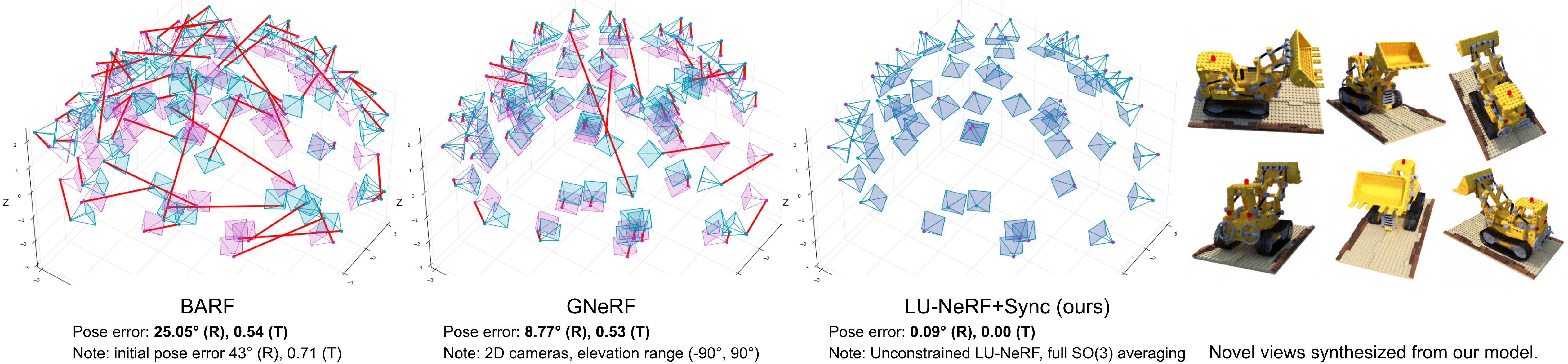
Zezhou Cheng is an Assistant Professor of Computer Science at the University of Virginia, leading the Computer Vision Lab. He holds a Ph.D. from UMass Amherst (2023), a postdoctoral position at Caltech, and a Bachelor's degree from Sichuan University (2015). His research focuses on computer vision, machine learning, and their applications in ecology, materials science, and autonomous systems. Key areas include 3D understanding, self-supervised learning, and AI-driven ecological monitoring. He has received awards such as the Best Synthesis Award (2020) and Outstanding Reviewer (CVPR 2021). His work spans publications in top venues like CVPR, ICCV, and ECCV, addressing challenges in 3D reconstruction, generative models, and ecological data analysis. Education: Ph.D. in Computer Science, UMass Amherst (2023) Bachelor's Degree, Sichuan University (2015) Postdoctoral Researcher, Caltech (advised by Georgia Gkioxari) Research Highlights: Developed LU-NeRF for unposed scene reconstruction and camera pose estimation Contributed to AI for ecology via bird roost detection using weather radar data Advanced 3D representation learning through procedural programs and self-supervised techniques Awards & Recognition: Outstanding Reviewer, CVPR 2021 Best Poster Award, New England Computer Vision Workshop 2019 National Scholarship (China, 2014 and 2016) His lab explores cutting-edge topics in computer vision, with a focus on interdisciplinary applications. Teaching roles include leading Caltech's AI Bootcamp and serving as a Teaching Assistant at UMass Amherst. Industry collaborations include internships at Google Research, Snap, and Amazon.
Xuan Zhang is an Associate Professor at the Department of Information and Communication Technology, University of Agder. His research focuses on Tsetlin Machines, learning automata, and their applications in machine learning, computer vision, and hyperspectral imaging. Research Trends: Zhang’s recent work includes developing interpretable machine learning models (e.g., Tsetlin Machines), optimizing convolutional architectures for image processing, and applying automata theory to solve multi-armed bandit problems and channel selection in cognitive networks. His field spans theoretical analysis and practical implementations in AI, remote sensing, and health informatics. Scientific Contributions Co-developed advanced Tsetlin Machine variants for XOR/NOT operator convergence, disease forecasting, and image restoration Published in journals like IEEE Transactions on Pattern Analysis and Machine Intelligence , Information Sciences , and Applied Intelligence Explored Bayesian pursuit algorithms, hierarchical learning automata, and particle swarm optimization techniques Contact: xuan.zhang@uia.no
Michael Webster is a Professor of Psychology at the University of Nevada, Reno, serving as Co-Director of the Graduate MS/PhD Neuroscience Program and Undergraduate BS Neuroscience Program, and Director of the NIH-funded COBRE for Integrative Neuroscience. His research focuses on visual perception, particularly how perception adapts to environmental and physiological changes. He leads major initiatives like the $10 million COBRE grant establishing an fMRI facility and neuroscience programs. Education: Ph.D., Psychology, University of California, Berkeley (1988); B.A., Psychology, University of California, San Diego (1981). Research Interests: Cognitive neuroscience of vision, visual adaptation mechanisms, color and face perception, and cultural/environmental influences on perception. Notable contributions include discoveries about face adaptation, color constancy, and blur correction. His work is funded by NIH grants and recognized through awards like the Outstanding Researcher Award. Grants/Awards: NIH COBRE Directorship, foundation professorship, grants for radiology adaptation studies. His lab (Visual Perception Lab) explores neural and cognitive bases of visual processing.
Assoc. Prof. Dr. Yıltan Bitirim is a faculty member at the Computer Engineering Department of Eastern Mediterranean University in North Cyprus. With over two decades of academic experience, he has served in various roles including Vice Chair (2014-2022), Academic Affairs Coordinator (2025-), and committee member for ABET assessment, curriculum development, and faculty recruitment. Current academic rank: Associate Professor Active administrative roles: Senate Member (2023-), Information Technology Commission Member (2023-) Professional memberships: ACM, IEEE Senior Member, Cyprus Turkish Chamber of Computer Engineers Research Interests focus on four primary areas: Information Retrieval Systems – evaluating search engine effectiveness and reverse image search performance Machine Learning – applied to emotion classification, gender recognition, and medical diagnosis Data Mining – used in Turkish word-stemming analysis and user behavior studies Biometrics – specializing in hand/wrist/palm vein recognition systems and voice-based identification Publications demonstrate consistent contributions across disciplines, with recent works (2023-2025) emphasizing: Deep learning applications in biometric authentication Advanced emotion recognition systems Medical AI for diabetes management and retinopathy diagnosis Biometric spoof detection mechanisms Turkish language processing challenges Recommendation system innovations Awards & Recognition : Research Incentive Awards (2020, 2021) Best Paper Award at ICIW 2007 IEEE Senior Member status As an educator, he has supervised numerous thesis committees and taught foundational courses in computer engineering, including CMPE 112 and CMPE 342. His certifications (MCTS, MCITP) reflect technical expertise in Microsoft technologies.
Emily Whiting is an Associate Professor of Computer Science at Boston University and Director of the Shape Design & Computation Lab. She also serves as Director of PhD Admissions and Co-Director of the BU Computer Graphics Lab. Her research focuses on computational fabrication, architectural geometry, and computer-aided design, bridging digital geometry processing, engineering mechanics, and rapid prototyping. She holds a PhD from MIT (2012), an SM in Design & Computation from MIT (2006), and a BASc in Engineering Science from the University of Toronto (2004). Previously, she was faculty at Dartmouth and a Marie Curie Postdoctoral Fellow at ETH Zurich. Her research interests include 3D printing optimization, structural design for fabrication, and tools for functionally-valid object creation. Notable projects include work on elastic garments, climbing experience replication, and print-wind instrument design. Her work has been featured on TEDx and PBS NOVA, and she has received awards such as the NSF CAREER Award and Sloan Research Fellowship. Education: PhD (MIT), SM (MIT), BASc (University of Toronto) Labs: Shape Design & Computation Lab, BU Computer Graphics Lab Key Projects: Knitting 4D garments, Environment-Scale Fabrication, Thermal-comfort casts Recent professional activities include program committee roles at SIGGRAPH 2025 and UIST 2024, and serving as Program Co-Chair for Pacific Graphics 2024. She advises a team of PhD and MS students, with alumni now in academia and tech industries.
Paolo Prandoni is a Lecturer at École Polytechnique Fédérale de Lausanne (EPFL) in the School of Computer and Communication Sciences (IC). He serves as a Scientist in the Audiovisual Communications Laboratory (LCAV) and teaches in the SSC-ENS and SIN-ENS units, focusing on signal processing theory and practical applications in audiovisual communications. He earned his PhD from EPFL after completing all prior education there, driven by childhood fascination with long-distance telephony. His doctoral work established foundations in communication systems that continue to inform his research. Prandoni's research spans audio/image processing, machine learning for media analysis, and DSP education. Key areas include computational photography (e.g., spectral imaging, stained glass rendering), speech quality assessment via transfer learning, music information retrieval (e.g., fingering prediction), and audience analytics through his company Quividi. His work consistently bridges theoretical signal processing with real-world implementation. Recent publications reveal a strategic shift toward machine learning integration in signal processing tasks, particularly non-intrusive speech assessment and lensless imaging reconstruction. Simultaneously, he advances DSP pedagogy through MOOC development and hands-on teaching tools using off-the-shelf hardware, emphasizing accessibility and practical skill development. No scientific awards are documented in the provided materials. He has advised PhD student Thanikachalam Niranjan (thesis: Image Based Relighting of Cultural Artifacts , 2016) and teaches Communication Systems and Computer Science courses. His educational impact extends through the open-access textbook Signal Processing for Communications (2008) and tools like MultiPub for maintainable online classes. Industry engagement includes Quividi co-founding (2006) and ongoing CSO role in attention analytics. As a core LCAV laboratory member, he collaborates on interdisciplinary projects including cultural heritage digitization, embedded signal processing systems, and real-time audience measurement, leveraging EPFL's infrastructure for both academic and commercial applications.
Fabrizio Falchi is a researcher at the Artificial Intelligence for Media and Humanities (AIMH) Lab of the Institute of Information Science and Technologies (ISTI) within Italy's National Research Council (CNR). He also maintains an associate position at the Biorobotics Institute of Scuola Superiore Sant'Anna. His work focuses on developing advanced multimedia retrieval systems, with the VISIONE platform being his most notable contribution, which has won international competitions including the Video Browser Showdown in 2024 and placed second in 2023. Falchi's educational background includes: Ph.D. in Information Engineering from University of Pisa (Italy) Ph.D. in Informatics from Faculty of Informatics of Masaryk University of Brno (Czech Republic) M.B.A. from Scuola Superiore Sant'Anna in Pisa His research spans deep learning, convolutional neural networks, deep features extraction, similarity search algorithms, distributed indexing systems, multimedia information retrieval, computer vision applications, and peer-to-peer systems. Falchi has made significant contributions to fine-grained visual understanding, cross-modal retrieval (particularly image-text matching), and robustness of deep learning systems against adversarial attacks. His work demonstrates a strong focus on practical applications of these technologies, particularly in video retrieval systems and safety monitoring solutions. Analysis of Falchi's recent publications reveals a strong focus on video and image retrieval systems, with the VISIONE platform being central to his work. His research shows increasing emphasis on fine-grained understanding in computer vision, cross-modal retrieval, and addressing practical challenges like cross-resolution face recognition. Recent work demonstrates innovation in making these systems more efficient through techniques like knowledge distillation (ALADIN) and leveraging virtual worlds for training data. His publications consistently bridge theoretical advances with practical applications in surveillance, safety monitoring, and multimedia search. Falchi's work has received significant recognition: Best paper award at CBMI 2024 for 'Is ClLIP the main roadblock for fine-grained open-world perception?' VISIONE 2024 won the Video Browser Showdown competition in Amsterdam VISIONE obtained second place at Video Browser Showdown 2023 in Bergen Best Paper Award for 'Learning Safety Equipment Detection using Virtual Worlds' at CBMI 2019 Falchi collaborates extensively with researchers at ISTI-CNR, particularly within the AIMH Lab. His work on VISIONE involves collaboration with Giuseppe Amato, Paolo Bolettieri, Fabio Carrara, Claudio Gennaro, Nicola Messina, Lucia Vadicamo, and Claudio Vairo. As co-chair of Ital-IA 2023, the 3rd National Conference on Artificial Intelligence, he plays an active role in the academic community. He is a member of ACM (since 2012), the Computer Vision Foundation, the Italian Association for Computer Vision Pattern Recognition and Machine Learning (CVPL), and the CINI Lab on Artificial Intelligence and Intelligent Systems. Falchi is a key member of the Artificial Intelligence for Media and Humanities (AIMH) Lab at ISTI-CNR, where he leads research on video retrieval systems. The lab has developed the award-winning VISIONE platform, which combines multiple scientific results in content-based video retrieval. His team focuses on developing systems that enable users to search for target videos using textual prompts, drawing objects and colors, or images as query examples. The lab's work demonstrates strong interdisciplinary collaboration, bridging computer science with practical applications in media, safety monitoring, and urban environments.
Dr. Alexander Plopski is an Assistant Professor at the Institute of Visual Computing, Technische Universität Graz. His research focuses on advancing augmented reality (AR) technologies, human-computer interaction (HCI), and optical display systems. He holds a PhD, M.Sc., and BSc in relevant fields. His work emphasizes perceptual optimization in AR displays, eye tracking integration, and accessibility solutions for color vision deficiencies. Key research areas include gaze-contingent AR interfaces, light field manipulation for extended reality, and multimodal interaction techniques. Notable contributions include the development of the 'guitARhero' interactive AR guitar tutorial system and studies on focal distance effects in optical see-through displays. His publications span topics from AR display calibration to gesture recognition using radar sensing. He has explored applications in industrial training, medical AR, and robotic telemanipulation. His work often bridges theoretical perceptual studies with practical system implementations, aiming to enhance user experience and accessibility in AR/VR environments.
Melissa Hyde is Professor and Distinguished Teaching Scholar at the University of Florida's College of the Arts, School of Art and Art History. She holds a PhD in Art History from UC Berkeley and an honorary doctorate from Colorado College. Specializing in 18th-19th century European art, her research examines gender, identity, and cultural contexts in visual culture. Education: PhD, History of Art, University of California, Berkeley Honorary Doctorate, Colorado College (History major) Hyde's research explores Rococo aesthetics, women artists, color symbolism, and self-portraiture through interdisciplinary frameworks. She has curated major exhibitions like Becoming a Woman in the Age of Enlightenment and collaborates internationally. Her scholarship reinterprets gender dynamics in art historical narratives. Publication analysis reveals sustained focus on 18th-century French art, particularly: gender representation in portraiture; women artists' professional strategies; Rococo revivalism; and color politics. Recent work engages with contemporary artists reinterpreting historical techniques. Awards: UF Research Foundation Professor (twice) UF Academy of Distinguished Teaching Scholars (2018) COTA Outstanding Doctoral Mentoring Award (2022) Mellor Prize, National Museum of Women in the Arts (2009) CASVA Senior Fellowship (2020) Advised 9 PhD students including current advisees and completed dissertations on feminist art history, portraiture politics, and cross-cultural representation. Secured grants from Getty Research Institute, Clark Art Institute, and AAUW. Directed the Harn Eminent Scholar Chair Lecture Series and served as President of ASECS and HECAA. Leads research initiatives on women artists through the Getty-sponsored Illuminating Women Artists publication series.
Thomas Wachtler-Kulla is a Professor in the Department of Biology II at Ludwig-Maximilians-University Munich, where he leads the Computational Neuroscience research group. He is a GSN full member and serves as the GSN Ombudsperson, offering neutral and confidential counseling for students. He is also the Group Leader and Scientific Director at the German Neuroinformatics Node (G-Node), contributing significantly to neuroscience data infrastructure. His research focuses on how the brain processes sensory signals, particularly in the visual system, aiming to understand neural coding, perceptual stability, and color vision under natural conditions. He employs neurophysiology, psychophysics, and computational modeling to investigate sensory processing, eye movement compensation, and efficient coding mechanisms. At G-Node, he develops software and hardware tools for organizing, storing, analyzing, and sharing neurophysiological data, promoting reproducible research. His recent work spans Bayesian models of hue perception, data management frameworks like DataLad and odML, and studies on honeybee neuroethology. He actively supervises graduate students and contributes to major initiatives such as NFDI-Neuro and the International Neuroinformatics Coordinating Facility, advancing standards for open and FAIR neuroscience. Scientific Contributions and Leadership: Scientific Director, German Neuroinformatics Node (G-Node) GSN Ombudsperson for student conflict resolution Key contributor to NFDI-Neuro and INCF Developer of tools for metadata management and data sharing He advises several current and former graduate students and is deeply involved in shaping data policies and infrastructure for the neuroscience community, ensuring scientific rigor and accessibility.
Dr Mark-Anthony Turnage CBE FRCM serves as Senior Research Fellow in Composition and RCM Research Fellow in Composition at the Royal College of Music. He is a composer of truly international stature whose orchestral and operatic music is often forthright and confrontational, unafraid to mirror the realities of modern life, yet its energy is exhilarating. With his flair for vivid titles and complete absorption of jazz elements into a contemporary classical style, Turnage produces work with strong appeal to an enquiring, often young audience while expressing deep tenderness, especially emotions associated with loss. Turnage's research interests focus on the intersection of contemporary classical music with jazz elements. His work explores: Innovative approaches to orchestral composition Jazz-classical fusion techniques Opera and theatrical music composition Music that addresses contemporary social issues Expressive techniques for conveying emotional depth Vivid musical imagery through descriptive titles An analysis of Turnage's extensive publication record reveals a consistent exploration of emotional depth and technical innovation across more than four decades. His works frequently engage with themes of loss, memory, and social commentary while maintaining a distinctive musical voice that incorporates jazz sensibilities within contemporary classical frameworks. The titles of his compositions often provide vivid imagery that guides the listener's interpretation, reflecting his belief in music's ability to communicate directly with audiences through both confrontation and tenderness. Turnage has received significant recognition for his contributions to music: Commander of the Order of the British Empire (CBE) Fellow of the Royal College of Music (FRCM) As a senior figure in composition at the Royal College of Music, Turnage contributes to the institution's research profile through his creative practice and by serving as a role model for emerging composers. His extensive body of work spanning from 1981 to the present demonstrates remarkable consistency in artistic vision while evolving with contemporary musical developments. Turnage maintains an active creative practice through his composition process, which continues to produce significant works that push the boundaries of contemporary classical music while remaining accessible to diverse audiences. His recent compositions continue to explore emotional depth and technical innovation within the contemporary classical framework.
Aditi Majumder is a Professor of Computer Science at the University of California, Irvine (UCI), affiliated with the School of Engineering and Information Sciences. Her research focuses on multi-projector display systems, augmented reality (AR), and their applications in scientific and medical fields. She holds a Ph.D. from the University of North Carolina, Chapel Hill (2003). Her work addresses challenges in geometric, chromatic, and luminescent corrections for tiled displays, with applications in surgical assistance and deformable surface visualization. Recent projects include precision stencils for surgical sites and dynamic projection mapping on non-rigid surfaces. Notable achievements include the Inaugural Hasso Plattner Endowed Chair in Artificial Intelligence (2025). Her research spans AR in medicine, real-time multi-projector synchronization, and color gamut optimization. Dr. Majumder also engages in public discourse on computer science education, emphasizing its societal importance and foundational skills like programming and discrete mathematics. Her 15 most recent articles (2021–2024) highlight advancements in surgical AR, deformable surface projection systems, and medical visualization. These contributions bridge computer graphics, vision, and biomedical engineering, reflecting her interdisciplinary approach to solving complex display and interaction challenges.
Peter H.N. de With is a Full Professor at the Video Coding & Architectures group within the Department of Electrical Engineering at Eindhoven University of Technology (TU/e). He is an international expert in video compression and image analysis for health, surveillance, and automotive applications, with over 35 years of R&D experience. He leads the Video Coding & Architectures Group (SPS-VCA) and contributes to initiatives like the Center for Care & Cure Technology Eindhoven and Eindhoven MedTech Innovation Center. De With's research focuses on video/image signal processing, machine learning, and their applications in healthcare (e.g., esophageal cancer detection), security, and automotive systems. His work includes collaborations with hospitals, EU projects, and industry leaders like Bosch Security Systems and ASML. His recent publications emphasize real-time 3D processing, assembly state recognition, driver action analysis, and medical imaging advancements, reflecting his expertise in computer vision and AI. Notable scientific awards include IEEE Fellowship and multiple paper awards (CE Chester Sall, SPIE, Elsevier). Scientific Awards IEEE Fellow CE Chester Sall Award SPIE Paper Award Elsevier Journal Award Best Paper Award (2017) Second Place in CAMELYON17 Challenge De With has supervised numerous research projects and contributed to datasets in noise reduction, augmented reality, and medical imaging. He actively collaborates on AI-driven innovations for healthcare and industrial applications.