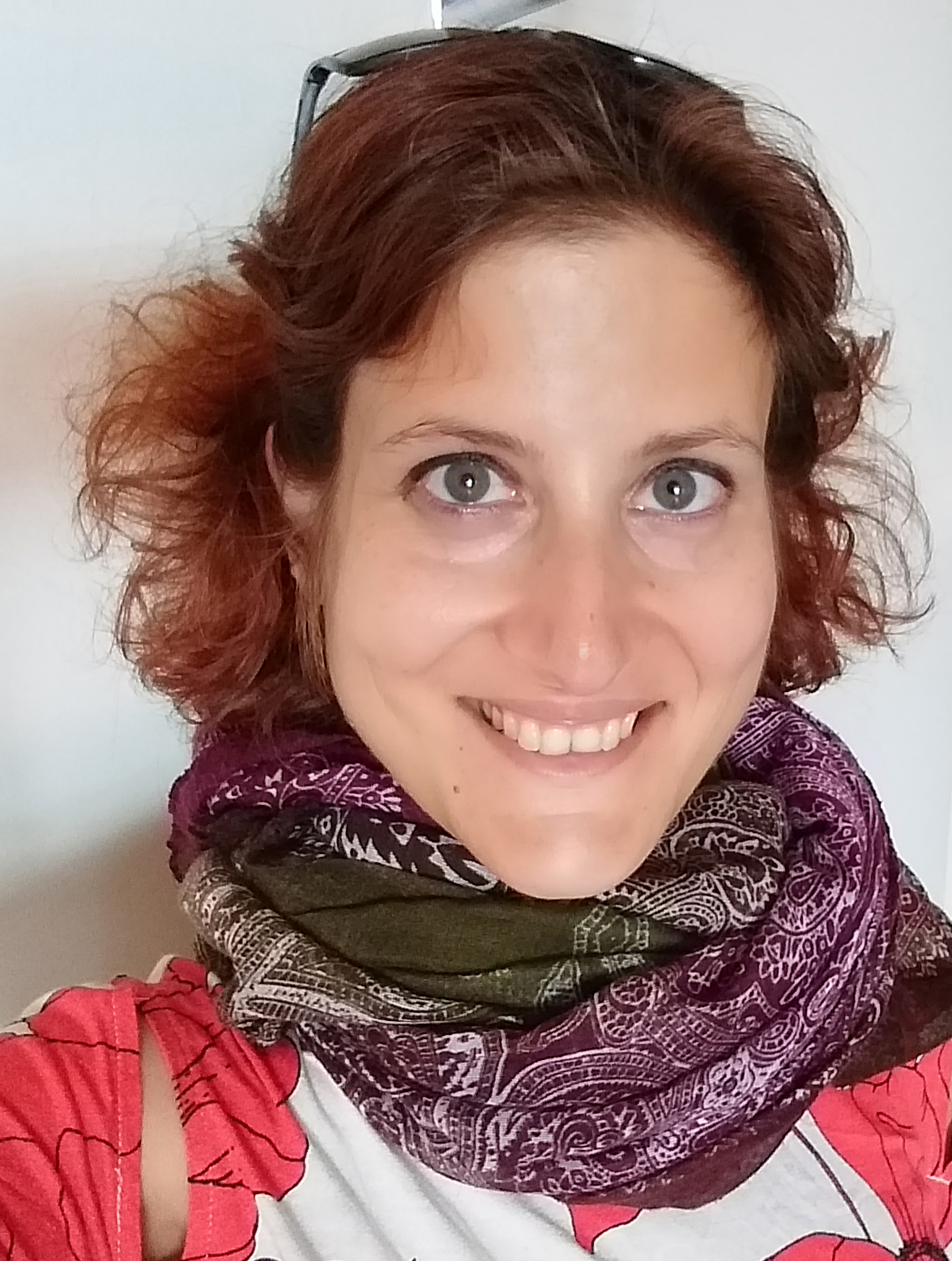
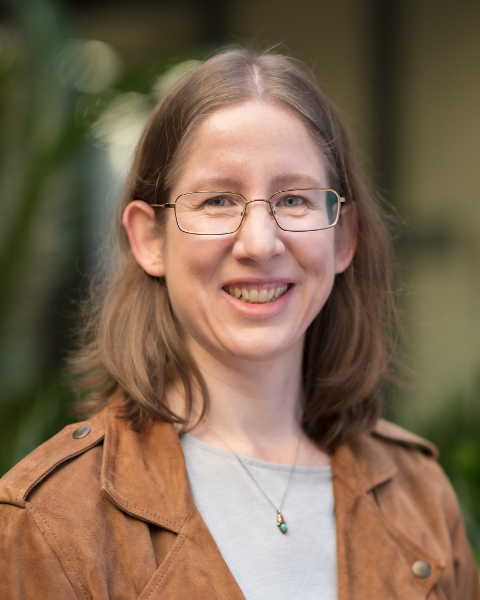
Olga Sorkine-Hornung is a Professor of Computer Science at ETH Zurich and head of the Institute of Visual Computing. She leads the Interactive Geometry Lab, focusing on theoretical and practical advancements in digital content creation, geometry processing, and shape modeling. Current position: ETH Zurich, Department of Computer Science Previous roles: Courant Institute (NYU), Technical University of Berlin Education: BSc and PhD from Tel Aviv University, postdoc at TU Berlin Her research spans shape representation, digital fabrication, computer animation, and fundamental geometry processing. Key contributions include Laplacian surface editing, as-rigid-as-possible deformation, and generalized winding numbers. She works on applications in VR, AR, and autonomous systems. Awards include Test of Time Awards (2024), ACM Fellow (2020), ERC Consolidator Grant (2020), and EUROGRAPHICS Young Researcher Award (2008). She has supervised numerous students and co-developed software libraries like libigl and Instant Meshes . Co-chair roles for SIGGRAPH, Eurographics, and Pacific Graphics Editorial board member for ACM Transactions on Graphics and other journals Keynote speaker at VMV, CVPR, and SIAM conferences Her work bridges mathematical rigor with practical implementation, advancing computer graphics and geometry processing through intuitive algorithms that maintain surface detail while enabling efficient computation.
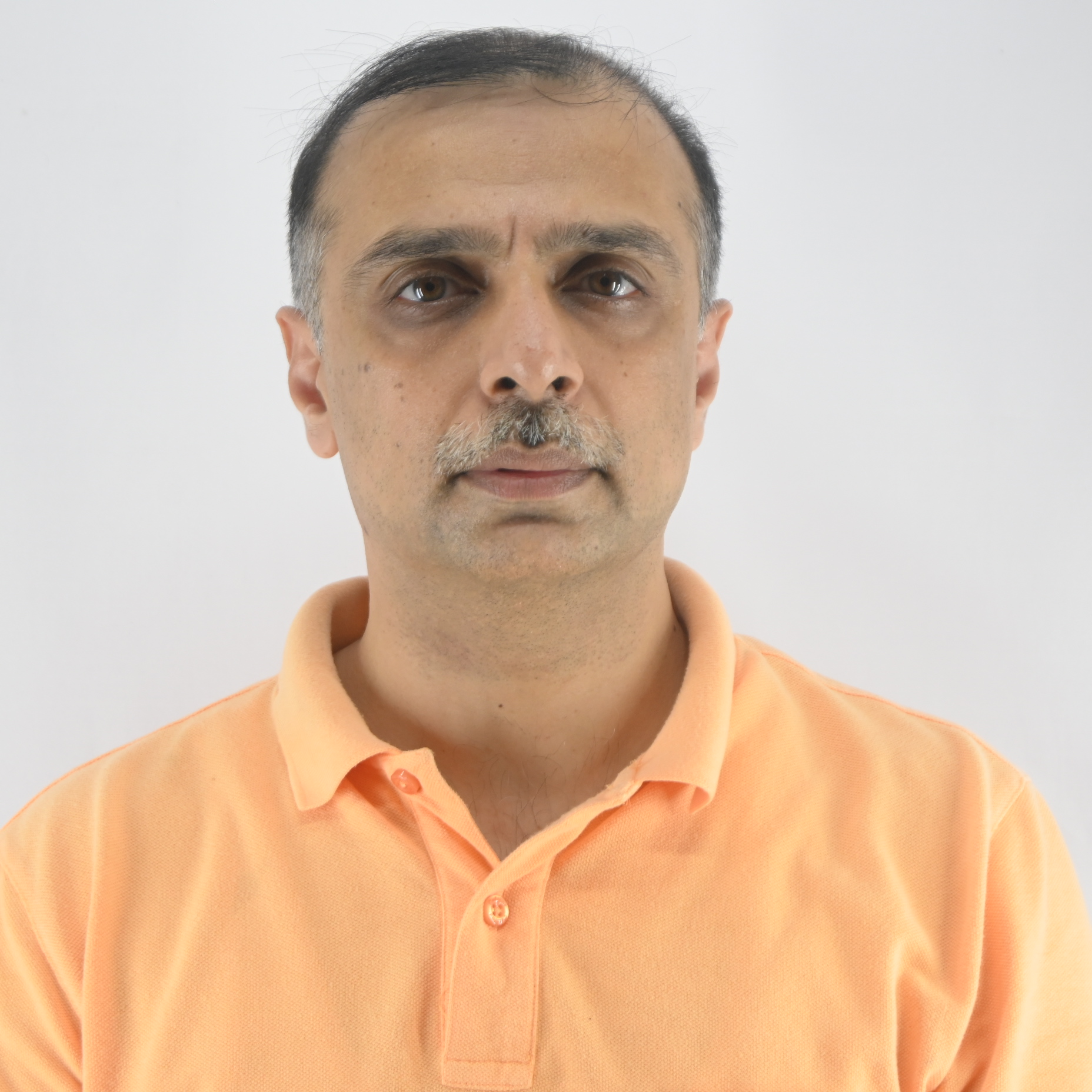
Ajit Rajwade is a Professor at the Department of Computer Science and Engineering , Indian Institute of Technology Bombay. His research spans Artificial Intelligence , Compressed Sensing , and Medical Imaging , with affiliations to the Centre for Machine Intelligence and Data Science and the Koita Centre for Digital Health . Education : PhD in Computer and Information Science and Engineering, University of Florida (2010) MSc in Computer Science, McGill University (2004) BTech in Computer Engineering, University of Pune (2002) His research interests focus on intelligent data acquisition, particularly in neural network analysis , graph signal processing , and medical imaging . He develops compressed sensing algorithms for inverse problems like tomography and MRI reconstruction , alongside applying group testing to pandemic response. Scientific awards include the Prof. S. P. Sukhatme Award (2024) and Departmental Teaching Excellence (2019). His publications demonstrate expertise in image restoration , noise modeling , and epidemiological algorithms . He has advised PhD students like Sabyasachi Ghosh and Jerin Geo James , with a focus on computationally efficient methods in medical imaging and machine learning .
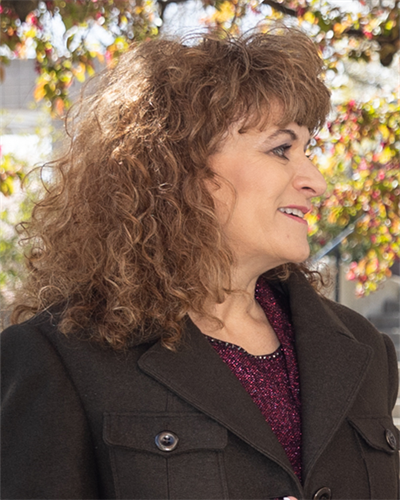
Clark Olson is a Professor in the Division of Computing & Software Systems at the University of Washington Bothell, part of the School of Science, Technology, Engineering & Mathematics. He earned his Ph.D. in Computer Science from UC Berkeley (1994), M.S. in Electrical Engineering (1990), and B.S. in Computer Engineering (1989) from the University of Washington, Seattle. Education: Ph.D. in Computer Science (2017) from University of California, Berkeley M.S. in Electrical Engineering (1990) from University of Washington, Seattle B.S. in Computer Engineering (1989) from University of Washington, Seattle His research focuses on computer vision, robot navigation, and clustering algorithms. He has developed techniques for Mars rover terrain mapping, subspace clustering, and geometric feature matching. His work bridges theory and application in autonomous systems and image analysis. Analysis of his publications reveals expertise in computer vision (8 papers), clustering algorithms (4 papers), and robotics (5 papers). Key subtopics include Mars exploration (3 papers), Hough transforms (3 papers), and probabilistic methods (3 papers). Professor Olson teaches courses ranging from introductory programming (CSS 161-162) to advanced topics in computer vision (CSS 487-587) and algorithm design (CSS 549). He also advises on the CSSE Capstone (CSS 497) projects requiring rigorous prerequisites and structured evaluation criteria.
Dr. Ayşe Nihan AVCI is an Assistant Professor at the Department of Interior Architecture, Faculty of Architecture at Çankaya University. She holds a PhD in Design (2022), Master's in Interior Architecture (2017), and Bachelor's in Interior Architecture (2010) from the same institution. Her research focuses on lighting design's impact on health and well-being, biophilic design principles, and OLED/LED lighting technologies. She has been a full-time faculty member since 2015, progressing from Research Assistant (2015-2022) to Doctoral Researcher (2022-2024) before her current role. Education: PhD in Design, Çankaya University (2017-2022) MSc in Interior Architecture, Çankaya University (2014-2017) BSc in Interior Architecture, Çankaya University (2005-2010) Research Interests: Her work integrates lighting science with human-centric design principles, emphasizing: Salutogenic lighting strategies for health promotion OLED technology's circadian rhythm effects Biophilic daylighting in historical buildings Visual comfort in workplaces Publications: Over 15 peer-reviewed articles (2016–2025) focus on OLED/LED lighting applications, circadian rhythms, and daylighting in heritage buildings. Recent work explores salutogenic design in coffee shop environments and workplace environmental quality. Awards: No specific awards listed, but active in academic service: Member of Aydınlatma Türk Milli Komitesi since 2017 Member of TMMOB İç Mimarlar Odası since 2010 Reviewer for journals including PLANARCH Grants & Projects: Led a university-supported research project (2020–2021) on lighting design's health impacts. Currently teaches courses on lighting design, materials science, and interior design fundamentals.
Xuezhe Ma is an Assistant Professor in the Department of Computer Science at the University of Southern California's Viterbi School of Engineering. Previously, he was a Ph.D. student at Carnegie Mellon University's Language Technologies Institute, where he worked under the supervision of Professor Eduard Hovy. His academic journey includes a Master's degree from Shanghai Jiao Tong University's Center for Brain-like Computing and Machine Intelligence and a Bachelor's degree in Computer Science from the same institution. Ph.D. in Computer Science, Carnegie Mellon University (completed ~2020) M.S. in Brain-like Computing, Shanghai Jiao Tong University B.S. in Computer Science, Shanghai Jiao Tong University Dr. Ma's research spans multiple areas at the intersection of Natural Language Processing and Machine Learning, with particular focus on structured prediction, syntactic and semantic parsing, machine translation, language generation, and deep generative models. His recent work has expanded into vision-language models, large language model architectures, and applications across computer vision tasks. His research combines theoretical foundations with practical implementations, as evidenced by his development of tools like NeuroNLP2 and MaxParser. His publication record shows a clear trajectory from foundational NLP work during his PhD (including papers on dependency parsing and sequence labeling) to more recent contributions in generative models and large language systems. The 15 most recent publications reveal a strong focus on addressing fundamental challenges in generative modeling, context handling, and multimodal integration, with applications spanning literary translation, medical imaging, and news diffusion analysis. AI2 Outstanding Intern Award (2018) Dr. Ma has secured research funding supporting his work in generative models and language technologies, with projects focusing on improving the efficiency and capabilities of large language models. His research group at USC is actively working on next-generation language understanding and generation systems, with particular emphasis on context-aware modeling and multimodal integration. He has established collaborations with industry partners including the Allen Institute for AI and has contributed to open-source projects like Texar. At USC, Dr. Ma leads research in the Information Sciences Institute, directing projects on efficient large language model architectures and multimodal reasoning systems. His lab focuses on developing novel approaches to context handling, model efficiency, and multimodal integration, with applications across diverse domains including healthcare, literary analysis, and news media.
Karen Panetta is a Professor at Tufts University School of Engineering with appointments in Electrical and Computer Engineering, Computer Science, Mechanical Engineering, and Academic Services. She currently serves as Dean of Graduate Education for the School of Engineering and holds the title of Distinguished Professor. Ph.D. in Electrical Engineering, Northeastern University M.S. in Electrical Engineering, Northeastern University B.S. in Computer Engineering, Boston University Dr. Panetta's research focuses on developing efficient algorithms for simulation, modeling, and signal and image processing for security and biomedical applications. Her work brings together artificial intelligence, machine learning, and visual sensing systems to create solutions for robot vision and biomedical imaging. She develops algorithms inspired by the human visual system to enable machines to 'see' like humans, with applications in homeland security, biomedicine, facial recognition, and search and rescue operations. Her research has significant humanitarian applications, addressing global challenges facing women and children. Dr. Panetta has received numerous prestigious awards including induction into the National Academy of Engineering (2023), the Presidential Award for Science and Engineering Education and Mentoring (2011), and the IEEE Award for Distinguished Ethical Practices (2013). She is a fellow of multiple prestigious academies including the National Academy of Inventors, European Academy of Sciences and the Arts, and IEEE. Member, National Academy of Engineering (2023) Presidential Award for Science and Engineering Education and Mentoring (2011) IEEE Award for Distinguished Ethical Practices (2013) Fellow, National Academy of Inventors Fellow, European Academy of Sciences and the Arts Fellow, Asia-Pacific Artificial Intelligence Association As an educator and mentor, Dr. Panetta founded the nationally acclaimed Nerd Girls program to promote engineering to young students, particularly women. She previously served as worldwide director for IEEE Women in Engineering and editor-in-chief of the IEEE Women in Engineering magazine. Her approach to graduate education emphasizes the importance of building strong collaborative relationships between faculty and students, with a focus on proactive communication and documentation of research progress. Dr. Panetta's humanitarian research applies engineering solutions to global challenges, including developing technology to help doctors find cancerous tumors, security screeners find concealed weapons, and law enforcement agencies find criminals and missing children. Her work demonstrates a commitment to 'Doing The Right Thing' by addressing issues affecting populations with limited resources or 'voice' in society.
Dr. Benjamin Busam is a Senior Research Scientist at the Technical University of Munich , affiliated with the Chair for Computer Science Applications in Medicine under Prof. Nassir Navab. Starting September 2025, he will hold the Professorship for Photogrammetry and Remote Sensing at TUM. His career includes leadership roles at FRAMOS Imaging Systems and Huawei Research in London. Education: Mathematics (TUM), Mathematics and Physics (ParisTech, University of Melbourne), PhD in Mathematics (TUM, 2014) His research focuses on 3D computer vision , multi-modal sensor fusion , and their applications in collaborative robotics and augmented reality . He specializes in projective geometry , 6D pose estimation , and neural radiance fields , with a particular emphasis on photometrically challenging environments. Recent publications highlight advancements in 3D scene understanding , neural rendering , and medical imaging , often leveraging machine learning and vision-language models . His work has been recognized through awards like the EMVA Young Professional Award (2015) and Innovation Pioneer of the Year (2019) , along with multiple Outstanding Reviewer distinctions at leading conferences. Dr. Busam has supervised numerous PhD and MSc students on topics including 6D pose estimation , medical augmented reality , and robotic ultrasound , collaborating with institutions like MIT , École Polytechnique , and University of Padova .
Jakoah Brgoch is an Assistant Professor in the Department of Chemistry at the University of Houston. His research focuses on leveraging machine learning to design inorganic compounds for applications in LED-based lighting and superhard materials. Key areas include phosphor development, sparse data handling, and predicting material formation. He leads the Brgoch Group, which emphasizes interdisciplinary approaches combining computational modeling and experimental synthesis. Research interests span luminescent materials, crystal chemistry, and defect engineering, with a particular emphasis on optimizing phosphors for solid-state lighting and high-performance materials under extreme conditions. His work bridges data science and traditional materials discovery to accelerate innovation in optoelectronics and mechanical materials. Recent publications highlight advancements in cyan-emitting nitridation processes, machine learning-guided phosphor discovery, and understanding oxidation resistance in silicides. His team has developed novel phosphors like Na2CaZr2Ge3O12:Cr³⁺ for NIR bioimaging and explored luminescent properties of Sr-based solid solutions. Active in translational research, Dr. Brgoch collaborates on applications like smartphone-readable diagnostic platforms using nanophosphors and point-of-care testing. His lab emphasizes open science practices and has pioneered methods like Single-crystal automated refinement (SCAR) for structural determination.
Dr. Hongli (Julie) Zhu is an Associate Professor in the Department of Mechanical and Industrial Engineering at Northeastern University's College of Engineering. Her research focuses on sustainable energy storage, multifunctional materials, and advanced manufacturing, with emphasis on developing environmentally friendly biomass-derived materials, all solid-state batteries, and flow batteries. She leads the ZHU Lab at Northeastern University, which is dedicated to creating safer, cheaper, and higher performance energy storage solutions while exploring multifunctional materials derived from nature. Dr. Zhu received her PhD from South China University of Technology and Western Michigan University (2004-2009). She conducted postdoctoral research at KTH Royal Institute of Technology in Sweden (2009-2011), focusing on biodegradable and renewable biomaterials from natural wood, followed by additional postdoctoral work at the University of Maryland (2012-2015), where she researched nanocellulose and energy storage. Dr. Zhu's research spans multiple disciplines at the intersection of materials science, energy storage, and sustainable manufacturing. Her work addresses critical challenges in energy storage technology, including developing all solid-state batteries, flow batteries, and high energy density battery systems. She has pioneered research in sustainable biomass-derived materials, particularly investigating cellulose, hemicellulose, and lignin for applications in bendable, implantable, and biocompatible electronics. Her lab also focuses on advanced manufacturing techniques, including high-speed roll-to-roll processing for emerging advanced materials and devices. Analysis of Dr. Zhu's publication record reveals a strong focus on next-generation battery technologies, particularly solid-state systems. Her research demonstrates significant contributions to understanding and improving lithium dendrite suppression, electrode architecture optimization, and interface stabilization in solid-state batteries. She has also made substantial advances in sustainable materials derived from natural resources, developing applications for cellulose nanostructured fibers, paper, and aerogel/hydrogel systems. MRS Communications Early Career Distinguished Presenters and JMR Distinguished Invited Speakers (2024) Selected in Stanford University List of Top 2% Scientists Worldwide (2021-2024) College of Engineering Faculty Fellow (2023) Soren Buus Outstanding Research Award (2022) Women in Materials Science, Advanced Materials (2021 and 2022) Women Scientists at the Forefront of Energy Research, ACS Energy Letters (2020) Innovator of the Year 2013, Maryland Jakob Wallenberg Scholarship, Sweden Dr. Zhu has secured significant research funding from various sources, including the National Science Foundation and Department of Energy. Her current projects include "Uncovering the mechano-electro-chemo mechanism of fresh Li in sulfide based all solid-state batteries through operando studies" (NSF), "Enabling Advanced Electrode Architecture through Printing Technique" (DOE), and "Engineering the Metal Sulfide Interface in All Solid State Batteries through Operando Study" (NSF). She collaborates with industry partners including Rogers Corporation and has developed patented technologies related to sustainable materials and energy storage. Dr. Zhu serves as Codirector of Advanced & Intelligent Manufacturing, Editor of Progress in Materials Science, and on the Editorial Advisory Board of Chemical Society Reviews. The ZHU Lab at Northeastern University is a highly interdisciplinary research group that bridges scales from the nanoscopic to macroscopic and system level. The lab's work has led to numerous patents, including "Natural fiber composites as a low-cost plastic alternative" and "Fire-retardant Nanocellulose Aerogel, and Methods of Preparation and Uses Thereof." The group focuses on making energy storage safer, cheaper, and higher performing while exploring multifunctional materials derived from nature, with particular emphasis on applying high-speed roll-to-roll manufacturing to emerging advanced materials and devices.
Guo Ping is an Associate Professor of Mechanical Engineering at Northwestern University, leading the Advanced Intelligent Manufacturing Laboratory (AIM). His research focuses on precision manufacturing, intelligent metrology via deep learning, and advanced manufacturing applications. He holds a Ph.D. from Northwestern University and a B.S. in Automotive Engineering from Tsinghua University. Education: Ph.D. in Mechanical Engineering, Northwestern University, Evanston, IL B.S. in Automotive Engineering, Tsinghua University, Beijing, China Research Interests: Dr. Guo’s work emphasizes innovations in precision engineering, including ductile-regime machining, smart metrology systems, and robotics-driven manufacturing. Key areas include structural coloration, additive manufacturing, and human-robot collaboration in industrial settings. His lab explores cutting-edge techniques like ultrasonic vibration machining and machine learning for defect detection and process optimization. Publications Trends: Recent work spans AI-driven quality control (e.g., photometric stereo networks), robotic swarm patterning, and wearable fatigue monitoring systems. His research bridges machine learning, robotics, and traditional manufacturing to address scalability and precision challenges. Awards: F.W. Taylor Medal (CIRP, 2023) ASME Kornel F. Ehman Manufacturing Medal (2021) SME Outstanding Young Manufacturing Engineer Award (2020) Professional Service: Associate Editor of the Journal of Manufacturing Processes (2017–present). Active in organizing conferences and reviewing for top journals. Labs & Teams: Directs the AIM Lab, which integrates robotics, AI, and advanced materials to solve problems in precision fabrication and smart manufacturing. Current projects include structural coloration for anti-counterfeiting and fatigue prediction in industrial workers.
Keith Obadike is a Professor in the Department of Art at Cornell University's College of Architecture, Art, and Planning (AAP), where he also serves as Director of Undergraduate Studies. He is an acclaimed interdisciplinary artist and composer, known for his collaborative work with Mendi Obadike, which spans sound art, digital media, public installations, performance, and internet-based projects. His artistic and academic work critically engages with technology, race, history, and identity. Obadike earned a B.A. in Visual Art from North Carolina Central University and an M.F.A. in Sound Design from Yale University. Prior to joining Cornell, he taught at William Paterson University and held visiting positions at Princeton University, Columbia University, Northwestern University, and the Art Institute of Chicago. His research and creative practice focus on sound art, digital media, public art, performance, and collaborative practice , with strong interdisciplinary connections to Afrofuturism, data sonification, and social justice. He explores how sound and technology mediate racial identity, memory, and liberation, notably through the concept of acousmatic blackness , which he and Mendi developed to describe the racial perception of sound when its source is unseen. Obadike’s selected works include large-scale public sound installations such as Blues Speaker (for James Baldwin) , Free/Phase , Compass Song (Times Square Arts), and GuideStar (Space Needle, Seattle). His projects often use data sonification, archival research, and mythic storytelling, blending historical inquiry with futuristic vision. Notable series include the Opera-Masquerades , Americana Suites , and Numbers Station works, which transform databases of violence into sonic experiences. His honors include: Rockefeller New Media Arts Fellowship (2004) Louis Comfort Tiffany Biennial Award (2015) New York Foundation for the Arts Fellowship in Fiction New Music USA Creator Development Fund (2022) Obadike has received commissions and support from institutions such as the Vera List Center, Harlem Stage, Times Square Arts, the American Composers Orchestra, and the Cornell Mui Ho Center for Cities. He has exhibited and performed at The New Museum, The Whitney Museum of American Art, MoMA, and The Studio Museum in Harlem. His writings and publications include contributions to Studies into Darkness (2022), and artist books such as Four Electric Ghosts and Big House / Disclosure (both 2014). He has also released albums like Crosstalk (2008) and created internet artworks such as Blackness for Sale (2001) and The Interaction of Coloreds (2002), which are foundational in new media and critical race art. While specific advisees are not listed, his role as Director of Undergraduate Studies and Professor indicates active mentorship. His work is deeply collaborative, often co-created with Mendi Obadike, and supported by interdisciplinary teams and institutions.
Prof. Anna Franklin is a Professor of Visual Perception and Cognition at the University of Sussex's School of Psychology. She leads the Sussex Colour Group and Sussex Baby Lab , focusing on human color perception, development, and neural representation. Her research combines cognitive psychology, developmental science, and neuroscience to explore how color perception develops, influences aesthetics, and relates to conditions like autism. Key projects include ERC-funded initiatives studying environmental impact on color perception and developing the ColourSpot diagnostic app for childhood color vision deficiency. She also serves as Deputy Director of Research and Knowledge Exchange for the School of Psychology. Education includes a BA from the University of Nottingham and a PhD from the University of Surrey, followed by a postdoctoral fellowship. Her work spans 107+ publications, emphasizing interdisciplinary methods like hyperspectral imaging and fMRI. Collaborations include industry partnerships with ETTA LOVES and COSATTO to apply infant visual preference research in product design. Research grants include European Research Council awards (Starting Grant 2012-2017, Consolidator Grant 2018-2025) and a Proof of Concept grant for ColourSpot . Her labs investigate cross-cultural color categorization, infant aesthetics, and neural correlates of color processing. Future work focuses on calibrating visual systems to environmental statistics and improving early childhood color vision screening.
Dr. Colin Palmer is a Visiting Fellow in the School of Psychology at the University of New South Wales (UNSW), where he conducts research on visual perception with a focus on social features of our sensory environment. His work examines how the brain processes elements like eyes, faces, and behaviors of people around us using visual psychophysics, computational modeling, and 3D graphical rendering. Dr. Palmer completed his Ph.D. in 2016 and Bachelor of Behavioural Neuroscience (Honours) in 2009, both at Monash University. His doctoral research explored how neurocognitive models of sensory processing relate to differences in sensory integration and social cognition in autism. His primary research interests center on understanding the perceptual and neural mechanisms underlying our sensitivity to dynamic social cues, particularly eye and head movements. Dr. Palmer investigates how the visual system extracts basic environmental elements (color, shape, motion) and develops a mechanistic understanding of how our experience of the social world arises from nervous system activity. His work has clinical applications for understanding sensory and social difficulties in conditions like autism and schizophrenia. Dr. Palmer's recent publications reveal a consistent focus on social vision, particularly gaze perception, face processing, and animacy detection. His research increasingly incorporates computational modeling approaches to understand visual perception mechanisms. There's a strong emphasis on how lighting and shading affect face and gaze perception, with growing attention to clinical applications for neurodevelopmental conditions. Dr. Palmer has received recognition for his work through several awards: Emerging Investigator Award, Australasian Cognitive Neuroscience Society, 2017 Postdoctoral presentation award, Australasian Cognitive Neuroscience Society, 2016 Dr. Palmer is actively involved in research supervision and teaching. He teaches PSYC 3221 Vision and Brain and is available to supervise research students. His research is supported by significant funding: ARC Discovery Project (2020-2022): "Extracting meaning from motion" ($492,000) ARC Discovery Early Career Researcher Award (2019-2021): "Human sensitivity to the dynamics of other people's eye movements" ($356,000) Experimental Psychology Society Study Visit Grant (2017): "Testing computational theories of autism spectrum disorder in the social domain" (£2,580) Dr. Palmer collaborates extensively with Professor Colin Clifford at UNSW and maintains international collaborations with researchers in the UK and Australia, particularly on projects related to autism spectrum disorders and social cognition.
Krista A. Ehinger is an Associate Professor and co-lead of the AI group at the University of Melbourne's School of Computing and Information Systems. She holds a PhD from MIT and has held postdoctoral positions at York University and Harvard Medical School. Her research focuses on the intersection of human and computer vision, including scene recognition, visual search, and depth perception. Methodologically, she combines Bayesian models, deep learning, and behavioral experiments like eye tracking. Current projects explore AI applications in space systems (e.g., SpIRIT satellite) and ethical implications of workplace surveillance via computer vision. Recent work emphasizes amodal completion (e.g., reconstructing occluded objects) and AI reasoning systems. She collaborates on medical imaging (TCAM-Diff model), autonomous driving (truck speed detection), and 3D reconstruction. Her lab actively engages in open-source tools like the SUN Database for scene understanding. Professional activities include AI ethics discussions and academic service. She advises students on Masters/PhD projects and contributes to conferences like CVPR and NeurIPS.
Dong Kyoo Shin is a Professor at Sejong University's Department of Computer Science and Engineering, where he has been employed since 1998. He holds a Ph.D. from Texas A&M University (1997), an M.S. from Illinois Institute of Technology (1992), and a B.S. from Seoul National University (1986). His professional background includes roles as a Researcher at the Korea Institute of Defense Analyses (1986-1991) and Senior Researcher at Hyundai Electronics (1997-1998). Shin leads research in cybersecurity, machine learning, and ubiquitous systems , with specialized interests in intrusion detection, data mining, cyber warfare frameworks, and adversarial ML defense. His recent publications focus on AI-driven security solutions, ransomware analysis, and resilience quantification in critical infrastructure. He directs the Cyber Warfare Research Institute (established 2017) and the Multimedia & Internet Lab , focusing on defense technologies and smart systems. His team has executed projects for the Ministry of National Defense, ADD, and ETRI, including cyber threat response systems and military security frameworks. Service includes advisory roles for the Ministry of National Defense, Defense Acquisition Program Administration, and editorial duties for defense journals. He holds patents in malware detection, data encryption, and sensor-based interfaces.