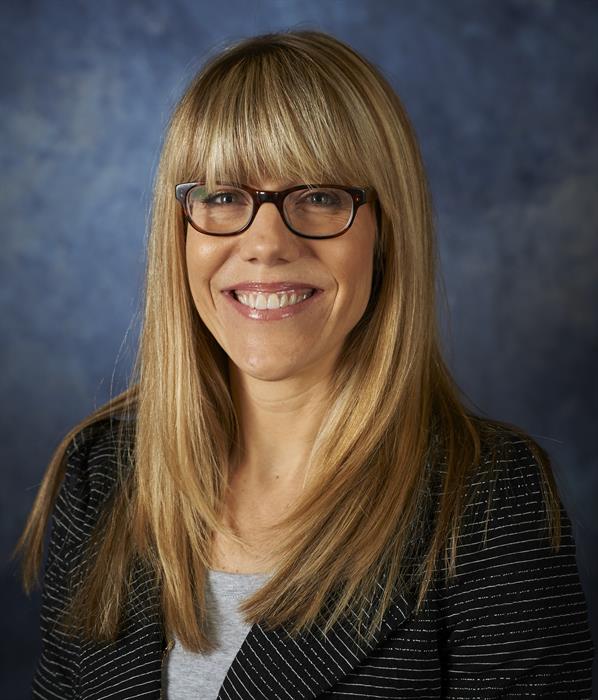
Dr. Vineetha is an Associate Professor at Monash University's School of Engineering, leading the Intelligent Lighting Laboratory . Her research focuses on Solid State Lighting , Color Science , and Circadian Lighting , with industry-driven applications for energy-efficient human-centric lighting systems. Key Projects : Smart Edge Computing Vision Solution using AI (2025-2028) Shaping Global Human Light Behaviour (2023-2025) Enhancing Rosmarinic Acid Production via LEDs (2020-2022) Circadian System Impact Assessment (2020-2024) Light Quality Research (2015-2018) Teaching Innovations : Flipped classrooms Interactive teaching via audience response systems Virtual reality lab training (SLED Project) Scientific Recognition : Best Paper Award (2023) Her work contributes to UN Sustainable Development Goals including Clean Energy , Good Health , and Industry Innovation . She serves as Course Coordinator for Electrical and Computer Systems Engineering, emphasizing rigorous course management improvements.
Maureen Stabio is an Associate Professor in the Department of Cell and Developmental Biology at the University of Colorado Anschutz Medical Campus. She serves as Vice Director of the Modern Human Anatomy Program and specializes in retinal structure-function relationships, neuroanatomy education, and neurodegenerative disease research. PhD in Anatomy and Neurobiology from Boston University School of Medicine (2007) Postdoctoral training in retinal neuroscience at Brown University's Berson Lab Her research focuses on intrinsically photosensitive retinal ganglion cells (ipRGCs) , particularly M4/M5 subtypes involved in conscious vision. She investigates their role in diseases like Familial Dysautonomia (FD) and develops 3D neuroanatomy teaching tools to improve clinical education. Recent publications address retinal topography, FD-related degeneration, and educational neuroscience frameworks. Scientific contributions span: Retinal ganglion cell diversity and circuitry Neuroanatomical visualization techniques Mouse models of neurodegeneration Educational technology assessment She leads the CU Plastinated Organ Library and conducts NSF-funded research on FD retinal degeneration with Montana State University's Lefcort Lab.
Seeta Chaganti is a Professor of English at the University of California, Davis, where she has been a faculty member since 2001. Her scholarly work uniquely bridges medieval literary studies with contemporary social justice movements, focusing on the intersections of Old and Middle English poetry, material culture, and dance. As an active public intellectual, she contributes to critical conversations on race, abolition, and institutional power through both academic and public-facing platforms. Her educational foundation includes: Ph.D. in English from Yale University (2001) M.A. in English from Georgetown University (1995) A.B. in English from Harvard University (1989) Chaganti's research fundamentally reimagines how we understand medieval poetic form through the lens of embodied experience, particularly dance. Her groundbreaking monograph Strange Footing revolutionized the field by demonstrating how medieval audiences experienced poetry as a multimedia phenomenon shaped by dance practices, proposing innovative methods for reenacting medieval dance through contemporary performance frameworks. Her current project, Carceral Angels: An Abolitionist History of the Sheriff , traces the historical triangulation of violence, whiteness, and property from pre-Conquest England to modern America, positioning medieval studies as vital to contemporary abolitionist movements. Her scholarship consistently engages with critical race theory, demonstrating how medieval literary traditions inform and complicate modern racial formations. Analysis of her recent publications reveals a decisive turn toward interdisciplinary work connecting medieval textual analysis with urgent contemporary issues. Her post-2018 output increasingly centers abolitionist frameworks, critical race theory, and institutional critique, moving beyond traditional literary analysis to examine how medieval cultural forms underpin systemic violence in Anglophone modernity. This trajectory reflects her commitment to making medieval studies relevant to current social justice struggles, particularly through collaborations with Race before Race and Medievalists of Color. Her exceptional contributions have been recognized with prestigious awards including: Modern Language Association Aldo and Jeanne Scaglione Prize for Comparative Literary Studies (for Strange Footing ) Phi Beta Kappa Northern California Association Excellence in Teaching Award (2023) UC Davis Academic Senate Distinguished Teaching Award (2014) Outstanding Mentor Award from the UC Davis Consortium for Women and Research (2012) Chaganti has demonstrated significant leadership through service as Trustee of the New Chaucer Society and Councillor of the Medieval Academy of America, while her current roles on the Executive Board of Race before Race and as a member of Medievalists of Color reflect her commitment to transforming the field through anti-racist scholarship and institutional change. Her mentorship extends beyond the classroom to shaping professional discourse through these organizations, where she actively supports underrepresented scholars and promotes inclusive approaches to medieval studies. These collaborative networks function as her primary scholarly 'labs,' fostering interdisciplinary dialogue that challenges traditional period boundaries and disciplinary silos.
Viviana Firpo is a Lecturer at the University of Palermo within the School of Medicine and Surgery , affiliated with the Department of Biomedicine, Neuroscience and Advanced Diagnostics . Her research focuses on the intersection of visual processing , migraine pathophysiology , and electrophysiology , as evidenced by her clinical studies and conference contributions. Research areas: Neuroscience, Ophthalmology, Neurological Disorders Publications highlight interdisciplinary work in neuro-ophthalmology and sensory dysfunction in migraines Email: viviana.firpo@unipa.it Her recent publications (2015-2018) demonstrate expertise in electrophysiological analysis of visual cortex dysfunction in migraines and clinical outcomes of intraocular lens implants. Key themes include neurovascular coupling , sensory processing , and neuro-ophthalmology . Scientific awards : No awards explicitly mentioned in available texts
Fabien Pierre is an Associate Professor at the University of Lorraine in Nancy, France, affiliated with the MAGRIT/Tangram team at LORIA (Lorrain Research Laboratory in Computer Science and its Applications), a joint research unit between CNRS, Inria, and the University of Lorraine. He has been a lecturer at the University of Lorraine since 2017 and previously served as Head of the DUT/BUT MMI (Multimedia and Internet Professions) department at the IUT of Saint Dié from September 2019 to August 2022. His educational background includes: Doctor of Applied Mathematics from the University of Bordeaux (2016) Master 2 in Signal and Image Processing, with honors (2013) Master 2 in Fundamental Mathematics, with honors (2011) Mathematics Aggregation, specializing in Probability and Statistics (2012) Fabien Pierre's research focuses on the intersection of mathematics, computer science, and image processing. His work primarily centers on image and video colorization, enhancement, and restoration techniques. He has developed innovative approaches combining variational methods with deep learning for various applications including medical imaging, film restoration, and video processing. His research has significant applications in medical diagnostics (particularly for aneurysm detection), quality control in industrial settings, and cultural heritage preservation through film restoration. His recent publications (2021-2023) demonstrate a clear trend toward applying deep learning to medical imaging challenges, particularly in aneurysm detection, while continuing to advance colorization techniques with novel hybrid approaches that combine traditional variational methods with modern neural network architectures. This evolution reflects his ability to adapt mathematical frameworks to leverage emerging AI technologies. As a scientific manager, he leads the ANR Arcé project focused on Automatic Colorization of Videos. His software contributions include COLOCIEL, a graphical interface for image colorization, and various Matlab toolboxes for contrast enhancement and image processing. He actively mentors the next generation of researchers, having co-supervised several doctoral theses and internships. His current advisee is Nicolas Maignan, while he has previously supervised Arthur Renaudeau, Youssef Assis, and Gaetano Agazzotti. His teaching portfolio spans DUT-level courses in scientific culture, algorithms, and JavaScript, as well as Master's level instruction in deterministic tools and models for information systems. Based at INRIA Nancy Grand Est, Pierre operates within a robust research ecosystem that bridges theoretical mathematics with practical computer vision applications across multiple domains.
Ronan FABLET is a Professor in the Mathematical and Electrical Engineering (MEE) department at IMT Atlantique, a member of the Institut Mines-Télécom. His research focuses on signal processing, computer vision, and machine learning applied to ocean remote sensing and geophysical data analysis. He has held academic and research positions since 2002, including postdoctoral fellowships and industry collaborations. Education and Career: Bachelor's degree from École Nationale Supérieure de l'Aéronautique et de l'Espace (SUPAERO), France (1997) PhD in Signal Processing and Telecommunications from University of Rennes (2001) Postdoctoral fellowship at Brown University, USA (2002) Researcher at Ifremer Brest (2003–2007) Associate Professor at Telecom Bretagne (2008–2012) Professor at IMT Atlantique since 2012 Visiting researcher at IRD/IMARPE (Peru) and IMEDEA (Spain) Research Interests: Dr. FABLET specializes in data assimilation, neural networks for geophysical dynamics, and ocean-atmosphere interactions. His work integrates machine learning with physical models to enhance predictions of climate phenomena like the Atlantic Meridional Overturning Circulation (AMOC) and ocean eddies. Key areas include: Neural data assimilation for regime shift monitoring SWOT satellite data integration for ocean mapping Machine learning for particle trajectory prediction and sediment trap analysis Uncertainty quantification in high-dimensional systems Recent Contributions: His team develops frameworks like 4DVarNet for spatiotemporal interpolation of satellite and in situ data, advancing applications in ocean color reconstruction, wind speed estimation, and submesoscale dynamics. Published work emphasizes hybrid modeling, end-to-end learning, and uncertainty-aware systems. Labs and Collaborations: Active in the Lab-STICC (Laboratoire des sciences et techniques de l'information, de la communication et de la connaissance) and the ODYSSEY team (Océan Dynamique Observations Analyse). Collaborates with institutions like Mercator Ocean International and Naval Group on operational oceanography and maritime applications.
Dr. Mohamed Khabou serves as a Professor in the Department of Electrical and Computer Engineering and Dean of the Hal Marcus College of Science and Engineering at the University of West Florida. He holds a Ph.D., M.S., and B.S. in Electrical Engineering from the University of Missouri. His research spans multi-component image analysis, gender equity in engineering, historical artifact digitization, and distance learning impact analysis. He has authored over 30 publications in IEEE Transactions and other journals, and his work includes systems for mosaic image indexing, actigraphy signal analysis, and land mine detection. Dr. Khabou has mentored over 60 engineering capstone projects, many of which achieved regional/national recognition. He teaches Microprocessor Applications, Digital Logic, and Pattern Recognition courses. His 2013 Faculty Excellence in Teaching Award reflects his dedication to pedagogy. Collaborative research areas include underrepresentation of women in engineering and interactive distance-learning laboratory development. Key research themes include spectral geometry for shape recognition, fuzzy logic applications in cultural heritage preservation, and adaptive machine learning systems. His work bridges theoretical foundations (eigenvalue analysis, Laplacian operators) with practical applications in education technology and biomedical signal processing.
Dr. Güven Kandemir is a Researcher at the Faculty of Behavioural and Movement Sciences, Department of Cognitive Psychology at Vrije Universiteit Amsterdam, and affiliated with IBBA. His research focuses on cognitive neuroscience, particularly working memory mechanisms, neural correlates of memory encoding and maintenance, and sensory processing. He has contributed to understanding cross-modal memory access, visual cortex activity during memory tasks, and the impact of emotional stimuli on memory consolidation. Research Interests : Working memory encoding and maintenance processes Neural correlates of sensory and visual memory Impact of peripheral vs. foveal stimuli on cognitive performance Electroencephalography (EEG) applications in cognitive research Interactions between emotional stimuli and memory consolidation Recent Research Trends : His articles explore how sensory modalities (auditory/visual) interact with working memory, the role of impulse perturbation in revealing memory states, and the neural underpinnings of peripheral vs. central visual processing in memory tasks. Recent work emphasizes activity-quiescent states in working memory and cross-modal associative mechanisms. Grants & Projects : Contributed to the PERISCOPE project (2017-2024), focusing on integrating peripheral vision into visual search processes. Served as Project Researcher in this multidisciplinary initiative. Labs/Teams : Engaged in collaborative research within the Cognitive Psychology unit at VU Amsterdam, contributing to projects on sensory and working memory systems.
Sina Zarrieß is a Professor of Computational Linguistics at the University of Bielefeld, affiliated with the Faculty for Linguistics and Literature Studies. His research focuses on computational models of language use, with applications in natural language generation, dialogue systems, and language-vision integration. He leads the Computational Linguistics Bielefeld group and collaborates on interdisciplinary projects in ecology, hate speech analysis, and multimodal interaction. Research interests include language model architecture optimization, pragmatic reasoning in generation, and ethical NLP. He actively contributes to workshops such as ACL, EMNLP, and NLP4Ecology, publishing on topics like character-based LMs, gaze-driven hate speech detection, and visualization-oriented dialog systems. His work bridges theoretical linguistics with applied machine learning, emphasizing interpretability and real-world impact. Notable projects include developing BabyLM character-based models, studying gender-inclusive language benchmarks (SlayQA), and creating tools like VIST5 for adaptive visualization dialog. He explores how LMs encode linguistic principles like Maximize Presupposition! and investigates zero-shot learning for novel object categories. Current research trends show a focus on model efficiency (e.g., sentence selection for classification), multimodal grounding (e.g., scene context in visual tasks), and human-AI interaction dynamics (e.g., explanation effects on user perception). Despite prolific publishing, no specific scientific awards are mentioned in the provided materials. Advising and grants are not explicitly detailed, though his extensive co-authorship network indicates active mentoring. The Computational Linguistics Bielefeld group maintains open research directions in visual question answering, poetry generation diversity, and historical hate speech evolution studies.
Gideon Caplovitz is an Assistant Professor of Psychology at the University of Nevada, Reno, specializing in cognitive neuroscience and visual perception. He holds a Ph.D. in Cognitive Neuroscience from Dartmouth College (2008), an M.S. in Mathematics from the Courant Institute (1998), and a B.A. in Computational Mathematics from UC Santa Cruz (1995). His research focuses on neural mechanisms underlying visual perception, integrating behavioral experiments with neuroimaging techniques. He investigates interactions between form/motion processing, local/global visual integration, and the influence of consciousness on perceptual systems. Caplovitz leads projects at the Center for Integrative Neuroscience and has secured grants from the NSF and NIH. His work explores questions such as how form-motion interactions reveal brain organization and how conscious experiences modulate perceptual processes. He has expertise in computational modeling from prior internships at institutions like AT&T Bell Labs and the Naval Undersea Warfare Center. His publications span journals like Neuropsychologia , Cerebral Cortex , and Consciousness & Cognition , addressing topics from visual working memory to synesthesia. He currently advises graduate students in the Cognitive and Brain Sciences program, focusing on interdisciplinary approaches to understanding the visual brain.
Abel João Padrão Gomes is a Full Professor at the University of Beira Interior (UBI), affiliated with the Department of Computer Science and the Institute of Telecommunications. He holds roles as a researcher and director of the Creative Computing and Virtual Reality program. His expertise spans geometric computing, computer graphics, medical imaging, and virtual reality. Gomes is a member of IEEE, ACM, and Eurographics, and serves as an associate editor for Computers & Graphics and the International Journal of Computer Games Technology . Completed 16 PhD supervisions and currently supervising 2 PhD projects focusing on deep learning applications in medical imaging and 3D point cloud processing. Recipient of awards including the 2021 Sigma Xi Full Member recognition and a 2015 Best Paper Award. Key research projects include QUANTUM-TOX (computational toxicology with AI) and miraASSETS (structural management of industrial assets). His work bridges theoretical advancements with practical applications in healthcare, gaming, and engineering.
Simona Buetti is a Research Professor in the Department of Psychology at the University of Illinois. She holds a PhD from the University of Geneva (Switzerland) and serves as a Faculty Fellow at the Center for Innovation in Teaching and Learning. Her research focuses on visual attention, employing methodologies such as behavioral psychophysics, eye-tracking, and computational modeling. Her work aims to understand how attention guides visual processing, particularly in complex scenes. Dr. Buetti has received prestigious awards including the 2019 NSF Grant (as PI) for developing the TCAS Toolbox, the 2016 BRIDGE Grant, and the 2014 NARSAD Young Investigator Grant. She teaches courses like Psyc230 (Perception and Sensory Processes) and Psyc396 (The Attentive Mind), integrating global educational practices through programs like the Engineering Research Summer School. Her research explores topics such as color-feature guidance in visual search, parallel processing dynamics, and the interplay between emotion and attention. Collaborations span institutions worldwide, with notable studies on online eye-tracking validation and reconciling emotional effects on memory. She leads the VisionLab, advancing tools and theories in visual cognition.
Margaret M. Fleck is a Teaching Professor at the Siebel School of Computing and Data Science , University of Illinois, Urbana-Champaign. She holds a Ph.D. in Electrical Engineering and Computer Science from MIT (1988), an M.S. from MIT (1985), and a B.A. in Linguistics from Yale University (1982). Her research focuses on computational linguistics, unsupervised word segmentation, prosodic features in language modeling, and computer vision. She has contributed to systems like Envision and Schwa , which integrate programming language support for AI and linguistic research. Teaching is central to her work, with extensive development of courses like Discrete Structures (CS 173) and Artificial Intelligence (CS 440) . She emphasizes scalable educational materials, including textbooks, video lectures, and automated assessments. Fleck received the Rose Teaching Award (2019) for her pedagogical innovations. Her former advisees include faculty members such as Ramesh Raskar (MIT), Sang-Kyun Kim (Myongji University), and Cassandra Jacobs (SUNY Buffalo). She has supervised numerous PhD, MS, and undergraduate projects across linguistics, computer vision, and AI. Fleck’s work also extends to interdisciplinary systems, such as Rememberer for museum visit tracking and Rememberer for annotating personal experiences.
Chi Ho Chan is a Research Fellow at the University of Surrey's Centre for Vision, Speech and Signal Processing (CVSSP). His work focuses on biometrics, computer vision, and pattern recognition with emphasis on face recognition, 3D morphable models, and illumination-invariant systems. He has contributed to developing robust facial recognition techniques under varying lighting conditions and resolutions, as well as speaker authentication using lip dynamics. Research interests include: 3D face reconstruction and pose/illumination normalization Deep learning for cross-resolution face recognition Biometric performance analysis over time Kernel fusion of visual descriptors Optimization of 3D morphable models for low-resolution images Key publications explore resolution-aware 3D models (2012), NPT-loss for face recognition (2022), and adaptive biometric systems (2015). His work bridges theoretical computer vision with practical applications in surveillance and authentication systems.
Wayne Hayes is an Associate Professor at the Donald Bren School of Information and Computer Sciences (ICS) at the University of California, Irvine. His research focuses on computational methods applied to biological networks, astrophysical image analysis, and algorithm design. He holds a Ph.D. from the University of Toronto (2001) and has held visiting positions at Oxford University and Imperial College London. His work includes developing the SANA algorithm for cross-species protein function prediction via network alignment and SpArcFiRe for spiral galaxy structure analysis. Hayes' research bridges computer science, biology, and astrophysics, emphasizing interdisciplinary applications like drug targeting through network alignment. His team has advised numerous graduate and undergraduate researchers, contributing to impactful publications in systems biology and computational astrophysics. Education: Ph.D., University of Toronto, 2001; Postdoctoral work at University of Maryland and Mount Sinai Hospital. Visiting Fellowships: Oxford University (2010), Imperial College London (2009–2010). Research Interests: Computational Science, Topological Network Alignment, Biological Network Analysis, Galaxy Morphology, Algorithmic Design. Recent work highlights include SANA's successful cross-species protein function predictions and SpArcFiRe's automated spiral galaxy arm detection. His lab also develops tools like CALFIN for glacial terminus tracking and PoseBench3D for human pose estimation. Hayes emphasizes reproducibility and rigorous validation in computational methods, contributing to both foundational theory and applied tools in his fields.