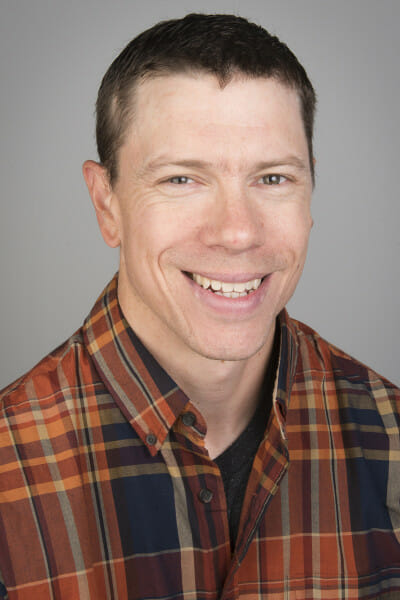
Devin Hubbard is a Teaching Professor in the Lampe Joint Department of Biomedical Engineering at UNC Chapel Hill and NC State University. His pedagogical approach emphasizes interactive methods for medical device innovation using clinical immersion and quality systems. Research focuses on: Hardware/software for dermal wound assessment Color/feature recognition in 2D/3D wound imaging Quantitative clinical evaluation tools Low-resource healthcare applications Publications demonstrate interdisciplinary work spanning medical education (design thinking pedagogy) and biomedical instrumentation (transducer calibration systems). His educational research explores rural experiential learning and creative problem-solving frameworks.
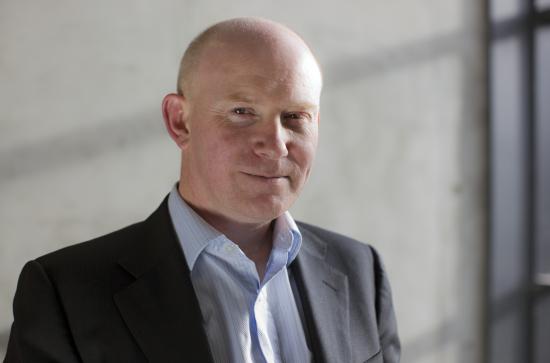
Martin Whiting is a Professor of Animal Behaviour at Macquarie University's School of Natural Sciences. His research focuses on the evolution of sociality, cognition in animals, and animal communication, primarily using lizards as model systems. His work integrates field and lab-based approaches to understand how behavior influences fitness and its underlying mechanisms. Research Interests: Evolution of social systems, cognitive traits in reptiles and amphibians, effects of environmental factors on behavior and learning. Key Projects: Investigating transitions in social complexity in Egernia lizards, cultural transmission in reptiles, and impacts of incubation temperature on cognitive development. Recent publications highlight studies on cultural behavior in reptiles, effects of elevated temperatures on lizard learning, and predator-prey dynamics involving monitor lizards. Collaborations span global institutions, emphasizing comparative and evolutionary approaches. Whiting leads a dynamic research group and has contributed to over 200 publications, advancing understanding of behavioral ecology and conservation implications.
Paulo Jorge Gama Mota is an Associate Professor at the Faculty of Sciences and Technology, University of Coimbra. His research focuses on animal communication, mate choice behavior, animal cognition, and the behavioral ecology of human altruism and cooperation. He also investigates great ape behavior in African natural populations through field and laboratory studies. Mota coordinates the establishment of the TwinLab of Cabinda and leads projects like 'Why be so colorful?' exploring sexual selection in serins and the evolutionary genetics of coloration. His work integrates behavioral, ecological, and evolutionary perspectives to understand adaptive behaviors and their cognitive foundations. Research Projects: VOCAL (vocal learning in birds), 'Why be so colorful?' (serin coloration evolution), and the 'History of Science in Coimbra University (1547-1933).' Key Themes: Behavioral ecology, evolutionary mechanisms, human societal differences, and conservation implications of invasive species.
Hung Viet Nguyen is a Research Fellow at the 5G Innovation Centre, University of Surrey, UK, within the Institute for Communication Systems. He holds a PhD in Electronics and Electrical Engineering from the University of Southampton (2013), an MEng in Telecommunications from Asian Institute of Technology (2002), and a BEng in Electronics & Telecommunications from Hanoi University of Science and Technology (1999). His research focuses on quantum communications, including quantum error correction, quantum algorithms, and quantum key distribution (QKD), alongside classical domains like cooperative communications, channel coding, and network coding. He has contributed to EU-funded projects such as CONCERTO and OPTIMIX, and his work bridges quantum and classical information systems. Key research areas include: - Quantum error correction codes and topological codes (e.g., surface codes, color codes) - Quantum network coding and quantum channel capacities - Network-coding aided cooperative communications - Applications in 5G-NR and future wireless systems Publications highlight advancements in QKD protocols over free-space optics, quantum turbo codes for memory channels, and quantum-assisted routing optimization. His work on classical-to-quantum coding isomers and Pareto-optimal routing algorithms underscores interdisciplinary innovation. Nguyen’s contributions also extend to MIMO systems, antenna optimization, and energy-efficient ad hoc networks. Labs/Teams: Active member of the 5G Innovation Centre and collaborator with the School of Electronics & Computer Science, University of Southampton.
Dr. Michael Downey is a Professor in the Department of Cellular and Molecular Medicine at the University of Ottawa’s Faculty of Medicine. He holds a PhD from the University of Toronto and completed postdoctoral training at the University of California, San Francisco. His research focuses on non-histone protein acetylation, polyphosphate biology, and their roles in cellular stress responses and disease pathologies. His lab uses yeast and human cell culture models to explore how acetylation and polyphosphate signaling regulate metabolism, genome stability, and ribosome biogenesis. Key research interests include the functional consequences of acetylome regulation by HAT/HDAC enzymes, the interplay between polyphosphate and protein modifications in prokaryotic/eukaryotic systems, and translational applications for cancer and aging-related therapies. The lab has received funding from the Ontario Ministry of Research and Innovation, including an Early Researcher Award supporting community outreach initiatives like the ‘SUPER COOL SCIENTISTS’ coloring book project. Dr. Downey actively collaborates on projects integrating genomic screens, mass spectrometry, and functional assays to map acetylation/polyphosphate networks. His team participates in public engagement activities such as annual Science Days at York Street Public School and fundraising for muscular dystrophy research. Future work aims to bridge yeast and mammalian studies to develop diagnostic/treatment strategies targeting acetylation pathways.
Associate Professor Karen Cheney is a marine ecologist at The University of Queensland, leading the Marine Sensory Ecology Group and serving as Academic Director of the Moreton Bay Research Station. Her work focuses on predator-prey interactions, animal signaling, and color pattern evolution in marine organisms, particularly nudibranchs and reef fish. She co-leads conservation projects on seahorse conservation and shellfish reef restoration in SE Queensland, and is Deputy Director of the Centre for Marine Science. Education: BSc(Hons) from The University of Manchester; PhD from University of East Anglia; Postgraduate Diploma in Higher Education from UQ. Roles: Director of Centre for Marine Science; Affiliate Associate Professor at Queensland Brain Institute. Her research integrates sensory, behavioral, and chemical ecology using innovative methods like underwater spectral analysis and CRISPR technology. Key areas include aposematic signaling in nudibranchs, UV vision in anemonefishes, and the ecological role of color patterns in predator avoidance. She collaborates widely on projects addressing marine conservation and visual system evolution. Recent work explores how chemical defenses correlate with color patterns, UV vision’s role in fish behavior, and the application of quantitative color analysis (QCPA) to ecological studies. Projects also investigate the impacts of cleaner fish on reef ecosystems and the functional significance of structural coloration in marine species. Her lab develops cutting-edge tools like multi-channel LED displays for UV perception studies and automated workflows for color pattern analysis. These innovations advance understanding of how marine organisms perceive and communicate within their environments.
Dr. Harold Zakon is a Professor in the College of Natural Sciences at The University of Texas at Austin, affiliated with the Section of Neurobiology. His research focuses on the function, regulation, and evolution of voltage-dependent ion channels, using electric fish as a primary model organism. His lab investigates how these channels are modulated by hormones and social factors to produce precise electric organ discharges (EODs) for communication and behavior. His work spans neuroethology, molecular evolution, and comparative physiology, with recent publications examining potassium channel voltage dependence, toxin resistance evolution in poison frogs, and thermosensory adaptations in Antarctic fishes. Current projects explore gene regulation in electric organs and the evolutionary origins of neural system complexity. The Zakon lab utilizes freely behaving electric fish to study dynamic biophysical events in excitable membranes, linking cellular mechanisms to whole-animal behavior. Their research has implications for understanding evolutionary convergence, neurotoxin resistance, and sensory-motor adaptation.
Prof. Anja Widdig is a Professor of Behavioural Ecology at the University of Leipzig and a Bridge Professor between the University of Leipzig and the Max Planck Institute for Evolutionary Anthropology. She leads the Research Group 'Primate Behavioural Ecology' and the Junior Research Group on Primate Kin Selection. Her affiliations include the Department of Primate Behavior and Evolution at the Max Planck Institute and the Institute of Biology at the University of Leipzig. She is also Co-Director of the Macaca Nigra Project in Indonesia. Education: Ph.D. in Ethology (Humboldt University Berlin, 2002), Diploma in Biology (focus Zoology/Ethology, Humboldt University Berlin, 1996), and undergraduate studies in Biology at Humboldt University Berlin (1990-1992) and the University of Edinburgh, UK (1993-1994). Research Interests: Primatology, behavioral ecology, genetics of social behavior, primate conservation, olfactory communication, and the social dynamics of primates. Her work integrates field studies, genetic analysis, and experimental approaches to understand primate behavior and adaptation. Publications (2020-2025) focus on primate social behavior, genetic relatedness, conservation, and cognitive abilities. Key themes include dominance hierarchies, reproductive strategies, and the impact of habitat changes on endangered species. Awards: Emmy Noether Fellow (DFG, 2004), Katharina-Heinroth Prize (1997), and recognition in AcademiaNet (2010). She serves on editorial boards of journals like Behavioral Ecology and Sociobiology and PLoS ONE . Grants and Projects: Funded by DFG (Emmy Noether Programme), ERC, and the Leakey Foundation. Collaborations include the Macaca Nigra Project in Indonesia and the MacaqueNet initiative for comparative research. Labs/Teams: Leads the Primate Behavioural Ecology group and collaborates internationally on projects like the study of crested macaques and rhesus macaques.
Professor Guillaume Chomicki holds a dual appointment as a Professor and NERC & ERC-UKRI fellow in the Department of Biosciences at Durham University. His research focuses on mutualism evolution, plant domestication, and symbiotic relationships. He has held prestigious fellowships including the Glasstone Research fellowship (Oxford) and Junior Research fellowship (Queen’s College, Oxford). Chomicki’s work combines field experiments, comparative genomics, and 3D imaging to study mutualistic systems like ant/plant farming and watermelon domestication. Education: BSc in Plant Sciences (University of Manchester, 2012), PhD in Biology (Ludwig Maximilian University of Munich, 2016). He is also affiliated as a visiting researcher at the Chinese Academy of Sciences and Royal Botanic Gardens, Kew. Research interests emphasize symbiotic relationships' evolutionary dynamics, including how mutualisms stabilize or breakdown over time. Notable projects include the ERC-funded 'BREAKDOWN' project (2023-2028) and NERC's 'Drivers of Major Transitions in Mutualistic Dependence' (2019-2026). His discoveries include identifying the first obligate plant farming by ants (Nature Plants 2016) and clarifying watermelon domestication origins via ancient DNA analysis. Scientific awards include NERC & ERC-UKRI fellowship and multiple grants from DFG, National Geographic, and UKRI. His work spans over 50 peer-reviewed articles, with recent contributions on symbiotic compartmentalization, ant-farmed plant genomics, and ancient Citrullus seed analysis. Advises Nathaniel Holmes (MSc) and collaborates widely in international teams. Active in labs focusing on phylogenomics, functional morphology, and symbiotic evolution.
Prof. Ray O'Neill is an experimental physicist at Maynooth University's Department of Experimental Physics, affiliated with the Faculty of Science & Engineering and Hamilton Institute. He holds the title of Associate Dean of Science and Engineering, with prior roles including Dean of the Faculty of Science, Dean of Research and Graduate Studies, and Vice President for Innovation (2013-2016). His research spans atomic and molecular physics, quantum entanglement, biomedical imaging, and innovation systems. O'Neill earned his BSc and PhD in Physics from Queen’s University Belfast, joining Maynooth in 1993. He contributed to Ireland’s first national research integrity policy (2011-2013) and led the Maynooth University Curriculum Commission (2014-2016). Education: BSc in Physics, Queen’s University Belfast PhD in Atomic and Molecular Physics, Queen’s University Belfast Research Interests: Combines foundational physics (electron impact excitation, quantum systems) with applied work in near-infrared biomedical imaging and innovation systems. Recent focus on data analytics and machine learning applications. Publications Overview: Over 30 peer-reviewed articles across atomic physics, optics, and biomedical engineering. Key topics include laser plasma dynamics, multiphoton ionization, and brain-computer interface technologies. Administrative Contributions: Chaired national research integrity working group (2011-2013) Member of European Universities Association Research Policy Group Developed university-wide curriculum reforms as Curriculum Commission Chair Labs/Teams: Active in Hamilton Institute collaborations, focusing on interdisciplinary innovation and applied physics research.
Dr Sven Buder is a Research Fellow at the Research School of Astronomy & Astrophysics, Australian National University (ANU). He holds a PhD in Astrophysics from the University of Heidelberg. His expertise spans Galactic Archaeology and Stellar Spectroscopy, focusing on understanding the formation and evolution of the Milky Way through chemical abundance analysis and stellar dynamics. His research leverages large-scale surveys like GALAH (GALactic Archaeology with HERMES) to study stellar populations, accretion events, and the chemical evolution of the Galaxy. Key projects include tracing the Milky Way’s history via RR Lyrae stars and investigating neutron-capture elements’ roles in galactic disc evolution. Buder’s work has produced over 90 peer-reviewed publications, with notable contributions to understanding lithium abundance patterns, stellar companions of exoplanet hosts, and the impact of mergers like Gaia-Sausage-Enceladus on the Milky Way’s structure. He advises two PhD students and collaborates on instrumental projects through the Australian National University’s Astronomy and Astrophysics facilities. His research integrates observational data with advanced simulations, contributing to interdisciplinary efforts in galactic dynamics and stellar astrophysics.
Pierre Jouchet is a Research Fellow in the Department of Chemistry at Stanford University, affiliated with the School of Humanities and Sciences. He is associated with the CMAD, ChEM-H, and SSRL programs. His work focuses on advancing super-resolution microscopy techniques and understanding actin-driven cellular processes. Research interests include developing novel optical methods for high-resolution imaging of biological systems, with emphasis on single-molecule localization microscopy (SMLM), deep learning applications in microscopy, and the role of nanotopography in cell adhesion. His contributions bridge biophysics, optics, and biomedical engineering. Recent work explores time-modulated excitation, DMD-based microscopy, and PSF engineering to enhance imaging precision. Collaborations span interdisciplinary teams at Stanford and affiliated institutions. No scientific awards are listed, though his publications indicate significant contributions to microscopy innovation. Advising and grants details are not specified in available texts. His research is conducted within the Department of Chemistry labs and affiliated centers.
Dr Anthony Kleerekoper is a Senior Lecturer in the Department of Computing and Mathematics at Manchester Metropolitan University, where he specializes in databases and data science education. As Pathway Lead for the Data Analyst path in the Digital Technology Specialist Degree Apprentice programme, he focuses on developing innovative teaching methodologies and automated assessment tools for SQL and database systems. Developed an automated assessment tool used across multiple university units Research interests span database pedagogy, machine learning, and agricultural technology Active in performance modeling and wireless sensor networks research His publications demonstrate expertise in distributed computing, signal processing, and educational technology. Notable works include: Deep learning performance models for distributed environments (2024) Automated SQL assessment frameworks (2024) UAV-based crop disease detection using hyperspectral imagery (2022) Longitudinal athlete performance analysis (2020-2021)
Dr. Abhijit Mahalanobis is an Associate Professor at the University of Central Florida (UCF), affiliated with the Center for Research in Computer Vision (CRCV). Previously, he served as a Senior Fellow at Lockheed Martin and held academic positions at the University of Arizona and the University of Maryland. He earned his B.S. from UC Santa Barbara (1984) and M.S./Ph.D. from Carnegie Mellon University (1985/1987). His research focuses on computational sensing, imaging systems, and automatic target recognition (ATR). Notable contributions include work on correlation filters, compressive sensing, and 3D imaging. He has published over 170 papers, holds four patents, and co-authored a book on pattern recognition. Dr. Mahalanobis has received prestigious awards such as the IEEE Fellow (2015), OSA Fellow (2004), and SPIE Fellow (1997). He has been honored with the Lockheed Martin NOVA Award (2005), Scientist of the Year (2006), and Innovator of the Year (1999). He has served on editorial boards for journals like Applied Optics and Pattern Recognition , and chairs for OSA and SPIE conferences. His research spans topics including infrared target detection, compressive sensing architectures, and deep learning for target recognition. The CRCV lab, under his leadership, develops advanced algorithms for defense and surveillance applications.
Ronald MacLaren is Professor of Biology at Merrimack College, conducting interdisciplinary research at the intersection of animal behavior, evolutionary biology, and conservation. His dual affiliation with the Blue Ocean Society for Marine Conservation drives fieldwork on marine mammal behavior in the Gulf of Maine while mentoring undergraduate researchers through whale-watch vessel studies. His educational foundation includes: Ph.D. in Ecology and Evolutionary Biology from Indiana University B.A. in Biology from University of Maine, Farmington MacLaren's research program integrates ethological, evolutionary, and ecological approaches to investigate behavioral mechanisms in fishes and marine mammals. Primary focus areas include sexual selection dynamics in Poeciliid fishes (examining female mate choice, aggression, and visual signaling), marine mammal conservation in the Gulf of Maine ecosystem, and emerging ecotoxicology studies on pharmaceutical impacts. His work bridges laboratory experiments with field observations to address fundamental questions about behavioral evolution and anthropogenic environmental change. Analysis of his 15 most recent publications reveals consistent investigation of sexual selection mechanisms in fish, with increasing emphasis on environmental contaminants since 2016. The research demonstrates methodological rigor across controlled lab experiments (Poeciliid mate choice) and field ecology (whale behavior), showing particular expertise in dissecting visual signal function and female preference evolution. Recent work critically examines how human-introduced pollutants disrupt natural behavioral patterns. His research impact is recognized through sustained institutional support: Faculty Development Grants (2009, 2011-2015, 2017-2019) Center for Excellence in Teaching and Learning/Davis Grant (2015-2016) Paul E. Murray Fellowships (2011, 2016) Provost Innovation Fund Grants (2012-2015, 2018) MacLaren actively develops undergraduate research capacity through direct mentorship at Merrimack College and competitive Blue Ocean Society internships. His whale-watch naturalist role transforms commercial vessels into floating classrooms, generating original datasets while training students in marine mammal observation protocols. This model exemplifies community-engaged science that advances conservation through public education. As associate scientist with the Blue Ocean Society, he leads summer field operations collecting behavioral metrics on cetaceans in Stellwagen Bank National Marine Sanctuary. The program maintains long-term monitoring of population dynamics while developing innovative techniques for non-invasive behavioral assessment in open-ocean environments.