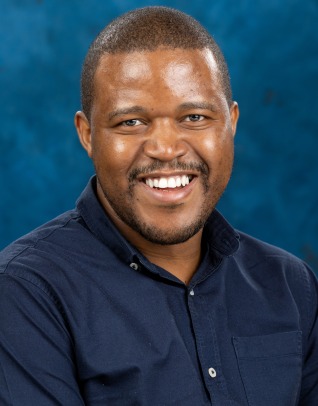
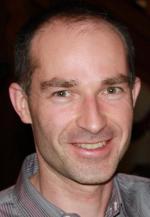
Sonwabile Mafunda is an Assistant Professor of Mathematics at Soka University. His research focuses on graph theory, algebraic graph theory, and discrete mathematics, with a particular emphasis on distance measures in graphs and their applications to cryptography and combinatorial optimization. He holds a PhD and is affiliated with the Department of Mathematics. Dr. Mafunda's work explores extremal graph theory, proximity and remoteness in graphs, and structural properties of graphs such as tree structures and free graphs. His research bridges theoretical mathematics with practical applications in algorithm design and network analysis. His recent publications (2020–2025) highlight advancements in understanding graph distance parameters, spanning trees, and optimization problems. Earlier work (2015) demonstrates contributions to applying algebraic graph theory in cryptographic systems. No scientific awards or grants are explicitly listed. Advising records are not detailed in the provided texts. He is reachable at smafunda@soka.edu.
Peter Nelson is an Associate Professor in the Department of Combinatorics and Optimization at the University of Waterloo, Canada. He currently serves as the Associate Chair for Undergraduate Studies, coordinating academic advising and managing departmental operations. His research focuses on structural and extremal matroid theory, graph theory, and their connections to coding theory, additive combinatorics, and finite geometry. He holds an NSERC Discovery Grant and has contributed to foundational work on matroid minors, binary matroid classification, and combinatorial enumeration. His recent interests include formalizing proofs in the LEAN theorem prover. Education: Ph.D. in Mathematics (University of Waterloo, 2008) with a thesis titled *Exponentially dense matroids*. His academic journey includes postdoctoral research and teaching roles prior to his current position. Research Interests: Structural matroid theory (e.g., minor-closed classes, forbidden configurations) Binary matroid extremal problems Applications to coding theory and additive combinatorics Formal proof systems like LEAN Advising & Grants: As Associate Chair, he oversees undergraduate academic advising via coundergrad.officer@uwaterloo.ca . His NSERC grant supports investigations into matroid density and extremal configurations. He has collaborated extensively with institutions globally, including co-authoring over 40 peer-reviewed publications. Labs/Teams: Active member of the Combinatorics and Optimization research group at Waterloo, contributing to collaborative projects on matroid theory and discrete mathematics.
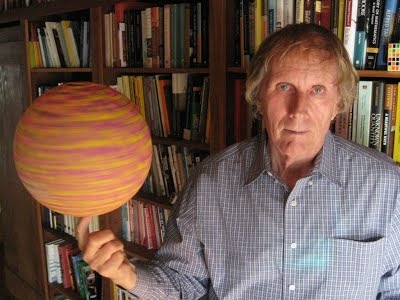
Bodo Wilts is a Professor at the University of Salzburg in the Chemistry and Physics of Materials department. His research focuses on biophotonics , structural color , and photonic nanostructures in biological systems, particularly insects and beetles. Education Habilitation in Physics, University of Freiburg (2020) PhD in Physics, Rijksuniversiteit Groningen (2013) Diploma in Physics, University of Göttingen (2009) Research Trends Wilts’s recent publications highlight interdisciplinary work bridging biological optics , nanotechnology , and biomimetic materials . Key themes include: Photonic networks in insects (disordered vs. ordered structures) Self-assembly of block copolymers for advanced materials Applications of structural coloration in diagnostics and sensing 3D imaging of photonic nanostructures using X-ray tomography Projects Ra-Dia-M (2025–2026): Label-free SERS diagnostics for melanoma cells Unraveling butterfly scale morphogenesis (2022–2026): Genetics and biomechanics of butterfly scales High-aspect ratio optical structures (2024–2025): Simulation and characterization of optical metamaterials Activities Keynote on Dis/ordered photonic networks in insects (2024) Lectures on Multifunctional colors and nanostructure formation (2024) Presentations on Amorphous photonic networks (2023–2024)
Professor Silvio Franz is affiliated with the Department of Mathematics and Physics 'Ennio De Giorgi' at the University of Salento (Italy). His research career spans over 30 years with 110+ publications, focusing on the statistical mechanics of disordered systems and their interdisciplinary applications. Key contributions include the development of the Franz-Parisi potential for studying glass transitions and rigorous mathematical frameworks for spin glasses. PhD in Theoretical Physics Full Professor at University of Salento Research Interests center on spin glasses and glassy systems , with applications to: Theoretical Neuroscience Machine Learning Population Genetics Constraint Satisfaction Problems Random Matrix Theory Theoretical Computer Science His work connects statistical physics to: Information Theory Optimization Algorithms Neural Network Modeling Evolutionary Biology Complex Systems Theory Key Publications demonstrate: Landau theory for glasses Universality in jamming transitions Stochastic stability analysis Effective temperature formulations Replica symmetry breaking Applications to error-correcting codes
Gaurav Rattan is an Assistant Professor in the Department of Applied Mathematics at the University of Twente's Faculty of Electrical Engineering, Mathematics and Computer Science (EEMCS), where he joined in May 2024. His research focuses on the mathematical foundations of machine learning on graphs and discrete structures, with particular emphasis on theoretical aspects of graph neural networks. University of Twente, Department of Applied Mathematics (May 2024-present) TU Darmstadt, Postdoctoral Researcher in Pascal Schweitzer's group RWTH Aachen, DFG Eigene Stelle Researcher in Martin Grohe's group Dr. Rattan completed his PhD at IMSc Chennai under V. Arvind and earned his B. Tech. from IIT Bombay, establishing a strong foundation in theoretical computer science and mathematics. His research spans graph theory, algorithms, and machine learning on graphs, with specific expertise in graph isomorphism, graph homomorphisms, and the theoretical underpinnings of graph neural networks. He applies mathematical techniques from logic and algebra to develop theory-driven approaches for graph learning systems, with practical applications in optimization, bioinformatics, and databases. Dr. Rattan's publication record reveals a consistent focus on the intersection of theoretical computer science and machine learning. His recent work explores Weisfeiler-Leman algorithms, symmetry breaking techniques, and parameterized complexity of graph problems, demonstrating how classical graph algorithms connect with modern graph learning methodologies. His research provides crucial theoretical foundations for understanding the capabilities and limitations of graph neural networks. Active in the academic community, Dr. Rattan regularly presents at conferences including the Netherlands Mathematical Congress, SIGAlgo, LOGAMS, and specialized workshops on graph learning. Recent presentations include "From Graph Homomorphisms Densities to Graph Learning" at the Graph Learning Workshop at NITMB Chicago and "Color Refinement: One Algorithm, Many Facets" at SIGAlgo 2024.
Stephan Kramer is an Associate Professor of Accounting and Control at the RSM, Erasmus University . He holds a PhD from WHU – Otto Beisheim School of Management and an MSc in Business Information Systems from the University of Münster. Research interests focus on incentive system design , governance mechanisms , target setting practices , and performance evaluation . His work bridges archival/experimental methods with practical applications in management accounting , corporate governance , and managerial behavior . Recent articles explore color-coded feedback in decision-making , CEO incentives under competition , and age-related executive biases . Scientific awards include the David Solomons Prize (2016) European Accounting Review Outstanding Reviewer Award (2021) Professor of the Year Award (2023) IMA/CIMA research grants Teaching spans Financial Analytics , Management Accounting , and Fraud Investigations across bachelor, master, and executive programs. He has served as AACSB/NVAO accreditation team member and Academic Director at RSM.
Andrej Bogdanov is a Professor at the University of Ottawa in the School of Electrical Engineering and Computer Science . He earned his B.S. and M.Eng. from MIT and Ph.D. from UC Berkeley . Before joining Ottawa, he held positions at the Chinese University of Hong Kong , ITCS (Tsinghua) , DIMACS (Rutgers) , and the Institute for Advanced Study . He has served as a Visiting Professor at the Tokyo Institute of Technology (2013) and the Simons Institute (2017, 2021). Research Interests : Computational complexity, cryptography foundations, pseudorandomness, one-way functions, property testing, quantum algorithms, and sublinear-time algorithms. Teaching : Courses on Discrete Mathematics, Great Algorithms, Computational Complexity, and Cryptography at University of Ottawa, Chinese University of Hong Kong, and Rutgers University. Publications : 15+ recent works in TCC , CRYPTO , ICALP , RANDOM , and journals like Journal of Cryptology and Theory of Computing . Service : Program co-chair for SAC 2026 , and committee member for major conferences including CRYPTO , TCC , Eurocrypt , and FOCS . Advising : 12 current and former Ph.D./M.Phil. students, with postdoctoral advisees at institutions like IIT Palakkad and Academia Sinica . His work bridges theoretical computer science with applications in cryptography, quantum computing, and network security.
Ron Peled is a Full Professor in the School of Mathematical Sciences at Tel Aviv University. Starting in summer 2024, he will serve as a Brin Professor in the Department of Mathematics at the University of Maryland, on leave from Tel Aviv University. During the 2022-2024 academic years, he visited Princeton University and the Institute for Advanced Study. His research spans multiple areas of probability theory and statistical physics, with significant contributions to understanding random surfaces, first-passage percolation, spin systems, and disordered models. Peled's research interests primarily focus on Probability Theory and Statistical Physics. His work examines the behavior of random systems, particularly in the presence of disorder or constraints. He has made significant contributions to understanding minimal surfaces in random environments, the structure of geodesics in first-passage percolation, phase transitions in spin systems, and the properties of random surfaces. His research often combines deep probabilistic insights with connections to statistical mechanics and mathematical physics, revealing universal behaviors in complex random systems. Analysis of Peled's recent publications reveals a strong focus on understanding the effects of disorder in statistical physics models. His work spans multiple domains including first-passage percolation, random surfaces, spin systems, and random matrix theory. A recurring theme is the investigation of how microscopic randomness affects macroscopic properties, with particular attention to phase transitions, correlation decay, and geometric structures emerging in random environments. His research often employs sophisticated probabilistic techniques combined with insights from statistical mechanics. Peled has received significant recognition through prestigious grants including multiple Israel Science Foundation grants (1048/11, 861/15, 1971/19, 2340/23), a Marie Skłodowska-Curie Actions International Reintegration Grant (SPTRF), an ERC Starting Grant (LocalOrder), and an ERC Consolidator Grant (Transitions). These awards reflect the importance and impact of his research in the mathematical community. Peled has supervised numerous students and postdocs throughout his career. His Ph.D. students include Daniel Hadas (joint with Wojciech Samotij) and Yinon Spinka (graduated August 2018). His Master's students include Michal Bassan (joint with Shoni Gilboa), Daniel Hadas, Yoav Bar Nir, Dor Elboim (who went on to do a Ph.D. at Princeton), Vital Kharash, Omri Cohen-Alloro, Alexey Gladkich, and Yinon Spinka. He has also mentored postdoctoral fellows including Lakshmi Priya, Paul Dario, Matan Harel, Raimundo Briceño, Alexander Glazman, Alexander Magazinov, Xiaolin Zeng, Nishant Chandgotia, Jeremiah Buckley, Wojciech Samotij, and Tom Ellis. Peled is actively involved in the academic community, serving as one of the organizers of the online Joint Israeli Probability Seminar and previously organizing the Horowitz Seminar on Probability, Ergodic Theory and Dynamical Systems. He has also organized several workshops and conferences including "Challenges in probability and statistical mechanics" at the Technion in 2022, the "Workshop on Strongly Correlated Random Interacting Processes" at Oberwolfach in 2018, and "Elegance in probability: A conference honoring Russell Lyons' 60'th birthday" at Tel Aviv University in 2017.
Eva Blasco is an Associated Group Leader at the Functional Polymeric Materials Research Unit under the Institute of Nanotechnology at Karlsruhe Institute of Technology (KIT), with affiliations to the University of Heidelberg. Her work bridges 3D printing , polymer chemistry , and nanophotonics , focusing on light-driven material design. Her research centers on photochemically activated 3D printing inks , light-stabilized dynamic materials , and multi-photon lithography . She explores how two-color light absorption , alkoxyamine chemistry , and visible light post-processing enable adaptable microstructures. Key trends include 4D printing , biodegradable inks , and temperature/light-responsive systems . Blasco's publications highlight collaborations with institutions like KIT, University of Heidelberg, and international teams. Her work spans photonic metamaterials , bio-inspired 3D scaffolds , and subtractive laser lithography , often involving interdisciplinary applications of light in material science.
Frédéric Blanqui is a Research Professor at Inria, leading the Deducteam, Chair of EuroProofNet (a European COST action with 578 participants across 47 countries), and Assistant director of the Paris-Saclay doctoral school of computer science. He also serves on the scientific committee of Inria Paris-Saclay and the steering committee of ISR. His research focuses on: Proof system interoperability Proof assistants Rewriting theory Type theory λ-calculus Termination His recent work includes proof verification techniques accepted at FLAIRS'25. He developed key software tools like Lambdapi, CoLoR, and HOT, which dominated the higher-order rewriting category in the 2012 international termination competition. Scientific awards: 2012 international termination competition winner in higher-order rewriting category He has advised 19 PhD students and postdocs, including Thiago Felicissimo, Mohamed Yacine El Haddad, and Guillaume Genestier, and supervised numerous interns on projects involving proof translation, type theory, and automated verification. Labs/teams: LMF (Laboratoire Méthodes Formelles) Deducteam Contributor to SimSoC-Cert and other proof assistant projects
Joy Morris is a Professor at the Department of Mathematics & Computer Science at the University of Lethbridge. She earned her BSc from Trent University in 1992 and her PhD from Simon Fraser University in 2000 under Brian Alspach. Her academic journey includes tenure in 2005, promotion to Associate Professor, and full Professor status in 2015. Research Focus: Interactions between group theory and graph theory, with emphasis on Cayley graphs and automorphisms Key Contributions: Solving the distinguishing number problem for various graph families, advancing DCI/CI group theory Research Overview Her work bridges abstract algebra with graph theory through Cayley graphs. She investigates automorphism groups, Hamilton cycles, and graph symmetry properties. Notable contributions include resolving the DCI property for specific groups, analyzing Praeger-Xu graphs, and studying color-preserving automorphisms. Academic Leadership As a co-author of two influential open-access textbooks ( Proofs and Concepts with Dave Morris and her own Combinatorics text), she has shaped curriculum development and mathematical education outreach programs for parents in Alberta. Her teaching portfolio includes foundational courses like Math 2000 and advanced combinatorial theory instruction. Collaborative Impact With over 30 publications since 1996, her collaborations span international researchers including C. Praeger, P. Spiga, and E. Dobson. Current projects involve hypercube distinguishing costs and automorphism group analysis of vertex-transitive digraphs. She maintains active research into graphical regular representations and graph isomorphism problems.
Ronald Graham is a Professor in the Computer Science and Engineering Department at the University of California San Diego (UCSD), affiliated with the Jacobs School of Engineering. He also serves as Chief Scientist at the California Institute for Telecommunications and Information Technology (Calit2). Graham’s career spans academia and industry, including a 37-year tenure at Bell Labs and leadership roles at AT&T Labs. He is renowned for contributions to combinatorics, Ramsey theory, scheduling algorithms, and discrete mathematics. His Erdős number of 1 underscores his collaborative ties to Paul Erdős, a legendary mathematician. Education: Graham earned his PhD in Mathematics from UC Berkeley in 1962. Research Interests: Graham’s work focuses on combinatorics, graph theory, number theory, computational geometry, scheduling theory, and quasi-randomness. He has also explored recreational mathematics, notably through his book Magical Mathematics (2011), which intertwines card tricks with mathematical principles. His research has influenced internet infrastructure design, including foundational work on routing algorithms and the development of Akamai Technologies. Notable Achievements: Graham has received the Steele Prize for Lifetime Achievement (2003), Euler Medal (1994), and Polya Prize in Combinatorics (1972). His concept of “Erdős numbers” revolutionized academic collaboration tracking, later adapted into Hollywood’s “Six Degrees of Separation” game. Advising & Grants: Graham mentors students and faculty, inspiring future generations through teaching and mentorship. The UCSD CSE Department established the Ronald L. Graham Chair in Computer Science in 2015 to honor his legacy, funded by an $18.5M alumni donation. Labs & Collaborations: As Calit2’s Chief Scientist, Graham advises on strategic directions, emphasizing interdisciplinary research in information technology and communications. His work bridges theoretical mathematics and applied computing, shaping global technological advancements.
Robert Peticzka serves as Assistant Professor in the Department of Geography and Regional Research at the University of Vienna, where he also directs geography studies. His research integrates physical geography, soil science, and geoecology with specialized focus on loess regions of Lower Austria. His primary research domains include: Loess-paleosol stratigraphy and quaternary landscape evolution Soil hydrology and microdialysis techniques in dry soils Geoarchaeological investigations of anthropogenic landforms Peatland carbon cycling and root exudate dynamics Environmental monitoring in urban and agricultural settings Recent publications reveal methodological innovation in soil solution analysis and paleoenvironmental reconstruction, with strong emphasis on interdisciplinary approaches combining geological, archaeological, and hydrological perspectives. His work frequently examines human-environment interactions in Central European landscapes. Professor Peticzka supervises bachelor and master students through dedicated preparatory seminars while teaching core courses in soil geography, geoecology, and field methods. He maintains active affiliation with the Physiogeographical Laboratory (http://www.univie.ac.at/physiogeographisches_labor/), conducting field research in the Vienna Basin and Lower Austrian loess regions.
Jeffry Kahn is a Professor of Mathematics at Rutgers, The State University of New Jersey, within the Department of Mathematics. His research focuses on discrete mathematics and related areas, with particular emphasis on combinatorics, graph theory, and probability. He holds an office in Hill Hall (HLL-728) on the Busch Campus. His work spans foundational contributions to extremal combinatorics, random graph theory, and probabilistic methods. Kahn has co-authored influential papers on threshold phenomena, phase transitions in statistical mechanics models, and structural properties of discrete systems. Notable contributions include resolving Borsuk's conjecture and advancing understanding of random matrix singularity probabilities. He teaches advanced courses such as Combinatorics II (642.583), emphasizing problem-solving and rigorous proofs. His research interests exhibit a cohesive thread in exploring combinatorial structures under probabilistic and extremal frameworks. Recent works address Shamir’s Problem asymptotics, maximal independent sets in hypercubes, and threshold conjectures. His articles often intersect with theoretical computer science, revealing interdisciplinary insights. Despite no explicitly listed awards, his publications in top journals like Annals of Mathematics and Combinatorica underscore his academic impact. His advising focuses on graduate-level combinatorial research, with courses structuring students via problem sets requiring precise, efficient solutions.
Mohamed Najim is a Professor at IMS Bordeaux (Laboratoire de l'intégration, du matériau au système) affiliated with the University of Bordeaux. He is a member of the Signal and Image Processing research group within the MOTIVE team, where he conducts cutting-edge research in multidimensional signal processing and image analysis. His work spans theoretical developments in signal modeling and practical applications in speech enhancement, image colorization, and communication systems. Professor Najim's research interests focus on advanced signal processing techniques, with particular expertise in autoregressive modeling, Kalman filtering, generative adversarial networks, and multidimensional system analysis. His work bridges theoretical signal processing with practical applications in image processing, speech enhancement, and wireless communications. He has made significant contributions to the development of novel algorithms for texture analysis, channel modeling, and noise reduction in various signal processing contexts. The analysis of his publication record spanning over 25 years reveals a consistent research trajectory focused on fundamental signal processing techniques with expanding applications into modern deep learning approaches. His recent work demonstrates a clear progression from traditional signal processing methods toward integrating machine learning techniques, particularly evident in his 2023 SPDGAN paper which combines manifold learning with generative adversarial networks for image colorization. Throughout his career, Professor Najim has maintained strong theoretical foundations while adapting to emerging technologies in the field. Mohamed Najim has supervised numerous research projects and collaborated extensively with colleagues across institutions. His work shows consistent funding support through participation in various research programs focused on signal processing applications. He has maintained active research collaborations with institutions including CNRS and HESAM University. Professor Najim conducts his research within the IMS laboratory, a leading research center for integration from materials to systems. The laboratory provides state-of-the-art facilities for signal processing research, including specialized computing resources for image processing and speech analysis. His work within the MOTIVE team focuses on developing innovative approaches to complex signal processing challenges across multiple application domains.