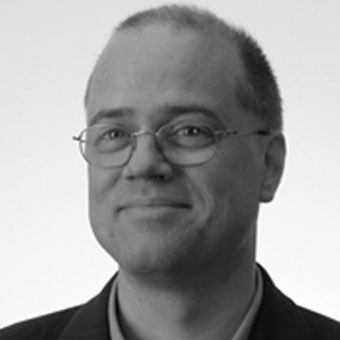
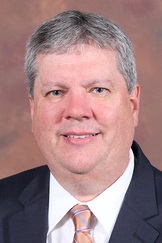
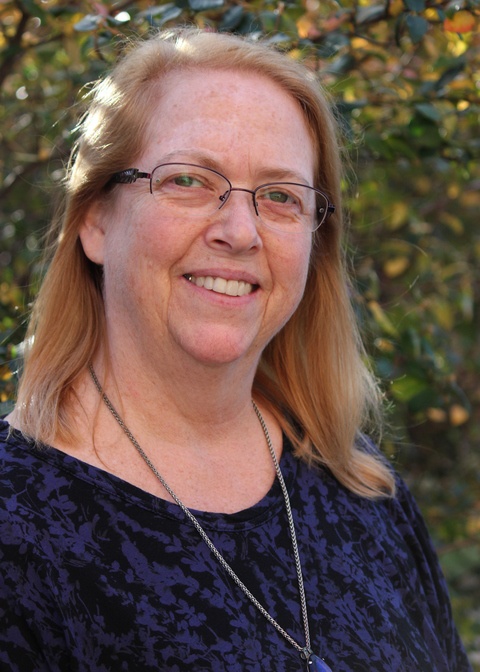
Prof. Dr.-Ing. Thomas Bonse is a Professor in the field of Bildtechnik (Image Technology) at the Hochschule Düsseldorf (University of Applied Sciences Düsseldorf), Faculty of Media since 2000. His career includes roles as project leader at ITK Telekommunikation AG , group leader at the Forschungsinstitut für Telekommunikation , and R&D engineer at Grass Valley and Panasonic in the domain of advanced TV systems. Education: Diplom-Ingenieur (Dipl.-Ing.) and Doctorate (Dr.-Ing.) in Electrical Engineering from the University of Dortmund. Current Role: Teaching and research in image technology, supervising 15+ theses annually, and leading projects in HDR, broadcast workflows, and real-time video systems. His research focuses on media engineering , particularly in high dynamic range (HDR) imaging , video signal processing , and real-time broadcast systems . Key areas include: Quantisierung von Videoformaten ACES color workflow optimization Wireless video transmission AI-driven object detection IP-based broadcast infrastructures Photovoltaic soiling measurement via drones Recent research trends show emphasis on IP-based video transmission (2016-2023), HDR/SDR workflows (2021-2023), and automated studio systems (2018-2023). He has collaborated with institutions like the Institut für Rundfunktechnik (IRT) , Sportcast GmbH , and Ericsson . As a supervisor, he has guided students in: Automated camera control (Scheunert, 2020) Photovoltaic soiling detection (Mikulaschek/Scheunert, 2020) Sports broadcasting analytics (Mikulaschek, 2022) LED studio lighting systems (2023) Contact: thomas.bonse@hs-duesseldorf.de | Room 04.2.006, HSD Campus
Matthew Just is a Lecturer in the Department of Mathematics at the University of Georgia, where he completed his PhD in 2022 after earning BS (2012) and MS (2016) degrees from Georgia Southern University. He teaches mathematics courses for middle grades education majors and mentors undergraduate research. His educational background includes: BS in Mathematics, Georgia Southern University, 2012 MS in Mathematics, Georgia Southern University, 2016 PhD in Mathematics, University of Georgia, 2022 Just's research centers on number theory and combinatorics, investigating the interplay between additive and multiplicative structures, integer partitions, and analytic properties of power series/modular forms. His earlier work developed transmission models for Ebola and typhoid outbreaks, demonstrating cross-disciplinary applications in mathematical biology. His publication trends reveal deep integration of analytic methods across number theory and combinatorics, with emerging connections to arithmetic geometry through partition Eisenstein series and semi-modular forms, while maintaining relevance to real-world problems via epidemiological modeling. His academic honors include: Outstanding Graduate Teaching Assistant (2019) David Galewski Outstanding Graduate Teaching Award (2020) As an active mentor, Just guides over 10 undergraduate researchers through the Directed Reading Program and as Undergraduate Research Mentor for combinatorics/number theory, yielding one published paper and multiple manuscripts in preparation. He also provides specialized tutoring for students with diverse learning needs across all age groups. He participates in departmental seminars like Combinatorics SMARTS and contributes to the academic community through the UGA Duplicate Bridge Club, while balancing family life with his wife Erin and children Filly and August.
Ali Madooei is a Teaching Professor in the Department of Computer Science at Johns Hopkins University, affiliated with the Whiting School of Engineering. He specializes in computer science education, software engineering, instructional design, and learning technology, with a focus on hands-on project-based learning. Department: Computer Science School: Whiting School of Engineering Academic Rank: Teaching Professor Email: madooei@jhu.edu His research interests revolve around enhancing software development education through project-based learning environments. He established the Coding, Learning, and Application-Building Lab (COLLAB) , which provides students with unstructured, self-directed software project experiences. He also leads the AI-Assisted Instruction Lab , exploring how artificial intelligence can improve educational technology. Madooei's work emphasizes modern technology stacks, employability, and flexible remote collaboration, with projects often aligning with industry standards. Additionally, he has contributed to biomedical imaging through prior research in color modeling and hyperspectral analysis for skin lesion diagnostics. Ali Madooei has received the Whiting School of Engineering Excellence in Teaching Award (2024) , highlighting his commitment to pedagogical innovation in computer science education. As an educator, Madooei promotes independent learning, mentorship, and leadership development in his labs. His labs support a dozen students each term with academic credit and practical experience, offering paid, volunteer, and self-directed project opportunities. Projects are structured around sprint cycles and remote collaboration, with students encouraged to propose ideas or join existing initiatives. He has previously taught at the University of British Columbia, Simon Fraser University, and Kwantlen Polytechnic University, bringing diverse institutional experience to his current role.
Mattias Rantalainen is a Senior Lecturer and Docent at Karolinska Institutet's Department of Medical Epidemiology and Biostatistics, where he leads the Predictive Medicine research group. His work focuses on applying statistical machine learning, artificial intelligence, and big data analytics to medical research, with particular emphasis on computational pathology and cancer precision medicine. The research group maintains over 300,000 whole slide images for population-based studies, primarily focused on breast, prostate, and colorectal cancer. Dr. Rantalainen completed his PhD at Imperial College London developing multivariate pattern recognition methods with applications in metabonomics. He previously held a research fellowship (2009-2013) with joint affiliation at the Department of Statistics and the Wellcome Trust Centre for Human Genetics at the University of Oxford, where he was awarded the MRC Centenary Early Career Award (2012-2013) and a Medical Research Council Special Training Fellowship in Biomedical Informatics (2009-2012). He holds an undergraduate degree in Engineering Biology (combined BSc/MSc) from Umeå University in Sweden. His research interests span computational pathology, cancer precision medicine, and AI-driven medical research. The Predictive Medicine group develops and applies AI and machine learning methodologies for predictive modeling in biomedical applications. Their mission is to transform large biomedical datasets into clinically relevant predictions at the individual level, with a particular focus on precision pathology applications where the goal is to predict patient outcomes. Their work integrates comprehensive molecular profiling (DNA- and RNA-sequencing), clinical information, and medical imaging data. Analysis of his recent publications reveals a strong trend toward developing and validating deep learning models in computational pathology, particularly for breast cancer applications. His work focuses on risk stratification, histological grading, and gene expression prediction from histopathology images. There's a clear progression from method development to clinical validation and implementation, with increasing emphasis on real-world applicability and comparison with established clinical assays. His research bridges the gap between computational methodology and clinical practice in cancer diagnostics. MRC Centenary Early Career Award (2012-2013) Medical Research Council (MRC) Special Training Fellowship in Biomedical Informatics (2009-2012) Dr. Rantalainen serves as main supervisor for PhD students Philippe Weitz and Abhinav Sharma, and as co-supervisor for several other doctoral candidates including Dusan Rasic, Sandra Kristiane Sinius Pouplier, and Tewodros Yalew. He coordinates the Swedish AI Precision Pathology (SwAIPP) consortium, which focuses on translation and implementation of AI-based pathology. His group has received significant funding, including a recent 120 million SEK grant to the Department of Medical Epidemiology and Biostatistics from Swedish funding agencies. The Predictive Medicine group operates within the Department of Medical Epidemiology and Biostatistics at Karolinska Institutet, coordinating several national and international initiatives including the CHIMES study (www.chimestudy.se), ABCAP (www.abcap.org), and the Swedish AI Precision Pathology consortium (www.swaipp.org). The group has developed numerous AI-based tools that improve cancer diagnosis and risk prediction, with several projects advancing toward clinical implementation as regulatory-approved medical devices. Their work represents a significant contribution to the field of precision pathology and AI-driven cancer diagnostics.
Lili Cai is an Assistant Professor in the Department of Mechanical Science and Engineering and the Materials Research Lab at the University of Illinois. Her research focuses on advanced materials for thermal management, radiative cooling, and energy harvesting. She holds a PhD and has contributed to cutting-edge work in nanomaterials, sustainable coatings, and smart textiles. Research interests include radiative cooling systems, nanowire synthesis via flame deposition, and phase change materials for thermal stability. Her work addresses environmental challenges through innovations like passive cooling paints and energy-efficient materials. Awards: Delcie Durham Award (2023), NSF CAREER (2023), ONR Young Investigator (2024) Labs/Teams: Materials Research Lab, University of Illinois Nanomaterials Group Her recent work emphasizes scalable solutions, including electrochemical nanoimprinting and defect-engineered catalysts for methane conversion. Grants include NSF and ONR funding for sustainable energy projects.
Michael Zink is an Assistant Professor in the Department of Electrical and Computer Engineering at the University of Massachusetts Amherst and an adjunct assistant professor in the Manning College of Information and Computer Sciences (CICS). He is affiliated with the Microwave Remote Sensing Laboratory and has held roles including assistant research professor in computer science. His research focuses on network protocols, multimedia distribution systems, and high-bandwidth data networks, with contributions to the KOMSSYS streaming platform and FPGA-based network architectures. Zink's work spans topics like secure video streaming, LED wall calibration, and federated learning for sustainable UAV operations. He received the Best Paper Award at Multimedia Computing and Networking (2008). Education: PhD from Darmstadt University of Technology. Research Interests: Sensor networks, wireless and wired multimedia distribution, network protocol optimization, video streaming security, and distributed cloud platforms. Recent work includes innovations in hue-preservation for virtual production and carbon-efficient federated learning (CEFL). Technical Contributions: Developed systems for real-time route configuration of entertainment content, scanner noise elimination in film restoration, and profile-based HDR content generation. His team explores network-attached FPGAs in cloud environments and edge-to-cloud workflows for scientific applications. Labs & Teams: Active in the Microwave Remote Sensing Laboratory and collaborates with the Open Cloud Testbed (OCT) for cloud infrastructure research. Engaged in federated cyberinfrastructure projects like the ERN Cryo-EM Pilot.
Dr. Andrew Baird is an Assistant Professor in the Department of Sociology, Social Work and Anthropology at Christopher Newport University, affiliated with the Center for Education Research and Policy. His work focuses on higher education, for-profit institutions, social mobility, substance use, and racial discourse. Education : PhD in Sociology, University of Central Florida MA in Sociology, University of West Georgia BS in Sociology, Florida State University Research Interests : Dr. Baird’s research examines for-profit education systems, social mobility outcomes, substance use among marginalized populations, and racial attitudes. He employs quantitative methodologies to analyze topics like grade inflation in for-profit universities and the societal impact of anti-political correctness rhetoric. Advising/Grants : No specific advising or grant information is provided. His lab or team affiliations are unspecified.
David Hayes is a Professor of Accounting and PBMares Faculty Scholar at the James Madison University (JMU) College of Business. His expertise spans Accounting Information Systems, Forensic Data Analytics, and Fraud Investigation. He holds a Ph.D. in Accounting Information Systems from the University of South Florida (2002), an M.B.A. from the University of West Florida (1996), and a B.S./B.A. in Accounting/Data Processing from the University of Arkansas (1987). His research focuses on forensic accounting education, fraud detection methods, and innovative teaching strategies. Notable work includes applying reality TV scenarios to teach fraud analysis and developing case studies using IDEA software for forensic audits. He emphasizes practical skills like Excel applications and data visualization tools for fraud investigation. Awards include the 2020 Teaching and Learning Scholarship Award (JMU College of Business) and the 2020 Best Teaching Innovation Award from the American Accounting Association's Forensic Accounting Section. His articles highlight trends in mitigating cyberattacks, enhancing student engagement through active learning, and bridging theory-practice gaps in accounting education. Prior to academia, Hayes held leadership roles in accounting at McDonald's franchises and CPA firms. He advises on academic integrity, software proficiency, and fraud prevention strategies, contributing to both JMU's curriculum and professional accounting education.
Carl Yerger is a Professor of Mathematics and Computer Science at Davidson College, where he has been teaching since 2010. He previously served as the Shelley Visiting Assistant Professor at Carnegie Mellon University (2014-2015). His academic background includes a Ph.D. in Algorithms, Combinatorics, and Optimization from Georgia Institute of Technology, a Certificate of Advanced Study in Mathematics from University of Cambridge, and a B.A. in Mathematics from Harvey Mudd College with a humanities concentration in Economics. Research Interests: Structural graph theory and combinatorics Sports analytics applications Collaborative work with undergraduate researchers Notable Contributions: Co-Editor-in-Chief of the American Mathematics Competitions' AMC 10/12 Exam Coordinator for the Charlotte Math Club (grades 4-12) Awards: Barry M. Goldwater Scholarship NSF Graduate Research Fellowship Winston Churchill Foundation Scholarship
Dana Shockley is Professor of Film and Television at Savannah College of Art and Design, teaching post-production techniques including Avid software and editing aesthetics since 2019. She holds an M.A. in Film from Boston University and a B.A. in English from Longwood College. Industry credits span 25+ years as editor and assistant editor on projects like Lucifer (2017), Switched at Birth (2016), and Veronica Mars (2004-2006). Professional work demonstrates expertise in narrative structure across genres: episodic dramas use multi-storyline integration, documentaries prioritize historical clarity, and comedies employ precise timing. Recent projects emphasize accessibility representation and VFX coordination. As Local 700 (Motion Picture Editors Guild) member, she bridges industry practices with academic instruction. Prior teaching includes Columbia College Hollywood (2012-2014).
Kristen M. Meiburger is a Tenure-track Assistant Professor at the Department of Electronics and Telecommunications, Politecnico di Torino. She holds a Master’s in Biomedical Engineering (2010) and a Ph.D. in Biomedical Engineering (2015) from Politecnico di Torino. She has conducted research at the University of Texas at Austin (2013–2014) and the University of Toronto (2015). Her work focuses on biomedical image processing, including ultrasound and photoacoustic imaging, radiomics, deep learning, and signal reconstruction methods. Her research interests emphasize innovative imaging techniques, non-invasive vascular analysis, and dermatological applications. She leads ongoing projects like REAP (cancer imaging with optical coherence/photoacoustic tomography), AI-VASCUES (vascular dysregulation analysis), and ImPACT-AI (ethical AI in photoacoustic imaging). She teaches and proposes thesis topics at Politecnico di Torino’s DET (Department of Electronics and Telecommunications). Recent publications highlight advancements in AI-driven imaging, such as texture analysis in OCT, hybrid deep learning frameworks for microscopy, and GANs for color normalization. Her work bridges medical imaging innovation with clinical applications, focusing on disease diagnosis and treatment monitoring. Ongoing efforts integrate ethical AI practices and multi-center imaging harmonization to improve medical decision-making.
James Haglund is a Professor of Mathematics at the University of Pennsylvania's School of Arts and Sciences, within the Department of Mathematics. He specializes in algebraic combinatorics, with a focus on symmetric functions, Macdonald polynomials, and experimental mathematics. His research integrates computational tools like Maple to explore conjectures in enumerative and algebraic combinatorics. He teaches advanced courses such as Math 4100 (Complex Analysis) and has advised numerous PhD and Master’s students, including Marino Romero, Per Alexandersson, and Andy Wilson. As a Fellow of the American Mathematical Society (AMS), his contributions to combinatorics have been recognized through prestigious awards and fellowships. Haglund co-organizes the IPAC seminar, focusing on cutting-edge papers in algebraic combinatorics. His work spans international collaborations, with presentations at conferences like FPSAC and workshops at institutions such as the Erwin Schrödinger Institute and the Institute for Advanced Study (IAS). Key contributions include books like The q,t-Catalan Numbers and the Space of Diagonal Harmonics and foundational papers on the Delta Conjecture, geometric interpretations of symmetric functions, and Jack polynomials. His advising and mentorship span postdoctoral researchers and students, with notable alumni holding academic and industry positions worldwide. Haglund’s research also intersects with algebraic geometry and number theory, reflecting his broad impact in mathematical sciences.
Barry Hammond is a Professor in the Department of General Dentistry at the Dental College of Georgia, Augusta University, with dual appointments spanning Restorative Sciences. He served as Director of Dental Continuing Education (2012-2020) and maintains active roles in university governance and professional organizations. Education: DMD in Dentistry, Medical University of South Carolina, 1986 BS in Biology, Furman University, 1982 His research integrates esthetic dentistry, prosthodontics, and occlusion, focusing on clinical innovations for implant aesthetics, full-mouth rehabilitation, and restorative techniques. Recent work examines educational quality assessment in fixed prosthodontics and biomaterials biocompatibility. Publications from 2014-2024 reveal consistent emphasis on improving clinical outcomes through evidence-based approaches, with growing attention to digital workflows and long-term prosthetic success in implant dentistry. Scientific Awards: AU Outstanding Faculty Award (2024) OKU membership (2024) Outstanding Dedication and Department Support (2020) American Student Dental Association Student Advocacy Award (2011) Dr. Hammond contributes extensively to academic service: leading the AU Dental Associates Board of Directors, serving on Title IX and student affairs committees, and participating in ADEA Council of Faculties. Professionally, he advises the American Academy of Cosmetic Dentistry and reviews for the Journal of Cosmetic Dentistry.
Eileen Underwood is a Professor in the Department of Biological Sciences at Bowling Green State University (BGSU) , within the College of Arts and Sciences . She holds a Ph.D. from Indiana University and has served in academic roles since at least 2006. Her research focuses on herpetology , particularly developmental genetics, reptile and amphibian husbandry, and the educational impact of using live reptiles in classroom settings. University : Bowling Green State University School : College of Arts and Sciences Department : Biological Sciences Education : Ph.D., Indiana University Her research spans two primary areas: (1) developmental genetics and the effects of egg incubation temperature on life history traits in reptiles (e.g., sex ratios, hatch rates, growth rates), and (2) science education through reptile-based outreach to students from grades 1-12 and college-level courses. She also investigates water quality impacts on tadpole development and genetic inheritance in reptiles. The articles listed reflect her work in herpetology , animal husbandry , and science education . Her publications include analyses of Drosophila genetics , reptile care sheets , and studies on student engagement with live animals. Underwood leads the BGSU Herpetarium , where students learn husbandry and design independent projects. The lab’s resources are used in educational demonstrations for K-12 and university courses, emphasizing hands-on learning and conservation.
Keith Hollingsworth is a Lecturer in the Media and Entertainment Arts program within the School of Media Communication at the University of Southern Mississippi, where he also earned his Bachelor of Arts (2011) and Master of Science (2012). His professional expertise spans video production, post-production workflows, editorial techniques, and color grading, with industry experience including broadcast news direction at WJTV, military communications content creation for TAD PGS Inc. (Army National Guard), and independent film production roles as DIT, assistant editor, editor, and colorist. Hollingsworth teaches Advanced Post-Production, Digital Imaging Technology and Theory, Writing for Radio TV and Film, and Intermediate Video and Post Production, integrating practical industry knowledge into his curriculum to prepare students for media careers.