Professor Catherine Greenhill is a faculty member at the School of Mathematics and Statistics, UNSW Sydney , where she serves as Professor and head of the Combinatorics group. Her academic career spans institutions including the University of Queensland, University of Oxford, University of Leeds, University of Melbourne, and Australian National University. D.Phil., University of Oxford (1996) M.Sc. (Research) in Combinatorics (1992) B.Sc. (Hons) in Pure Mathematics (1991) Her research focuses on the intersection of discrete mathematics , theoretical computer science , and probability , particularly in asymptotic combinatorics , probabilistic methods , and analysis of algorithms . Her work includes asymptotic enumeration of combinatorial structures and design of randomized algorithms for graph sampling and counting. Her recent publications (2025–2021) center on random graphs and hypergraphs , with key contributions to switch Markov chains , degree sequence analysis , and chromatic number bounds . These works reflect her expertise in probabilistic combinatorics and algorithmic complexity . Scientific Awards: Fellow of the Australian Academy of Science (2022) Christopher Heyde Medal in Pure Mathematics (2015) June Griffith Fellowship (2013) Hall Medal (2010) Advising and Grants: She has supervised numerous PhD/Masters students and secured multiple ARC Discovery Grants (2019–2021, 2014–2016, 2012–2014). Her grants address topics like hypergraph modeling, random discrete structures, and network analysis in illicit drug trafficking.
Olga Sorkine-Hornung is a Professor of Computer Science at ETH Zurich and head of the Institute of Visual Computing. She leads the Interactive Geometry Lab, focusing on theoretical and practical advancements in digital content creation, geometry processing, and shape modeling. Current position: ETH Zurich, Department of Computer Science Previous roles: Courant Institute (NYU), Technical University of Berlin Education: BSc and PhD from Tel Aviv University, postdoc at TU Berlin Her research spans shape representation, digital fabrication, computer animation, and fundamental geometry processing. Key contributions include Laplacian surface editing, as-rigid-as-possible deformation, and generalized winding numbers. She works on applications in VR, AR, and autonomous systems. Awards include Test of Time Awards (2024), ACM Fellow (2020), ERC Consolidator Grant (2020), and EUROGRAPHICS Young Researcher Award (2008). She has supervised numerous students and co-developed software libraries like libigl and Instant Meshes . Co-chair roles for SIGGRAPH, Eurographics, and Pacific Graphics Editorial board member for ACM Transactions on Graphics and other journals Keynote speaker at VMV, CVPR, and SIAM conferences Her work bridges mathematical rigor with practical implementation, advancing computer graphics and geometry processing through intuitive algorithms that maintain surface detail while enabling efficient computation.
Haijun Xia is an Assistant Professor at the University of California, San Diego (UCSD), where he directs the Foundation Interface Lab and contributes to the Cognitive Science and Design Lab. His work focuses on Human-Computer Interaction (HCI) and Human-AI Collaboration , emphasizing the development of dynamic, malleable interfaces that integrate human cognition with intelligent systems to enhance thinking and working paradigms. Education: Bachelor's, Tsinghua University Master's and PhD, University of Toronto His research spans generative AI , interface design , and creative collaboration , with applications in data visualization, programming, and scholarly work. He advocates for treating information as a malleable material that can be flexibly manipulated by users and AI agents. Recent publications highlight advancements in: 2025 CHI Conference - Generative user interfaces, malleable overview-detail designs, and compositional structures for human-AI co-creation 2024 CHI Conference - Structured design space exploration with LLMs, ASCII diagram analysis, and adaptive presentation systems 2023 CHI/UIST Conferences - Data particle visualization, contextual logging tools, and metaphor generation for science communication Scientific recognitions include: Multiple Best Paper Awards and Honorable Mentions at CHI and UIST Hellman Fellowship and grants from NSF , Microsoft , Google , Meta , Apple , and Adobe He actively recruits undergraduate and graduate interns and has an upcoming postdoc position in early 2025 for researchers interested in foundational interface development.
Dr. Janet Garcia-Hallett is an Associate Professor of Criminal Justice in the Henry C. Lee College of Criminal Justice and Forensic Sciences at the University of New Haven. She earned her Ph.D. in Criminal Justice from Rutgers University School of Criminal Justice and specializes in research examining the intersection of race, gender, and the criminal legal system, with particular focus on formerly incarcerated mothers of color. Dr. Garcia-Hallett's educational background includes: Ph.D., Criminal Justice, Rutgers University School of Criminal Justice M.A., Criminal Justice, Rutgers University School of Criminal Justice B.A., Cum Laude, Honors in Sociology and Psychology, CUNY Macaulay Honors College: Hunter College Her research interests focus on the detrimental impact of incarceration on communities of color and the intersectional obstacles women of color face throughout the criminal legal process. She examines how formerly incarcerated mothers navigate motherhood while confronting systemic barriers related to gender, race, and criminal record. Her work challenges traditional narratives about mass incarceration that have historically centered on men, instead highlighting the unique experiences of women of color who must perform motherwork under oppressive conditions of surveillance and marginalization. Analysis of Dr. Garcia-Hallett's publications reveals consistent themes across criminal justice, gender studies, and race theory. Her work demonstrates a strong focus on qualitative methodologies to center the voices of marginalized populations, particularly examining the intersection of motherhood and incarceration. Recent publications increasingly address public health issues within correctional settings and community reentry challenges. Her research consistently applies critical race and feminist frameworks to challenge systemic oppression within the criminal legal system. Dr. Garcia-Hallett has received significant recognition for her scholarship: 2023 ASA Ida B. Wells-Barnett Distinguished Book Award Multiple 2023 finalists and honorable mentions for book awards 2019 SAGE Junior Faculty Professional Development Teaching Award University of Missouri President's Award for Intercampus Collaboration Her grant funding demonstrates substantial research impact, including the Prison Research and Innovation Network ($200,000) and collaboration on a $2.8 million Arnold Ventures grant for the Missouri Prison Transformation Project. Dr. Garcia-Hallett actively engages in community partnerships, such as her work with Winning Ways Inc. to empower women in the community. Her media presence shows significant public engagement through op-eds in Ms. Magazine and Hartford Courant addressing critical issues like abortion rights for incarcerated women.
Robert Jenssen is a Professor in the Machine Learning Research Group at UiT The Arctic University of Norway and serves as the Director of Visual Intelligence , an 8-year Research Council of Norway-funded SFI center. His research focuses on solving societal challenges in healthcare, marine mapping, energy, and Earth observation through collaborations with industry and public stakeholders. Director, Visual Intelligence (SFI) Center Professor, UiT Adjunct Professor, Pioneer Centre for AI (University of Copenhagen) and Norwegian Computing Center His methodological expertise spans neural networks, information-theoretic learning, self-learning, and explainable AI (XAI). Recent work emphasizes multimodal learning, uncertainty estimation, and medical image analysis. Scientific awards include: Best Paper, Pattern Recognition Letters (2024) Dissertation Award, Norwegian AI Society (2023) Best Paper, Color and Visual Computing Symposium (2022) IEEE GRS Society Letters Prize (2013) Prize for Young Researchers, University of Tromsø (2007) He contributes to international leadership as a member of the Scientific Advisory Board (SAB) for the Max Planck Institute for Intelligent Systems, France's SequoIA AI Excellence Cluster, and Denmark's DIREC center.
Nancy M. Wells is a Professor in the Department of Human Centered Design and serves as the Senior Associate Dean for Research and Graduate Education in the College of Human Ecology at Cornell University. Her work bridges environmental psychology and public health, examining how built and natural environments impact human health and behavior across the lifespan. Dr. Wells received a joint PhD in Psychology and Architecture from the University of Michigan and completed National Institute of Mental Health (NIMH) post-doctoral training at the University of California, Irvine. Her educational background uniquely positions her to investigate the intersection of physical environments and human wellbeing through both psychological and architectural lenses. Her research focuses on how environmental contexts—from homes to neighborhoods to schools—affect health outcomes, cognitive functioning, and resilience. A central theme examines nature's role in human resilience, particularly how natural environments buffer against adversity and challenge. She has conducted influential work on school gardens and their effects on children's physical activity, dietary habits, and learning. More recently, she has pioneered research on nature and autism, conducting a randomized controlled trial examining natural environments' effects on autistic youth wellbeing. Analysis of Dr. Wells' recent publications reveals consistent focus on nature's health benefits, with strong emphasis on experimental methodologies including randomized controlled trials and natural experiments. Her work spans environmental psychology, public health, and education, with particular attention to vulnerable populations including low-income communities and children of color. NSF Funding for environmental health research USDA Funding for school garden studies Robert Wood Johnson Foundation Funding MacArthur Foundation Funding Senior Associate Editor of Environment and Behavior (4 years) Research Advisory Board of Children and Nature Network Board of Directors for reDirect Dr. Wells actively mentors undergraduate and graduate students through the Wells Lab, involving them in all research stages from data collection to publication. Her research has been supported by multiple significant grants examining housing quality effects on mental health, neighborhood design impacts on physical activity, and school garden interventions. She leads interdisciplinary research teams that integrate perspectives from environmental psychology, public health, landscape architecture, and education. The Wells Lab operates as an integrated research-teaching-outreach unit that develops practical yet rigorous studies to assess causal relations between environment and health, creates valid measurement tools, and identifies causal pathways. Current projects include examining nature's effects on autistic youth wellbeing in partnership with The Center for Discovery in New York, and investigating multi-sensory design in urban public spaces.
Albert Presto is a Research Professor in the Department of Mechanical Engineering at Carnegie Mellon University with a courtesy appointment in Civil and Environmental Engineering. He serves as Director of the Center for Atmospheric Particle Studies (CAPS) and is a Faculty Affiliate at the Steinbrenner Institute for Environmental Education and Research. His work spans multiple interdisciplinary collaborations across environmental science, engineering, and public health domains. Department of Mechanical Engineering, College of Engineering Center for Atmospheric Particle Studies (CAPS) Steinbrenner Institute for Environmental Education and Research Africa Clean Air Network Advisory Council Health Effect Institute's Energy Review Committee Presto's research focuses on pollutant emissions from energy extraction and consumption and their subsequent atmospheric transformations. His work examines how gas and oil wells emit methane, how vehicles emit carbon monoxide and particulate matter, and how these pollutants undergo oxidation in the atmosphere to create secondary pollutants like ozone and secondary particulate matter. His approach combines ambient measurements, laboratory experiments, source testing of pollution sources, and atmospheric models to provide a holistic view of pollutant emissions and transformations. His recent publications reveal a strong emphasis on air quality monitoring technologies, particularly low-cost sensor networks deployed internationally. There's a clear trend toward studying air pollution in African cities (especially Nairobi, Kampala, and Addis Ababa), examining spatial and temporal variability of particulate matter, and investigating the health impacts of air pollution exposure. His work increasingly integrates machine learning approaches for pollution forecasting and leverages international collaborations to address global air quality challenges. Member of Africa Clean Air Network Advisory Council Collaborator with US embassies worldwide on air quality data collection Quoted in The Guardian on inequality of air pollution exposure, specifically noting how people of color are more likely to be exposed to harmful air pollution Collaborated on research regarding chemicals released during the Ohio train derailment Presto actively collaborates with medical professionals to develop neighborhood-by-neighborhood studies of pollutant exposure and to understand relationships between emissions and health effects like childhood asthma. His work includes investigating racial-ethnic exposure disparities to airborne pollutants and examining how proximity to pollution sources like fast-food restaurants affects pediatric asthma outcomes. He has received seed funding from the Scott Institute for Energy Innovation for research in clean hydrogen production, AI hardware efficiency, and decarbonizing transportation. As Director of CAPS, Presto leads a research team focused on atmospheric particle studies with applications ranging from local Pittsburgh air quality to global monitoring initiatives. His lab develops and deploys advanced air quality monitoring technologies, including low-cost sensor networks that have been implemented in multiple cities across Africa. The CAPS research group works at the intersection of environmental engineering, atmospheric science, and public health to address critical air quality challenges worldwide.
Prof. dr. ir. C.H. (Caspar) van der Wal is a Full Professor in Physics of Quantum Devices at the Faculty of Science and Engineering , University of Groningen. His research focuses on spintronic and quantum information functionalities using electron/nuclear spins in semiconductor devices, combining quantum optical and electron transport methods. PhD in Quantum Transport (Delft University of Technology, 2001) Postdoc in Quantum Optics at Harvard University (2001-2003) Scientific Director of Zernike Institute for Advanced Materials (2016-2022) Research keywords include Quantum Optics , Spintronics , Quantum Information , and Semiconductor Physics . Recent work explores 2D/3D semiconductor heterostructures , spin defects in SiC , and transition metal dichalcogenides . His scientific contributions have earned him the NWO-Vidi Grant (2005) , ERC Starting Grant (2011) , and multiple teaching awards. Publications since 2001 span topics like quantum superpositions in superconducting circuits, spin relaxation in quantum dots, and telecom-ready spin centers in silicon carbide. Grants : NWO-Vidi (2005), ERC Starting Grant (2011) Leadership : Scientific Director, Zernike Institute (2016-2022) Teaching : Teacher of the Year (2015), Education Prize (2012) Current affiliations include the Physics of Nanodevices group at the Zernike Institute for Advanced Materials. Collaborations span institutions like MIT, Harvard, and AMOLF.
Mohsen Ghaffari is an Associate Professor at MIT's Department of Electrical Engineering and Computer Science (EECS), holding the Steven and Renee Finn Chair. His research focuses on theoretical computer science, particularly distributed and parallel algorithms, graph theory, and network optimization. Formerly, he was a tenured CS faculty member at ETH Zurich until 2022. PhD in Computer Science from MIT (2016) His research interests include distributed algorithms, parallel computing, graph decomposition, and network congestion management. His recent work addresses coreness decomposition, spanner construction, and Euclidean k-center optimization in massive parallel computation frameworks. Notable scientific awards include the ACM Doctoral Dissertation Award (Honorable Mention), ACM-EATCS Doctoral Dissertation Award, and multiple best paper awards at FOCS, PODC, and SODA. He has advised numerous PhD and Master's students, many of whom have transitioned to academic and industry roles. He has taught courses at MIT and ETH Zurich on distributed algorithms, advanced algorithms, and massively parallel computation. His professional activities include serving on program committees for SODA, FOCS, STOC, and organizing workshops like Highlights of Algorithms (HALG) and Workshop on Local Algorithms (WOLA).
Jan Dreier is a Research Fellow at the Institute of Logic and Computation at Vienna University of Technology. His research centers on structural graph theory and algorithmic meta-theorems, particularly exploring the boundaries of tractability for model checking problems. Dreier's work bridges theoretical computer science and discrete mathematics, focusing on graph decompositions, parameterized complexity, and logical expressiveness. Key research themes include monadic stability in graph classes, applications of model theory to computer science, and efficient algorithms for logical queries on structured graphs. His publication record shows consistent focus on graph sparsity concepts and algorithmic applications of logic, with recent work expanding into approximation methods for counting queries. Research demonstrates sophisticated applications of combinatorial methods to fundamental problems in computational complexity.
Michael S. Brown is a Professor and Canada Research Chair at York University's Department of Electrical Engineering and Computer Science (EECS). He also serves as Senior Director at the Samsung AI Center in Toronto, Canada. His research focuses on computer vision, image processing, and computer graphics, with a deep specialization in camera imaging pipelines, color theory, and AI-driven ISP optimization. He has organized major conferences like ProCams, eHeritage, WACV, and ICCV, and holds editorial roles in journals like TPAMI and IJCV. He is renowned for his work on computational color constancy, ISP hardware algorithms, and AI-based image enhancement techniques. His recent ICCV 2023 tutorial detailed modern camera pipelines and AI applications in ISP components. His research is supported by grants from NSERC, Samsung, Adobe, Google, and Microsoft. Brown advises numerous graduate students and has mentored over 30 alumni now in academia and industry roles at Meta, Samsung, Microsoft, and startups. His lab focuses on camera systems, noise modeling, and cross-platform color management, with contributions to open-source datasets and software platforms for ISP experimentation.
J. Anthony Movshon is a Professor at New York University (NYU) in the Department of Psychology and a key member of NYU's Center for Neural Science (CNS). His research focuses on the primate visual system, particularly the encoding and decoding of visual information in cortical areas like V1 and MT, and its role in behavior and perception. Education: Doctorate in Visual Neurophysiology and Psychophysics from Cambridge University Research Interests: Movshon investigates the functional architecture of the visual cortex, emphasizing motion, form, and color processing. His work explores how neural activity relates to perceptual decisions and motor behavior, using electrophysiological recordings, neuroimaging, and computational models. He also studies developmental disorders like amblyopia and their impact on visual system organization. Publications: His recent work spans visual texture selectivity in V2, contextual modulation in neural responses, motion processing in MT, and decoding mechanisms in visual cortex. These studies employ interdisciplinary approaches blending neurophysiology, computational neuroscience, and cognitive modeling. Labs & Collaborations: Movshon leads the Visual Neuroscience Laboratory at NYU, collaborating with researchers such as Michael Hawken, Lynne Kiorpes, and Eero Simoncelli.
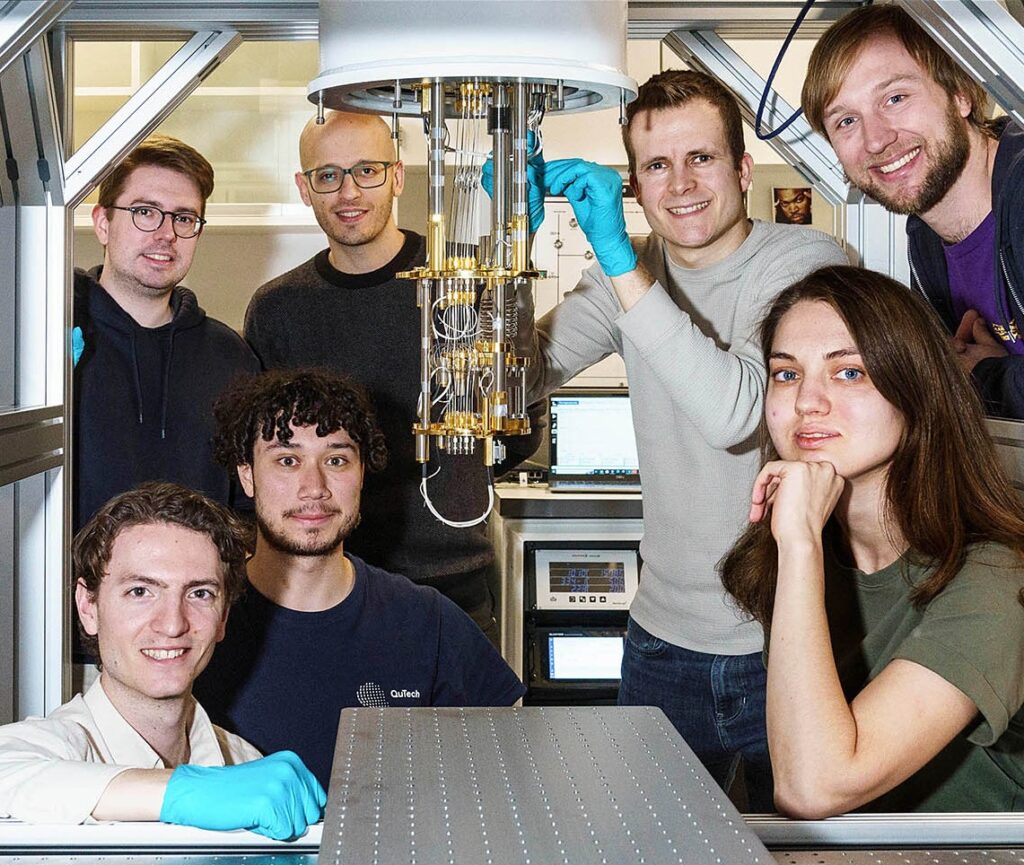
Carlos Errando Herranz serves as an Assistant Professor in the Quantum and Computer Engineering Division at Delft University of Technology's Faculty of Electrical Engineering, Mathematics and Computer Science (EEMCS) and as a Principal Investigator at QuTech. His research focuses on developing scalable quantum photonic integrated circuits using semiconductor fabrication processes compatible with existing infrastructure for quantum internet applications. He received Bachelor's and Master's degrees from Universitat Politècnica de València (2013) and a PhD in Micro and Nanosystems from KTH Royal Institute of Technology (2018), followed by postdoctoral positions at KTH and MIT as a Marie Curie fellow. His lab investigates quantum photonics, integrated photonics, and color centers with emphasis on diamond tin-vacancy systems and silicon-based quantum emitters. Recent publications demonstrate strong expertise in tuning quantum emitters via strain engineering, heterogeneous integration of spin-photon interfaces, and MEMS-enabled reconfigurable photonics. Key advancements include cavity-enhanced quantum memories, superconducting detector integration, and spectral control of solid-state emitters for quantum networks. Dr. Herranz advises seven graduate students including PhD candidates Vicky Dominguez Tubio, Arjan Mejas, Matteo Pirro, Christian Primavera, Jan Riegelmeyer, and Elena Volkova, along with Master student Bram Zijlstra. His team comprises postdocs Lin Jin and Pat Laferriere, and interns Elsa Herranz Valiente and Ernest Staffetti Cruañas. The Errando Herranz Lab operates within QuTech's Quantum Internet Division at Delft University, maintaining specialized facilities for nanofabrication and optical characterization of quantum photonic devices. Current research directions include developing CMOS-compatible quantum memories operating at telecom wavelengths and scalable architectures for quantum repeaters.
Monika Henzinger is Professor at the Institute of Science and Technology Austria (ISTA), heading the research group of Theory and Applications of Algorithms. She also serves as Vice President for Technology Transfer at ISTA since 2024. Previously, she held professorships at the University of Vienna (2009-2023) and EPFL, Switzerland (2005-2009), was Director of Research at Google (1999-2005), and served as Assistant Professor at Cornell University. Professor Henzinger's research centers on efficient algorithms and data structures with three main thrusts. First, she investigates dynamic settings where program inputs are repeatedly updated, seeking solutions faster than restarting computations. Second, she develops privacy-preserving algorithms that add minimal noise to protect input data while maintaining efficiency. Third, she translates theoretically optimal algorithms into practical implementations for dynamically changing inputs. Her work consistently addresses resource conservation in data processing, particularly computing time and memory space, while exploring the theoretical limits of possible savings. Henzinger's recent publications (2024-2025) reveal strong trends in dynamic algorithms, differential privacy, and graph theory. Her research consistently bridges theoretical computer science with practical applications, focusing on algorithms that adapt to changing inputs while preserving computational efficiency and data privacy. She has made significant contributions to problems like dynamic matching, minimum cut computation, and privacy-preserving data analysis across various domains. Professor Henzinger has received numerous prestigious awards and honors: Wittgenstein Award (2021) Two ERC Advanced Grants (2014, 2021) Carus Medal of the German Academy of Sciences Leopoldina (2019) SIGIR Test of Time Award Fellow of the Association of Computing Machinery (2016) Member of the Austrian Academy of Sciences (2017) CAREER Development Award of the National Science Foundation Best paper Award at the Symposium on Discrete Algorithms (2024) Professor Henzinger currently advises PhD students Bardiya Aryanfard, Antoine El-Hayek, and Roodabeh Safavi Hemami, along with postdocs Anamay Chaturvedi and Niklas Hahn. Her research is supported by multiple significant grants including an ERC Advanced Grant for 'Design and Evaluation of Modern, Fully Dynamic Data Structures,' the FWF Wittgenstein Prize, and the WEAVE Project on 'Static and dynamic hierarchical graph decompositions.' She also serves as Principal Investigator for the FWF project 'Fast algorithms for a reactive network layer,' providing substantial funding for her innovative work in algorithms and data structures. Professor Henzinger leads the Theory and Applications of Algorithms research group at ISTA, which focuses on developing practical algorithms for dynamic environments. Her team investigates resource conservation in data processing, specializing in dynamic algorithms that efficiently handle changing inputs, privacy-preserving algorithms that minimize noise while protecting data, and translating theoretical algorithms into practical implementations. The group maintains a strong presence in theoretical computer science through regular publications in top conferences and journals, and collaborates extensively with institutions worldwide to advance algorithmic research.
Dr. James D. Foley is a Professor in the College of Computing and the School of Electrical and Computer Engineering at Georgia Institute of Technology. He holds the Stephen Fleming Chair in Telecommunications. He earned his Ph.D. in Computer Information and Control Engineering from the University of Michigan and a BSEE from Lehigh University, where he was inducted into Phi Beta Kappa, Tau Beta Pi, and Eta Kappa Nu. Founded the Graphics, Visualization & Usability (GVU) Center at Georgia Tech, ranked #1 in graphics and user interaction. Directed Mitsubishi Electric Research Lab and later served as CEO of Mitsubishi Electric ITA. Executive Director of Yamacraw, Georgia's broadband development initiative. His research focuses on computer graphics, human-computer interaction (HCI), visualization, and user interface design. He co-authored foundational textbooks like Interactive Computer Graphics , translated into multiple languages. Professional leadership includes Chair of the Computing Research Association (CRA), Fellowships with ACM and IEEE, and the ACM/SIGGRAPH Stephen Coons Award. He advised over 30 graduate students and led numerous conferences, panels, and editorial roles in top journals. Contributions span academia and industry, including roles in NSF workshops, JTEC studies on HCI in Japan, and advisory boards for institutions like MIT and Lehigh University.