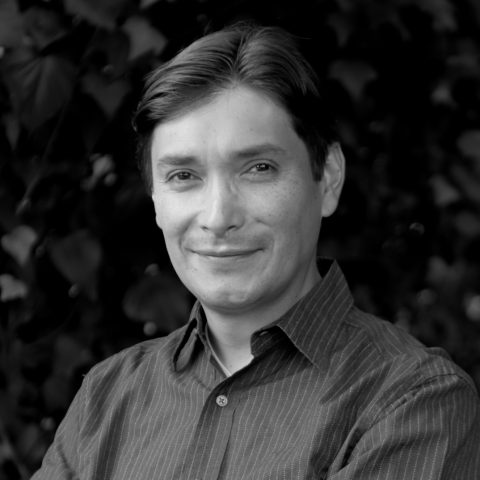
Étienne-Marie Lassi is a Professor in the Department of French, Spanish and Italian at the University of Manitoba's Faculty of Arts. His research focuses on Francophone African literature and cinema, postcolonial theories, ecocriticism, and posthumanism. PhD (Francophone Literature and Cinema), University of Ottawa, 2009 MA (Francophone African Literature), University of Calgary, 2005 Licence (Bilingual Studies), University of Yaoundé, 1990 His work explores interactions between humans and non-humans in African literature, ecological implications of postcolonial narratives, and urban/rural dichotomies in Francophone African fiction. Recent research examines posthuman societies and environmental social imaginaries. Publications and Google Scholar entries (2012-2025) demonstrate expertise in Francophone African ecocriticism, cinematic adaptation, and postcolonial urban/rural dynamics. Key themes include ecological imperialism, plantations, and environmental justice in literature. Falconer Emerging Researcher Award, Humanities Category (2016) Étienne-Marie Lassi is currently accepting graduate students for Master's and PhD supervision in Francophone African literature and cinema studies. His teaching includes courses on African cinema, postcolonial French literature, and written expression.
Krish Seetah is an Associate Professor of Environmental Social Sciences, Oceans, and Anthropology at Stanford University, and a Senior Fellow at the Woods Institute for the Environment. He holds a B.Sc. (1996) and M.Sc. (1998) from the University of Surrey, an M.Sc. in Osteoarchaeology from Bournemouth University (2002), and a Ph.D. in Archaeology from the University of Cambridge (2007). His research focuses on zooarchaeology, colonialism, and environmental archaeology, particularly in Mauritius, where he directs the ‘Mauritian Archaeology and Cultural Heritage’ (MACH) project. This project examines colonial activity, slavery, indentured labor, and ecological consequences of monoculture agriculture. His work integrates geometric morphometrics, butchery analysis, and interdisciplinary approaches to study human-animal relationships and socio-economic dynamics in colonial contexts. Seetah’s research spans the Mediterranean, Baltic, and Indian Ocean regions, addressing topics like trade networks, animal processing technologies, and the ecological impact of colonialism. His recent publications emphasize environmental archaeology in Mauritius, global health, and the intersection of ecology and colonial history. He advocates for frameworks that link archaeological insights to contemporary environmental challenges and disease control. His academic affiliations include the Doerr School of Sustainability and the Stanford Woods Institute, reflecting his commitment to interdisciplinary environmental and social science research.
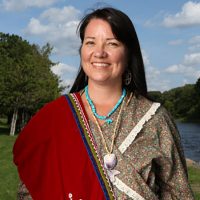
Dr. Kahente Horn-Miller (Kanien'kehá:ka/Mohawk) is an Associate Professor at Carleton University within the Faculty of Arts and Social Sciences . She holds a Ph.D. and M.A. from Concordia University and serves as the Associate Vice President Indigenous Teaching, Learning and Research . Her work focuses on Haudenosaunee-specific research methodologies , Indigenous governance , and cultural revitalization . She co-chaired the committee that developed Carleton's Kinàmàgawin Indigenous strategy and pioneered the Collaborative Indigenous Learning Bundles project to integrate Indigenous content across disciplines. Notable publications include performance-based interpretations of Haudenosaunee creation stories and analyses of Indigenous citizenship and adoption dynamics in settler colonial contexts. Her research also explores humor as medicine in Kanien'kehá:ka society. Scientific Awards: 2023 National 3M Teaching Fellow 2018 Award for Collaborative Indigenous Learning Bundles
Achille Mbembe is a Research Professor in History and Politics at the Institute for Social and Economic Research (ISER) at the University of the Witwatersrand, Johannesburg. He is internationally recognized for his critical analysis of colonialism, its enduring legacies, and the socio-political structures shaping African societies. His work interrogates themes of power, identity, and the ethical imperatives of restitution and repair in postcolonial contexts. Mbembe’s intellectual contributions have positioned him as a leading voice in decolonial thought and global critical theory. His 2022 MF CASR Annual Lecture, titled "RESTITUTION, REPAIR AND THE CAPACITY FOR TRUTH," emphasizes the necessity of confronting historical injustices through collective memory and ethical accountability. The lecture underscores Europe’s unresolved debts to formerly colonized nations and advocates for a shared commitment to global repair. Mbembe’s academic affiliations include MF CASR (as a lecture host) and the University of the Witwatersrand, where he leads research on colonial critique and political philosophy. His influence extends beyond academia through public engagements that bridge scholarly rigor with activist discourse.
Lars Berge is a Senior Lecturer in History and Religion at Dalarna University, affiliated with the School of Culture and Society. He holds dual roles as Programme Director for the Master Programme in African Studies (HAFSA) and One-Year Master Programme in African Studies (HAFRA), alongside coordinating multiple African Studies courses including research methodologies and thematic subjects like Urban Spaces in Africa and Religion/Politics dynamics. His research focuses on colonial and post-colonial African history, particularly Ethiopian experiences under Swedish missionary influences, and the interplay between education systems, nationalism, and modernization ideals in colonial contexts. Key research interests include: missionary historiography, colonial education policies, and the socio-political impacts of egalitarian ideals propagated through missionary networks. Berge has contributed chapters to volumes such as Africa as Method (Springer, 2024) and Narratives of education in times of colonization and decolonization in Africa (Brill, 2023), alongside conference presentations on Scandinavian colonial discourses and cultural transfers. His work bridges local African agency with transnational historical processes, examining how missionary activities shaped educational systems and identity formations in Ethiopia and southern Africa. Despite no explicitly listed awards, his prolific publication record (17+ works) indicates sustained academic contribution. Teaching responsibilities include guiding students through research proposal development, African economic dynamics, and thesis supervision in African Studies programs.
Professor Carl Mika (Tuhourangi iwi) is Head of School and Professor at Aotahi School of Maori and Indigenous Studies, University of Canterbury. He has held these positions since July 2023 and September 2021 respectively, and is actively engaged in research, teaching, and leadership within the field of Indigenous philosophies. Professor Mika's research focuses on Indigenous metaphysics and ontologies, particularly Māori concepts of nothingness and darkness as counterpoints to Enlightenment thinking. His scholarly work examines the intersections of colonization, reductionism, and Indigenous knowledge systems. He is currently exploring how Māori philosophical concepts can inform academic writing and contribute to discussions around mātauranga Māori and science. His research interests span Indigenous metaphysics, decolonial theory, Māori philosophy, educational philosophy, and the intersections of Western and Indigenous thought traditions. Professor Mika's work consistently challenges colonial frameworks while advancing Indigenous knowledge systems and perspectives. Professor Mika has received significant recognition for his scholarly contributions, including the 2024 University of Canterbury Research Medal and the 2024 University of Canterbury Faculty of Arts Kairangahau Māori Award. He is also a Fellow of the Philosophy of Education Society of Australasia (PESA) and received the PESA annual book award in 2017. As an active supervisor, Professor Mika has guided numerous Master's and Doctoral students through research projects exploring diverse aspects of Māori and Indigenous philosophies, metaphysics, identity, and cultural revitalization. His supervision portfolio demonstrates a commitment to fostering the next generation of Indigenous scholars. Professor Mika has contributed to significant research projects, including serving as a named investigator for the 'Sámi mánná jurddavázzin – Sámi Children as Thought Herders' project funded by the Swedish Research Council (2020-2023), which focused on storytelling and philosophical inquiries in Indigenous Early Years Education.
Ernesto Bilbao is an Assistant Professor at Auburn University’s School of Architecture, Planning and Landscape Architecture, where he teaches advanced design studios and the History and Theory of Architecture. He is also the founding principal of Estudio Ernesto Bilbao, based in Quito, Ecuador, specializing in landscape architecture and architectural design. Education: Doctor in Philosophy in Architectural History, The University of Texas at Austin Master of Architecture (Fulbright Scholar), Rice University Bachelor of Architecture, Universidad San Francisco de Quito His research focuses on modernization, post-colonization, 20th-century modern architecture in Latin America, decolonization theories, and the history and theory of landscape architecture. Notable projects include the Master Plan of Parque Bicentenario (Quito, 2012–2016), derived from his winning 2008 Parque del Lago design competition, and Jardín del Cacao y Chocolate (2012–2018), honored in the 2020 Pan American Biennale. His Ph.D. dissertation explored the impact of air transportation on Quito’s urban development from 1920–1960. Awards: Winner of Parque del Lago International Design Competition (2008) Honorable Mention in Quito’s 2020 Pan American Biennale of Architecture He actively engages with academic events, including hosting the Bob & Sherry Faust Distinguished Lecture at Auburn University.
Dr. José Juan Pérez Meléndez is an Associate Professor of History at the University of California, Davis. He holds a Ph.D. in History from the University of Chicago (2016), an M.A. in History from the University of Chicago (2011), an M.S. in Education from Mercy College (2008), and a B.A. in History from Princeton University (2005). His research focuses on 19th-century Latin America and the Caribbean, with particular emphasis on Brazil’s political, business, and migratory dynamics in global contexts. His first book, Peopling for Profit in Imperial Brazil (2024), examines migration policies in Brazil alongside global processes. Current projects include studies on monarchism in post-independence Latin America and the environmental history of Brazil’s leading navigation company. He also researches Puerto Rico’s decolonization debates and the illegal slave trade in the Caribbean. Teaching spans undergraduate courses on Latin American history, Brazilian history, migration studies, and U.S. colonialism in Puerto Rico, alongside graduate seminars on global history and corporate history. His awards include the UC Davis Hellman Fellowship (2022-2023) and the Max Weber Postdoctoral Fellowship (2016-2017). He has published widely in journals such as The Americas and Revista Brasileira de História , with a focus on slavery, business networks, and migration policies.
Anne Eller is an Associate Professor of Latin American and Caribbean History at Yale University, specializing in the intersection of emancipation, anticolonial movements, and Caribbean sovereignty. She holds a PhD in History from NYU, where her dissertation on Dominican independence earned the Dean’s Prize. Her research explores the interconnected histories of Haiti and the Dominican Republic, emphasizing popular resistance and transnational solidarity. Key works include We Dream Together (2016), which reinterprets Dominican independence within a broader Caribbean context, and a 2022 collaborative study on Haitian archival preservation. Her work has been supported by the Fulbright-Hays Program and multiple fellowships. Eller teaches courses on Caribbean political thought, Atlantic history, and the African Diaspora. Her articles analyze themes like post-emancipation agency, gendered protest, and the legacies of colonial historiography. Awards include the Samuel and Ronnie Heyman Prize for scholarly excellence and recognition from the Haitian Studies Association. Awards: Isis Duarte Book Prize (2017), Avant Garde Book Prize (2017), Andrés Ramos Mattei—Neville Hall Article Prize (2018) Grants: British Library Endangered Archives Programme, U.S. Fulbright-Hays Scholarship Labs/Teams: Collaborations with the Bibliothèque Haïtienne des Frères de l’Instruction Chrétienne on digital preservation projects
Professor Victoria Haskins is a distinguished historian at the University of Newcastle, where she holds a professorship in the School of Humanities, Creative Industries, and Social Sciences. She is a member and former founding director of the Purai Global Indigenous History Centre, dedicated to collaborative research with Indigenous communities. Her academic career spans prestigious appointments including an ARC Future Fellowship (2009-13), the NSW Centenary of Anzac Commemoration History Fellowship (2014-18), and a Distinguished Scholar fellowship at CUNY (2023). Haskins' research focuses on the complex interplay of gender, race, and labor relations in colonial domestic settings. She is particularly renowned for her work on Indigenous domestic service policies across Australia and the United States, and her current ARC Discovery project on 'Ayahs and Amahs: Transcolonial Servants in Asia and Britain 1780-1945.' Her scholarship reveals how domestic labor was central to colonial economies and social structures, with legacies that continue to shape contemporary society. She argues that 'labours of love and care in the home were essential not only to colonial economies but also to the social and cultural structures of colonization.' Haskins' recent publications demonstrate a consistent focus on transcolonial perspectives, examining domestic service across imperial networks. Her work spans Australian Indigenous history, North American Native American history, and Asian transnational connections, revealing patterns of regulation and cultural fixation that emerged in colonial histories. She has produced significant interdisciplinary collaborations, including the digital exhibition 'Transcolonial Journeys' with colleagues from multiple institutions. Fellow of the Australian Academy of the Humanities (2022) Member of the Council of the Australian Academy of the Humanities (2023) Fellow of the Royal Society of New South Wales (2024) ARC Future Fellowship recipient (2009-13) NSW Centenary of Anzac Commemoration History Fellowship (2014-18) Birkbeck Institute for the Humanities Fellowship (2017) As a supervisor, Haskins has guided numerous PhD candidates through research on Indigenous history, cross-cultural relationships, and colonial studies. Her grant history shows substantial funding success, including multiple ARC Discovery Projects and an ARC LIEF grant for the Time-layered Cultural Map of Australia. She has held significant leadership roles, including President of the University's Academic Senate (2020-2022) and membership on the ARC College of Experts (2020-22). Haskins co-directs the Purai Global Indigenous History Centre, which emphasizes collaborative research frameworks that prioritize respect, reciprocity, and partnership with Indigenous communities. Her approach to historical research is deeply informed by her belief that 'part of my role as a historian is to be a memory custodian,' highlighting the importance of understanding marginalized histories for building a positive future.
Christina H. Lee is Professor of Spanish and Portuguese and Acting Chair of the Humanities Council at Princeton University (2025-26). She serves as Acting Director of the Program in Humanistic Studies and holds affiliations with the Center for Culture, Society and Religion's Executive Committee, Indigenous Studies, Latin American Studies, and the Princeton Institute for International and Regional Studies. Lee is a Faculty Advisory Board member for the Emma Bloomberg Center for Access and Opportunity and a Princeton Alumni Weekly board member. Ph.D. in Romance Languages and Literatures from Princeton University Her research examines early modern Iberian and Spanish Transpacific cultural productions, focusing on colonial Philippines' religious practices, iconography, and resistance strategies. She explores intersections of race, identity, and missionary dynamics through literary analysis and archival recovery projects. Recent publications include the 2024 volume of The Spanish Pacific primary sources, Saints of Resistance (2021), and The Anxiety of Sameness (2015, 2018). Her work reveals how colonized communities preserved indigenous spirituality through saint devotions despite Spanish rule. Scientific Awards: Humanities Council Special Grant (Philippine archival work) Novogratz Bridge Year Faculty Fellow Lee co-directs the Reclaiming the Lost Archive of the Convento de San Agustin digital repatriation project with Cristina Martínez-Juan, and co-edits the Connected Histories in the Early Modern World book series with Julia Schleck. She is currently investigating 18th-century shifts in Philippine Chinese identity construction.
Manuela Ciotti is a Professor of Social and Cultural Anthropology of the Global South at the University of Vienna. Her research spans two interconnected strands: (1) inequality, identity politics, and modernity in India’s subaltern communities, and (2) the politics of art and materiality in global art circulation from India. She leads the research team Sedimented Visions and holds an ERC Advanced Grant for the project ANTHROFUTURE , focusing on the anthropology of the future through art world dynamics. Her research integrates ethnographic fieldwork and archival analysis across diverse sites, including villages in India, museums in New York, and the Venice Biennale. Key themes include caste and race in global contexts, digital anthropology, and socio-political struggles around infrastructure and urbanization. She has published extensively, including monographs Retro-modern India (2010) and Unsettling the Archetypes (2017). Recent projects examine the global south at the Venice Biennale (1950s-1980s) and the global life of caste and race , analyzing movements like #DalitLivesMatter. She collaborates with postdoctoral researchers such as Geoffrey Rathgeb Aung (Myanmar infrastructure studies, supported by NSF and Fulbright) and Evgenija Filova (Berlin art and racism research). Her team also includes PhD candidates Pierre Wenzel (Dakar urbanization) and Ankit (marriage dynamics in rural India). Ciotti’s work emphasizes ethical commitments to colonized peoples’ self-determination and critiques of systemic violence.
Anne-Claire Bonneville is a Lecturer at INALCO, affiliated with the Department of International relations, specializing in Middle Eastern History and Political Science. Her research focuses on the formation of the contemporary Arab world through colonization and decolonization, national and state constructions, and the history of power representations in the Arab-Muslim world. Key research themes: Contemporary international relations (1870–present), Modern Egypt (19th–21st centuries), and North Africa–Middle East regional studies. Active member of the CERMOM research laboratory and contributor to academic publications on Egyptian political history. Her scholarly work explores the intersection of imperial history, diplomatic conflicts, and socio-political transformations in the Arab world. She has received the Joseph du Teil Prize for diplomatic history in 2011. Administrative roles include participation in the CNU (National Scientific Council) and scientific councils for French research zones in Egypt, Sudan, and the Arabian Peninsula. Her publications span monographs, textbooks, and international conference proceedings, reflecting her expertise in historical analysis of power dynamics and international relations.
Samir SAUL is a Professor in the Department of History at the Université de Montréal , affiliated with the Faculty of Arts and Science . He co-founded and coordinates the Groupement interuniversitaire pour l'histoire des relations internationales (GIHRIC) since 2004. His work bridges academic research and public engagement, with media appearances analyzing global conflicts. Education: Specialized in Social Sciences, Literature, and Humanities Research Interests: Focus on the history of international relations , combining political, economic, and cultural forces. Key areas include France-Arab World dynamics, decolonization , and economic history (capital movements, trade, corporate history). Recent Publications: 15+ books and media contributions, including Le conflit mondial du XXIe siècle (2025) and Imperialism. As Rampant Today as in the Past (2025), examine imperialism’s evolution from colonial eras to neoliberal globalization. Supervision: Over 40 Master's and PhD students, focusing on topics like French-Libyan relations, Arab nationalism, and Cold War geopolitics. Awards: Recipient of the Outstanding Achievement in Teaching award early in his career, reflecting his dedication to pedagogy.
Lucy Taylor is a Senior Lecturer in Latin American Studies at Aberystwyth University's Department of International Politics. A specialist in Argentina and Welsh Patagonia, her work focuses on colonialism, citizenship, and decolonial theory. She is actively involved in academic societies such as the Bulletin of Latin American Research and the Society for Latin American Studies, and serves on the editorial board of Settler Colonial Studies . She leads initiatives on the Race Equality Charter and participates in the Women in Research group. Education: BA (University of London, Queen Mary), MPhil (Glasgow University), PhD (Manchester University) Her research interrogates settler colonialism and decolonial citizenship, particularly in Welsh Patagonia, Argentina, and Wales. Using archival analysis, she critiques mythologies around Welsh colonization, examining moral capital, settler-indigenous 'friendship,' and global perspectives. She is currently exploring how Patagonian narratives inform Welsh decolonization and anti-racism policies, with a forthcoming book in September 2024. Recent publications span settler colonial theory, international governance, and critical citizenship. Notable trends include interdisciplinary approaches linking colonialism to contemporary political power structures and global historical contexts. Lucy supervises PhD students in Latin American politics, social movements, and decolonial studies. Her research impacts include a 2024 Welsh Government Culture Strategy Consultation submission. She has also contributed to media discussions on Welsh Patagonia's colonial legacy.