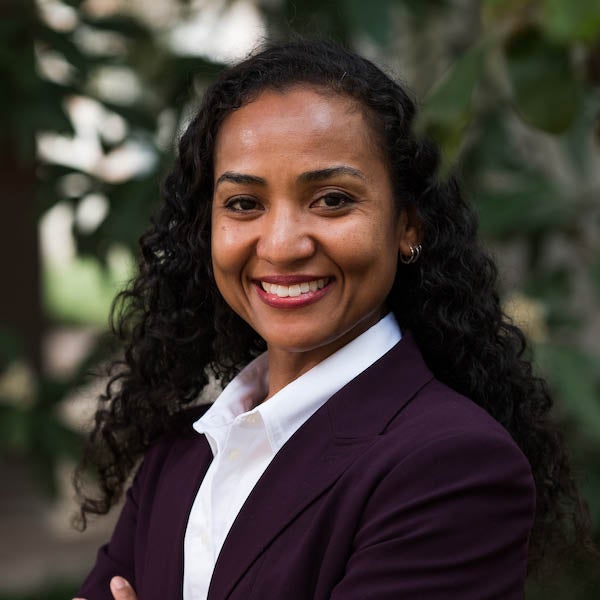
Fay Yarbrough is the Senior Associate Dean of Faculty and Graduate Programs and William Gaines Twyman Professor of History at Rice University's School of Humanities. She specializes in 19th-century Native populations of the U.S. Southeast and Indian Territory, focusing on Indigenous-African diaspora interactions. Her research examines tribal sovereignty, race formation, and gender through legal frameworks and colonial dynamics. Education: PhD (Emory University), MA (Emory University), BA (Rice University). Teaches courses on Civil War history, Native history, African American history, and gender studies. Key works include Race and the Cherokee Nation (2008), Choctaw Confederates (2021), and co-edited Gender and Sexuality in the Indigenous Americas (2011). Explores topics like Cherokee marriage laws, Choctaw Civil War participation, and colonial gender manipulation. Affiliated with Rice's Center for the Study of Women, Gender & Sexuality and Center for African & African American Studies. Active in promoting interdisciplinary research on race, Indigenous sovereignty, and gender in historical contexts.
James A. Millward is a Professor of Inter-societal History at Georgetown University's Edmund A. Walsh School of Foreign Service and Department of History. He holds a Ph.D. in History from Stanford University (1993), an MA from the School of Oriental and African Studies (University of London, 1985), and a BA in East Asian Languages and Civilizations from Harvard (1983). Millward specializes in Qing imperial history, the Silk Road, Xinjiang studies, and cross-cultural musical exchanges across Eurasia. Research Interests: His work critically examines Sinicization narratives, the Qing tribute system, and the impact of colonial historiography on contemporary China's ethnic policies. He also explores musical instrument diffusion along the Silk Road, comparing lutes like the pipa and oud. Publications: Notable works include Eurasian Crossroads: A History of Xinjiang (2007, 2021), The Silk Road: A Very Short Introduction (2013), and chapters in edited volumes analyzing Qing multiculturalism and cultural assimilation frameworks. Academic Leadership: As former president of the Central Eurasian Studies Society (2010) and contributor to the International Studies Association award-winning Culture and Order in World Politics (2019), Millward bridges historical analysis with modern political discourse. Media Engagement: A frequent contributor to The New York Times , Washington Post , and international media, he provides expert commentary on Xinjiang, Uyghur issues, and China-West relations. His current projects include a study of lute cultural exchange and the book Decolonizing History in China , challenging exceptionalist narratives in mainland historiography.
Manolis Manoledakis is Professor of Classical Archaeology at the International Hellenic University (IHU) and Dean of the School of Humanities, Social Sciences and Economics since 2020. He directs IHU’s archaeological excavation at Neo Rysio and co-edits the journal Ancient West and East . His academic career spans multiple institutions including Aristotle University of Thessaloniki, University of Ioannina, and Democritus University of Thrace. Education: Ph.D. in Classical Archaeology, Aristotle University of Thessaloniki (2003) Master of Arts in Classical Archaeology, Aristotle University of Thessaloniki (1999) Bachelor’s degree in History and Archaeology, Aristotle University of Thessaloniki (1997) His research focuses on the archaeology, historical geography, and ancient history of the Black Sea region and Macedonia, with specialization in ancient topography, cults, mythology, and Greek vase painting. He has developed unique interdisciplinary methodologies combining cartographic analysis with archaeological fieldwork. The 15 most recent publications reveal trends in Pontic studies, Greek colonialism, Roman hydraulic engineering, and ethnographic analysis of indigenous communities. His work bridges textual analysis with material evidence, particularly through GIS applications and remote sensing technologies. Scientific Awards: Scholarship of excellence (Aristotle University of Thessaloniki, 2001) State Scholarships Foundation fellowship (2006-2007) Manoledakis has directed the MA in Black Sea and Eastern Mediterranean Studies and MA in Classical Archaeology and Ancient History of Macedonia. He organized international workshops and summer schools, and led excavation teams at Neo Rysio and Vergina, while contributing to environmental history projects like Mines, Olives and Monasteries . His editorial work includes proceedings of Black Sea Antiquities workshops and co-edited volumes in the Colloquia Antiqua supplement series. He has applied digital methods to Ptolemy’s Geographia and WW2 aerial photography for ancient landscape reconstruction.
Dr Luca Follis is an Associate Professor in Criminology within the Department of Sociology and Criminology at the School of Law, Politics and Sociology, University of Sussex. His interdisciplinary research explores the intersections of law, power, technology, and resistance, with a focus on penal systems, surveillance, and digital activism. His education includes a PhD in Sociology (with Honours) from the New School for Social Research, where his dissertation won the Albert Solomon Memorial Award. He also holds a B.A. in English Textual Studies from Syracuse University and a B.A. in Sociology and Mass Communication from the University of New Mexico. Political Sociology Criminology and Penal Governance Hacktivism and State Hacking Surveillance and Networked Technology Carceral Logistics and Prison (Im)mobilities Migration, Health Systems, and (Im)mobilities His recent publications reflect a strong trend in analyzing how digital technologies reshape state power and resistance, from state hacking and cyberwar to healthcare access during pandemics. He frequently collaborates with scholars like Anna Fish and engages in critical legal and historical analyses of punishment and control. Albert Solomon Memorial Award in Sociology, New School for Social Research Senior Fellow of the Higher Education Academy Luca Follis advises students and contributes to academic discourse through editorial work, collaborative research, and public engagement. While specific grant details are not listed, his extensive publication record and interdisciplinary projects suggest active research funding. He is involved in critical studies of justice infrastructures, carceral systems, and digital governance. His work bridges historical and contemporary issues, from 19th-century penal governance to modern cyber conflicts, often situating technological change within broader political and cultural dynamics. He contributes to both academic and public understanding of power, resistance, and justice in digital and carceral contexts.
Alessandra Russo is Professor and Chair of the Department of Latin American and Iberian Cultures and Director of the Hispanic Institute at Columbia University. She specializes in the theory, practice, and display of early modern arts with a special emphasis on artistic dynamics within the context of Iberian colonization. Her work bridges art history, historical anthropology, and global studies, exploring how artifacts encountered and collected during Iberian expansion influenced the development of modern art concepts. Professor Russo received her training in art history and historical anthropology at the Universitá di Bologna, the Universiteit Leiden, and the École des Hautes Études en Sciences Sociales in Paris. She has been a fellow at the Wissenschaftskolleg-Institute for Advanced Study in Berlin and has held visiting positions at ESBA of Genève, the Institut National d'Histoire de l'Art, and the École des Hautes Études en Sciences Sociales where she is an associate member of the Centre de recherches sur les mondes Américains (CERMA). Her research focuses on the intersection of art, knowledge, and power in the early modern period, particularly examining how the encounter between European and Indigenous artistic practices transformed understandings of art globally. Russo investigates how artifacts from the Americas, Africa, and Asia collected during Iberian expansion contributed to reshaping European artistic concepts, challenging traditional narratives of art history that position Europe as the sole origin of modern art. She explores the role of multilingual dialogues, material exchanges, and visual translations in creating new artistic universes that were neither purely European nor Indigenous but emerged from their encounter. Professor Russo's publications reveal consistent engagement with global art history, transcultural studies, and the materiality of artistic production. Her work spans diverse topics including feather art, cartography, museum studies, and the theoretical frameworks that shaped artistic production across the Iberian world. A recurring theme is the examination of how objects and images traveled across continents, acquiring new meanings while retaining connections to their places of origin. Her research demonstrates how early modern artistic practices were fundamentally shaped by global encounters rather than developing in isolated national or regional contexts. Eleanor Tufts Award of the Society of Iberian and Latin American Art (SIGA) for A New Antiquity: Art and Humanity as Universal (1400-1600) Best book award in "theory of art" for Images Take Flight Grand Prix du Jury at FILAF for Images Take Flight ALAA Book Award Honorable Mention for Images Take Flight Professor Russo has advised numerous doctoral students at Columbia University whose work explores global art history, colonial Latin America, and Indigenous artistic practices. She leads the research group "Spanish Italy and Iberian Americas," which has received funding from the Getty Foundation for its work on artistic interactions between Spanish Italy and the Iberian Americas in the 16th century. This project has brought together scholars from Italy and Latin America to study artistic connections between these regions, resulting in workshops, symposia, and digital publications that document objects, monuments, maps, and prints. As a member of the Museum Advisory Committee at the Metropolitan Museum of Art, Professor Russo contributes to the reinstallation of galleries including the Gallery of Central Europe and the Gallery of Northern Renaissance. Her curatorial work includes the exhibition "El vuelo de las imágenes. Arte plumario en México y Europa. 1300-1700" at the Museo Nacional de Arte and collaboration on "Planète Métisse" at the Musée du Quai Branly in Paris. She is currently developing an exhibition project "Sebastiano, il Custode del Mondo. Universi artistici a Bologna nel Seicento" alongside her book manuscript on Sebastiano Biavati, the custodian of Ferdinando Cospi's art collections in seventeenth-century Bologna.
Patrick M. Tarwater is a Professor in the Department of Epidemiology & Biostatistics at Texas A&M University, with research spanning infectious disease epidemiology, traumatic brain injury rehabilitation, sleep science, biostatistical methods, and environmental health impacts on child development. His work integrates clinical, laboratory, and computational approaches to address complex public health challenges. His educational foundation includes: PhD in Biometry from University of Texas Health Science Center at Houston (1999) MS in Mathematics from Texas Tech University (1992) BA in Mathematics from Texas Tech University (1990) Tarwater's research in Infectious Disease Epidemiology features extensive work on HIV/SIV pathogenesis using non-human primate models, SARS-CoV-2 variant dynamics, and microbial risk assessment in environmental settings. His Traumatic Brain Injury and Sleep research includes innovative interventions like the OSABI sleep hygiene protocol and objective sleep monitoring methodologies for rehabilitation patients. The Environmental Health focus centers on the ECHO program's investigation of maternal nutrition and child health outcomes, alongside risk assessments for oil spill contaminants and recreational water safety. Analysis of his 2018-2024 publications reveals three dominant trajectories: (1) viral pathogenesis mechanisms using advanced animal models, (2) neuroimmunological consequences of infections and injuries, and (3) environmental exposure risk modeling. His work consistently employs sophisticated biostatistical techniques and translational approaches bridging laboratory findings to clinical applications. While no specific awards are documented in the source material, Tarwater's prolific publication record in high-impact journals demonstrates significant scholarly contributions. His teaching portfolio includes foundational courses in epidemiology and biostatistics, plus advanced instruction in cohort analysis and epidemiologic inference.
Seth Bernard is a Professor of Classics at the University of Toronto, specializing in Roman social and economic history, Roman archaeology, and the application of scientific methods to historical studies. He holds a PhD in Ancient History from the University of Pennsylvania and has been affiliated with institutions such as the American School for Classical Studies at Athens and the American Academy in Rome. His research integrates archaeology, anthropology, and environmental science to explore pre-Imperial and Republican Italy, focusing on labor, urbanization, and historical culture. Education includes a BA in Classics from Amherst College and a PhD in Ancient History from the University of Pennsylvania. He has led major projects like the Falerii Novi excavation in Italy, investigating Roman urbanism and environmental history. His work has been supported by grants from SSHRC (Social Sciences and Humanities Research Council), including a Connection Grant and an Insight Grant. Research interests include the economic foundations of Roman imperialism, climate history, and the role of slavery in ancient economies. Notable publications include Building Mid-Republican Rome (2018), Historical Culture in Iron Age Italy (2023), and co-edited volumes on the Middle Republic and Greco-Roman economic models. He serves as Associate Editor of the Journal of Roman Archaeology and editorial board member of the Journal of Roman Studies . Awards include the Rome Prize Fellowship (American Academy in Rome) and recognition for interdisciplinary research. Current projects include the Oxford Handbook of the Iron Age Mediterranean and studies on labor and the Roman economy.
Aileen Friesen is an Associate Professor in the Department of History at the University of Winnipeg, affiliated with the Faculty of Arts. She also serves as Executive Director of the Plett Foundation, focusing on interdisciplinary historical research and community engagement. Her work bridges academic and public history through initiatives like heritage cruises and educational outreach. Education Background : While specific degrees are not detailed in the text, her academic roles and publications suggest advanced training in History, likely with a PhD in Russian or Mennonite Studies. She is associated with the Centre for Transnational Mennonite Studies and the H. Sanford Riley Centre for Canadian History. Research Interests : Mennonite History : Focuses on migration, religious dissent, and colonial experiences in Siberia and Ukraine. Russian/Soviet History : Explores Orthodoxy’s role in colonization, state-religion interactions, and ethnic group policies. Migration Studies : Analyzes displacement patterns, transnational identity formation, and diaspora communities. Her work frequently intersects with environmental history, religious studies, and colonial studies. Publications Trends : Recent scholarship emphasizes Siberian Mennonite communities, Soviet-era religious policies, and transnational ethnic mythologies. She combines archival research with oral histories, as seen in The Russian Mennonite Story (2018) and Colonizing Russia’s Promised Land (2024). Her 2020 analysis of Omsk bishops reveals how spiritual networks shaped colonial dynamics. Awards & Grants : No specific awards listed. However, her publications and roles suggest sustained institutional support for research in Mennonite and Russian studies. Labs/Teams : Active in the Newberry Consortium in American Indian Studies and the State Socialism Workshop. Collaborates with the Oral History Centre and the Centre for Rupert’s Land Studies.
Scott L. Pratt is Professor and Department Head of Philosophy at the University of Oregon. His work spans American philosophy, logic, and Indigenous thought, with a focus on decolonial methodologies and educational philosophy. As co-director of the Central European Pragmatist Forum and PLURILOG research project, he bridges interdisciplinary studies of logic and cultural plurality. Beloit College (BA) University of Minnesota (PhD) His research examines how logic shaped colonization and informs anti-colonial efforts, as seen in his forthcoming book Against Critical Reason . Articles highlight intersections of pragmatism, Indigenous agency, and critiques of Eurocentric epistemologies. Academic leadership includes past roles as Vice Provost and Dean of the Graduate School. Scientific Awards: 2024 Joseph L. Blau Prize 2022 Inter-American Philosophy Prize Pratt teaches courses on American philosophy, Native American philosophy, and advanced logic. He co-founded the Josiah Royce Society and served as President of the Society for the Advancement of American Philosophy, contributing to faculty union organizing at the University of Oregon.
Dr. Peter Mainka is a part-time lecturer at the Chair of Modern History at the University of Würzburg, with a focus on Early Modern European history and colonial contexts. He holds a PhD in Modern and Contemporary History from Würzburg and has extensive experience in German-Brazilian academic collaborations. Education : History, German Studies, and Ancient Greek at the University of Würzburg and Vienna. Research Interests span colonial history, Ibero-American studies, enlightened absolutism, and the role of religious orders in colonial contexts. His work often intersects with educational history and cultural exchange. His recent publications emphasize the Portuguese Empire, Jesuit missions in Brazil, and Early Modern political philosophy. Notable awards include the Wissenschaftspreis der Stiftung Ostdeutscher Kulturrat (2nd Place, 1995). He has led student excursions to Brazil and the Netherlands, fostering cross-cultural academic engagement. Teaching activities at Würzburg include seminars on the Portuguese seaborne empire, Ibero-American colonialism, and the Thirty Years' War. Since 2014, he has been a pedagogical staff member at the Würzburg Adult Education Center (vhs).
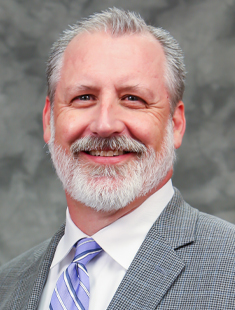
Franklin T. Lambert is a Professor in the Department of History at Purdue University. He earned a Ph.D. from Northwestern University in 1990 and specializes in American Colonial and Revolutionary Era history. His work explores intersections of religion, politics, and commerce in early American history. Education: Ph.D., Northwestern University (1990) Research Interests: Lambert focuses on religious liberty, transatlantic revivals, and colonial economic networks. His publications, including Separation of Church and State (2014) and The Barbary Wars (2005), analyze ideological and geopolitical foundations of American independence. His scholarship has shaped debates on the Great Awakening and the role of religion in the Founding era. Teaching: Professor Lambert offers courses such as Hist 460: American Colonial History and Hist 651: Reading Seminar in American History , emphasizing religion's impact on societal development.
Kimberley Owens is a Senior Lecturer and Curriculum Transformation Lead at James Cook University (JCU) within the College of Medicine and Dentistry. She holds a PhD from the Australian National University (2008) and a Bachelor of Social Science (Hons) from JCU (2001). Her work spans medical education, historical archaeology, and student well-being initiatives. Teaching focuses include Health Professional Education, Social Contexts of Health Systems, and Historic Archaeology. She coordinates modules like [MD3000] Selective Study (2021–2023) and led grants addressing mindfulness training for health students (2015–2019). Owens actively participates in university committees, including the Medicine Board of Studies and CMD Curriculum Management Committee. Her research bridges archaeology and education, with notable projects on Lord Howe Island colonization (2008) and mindfulness interventions in medical training (2020). She has presented widely on health education pedagogy and curriculum transformation at ANZAHPE conferences since 2010.
Professor Chris L. Smith is the Professor of Architectural Theory at the Sydney School of Architecture, Design and Planning, University of Sydney. He holds a PhD from the University of New South Wales (UoN), Australia, and has academic qualifications in Architecture (BArch and BSc(Arch)). He is also a member of the Sydney Environment Institute and a Fellow of the Higher Education Academy. His research explores the intersection of architecture with the body, philosophy (especially Deleuze and Guattari), and biosciences. He has authored/co-authored multiple books, including Bare Architecture: a schizoanalysis and edited volumes like LabOratory: Speaking of the Architecture of Science . Smith’s teaching roles include Program Director for the Bachelor of Design in Architecture (Hons) and Master of Architecture programs. He has supervised research students focusing on topics such as mental health architecture, palliative care environments, and youth mental health design. His professional roles include Chair of the Australian Institute of Architects’ National Education Committee and membership in various academic committees at the University of Sydney. His research has been published in journals like Architectural Design , Footprint , and Design Ecologies , and addresses themes such as architectural membranes, libidinal economies, and the nexus between science and architectural practice. Recent work includes studies on environmental considerations in pediatric palliative care and co-design methodologies in mental health facilities. Education: PhD, University of New South Wales (UoN), Australia BArch, UoN, Australia BSc(Arch), UoN, Australia PCAP and Membership of the Higher Education Academy, Newcastle, UK He has secured grants, including the 2013 Australian Research Council (ARC) Discovery Project on experimental science architecture. His work bridges philosophy, biosciences, and architectural practice, with a focus on innovative design approaches to healthcare, mental health, and urban spaces.
Stephan Sander-Faes is an Associate Professor at the University of Bergen's Department of Archaeology, History, Cultural Studies and Religion. He holds a Ph.D. from the University of Graz (2011) and a Habilitation in Early Modern and Modern History from the University of Zurich (2018). Before joining UiB in 2020, he taught for ten years at other institutions. His research focuses on Central European history, particularly the Habsburg Empire, Venetian Stato da mar, and economic history. He has published extensively on topics such as fiscal policies, urban dynamics, and legal practices in early modern Europe. Education: Ph.D., University of Graz, 2011 Habilitation, University of Zurich, 2018 Research Interests: Habsburg Studies Venetian Republic and its territories Economic and legal history Urban and social dynamics in early modern Europe Recent Research Trends: His publications analyze fiscal crises, state formation, and legal practices within Habsburg and Venetian contexts, with a focus on Bohemia, Dalmatia, and Adriatic trade networks. Recent work explores the interplay between Enlightenment ideals and bureaucratic reform in 18th-century Austria. Labs/Teams: Engaged with interdisciplinary projects on early modern state-building and transregional networks, collaborating with institutions such as the German Historical Institute London and the Austrian Academy of Sciences.
Dr. Borna Izadpanah is a Lecturer in Typography & Graphic Communication at the University of Reading. His research focuses on the history of printing and type design, particularly in Persian and Urdu languages using the Arabic script. He emphasizes decolonizing curricula and promoting inclusivity through interdisciplinary collaborations and open access initiatives. Education: PhD in Typography (2021), University of Reading MA in Typeface Design (2015), University of Reading MA in Graphic Design (2010), London College of Communication BA in Graphic Design (2006), Soore University Research Interests: Decolonizing typography, preservation of endangered archival materials, digital humanities, and the historical development of Arabic-script typography. His work bridges print history, art history, and Islamic studies, using non-European language sources. Articles Trends: Recent publications explore Urdu typography’s colonial influences, Persian printing in Qajar Iran, and the global history of Arabic-script type design. His research highlights underrepresented communities and historical gaps in type design practices. Awards: Type Directors Club Awards (2024, 2023, 2017) Granshan Typeface Design Competition (2015–2017) Advising & Grants: Supervises doctoral research in Persian and Asian typography, with a focus on underrepresented communities. Collaborates on projects like the Typodiversity exhibition and workshops on non-Latin type design. Labs/Teams: Involved in the Type Design intensive (TDi) program and co-leads courses at the British Library. Active in the Royal Asiatic Society and Google Fonts collaborations.