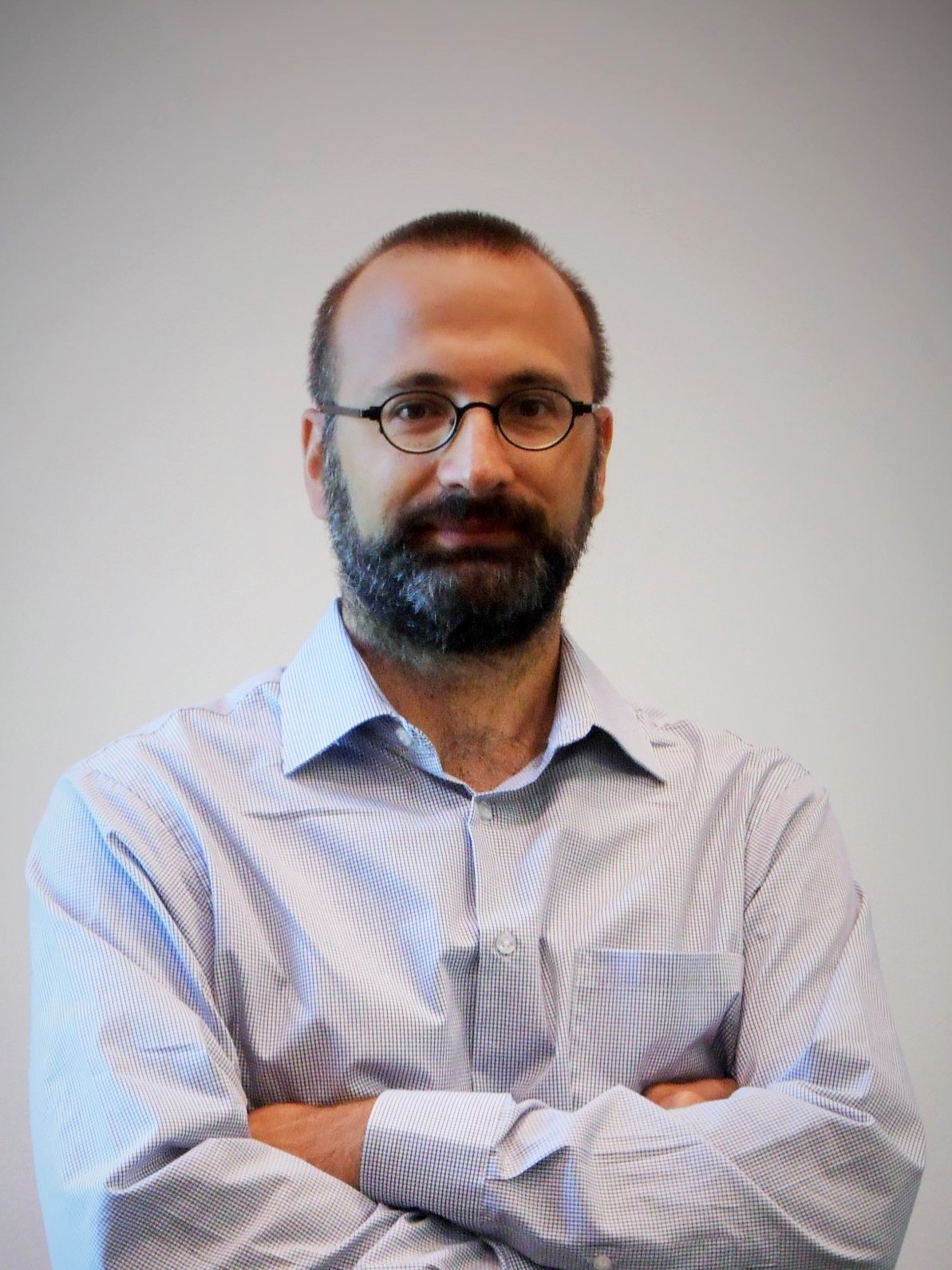
Dr. Katerina Marcoulides is an Associate Professor in the Quantitative and Psychometric Methods Program at the University of Minnesota's Department of Psychology. She is affiliated with the Minnesota Population Center and serves as Co-Chair of the Structural Equation Modeling Special Interest Group (SEM SIG) for the American Educational Research Association. Her research focuses on advanced data mining and modeling techniques for complex longitudinal data, particularly applied to developmental processes in economically disadvantaged immigrant children. She holds a PhD in Quantitative Psychology from Arizona State University, an MA from UC Davis, and a BA from UC Santa Barbara. Education: PhD: Quantitative Psychology, Arizona State University MA: Quantitative Psychology, University of California, Davis BA: Psychology (minor in Education), University of California, Santa Barbara Research Interests: Dr. Marcoulides develops and applies statistical methods such as structural equation modeling (SEM), Bayesian synthesis, and data fusion to study developmental and educational processes. Her work emphasizes longitudinal data analysis, item response theory, and multilevel modeling. Recent projects include NIH-funded research on parenting, marginalization, and well-being during the pandemic. Awards: APS Rising Star Award (2021) NIH Grant Award Teaching & Collaboration: She teaches courses on SEM, multilevel modeling, and data analysis at the University of Minnesota. Previously at the University of Florida, she contributed to workshops on educational data mining and served as an APA Advanced Training Institute presenter. Her interdisciplinary collaborations span population studies, health inequities, and workforce research. Labs & Groups: She leads the Data Analytics and Visualization Lab and actively participates in the Minnesota Population Center, integrating computational and statistical innovations with real-world applications.
Roland Greene is the Mark Pigott KBE Professor and Anthony P. Meier Family Professor of the Humanities at Stanford University, holding dual appointments in the Department of English and the Department of Comparative Literature. He serves as Director of the Stanford Humanities Center and co-chair of the Renaissances and Poetics Workshop research groups. Educated at Brown University (A.B., 1979) and Princeton University (Ph.D., 1985), his academic career includes prior roles at Harvard and Oregon universities. His research focuses on Renaissance literatures of England, Latin Europe, and the transatlantic world, with expertise in poetry and poetics from the Renaissance to the present. Major works include Five Words: Critical Semantics in the Age of Shakespeare and Cervantes (2013) and editing the Princeton Encyclopedia of Poetry and Poetics (2012). Recent lectures address topics like Juan Caramuel’s Metametrica , Baroque aesthetics, and digital humanities challenges. Greene has advised over 50 Ph.D. students, many of whom hold academic positions globally. Awards include American Academy of Arts and Sciences membership and leadership roles like MLA President (2015–2016). His work engages with interdisciplinary themes such as colonial baroque, digital humanities, and global literary history.
Alexey Vladimirovich Vdovin is a Professor and Senior Research Fellow at the National Research University Higher School of Economics (HSE), working within the Faculty of Humanities and School of Philological Sciences. He began his tenure at HSE in 2012 and has accumulated 15 years of scientific and teaching experience. His academic journey includes a Doctor of Philology degree from HSE (2023), a PhD from the University of Tartu (2011), and his initial degree in 'Russian language and literature' from Vyatka State Humanitarian University (2007). He has held significant roles including Deputy Dean for Science at the Faculty of Humanities (2018-2020) and serves on numerous academic councils and committees. Vdovin's educational background demonstrates both depth and international perspective. After completing his undergraduate studies at Vyatka State Humanitarian University in 2007, he pursued doctoral studies at the University of Tartu, where he earned his PhD in 2011 with a dissertation on 'The concept of 'chapter of literature' in Russian criticism of the 1830-1860s.' His academic development has been enriched by numerous international experiences, including visiting researcher positions at Selwyn College, University of Cambridge (2019), Jordan Center at New York University (2017), and multiple research stays at Humboldt University in Berlin through the Aurora Erasmus Mundus program. Professor Vdovin's research focuses on Russian intellectual history, the history of ideas, the Russian Empire, Russian literature of the 19th century, and nationalism studies. His work particularly examines the formation of the Russian literary canon, representations of peasants in literature, and the relationship between literature and society. He has authored approximately 80 articles and 4 monographs on 19th-century Russian literature, culture, and criticism, with works on major figures like Turgenev, Dostoevsky, Tolstoy, Goncharov, Belinsky, Chernyshevsky, Dobrolyubov, and Nekrasov. His recent book 'Monsters at the Threshold: Dracula, Frankenstein, Viy and Other Literary Monsters' (2024) demonstrates his expanding interest in literary archetypes and cultural phenomena. Vdovin has received numerous awards and recognitions for his scholarly work, including the Moscow Government Prize for young scientists (2017), multiple 'Best Teacher' awards (2013-2015, 2017-2024), and recognition as a winner of HSE's competition for best Russian-language scientific works (2022, 2024). He has also received various letters of gratitude from HSE administration, the Faculty of Humanities, and the School of Philology for his contributions to academic life. As an advisor, Vdovin has supervised numerous student research projects, including Smirnova T.V.'s 2014 master's thesis on 'Representation of 'Russianness' and 'Otherness' in Russian essays of the 1840s.' He has also served as a curator for HSE's Personnel Reserve Program at the School of Philological Sciences and has been actively involved in dissertation councils. His research has been supported by significant grants, including a 2024-2025 Russian Science Foundation grant 'The Genre of 'Peasant Life Story' in Russian Literature Before 1861: Poetics, Plots, Socio-Cultural Functions' (No 24-28-00184) and a 2018-2020 RFBR grant on 'State and Literary Institutions: From Peter I's Reforms to the 'Great Reforms.' Professor Vdovin is actively engaged in academic communities beyond HSE, serving as editor-in-chief of the HSE preprint series 'Literary Studies' and participating in the Big Project 'Literature and Society: An Experience of Sociocultural Description.' He is also involved in public scholarship, frequently giving public lectures through platforms like 'Arzamas,' 'Postnauka,' and 'Stradarium,' and appearing on the 'Observer' television program (Culture channel). Since 2015, he has been a mentor at Maya Kucherskaya's Creative Writing School, bridging academic scholarship with creative practice.
Adam Wickberg is a researcher in the Division of History of Science, Technology and Environment at KTH Royal Institute of Technology in Stockholm. He serves as co-director of the VR Excellence Centre for Anthropocene History and deputy director of the KTH Environmental Humanities Lab . His work critically examines the intersections of digitalization, sustainability , and the Anthropocene , focusing on their social, political, and historical dimensions. He leads the research project The Mediated Planet: Claiming data for environmental SDGs and has held visiting positions at the Max Planck Institute for the History of Science in Berlin. Education : Not explicitly stated His research spans media studies, environmental history, critical data studies , and postcolonial science and technology studies . Key themes include: Digital twins and marine futures AI ethics for climate justice Colonial histories of environmental data Temporal dimensions of Anthropocene governance Environing media as epistemological tools Planetary datafication systems Recent publications explore how data infrastructures shape environmental governance and how historical media practices inform contemporary sustainability challenges. He has contributed to journals like New Media and Society , Nature , and Critical Inquiry , while engaging in public debates through op-eds in Dagens Nyheter and Aftonbladet . Teaching : Courses include Artificial Intelligence and Sustainable Development (AK122V), Environmental History (AK2210), and The Anthropocene (AK126V). Labs/Teams : Leads the Environmental Humanities Lab and collaborates with the WASP-HS Community .
Tiraana Bains is an Assistant Professor of History at Brown University, specializing in modern Britain and the global British Empire. Her research investigates the contested formation of the British imperial state in South Asia between the 18th and 20th centuries, emphasizing participatory and revolutionary dimensions of imperial governance. PhD, Yale University, 2021 MA, Yale University, 2015 BA, Yale University, 2015 Postdoctoral Fellowship, Modern Intellectual History, Dartmouth College, 2021–2023 Her research interests lie at the intersection of imperial history, political authority, and intellectual frameworks of empire. She examines how both elite and non-elite actors across Britain and South Asia contested and shaped imperial rule, taxation, and labor systems. Her work positions British imperial formation not merely as coercion but as a dynamic, ideologically charged process comparable to revolutionary state-building in America and France. The recent publications reflect a deep engagement with sovereignty, imperial connectivity, and the intellectual history of empire. Her articles explore the collapse and reconstitution of imperial presidencies, dual sovereignty between Mughal and British powers, and broader conceptual attempts to 'think the empire whole.' These works span journals in British, global, and South Asian history, indicating a transregional and interdisciplinary approach. While no formal scientific awards are listed, her publications in leading historical journals and her active research program suggest strong scholarly recognition. Tiraana Bains teaches undergraduate courses at Brown, including HIST 1267: The Global British Empire, 1600–The Present and HIST 1974E: The Intellectual History of Imperialism . She is currently completing a book titled Instituting Empire: The Contested Makings of a British Imperial State in South Asia, 1750–1800 , which promises to make a significant contribution to the field. Her postdoctoral training at Dartmouth further underscores her expertise in intellectual history. Though no lab or research team is mentioned, her collaborative publications suggest engagement with a broader scholarly network at Brown and beyond.
Dr. Fabian Schulz is a Senior Researcher in Ancient History at the University of Tübingen, where he works in the Department of History within the Faculty of Humanities. He leads a prestigious Junior Research Group under the Emmy Noether Programme of the German Research Foundation (DFG), titled 'Power and Influence: Influencing Emperors between Antiquity and the Middle Ages.' His academic profile also includes association with the Collaborative Research Center (SFB) 923 'Threatened Order - Societies under Stress' and active participation in the 'Tübingen Theosophy' research group. Previously, he contributed to the Heidelberg Academy of Sciences and Humanities project on John Malalas' Chronicle and the University of Tübingen's DFG project 'East and West 400-600 AD.' Dr. Schulz earned his PhD in Classics from Freie Universität Berlin (2006-2010), where he also served as a teaching assistant. During his doctoral studies, he was a Pensionnaire étranger at the École Normale Supérieure Paris. Prior to that, he completed an MA equivalent degree in Classics at Freie Universität Berlin, with time spent as a visiting student at the University of Oxford (1999-2005). His early career included teaching Latin and Greek at a grammar school in Lübeck (2006). His research specializes in power structures and influence mechanisms in ancient societies, with particular focus on how advisors shaped imperial decisions in Late Antiquity. He has made significant contributions to understanding councils of elders in Archaic Greece (especially the Spartan Gerousie), Byzantine chronography (particularly John Malalas' works), and the complex dynamics between Eastern and Western Roman empires during the 5th and 6th centuries. His methodological innovation lies in applying modern sociological models of interpersonal influence to historical analysis of ancient political culture, bridging literary representation with political reality in pre-modern monarchical states. Young researchers award for 'Ratgeber, Experten, Manipulatoren: Einfluss als Machtfaktor und Diskursobjekt in der Antike' As principal investigator of his Emmy Noether project, Dr. Schulz has secured substantial research funding from the German Research Foundation. His collaborative work includes multiple edited volumes on Late Antique history and Byzantine chronography, reflecting his strong international scholarly network. He currently serves as a deputizing member (non-professorial academic staff) on the faculty board of Humanities at the University of Tübingen. His research often intersects with contemporary concerns about power dynamics, political influence, and historical memory, as evidenced by his work on video game representations of ancient history. Dr. Schulz is an active contributor to the online commentary project on John Malalas' chronicle, specifically editing sections of Book XVIII. His work frequently involves detailed textual criticism and analysis of historical sources, with particular attention to how narratives are transmitted and reinterpreted across different cultural contexts. His scholarly approach combines philological precision with broader historical and sociological perspectives.
Dr. Majdi Faleh is an Academic Fellow/Lecturer in Cultural Heritage at the School of Architecture Design and Built Environment, Nottingham Trent University. He focuses on architectural globalization, migration and heritage, Islamic architecture ethics, and social justice in cities. Previously, he held roles at the University of Bahrain, MIT’s Aga Khan Programme, and multiple Australian institutions. He coordinates the Tunisia ENGAGE Hub Network for Humanitarian Heritage and leads the ARC-funded 'Australian Mosque Today' project. Education: PhD in Architecture and Humanities (University of Western Australia), Master of Architecture (Ball State University). Affiliations: Registered Architect in Tunisia, member of AIA, ICOM, and multiple architectural networks. His research bridges marginalized communities’ heritage with global architectural trends, emphasizing ethical frameworks in design. Notable projects include studies on Tunisian medinas, Dubai’s urbanization, and Australian mosque architecture. His work has been supported by ARC grants, Fulbright, and other international bodies. He has authored/co-authored over 20 peer-reviewed articles and book chapters on topics like public housing challenges for refugees, Islamic architectural ethics, and cultural preservation. Awards include the MIT Aga Khan Fellowship and Fulbright grants. Grants & Projects: Led £400k ARC-funded mosque project, coordinated Tunisia-UK humanitarian heritage networks, and contributed to Melbourne’s African immigrant housing studies. He has taught at universities in Australia, China, and the Middle East, and his practice spans architecture in the US, Tunisia, and France. Fluent in five languages, he engages in international conferences and editorial roles for journals like Journal of Architecture .
Peter C. Caldwell is the Samuel G. McCann Professor of History at Rice University and Director of the Program in Politics, Law, and Social Thought. He specializes in modern European history with a focus on Germany, constitutionalism, welfare state development, and political thought. His research spans Weimar Republic legal crises, postwar West Germany, and 19th/20th-century intellectual movements. Education: PhD (1993), MA (1989), and BA (1987) from Cornell University, New York University. Awards include the George R. Brown Award for Teaching (2016) and Humboldt Fellowship. He has authored/co-authored major works like Democracy, Capitalism, and the Welfare State (2019) and Germany Since 1945 (2018, 2023 revision). Teaching focuses on European political history, comparative welfare states, and 19th-century political thought. Current research examines democratic rhetoric in contemporary Mexican politics and authoritarian constitutionalism. Advised over a dozen undergraduate theses on topics ranging from Weimar Republic legal theory to Cold War historiography. Publications span German constitutional history, Cold War dynamics, and East German politics. His work bridges legal, economic, and cultural dimensions of modern European history with interdisciplinary approaches to political theory.
Gayle Letherby is a Visiting Professor of Sociology at the University of Plymouth’s Peninsula Medical School (Faculty of Health), and holds visiting roles at the University of Greenwich and the University of Bath’s Centre for Death and Society (CDAS). She is an Academician of the Academy of Social Sciences (since 2007) and recipient of the 2023 Lifetime Contribution to Autoethnography Award. Her research focuses on feminist methodology, health sociology, grief and bereavement, mobility studies, and criminology. She has supervised over 20 doctoral students across multiple universities, including topics like non-motherhood, occupational therapy, and gang culture in African Caribbean communities. Her teaching spans undergraduate and postgraduate levels, covering crime theory, auto/biographical research, and feminist epistemology. Notable collaborations include participatory studies on homeless individuals’ food experiences and ethnographic explorations of medical decision-making. Her interdisciplinary work bridges sociology, criminology, and health studies, with a strong emphasis on autoethnographic and creative methodologies. Recent research explores themes like grief narratives, gendered travel experiences, and the emotional dimensions of doctoral journeys. She has contributed to policy discussions on family-centred care and has been a guest lecturer globally, including at York University (Canada) and University College Cork (Ireland). Awards: Academy of Social Sciences Academician (2007), Lifetime Contribution to Autoethnography (2023) Teaching Expertise: Feminist research methods, criminology, sociology of health, gender studies Key Research Areas: Auto/biography, non-motherhood, medical sociology, mobility, grief studies
Robert Wellington serves as Associate Professor and Director of the Centre for Art History & Art Theory at the School of Art & Design, Australian National University (ANU), within the College of Arts & Social Sciences. His academic leadership focuses on advancing art historical research and public engagement through institutional initiatives. His research spans Art History, Early Modern European Art (particularly Louis XIV's France), Museum Studies, Public Humanities, and Cultural Heritage. Wellington investigates transcultural object exchange, royal iconography, and identity construction through material culture, with emphasis on Versailles, medals, and marginalia. His work bridges historical scholarship with contemporary public humanities applications in museums and digital archives. Analysis of his 2020-2024 publications reveals concentrated exploration of Louis XIV's cultural legacy, Versailles' global impact, and the evolving role of humanities institutions. He pioneers digital critical editions while examining how objects shape identity across cultural boundaries, consistently connecting historical practices to modern museum and archival challenges. No scientific awards were documented in the provided materials. As Centre Director, Wellington oversees research programs and institutional partnerships, though specific student advisees and grant details remain unlisted in available sources. His leadership facilitates interdisciplinary projects including the Jean-Benjamin de Laborde digital edition initiative. The Centre for Art History & Art Theory functions as a research hub under Wellington's direction, driving public humanities innovation through the ANU's Art & Design Seminar Series, Visiting Artist Program, and collaborative projects with national collections. Current initiatives focus on digital heritage and community-engaged scholarship within the School of Art & Design framework.
Andrea Lanza serves as Associate Professor in the Department of Italian Studies within the Faculty of Arts & Science at the University of Toronto. Originally from Italy, he completed his academic training in France at the École des Hautes Études en Sciences Sociales (EHESS), earning both his Diplôme d'Études Avancées and Doctorat degrees, following his Laurea from Università degli Studi di Milano La Statale. His scholarly profile demonstrates extensive transnational engagement with French political thought while maintaining institutional affiliation with Italian Studies. Doctorat, École des Hautes Études en Sciences Sociales (Paris) Diplôme d'Études Avancées, École des Hautes Études en Sciences Sociales (Paris) Laurea, Università degli Studi di Milano La Statale Lanza's research focuses on the historical intersections between political thought and social science, with particular emphasis on Early French Socialism (1800-1850), the making of French working classes, and Contemporary French Political Thought. His scholarly trajectory follows two interrelated axes: the emergence of socialist discourse in 19th century France and historic-philosophical debates on democratic society, especially regarding French thinkers like Lefort, Gauchet, Rosanvallon, Foucault, and Rancière. His work demonstrates remarkable interdisciplinary range, connecting political philosophy with historical anthropology, sociology, and religious studies. His recent publications reveal a growing engagement with contemporary issues including decolonization debates, cancel culture, and the epistemological challenges facing social sciences today. Lanza has also held significant administrative roles, serving as Associate Chair for Undergraduate Studies in the Department of Italian Studies during 2022-2023. Administrative Service: Associate Chair - Undergraduate, Department of Italian Studies (2022-2023) Lanza's scholarly network extends across North America and Europe, with collaborations spanning multiple disciplines. His recent editorial work on Claude Lefort's political philosophy and Marcel Gauchet's theories of democratic society demonstrates his position at the forefront of contemporary political thought scholarship.
Ali Mousavi is Assistant Professor of Iranian Archaeology in UCLA’s Department of Near Eastern Languages and Cultures and a core faculty member of the Cotsen Institute of Archaeology. A Berkeley PhD and former fellow of the Smithsonian, Maison de l’Orient and Global Heritage Fund, he has directed excavations and UNESCO World-Heritage projects at Pasargadae, Bam, Susa, Sultaniyeh and Turang Tepe and authored prize-winning volumes Ancient Iran from the Air and Persepolis: Discovery and Afterlife of a World Wonder . Education PhD, Near Eastern Studies (Archaeology), University of California, Berkeley (2005) MA, Archaeology, History and Languages of Old World Civilizations, Université Lyon II, France (1997) BA, Archaeology and Art History of Europe and the East Mediterranean, Université Lyon II, France (1996) Research interests span the archaeology and art history of Iran from the Neolithic to the early-20th century, with particular focus on Achaemenid and Sasanian monumental architecture, ancient irrigation (qanats), landscape archaeology, digital heritage, and the modern historiography of Iranian archaeology. His field projects integrate remote sensing, epigraphy, GIS and conservation science to investigate imperial capitals, rock-cut monuments and water-management systems across the Iranian plateau. Across more than 30 peer-reviewed articles and book chapters, Mousavi has re-examined dating criteria for Achaemenid stone monuments, analysed royal inscriptions as visual displays, traced medieval Persian pilgrims’ graffiti at ancient sites, and produced synthetic archaeological surveys of the Sasanian empire and the Central Alborz Iron-Age cultures. The corpus reflects a sustained engagement with primary field data, archival research and critical historiography of 19th- and 20th-century excavations. Selected honours Ehsan Yarshater Book Award (2014) Iranian Ministry of Culture World Book Award (2014) Leon Levy – Shelby White publication grant (2008) UNESCO award for World-Heritage nomination files (2003) Iran Heritage Foundation field-work award (2003) Guitty Azarpay Fellowship, UC Berkeley (2000-2003) IFRI Fellowship, Paris (1998) At UCLA he offers undergraduate courses “Archaeology of Iran” and “Ancient Cities of Iran (4000 BC-AD 1900)” and mentors graduate researchers in the Cotsen Institute. His grants and fellowships from NSF-equivalent European and American agencies underwrite both field seasons and publication of critical archaeological corpora, while his service on Iranian, UNESCO and international heritage boards continues to link scholarly output with heritage-management policy.
Bettina Migge is a Full Professor in the School of Languages, Cultures and Linguistics at University College Dublin, where she has been a faculty member since 2004. She previously held academic positions at Goethe University Frankfurt and earned her PhD in Linguistics from The Ohio State University. She served as Head of School from 2016 to 2021 and has held leadership roles in research centers and committees, including the Royal Irish Academy and the Society for Pidgin and Creole Linguistics, of which she is President until 2023. She is Co-Editor of the Journal of Pidgin and Creole Languages and actively contributes to COST Action LITHME, focusing on language and technology. Her educational background includes studies at Universität Hamburg, Université de Cameroun, Freie Universität Berlin, and The Ohio State University, culminating in a PhD focused on African languages in creole genesis, with fieldwork in Suriname and Benin. She is fluent in Dutch, English, French, German, and Ndyuka/Pamaka. Bettina Migge's research centers on sociolinguistics, language contact, and creole languages, with a focus on multilingual contexts undergoing rapid social change such as urbanization and migration. Her work spans French Guiana, Suriname, and Ireland, examining structural and socio-pragmatic aspects of language use, linguistic landscaping, and computer-mediated communication. She has led significant projects like the trilingual DicoNenge(e) dictionary and has explored the role of AI in reshaping language practices. Her recent publications reflect a critical engagement with the impact of AI and machine learning on language, revealing colonial continuities in language technologies and questioning dataist ideologies. She investigates how language is materially produced in both colonial and digital contexts, emphasizing power, authenticity, and control. She has received research funding from the National Science Foundation (USA), IRCHSS, IRC, Ulysses grants, and French research units like SeDyL. Her collaborative projects include work on complementation in creoles, South Dublin English, and language practices in multilingual border zones. Bettina Migge supervises MA and PhD students in sociolinguistics, linguistic landscaping, and World Englishes. She is involved in numerous editorial and professional associations, including the Society for Caribbean Linguistics and The Global Council on Anthropological Linguistics. She has coordinated modules such as World Englishes, Sociolinguistics, and Research in Creole Languages. She leads and participates in public engagement activities, including workshops on AI in linguistics, multilingualism in Ireland, and dictionary launches. Her research team includes collaborators from Europe and beyond, and she is committed to participatory and ethnographically grounded approaches in language documentation and analysis.
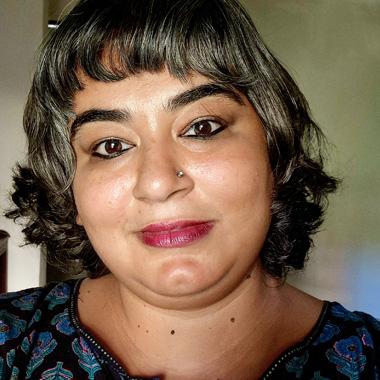
Akanksha Mehta is a Lecturer in Gender, Race and Cultural Studies at Goldsmiths, University of London , where she co-directs the Centre for Feminist Research. She joined Goldsmiths in September 2018 after lecturing at the School of Global Studies, University of Sussex (2016-2018). Research Focus: Intersections of gender, sexuality, race, and everyday politics/violence; affective and material structures in nationalist movements; decolonial pedagogies. Key Projects: Co-founded the 'Mind the BAME Gap' initiative at Sussex; ongoing book project on right-wing women's mobilizations. Recognition: Recipient of the EISA Best Dissertation Award (2018) and Rachel Tanur Memorial Prize (2016). Publication Trends: Her work spans feminist critiques of Hindutva, queer rights in post-377 India, ethnographic analyses of right-wing women, and decolonial pedagogical frameworks. Recent outputs engage with racial justice in universities, affect theory, and visual sociology. Scientific Awards: Best Dissertation Award, EISA (2018) Rachel Tanur Memorial Prize, ISA (2016) Collaborative Work: Engages with decolonial visual practices, collective complaint mechanisms in academia, and intergenerational feminist dialogues through the podcast 'The F Less Travelled'.
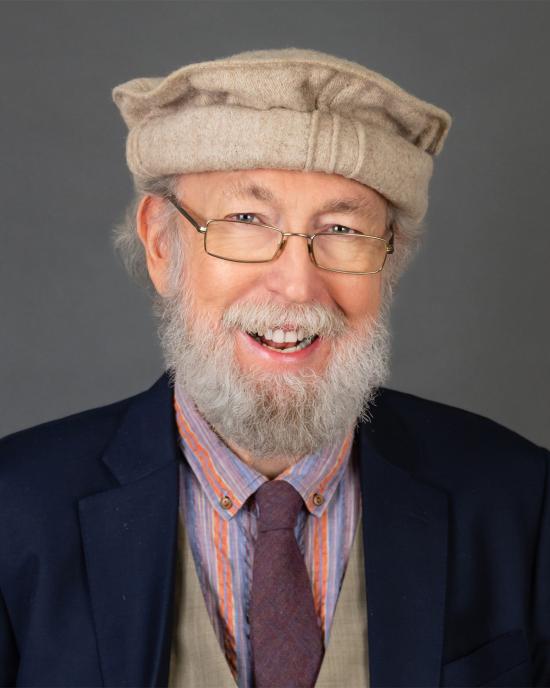
Michael R. Dove is the Margaret K. Musser Professor of Social Ecology and Professor of Anthropology at Yale University, where he also serves as Curator of Anthropology at the Peabody Museum and Co-Coordinator of the Combined YSE/Anthropology Doctoral Program. With over forty years of research experience, his work focuses on environmental anthropology, particularly the environmental relations of local communities in South and Southeast Asia. Dove earned his B.A. from Northwestern University and his M.A. and Ph.D. from Stanford University. His academic journey has spanned decades of field research in Asia, including more than a dozen years conducting long-term studies on human ecology in Borneo and Java, developing government research capacity in Indonesia, and advising the Pakistan Forest Service on social forestry policies. Professor Dove's research interests encompass the anthropology of climate change, cultural and political aspects of natural hazards and disasters, indigenous environmental knowledge and practice, environmental institutions and movements, history of environment-related sciences, and multispecies ethnography. His work often examines how local environmental systems interact with national and global markets, politics, and ideologies, with a focus on problematizing orthodox approaches to conservation and development. He has made significant contributions to understanding human-environment relations through both theoretical frameworks and practical applications. Dove's recent scholarly output demonstrates a progression toward more integrated approaches to environmental challenges, blending historical perspectives with contemporary issues. His publications increasingly focus on the intersections of climate change, social justice, and indigenous knowledge systems, while maintaining his longstanding interest in Southeast Asian environmental relations. The work shows a growing emphasis on post-humanist approaches and multispecies ethnography, reflecting broader trends in environmental anthropology while maintaining his distinctive focus on political ecology and institutional analysis. As an educator, Professor Dove has supervised numerous doctoral and master's students, many of whom have gone on to win research awards and secure prestigious positions. He organizes separate research labs for doctoral students from Yale School of the Environment and other departments, as well as for joint YSE/Anthropology doctoral students. His advisees typically conduct international research and have excellent records of obtaining research support both within and beyond Yale. The Dove Lab at Yale School of the Environment serves as a hub for environmental anthropology research, focusing on topics including natural resource management, property rights, power struggles, household energy transitions, and human-wildlife interactions. The lab fosters a collaborative environment with 30-50 students working on related issues each year, characterized by supportive peer dynamics rather than competition. It also contributes to policy and social change through its research and the work of its alumni.