Lisa Binkley is an Assistant Professor at Dalhousie University's Department of History, serving as Graduate Coordinator and Coordinator of the Art History Certificate program. Her work bridges historical geography, material culture, and Indigenous studies, emphasizing textiles as political and heritage artifacts. BAH in Human Geography (Queen's University) MA in Human Geography (Queen's University) PhD in Art History and Material Culture (Queen's University) W.P. Bell Post-doctoral Fellow at Mount Allison University Her research focuses on Indigenous and settler women's histories, critical heritage studies, and the role of craft in resistance and reclamation. Current projects include collaborative grants (2020) exploring Indigenous approaches to cultural canons and climate grief through artistic practices. Awards include the prestigious W.P. Bell Post-doctoral Fellowship.
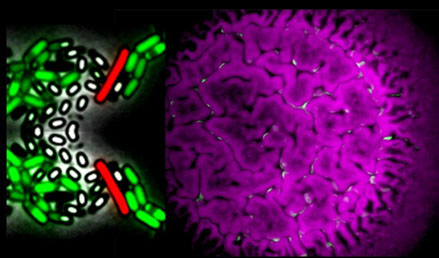
Gurol Suel is a Professor in the Department of Molecular Biology at the University of California San Diego (UCSD), affiliated with the Division of Biological Sciences. His research focuses on understanding electrical signaling in bacterial biofilms and the emergent collective behaviors they exhibit. His lab integrates quantitative biology, mathematical modeling, and synthetic biology approaches to explore principles of microbial organization and coordination. Dr. Suel earned his PhD in Molecular Biophysics from UT Southwestern Medical Center under Dr. Rama Ranganathan, followed by postdoctoral training in Dr. Michael Elowitz's lab at Caltech, combining biology and applied physics. His work has revealed groundbreaking discoveries about ion channel-mediated electrical signaling in biofilms, including their role in nutrient time-sharing between distant communities and the segmentation clock driving cellular differentiation. Key research areas include: biofilm signaling networks, bacterial collective computation, membrane potential dynamics, and engineering controllable microbial systems. His lab develops novel tools for studying bioelectronic interactions, such as potassium ion-based bioelectronic delivery systems. Spatial and temporal patterning in biofilms, including fractal interface formation and memory encoding through membrane potentials, are central themes in his work. Though no specific student names are listed, his lab actively conducts PhD rotations and trains researchers in experimental and theoretical microbiology. His work is supported by grants enabling exploration of biofilm communication and synthetic microbial systems. Contact information includes the UCSD Pacific Hall address and the email 'gsuel@ucsd.edu'. The lab's physical location includes specialized equipment for biofilm electrophysiology and quantitative imaging, as shown in lab photo collections.
Dr Luca Follis is an Associate Professor in Criminology within the Department of Sociology and Criminology at the School of Law, Politics and Sociology, University of Sussex. His interdisciplinary research explores the intersections of law, power, technology, and resistance, with a focus on penal systems, surveillance, and digital activism. His education includes a PhD in Sociology (with Honours) from the New School for Social Research, where his dissertation won the Albert Solomon Memorial Award. He also holds a B.A. in English Textual Studies from Syracuse University and a B.A. in Sociology and Mass Communication from the University of New Mexico. Political Sociology Criminology and Penal Governance Hacktivism and State Hacking Surveillance and Networked Technology Carceral Logistics and Prison (Im)mobilities Migration, Health Systems, and (Im)mobilities His recent publications reflect a strong trend in analyzing how digital technologies reshape state power and resistance, from state hacking and cyberwar to healthcare access during pandemics. He frequently collaborates with scholars like Anna Fish and engages in critical legal and historical analyses of punishment and control. Albert Solomon Memorial Award in Sociology, New School for Social Research Senior Fellow of the Higher Education Academy Luca Follis advises students and contributes to academic discourse through editorial work, collaborative research, and public engagement. While specific grant details are not listed, his extensive publication record and interdisciplinary projects suggest active research funding. He is involved in critical studies of justice infrastructures, carceral systems, and digital governance. His work bridges historical and contemporary issues, from 19th-century penal governance to modern cyber conflicts, often situating technological change within broader political and cultural dynamics. He contributes to both academic and public understanding of power, resistance, and justice in digital and carceral contexts.
Giancarlo Casale is a Full-time Professor and Head of the Department of History at the European University Institute (EUI) in Florence, Italy, a leading institution for advanced research in the social sciences and humanities. He is a specialist in the early modern Ottoman Empire and its global connections, particularly with Renaissance Europe, focusing on intellectual, diplomatic, and maritime history. His research interests include early modern history, Ottoman studies, intellectual history, cartography, cosmography, travel literature, ethnographic writing, maritime technology, and comparative empire studies. He is especially interested in the intersections between Ottoman intellectual life and Renaissance Italy, as well as the broader dynamics of global diplomacy and knowledge exchange in the early modern world. His work contributes significantly to decentering Eurocentric narratives in global history. His recent publications reveal a strong thematic focus on Ottoman intellectual practices (such as taḥqīq), cross-cultural scientific exchange, and innovative methodologies in historical research, including reflections on digital media and video games as tools for historical engagement. These works span disciplines including history of science, diplomatic history, and cultural history, with recurring sub-themes of spatial thinking, knowledge networks, and transcultural encounters. He serves on the editorial boards of several major journals, including Renaissance Quarterly , Medieval Encounters , and Arabic Humanities , and has been Executive Editor of the Journal of Early Modern History since 2011. He supervises a large cohort of PhD students, indicating an active and international research group. He is fluent in English, Italian, Turkish, French, Portuguese, and Arabic, underscoring his transnational scholarly profile. His leadership roles, editorial work, and ongoing research projects—such as the Working Group on Methods in Early Modern History and the Diplomatic/International History Working Group—highlight his central role in shaping contemporary historical scholarship.
Andrew Shankman is Professor of History at Rutgers University–Camden, within the School of Arts and Sciences. He holds a Ph.D. from Princeton University (1997) and specializes in early modern England, colonial British North America, the American Revolution, and the early American Republic. He teaches both undergraduate and graduate courses in these areas. Education: Ph.D., Princeton University, 1997 M.A., Princeton University, 1994 B.A., Northern Illinois University, 1992 Shankman's research centers on the political and intellectual foundations of the early United States. His work explores the tensions between egalitarian ideals and capitalist development in revolutionary and early national America. He has made significant contributions to the historiography of the Founding Fathers and the ideological struggles of the early republic, particularly through regional studies such as in Jeffersonian Pennsylvania. His editorial and leadership roles reflect his standing in the field. He is President-Elect of the Society for Historians of the Early American Republic and served as former editor of the Journal of the Early Republic . He has authored Original Intents: Hamilton, Jefferson, Madison, and the American Founding and Crucible of American Democracy , and edited major collections including Rethinking America: From Empire to Republic and Anglicizing America . Scientific Awards and Leadership: President-Elect, Society for Historians of the Early American Republic Former Editor, Journal of the Early Republic Shankman has advised numerous students and contributed to graduate and undergraduate education in history. While specific grants are not listed, his editorial and presidential roles suggest active research support and professional recognition. He has published over 20 essays in the field of early American history and continues to shape scholarly discourse on the revolutionary era and early republic. No specific labs or research teams are mentioned in the provided text.
Dr. Cheryl X. Dong is an Assistant Professor of History and Internship Advisor at Bowling Green State University’s College of Arts and Sciences, Department of History. She previously served as Assistant Professor of Public History and Coordinator of Public History Programs at the University of Northern Iowa. Ph.D., Public History, North Carolina State University (2020) M.A., History, University of North Carolina at Chapel Hill (2013) B.A., History and Classical Studies, Duke University (2010) Her research focuses on African American history, memory studies, and cultural heritage, interrogating how institutions interpret Black history to marginalized communities. She examines police brutality, racial inequality, and the role of museums in fostering trust. Recent publications emphasize the Black Panther Party’s relationship with veterans, martyrdom narratives, and 20th-century U.S. military history. Her work spans memory studies, public history, and digital humanities. New Professional Award, National Council of Public History (2021) At BGSU, she collaborates with Fort Meigs and the Wood County Museum. She serves on the National Council of Public History’s Board of Directors and Long Range Planning Committee.
Dr. Idris Nassery serves as Assistant Professor of Islamic Jurisprudence at the Paderborn Institute of Islamic Theology (PIIT), Faculty of Arts and Humanities, Paderborn University. Since October 2021, he holds the junior professorship while leading the Department of Islamic Normative Science since October 2019. His academic credentials include: PhD (2017) on law-ethics relationship in Al-Ghazali's thought Master in Islamic Law (LL.M.) from SOAS, University of London Legal education at University of Bielefeld culminating in full legal qualification (2019) Certified training in Islamic Banking and Finance from LSE Master in Classical Islam from University of Johannesburg Research periods at Oxford, Al-Azhar University, Hamad bin Khalifa University, and Saint-Josef-University Nassery's research bridges classical Islamic legal theory with contemporary applications. His work spans Islamic jurisprudence fundamentals, legal philosophy, banking ethics, and critical analysis of Taliban ideology. Since 2022, he co-founded and chairs the Institute for Law and Society in Afghanistan (ILSAF), demonstrating practical engagement with his academic focus on Afghanistan. His publication trajectory shows evolution from classical scholarship (2023 edited volume on tradition dynamics) to urgent political commentary (2021-2022 FAZ articles analyzing Western failure in Afghanistan and post-jihad governance). This progression reflects his dual expertise in historical Islamic law and contemporary geopolitical realities. Teaching responsibilities include courses on economic ethics across Judaism and Islam, comparative religious theology, Islamic jurisprudence fundamentals (Usul al-fiqh), and 19th century Ottoman religious reforms. His departmental leadership since 2019 indicates significant institutional responsibilities beyond research and teaching duties.
Dr. Rennan Lemos is a Teaching Associate in Egyptian Archaeology and Affiliated Lecturer at the University of Cambridge's Department of Archaeology, with additional affiliation as a College Research Associate at Emmanuel College. His academic work focuses on the complex dynamics of Egyptian colonialism in ancient Nubia, particularly during the New Kingdom period. Dr. Lemos specializes in material culture analysis, examining how objects served as tools for negotiating identity, power, and social structure in colonial contexts. His research challenges traditional narratives of 'Egyptianization' by revealing the nuanced, bidirectional nature of cultural interactions between Egyptians and Nubians. He integrates archaeological theory with scientific analysis, employing methods like lead isotope analysis and organic residue characterization to study ancient trade networks and ritual practices. His recent publications (2023-2024) demonstrate a clear trend toward bridging postcolonial theory with empirical archaeological evidence. Many articles examine how material culture functioned in colonial settings, with particular attention to funerary practices, artistic representations, and supply chains. His work increasingly focuses on 'decolonizing' archaeological practice while maintaining rigorous scientific approaches to understanding ancient cultural interactions. Dr. Lemos's research has significantly contributed to understanding how Egyptian-style objects were adopted, adapted, and reinterpreted in Nubian communities. His theoretical work, particularly 'Can We Decolonize the Ancient Past? Bridging Postcolonial and Decolonial Theory in Sudanese and Nubian Archaeology' (2022), has been influential in reshaping scholarly approaches to ancient colonial dynamics.
Christine Hatzky is Professor of the History of Latin America and the Caribbean at Leibniz University Hannover, Faculty of Philosophy, Historical Seminar, and serves as Dean of Research of the Faculty since 2021. She is founding spokesperson of the interdisciplinary M.A. programme Atlantic Studies in History, Culture and Society and directs the university’s Centre for Atlantic and Global Studies . Since 2019 she leads a CALAS sub-project on Visions of Peace in Latin America and previously co-directed the EU Horizon 2020 project ConnectCaribbean . Her research integrates Atlantic, global and trans-regional perspectives with gender and oral history to analyse decolonization, violence and peace processes in Latin America and the Caribbean. Education & Career 1990–1997: Studies in Iberian and Latin American History, Romance Studies, Medieval and Modern History, University of Cologne & Universidad Nacional Autónoma de México (UNAM) 1997: M.A., University of Cologne 2003: Ph.D. in Modern History, University of Hanover – dissertation on Julio Antonio Mella 2010: Habilitation, University of Duisburg-Essen – thesis on Cubans in Angola 2010–present: Professor, Leibniz University Hannover Research Focus Hatzky’s work centres on the decolonization of Latin America, Africa and the Caribbean , analysing violence, conflicts and peace processes through trans-regional and global lenses. She investigates transnational solidarity networks during the Cold War , revolutions in Europe and the Americas , and the global history of science and knowledge transfer . Methodologically she combines oral history, biographical research and gender perspectives to illuminate entangled histories of the Global South. Awards & Recognition 2016: Luciano Tomassini Book Award, Latin American Studies Association 2013: Geisteswissenschaften International Award for Cubans in Angola 2011, 2004, 1999: Printing-cost and doctoral scholarships from DFG, VG Wort, Heinrich Böll Foundation Doctoral Supervision & Projects She currently supervises six ongoing PhD projects on topics ranging from Afro-descendant women in Colombia to Turkish-Syrian-Lebanese migration in Argentina. Eight further dissertations have been successfully completed under her guidance, exploring Central American peace processes, German solidarity movements, Cuban-African networks and urbanisation in Brazil. Laboratories & Networks Hatzky co-directs the CALAS/Merian Regional Center Centroamérica y Caribe (with Universidad de Costa Rica) and leads the CEAGS research hub, hosting more than 50 visiting scholars from Latin America and the Caribbean over the past five years.
François Robinet serves as a Lecturer in Contemporary History at the University of Versailles Saint-Quentin-en-Yvelines (UVSQ), where he is an elected member of the Council of the Institute of International Cultural Studies. He concurrently directs the Graduate School of Humanities and Heritage Sciences at the University of Paris-Saclay and holds appointments with the Laboratory Center for the Cultural History of Contemporary Societies (CHCSC) and the 22nd section of the CNU. Education: Doctor of History (2012) Robinet's research centers on 20th-21st century cultural and political history, with concentrated expertise in the Rwandan Tutsi Genocide, post-colonial Franco-African memory politics, and media history since 1990. His work critically examines French journalistic coverage of African conflicts, international information manufacturing during wartime, and the cultural history of colonial and post-colonial societies. He employs interdisciplinary approaches bridging media studies, genocide research, and digital humanities to analyze historical narratives and memory construction. His 15 most recent publications (2016-2023) reveal consistent thematic focus on Rwandan genocide documentation, Franco-Rwandan historical accountability, and media's role in shaping political memory. Key trends include digital methodologies for genocide archives, analysis of French state-media interactions during crises, and evolving commemorative practices through digital platforms. The work demonstrates increasing engagement with digital humanities tools while maintaining rigorous historical analysis of colonial legacies. No scientific awards were documented in the source material. Robinet coordinates the international RwandaMAP2020 research network mapping genocide documentation sites and serves as Vice-president of the Association for the Development of Cultural History. He is an active member of the Society for the History of Media (SPHM) and editorial board of Le Temps des Médias , demonstrating significant scholarly leadership beyond traditional academic advising. His institutional presence spans laboratory governance (CHCSC), university administration (UVSQ Board of Directors), and major conference organization including the 2014 Rwanda international conference and 2022 International Communication Association pre-conference on empires in media history.
Mehdi Achouche is an Associate Professor at Sorbonne Paris Nord University (USPN), where he focuses on film and television studies with an emphasis on science fiction and utopian narratives . His academic affiliations include the Pléiade Research Center (Multidisciplinary Research in Literature, Languages, Human Sciences, and Society) and the IdA (Institut des Amériques) as a representative of USPN. Education: PhD in Film Studies (2011) from Université de Grenoble Current Role: Teaching and research at Sorbonne Paris Nord University His research explores technological progress , transhumanism , and technological utopianism in American popular culture, particularly analyzing representations in English-language cinema and TV series . Key themes include: Intersections of science fiction and political discourse Evolution of reboot culture in Hollywood Gnostic spiritualism in techno-utopian narratives Digital immortality through mind uploading Science as political tool in historical contexts Article trends show sustained engagement with science fiction (5/15), film analysis (6/15), and television studies (5/15), spanning 1980s films to 2024 media reviews. His recent 2024 reviews focus on contemporary transmedia adaptations and global sci-fi narratives.
Dr. Mukesh Kumar serves as a lecturer and Swiss National Science Foundation (SNSF) senior fellow at the University of Zurich, conducting interdisciplinary research at the intersection of history and anthropology. His work centers on socio-cultural, economic, and religious encounters between diverse traditions in South Asia, with particular emphasis on syncretic practices and marginalized communities. His educational background includes: PhD from the University of Technology in Sydney (2019) Dr. Kumar's research explores South Asian Religions, Religious Conversion, Devotional Hinduism, Social Mobility, Caste and Music, Yoga, Tantra, and Sacred Spaces. He investigates how religious practices dynamically interact with caste structures, economic systems, and cultural exchanges, revealing complex identity formations through ethnographic and historical analysis of syncretic traditions. His publication record demonstrates consistent focus on Hindu-Muslim relations, religious conversion, and sacred geography across historical and contemporary contexts. Recent works examine the Laldas tradition, Basel Mission impacts on lower-caste communities, urban religious orders, and digital democracy, reflecting methodological diversity spanning archival research, ethnography, and textual analysis. His research has been recognized through prestigious awards: Alexander von Humboldt Foundation Fellowship (2019-21) ETH Zurich Postdoctoral Research Fellowship (2021-23) Swiss National Science Foundation Senior Fellowship (2024-28) As principal investigator of the SNF-Project "Caste Religion and Social Mobility in India," Dr. Kumar leads contemporary research on religious and social dynamics while contributing to academic discourse through his monograph Between Muslim Pīr and Hindu Saint (Cambridge University Press, 2024) and numerous journal articles. His current research trajectory involves two book projects examining Billava communities and the Sant Rampal order in Delhi, advancing understanding of religious pluralism within India's evolving social landscape.
Catherine Higgs is a Professor in the Department of History and Sociology at the University of British Columbia Okanagan campus. Her research focuses on Southern Africa , Portuguese colonialism , and Atlantic World histories, with emphasis on activism , labor , political history , and women's movements . She teaches courses on African commodities, British and Portuguese colonialism, and contemporary world history. Education: PhD, MPhil, MA (Yale University); BA Honours (Queen’s University) Her research examines intersections of colonial policy , labor exploitation , and transnational activism , including works on cocoa slavery in São Tomé and Príncipe, African nuns' resistance during apartheid, and South African political figures like D.D.T. Jabavu. She has received grants from the National Humanities Center and Rockefeller Foundation . Scientific awards include the 2024 Sol T. Plaatje Translation Award for her role in publishing D.D.T. Jabavu’s travelogue. As a graduate supervisor, she mentors students in African studies and labor history. She served as Head of her department from 2015-2020 and previously taught at the University of Tennessee, University of Nebraska at Kearney, and Rollins College.
Anna L. Boozer is a Professor in the History Department at Baruch College's Weissman School of Arts and Sciences, City University of New York. Her research focuses on households, connectivity, and empires in Roman Egypt and Meroitic Sudan, with extensive fieldwork at Amheida (Dakhleh Oasis) and Meroe. She directs the CUNY excavations at Amheida and the Meroe Archival Project. Boozer earned her Ph.D., M.Phil, and M.A. in Archaeology/Anthropology from Columbia University and a B.A. in Philosophy and History of Math/Science from St. John's College. Her scholarly contributions span household archaeology, imperial borderlands, and material culture studies, examining how domestic spaces reflect broader social and political dynamics in antiquity. Her research interests center on social archaeology of Roman Egypt and Meroitic Sudan, with particular focus on household organization, material culture, and imperial connectivity. She examines how domestic spaces serve as sites of cultural negotiation, exploring themes of identity formation, social memory, and daily life practices at imperial frontiers. Her work challenges traditional Romanization narratives by highlighting local agency and cultural hybridity. Boozer's publications reveal consistent engagement with household archaeology, material culture analysis, and imperial borderlands studies. Her work demonstrates how domestic contexts provide critical insights into larger imperial processes, with recurring themes of connectivity, cultural negotiation, and the social significance of material remains. She frequently employs interdisciplinary approaches bridging archaeology, anthropology, and history. Teaching and Learning Award (University of Reading, 2013) Lump Sum Award (University of Reading, 2012) Boozer actively supervises doctoral dissertations and has secured multiple research grants including PSC-CUNY awards totaling over $20,000 for projects on Roman Egypt and Meroitic Sudan. She serves as Area Editor for the Encyclopedia of Ancient History and sits on editorial boards for Dotawo: A Journal of Nubian Studies and Brepols' Borders, Boundaries, and Landscapes series. She directs two major research initiatives: the CUNY excavations at Amheida (ancient Trimithis), a Romano-Egyptian city in the Dakhleh Oasis, and the Meroe Archival Project which analyzes legacy data from Sudan's ancient Meroitic capital. These projects involve international collaborations with institutions in Egypt, Sudan, and Europe, focusing on household archaeology and imperial connectivity.
Professor Stefanie Kappler serves as Professor in Conflict Resolution and Peacebuilding at Durham University's School of Government and International Affairs since 2015, following her directorship of the Archbishop Desmond Tutu Centre for War and Peace Studies at Liverpool Hope University. Her research examines contested memories of violence and peacebuilding through extensive fieldwork across Bosnia-Herzegovina, South Africa, Northern Ireland, Cyprus, Brussels, Kosovo, and the Basque Country. Education: PhD from University of St Andrews Research Interests: Kappler investigates memory politics and legacies of violence in peacebuilding, with groundbreaking work on artists' roles in addressing justice demands amid ongoing inequality. Her scholarship explores decolonising peace education and spatial dimensions of peace formation , challenging liberal peacebuilding paradigms through critical analysis of cultural heritage and resistance practices in post-conflict societies. Publication Trends: Her 2021-2025 publications reveal increasing focus on arts-based peace formation , with soundscapes and curation emerging as key methodologies for decolonial memory work. Kappler consistently connects spatial reparations to structural violence while advancing intersectional frameworks that integrate feminist theory with critical peace studies, particularly in Western Balkans and Southern African contexts. Projects and Grants: Kappler leads externally-funded initiatives including: Peace and Memory : Analyzing memory politics-cultural heritage-peacebuilding intersections The Art of Peace : Investigating arts' role in peace formation processes Decolonising Peace Education : Transforming curricula through critical pedagogy Labs and Teams: She collaborates with international research collectives including University of Manchester's Art of Peace network and Aspen Institute Germany, evidenced by her 2024 Western Balkans reconciliation report, though no dedicated physical lab is specified in her profile.