

Stefan Kipfer is a Professor at the Faculty of Environmental and Urban Change , York University. He coordinates the Cities, Regions, Planning program and holds a PhD in Political Science from York University. His research focuses on the intersections of spatial organization, social order, and political rule, with particular emphasis on urban politics, racial capitalism, and anti-colonial theory. Education: PhD in Political Science, York University MES in Urban Political Economy and Ecological Politics, York University BA in Political Science and French, York University Kipfer's research spans transnational urban studies, critical theory, and radical political ecology. He explores: Urban social movements in Zurich, Toronto, and Paris State interventions in public housing, transit, and environmental policy The capitalist and racialized dimensions of urbanization Right-wing populism and neo-fascism Connections between Henri Lefebvre, Frantz Fanon, and Antonio Gramsci Recent work analyzes: Urbanization as neocolonial process Anti-racist and decolonial spatial strategies Transit justice and free public services Comparative urban governance Resistances to far-right regimes Articulation theory and political strategy He supervises graduate students in Environmental Studies, Geography, and Political Science, and has contributed to critical urban theory through publications linking Marxist, anti-colonial, and feminist frameworks.
جستوجوی استاد و پژوهشگر
استاد راهنما، استاد دانشگاه یا پژوهشگر مناسب برای مسیر پژوهشیتان را پیدا کنید و با او ارتباط بگیرید.
نمایش ۱-۱۵ از ۱۹۵ استاد راهنما
اطلاعات این پروفایلها از صفحات عمومی دانشگاهها جمعآوری شده و ممکن است بهروز نباشد.
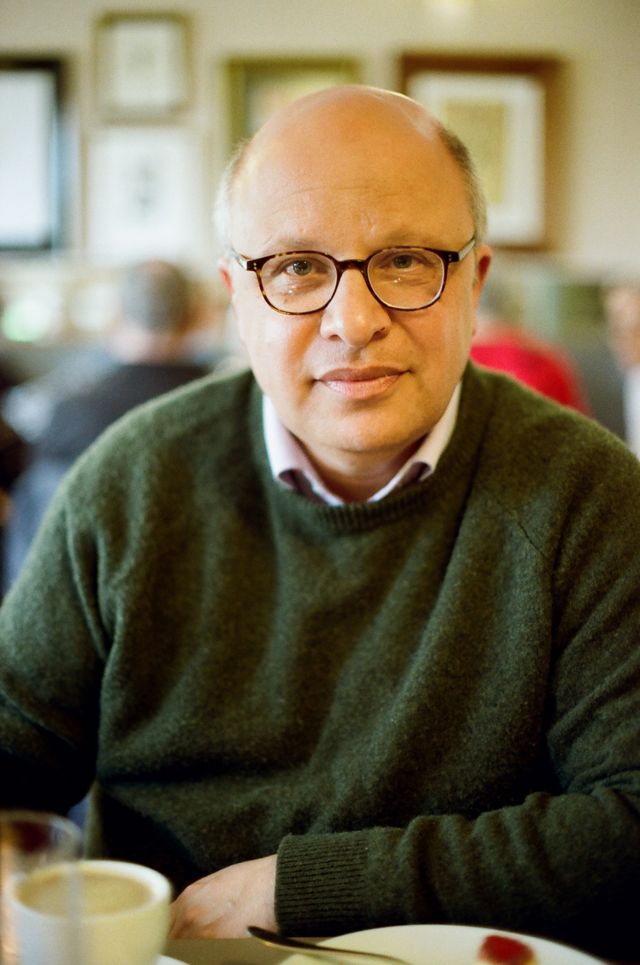
Adam Sabra is a Professor and King Abdul Aziz Ibn Saud Chair in Islamic Studies at the University of California, Santa Barbara (UCSB). He holds a Ph.D. from Princeton University (1998). His research focuses on pre-modern Middle Eastern history, particularly Egypt, with emphasis on medieval and early modern periods. Key areas include social/cultural history of Cairo, poverty/charity systems, legal history, and Islamic mysticism. Education: Ph.D. in History, Princeton University, 1998 Research Interests: Medieval Egyptian urban society and economy Sufi orders and spiritual lineages Legal and charitable institutions under Mamluk and Ottoman rule Families and social mobility in early modern Egypt Recent Scholarship Trends: Recent work examines aristocratic families in Ottoman Egypt (1500–1800) and integrates hagiography into social history analysis. His publications span topics like waqf systems, artisan-scholar networks, and gender dynamics in Sufi literature. Scientific Awards & Activities: Cleveland Bayard Dodge Distinguished Visiting Professorship at AUC (2014–15) Member, Institute for Advanced Study, Princeton (2012–13) National Endowment for the Humanities Fellow Advising & Grants: Advises graduate students Nicholas Liu and Ibrahim Mansour. His research has been supported by fellowships from NEH and the American Research Center in Egypt. Labs/Teams: Collaborates with scholars in Islamic studies through edited volumes and international research networks.

Rachel Marion Scott is a Professor and Chair of the Department of Religion and Culture at Virginia Polytechnic Institute and State University, within the College of Liberal Arts and Human Sciences. She is also affiliated with ASPECT (Alliance of Social, Political, Ethical, and Cultural Thought), reflecting her interdisciplinary engagement with political and ethical theory in Islamic contexts. Her research centers on Islamic political thought, modern Islamic law, constitutional development in Muslim-majority countries, and personal status law. She has made significant contributions to understanding the interplay between religion and the nation-state, particularly in Egypt. Her scholarly work explores how religious authority is negotiated in constitutional frameworks, the evolution of Islamic legal thought, and the role of institutions like al-Azhar and the Muslim Brotherhood in shaping political discourse. Professor Scott’s publications reveal a sustained focus on the dynamics of Islamic law in modern governance, with a particular emphasis on Egypt’s constitutional history and legal reforms. Her work bridges religious studies, political science, and legal theory, addressing themes such as secularism, religious pluralism, citizenship, and hermeneutics. The articles show a trajectory from broader studies of political Islam to more nuanced analyses of constitutionalism, gender, and religious authority. She has authored two major monographs: The Challenge of Political Islam: Non-Muslims and the Egyptian State (Stanford University Press, 2010) and Recasting Islamic Law: Religion and the Nation State in Egyptian Constitution Making (Cornell University Press, 2021), both of which are central to contemporary scholarship on Islam and governance. While no formal list of awards is provided in the text, her publications with leading academic presses indicate recognition and scholarly impact in her field. Rachel M. Scott advises graduate students and contributes to academic mentorship through her leadership roles. As department chair, she oversees curriculum development, faculty collaboration, and interdisciplinary initiatives. There is no explicit mention of external grants, but her research output suggests engagement with funded scholarly projects or institutional support. She is affiliated with research initiatives related to Islamic studies, political thought, and constitutional law, particularly through her work with ASPECT and the Department of Religion and Culture. These affiliations support collaborative scholarship on ethics, cultural thought, and the role of religion in public life.

Audrey Truschke is Professor of South Asian History and Director of Asian Studies at Rutgers University–Newark, within the Department of History, Faculty of Arts and Sciences. She holds a Ph.D. from Columbia University and specializes in the cultural, imperial, and intellectual history of early modern and modern India (c. 1500–present). Her scholarship bridges deep historical inquiry with urgent contemporary debates, particularly around religious identity, nationalism, and decolonization. Truschke earned her B.A. in Religious Studies from the University of Chicago (2004) and her Ph.D. in Middle Eastern, South Asian, and African Studies from Columbia University (2012). Her academic journey includes prestigious fellowships at Stanford University, the University of Cambridge, and the University of Sorbonne Nouvelle Paris III. Her research centers on South Asian history, with a focus on the Mughal Empire, Indo-Muslim rule, Sanskrit-Persian cultural exchanges, and the historical construction of Hindu identity. She critically examines how premodern histories are mobilized in modern political projects, especially Hindu nationalism (Hindutva). Her work spans cultural, intellectual, and religious history, emphasizing philology, translation, and the politics of historical memory. Truschke’s recent publications reveal a consistent trajectory: analyzing the evolution of religious and ethnic identities, particularly 'Hindu' and 'Han', through longue durée historical lenses. Her articles explore how empires, religions, and languages interacted in South Asia, and how these pasts are weaponized in the present. She frequently engages with themes of hegemony, identity formation, and the dangers of historical falsification, especially in the context of Hindutva ideology and its global manifestations. Scientific Awards and Honors: Karwaan Book Award (2022) National Endowment for the Humanities Public Scholars Fellowship (2021) Rutgers Board of Trustees Research Fellowship for Scholarly Excellence (2020) John F. Richards Prize in South Asian History, American Historical Association (2017) Andrew W. Mellon Postdoctoral Fellowship (2013–2016) Fulbright-Hays Doctoral Dissertation Research Abroad Fellowship (2009–2010) Truschke is an active advisor and mentor, though specific student names are not listed in the provided texts. She has secured significant research funding, including grants from the NEH and Princeton University Press. Her public scholarship includes contributions to the South Asia Scholar Activist Collective , the Hindutva Harassment Field Manual , and the Reporting Guide on Hindu Nationalism . She is currently writing a single-volume history of India for Princeton University Press, forthcoming in 2025. She is affiliated with several research initiatives, including the South Asia Scholar Activist Collective (SASAC), and maintains an active public presence through her personal website, media appearances, and public writings. Her work bridges the academy and public discourse, challenging dominant narratives and promoting historical accuracy in understanding South Asia.

Gregory Mann is a Professor of African History at Columbia University, specializing in 20th-century West Africa and the Sahel, with particular focus on Mali. His work bridges colonial and postcolonial studies, analyzing governmentality, migration, human rights, and the historiography of Africa. Education: Ph.D. from Northwestern University (2000) M.A. from Northwestern University (1995) B.A. from University of Georgia (1993) Research interests center on colonial and postcolonial governance, African historiography, and the interplay between state and society. His publications explore themes like military veterans, Islamic policy, citizenship, and NGO transitions. Recent articles examine democracy, human rights, and archival preservation in Mali. Key article trends include historical analysis of French colonial law, transnational citizenship, and postcolonial political crises. Co-authored works reflect collaborative research with scholars in Africa and Europe. Scientific awards: David Pinkney Prize (2007) Melville J. Herskovits Prize Finalist (2007) Choice Outstanding Academic Title (2015) Stanford Humanities Center Fellow (2009-10) NEH Summer Stipend (2005) Fulbright-IIE Fellowship (1998-99) Mann has advised doctoral and Master’s students in History, Anthropology, and Political Science. He directed Columbia's M.A. program in History and Literature (Paris) and co-organized seminars on African temporality. Current projects include preserving Malian feminist archives and writing a synthetic book on Franco-African historical relationships.
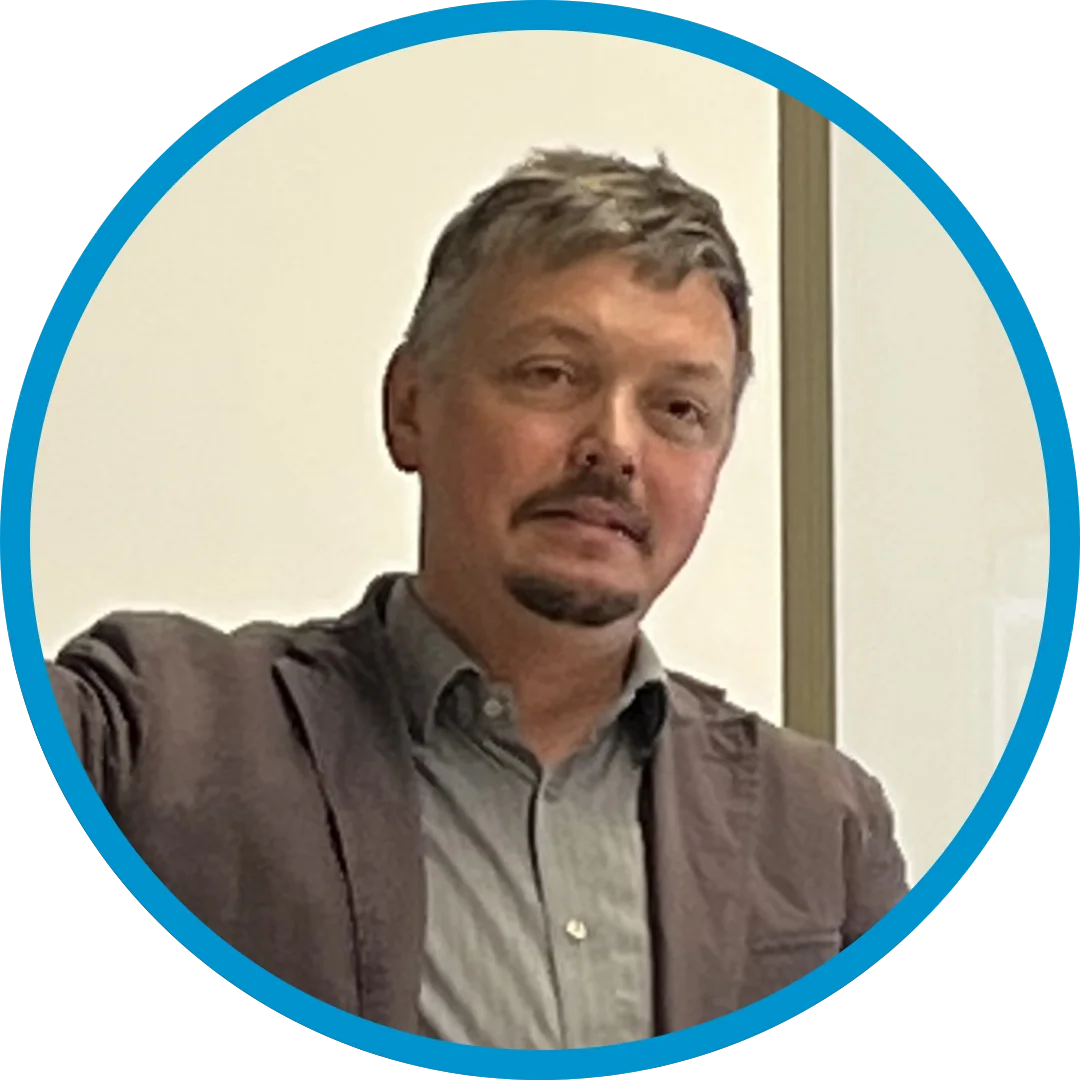
Przemysław Kordos is a Professor at the University of Warsaw , affiliated with the Faculty of Liberal Arts , where he serves as Coordinator for the Development of the Modern Greek Philology Program . He holds two PhDs in Humanities (2007, 2019) and was awarded the Loukis Papaphilippou Seat of Advancement in Modern Greek scholarship. Education: MA in Ethnology and Cultural Anthropology (University of Warsaw, 2001) MS in Sociology (University of Warsaw, 2002) PhD in Humanities (University of Warsaw, 2007) Second PhD in Humanities (University of Warsaw, 2019) His research interests span: Contemporary Modern Greek and Cypriot literature Polish-Greek cultural relations (philhellenism) Social and ethnographic issues in Greece and Cyprus Travel literature analysis Fantasy literature's cultural implications His scientific work reveals a focus on linguistic assimilation in foreign language learning (via fMRI studies), historical parallels between Polish and Greek independence movements, and critical analyses of Cypriot folk culture's politicization. Key scientific awards include: Loukis Papaphilippou Seat (University of Warsaw) Internships at EKPA and IKY (Greece) Scholarships at IMXA (Greece) and MUNI (Czech Republic) His academic contributions include cataloging 60+ Polish travel accounts to Greece, analyzing the shift from travel literature to tourism discourse, and examining the Hellene-Romios dichotomy's role in modern Greek identity construction.

Prof. Dr. Arndt Brendecke is a Professor of Early Modern History at Ludwig-Maximilians-Universität München (LMU), holding the Chair for Early Modern History since 2011. He serves as a spokesperson for the Collaborative Research Centre 1369 ‘Cultures of Vigilance’ and has held leadership roles such as Dean of LMU’s Faculty of History and Arts (2021–2023) and Director of LMU’s History Department (2013, 2014, 2019). His academic career includes visiting professorships at the Université Paris 1 (Panthéon-Sorbonne) and the German Historical Institute in London. Brendecke’s research focuses on early modern political and colonial history, with a particular emphasis on Spain’s empire, knowledge politics, and vigilance cultures. Education: PhD in Modern History (1999), LMU Munich Habilitation in Modern History (2008), LMU Munich Research Interests : Brendecke explores the intersection of knowledge, power, and governance in early modern Europe, especially in Spanish colonial contexts. His work on ‘vigilance cultures’ examines how societies historically managed attention and surveillance. Key themes include colonial administration, archival practices, and the conceptual history of modernity. Awards and Roles : He is a member of the Bavarian Academy of Sciences and Humanities (2024), Academia Europaea (2016), and the LMU Centre for Advanced Studies. He co-edits major journals like Historische Zeitschrift and has led major research initiatives, including the Collaborative Research Centre 573 (2007–2009) and ProMoHist doctoral program (2012–2023). Grants and Advisory Roles : Funded projects include the Goethe-Institute’s translation of his habilitation thesis. He advises institutions such as the Bavarian Academy of Sciences and the Munich Centre for Global History. His work bridges historical scholarship with global perspectives, emphasizing the empirical dimensions of early modern empires. Labs/Teams : Leads the Collaborative Research Centre 1369, exploring vigilance as a cultural and historical phenomenon. Collaborates with international networks like the ‘Network of Early Modern Senses’ and the ‘Cooperation Network of European Routes of Emperor Charles V’.

Dr. Samuël Kruizinga , an Associate Professor of Contemporary and Military History at the University of Amsterdam , is a leading scholar on conflict, neutrality, and transnational warfare. His research spans World War I/II blockades, postcolonial conflicts (e.g., Indonesian Independence War), and the role of small states in international relations. He leads the €10.2 million BLOCKADE: The Hidden Weapon project, funded by the European Research Council (ERC) and NTNU, exploring blockades' impact on violence, humanitarianism, and global order. Education: Leiden University, Sorbonne (Paris), University of Oxford, Ph.D. from University of Amsterdam (2011) Research Themes: Conflict resolution, resilience in crises, foreign fighters (e.g., Ukraine, Spanish Civil War), grey zone warfare, occupation studies His work bridges disciplines like international history, econometrics, and war studies. Recent publications analyze blockades, intelligence failures, and the moral ambiguities of colonial military operations. Kruizinga also contributes to debates on neutrality, historical memory, and the transformation of warfare. Scientific Awards: ERC Synergy Grant (€2.3 million) for the BLOCKADE project (2024)
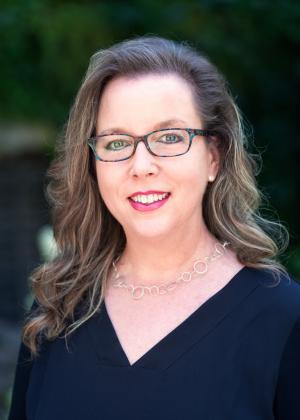
Emily Lynn Osborn is an Associate Professor in the Department of History at the University of Chicago, specializing in African history with a focus on precolonial and colonial West Africa. She holds a PhD from Stanford University and a BA from UC Berkeley. Her research explores gender, technology transfer, colonialism, and the Anthropocene in African contexts. Education: PhD in History, Stanford University, 2000 AB, University of California, Berkeley Research Interests: Osborn’s work bridges historical analysis with interdisciplinary themes such as gender and statecraft, technology diffusion, and environmental history. She has published extensively on topics like the role of intermediaries in colonial rule, the cultural significance of color in the Atlantic world, and the Anthropocene in Africa. Her current book project examines artisans and technology transfer in West Africa. Awards and Fellowships: Quantrell Award for Excellence in Teaching (2016) Fulbright IIE and Fulbright-Hays Fellowships American Council of Learned Societies and Social Science Research Council grants Affiliations: Osborn serves as Faculty Director of the Senegal study abroad program and the Social Sciences Postdoctoral Teaching Fellows program. She is affiliated with the Center for Gender and Sexuality Studies, the Pozen Family Center for Human Rights, and the Center for International Social Science Research. Teaching: She teaches courses on African history, gender studies, and the Atlantic world, emphasizing oral history, slavery, and interdisciplinary approaches to the Anthropocene.

- Public Law
- Administrative Law
- Judicial Review
- +۳ مورد دیگر
Professor Christopher F Forsyth is the Sir David Williams Professor of Public Law at the University of Cambridge, Faculty of Law. He also holds the position of Honorary Professor of Law at the University of Stellenbosch and serves as an Honorary Member of the Advisory Board of the Faculty of Law at the Chinese University of Hong Kong. As an Academic Bencher of the Inner Temple and a practicing barrister from 4-5 Gray's Inn Square, Professor Forsyth maintains an active role in legal practice alongside his academic work. His research interests span several key areas of legal scholarship: Public law with focus on judicial review and the judiciary Administrative Law, particularly examining the legal effect of invalid acts, foundations of judicial review, and legitimate expectations Comparative public law, with special emphasis on Southeast Asia and Southern Africa Private international law, both theoretical and comparative studies Roman-Dutch law, especially regarding suretyship and private international law Professor Forsyth's scholarly work demonstrates a consistent focus on the principles of administrative justice, judicial independence, and the rule of law across various jurisdictions. His publications reveal a particular interest in the evolution of legal systems in post-colonial contexts, especially in Southern Africa and Hong Kong, where he examines how historical legal frameworks adapt to contemporary constitutional arrangements. His work on judicial review spans both theoretical foundations and practical applications across common law jurisdictions. His notable awards and honors include: Recorder of the Crown Court Academic Bencher of the Inner Temple Extraordinary Professor in Public Law, University of Stellenbosch Honorary Member of Advisory Board, School of Law, Chinese University of Hong Kong Tapp Research Student, Gonville and Caius College Professor Forsyth serves as a part-time judge, sitting as a Recorder in the Crown Court and as a Deputy High Court Judge in the Administrative Court. His significant contributions to legal scholarship include co-authoring "Administrative Law" with the late Sir William Wade QC, which has become a standard work cited by students, scholars, and judges across the common law world. He has also authored "Private International Law," a standard textbook on Roman-Dutch conflict of laws widely used in Southern Africa. Internationally, Professor Forsyth has advised governments on constitutional developments and judicial review in several Commonwealth countries. Notably, he served as Technical Adviser on Constitutional Reform to the Law Commission of Malawi, drafting constitutional reports and amendment bills. He has conducted training for civil servants in administrative law across multiple jurisdictions, including programs for the reformed South Africa.
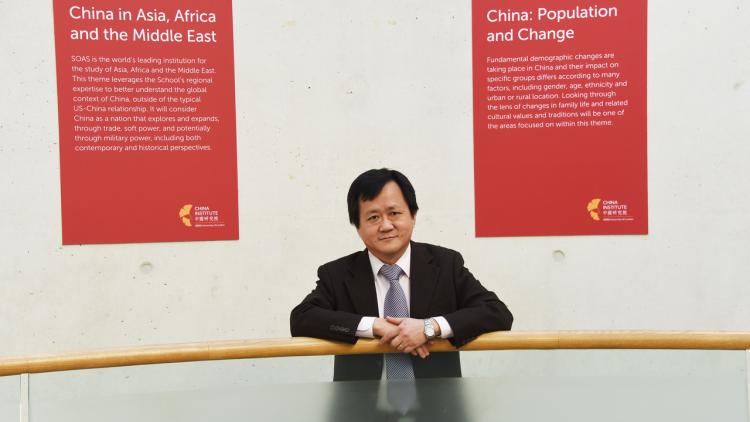
Roles and Affiliations: Steve Tsang is the Director of the SOAS China Institute at the School of Oriental and African Studies (SOAS), University of London. Previously, he served as Head of the School of Contemporary Chinese Studies at the University of Nottingham (2016) and held positions as Professorial Fellow (now Emeritus Fellow) at St Antony’s College, Oxford. He maintains strong ties with both SOAS and the Nottingham China Policy Institute through his editorial and research activities. Education: Steve Tsang holds an MA and DPhil (PhD) from the University of Oxford. Research Interests: His work focuses on Chinese politics, the evolution of China’s political system, and the Chinese Communist Party’s engagement with democracy and human rights. He explores China’s foreign policy dynamics, including soft power strategies, relations with the UK, EU, U.S., and Asia, as well as geopolitical issues like Taiwan’s security and Hong Kong’s post-colonial governance. His historical research delves into 20th-century Chinese history, decolonization processes, and colonial legacies in Hong Kong. Publications Trends: Recent scholarship emphasizes Xi Jinping’s political thought and its global implications, alongside analysis of China’s technological ambitions and military strategy. Earlier work chronicled Taiwan’s democratization journey and explored Hong Kong’s administrative challenges during its transition to Chinese rule. A consistent thread is the interplay between historical narratives and contemporary policy-making. Advising and Grants: He has supervised PhD theses on topics ranging from Taiwan’s party-movement relations to UK-China relations. Major research projects include a Smith Richardson Foundation-supported study on China’s global strategy under Xi Jinping. His advisory roles extend to governmental bodies, having testified before UK Parliament committees and the Canadian House of Commons. Labs/Teams: Central to his work is the SOAS China Institute, which focuses on China’s domestic and international dynamics, and the Nottingham China Policy Institute, where he previously led research initiatives.
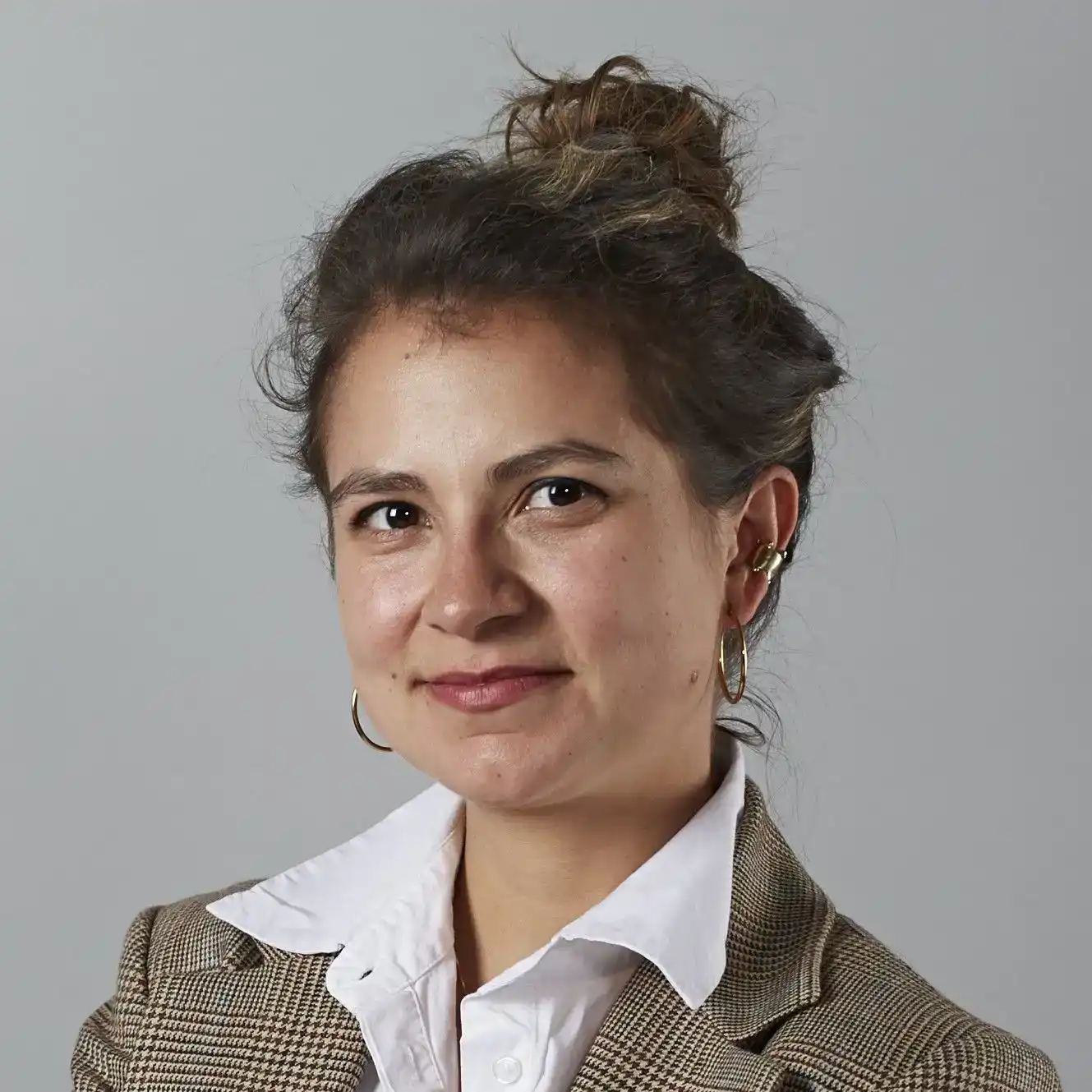
Beatriz Botero Arcila is an Assistant Professor of Law at Sciences Po Law School and a Faculty Associate at the Berkman Klein Center for Internet and Society at Harvard University. She specializes in the governance of data, artificial intelligence, and digital surveillance. LLM and Doctorate from Harvard Law School Research Focus : Law of the Digital Economy Privacy Law / Global Data Law Surveillance Law Legal Theory Scientific Awards : Future of Privacy Forum's 14th Annual Privacy Papers Award (2024) Labs & Teams : Co-founder of The Edgelands Institute, a pop-up institute incubated at the Berkman Klein Center focused on digital surveillance and cities.

Perry Andersonمشاهده پروفایل
استاد پژوهشی
Perry Anderson is a Research Professor of History at the University of California, Los Angeles (UCLA). His work focuses on state structures, political ideas, and European integration, with publications spanning classical, feudal, and modern systems of power. He has taught across continents, held residencies at European institutes of advanced study, and lectured at prestigious institutions including the Collège de France. His research interests include: Comparative historical analysis of state structures Political philosophy (justice, equality, hegemony) European Union history and legal evolution Modernity and postmodernity discourses Anderson's recent lectures at the Collège de France (2022) examined the interplay of law, sovereignty, and European integration, culminating in critical reflections on the Ukraine war's impact on European construction.

- Medieval Literature
- Medieval History and Culture (1000-1550)
- Medieval Ethics and Moral Philosophy
- +۶ مورد دیگر
Professor Laura Ashe is a leading scholar in medieval English literature and culture (c. 1000–1550), holding the David Woods Kemper Family Fellowship at Worcester College, Oxford. Her work bridges literary analysis with historical and philosophical inquiry, focusing on the intersections of medieval ethics, subjectivity, and literary innovation. She is particularly noted for her studies on Chaucer, the development of romance genres, and the cultural impacts of medieval conquests. Her research explores multilingual literary traditions in post-Conquest England, the invention of fiction, and the evolution of chivalric ideals. Key projects include Chaucer's Ethical Philosophy (2025) and co-edited volumes like Conquests in Eleventh-Century England (2020). She has held prestigious fellowships including the Morton Bloomfield Visiting Fellowship at Harvard (2016). Public engagement includes the Penguin Classics volume Early Fiction in England (2015) and contributions to interdisciplinary histories like Penguin Monarchs: Richard II (2016). Current projects include a major study on the history of love across medieval and early modern periods. Awarded the Philip Leverhulme Prize (2009) and Leverhulme Research Fellowship (2015), her work appears in top journals like Studies in the Age of Chaucer and Journal of English and Germanic Philology . She co-edits New Medieval Literatures , fostering scholarly collaboration in the field.
- Business Law
- Corporate Governance
- Good Governance
- +۱۲ مورد دیگر
Rachel J. Anderson is a Professor of Law at the William S. Boyd School of Law, University of Nevada, Las Vegas (UNLV), where she serves as Director of the International, Transnational & Comparative Law Program and Co-Director of the Business & Commercial Law Concentration. Her academic and professional work bridges legal scholarship, public service, and institutional leadership. University: University of Nevada, Las Vegas School: William S. Boyd School of Law Rank: Professor of Law Email: rachel.anderson@unlv.edu Phone: 702-895-5806 Education: J.D., University of California, Berkeley, School of Law M.A., Stanford University, International Policy Studies Zwischenprüfung, Humboldt-Universität zu Berlin Professor Anderson teaches Business Organizations, International Business Transactions, and International Law. Her research centers on good governance across public and private sectors, with emphasis on business law, international law, and poverty law and policy. She explores how legal frameworks can promote equity, human rights, and sustainable development, particularly in transnational contexts. Her recent scholarship spans topics such as global corporate citizenship, gender equality in the workplace, transnational corporate accountability, and colonial reparations. The publications reflect a consistent engagement with structural inequities and the role of law in addressing them. Her work appears in journals like Denver University Law Review , Michigan State Journal of International Law , and California Law Review , as well as in edited volumes and policy commentaries. Scientific Awards and Honors: UNLV 2024 Community Engagement Service-Learning Award Outstanding Non-Traditional Career Award, National Bar Association Women Lawyers Division, 2024 State Bar of Nevada, Medal of Justice, 2012 Lawyers of Color Magazine, Law School Diversity 50 Under 50 List, 2014 Multiple congressional and state-level recognitions for public service Professor Anderson has held significant public service roles, including General Counsel for the Office of the Nevada Attorney General (2019–2021) and Director of the Poverty Law & Policy Clinic (2023–2025). She is active in professional organizations such as the Association of American Law Schools (AALS), where she was elected Chair-Elect of the Section on Poverty Law in 2025, and serves on the Board of Directors for Nevada Legal Services. She also contributes to national conversations on democracy, voting rights, and diversity in the legal profession. Labs, Teams, and Professional Affiliations: Member, American Society of Comparative Law’s Board of Directors Member, Nevada Supreme Court’s Access to Justice Commission Board Member, Nevada Legal Services Leadership roles in AALS Sections on Poverty Law and Clinical Legal Education Contributor to National Bar Association initiatives on racial equity and mental health