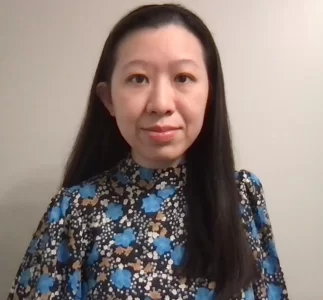
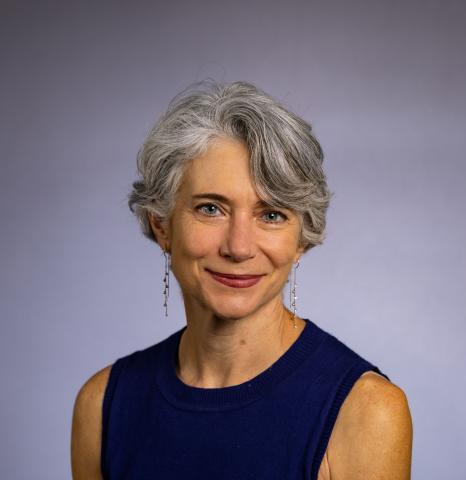
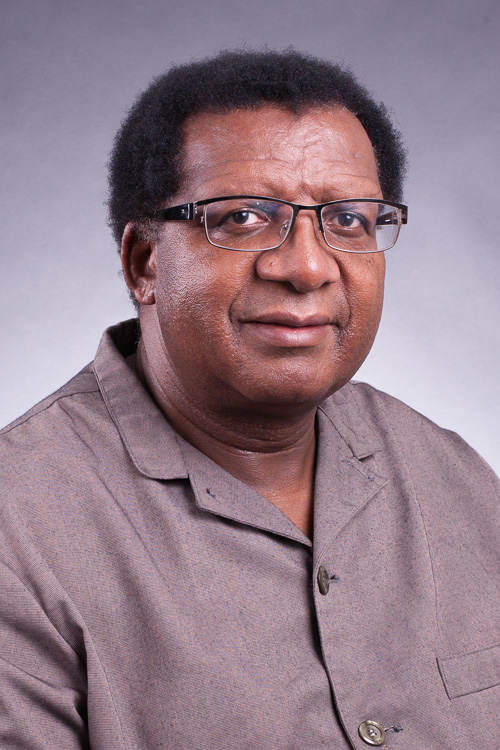
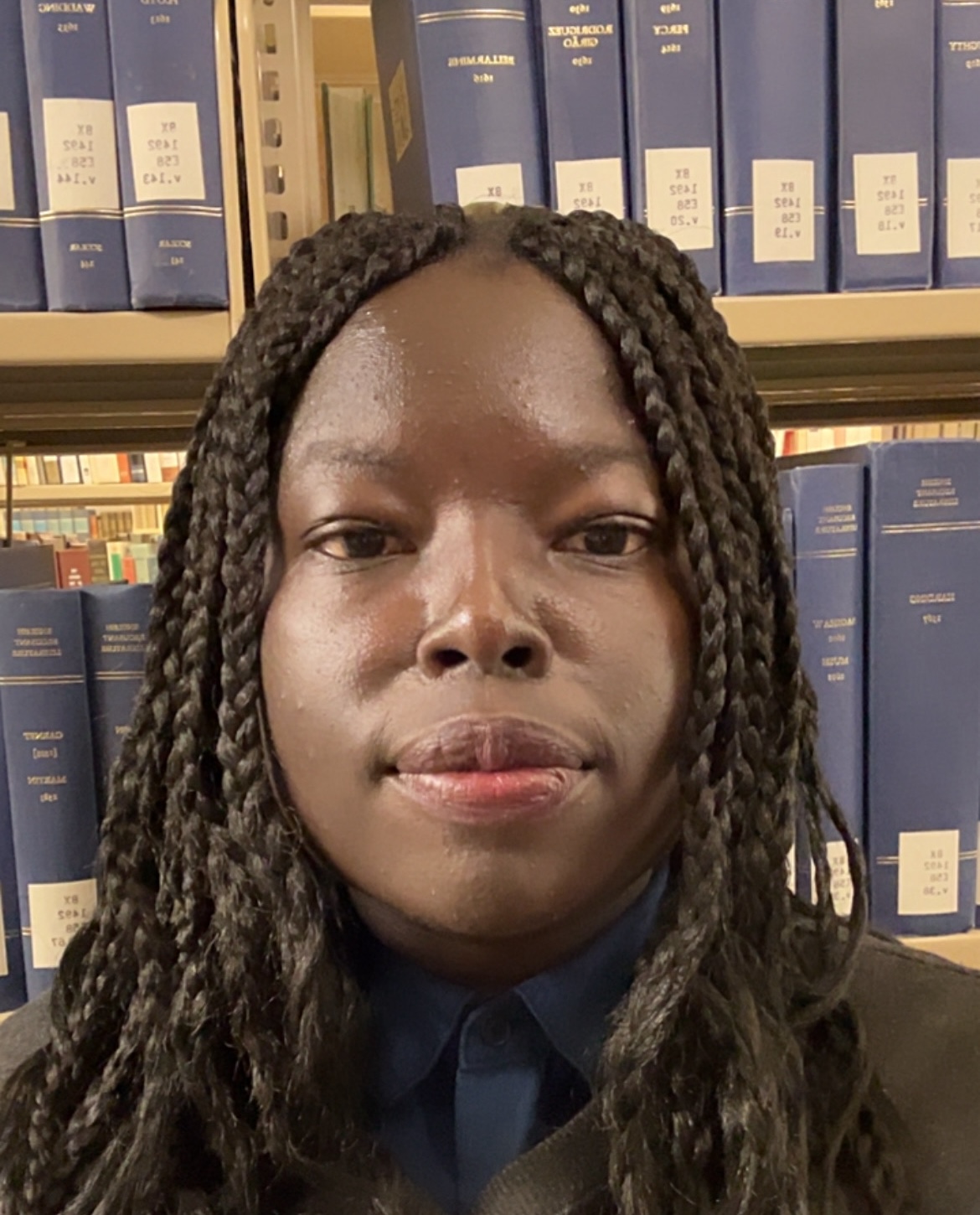
Alice Wickenden is affiliated with the School of English and Drama at Queen Mary University of London. Her research focuses on the material and historical dimensions of collections, particularly Hans Sloane's library and its connections to early modern science, botany, and book culture. She contributes to the Sloane's Printed Book Catalogue at the British Library and actively participates in the London 18th Century Reading Group. Her work interrogates the boundaries of libraries as collections, emphasizing their roles in shaping knowledge systems across disciplines. Research interests include material culture, the history of early modern books, and the intersections between botany, language, and colonialism. She explores how Sloane’s collection—a foundational part of the British Museum and Library—reflects broader questions of ownership, categorization, and cultural heritage. Collaborations include organizing academic groups and cataloguing initiatives. No specific grants or awards are listed, but her contributions to interdisciplinary projects highlight her commitment to historical and cultural studies.
Dr Jesús Sanjurjo-Ramos is a Lecturer (Assistant Professor) & Chancellor’s Fellow in Atlantic World History at the University of Strathclyde, Glasgow. Previously, he taught at the Universities of Cambridge, Cardiff, and York. He holds a PhD from the University of Leeds (2018), supported by an AHRC-WRoCAH scholarship, and a Master of Arts in Race and Resistance from Leeds (2013), alongside a BA from Universidad de Oviedo (2012). He serves as Councillor and Trustee of the Royal Historical Society since 2022. His research focuses on radical politics, race, slavery, carceral systems, and state violence in Spain’s Atlantic Empire (1700–1900). Major works include In the Blood of Our Brothers (2021), finalist for the Paul E. Lovejoy Prize, and its Spanish translation (2023). Current projects investigate political repression after the 1836 Santiago de Cuba uprising (Leverhulme Trust-funded) and systemic racism in Spanish carceral systems (British Library-funded). Awards include Fellow of the Royal Historical Society and recognition for his monograph. He actively promotes interdisciplinary approaches to Atlantic World studies through conferences and symposia, such as the 2025 ‘Global Economics: History is Not the Past’ forum.
Max Johnson Dugan is a Kenyon College Visiting Professor in Religious Studies, with a PhD from the University of Pennsylvania (2024). His work bridges Islamic material culture , affect theory , and digital humanities praxis. His research explores: Embodiment in Islamic traditions Urban halal consumption networks Religion-sport intersections Postcolonial affective dynamics Digital archival ethics Recent publications analyze Material Religion aesthetics, sporting infrastructure as communal discourse, and Cambridge University Press monographs. He co-authored the ISCC Oral History Project , documenting mosque development through ethnographic photography and community narratives.
Adam Gordon is an Associate Professor of English at Whitman College, specializing in early and 19th-century American literature, print culture, and the history of literary criticism. He holds a B.A. in English from the University of Pennsylvania and a Ph.D. from UCLA. His research examines the evolution of literary criticism in antebellum America and its cultural impact, culminating in his book Prophets, Publicists, and Parasites (UMass Press, 2020). At Whitman, he teaches courses on early American literature, seminars on Poe, Melville, and slavery literature, as well as introductory creative writing classes. Dr. Gordon has received prestigious fellowships including the John B. Hench Post-Dissertation Fellowship at the American Antiquarian Society and Mellon Foundation support at the Huntington Library. His scholarship appears in American Literature , Arizona Quarterly , and Early American Literature . His work bridges literary analysis with historical context, emphasizing print culture's role in shaping American intellectual traditions. Education: PhD UCLA, BA University of Pennsylvania Recent Book: Prophets, Publicists, and Parasites (2020) Awards: 4 major research fellowships His teaching focuses on close reading, historical contextualization, and critical engagement with canonical and marginalized texts. He advises students in literature analysis and research methodologies.
A. Tunç Şen is an Assistant Professor in the Department of History at Columbia University, specializing in the social and cultural history of the Ottoman Empire and its intersections with the early modern world. His research focuses on intellectual practices, the construction of expertise, and the interplay between knowledge systems and political structures. He holds a Ph.D. from the University of Chicago, alongside degrees from Sabancı University and the University of Chicago. Şen’s current research includes a project on Ottoman education and scholarly life through microhistory and emotional history frameworks, and an exploration of Ottoman Islamic manuscripts in European collections. He is a core member of the ERC-funded Geographies and Histories of the Ottoman Supernatural Tradition (GHOST) project. Before Columbia, he taught at Leiden University. His major publications include the forthcoming monograph Forgotten Experts: Astrologers, Science, and Authority in the Ottoman Empire (Stanford, 2025), and influential articles on Ottoman almanacs, scholarly languages, and manuscript networks. His work bridges Ottoman studies with broader histories of science, emotion, and material culture. Grants & Fellowships: Heyman Center Fellowship (2024–25), TÜBİTAK Research Grant (2023–26), Columbia Humanities War & Peace Initiative Grant (2021) Awards: Columbia Social Science Excellence Award (2025), CIEPO Young Scholar Prize (2018), MEM Dissertation Prize (2018) Courses Taught: Ottoman Empire surveys, Ottoman-Turkish historiography, manuscript studies, and seminars on the occult in Islamic traditions Şen’s research integrates textual analysis with interdisciplinary approaches, examining how knowledge production shaped Ottoman imperial dynamics and global early modern interactions.
Sheryl Wombell is a PhD student in the Department of History and Philosophy of Science at the University of Cambridge, a Freer Prize Fellow at the Royal Institution of Great Britain (2024–2025), and an Audrey and William H. Helfand Fellow at the New York Academy of Medicine Library (2024). She is affiliated with Wolfson College. Her research explores early modern health practices, focusing on the transmission of medical knowledge through elite networks and manuscripts, particularly in contexts of migration and exile. Education: MA in Historical Research, University of Sheffield (2018, Distinction) BA Hons History, University of Cambridge (2013, First Class) Research interests include the history of medicine and science, material culture, and the social dimensions of medical expertise. She examines how health practices were documented and shared in early modern Europe, emphasizing mobility of knowledge and the role of manuscripts in elite networks. Awards and Fellowships include the George Richard Potter Prize (2018) for exceptional Master’s performance, and scholarships from the White Rose College (2015) and Open-Oxford-Cambridge DTP (2019–2024). Teaching roles include leading supervision for HPS Part II Paper 1 (2021–2022) and contributing to courses like Early Medicine and Material Culture in the Early Modern World . She has experience in academic libraries, curatorial work, and archival catalog development. Professional service includes roles as Programming Officer and Finance Officer for the Across Distance: 2021 Cambridge AHRC Conference , Cambridge Representative in the Open-Oxford-Cambridge DTP Steering Committee (2019–2023), and Treasurer of Wolfson College Students’ Association (2020–2021). Her work is part of collaborative projects like Colonial Natures and History of Medicine in the department, and she has partnered with institutions including the European University Institute, MIT, and ANU.
Amy B. Huang is an Assistant Professor of Theater at Bates College, affiliated with the American Studies program. She holds a PhD in Theatre Arts and Performance Studies from Brown University. Her research focuses on secrecy in theater and its intersections with power, racism, slavery, settler colonialism, and exclusion policies. Her book project Circuits of Secrets on British and American Stages examines how theatrical secrecy interacts with historical systems of oppression. Her work has appeared in Theatre Survey and the Routledge volume Milestones in Asian American Theatre . She teaches courses including Introduction to Performance Studies , Asian American and Pacific Islander Forms of Memory , and Senior Thesis . Her research has been supported by institutions such as the Library Company of Philadelphia and Winterthur Museum.
Barbara E. Mundy is the Martha and Donald Robertson Chair in Latin American Art and a Professor at Tulane University's Newcomb Art Department within the School of Liberal Arts. Her work focuses on Indigenous visual cultures in colonial Americas, emphasizing spatial constructions and Indigenous-European interactions. Previously at Fordham University, she held visiting roles at Yale University. She earned her Ph.D. in Art History from Yale University, alongside MA and BA degrees in Art History and American Studies. Her research investigates how Indigenous peoples shaped visual and spatial practices under colonialism, notably through cartography and urban development. Key projects include The Death of Aztec Tenochtitlan, the Life of Mexico City and the digital Vistas: Visual Culture in Spanish America . Current projects examine Indigenous bookmakers' engagement with European print culture. Her scholarly distinctions include the Kislak Chair at the Library of Congress (2021-22), Senior Fellow at Dumbarton Oaks, and leadership roles in the American Society for Ethnohistory. She contributes to academic governance through editorial boards for Latin American and Latinx Visual Culture and Estudios de cultura náhuatl . Mundy teaches courses on ancient American art, colonial Latin American art, and global Renaissance studies. She has mentored 42 graduate students in the past five years, reflecting her commitment to training future scholars. Her work bridges pre-Columbian, colonial, and digital humanities methodologies, emphasizing decolonial perspectives in art historical analysis.
Lyombe Eko is the William S. Morris Professor in Innovation, Journalism, and Information at Texas Tech University’s College of Media & Communication. His work focuses on comparative communication law, media ethics, and postcolonial studies. Eko holds a Ph.D. from Southern Illinois University and has held leadership roles including Director of African Studies at the University of Iowa. His research examines intersections between media law, cultural memory, and transnational journalistic practices. Notable works include The Charlie Hebdo Affair and Comparative Journalistic Cultures and The Anglophone Question & Postcolonial Hegemony in Cameroon . He has received awards such as the Texas Tech President’s Faculty Book Award and the International Book Awards. Eko teaches courses on international media systems, legal issues in communication, and digital media ethics. His recent work analyzes the Anglophone crisis in Cameroon through historical, legal, and cultural lenses. Education: Ph.D., Southern Illinois University at Carbondale. Research Interests: Eko’s research explores how legal frameworks shape media practices globally, with particular attention to postcolonial contexts. His work on collective memory examines how visual media like cartoons and digital platforms reflect and contest power structures. Current projects address the Anglophone crisis in Cameroon, predation in scholarly publishing, and transnational journalistic solidarity. Publications: Over 50 peer-reviewed articles and books, including works on media law in Africa, digital rights, and comparative press freedom. Recent studies analyze the role of media in international conflicts and the ethics of satire across cultures. Awards: 2021 Texas Tech President’s Faculty Book Award, 2020 International Book Awards (Multicultural Non-Fiction), 2014 Independent Publisher Book Gold Medal. Leadership: Served as Director of Graduate Studies at the University of Iowa’s School of Journalism, and led federally-funded educational exchanges through the FIPSE VITAL Project. Teaching: Courses include Media Law, International Communication Theory, and Digital Journalism Ethics. Recognized with the 2019 Raider Ready Teaching Fellow Award.
Joseph M. Adelman is a Professor in the History Department at Framingham State University, where he also coordinates the Arts & Ideas Series. His research focuses on media, communication, and politics in the Atlantic World, with a particular emphasis on the Post Office’s role in American history. He holds a B.A. from Harvard University and M.A./Ph.D. from Johns Hopkins University. Adelman’s work bridges historical scholarship and public engagement, including his book *Revolutionary Networks* (2019), which received an Honorable Mention from the Bibliographical Society of America. His current project explores the history of the U.S. Post Office. He has held fellowships from the NEH, American Antiquarian Society, and others, and has published in *Enterprise & Society*, *Early American Studies*, and platforms like *The Atlantic* and *The Washington Post*. Research Trends: His publications analyze the interplay between political communication, postal infrastructure, and revolutionary movements. Themes include the role of printers in shaping public opinion and the evolution of communication networks in the 18th and 19th centuries. Awards: Honorable Mention for the 2019 St. Louis Mercantile Library Prize Grants/Fellowships: NEH Fellowship (American Antiquarian Society), Postdoctoral Fellow at Library Company of Philadelphia Labs/Teams: Associate Editor of *The New England Quarterly*, collaborator with the Omohundro Institute’s digital initiatives and the *Ben Franklin’s World* podcast.
Mare Lodu serves as Assistant Professor and Digital Collections Archivist at Loyola University New Orleans' Monroe Library, specializing in Special Collections and Archives. She acts as the dedicated library liaison for Art & Art History, Design, and Film departments, providing research support and resource curation. Her educational background includes: M.L.I.S in Library and Information Studies, University of Wisconsin-Madison, Information School (2024) B.A. in Art History, University of Minnesota-Twin Cities (2016) Dr. Lodu's research centers on colonial and post-colonial archives of Sudan and South Sudan, with focused efforts in documenting Indigenous African knowledge systems through community-centered archival methodologies. Her work emphasizes decolonizing archival practices and preserving multimedia collections including photography, film, and video. As a practitioner-scholar, she develops digital collections while advocating for inclusive archival frameworks that prioritize marginalized voices. Her liaison role bridges academic departments with archival resources, supporting curriculum development and scholarly research in visual arts disciplines.
Dr Rosie Spooner is a Lecturer in Information Studies within the School of Humanities at the University of Glasgow. She specializes in the history, theory and practice of museums and heritage sites within imperial contexts, with particular expertise in critical museology and decolonial approaches to heritage. Dr Spooner's educational background includes: PhD in History of Art from the University of Glasgow (2013-2016) Master's degree in History (colonialism, empire and race pathway) from the University of Bristol (2008-2009) Undergraduate degree in Single Honours History from the University of Glasgow (2002-2006) Dr Spooner's research sits at the intersection of British imperial history, critical museology, and decolonial theory. Her work examines how museums and heritage spaces functioned as tools of empire through object collection, classification, and display. She investigates how heritage construction intersects with contested histories of colonialism and explores progressive, anti-racist museum practices. Her current projects include analyzing Glasgow's international exhibitions (1888-1938) and developing walking as a critical heritage research method. Her recent publications reveal a strong focus on decolonial heritage practices, with particular emphasis on walking methodologies, imperial legacies in Scottish contexts, and the intersection of AI with indigenous knowledge systems. Her work consistently engages with critical approaches to museum studies, postcolonial theory, and the material manifestations of empire in urban spaces. Dr Spooner has received several prestigious awards for her work: 2022: Team Teaching Award, College of Arts & Humanities, University of Glasgow 2017: Research Development Fund Award, Glasgow School of Art 2015: Vivien Hughes Prize, British Association for Canadian Studies 2013: Research Project Bursary, Cultural Artefacts, Buildings, Landscapes, Environments: Scotland 2014-2015: Hunterian Associate, Fellowship Programme, The Hunterian 2013: Graduate Scholar Award, Inclusive Museum Research Network Dr Spooner is an active supervisor of PhD research, currently guiding projects on topics including Scottish museums and Black Lives Matter, decolonial initiatives in historic house settings, and Egyptian heritage conservation. She has also led significant collaborative projects including iREAL (Inclusive Requirements Elicitation for AI in Libraries), funded through the AHRC's Bridging Responsible AI Divides scheme. Her external advisory roles include serving on the Decolonising Advisory Group at V&A Dundee and the Decolonisation Leaders Network with the UK Museums Association. Dr Spooner co-directs the Decolonise Glasgow Arts Lab and is involved with the Beniba Centre for Slavery Studies at the University of Glasgow. Her practice-led research includes creating critical heritage walking tours that expose underrepresented histories of empire in Glasgow's public spaces, particularly through events like Black History Month in Scotland and the Glasgow Doors Open Days Festival.
Dr Sarah Frank is a Lecturer in the History of the Francophone World at the University of Sheffield's School of History, Philosophy and Digital Humanities. Her work focuses on resistance, collaboration, and anticolonialism during 1940–1965, with a particular emphasis on French colonial rule's impact on African, Asian, and Caribbean populations. She holds a PhD from Trinity College Dublin and has held academic positions at the University of the Free State (South Africa) and the University of St. Andrews (Scotland). Education: M.Phil in Modern Irish History (Trinity College Dublin) PhD in Modern European History (Trinity College Dublin, funded by the Irish Research Council) Her research explores post-war trauma, everyday life under colonial rule, and political mobilization. Her award-winning monograph Hostages of Empire (2022) analyzes colonial prisoners of war in Vichy France, reshaping understandings of race and empire in Vichy policies. Research Projects: 'Rebuilding Lives, Decolonising Nations': A transnational oral history project examining post-WWII repatriation in former French and British colonies, advised by Mr. Clément Gnimagnon. Awards: 2022 Alf Andrew Heggoy Prize Shortlisted for Gladstone Prize Coups de Coeur (American Library in Paris) Advising & Grants: Supervised Rory Hanna’s PhD on student activism in West Germany (second supervisor) Recipient of Irish Research Council PhD funding
Jeffrey C. H. Ngo is a Lecturer and Doctoral Student in History at Georgetown University, teaching courses including China II: From Empire to Nation(s), The Makings of Vietnam, Cambodia, and Laos, and Sino-American Relations Since 1776 across Hilltop and Capitol campuses. His academic training includes formal education at Georgetown University (Ph.D. and M.A. in History) and New York University (B.A. and M.A., 2016–2017), supplemented by a visiting scholar position at the University of Toronto's Richard Charles Lee Canada-Hong Kong Library (2017–18). Georgetown University: Doctor of Philosophy in History Georgetown University: Master of Arts New York University: Master of Arts (2017) New York University: Bachelor of Arts (2016) Ngo's research centers on Pacific World historiography, with emphasis on Chinese maritime frontiers, Qing imperial sovereignty, colonial/postcolonial Vietnam, and U.S. foreign policy. His work critically examines borderlands governance, refugee crises, and displacement through interdisciplinary frameworks connecting historical sovereignty to contemporary human rights regimes. His publication "Solace and Solidarity in Exile" (Journal of Asian Studies, 2024) exemplifies this approach by synthesizing New Qing History with modern displacement experiences in Tibet, Xinjiang, and Hong Kong, revealing transnational patterns of refugee solidarity and state power. Ngo's scholarly recognition includes significant competitive awards: Royden B. Davis Teaching Fellowship Five-year Departmental Ph.D. Fellowship Vietnamese Language Scholarship at Johns Hopkins SAIS Summer Dissertation Writing Award Piepho Travel and Research Grant Institute for Global History Summer Grant Multiple Conference Travel Grants As an active academic, he presents at major conferences (American Historical Association, Association for Asian Studies) and engages institutions globally while advancing dissertation research on Vietnamese refugees in Hong Kong's human rights governance context.
Agnieszka Sobocinska is the Director of the Menzies Australia Institute and Professor of International History and Historical Geography at King’s College London. She joined King’s in 2022 after roles at Monash University and the University of Sydney. Her research bridges history, politics, and geography in contexts like international development, Australia-Asia relations, and grassroots resistance to aid projects. She authored Saving the World? (2021) and Visiting the Neighbours (2014). Research Interests: She focuses on non-elite mobility through foreign aid, development volunteering, and tourism. Current projects include histories of resistance to Western aid in India and Indonesia, and community responses to NGOs like Oxfam and AusAID. Recent Work: Her articles explore topics like 1960s diplomacy, Australian historiography, and geopolitical strategies in the Indo-Pacific. She contributes to King’s research hubs like Contested Development and Empires and Decolonization . Awards: Australian Research Council DECRA (2016-2021), National Library of Australia Fellowship (2016) Teaching & Grants: Supervises students in development histories, Australia-Asia relations, and mobility studies. Leads EU-funded projects like DEVHIST (2025-2030) and Globalising Sisterhood (2025-2028). Affiliations: Contributes to King’s Global Institutes and organizes events on topics like climate change, Indigenous Voice reforms, and colonial legacies.