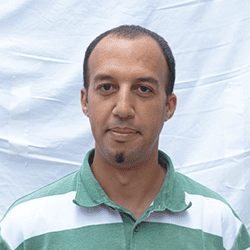
Amine MEHEL is a Research Professor at ESTACA's Mechanics and Environment Center (MSCE) since 2010, specializing in air quality and pollution control in transport systems. His work bridges experimental and numerical studies of turbulent flow interactions with pollutants and nanoparticles. Research Axes : CQA (Characterization of Air Quality) and EDP (Spatiotemporal Dynamics of Pollutants) Key Projects : CEPARER (2022-2025), AmCoAir (2020-2023), CAPNAV (2019-2022), CAPTIHV (2015-2018) His expertise includes experimental facilities like wind tunnels, PIV/LDV measurements, and CFD simulations using Eulerian-Lagrangian approaches. He supervises PhD students and coordinates teaching projects like PIRATE and PRI. Recent publications focus on ultrafine particle dispersion in vehicle wakes, brake emissions in underground stations, and cabin air quality characterization.
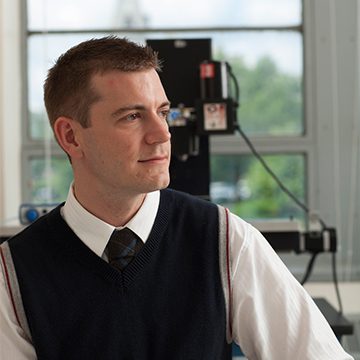
Robert F. Shepherd is an Associate Professor and Director of Graduate Studies for Mechanical Engineering at Cornell University's College of Engineering. He holds appointments in Aerospace Engineering, Fiber Science, Materials Science, Mechanical Engineering, Systems Engineering, and Theoretical and Applied Mechanics. Educational background: B.S. Material Science & Engineering, University of Illinois (2002) M.B.A. General Management, University of Illinois (2009) Ph.D. Material Science & Engineering, University of Illinois (2010) His research focuses on disruptive manufacturing technologies (3D printing, microfluidics) and functional materials for novel devices. He develops soft actuators mimicking biological functions and enhances fabrication techniques for efficient biomimetic machines. His work bridges materials innovation with robotic applications. Publications primarily explore soft robotics, biomimetic systems, and advanced manufacturing, with consistent emphasis on material behavior and actuator design across diverse applications. Scientific awards: Senior Member, National Academy of Inventors (2022) ONR Young Investigator (2016) Cornell Engineering Teaching Award (2016) Extreme Mechanics Letters Award (2016) NAE FOE Fellow (2016) NAS KAVLI Fellow (2016) Leads the Shepherd Group Research Laboratory and Organic Robotics Lab, focusing on soft material systems and bio-inspired machines.
Maartje Bastings is an Associate Professor at the École Polytechnique Fédérale de Lausanne (EPFL) , leading the Programmable Biomaterials Laboratory (PBL) within the School of Engineering (STI) . She holds additional affiliations with the Institute of Materials (IMX) , IBI-STI (Bioengineering), and supervises doctoral programs in Biotechnology and Biological Engineering ( EDBB-GE ) and Materials Science and Engineering ( EDMX-GE ). Her research focuses on DNA-based supramolecular materials engineered to achieve dynamic reciprocity —a two-way interaction between synthetic materials and biological systems. By leveraging DNA as a programmable scaffold, she investigates structural mechanics, valency control, and geometric constraints governing self-assembly and cell communication at bio-interfaces. Key applications include immune system modulation, diagnostics , and vaccine development . Analysis of her 15 most recent publications reveals a focus on multivalent interactions for T-cell activation, spatial patterning in immune signaling, and engineered coatings for DNA origami stability. Subfields span T cell receptor engineering , nanoscale protein dynamics , stimuli-responsive biomaterials , and bio-inspired therapeutic design . PhD Students: Chen Yuduo Hendrickx Pauline Bart M. Kononenko Artem Li Shujie Lou Yameng Meyer Pitt Narita Minako Rousseau Benjamin Bila Hale Caroprese Vincenzo Comberlato Alice Kurisinkal Eva Eugene Paloja Kaltrina Rodríguez Franco Hugo José Tekin Cem Wong Siu Ho Contact: maartje.bastings@epfl.ch
Michael J. Shelley is the Lilian and George Lyttle Professor of Applied Mathematics and holds joint appointments in Mathematics, Neural Science, and Mechanical Engineering at New York University's Courant Institute of Mathematical Sciences. He also serves as Co-Director of the Applied Mathematics Laboratory and Director of the Center for Computational Biology at the Flatiron Institute. Education: PhD (Applied Mathematics) from the University of Arizona (1985), MS (Applied Mathematics) from the University of Arizona (1984), BA (Mathematics) from the University of Colorado (1981). Research: Focuses on complex phenomena in active matter, biophysics, and complex fluids. Key areas include fluid-structure interactions (e.g., swimming/flying mechanics), cytoskeletal dynamics, and collective behavior in biological systems. Collaborates closely with experimentalists through the Applied Math Lab and Flatiron Institute. Labs & Affiliations: Co-Director, Applied Mathematics Laboratory; Director, Center for Computational Biology (Simons Foundation); affiliated with NYU’s Courant Institute and Department of Mathematics. Notable Work: Models for microtubule-motor assemblies, active suspensions, and fluid-structure interactions. Pioneered computational frameworks for Stokes suspensions and fiber dynamics in viscous fluids.
Fabian Pfrengle is a full Professor of Organic Chemistry at the Institute of Organic Chemistry , Department of Natural Sciences and Sustainable Resources , University of Natural Resources and Life Sciences Vienna (BOKU). He previously led research groups at the Max Planck Institute of Colloids and Interfaces (2013-2020) and worked at The Scripps Research Institute (2010-2013). Research Focus: His work bridges carbohydrate chemistry and plant biology , specializing in plant cell wall glycans and glycosyltransferases . He develops synthetic glycan arrays for enzyme characterization and investigates immune response triggering mechanisms in plants through oligosaccharide fragments . His projects include automated polysaccharide synthesis and liposome-based immune tolerance applications. Publication Trends: His 15 most recent articles emphasize chemical synthesis of sugar nucleotides , plant glycan arrays , and enzyme specificity analysis , reflecting his focus on carbohydrate engineering and plant immunity . Key subfields include UDP-sugar derivatization , Xylan structure-function relationships , and Glycosyltransferase profiling . Grants & Projects: Currently leads 5 major projects including Automated Algal Polysaccharide Synthesis (EU-funded, 2023-2028) and Synthetic Glycan Ligands for Plant Immune Receptors (FWF-funded, 2022-2026). His research also explores thrombocyte biology and Rhamnogalacturonan-II fragments with support from FWF and City of Vienna . Community Service: Serves on editorial boards ( Monatshefte für Chemie , 2021-present) and as reviewer for 12 journals including JACS Au , Nature Communications , and Angewandte Chemie . Member of professional societies: Gesellschaft Österreichischer Chemiker (2020), Deutscher Hochschulverband (2019), and Gesellschaft Deutscher Chemiker (2008).
Maiken H. Mikkelsen is the James N. and Elizabeth H. Barton Associate Professor in the Department of Electrical and Computer Engineering at Duke University, with a joint appointment in the Department of Physics . Her research focuses on quantum nanophotonics , plasmonics , and light-matter interactions in nanoscale materials, aiming to advance optoelectronics, quantum science, and biomedical diagnostics. Education B.S. in Physics, University of Copenhagen (2004) Ph.D. in Physics, University of California, Santa Barbara (2009) Postdoctoral Fellowship, University of California, Berkeley Her work explores nanophotonic engineering for quantum optics , spintronics , and ultrafast optoelectronics , with recent studies on nonlinear metasurfaces and plasmonic enhancement of immunoassays for point-of-care diagnostics. Publications highlight 2D semiconductor emission control , ultrafast single-photon sources , and metasurface-based photodetectors . Scientific Awards Maria Goeppert Mayer Award (2017) NSF CAREER Award (2015) Moore Inventor Fellow (2021) ONR/Air Force/Army Young Investigator Awards (2015-2017) Cottrell Scholar (2016) Stansell Family Distinguished Research Award (2021) She advises graduate students in Duke’s Electrical & Computer Engineering and Physics programs and leads the Mikkelsen Lab , which emphasizes ultrafast spectroscopy and quantum material development . The lab has graduated PhD students like Eunso Shin and Hengming Li (2025).
Kristofer Gunnar Paso serves as a Professor in the Department of Chemical Engineering within the Faculty of Natural Sciences at the Norwegian University of Science and Technology (NTNU), where he conducts research at the Ugelstad Laboratory. His work integrates fundamental rheological principles with practical applications in petroleum engineering and sustainable materials development, addressing critical industry challenges through experimental and theoretical approaches. Professor Paso's research spans rheology, polymer technology, enhanced oil recovery, wax deposition mechanics, and nanocellulose applications. His investigations focus on the behavior of complex fluids—including waxy crude oils, biopolymer composites, and nanocellulose suspensions—with emphasis on improving oil transportation efficiency, developing sustainable materials, and understanding interfacial phenomena. Key contributions include modeling wax deposition mechanisms, optimizing pour point depressants, and pioneering nanocellulose applications for enhanced oil recovery under extreme conditions. Analysis of his 2018-2025 publications reveals a strategic evolution from petroleum-focused rheology toward sustainable material solutions. While maintaining strong contributions to flow assurance (40% of recent work), his research increasingly incorporates biocomposites and recycled materials (25% growth since 2020), reflecting industry shifts toward decarbonization. His collaborative approach spans petroleum engineering, food science, and environmental technology, evidenced by publications in Energy & Fuels , Polymers , and Current Opinion in Food Science . No scientific awards were documented in the source material. Professor Paso maintains active collaborations across NTNU and international institutions, though specific advising relationships and grant details remain unreported. His laboratory operations center on the Ugelstad Laboratory's advanced rheological testing facilities, which support investigations into material behavior under reservoir conditions and industrial processing environments.
Ronald G. Larson serves as the George Granger Brown Professor of Chemical Engineering and A. H. White Distinguished University Professor at the University of Michigan's College of Engineering, with additional appointments in Mechanical Engineering and Macromolecular Science & Engineering. His research leadership spans multiple departments within the Chemical Engineering Division, where he directs the Larson Lab focused on fundamental and applied soft matter physics. His research program investigates complex fluids through computational and theoretical frameworks, emphasizing polymer physics, rheology, and molecular simulations. Key thrusts include polymer melt processing, biomembrane dynamics, colloidal systems, and polyelectrolyte coacervation. The group employs advanced techniques like Brownian dynamics, coarse-grained modeling, and multiscale simulation to address challenges ranging from industrial polymer processing to biomedical applications. Recent publications (2023-2025) reveal strong momentum in rheological modeling of complex fluids, with particular emphasis on self-healing materials, wax deposition in pipelines, and crystallization mechanisms. The work bridges fundamental molecular insights with industrial applications, demonstrating consistent high-impact output across polymer science, soft matter physics, and chemical engineering domains. The Larson Lab operates as a collaborative hub within the Chemical Engineering Department, leveraging computational resources to advance understanding of fluid mechanics and material properties. Current projects integrate machine learning with traditional modeling approaches, reflecting the group's commitment to methodological innovation while maintaining strong connections to experimental validation and real-world engineering problems.
François Peeters is a Full Professor of Physics at the University of Antwerp, Belgium, holding the position since 2000 (with Dutch title 'gewoon hoogleraar' since 2003). He previously served as Research Director (FWO-VI) at the University of Antwerp (1996-1999), Research Leader (NFWO) (1992-1996), and Senior Research Assistant (NFWO) (1988-1992), establishing a distinguished academic career spanning over three decades. His educational background includes a Ph.D. in Physics from the University of Antwerp (1982), followed by a Habilitation (Hoger aggregaat) from the same institution (1987), and a postdoctoral fellowship at Bell Laboratories in Murray Hill, New Jersey (1982-1983). His academic journey also featured research periods at prestigious institutions including the High Magnetic Field Laboratory in Grenoble, University of California Berkeley, Oxford University, and several Brazilian and Australian universities. Peeters' research focuses on theoretical condensed matter physics , specializing in the electronic, optical, and magnetic properties of nanostructured systems. His work encompasses semiconductors , superconductors , graphene , and hybrid quantum systems , with particular emphasis on strong correlations in both classical (colloids, dusty plasma) and quantum (quantum dots) environments. His theoretical frameworks bridge fundamental quantum mechanics with practical nanotechnology applications, driving innovations in spintronics and quantum device design. Analysis of his publication record reveals a clear evolution from foundational work on polaron physics and quantum Hall systems in the 1980s-1990s toward contemporary research on graphene, topological materials, and programmable quantum nanodevices. His most cited works demonstrate consistent leadership in mesoscopic physics, with recent publications showing increased focus on spin-dependent transport phenomena and two-dimensional material systems. His scientific recognition includes: Fellowship in the American Physical Society (2005) APS Outstanding Referee award (2008) Doctor Honoris Causa from University of Szeged, Hungary (2009) Peeters has supervised 26 completed PhD theses and currently leads the Condensed Matter Theory research group comprising 3 ZAP researchers, 16 PhD students, and 8 postdocs. His grant portfolio includes coordination of an EU Marie Curie Training site on 'Electrons on helium', participation in multiple EU projects, COST actions, and ESF networks, demonstrating sustained success in securing competitive international funding. The Condensed Matter Theory group maintains extensive international collaborations, evidenced by Peeters' research visits to over 10 institutions worldwide and regular hosting of 3-4 international visitors at postdoc or professorial levels. The group's output of over 770 refereed publications with 12,000+ citations reflects its position at the forefront of theoretical condensed matter physics research.
Martin Nilsson Jacobi serves as President and CEO of Chalmers University of Technology, holding the position of the institution's fourteenth President since September 2023. He simultaneously maintains his academic standing as Professor of Complex Systems at the university, demonstrating his dual commitment to academic leadership and scholarly work. Professor Nilsson Jacobi's research portfolio spans theoretical physics, complex systems theory, and ecological applications. His work bridges multiple disciplines, creating innovative approaches to understanding natural systems through mathematical and computational frameworks. His research trajectory shows an evolution from theoretical physics to complex ecological systems, with particular emphasis on spatial patterns, ecosystem stability, and marine conservation strategies. His scholarly output demonstrates consistent productivity across multiple domains. The most recent publications (2020-2022) focus on complex ecological communities, spatial coherence in heterogeneous landscapes, and species-area relationships, while earlier work (2010-2015) explored self-assembly systems, hierarchical dynamics, and theoretical approaches to complex systems. This progression reflects his ability to apply fundamental theoretical concepts to increasingly complex real-world ecological challenges. Lifetime member of the Swedish Royal Academy of Engineering Sciences (IVA) Professor Nilsson Jacobi has held significant leadership roles beyond his current presidency, including serving as chairman of the Faculty Senate and Head of Department at Chalmers. His international research experience includes collaborations with Los Alamos National Laboratory and the Nordic Institute for Theoretical Physics (NORDITA), highlighting his global scientific engagement. He has successfully secured research funding through multiple projects supported by the Swedish Research Council and the European Commission, demonstrating his ability to lead substantial research initiatives.
Naveen Tiwari is a Professor in the Department of Chemical Engineering at the Indian Institute of Technology Kanpur. His research focuses on transport phenomena, instabilities in micro-scale free surface flows, flow through porous media, and numerical modeling and simulation. He maintains active research collaborations and has published extensively in leading fluid dynamics journals. His research interests encompass Transport Phenomena , Instabilities in micro-scale free surface flows , Flow through porous media , and Numerical modeling and simulation . His work primarily investigates thin liquid film dynamics, interfacial phenomena, and stability analysis of coating flows over heterogeneous surfaces. His research has significant applications in coating technologies, microfluidics, and thermal management systems. His recent publications demonstrate a strong focus on Thin film stability analysis over heated surfaces Effects of substrate topography on liquid film behavior Nonlinear dynamics of volatile liquid films Dip-coating processes on patterned surfaces His work bridges fundamental fluid dynamics with practical engineering applications. His notable scientific achievements include: Young Scientist Research Award from the Department of Atomic Energy (2014) Membership in the Honor Society of Phi Kappa Phi (2007-2008) Invitation to present at the International Union of Theoretical and Applied Mechanics symposium in Bangalore (2014) Prof. Tiwari received his PhD from the University of Massachusetts Amherst (2003-2008) with a thesis on 'Dynamics and Stability of Non-Inertial Coating Flows over Heterogeneous Surfaces' under Prof. Jeffrey M. Davis. Prior to his current position, he worked as a Senior Research Engineer at Saint-Gobain, MA (USA) from 2008-2012, where he worked on Diesel Particulate Filter regeneration modeling, methane ignition modeling, sapphire crystal growth, and solid-oxide fuel cells.
Professor Bjoern Braunschweig is a W2 Professor for Physical Chemistry at the Institute of Physical Chemistry within the Faculty of Chemistry and Pharmacy at the University of Muenster. His research group focuses on fluid interfaces, hierarchical materials, and responsive systems, utilizing advanced nonlinear optical spectroscopy techniques such as sum-frequency generation (SFG) and second-harmonic scattering (SHS) to investigate molecular structures at interfaces. He leads the ERC-funded SUPERFOAM project, which aims to establish molecular-level understanding of foam formation and stability. His research interests span across interface science, soft matter physics, electrocatalysis, and responsive materials. Braunschweig's work particularly emphasizes molecular self-assembly at fluid interfaces, electrode/electrolyte interfaces in ionic liquids, and the development of light- and temperature-responsive materials. His group investigates how molecular building blocks like surfactants, polymers, and proteins determine macroscopic properties of soft materials such as foams and emulsions. The research group has published extensively on photoswitchable arylazopyrazole surfactants, thermoresponsive polymer systems, CO 2 electrocatalysis in ionic liquids, and ion-specific effects at interfaces. Their recent publications demonstrate a strong focus on molecular-level understanding of interface phenomena with applications in energy conversion, smart materials, and environmental processes. ERC Starting Grant (2014) BASF fellowship (2014) Max Buchner research fellowship (2012) DAAD Travel Grant (2012) Feodor Lynen fellowship (2009) Dissertation award (2009) Professor Braunschweig supervises multiple PhD students and postdoctoral researchers, including Billura Shakhayeva, Tim Blinzer, Tan Phat Pham, and Zugang Cong. His former students include notable researchers such as Natalia García Rey, Marco Schnurbus, and Eric Weißenborn. The group maintains strong collaborations with researchers across Europe, particularly with Michael Ryan Hansen, Andreas Heuer, and Monika Schönhoff at the University of Muenster, as well as international partners in Poland and the United States. Their research combines experimental approaches with theoretical modeling to develop fundamental understanding of interface phenomena with practical applications in materials science and energy technologies.
Dr. Su Ryon Shin is an Assistant Professor in the Division of Engineering in Medicine at Harvard Medical School and Brigham and Women's Hospital (BWH) in Cambridge, MA. She leads an active research laboratory focused on bioengineering, tissue engineering, and regenerative medicine, with particular expertise in 3D bioprinting, biomaterials, and organ-on-a-chip technology. Her research interests span biohybrid robotics, decellularized extracellular matrix, stem cell-based tissue engineering, and volumetric muscle regeneration . Dr. Shin's work integrates advanced biomaterials with cellular systems to create innovative solutions for tissue regeneration and disease modeling. She has pioneered approaches using human stem cell-derived materials for volumetric tissue regeneration and developed biohybrid neuromuscular robots powered by living cardiac muscle cells. Her publication record demonstrates consistent productivity with over 180 publications, including numerous first/senior author papers in high-impact journals like Science Robotics, Advanced Materials, and Nature Reviews Bioengineering . Her work shows a clear progression from fundamental biomaterials development to increasingly complex tissue engineering applications and translational research. Dr. Shin has received significant recognition including being named a 2025 BWH Health & Technology Innovation Awardee , Highly Cited Researcher 2024 by Web of Science, and multiple Stepping Strong Innovator Awards (2015, 2018, 2020). Her research has been featured in Nature Reviews Bioengineering for breakthrough work on biohybrid robots. She actively mentors students and postdocs, with former lab members accepted to prestigious programs like MIT's PhD program in Chemical Engineering. Her collaborative approach is evident through numerous interdisciplinary projects with researchers across Harvard Medical School, BWH, and international institutions.
John F. Brady is the Chevron Professor of Chemical Engineering and Mechanical Engineering at the California Institute of Technology. He earned his B.S. from the University of Pennsylvania (1975), M.S. (1977) and Ph.D. (1981) from Stanford University, and has held academic roles at Caltech since 1985, including Executive Officer for Chemical Engineering (1993-99; 2013-19). His research focuses on fluid mechanics, transport processes, and complex/multiphase fluids. Elected to the National Academy of Sciences (20XX) Elected to the American Academy of Arts and Sciences (20XX) Brady's publications reveal expertise in active matter dynamics, microrheology, and non-equilibrium systems. His work spans fundamental fluid mechanics to applied biomedical device design, with a strong emphasis on computational modeling and experimental validation in colloidal and soft matter physics.
Ronald Hedden is a Professor of Practice in the Department of Chemical and Biological Engineering at Rensselaer Polytechnic Institute (RPI), where he focuses on innovations in undergraduate education and polymer science. Previously, he served as an Associate Professor at Texas Tech University (2009–2017). His current research emphasizes Virtual Reality (VR) integration into chemical engineering education, including the development of a Virtual Chemical Plant (VCP) simulation to provide safe, cost-effective access to process equipment. His research interests span chemical engineering, polymer science, soft materials, and nanomaterials. Notable projects include applying VR for teaching process safety and dynamics, as well as exploring nanocomposite materials and membrane technologies. He also investigates polymer rheology and structure-property relationships using advanced characterization techniques like NMR and SANS. Hedden teaches both core chemical engineering courses and interdisciplinary engineering subjects. His work bridges academic research and practical applications, with contributions to biofuel refining, asphalt modification, and nanoparticle incorporation in polymers. While no specific awards are listed, his extensive publication record highlights impactful contributions to materials science and educational technology. His advisory work involves student projects on VR simulations and materials engineering. He collaborates on initiatives like the VCP platform, aimed at advancing safety training and process control education. Hedden’s career reflects a commitment to both cutting-edge research and transformative pedagogy in engineering education.