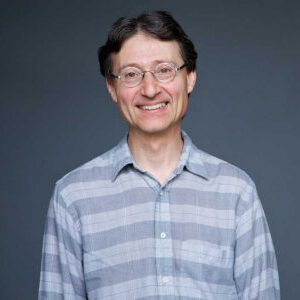
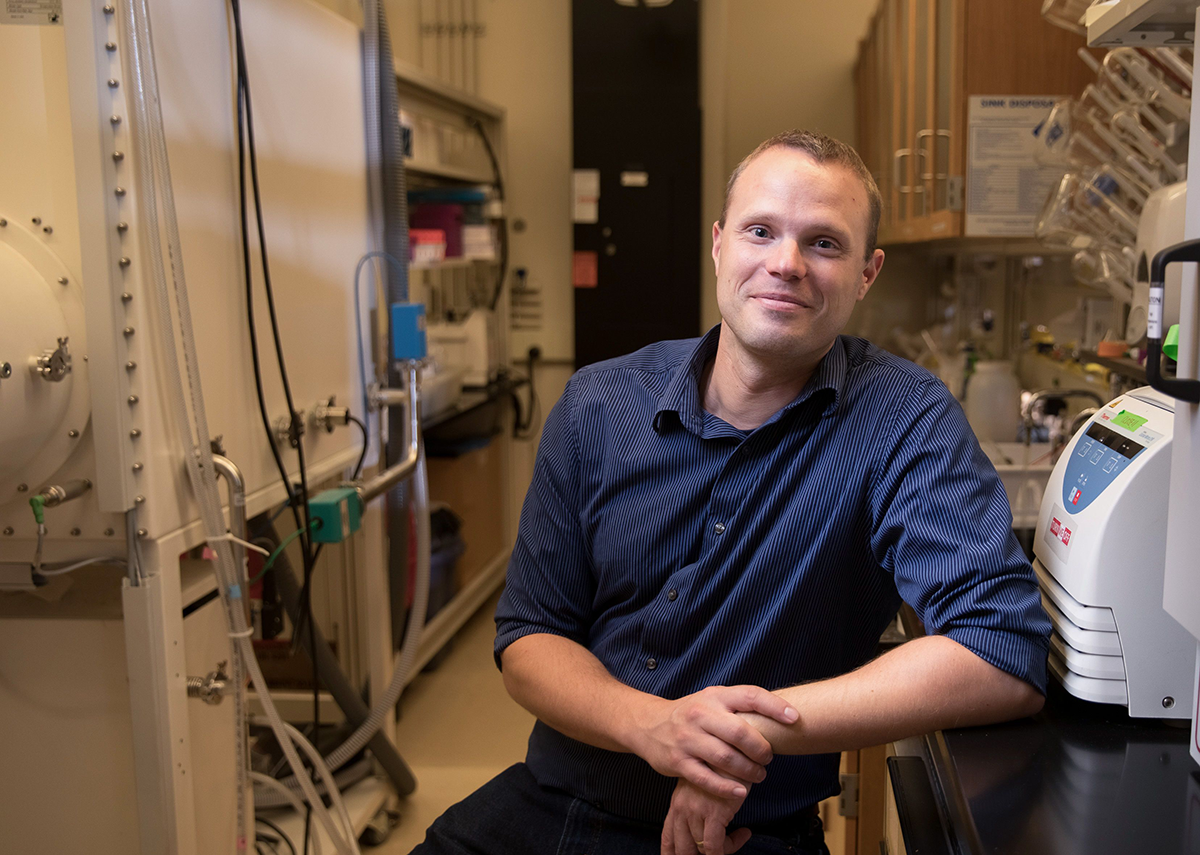
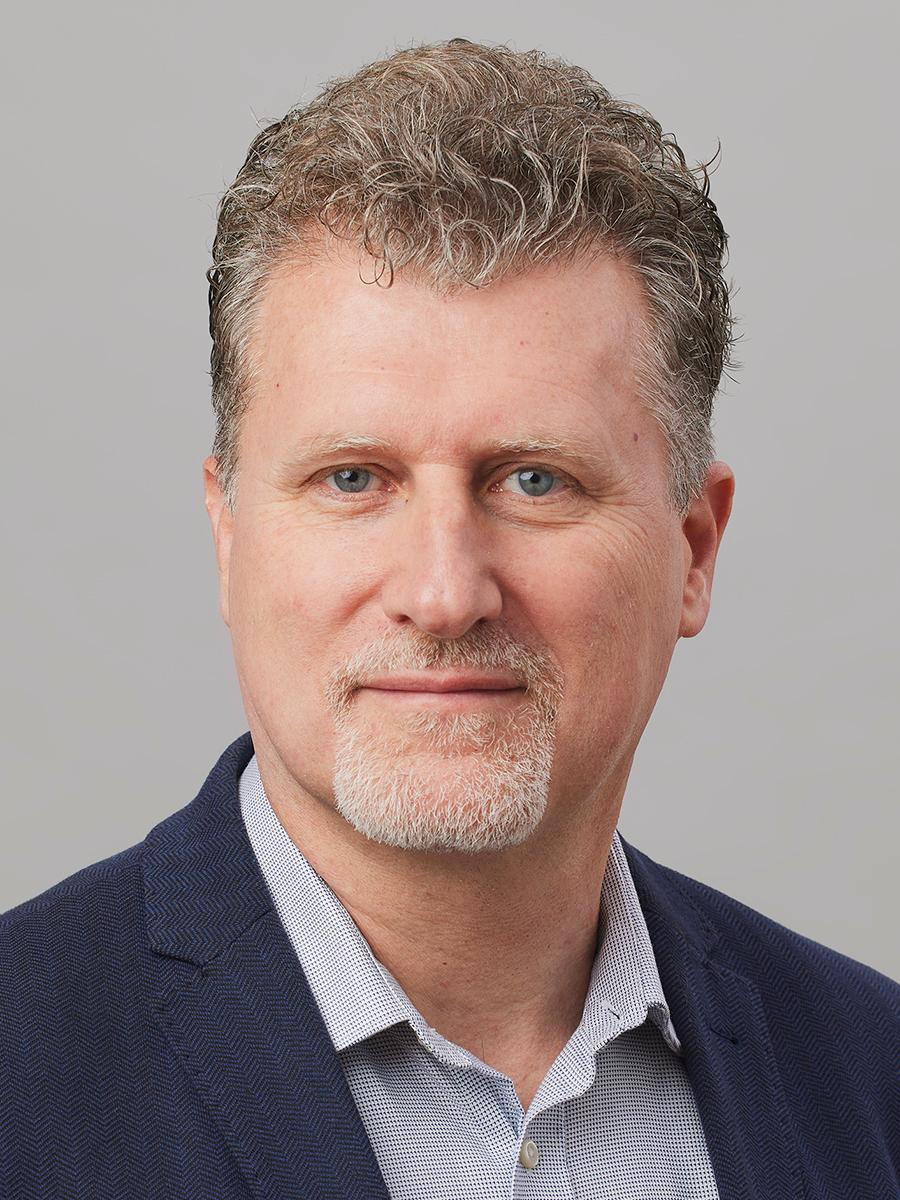
Professor Harry E. Ruda holds the Stanley Meek Chair in Advanced Nanotechnology at the University of Toronto's Faculty of Applied Science and Engineering. He directs the Centre for Advanced Nanotechnology and leads the Electronic-Photonic Materials Group. His research spans semiconductor nanostructures, focusing on nanoelectronics and nanophotonics, with notable contributions to nanowire growth, quantum transport, and plasmonic effects. Education: B.Sc. in Physics, Imperial College London Ph.D. in Physics, MIT His research interests include: Semiconductor nanowire growth via VLS process Quantum transport and spintronics Nonlinear optical effects in quantum dots/nanowires Surface state control through passivation Photonic crystal structures for optical devices Carrier dynamics in low-dimensional systems Recent publications highlight advancements in InAs nanowire sensors, Coulomb impurity effects, photonic crystal design, and hybrid superconducting/semiconductor devices. His work bridges fundamental electron dynamics and applied quantum technologies. Scientific Awards: Fellow, Canadian Academy of Engineering Fellow, Royal Society of Canada Fellow, Institute of Physics (UK) Fellow, Institute of Nanotechnology Fellow, Institution of Engineering and Technology Fellow, Institute of Materials, Minerals and Mining Fellow, Canadian Academy of Engineering Teaching: MSE335: Materials Physics MSE490: Professional Ethics and Practice MSE1023: Quantum Transport
Professor Todd Squires is a distinguished faculty member in the Department of Chemical Engineering at the University of California, Santa Barbara, within the Robert Mehrabian College of Engineering. His research focuses on the fundamental principles of transport phenomena as applied to interfaces, membranes, and complex fluids, employing theoretical, computational, and experimental approaches to address significant challenges in micro-scale fluid mechanics. Dr. Squires' educational background includes: BS in Physics, UCLA (1995) BA in Russian Language and Literature, UCLA (1995) PhD in Physics, Harvard University (2002) His research interests span microfluidics and electrokinetics, active and nonlinear microrheology of complex materials, polymer dynamics and sensors, with particular emphasis on non-linear electrokinetic flows, interfacial rheology, and the self-assembly of nanostructured materials. His work bridges fundamental fluid mechanics with practical applications in microfluidic devices, energy storage, and biomedical systems, demonstrating the versatility of this fascinating field. Analysis of Professor Squires' recent publications reveals a consistent focus on interfacial phenomena, with particular attention to the rheological properties of fluid interfaces, particle dynamics in complex fluids, and novel microfluidic techniques for measuring and manipulating these systems. His research demonstrates strong interdisciplinary connections between chemical engineering, physics, and materials science, with applications spanning energy storage, biomedical engineering, and environmental systems. Professor Squires has received numerous prestigious awards and honors: 2018 Robert W. Vaughan Lecture in Chemical Engineering, Caltech 2015 Elected Fellow of the American Physical Society 2013 Mid-Career Award, American Electrophoresis Society 2012 The Dudley Saville Memorial Lecture at Princeton 2010 Pierre Gilles de Gennes Prize 2010 Allan P. Colburn Memorial Lectureship, University of Delaware 2009 Francois Frenkiel Award for Fluid Mechanics 2009 Camille Dreyfus Teacher-Scholar Award 2008 Beckman Young Investigator 2007 NSF CAREER Award 2005 'Rising Star' - Chronicle of Higher Education As principal investigator of the Squires Group, Professor Squires leads a dynamic research team that combines experimental, theoretical, and computational approaches to investigate transport phenomena at interfaces. His work has been supported by major funding agencies including the National Science Foundation, with his CAREER award indicating early recognition of his potential as both researcher and educator. While specific grant details aren't provided in the source material, his extensive publication record and prestigious awards suggest robust and sustained research funding. The Squires Group maintains state-of-the-art laboratory facilities for studying micro-scale fluid mechanics, including specialized equipment for microrheology measurements, microfluidic device fabrication, and interfacial characterization. Their research environment fosters collaboration across disciplines, with connections to materials science, physics, and biomedical engineering researchers at UCSB and beyond.
Bradley D. Olsen is a full professor in the Department of Chemical Engineering at the Massachusetts Institute of Technology (MIT), where he leads research at the intersection of polymer science, soft matter physics, and bioengineering. His work focuses on designing materials for critical applications in biotechnology, hemostasis, and sustainable polymer development while advancing fundamental understanding of polymer network mechanics and self-assembly. Education: Ph.D. in Chemical Engineering, University of California Berkeley (2007) S.B. in Chemical Engineering, Massachusetts Institute of Technology (2003) Olsen's research spans protein-based materials, block copolymer phase behavior, and mechanochemical hydrogels. He has pioneered methods for quantifying polymer network topology, developing hemostatic nanoparticles, and creating bio-inspired materials for selective biomolecular transport and medical applications. His recent publications emphasize data-driven approaches to polymer characterization and educational outreach in materials science. Scientific Awards: American Physical Society (APS) Fellow (2023) Fulbright Amazonia Scholar (2023) Alexander and I. Michael Kasser Chair in Chemical Engineering (2021) ACS Macro Letters Young Investigator Award (2021) MIT Committed to Caring Honor (2019) AIChE Owens Corning Early Career Award (2019) APS Dillon Medal (2018) Kavli Emerging Leader in Chemistry (2017) ACS Polymer Division Fellow (2016) Camille Dreyfus-Teacher Scholar (2015) Alfred P. Sloan Research Fellow (2014) NSF Career Grant (2013) NIH Postdoctoral Fellowship (2008-2009) Hertz Fellow (2003-2007) Barry M. Goldwater Scholarship (2002) Olsen has received significant grant support including NSF Career (2013) and AFOSR (2012) awards. His teaching activities include innovative international outreach like the 2025 soccer-themed science camp in Brazil. The Olsen Group at MIT explores advanced materials with applications ranging from trauma care to sustainable polymers.
Michael McAlpine is a Professor in the Mechanical Engineering department at the University of Minnesota . He also holds affiliations with the Biomedical Engineering and Electrical and Computer Engineering departments. His research focuses on 3D printing functional materials & devices , Nanoscale inks , Biomedical devices , Bioelectronics , and Flexible Microsystems . Research Interests : 3D Printing, Biomedical Engineering, Nanotechnology, Flexible Electronics, Microfluidics Labs : ME 361/363 Contact : mcalpine@umn.edu , (612) 626-3303, ME 117 Recent Research Trends include 3D Printed Biomedical Devices , Flexible Electronics , and Bioprinting Applications . His work spans from Spinal Organoid Formation to Programmable Drug Release Capsules . Scientific Award : Circulation Research 2020 Best Manuscript Award
Cherie Kagan serves as the Stephen J. Angello Professor at the University of Pennsylvania, holding primary appointment in the Department of Electrical and Systems Engineering within the School of Engineering and Applied Science, with secondary appointments in Chemistry and Materials Science and Engineering. Her interdisciplinary research bridges chemistry, materials science, and electrical engineering to develop novel functional materials and devices that integrate optical, electrical, magnetic, mechanical, and thermal properties. Professor Kagan's research group combines the flexibility of chemical synthesis and bottom-up assembly with top-down fabrication techniques to design innovative nanomaterials. They employ advanced characterization methods including spatially- and temporally-resolved optical spectroscopies, AC/DC electrical measurements, electrochemistry, and various microscopy techniques. Her recent work demonstrates particular strength in colloidal nanocrystals and quantum dots for applications in quantum information science, sensing technologies, and energy conversion devices. Scientific Recognition Induction to the American Academy of Arts and Sciences (2025) IEEE Fellow (2024) for contributions to colloidal nanocrystals and their integration in optical and electronic devices George H. Heilmeier Faculty Award for Excellence in Engineering (2024-25) Humboldt Research Award Fellowship (2024) MRS Fellow for distinguished research accomplishments in materials science National Academy of Inventors Fellow for innovation in nanomaterials Professor Kagan actively mentors PhD students across multiple departments, with recent graduates including Gary Chen, Chavez Lawrence, and Shobhita Kramadhati. Her research is supported by significant grants including the IoT4Ag project focused on precision agriculture sensing systems. She maintains active collaborations with Nobel Laureate Moungi Bawendi, her former PhD advisor at MIT, and works with institutions including the Max-Planck Institute for Chemical Physics of Solids through her Humboldt Fellowship. The Kagan Research Group operates comprehensive facilities for nanomaterials synthesis, characterization, and device fabrication, combining expertise across chemistry, physics, and engineering disciplines. Current team members include PhD students from Electrical and Systems Engineering and Chemistry departments, postdoctoral researchers like Anamika Singh and Akhila Mallavarapu, and undergraduate researchers supported through programs like CURF.
Dr. Rajesh Bera is a Research Fellow at ICFO's Functional Optoelectronic Nanomaterials group specializing in quantum-confined nanostructures. His research examines ultrafast carrier dynamics, excitonic properties, and optoelectronic applications of nanomaterials including quantum dots, nanoplatelets, and hybrid nanostructures. Current investigations focus on intraband transitions in doped nanocrystals, orientation-dependent excitonic behavior in 2D materials, and charge transfer mechanisms in heterostructure devices. Work bridges fundamental photophysics with applications in photodetection, sensing, and energy conversion. Recent publications demonstrate expertise in time-resolved spectroscopy of quantum materials, nanomaterial synthesis via colloidal chemistry, and rational design of optoelectronic devices. Continually develops novel characterization methods to probe ultrafast processes at nanoscale interfaces.
Nonappa Nonappa is an Associate Professor (tenure track) in Nanochemistry at Tampere University's Faculty of Engineering and Natural Sciences since 2020. With a multidisciplinary background spanning organic chemistry, supramolecular systems, nanoparticle self-assembly, and advanced electron microscopy, he leads research at the intersection of materials science and biomedical applications. PhD in Organic Chemistry (IISc Bangalore, 2008) Docent in Soft Matter Microscopy (Aalto University, 2017) Executive MBA (Quantic School, 2020) Research focuses on bio-based optical materials using nanocellulose for sustainable photonics, breast cancer models via lab-on-a-chip systems, and precision nanomaterials through tailored self-assembly mechanisms. His team develops 3D extracellular matrices for cancer tissue culture and plasmonic nanodevices for photonic applications. Recent publications highlight gold/silver nanocluster assemblies (43+ citations in 2021-2025), electron tomography for structural analysis, and metastasis modeling systems. Key awards include Italy's Abilitazione Scientifica Nazionale (2018) and Aalto University's Docent title (2017).
Prof. Raffaele Mezzenga is a Full Professor at ETH Zürich's Department of Health Sciences and Technology and Head of the Institute of Food, Nutrition, and Health. He earned his master's from Perugia University (Italy) and a PhD in Polymer Physics from EPFL, followed by postdoctoral work at UC Santa Barbara. His career includes roles at the Nestlé Research Center and the University of Fribourg before joining ETH in 2009. His research focuses on self-assembly processes in polymers, biopolymers, and colloidal systems, with applications in environmental remediation, bioplastics, and biomedical materials. Key contributions include pioneering protein-based materials and advancing understanding of amyloid fibrils. Education: Master's, Materials Science & Engineering, Perugia University PhD, Polymer Physics, EPFL Research Interests: Self-assembly, biopolymers, amyloid materials, sustainable technologies, food colloids, and soft condensed matter. Awards: 2011 AOCS Award, 2017 APS Fellowship, and 2013 Biomacromolecules Young Investigator Award. Visiting Roles: Held visiting professorships at Aalto University, RMIT, Monash University, Nanyang Technological University, and others. Labs/Teams: Leads the Institute of Food, Nutrition, and Health at ETH, focusing on interdisciplinary research in food science and biomaterials. His work bridges fundamental science and applied innovation, addressing global challenges in sustainability and health through materials science. Recent projects include creating bioplastics from food waste, developing amyloid-based water purification systems, and advancing targeted drug delivery via lipidic mesophases.
Zoran Cenev holds a Tenure Track Assistant Professor position within the Mechatronics and Dynamics section of the Department of Mechanical and Production Engineering at the School of Engineering, Aarhus University. His primary institutional affiliation is with AU Engineering, and contact details include email zoran.cenev@mpe.au.dk and telephone +45 20 64 75 44, with office location Aarhus N, 5128-140. Research interests focus on interdisciplinary applications of magnetic and robotic systems: Robotic micromanipulation via electromagnetic needles Ferrofluid-based biofabrication for skeletal muscle engineering Laser-induced photothermal droplet control Theoretical modeling of particle dynamics at fluid interfaces Surface engineering for underwater metallic stability Nanostructure formation through ion bombardment His recent publications (2023-2025) reveal a dominant trend in adapting ferrofluids for biomedical automation, particularly 3D bioprinting of magnetically responsive tissues and droplet manipulation on engineered surfaces. This work bridges mechanical engineering with regenerative medicine, emphasizing practical implementations of theoretical models for microscale precision. Scientific awards are not documented in the provided information. As a faculty member, Dr. Cenev likely mentors graduate students and pursues research grants, though specific advisees or funding details are absent. Departmental laboratories and workshops support his experimental work in mechatronics, with emphasis on magnetic manipulation systems and surface characterization.
Dr. Yi Shen is a Senior Lecturer at the School of Chemical and Biomolecular Engineering, The University of Sydney, and Chair of RACI Women in Chemistry. She is also affiliated with multiple research institutes including Sydney Institute of Agriculture, Sydney Southeast Asia Centre, The Centre for Drug Discovery Innovation, and The University of Sydney Nano Institute. PhD in Soft Materials from ETH Zurich Postdoctoral research at University of Cambridge and Harvard University Her research focuses on protein phase behavior and functional biomaterials development, utilizing soft matter approaches and microfluidic techniques to address challenges in neurodegenerative diseases, sustainable materials, and biomedical engineering. She has published extensively in top journals like Nature Nanotechnology and PNAS, with a particular emphasis on: Protein liquid-liquid phase separation mechanisms Biomaterials from protein nanofibrils Microfluidic manipulation of biological systems Biodegradable bioplastics development Shear force effects on biomolecular systems Pathological protein aggregation dynamics Key scientific achievements include: 2022 ARC DECRA Fellowship 2022 Sydney Nano Frontier award 2018 ETH Zurich Spark Award (for Fe delivery system invention) 2012 Princeton Grand Challenges Program 2 patents pending 2 Nature Nanotechnology cover articles As an educator, she coordinates CHNG2802 Chemical Engineering Modelling and Analysis, co-teaches CHNG3804 Biochemical Engineering and CHNG5605 Bio-products: Laboratory to Marketplace, and guest lectures across biomedical and nanotechnology programs. Her lab actively collaborates with institutions in Switzerland (ETH Zurich), UK (Cambridge), and US (Harvard, Princeton), focusing on transforming biomolecular understanding into real-world applications in health, industry, and environmental sustainability.
Susanna Thon is an Associate Professor in the Department of Electrical and Computer Engineering at Johns Hopkins University (JHU), affiliated with the Whiting School of Engineering. She serves as Associate Director of the Ralph O’Connor Sustainable Energy Institute (ROSEI) and a member of the Data Science and AI Institute. Her research focuses on nanomaterials engineering for optoelectronic devices, emphasizing solar energy conversion and sensing. Notable areas include plasmonic-photocatalytic systems using aluminum nanoparticles and nanostructured materials like colloidal quantum dots for next-generation devices. Thon holds a BSc from MIT (2005) and MSc/PhD in Physics from UC Santa Barbara (2008/2010). She joined JHU in 2013 after postdoctoral work at the University of Toronto. Her work is funded by agencies such as the NSF, U.S. Army, and Maryland Energy Innovation Institute. She has published over 50 peer-reviewed papers and received JHU’s Catalyst and Discovery awards. Key research projects include developing plasmonic systems to enhance light absorption in titanium dioxide and creating scalable fabrication techniques for optoelectronic materials. Thon’s team also advances quantum dot solar cells and novel characterization methods for energy materials. She actively participates in professional societies, including the Optical Society of America and IEEE. Her grants and collaborations aim to train the next generation in sustainable energy research, with recent initiatives funded through NSF and Space@Hopkins seed grants. Thon’s lab integrates nanophotonics, materials science, and machine learning to address global energy challenges.
Prof. Dr. Andreas Hirsch is a Professor in the Department of Chemistry and Pharmacy at Friedrich-Alexander University Erlangen-Nürnberg (FAU) . His research focuses on organic chemistry , graphene functionalization , carbon nanomaterials , and molecular solar thermal systems , with significant contributions to 2D material engineering and supramolecular chemistry . Chair of Organic Chemistry II (FAU Erlangen-Nürnberg) ResearchGate: Profile Google Scholar: Profile His work spans graphene patterning via laser writing , black phosphorus stabilization using perylenediimides , and covalent functionalization of 2D materials like MoS 2 and carbon nanotubes . Recent studies include non-covalent passivation of BP nanosheets and electroswitchable catalysis for solar thermal energy storage . His scientific awards include the Second Place Poster Award (2023) and Robert C. Haddon Research Award (2021) . Collaborative projects highlight smart nanoparticle systems for radiation therapy and environmental remediation applications.
Prof. Silvia Vignolini is a leading researcher in sustainable and bio-inspired materials. Since January 2023, she has served as Director at the Max Planck Institute of Colloids and Interfaces , where she leads the department of Sustainable and Bio-inspired Materials . Her academic career includes a Lecturer in Physics at University College London (2013-2017) and a Professor of Biomaterials and Sustainability at the University of Cambridge (2020-2022). Education: University of Florence (Physics, PhD) Postdoctoral Research: University of Florence , University of Cambridge Her research bridges chemistry , soft matter physics , optics , and biology , focusing on the self-assembly of natural materials into functional architectures. She pioneered work on cellulose-based photonic materials with applications in displays, pigments, and radiative cooling. The selected articles highlight her work on cellulose nanocrystals , structural coloration , and sustainable fabrication techniques . Key trends include mechanochromic hydroxypropyl cellulose systems, bio-inspired light management, and applications in microalgae growth and bacterial symbiosis. Scientific Awards : Philip Leverhululme Prize (2019) ACS Lectureship in Sustainable Chemistry (2018) Ipazia Prize for Women in Science (2012) PhD Thesis Award (University of Florence, 2009) At the Max Planck Institute, her interdisciplinary research group explores bio-inspired design principles for sustainable materials, combining experimental and computational approaches to create functional materials from natural resources.
Markus Schmidt is a Professor of Fiber Optics at Friedrich Schiller University Jena and serves as Head of the Research Department of Fiber Photonics at the Leibniz Institute for Photonic Technologies (IPHT), where he leads the Hybrid Fibers work group. He previously held a team leadership position at the Max Planck Institute for the Science of Light (2006–2012) and conducted research at Imperial College London (2011). His research integrates fiber optics and photonics for applications in biophotonics, optofluidics, plasmonics, and nonlinear optics. Key innovations include 3D nanoprinted holograms for remote focus control, liquid-core fibers for stable supercontinuum generation, and fiber-integrated platforms for nanorheology and quantum spectroscopy. His work bridges materials science and applied photonics , enabling advancements in telecommunications, environmental monitoring, and bioanalytics. Scientific awards and student mentorship details are not explicitly mentioned in the provided texts. His email is markus.schmidt@leibniz-ipht.de .
Sharon C. Glotzer is the Anthony C. Lembke Department Chair of Chemical Engineering and the John Werner Cahn Distinguished University Professor of Engineering at the University of Michigan. She holds dual professorships in Materials Science & Engineering and Macromolecular Science & Engineering, alongside Physics and Applied Physics. Her research focuses on computational assembly science, predictive materials design of colloids, and soft matter, leveraging entropy-driven self-assembly principles. Glotzer leads a large interdisciplinary group of ~30 researchers, producing over 300 peer-reviewed papers and contributing to federal agency roadmaps in materials research. Education: B.S. and Ph.D. in Physics from UCLA and Boston University. Leadership: Directed the NIST Center for Theoretical and Computational Materials Science (1993–2001). Her work introduced 'patchy particles' and the 'shape space diagram,' revolutionizing nanoparticle design and colloidal self-assembly. Notable contributions include entropy-mediated assembly, quasicrystal engineering, and computational tools like HOOMD-blue and freud. Awards include National Academy memberships, APS Fellowships, and the Aneesur Rahman Prize. Her lab integrates simulation, theory, and AI to design programmable materials, with applications in nanotechnology, photonics, and biomaterials.