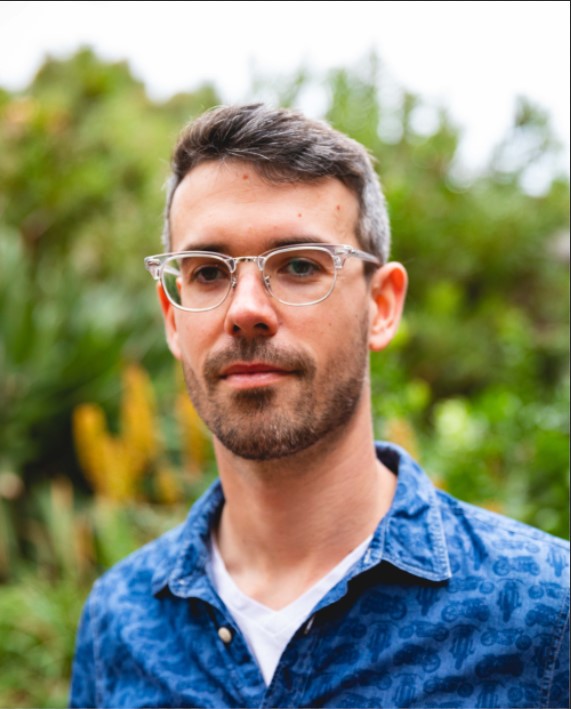
Denis Fougerouse is a Senior Lecturer at Curtin University’s School of Earth and Planetary Sciences (EPS), specializing in structural and economic geology with a focus on nanogeoscience and advanced characterization techniques. He leads research using atom probe tomography (APT) to study mineral interfaces, fluid dynamics, and critical metal distribution. His work spans asteroid mineralogy (e.g., Ryugu samples), ore genesis, and nuclear geology (e.g., Chernobyl zircon re-equilibration). Fougerouse is a key member of Curtin’s Geoscience Atom Probe Facility, advancing applications of APT in geosciences. Research interests include gold remobilization mechanisms, sulfide chemistry, and shock metamorphism. He has contributed to landmark studies on pyrite microtextures, xenotime geochronology, and nanoparticle transport in gold deposits. Fougerouse’s awards include the 2024 Mineralogical Society of America Award for pioneering nanoscale mineral analysis. His interdisciplinary collaborations span planetary science, environmental geochemistry, and materials science, reflecting his role at the forefront of geoscience innovation.
Dr. Yi Shen is a Senior Lecturer at the School of Chemical and Biomolecular Engineering, The University of Sydney, and Chair of RACI Women in Chemistry. She is also affiliated with multiple research institutes including Sydney Institute of Agriculture, Sydney Southeast Asia Centre, The Centre for Drug Discovery Innovation, and The University of Sydney Nano Institute. PhD in Soft Materials from ETH Zurich Postdoctoral research at University of Cambridge and Harvard University Her research focuses on protein phase behavior and functional biomaterials development, utilizing soft matter approaches and microfluidic techniques to address challenges in neurodegenerative diseases, sustainable materials, and biomedical engineering. She has published extensively in top journals like Nature Nanotechnology and PNAS, with a particular emphasis on: Protein liquid-liquid phase separation mechanisms Biomaterials from protein nanofibrils Microfluidic manipulation of biological systems Biodegradable bioplastics development Shear force effects on biomolecular systems Pathological protein aggregation dynamics Key scientific achievements include: 2022 ARC DECRA Fellowship 2022 Sydney Nano Frontier award 2018 ETH Zurich Spark Award (for Fe delivery system invention) 2012 Princeton Grand Challenges Program 2 patents pending 2 Nature Nanotechnology cover articles As an educator, she coordinates CHNG2802 Chemical Engineering Modelling and Analysis, co-teaches CHNG3804 Biochemical Engineering and CHNG5605 Bio-products: Laboratory to Marketplace, and guest lectures across biomedical and nanotechnology programs. Her lab actively collaborates with institutions in Switzerland (ETH Zurich), UK (Cambridge), and US (Harvard, Princeton), focusing on transforming biomolecular understanding into real-world applications in health, industry, and environmental sustainability.
Dr. Suresh Bhargava is a Distinguished Professor and Director of AcSIR at RMIT University's Research & Innovation department. He has led interdisciplinary research in materials science, catalysis, and environmental engineering for over three decades, with a focus on strengthening Indo-Australian scientific collaboration. His work bridges academia and industry, addressing challenges in pollution control, nanotechnology, and cancer treatment. Research & Leadership: Established RMIT's Centre for Advanced Materials and Industrial Chemistry (CAMIC), pioneering translational research with industry applications. Supervised 70+ PhD students (100% employment rate), many now leading roles at global institutions. Holds distinguished professorships across six countries and advises governments and Fortune 500 firms on environmental and industrial issues. Awards & Recognition: Recipient of Australia's Member of the Order of Australia (2022), India's P.C. Ray Chair (2014), and the Khwarizmi International Award (2016). His work on mercury pollution control and gold-based anticancer drugs has garnered global acclaim, with over 800 publications (26,000+ citations, h-index 86). Key Contributions: Architect of the Australia-India Strategic Research Fund and the RMIT-AcSIR Joint Research Program. Innovated eco-friendly graphene production from eucalyptus bark and patented anti-cancer gold compounds. Advises on sustainable mineral processing, hydrogen energy, and CO₂ valorization. Industry Engagement: Consulted for Rio Tinto, BHP Billiton, and CSIRO on resource efficiency, pollution mitigation, and nanotechnology applications. His research has created jobs and driven innovation in Australia and Asia-Pacific.
Dr. Yi David Ju is a Senior Research Fellow at RMIT University's School of Science and an ARC DECRA Fellow at La Trobe University's School of Cancer Medicine. He leads the Nanomedicine and Gene Therapeutics Laboratory at the Olivia Newton-John Cancer Research Institute (ONJCRI) and holds Honorary Fellowships at the University of Melbourne's Department of Microbiology & Immunology and Chemical Engineering. PhD from University of Melbourne (2017, Frank Caruso) 2017–2021 : Research Fellow at University of Melbourne 2021 : Vice-Chancellor’s Postdoctoral Fellow at RMIT 2023 : Visiting Researcher at University of Manchester's Nanomedicine Lab His research focuses on Bio-Nano Interactions , particularly Nanoparticle-Immune System dynamics, Lipid Nanoparticle Engineering for mRNA Delivery , and Poly(ethylene glycol) Alternatives . Key contributions include stealth nanoparticles for prolonged circulation, anti-PEG antibody dynamics in vaccine development, and patient-specific targeting models for chronic lymphocytic leukemia . Recent publications analyze hybrid immuno-PET-MRI probes for inflammation monitoring, zwitterionic PEG nanoparticles for reduced immunogenicity, and RAFT polymer-based LNPs for enhanced gene delivery . His work also explores supramolecular DNA-polyphenol assemblies and metal-phenolic coatings for controlled drug release . Scientific Awards : 2023 ACIS ECR Lectureship Finalist, 2023 ACS Nano Impact Award 2022&2023 RMIT Enabling Capability Platform Funding 2021 CBNS Most Significant Publication Award 2020 CBNS Career Development Award 2019 Outstanding Postdoctoral Researcher Award 2019 Nanoscale Advances Oral Prize 2017 Reviewer Excellence Award for Chemistry of Materials 2014 Best Tutor Award Professional Roles : Associate Editor, Journal of Materials Science Committee Member, Royal Australian Chemical Institute (Victorian Branch) Active Member, Australasian Colloid and Interface Society
Professor Jega Jegatheesan is a faculty member at the School of Engineering at RMIT University in Australia. His research focuses on environmental and chemical engineering, with a particular emphasis on water treatment, resource recovery, and sustainable technologies. He leads projects addressing wastewater management, membrane technologies, and nature-based solutions for urban water systems. His work spans interdisciplinary areas such as desalination, biochar applications, and the recovery of valuable metals from industrial waste. Professor Jegatheesan holds a leadership role in supervising research projects, including studies on lithium-ion battery recycling, brine management, and environmental impact assessments. He collaborates internationally on initiatives like scaling nature-based water treatment technologies in Southeast Asia. His contributions bridge academia and industry, emphasizing sustainable practices and environmental policy.
Professor Rajesh Ramanathan is a renowned interdisciplinary scientist and research leader at RMIT University's School of Science. He holds the rank of Professor and co-leads the NanoBiotechnology Research Lab (NBRL). His work focuses on nanotechnology, materials chemistry, and sensor development for healthcare applications, with over 85 peer-reviewed publications and 20 patents. He has secured AUD $22 million in research funding and mentored 16 PhD students and 3 postdocs. Education: PhD in Science (RMIT University, 2012), Master of Biotechnology (RMIT, 2006), and Bachelor of Science (Ruia College, 2004). Awards include the Hartung Lecturer Award (2022), Rising Star Award (2022), and Philip Law Postdoctoral Award (2019). Research interests span nanobiotechnology, nanozymes, antimicrobial surfaces, and sensors for environmental/clinical analytes. He leads projects in supercapacitor materials, inflammation theranostics, and UV protection textiles. Current students include Pyria Mariathomas (antibacterial nanozymes) and Shalu Yadav (2D nanocomposites for viral biomarkers). Professional roles include President of the Royal Australian Chemical Institute VIC Branch and leadership roles in the Australian Nanotechnology Network. His work bridges academia and industry, with collaborations in biomedical imaging and sensor commercialization.
Associate Professor Ken Chiang is a faculty member at RMIT University's School of Engineering under the STEM faculty. He holds an Associate Professor rank and has over 20 years of academic and industrial research experience, securing over $12 million in research funding. His work focuses on innovative catalyst technologies, sustainable processes, and liquid metal catalysis for applications in CO2 utilization, hydrogen generation, and environmental engineering. Research Interests Chemical Engineering, Macromolecular and Materials Chemistry, Materials Engineering, Environmental Engineering, and catalytic systems for renewable energy. Key Projects Recent projects include development of next-generation liquid metal catalysts for CO2 reutilization, low-emission hydrogen generation via ammonia utilization, and novel reactor concepts for process intensification. His research also addresses wastewater purification and solar-to-chemical energy conversion. Advising & Grants He has supervised 10 PhD students, 2 Master's students, and 2 industrial trainees. His funding includes government and industry projects totaling over $12 million. Labs & Collaborations Collaborates on decarbonization technologies and liquid metal systems, with contributions to RMIT's research network in sustainable energy and catalysis.
Dr. Amir Beheshti is a Research Fellow at the School of Chemistry and Molecular Bioscience, University of Wollongong (UoW). He holds a PhD in Chemical Engineering from the University of Queensland (2017–2021), focusing on polymer brush-grafted colloids as lubricant additives. Previously, he served as a Postdoctoral Research Associate at the University of South Australia (2021–2023) within the ARC Centre of Excellence for Enabling Eco-efficient Beneficiation of Minerals, where he applied surface-sensitive techniques like AFM and QCM-D to study polymer-surface interactions. His research integrates colloid and interface science with physical chemistry, emphasizing tribology, adsorption, and wetting phenomena. Key projects include collaboration with BlueScope Steel in the Steel Research Hub to develop advanced coatings and nanomaterials for industrial applications. He also teaches as a tutor in Modern Inorganic and Bio-inorganic Chemistry at UoW. Beheshti’s work spans experimental and applied research in lubricant additives, flame-retardant coatings, and nanofluids. His studies utilize cutting-edge techniques such as atomic force microscopy and quartz crystal microbalance with dissipation monitoring to analyze surface interactions and material properties.
Professor Neil Cameron is the Monash Warwick Alliance Professor of Polymer Materials, splitting his time between Monash University's Department of Materials Science and Engineering (Australia) and the University of Warwick's School of Engineering (UK). His research focuses on polymeric biomaterials for applications in tissue engineering, regenerative medicine, and drug delivery. He holds a PhD in Polymer Chemistry and a BSc in Chemistry from the University of Strathclyde. Key research themes include: New Tools for Biology: Scaffolds for 3D cell culture, glycopolymers, and polypeptides. New Tools for Chemistry: Supported catalysts and mass spectrometry methods for polymer sequencing. Materials for Medicine: Drug delivery systems targeting the eye, nanomedicine, and biodegradable scaffolds. Synthetic Biology: Polymersome-based protocells and glycosylated nanoparticles. His projects span interdisciplinary collaborations, including the development of biodegradable ligament scaffolds, functionalized cellulose materials, and novel mass spectrometry techniques. He leads or co-investigates grants such as the SURE-Poly project on recyclable polymers and the NHMRC Equipment Grant for UV lamp adaptors. Labs/Teams: Active in Monash’s Materials Science group and collaborates with Warwick researchers. His lab specializes in biomaterials design, with a focus on scalable production and clinical applications.
Professor Luke Connal is a full professor at the Research School of Chemistry at the Australian National University (ANU), where he leads the Connal Group. He joined ANU in 2017 after serving as a Senior Lecturer at the University of Melbourne. Currently, he holds an ARC mid-career industry fellowship and serves as the chair of the Royal Australian Chemical Institute (RACI) polymer division. Professor Connal is also an associate editor for the Royal Society of Chemistry journal "Molecular Systems Design and Engineering" and co-founder of two spin-out companies focused on polymer technologies. Professor Connal received his Bachelor of Chemical Engineering and PhD in polymer chemistry from the University of Melbourne, Australia. Following his doctoral studies, he completed a post-doctoral position with Professor Frank Caruso at the University of Melbourne, developing new techniques for the self-assembly of polymers. He then held a joint Sir Keith Murdoch postdoctoral Fellowship and Australian Linkage International Fellowship at the University of California, Santa Barbara, working with Professor Craig Hawker. Professor Connal's research focuses on the development of molecular design concepts to create new materials for diverse applications, including artificial skin and tissues, sustainable polymers and surfactants, additive manufacturing electronics, and water harvesting. His core competencies center around advanced polymer design, self-assembly, and catalysis . His group explores four main research themes: Catalysis, Functional Materials and Interfaces, Soft Matter, and Supramolecular Chemistry . They develop innovative materials such as enzyme-inspired polymer catalysts, smart polymers for 3D printing, and polymer electrolytes for energy storage applications. Analysis of Professor Connal's recent publications reveals a strong focus on developing biomimetic materials and responsive polymers. His work bridges fundamental polymer chemistry with practical applications in environmental remediation, healthcare, and sustainable technologies. A notable trend is the increasing emphasis on CO2 capture technologies through enzyme-inspired catalysts and hydrogel systems. His group has also made significant contributions to 3D printing of functional materials , particularly self-healing gels and pH-responsive polymers. The research demonstrates a consistent trajectory toward creating smart, responsive materials with applications addressing global challenges in sustainability and healthcare. David Syme Research Prize (2020) Grimwade Prize in Industrial Chemistry (2019) Professor Connal actively supervises multiple PhD students including Lilian Boton, Jason Buchanan, Sandra Jestin, Saif Rahaman, Peidong Shen, Ming Li Tan, Moki Thanusing, and Jekaterina Viktorova. His current research is supported by several significant grants including projects on sustainable and compostable plastic alternatives, multimaterial 3D printed antenna arrays, developing vitrimers as next-generation reusable plastics, multi-material 3D printing, and smart materials for atmospheric water management. These projects demonstrate his commitment to translating fundamental polymer research into practical solutions for environmental and technological challenges. The Connal Group at ANU operates at the intersection of polymer chemistry and materials science, developing innovative solutions across multiple domains. Their laboratory work focuses on creating new polymers with applications spanning artificial skin development, sustainable packaging alternatives, atmospheric water harvesting, and advanced electronics. The group's unique approach combines biomimicry principles with cutting-edge polymer synthesis techniques to create materials with precisely controlled properties. Current projects include developing strong and self-healing polymer materials for biological applications, expanding 3D printing capabilities for functional materials, creating fully recyclable or compostable plastics, and designing thermoresponsive polymer desiccants for sustainable water harvesting.
Professor Benu Adhikari is a faculty member in the School of Science at RMIT University, Australia. He holds honorary positions including Visiting Professor at Jiangnan University (China), Adjunct Professor at Soochow University (China), and Adjunct Distinguished Professor at the China Academy of Agricultural Sciences (Beijing). His research focuses on food engineering, emulsions, encapsulation technologies, biodegradable packaging, and food drying processes. Key projects include developing plant-based dairy alternatives, biodegradable films from agricultural waste, and texture-modified foods for the elderly. He supervises numerous research projects on topics like 3D-printed food from mushroom waste, sodium reduction in food systems, and encapsulation of bioactive compounds. His work integrates advanced materials science, sustainable processing, and food innovation. Professor Adhikari is an editorial board member of Sustainable Food Technology and Drying Technology . Research interests span food engineering fundamentals (rheology, thermal processing), emulsion stability mechanisms, micro/nano encapsulation of heat-sensitive ingredients, and biodegradable packaging development. His lab explores novel applications of plant and algal proteins, lignin-based materials, and AI-driven food supply chains. Over 400+ research outputs highlight contributions to food science, materials engineering, and sustainable technologies. Collaborations with industry and global institutions drive applied research in food safety, nutrition, and circular economy practices. Recent innovations include hemp protein-curcumin conjugates, AI-optimized fresh food logistics systems, and 3D-printed texture-modified foods for dysphagia management. His work addresses global challenges in food security, sustainability, and aging population nutrition through interdisciplinary approaches.
Timothy E. Long is a Professor at Arizona State University (ASU), holding joint appointments in the School of Molecular Sciences and the School for Engineering of Matter, Transport, and Energy . He serves as Director of the Biodesign Center for Sustainable Macromolecular Materials and Manufacturing . Long earned a B.S. in Chemistry from St. Bonaventure University (1983) and a Ph.D. in Chemistry from Virginia Tech (1987). His research focuses on sustainable polymer design, additive manufacturing (3D printing), and green chemistry principles. Key interests include developing degradable polymers, functional materials for advanced technologies, and integrating 3D printing with polymerization processes. He emphasizes circular economy principles, aiming to reduce environmental impact through recyclable and biodegradable materials. Long’s publications span over 200 peer-reviewed articles, with recent work addressing photopolymerization of latexes, non-isocyanate polyurethanes, and electroresponsive hydrogels. His group collaborates across disciplines, including chemical engineering, materials science, and biochemistry, promoting diversity in thought and innovation. He leads initiatives in ASU’s Biodesign Institute and teaches advanced courses in polymer science and sustainable materials. His research group actively engages in conferences and industry partnerships to translate fundamental research into practical applications.
Dr Ming Yao Lim is a Postdoctoral Research Fellow at the School of Chemical Engineering, The University of Queensland. His research focuses on soft contact tribology, lubrication mechanisms in food emulsions, and interfacial dynamics. Education: Bachelor (Honours) and Doctor of Philosophy in Chemical Engineering from The University of Queensland. Lim's work investigates viscoelastic properties of food emulsions and their tribological behavior, with applications in biomedical engineering, food science, and materials engineering. His studies include tribofilm formation, surfactant-stabilized emulsions, and colloidal interactions in soft contacts. Dr Lim is available for supervision and contributes to publications in journals like Biotribology and Biosurface . His research bridges chemical engineering principles with practical applications in lubrication and colloidal systems. Contact: Email ming.lim@uq.edu.au for collaboration or supervision inquiries.
Professor Nidhi Bansal is a leading expert in dairy and food bioprocessing at the University of Queensland (UQ) , serving as the Director of Teaching & Learning in the School of Agriculture and Food Sciences. With over 150 publications and an h-index of 38 (Google Scholar), her work bridges agricultural sciences , food chemistry , and clinical nutrition . PhD in Dairy Chemistry (University College Cork, 2007) B.Tech in Dairy Technology (SMC College of Dairy Science, 2003) Research Focus: • Non-Thermal Processing: Leading UQ's 'non-thermal processing research program' since 2011, developing pulsed electric field (PEF) and high-pressure processing (HPP) to preserve milk biomolecules while ensuring microbial safety. • Non-Bovine Milk Systems: Pioneering research on camel milk and human milk , exploring their composition, enzymology, and bioactive properties. • Milk Protein Structure: Investigating protein interactions, denaturation, and functional properties like foaming, gelling, and emulsification. Recent Article Trends highlight contributions to Precision Fermentation , Milk Foam Science , and Camel Milk Applications . Her work has been cited in 103 countries across 25 disciplines, including Medicine and Chemical Engineering . Scientific Leadership: Program Lead for the $165M Food and Beverage Accelerator (FaBA) Trailblazer Grant CI on grants exceeding $183M from NHMRC, ARC, and industry partners Director of UQ’s Education and Training Program in the Strategic University Reform Fund ($6.9M) Mentoring Excellence: Supervised 27 HDR students (12 as principal advisor) and >60 coursework students. Authored multiple Food Chemistry and Journal of Dairy Science publications with significant impact on infant nutrition and food safety .
Brendan Dyett is a Research Fellow at RMIT University, supported by an Australian Research Council Discovery Early Career Award. His research focuses on nanoscale dynamics at interfaces using microscopy and scattering techniques. He investigates lipid nanoparticle-cell interactions, non-wetting thin films, and surface nanobubbles/droplets, with applications in overcoming biological barriers for therapeutic delivery. He is affiliated with RMIT’s Research & Innovation Portfolio and teaches courses such as CHEM1015 (Environmental Chemical Issues) and ONPS2186 (Applied Science Project). His research interests span colloid and surface chemistry, nanomedicine, and modeling/simulation. He contributes to UN Sustainable Development Goals 3 (Good Health) and 10 (Reduced Inequalities). Recent projects include developing lipid nanocarriers for mRNA delivery and antimicrobial peptide encapsulation. Awards: Australian Research Council Discovery Early Career Award Grants: ARC-funded research on lipid nanoparticle mechanistic studies Collaborations: Industry projects and media inquiries welcomed His work bridges fundamental materials science with biomedical applications, emphasizing nanostructured systems for drug delivery and disease treatment.