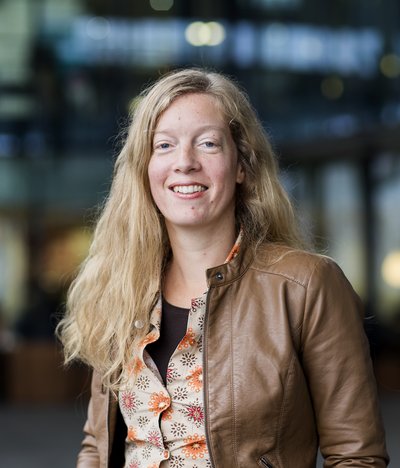
Ilja Voets is a Full Professor at Eindhoven University of Technology (TU/e) , holding positions in the Department of Chemical Engineering and Chemistry and the Institute for Complex Molecular Systems (ICMS) . Her research focuses on interdisciplinary studies of self-assembly processes in soft matter, particularly antifreeze proteins and smart materials. She leads the Self-Organizing Soft Matter group, collaborating with chemists, physicists, biologists, and engineers to bridge fundamental science and applied material design. Education: She earned a PhD cum laude in 2008 from Wageningen University (supervised by Arie de Keizer and Martien Cohen Stuart) and held a postdoc at the University of Fribourg (Switzerland). She joined TU/e in 2011 as an Assistant Professor, becoming a Full Professor in 2018. Research Interests: Her work spans colloidal self-assembly, polymer folding, protein biophysics, and ice-binding proteins. Key projects include designing antifreeze proteins for cryopreservation, light-responsive materials, and smart polymers for biomedical applications. She explores how environmental cues (e.g., light, temperature) can control self-assembly dynamics. Roles & Impact: She serves as an Associate Editor for ACS Nano and has contributed to Proceedings of the National Academy of Sciences and Angewandte Chemie . Her research bridges academia and industry, addressing challenges in food science, biomedical engineering, and materials innovation. Labs & Teams: Her group collaborates with TU/e’s ICMS to advance complex molecular systems research. Projects often involve correlative microscopy, computational modeling, and interdisciplinary design strategies.
Janelle Steffen is an Assistant Research Scientist in the Department of Oceanography at Texas A&M University. Her work focuses on understanding iron cycling in the ocean, particularly in Antarctic regions, using stable isotope techniques. She collaborates with Dr. Jessica Fitzsimmons to establish a state-of-the-art MC-ICP-MS facility at TAMU, positioning the university as a global leader in metal isotope analysis. Education: PhD in Oceanography, Texas A&M University (2024) M.S. in STEM Education, Johns Hopkins University (2013) B.S. in Environmental Science, Indiana University (2011) Research Interests: Iron and trace metal biogeochemistry in polar and open-ocean systems Application of stable isotope geochemistry to trace element cycling Development of advanced analytical techniques like MC-ICP-MS Her recent articles highlight Antarctic benthic iron fluxes, hydrothermal influences on iron budgets, and REE dynamics linked to West Antarctic ice sheet melting. These studies emphasize the critical role of sediments and hydrothermal activity in global iron supply. Awards: 2018 Texas A&M University Merit Fellowship Advising/Grants: While no students are listed, her work is supported by institutional funding and collaborative grants. Her lab focuses on advancing marine geochemical methodologies and understanding climate-sensitive ocean systems. Labs/Teams: Core member of the TAMU geochemistry group developing cutting-edge metal isotope analytical capabilities.
Hektor Kashuri is an Associate Teaching Professor in the Physics department at Worcester Polytechnic Institute (WPI). He holds a BS from the University of Tirana (1997) and a PhD from Northeastern University (2008). His research focuses on soft condensed matter physics, including liquid crystal phase transitions and electrical properties of biological tissues. Research employs techniques such as AC/relaxation calorimetry, dielectric spectroscopy, polarizing microscopy, and light scattering. He emphasizes conceptual understanding over formula memorization in teaching, maintaining consistent student engagement across different educational systems. Recent scholarly work includes studies on muscle impedance during contractions and high-frequency electrical impedance myography presented at the 2007 International Conference on Electrical Bioimpedance. His work bridges material science and biomedical applications, with a focus on experimental methods.
Prof. Dr. Gerhard Naegele is a senior researcher at the Institute for Biological Information Processes (IBI) within the Research Center Jülich GmbH . His primary role is in the Biomacromolecular Systems and Processes (IBI-4) department, focusing on theoretical and computational studies of biological soft matter. His research emphasizes colloidal systems, protein dynamics, and phase behavior in quasi-two-dimensional environments. Key research areas include: Structure and dynamics of charged colloids, microgels, and protein solutions Competitive interactions in dispersions and their impact on clustering and phase transitions Modeling ultrafiltration processes and membrane technologies Computational methods such as mode-coupling theory and multiparticle collision dynamics His work bridges theoretical physics, chemistry, and biophysics, with applications in biomaterials, drug delivery, and industrial filtration. Recent studies explore stimuli-responsive microgels and the rheological properties of soft matter systems. Notable contributions include: Development of advanced simulation frameworks for complex fluids Analysis of cross-flow filtration efficiency under varying conditions Experimental-theoretical collaborations on protein aggregation and colloidal stability His laboratory is part of the broader Helmholtz Association, emphasizing interdisciplinary research in energy, health, and materials science.
Carmen Enid Martinez is a Professor in the Soil and Crop Sciences Section of the School of Integrative Plant Science at Cornell University. Her research focuses on soil biogeochemistry, nutrient cycling, and soil organic matter dynamics with emphasis on iron-nitrogen-organic matter interactions, rhizosphere processes, and trace metal speciation. She holds a B.Sc. from the University of Puerto Rico and advanced degrees from Rutgers University. Key research areas include molecular-scale mechanisms of soil processes, mineral-organic matter associations, and environmental impacts of agricultural chemicals like glyphosate. She teaches undergraduate and graduate courses in soil chemistry and environmental science, including PLSCS 6710 and ESS 4990. Recent work investigates glyphosate adsorption dynamics, organic matter characterization via advanced spectroscopy, and Mn cycle impacts on terrestrial ecosystems. Publications span over 30 years with contributions to Geoderma, Environmental Science & Technology, and Langmuir. Labs and facilities include Bradfield Hall (Ithaca, NY), where her team employs techniques like ATR-FTIR spectroscopy and molecular networking. Current projects explore antibiotic mobility in agricultural soils and climate-driven changes in dissolved organic matter composition.
Fabio Marchesoni is a Professor of Physics at the University of Camerino, affiliated with INFN Perugia Section and Tongji University Shanghai. His research focuses on stochastic processes, nonequilibrium statistical physics, and gravitational wave physics. He has contributed to major collaborations like LIGO/Virgo, publishing over 246 articles with 148,100 citations. Research Interests: Active matter systems, artificial Brownian motors, nanoscale transport phenomena, and gravitational wave detection. His work bridges fundamental physics with applications in neuromorphic computing and materials science. Key Contributions: Pioneered stochastic resonance theory, developed models for nanoscale motor systems, and co-authored landmark papers on GW170817 (neutron star merger) and the first direct detection of gravitational waves (GW150914). Collaborations: Works with institutions worldwide including University of Augsburg, RIKEN, and Loughborough University. Active in interdisciplinary projects combining physics with engineering and biology.
Robert Levenson, PhD Robert Levenson is an Assistant Professor of Biochemistry at Soka University of America, specializing in protein assembly mechanisms, biophotonics, and biomolecular condensates. His research focuses on understanding how proteins form complex structures and malfunction in diseases, with applications in engineered biocatalysts and materials. He actively involves undergraduates in research, co-authoring peer-reviewed papers with them. Research Interests Protein structure and assembly in molecular machines Tunable liquid-liquid phase separation (LLPS) Protein aggregation and proteopathies Protein-based biocatalyst design Awards & Recognition National Science Foundation Award #2233670 ($293,310, Principal Investigator) Multiple travel awards (ASBMB, ACS Division of Biological Chemistry) Teaching Teaches courses including General Chemistry II, Integrated Biology & Chemistry, and specialized learning clusters on topics like SARS-CoV-2 and drug design. Emphasizes fostering intellectual independence and curiosity in students. Professional Experience 2020–present: Assistant Professor at Soka University of America 2016–2020: Assistant Project Scientist at UC Santa Barbara’s Institute of Collaborative Biotechnologies
Matteo Fasano is an Associate Professor at the Department of Energy (DENERG), Politecnico di Torino, where he serves as co-Director of the Multi-Scale Modeling Laboratory (SMaLL) and is a member of the CleanWaterCenter's management board. He holds a Ph.D. in Energy Engineering and Nanotechnology from the same institution, awarded in 2015, and has established a strong international research profile through collaborations with MIT, Houston Methodist, Imperial College, and the University of Minnesota. Education: Ph.D. in Energy Engineering and Nanotechnology, Politecnico di Torino (2015) His research focuses on computational and multi-scale modeling of heat and mass transfer in energy and environmental systems. Key areas include thermal energy storage, desalination, nanofluidics, and sustainable materials. He employs advanced simulation techniques such as molecular dynamics, Monte Carlo, coarse-grained modeling, and machine learning to analyze phenomena at nano- and micro-scales. His work supports UN Sustainable Development Goals 6 (Clean Water), 7 (Affordable and Clean Energy), and 9 (Industry, Innovation, and Infrastructure). The recent publication trends reflect a strong emphasis on sustainable technologies, particularly in solar-driven desalination, passive cooling materials, hydrogen co-production, and seasonal thermal storage. His modeling expertise bridges fundamental physics with practical applications in water, energy, and environmental engineering. Scientific Awards: ENI Award - Debut in Research (2017) Premi di Qualità, Politecnico di Torino (2014) Prof. Fasano actively supervises numerous Ph.D. students across Energetics, Materials, and Civil Engineering programs and leads multiple high-impact research projects funded by the EU (Horizon Europe), national PRIN grants, and private foundations. He teaches core courses such as 'Computational Heat and Mass Transfer', 'Advanced Engineering Thermodynamics', and 'Modeling of Nanoscale Phenomena' at both MSc and PhD levels. His advisory role extends to thesis supervision and research mentorship, contributing significantly to the next generation of engineers and scientists. Laboratories and Research Groups: Multi-Scale Modeling Laboratory (SMaLL), co-Director Research Group M3ES (DENERG) Member, CleanWaterCenter@PoliTo Management Board
Dr. Jack Panter is a Lecturer in Fluid Dynamics at the University of East Anglia (UEA), affiliated with the School of Engineering, Mathematics and Physics. He is a member of the Fluids & Structures research group and co-manages the Thermofluids Research Laboratory with Dr. Stefano Landini. His research integrates computational and experimental approaches to study multiphase fluid systems, with applications in sustainability, thermal management, and energy storage. Education: PhD in Physics, Durham University (awarded 2020) MSci in Physics and Chemistry, Durham University (2015, First Class) Dr. Panter's research centers on fundamental interfacial and wetting phenomena, with a strong emphasis on computational modeling. He develops and applies phase-field models, the Binary Image Transition State Search (BITSS) algorithm, and the Lattice Boltzmann method to study fluid equilibria, transitions, and dynamics. His work extends into soft matter, including elastic buckling, bio-elasticity, and colloidal organization. Applications include optimizing super-liquid-repellent surfaces with Procter & Gamble and simulating capillary rise for carbon capture technologies with ExxonMobil. His recent publications focus on thermal management of lithium-ion batteries using phase-change materials, hybrid immersion cooling strategies for electric vehicles, and computational simulations of wetting and capillary phenomena. These works reflect a strong trend toward sustainable engineering solutions, energy efficiency, and advanced computational fluid dynamics. Scientific Awards: No awards explicitly mentioned. Dr. Panter is actively involved in research funding and advising. He leads a Royal Society-funded project on capillary coupling and collaborates on a knowledge exchange project on low-cost thermal energy storage. He advises on computational methods and contributes to interdisciplinary research in thermal systems and fluid dynamics. His lab, the Thermofluids Research Laboratory, is equipped with advanced experimental facilities for thermal characterization, battery testing, 3D printing, and capillary force measurement, enabling both fundamental and applied research. Research Group: Thermofluids Research Laboratory – focused on phase-change phenomena, thermal management of electronics and batteries, and thermal energy storage. The lab supports projects in solid-liquid phase change materials, hybrid composites, microstructure design, and capillary phenomena.
Professor Prashant Valluri is a Personal Chair in Fluid Dynamics at the University of Edinburgh's School of Engineering, where he also serves as Director of Discipline and Head of Graduate School (since 2018). His research focuses on developing mathematical models for complex multiphase flow patterns to address industrial challenges including oil-gas transport, slurry transport, distillation, absorption, thermal management of microdevices, and biological problems such as cerebral temperature regulation and lung function. Professor Valluri earned his PhD in Chemical Engineering from Imperial College London in 2004 with a thesis on "Multiphase fluid dynamics in structured packings" and holds a Bachelor of Technology (Distinction) in Chemical Engineering from Dr. BA Technological University, Lonere, India (1998). He is an active member of several professional organizations including the American Association for Advancement of Science, American Physical Society, and Indian Society for Surface Science Technologists. His research expertise spans multiphase and single-phase fluid dynamics , transport phenomena , stability theory and turbulence , and biological fluid dynamics . Professor Valluri has developed several open-source computational tools including the Two Phase Level Set (TPLS) Solver for high-resolution DNS of multiphase flows, the Vascular Porous (VaPor) Solver for simulating biological temperatures, and the Gerris Immersed Solid Solver (GISS) for solid-fluid flow simulations. His work has significant applications in industrial cleaning, oil-gas transport, thermal management of microdevices, and cerebral temperature regulation. Professor Valluri's recent research publications demonstrate a strong focus on multiphase flows, droplet dynamics, boiling heat transfer, and computational fluid dynamics. His work combines theoretical modeling with high-performance computing to solve complex fluid dynamics problems across various scales, from microdevices to industrial applications. The research shows particular strength in Direct Numerical Simulation (DNS) techniques applied to multiphase systems. Member of American Association for Advancement of Science Member of American Physical Society Member of Indian Society for Surface Science Technologists Associate Member of IChemE Invited JSPS Fellow at Kyushu University (2018) Extraordinary Professor at University of Pretoria (2019) Professor Valluri has supervised numerous PhD students to completion, including Dr. Pedro J Sáenz (2014), Dr. Pei Shui (2015), Dr. Patrick Schmidt (2017), Dr. Stephen Blowers (2018), and several others through 2021. He has secured significant research funding for projects including ACoolTPS (Advanced Cooling of high power microsystems using Two-Phase Flows Systems) and ThermaSMART (Smart Thermal Management Of High-power Microprocessors Using Phase-change). His research group, the Institute for Multiscale Thermofluids, focuses on Multiphase Flows and Transport Phenomena. Professor Valluri leads the Multiphase Flows and Transport Phenomena Special Interest Group of the UK Fluids Network and has established extensive international collaborations with institutions including Imperial College London, University College Dublin, Université de Lyon, Université Pierre et Marie Curie, MIT, Stanford University, and Kyushu University.
Chengjie Luo is a researcher in the Department of Applied Physics at Eindhoven University of Technology, specializing in Non-Equilibrium Soft Matter and machine learning applications to materials science. His work focuses on structural properties of amorphous materials and dynamic correlations in glass-forming systems. Research Interests Application of supervised learning to classify glass states and particle behavior Theoretical frameworks for glass-forming liquid dynamics Size-dependent packing mechanisms in binary metallic glasses Structural emergence in supercooled liquids via first-principles modeling Research Trends His publications (2023-2024) reveal integration of machine learning with condensed matter physics, particularly in glass transition and structural property analysis . Studies employ molecular dynamics and density functional theory to explore non-equilibrium soft matter systems. Collaborations & Media Collaborates with researchers like L.M.C. Janssen and C. Storm. Media coverage (2023) highlights his work on supercooled liquid complexity and glass-forming dynamics .
Anne-Laure Biance is a CNRS Research Director at the Institut Lumière Matière (iLM) in Université Lyon 1, where she leads the "Liquid and Interfaces" team. Since 2018, she has also held teaching duties as a Professeur Chargée de Cours at École Polytechnique in the mechanical engineering department. Her research spans multiple institutions, including previous visiting positions at Tanaka's soft matter lab at Tokyo University (2014-2016). Her educational background includes a PhD from the Collège de France (2001-2004) under Quéré's group, a Master in liquid physics from Université Paris 6 (2000-2001), and studies at ESPCI (1997-2001). Biance's research focuses on interfacial hydrodynamics , particularly in nanofluidic systems, bubbles and foams, droplet dynamics, and the interactions of fibers, grains and water. Her work combines experimental approaches with theoretical modeling to understand transport phenomena at small scales. She has developed innovative experimental platforms to probe ionic flows, femtoL/s flow rates, and heat transfer in nanometric liquid films. Her research has applications in filtration, depollution, desalination, energy harvesting, and biomolecular analysis. Analysis of her recent publications reveals a strong focus on nanofluidic transport phenomena, particularly ionic transport in confined geometries, interfacial electrokinetics, and the behavior of soft matter systems like foams and droplets under various stimuli. Her work increasingly bridges fundamental physics with practical applications in environmental technology and energy conversion. Biance leads major research projects including ANR SoftNanoflu, FET-OPEN Progeny, and Nectar projects. She has supervised numerous PhD students including Yedhir Mezache (defended 2022), Grégoire Martouzet (defended 2022), and Aymeric Allemand (defended 2023), while currently mentoring Changwoo Bae, Rachel Piednoir, and others. Her research is funded by CNRS, ANR, and international collaborations. She maintains an active laboratory at Institut Lumière Matière (Campus de la Doua, Brillouin building), where her team develops novel experimental approaches for studying nanofluidic systems, foam stability under electrical stimuli, and droplet dynamics. Her work environment fosters collaboration between physicists, chemists, and engineers working on complementary aspects of interfacial phenomena.
Oriane Bonhomme is an Assistant Professor at Université Claude Bernard Lyon 1 , affiliated with the Institut Lumière Matière (ILM) and its Optique Non-Linéaire Et Interfaces (ONLI) team. Her research focuses on molecular-scale analysis of soft matter systems, particularly soap films and interfaces, using advanced non-linear optical techniques like Second Harmonic Generation (SHG) and Rayleigh scattering. She leads the ANR SOLSTICE project on soap film stability and collaborates on the PROGENY FET OPEN project studying electronic soap films. Teaching : Institut Universitaire de Technologie de Lyon (Department of Mechanical and Manufacturing Engineering) Key Techniques : QM/MM polarizable embedding, SHG diagnostics, electrokinetic modeling Her work intersects non-linear optics , surface science , and soft matter physics , with recent publications analyzing surfactant behavior under electric fields, hyperpolarizability fluctuations in water, and nanoscale diagnostics of liquid interfaces. She actively recruits postdoctoral researchers for projects involving molecular-scale stability and optical probing of complex systems. Scientific Awards : ANR SOLSTICE Project funding FET OPEN Project PROGENY Contact: oriane.bonhomme@univ-lyon1.fr
Alexander N. Tarnovsky is a Professor in the Chemistry Department at Bowling Green State University's College of Arts and Sciences. His research focuses on ultrafast photoinduced processes and chemical reaction dynamics in solution, utilizing advanced spectroscopic techniques. Ph.D. from S.I. Vavilov State Optical Institute, Russia M.S. from Institute of Fine Optics, Russia Research Interests include: Ultrafast excited-state dynamics Bond rupture and rearrangement in polyhalogenated alkanes Photochemistry of transition metal complexes Solute-solvent interactions Scientific Awards : NSF Career Award (2010-2011) His students have secured positions at institutions like Crossroads Photonics, East-Texas Baptist University, and Saint Petersburg State University. Key publications analyze charge separation in nanocrystals, conical intersections in metal dianions, and radical formation in photolysis reactions.
Dr. Erke Arıbaş is a Lecturer at Istanbul Technical University's Faculty of Computer and Informatics , specializing in the Department of Computer Engineering . His research spans interdisciplinary domains including artificial intelligence, simulation modeling, and biophysics applications. Education: PhD in Computational Science and Engineering (2001-2013), Istanbul Technical University MA in Information Systems Design and Management (2001), Istanbul Technical University (Evening Education) BS in Physics (1992-1996), Istanbul Technical University BS in Physics (1996-2000), University of Missouri-Rolla His research focuses on generative AI applications , autonomous systems , and multi-phase flow simulations with thermal modeling. He has contributed to fields ranging from smart city cybersecurity to biomechanical modeling of blood flow. Article trends show expertise in AI-personality modeling integration , unmanned aerial vehicle design , and biofluid dynamics with specialized focus on red blood cell aggregation and arterial hemodynamics.