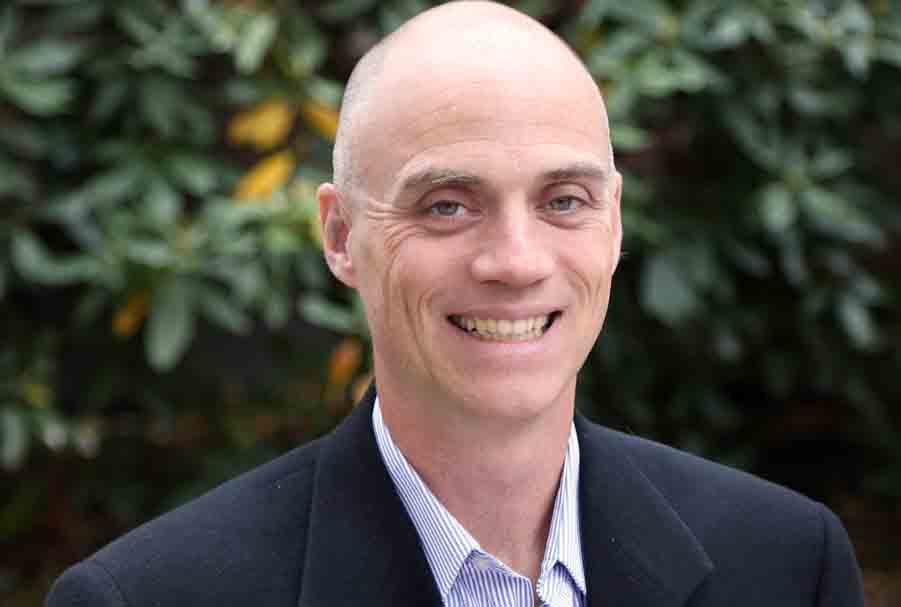
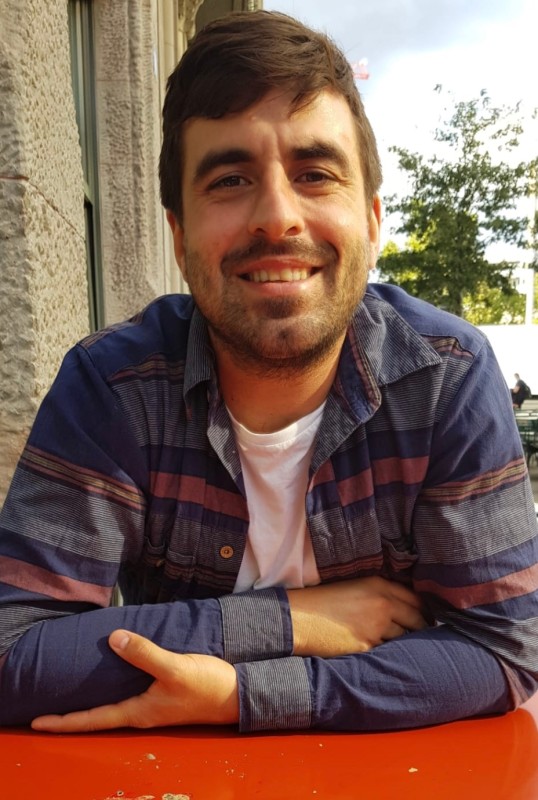
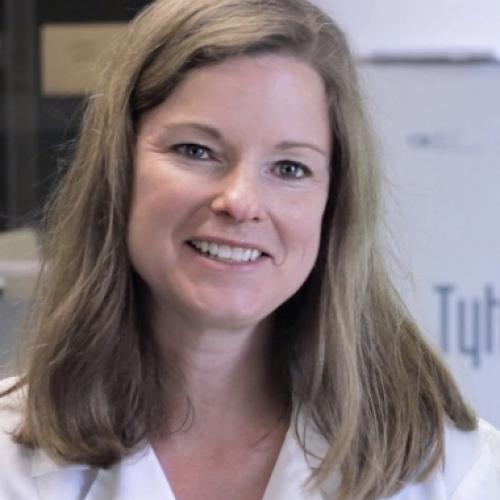
Ramin Golestanian is a Professor at the University of Oxford since 2010 and has served as Director at the Max Planck Institute for Dynamics and Self-Organization since 2018. He is also an Honorary Professor at the University of Göttingen. His primary affiliation is with the Department of Living Matter Physics at the Max Planck Institute for Dynamics and Self-Organization in Göttingen, Germany. Golestanian obtained his BSc from Sharif University of Technology in Tehran, and his MSc and PhD from the Institute for Advanced Studies in Basic Sciences (IASBS) in Zanjan. His PhD work was conducted under the remote supervision of Mehran Kardar from MIT, followed by a postdoctoral fellowship at the Kavli Institute for Theoretical Physics at UC Santa Barbara. He held academic positions at IASBS and the University of Sheffield before becoming a Full Professor in 2007. Golestanian has a broad research interest in nonequilibrium statistical physics, soft matter, and biological physics. He is particularly distinguished for his pioneering work on active matter, including the development of microscopic swimmers and active colloids. His recent research focuses on non-reciprocal interactions in active matter systems, exploring how breaking action-reaction symmetry leads to novel self-organization phenomena. His work spans theoretical frameworks for understanding living matter from fundamental principles, with applications ranging from synthetic biology to understanding the origin of life. Golestanian is an elected Fellow of the American Physical Society and the Institute of Physics. His major awards include the Holweck Medal of the Société Française de Physique and the Institute of Physics, the EPJE Pierre-Gilles de Gennes Lecture Prize, the Martin Gutzwiller Fellowship of the MPI-PKS, the Nakamura Lecturer Award of UCSB, and the 50th-Anniversary Most Distinguished Alumni Award of Sharif University of Technology. As Director of the Max Planck Institute for Dynamics and Self-Organization, Golestanian leads research initiatives exploring the fundamental principles of self-organization in complex systems. His department, the Department of Living Matter Physics, investigates how physical principles govern living systems. He has delivered numerous invited lectures at prestigious institutions worldwide, including Cambridge University, Oxford University, and the Kavli Institute for Theoretical Physics.