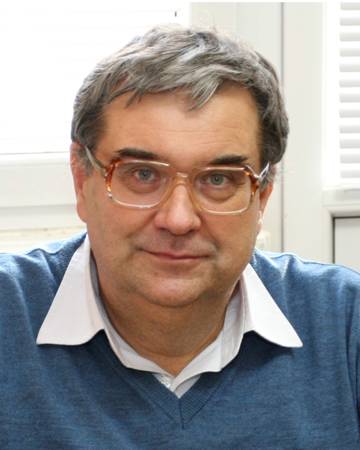
Piero Baglioni is a Full Professor of Physical Chemistry at the University of Florence and an MIT affiliate in Nuclear Science and Engineering. He leads the National Center for Nanosciences (CSGI) and serves on editorial boards of major journals including Soft Matter (RSC), Journal of Physical Chemistry Chemical Physics (RSC), and Langmuir (ACS). European Academy of Science Royal Academy of Art and Science in Göteborg, Sweden Royal Society of Chemistry International Institute for Conservation of Historic & Artistic Works American Chemical Society European Colloids and Interface Society Accademia delle Arti del Disegno (Italy) His research focuses on Soft Matter and Colloids , with over 500 publications spanning materials chemistry, cultural heritage conservation, and complex fluid dynamics. Key subfields include gel science, neutron/X-ray scattering, and surface chemistry. Scientific Recognitions: Rhodia Prize (ECIS, 2002) European Grand Prix for Innovation Awards Lifetime Achievement Award (JCIS, 2011) Caballero Aguila (INHA, Mexico, 2010) Chen Distinguished Lectureship (Taiwan, 2016) Overbeek Medal (2016) Bonino Medal (2016)
Peter Kralchevsky is a Full Professor of Condensed Matter Physics at Sofia University's Faculty of Chemistry & Pharmacy since 2002, with a distinguished academic career spanning over four decades. He currently serves as Head of the Laboratory of Complex Fluids and has held significant leadership positions including Dean of the Faculty of Chemistry & Pharmacy (2015-2019). Kralchevsky is a Fellow (2012) and Corresponding Member (2004) of the Bulgarian Academy of Sciences, reflecting his national scientific prominence. His research focuses on fundamental aspects of colloid and interface science, with particular expertise in capillary forces between colloidal particles, thin liquid films and surface forces, surfactant adsorption thermodynamics and kinetics, micelles and their rheological properties, and colloidal dispersions including foams, emulsions, and suspensions. Kralchevsky's work bridges theoretical understanding with practical applications in detergency and material science, with his book 'Particles at Fluid Interfaces and Membranes' (Elsevier, 2001) serving as a key reference in the field. Analysis of his publication record reveals a consistent focus on interfacial phenomena with increasing specialization in micellar systems and depletion forces in recent years. His work demonstrates strong theoretical foundations combined with experimental validation, particularly evident in his studies on wormlike micelles and analytical modeling of micelle growth. The international collaboration evident in his publications, particularly with Japanese and European researchers, underscores the global impact of his research. 2016 The Highest National Award "Pythagoras" for scientific achievements 2012 Fellow of the Bulgarian Academy of Sciences 2008 Best Professor Award, Bulgarian Ministry of Education and Science 2006 Blue Ribbon Medal for Achievements in Science, Sofia University 2004 Corresponding Member of the Bulgarian Academy of Sciences 1995 Diploma by the Science and Technology Agency of Japan 1990 Zlatarov National Award for Chemical Sciences Kralchevsky has supervised 41 BSc and MSc students and 16 PhD students throughout his career, demonstrating strong commitment to academic mentorship. His leadership extends to major international research initiatives, having chaired EU COST Action D43 (2008-2011) with participants from 29 countries and serving as Vice Chair of EU COST Action CM1101 (2012-2018) with participants from 31 countries. He currently serves as Secretary of the European Colloid and Interface Society (ECIS) and Member of the Council of the International Association of Colloid and Interface Scientists (IACIS). As Head of the Laboratory of Complex Fluids at Sofia University, Kralchevsky leads a research team investigating advanced aspects of colloid science. His laboratory work connects fundamental research on interfacial phenomena with practical applications in materials science and nanotechnology, continuing a research tradition established through his earlier leadership of the Laboratory of Chemical Physics and Engineering and the Laboratory of Thermodynamics & Physicochemical Hydrodynamics.
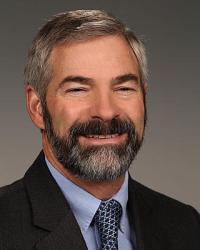
James J. De Yoreo is an Affiliate Professor of Chemistry and Materials Science & Engineering at the University of Washington, Seattle. His research focuses on understanding and manipulating interactions at solid-liquid interfaces in nanoscale, biological, and environmental systems using advanced in situ microscopy techniques like TEM and AFM. He holds a Ph.D. in Chemistry from Cornell University (1985). His research interests span biophysics, materials science, and environmental mineralogy, with a focus on biomineralization, protein aggregation, and crystal growth mechanisms. He leads a multidisciplinary group investigating topics such as oriented attachment in nanoparticle assembly, biomimetic mineral formation, and nanomaterial synthesis. His work bridges fundamental science and applied technologies, including energy materials and biomedical applications. De Yoreo has received prestigious recognition, including the 2025 Fred Kavli Distinguished Lecturer in Materials Science. His lab actively collaborates with institutions like Pacific Northwest National Laboratory (PNNL), leveraging cutting-edge tools to study dynamic processes at the atomic scale. He advises graduate students in areas like molecular engineering and nanotechnology. Key research themes include: Controlled mineralization using biomimetic polymers In situ visualization of nucleation and growth pathways Impact of solvents and additives on crystal morphology Design of 2D materials and peptoid-based nanomembranes His group’s innovations aim to advance fields from clean energy to biomedical implants through a deep understanding of atomic-scale processes.
Dr. Vaishnavi Krishnamurthi is a Research Fellow in the School of Engineering at RMIT University, located at the City Campus in Australia. Her research focuses on nanomaterials, liquid metal systems, catalysis, optoelectronics, and neuromorphic engineering. She specializes in the synthesis and characterization of nanomaterials for energy conversion, biological interactions, and advanced device applications. Her research interests include exploring novel liquid metal-based nanomaterials for catalytic systems, optoelectronic devices, and neuromorphic computing. She investigates material properties such as surface chemistry, structural evolution, and electronic behavior to enhance their performance in energy and biomedical applications. Recent work highlights include studies on liquid metal colloids, oxide layer dynamics, and thin-film semiconductors. Dr. Krishnamurthi supervises research projects such as 'Activation of Carbon nanomaterials for energy conversion' and 'Nanocolloidal Chemistry in Liquid Metal Media.' Her articles reflect a strong focus on interdisciplinary research at the intersection of materials science, chemistry, and engineering. She is open to supervising Masters and PhD students in areas like nanomaterials synthesis, liquid metal chemistry, and energy systems. Her contributions are highlighted through collaborations with international researchers and publications in high-impact journals like Advanced Materials and Nano Letters .
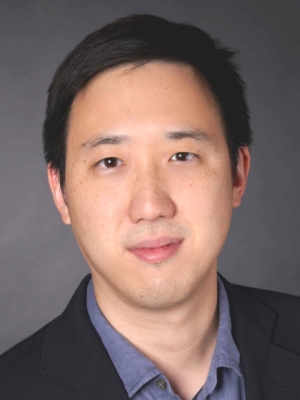
Dr. Hank Han is a Research Fellow at RMIT University's Research & Innovation Portfolio, specializing in physical chemistry, colloid science, and protein-related applications using ionic liquids. His work focuses on protein aggregation control, drug delivery systems, and synchrotron-based analytical techniques. He holds a PhD from Deakin University (2018) and has expertise in spectroscopy, crystallography, and scattering methods. Key research areas include ionic liquid design for protein solubility, antimicrobial coatings for implants, and novel bio-nanomaterials for biomedical applications. He is open to supervising Masters and PhD students in these areas. Collaborative projects span topics like nucleic acid delivery systems and orthopedic implant coatings. Publications emphasize nanocomposite materials, 3D-printed functional polymers, and sustainable waste utilization. His work appears in journals across materials science, biomedical engineering, and polymer chemistry. Education: PhD (Physical Chemistry), Deakin University, 2018 ORCID: 0000-0002-6974-0344 Current research includes projects on protein aggregation in neurodegenerative diseases and solvent design for nucleic acid delivery. He actively collaborates on synchrotron-based material characterization and biomedical material development.
Hyunjoon (Joon) Kong is the Robert W. Schaefer Professor in the Department of Chemical and Biomolecular Engineering at the University of Illinois, affiliated with Bioengineering and Pathobiology. He joined in 2007 and holds editorial roles for Biomaterials and Biofabrication . His research focuses on nanobiomaterials for therapeutic and diagnostic applications, including drug delivery, bio-inspired materials, and biofilm removal. Kong has authored over 150 papers and patents, with awards such as IAMBE and AIMBE Fellowships. Education: PhD (2001), University of Michigan; Postdoc at Harvard University (2004-2006). Research Themes: Active hybrid materials, self-propelling colloids, stretchable hydrogels, bio-abiotic machinery. Lab Activities: Active BioHybrid Matter Lab, group retreats, and collaborations in interdisciplinary fields like neuroscience and environmental engineering. His work addresses vascular diseases, infection control, and tissue regeneration, with recent advances in self-locomotive microrobots and neuron-muscle interfaces. Kong mentors over 20 students and actively participates in academic outreach and recruitment.
Harry Bermudez is an Associate Professor in the Department of Polymer Science and Engineering at the University of Massachusetts Amherst. He leads the Bermudez Research Group focusing on biological polymers and self-assembly mechanisms. Education: B.S. in Chemical Engineering from UMass Amherst (1998), Ph.D. in Chemical Engineering from University of Pennsylvania (2003). Research interests: Stabilization of enzymes using deep eutectic solvents; Supramolecular DNA polymerization for protein synthesis; Biological polymer interfaces; Protein-polymer interactions in ionic environments. Awards: Recipient of the NSF CAREER Award and Armstrong Fund for Science Award. Research supported by NSF grants including #1800442. Leads the Bermudez Research Group investigating biomolecular materials. Collaborates with Matysiak Lab on enzyme dynamics.
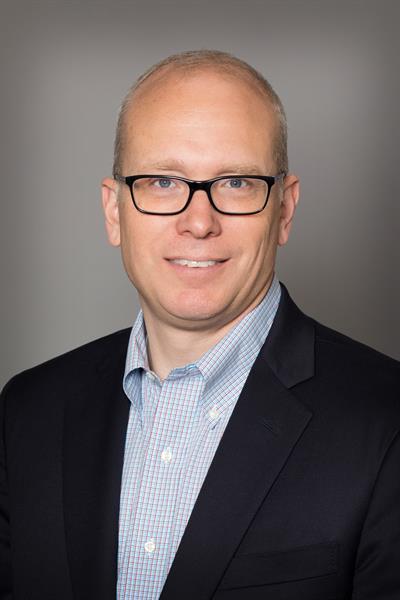
C. Andrew Ramsburg is an Associate Professor in the Department of Civil and Environmental Engineering at Tufts University School of Engineering. He serves as the Dean of Undergraduate Education, contributing to both academic leadership and research innovation. Doctor of Philosophy (Environmental Engineering), Georgia Institute of Technology, 2002 Master of Science in Environmental Engineering, Georgia Institute of Technology, 1999 Bachelor of Chemical Engineering, Georgia Institute of Technology, 1997 Ramsburg's research focuses on improving environmental quality through the study of multiphase flow and transport in porous media , biotransformation , and emerging contaminants . His work addresses critical challenges in groundwater remediation , DNAPL source zone characterization , and the fate of pharmaceuticals in wastewater . His expertise spans surfactant interactions , emulsion delivery systems , and mass transfer dynamics . Ramsburg's recent publications highlight advancements in biokinetic modeling , alkalinity release mechanisms , and emulsified oil applications for nitrate removal. His studies integrate experimental validation with numerical simulations to optimize subsurface restoration strategies.
Grant Webber is a Professor in the School of Engineering at the University of Newcastle, specializing in Chemical Engineering. His research integrates chemical engineering and physical chemistry to study colloidal and interfacial phenomena with applications in personal care products, pharmaceuticals, minerals processing, and biomedical devices. Research interests include stimulus-responsive polymer coatings that alter structure in response to pH, temperature, or salt concentration; specific ion effects in electrolyte solutions; electrostatic formation of liquid marbles for applications in micro-reactors and sensors; and mineral processing technologies. His work employs neutron scattering, atomic force microscopy, and computational modeling to link nanoscale behaviors to macroscale properties. His recent publications demonstrate a strong focus on polymer brush systems (15 articles since 2023), with emerging themes in telecommunications network optimization and mineral processing. The work shows consistent application of fundamental principles to solve industrial problems, particularly in sustainable resource processing and advanced materials design.
Dr. Se-Hyeong Jung is a Research Fellow at ETH Zurich's Material Institute, affiliated with the Professorship for Soft Materials and Interfaces since December 2022. He works in Prof. Lucio Isa's group, focusing on reconfigurable active colloids and stimuli-responsive polymer networks. His research integrates chemistry, materials science, and engineering to develop adaptive microswimmers and smart materials. Education includes: Bachelor's in Chemistry, University of Würzburg (2013) Master's in Chemistry, RWTH Aachen University (2017) PhD at DWI – Leibniz Institute/RWTH Aachen (2018–2022) Research interests center on: Design of multi-material colloids with tunable morphologies Chemical control of polymer network responsiveness Microgel-based reconfigurable systems for biomedical and engineering applications Light- and redox-responsive material platforms His publications (2018–2025) demonstrate expertise in microfluidics, supramolecular assembly, and stimuli-responsive materials, with recurring themes of programmable colloids, microgel fabrication, and adaptive functionality. Articles frequently appear in high-impact journals like Advanced Materials and Angewandte Chemie , with several featured as covers. Awards and honors: Elsevier Award for Senior Scientists (2025) Gels Travel Award (2024) Enzo Ferroni Award for Young Scientists (2021) He leads no advised students but collaborates extensively within Prof. Isa's lab and previously with Prof. Andrij Pich's group at RWTH Aachen. Current work explores DNA-based colloidal replication and programmable microscale actuation.
Dr. Keumkyung Kuk is a researcher at ETH Zurich's Department of Materials, specializing in Soft Materials and Interfaces under Prof. Lucio Isa and Dr. Robert Style. She holds a PhD from Heinrich Heine University Düsseldorf, where she focused on soft colloids and nano-optics. Her research interests encompass colloid and interface chemistry, tribology on elastomers, and material characterization. Prior to her academic career, she worked in the Korean automotive industry and traveled across Europe and Asia. Education: Bachelor's in Chemical Engineering, Chungnam National University, South Korea Master's in Colloid and Interface Chemistry, Münster University of Applied Sciences, Germany PhD in Soft Colloids and Nano-optics, Heinrich Heine University Düsseldorf Her research explores the behavior of soft colloidal systems, including drying processes, interfacial phenomena, and tunable microgel materials. Her work has been published in journals like Advanced Science and Soft Matter , with one paper highlighted by the Soft Matter Editorial Board in 2022. She collaborates closely with Prof. Matthias Karg and Jun.-Prof. Ivo Buttinoni in previous academic roles. Labs and Teams: Affiliated with Prof. Lucio Isa's research group at ETH Zurich, focusing on tribology and soft materials applications.
Prof. André R. Studart is a Full Professor and Deputy Head of the Department of Materials at ETH Zurich, leading the Complex Materials group. Born in Brazil, he holds a Bachelor's and PhD from the Federal University of São Carlos. His research focuses on bio-inspired materials, advanced ceramics, 3D printing, and sustainable manufacturing. Notable contributions include engineered living materials for carbon sequestration and microbial-based ceramic fabrication. He has received awards from Alcoa Co., Thermo Haake Co., and the Brazilian Ceramic Society. His work spans applications in energy, healthcare, and environmental technologies. Education: Bachelor's in Materials Science and Engineering, Federal University of São Carlos, Brazil PhD in Materials Science, Federal University of São Carlos, Brazil Research Interests: Development of smart materials for medical implants and energy systems Integration of microorganisms into materials for self-regulating functionalities Low-temperature ceramic processing via biocementation 3D printing of functional and reprocessable materials Scientific Awards: Alcoa Co. Award Thermo Haake Co. Award Brookfield Co. Award Magnesita Award Brazilian Ceramic Society Award Advising & Grants: Leads the Complex Materials group at ETH Zurich, with over 50 publications and three patents. His research is supported by grants from SNF and industry partnerships. Labs/Teams: Directs the Complex Materials group, focusing on bio-hybrid materials and advanced manufacturing techniques.
Robert Style is a Lecturer in the Department of Materials at ETH Zurich, Switzerland. His research focuses on experimental and theoretical studies of interfaces, functional materials, phase separation in soft and biological systems, freezing phenomena, membrane physics, and mechanics. He holds a PhD from the University of Cambridge (UK) and has held postdoctoral positions at Oxford University and Yale University, followed by roles as a lecturer and group leader before joining ETH. Education: PhD in Physics (Ice Growth) – University of Cambridge, UK Postdoctoral Research – University of Oxford (UK) and Yale University (USA) Research interests span soft matter physics and biological materials , emphasizing phase transitions, material failure mechanics, and surface tension dynamics. Notable contributions include studies on ice-lens growth, elastocapillarity, and hydrogel mechanics. His work integrates experimental and computational approaches to understand material behavior across scales. Awards: 2016 Young Scientist Award (Adhesion Society) 2015 Teaching Award (Oxford University) 2011 Bateman Fellowship (Yale University) Advising and grants: While no students are listed, his research group likely oversees PhD projects in soft materials. His grants and collaborations involve interdisciplinary projects on biomaterials and environmental materials science. Labs/Teams: Leads the Soft Materials and Interfaces Group at ETH Zurich, focusing on experimental and theoretical studies of soft materials' mechanical and interfacial properties.
Prof. Jan Vermant is Vice Rector for Curriculum Development and heads the Laboratory of Soft Materials at ETH Zürich. He earned his doctoral degree in Chemical Engineering from KU Leuven in 1996 under Prof. Jan Mewis. His research focuses on rheology and applications of complex fluid-fluid interfaces, colloidal suspensions, and developing novel experimental methods for soft matter applications in materials science. Research interests include: Rheology of complex interfaces Colloidal suspension dynamics Novel characterization techniques Soft matter applications Materials science innovation Publications demonstrate consistent focus on colloidal systems and interfacial phenomena, with recent advances in rheometry techniques and emulsion stabilization. Awards reflect recognition across molecular characterization, interfacial science, and rheological measurement techniques. Significant institutional roles include: Head of Department of Materials (2019-2020) Deputy Head of Department (2018, 2021) Member of Research Commission (2016-present) Member of Tenure Committee (2017-2019)
Dr. Taehee Kim serves as a Researcher in the Department of Inorganic Functional Materials at ETH Zurich, Switzerland. Their work is affiliated with the Laboratory of Inorganic Chemistry (LAC) and the Professorship for Functional Inorganic Materials. Kim's research focuses on advanced materials science, particularly in nanocrystals, perovskite quantum dots, and optoelectronic devices. They investigate phenomena such as photoluminescence, charge transport, and surface engineering in semiconductor materials. Key research interests include the development of novel functional materials for optoelectronics, energy applications, and biomedical imaging. Their studies often involve nanostructuring, defect engineering, and the exploration of unique optical properties such as circular polarization and multiphoton emission. Recent work emphasizes stretchable electronics, stimuli-responsive systems, and theranostic agents for medical applications. Kim’s publications highlight advancements in perovskite films, quantum dot dynamics, and hybrid organic-inorganic frameworks. Their contributions address challenges in material stability, charge transport efficiency, and defect mitigation. The lab’s interdisciplinary approach spans chemistry, physics, and engineering, with a focus on translating fundamental discoveries into practical technologies.