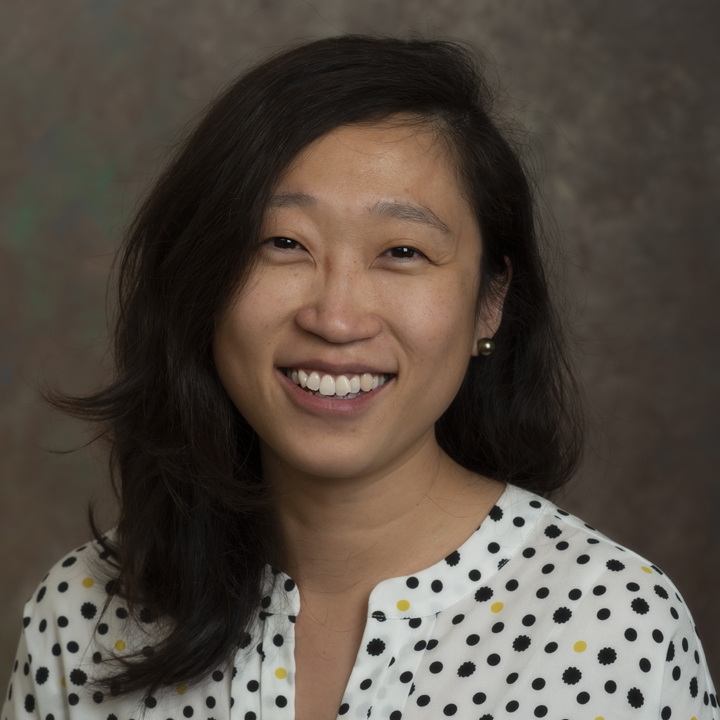
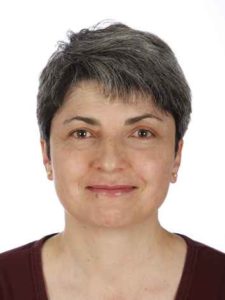
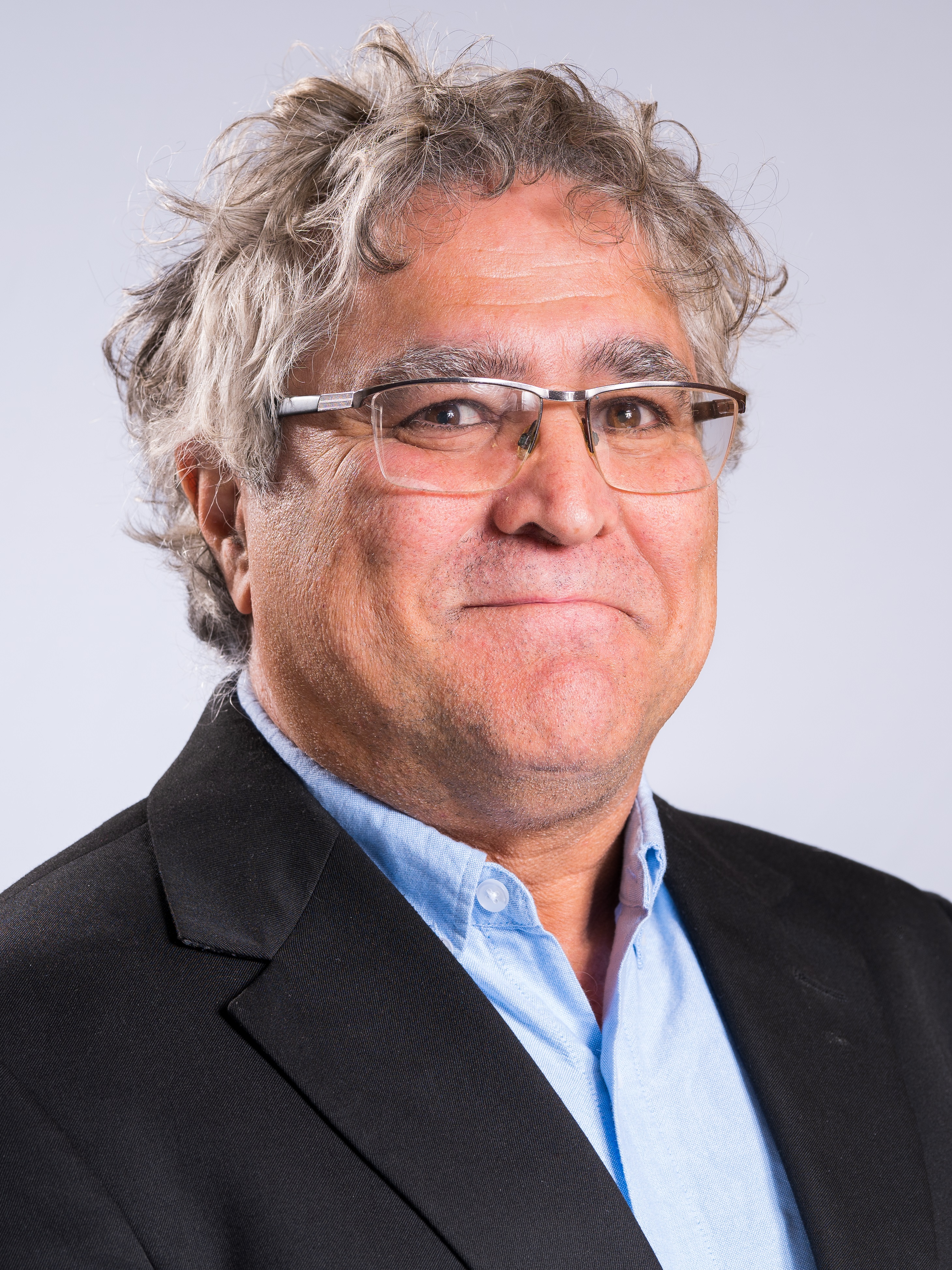
Nicholas Ling is a Research Fellow in Chemical Engineering at the University of Western Australia's School of Engineering. His research focuses on applying low-field nuclear magnetic resonance (NMR) techniques to characterize emulsions and fluid behavior in energy-related applications. He holds a PhD from UWA on the applications of bench-top NMR in characterizing oil field emulsions. Research interests include emulsion formation/stabilization in oil-water systems, enhanced oil recovery methods, hydrogen dispersion in geological formations, and NMR applications in porous media. Recent projects involve experimental studies of EGR/EOR from tight carbonates and hydrogen storage feasibility. Articles demonstrate consistent focus on NMR method development for energy applications, with recent progression toward hydrogen storage research and gas diffusion measurements. Collaborative projects include industry partnerships through the Future Energy Exports CRC.
Jing Gao is Associate Professor of Geospatial Data Science at the University of Delaware, with joint appointments in the Data Science Institute and Delaware Environmental Institute. Research domains include: Machine learning for spatial population modeling Uncertainty quantification in geospatial analysis Human-environment interactions in urbanization Her computational approaches integrate geospatial science with data mining to analyze environmental change impacts. Current projects focus on spatial demography and sustainability challenges.
Peter A. Kralchevsky is a Professor at the Department of Chemical and Pharmaceutical Engineering, Faculty of Chemistry and Pharmacy, Sofia University "St. Kliment Ohridski". He holds the distinction of being a Fellow of the Bulgarian Academy of Sciences and historically served as head of the laboratory from 1993 to 2008. His research spans colloid science, surface phenomena, and disperse systems including foams, emulsions, and surfactant solutions. As part of the Department of Chemical and Pharmaceutical Engineering, his work contributes to understanding capillary phenomena, hydrodynamics of thin liquid films, and biophysics of fat digestion. The department maintains strong international collaborations with research centers across Western Europe, North America, and Japan. Professor Kralchevsky ranks among Bulgaria's most cited scientists with over 6,500 citations, reflecting significant impact in colloid and interface science. His research has contributed to the department's robust publication record of approximately 100 peer-reviewed papers annually. Fellow of the Bulgarian Academy of Sciences As a long-standing faculty member, he has contributed to the department's leadership in research projects at Sofia University, with approximately 85 projects annually including 30 industrial collaborations. His work supports the department's strong international partnerships with institutions including Cambridge University, ETH Zürich, and Max Planck Institute.
María Moreno serves as Professor of Electronics in the Department of Applied Physics at the University of Salamanca, specializing in advanced electronic device development using two-dimensional materials. Her research bridges fundamental quantum phenomena with practical semiconductor applications. Her academic journey includes a PhD in Physics from Complutense University of Madrid (conducted at the Institute of Materials Science of Madrid/CSIC), followed by postdoctoral research at Berlin's Paul-Drude Institute of Solid-State Electronics, a Ramón y Cajal researcher position at the Institute of Materials Science of Madrid, and research associate work with the Semiconductor Physics group at the University of Cambridge. Her primary research domains encompass: Quantum Materials and 2D Material Systems (particularly Graphene) THz Technology and Next-Generation Solar Cells Quantum Nanosystems & Nonlinear Physics Colloids and Interfaces for Electronic Applications Her 2022 Science Advances publication exemplifies her focus on quantum transport phenomena in low-dimensional systems, revealing fundamental insights into spin-charge separation in nanoscale conductors that inform next-generation electronic device design. Within the Department of Applied Physics, she contributes to multiple research initiatives including Quantum Nanosystems development, advanced solar cell engineering, and THz technology applications, leveraging institutional facilities for materials characterization and device fabrication.
Ulf Schiller is an Associate Professor at the University of Delaware (UD), holding a joint appointment in the Computer and Information Sciences and Materials Science and Engineering departments. Prior to UD (since 2023), he was an Assistant Professor at Clemson University, where he established computational materials science as a key research area. His academic journey includes a Ph.D. in Physics from Johannes Gutenberg University Mainz (2008), dual M.S. degrees in Physics and Computer Science from the University of Bielefeld (2005/2003), and postdoctoral research at the University of Florida, Forschungszentrum Jülich, and University College London. Education : Ph.D., Physics, Johannes Gutenberg University Mainz, 2008 M.S., Physics, University of Bielefeld, 2005 M.S., Computer Science, University of Bielefeld, 2003 Research Interests : Dr. Schiller’s work centers on computational materials science , multiscale modeling , and high-performance computing , with applications in soft matter physics, biomedical fluid dynamics, and machine learning-driven materials discovery. He develops physics-informed machine learning algorithms to study interfacial phenomena, multiphase transport in porous materials, and patient-specific biomedical fluid dynamics. Research Trends in Publications : His recent articles focus on lattice Boltzmann simulations of emulsion gels, magnetic particle stabilization, and the impact of decontamination treatments on N95 respirators. A unifying theme is leveraging computational tools (e.g., LAMMPS, HemeLB) for predictive modeling in complex systems. Awards and Grants : No awards explicitly mentioned, but his interdisciplinary research suggests potential grant support from funding bodies focused on materials science and computational methods. Labs and Teams : He leads the Computational Materials Science Group at UD, advancing high-performance computing and machine learning applications in materials discovery and biomedical engineering.
Anindita Das is an Assistant Professor at Southern Methodist University (SMU), leading research in atomically precise nanomaterials for energy and biomedical applications. Her work focuses on synthesizing nanoclusters with controlled structures for renewable energy catalysis and targeted drug delivery. She currently oversees the Das Lab at SMU, advancing interdisciplinary nanoscience. Education: Postdoc at Northwestern University (2016-2020); Ph.D. in Chemistry from Carnegie Mellon University (2010-2015); M.Sc. (2007-2009) and B.Sc. (2004-2007) from University of Pune and Osmania University, respectively. Research Interests: Developing nanomaterials with atomic precision, studying ligand effects on gold nanoclusters, and exploring applications in renewable energy systems. Key themes include colloidal crystallization dynamics, drug delivery mechanisms, and sustainable catalytic processes. Her most recent work (2023-2024) addresses carbon-negative methanol production, photoredox catalysis in 2D frameworks, and biomedical nanocarriers. The lab’s covalent organic frameworks show promise for environmental sensing and water treatment. Advising: Actively recruiting PhD students interested in nanomaterials synthesis and applications. Collaborations focus on bridging nanoscale engineering with macroscopic systems. Labs/Teams: Das Lab (https://people.smu.edu/daslab/) investigates nanocluster design, catalytic systems, and bio-nano interfaces.
Yuji Arai is an Associate Professor in the Department of Natural Resources and Environmental Sciences at the University of Illinois. His research focuses on environmental geochemistry, soil mineralogy, and biogeochemical processes involving iron oxides, phosphate dynamics, and organic-mineral interactions. He has received notable awards including the Jackson Soil Chemistry and Mineralogy Award (2016) and the NACTA Educator Award (2017). His work investigates mechanisms of phosphorus mineralization, ferrihydrite transformation under various geochemical conditions, and the role of extracellular polymeric substances in biogeochemical cycles. Recent studies address the impact of carbonate and Fe(II) on mineral stability, as well as the environmental fate of organic phosphorus in agricultural systems. Awards: Jackson Soil Chemistry and Mineralogy Award (2016) Lloyd R. Frederick Soil Teaching Travel Study Award (2021) NACTA Educator Award (2017) Research Themes: Iron oxide mineral transformation Phosphate adsorption and desorption Organic matter-mineral interactions Environmental geochemistry of phosphorus Soil contaminant transport Dr. Arai's publications (99+) emphasize interdisciplinary approaches combining spectroscopic techniques (NMR, XAS) with field and laboratory experiments to understand biogeochemical processes in soils and aquatic systems. His work has significant implications for agricultural sustainability and environmental remediation strategies.
Professor Dame Molly Stevens holds the John Black Professorship of Bionanoscience at the University of Oxford's Department of Physiology, Anatomy & Genetics and Institute of Biomedical Engineering, while serving as Deputy Director of the Kavli Institute for Nanoscience Discovery. She maintains part-time roles at Imperial College London and the Karolinska Institutet, Sweden. Her research focuses on biosensing, regenerative medicine, and biomaterials, with over 400 publications and an H-index exceeding 100. Stevens is a serial entrepreneur, co-founding four biotech companies and holding numerous patents. Education: PhD in Materials Science (University of Nottingham), postdoctoral training at MIT. Research interests include advanced diagnostics, bio-material interfaces, bioelectronics, and digital medicine leveraging AI. She leads the UK Regenerative Medicine Hub and the EPSRC i-sense collaboration. Awards include the Novo Nordisk Award (2023), MRS Mid-Career Researcher Award (2022), and American Chemical Society Colloid Chemistry Award (2020). A Fellow of the Royal Society, Royal Academy of Engineering, and multiple international academies, she champions interdisciplinary innovation and healthcare democratization. Advising and funding: Supervises a multidisciplinary team of over 40 researchers, with grants from ERC, UKRI, Wellcome Trust, and industry partners. Her Stevens Group develops biomaterials for soft robotics, tissue engineering, and wearable diagnostics.
Petia Vlahovska is a Professor of Engineering Sciences and Applied Mathematics at Northwestern University, with a courtesy appointment in Mechanical Engineering. She holds a Ph.D. in Chemical Engineering from Yale University, an M.S. in Chemistry from Sofia University, and has held fellowships such as the David Crighton Fellowship. Her research spans experimental and theoretical modeling of membrane biophysics, electrohydrodynamics, and active matter. Key projects include studying biomembrane electromechanics, self-organization in active colloids, and electrohydrodynamic instabilities of drops and vesicles. She directs the Complex Fluids and Soft Interfaces Lab, focusing on integrating theory and experiment. Her awards include the 2019 APS Fellowship, 2016 Humboldt Fellowship, and 2009 NSF CAREER Award. She has advised numerous PhD students (e.g., Gerardo Pradillo, Hammad Faizi) and collaborated with researchers at institutions like the Max Planck Institute and Brown University. Her work bridges fluid dynamics, soft matter, and biophysics, with applications in antibiotic development and advanced materials. Teaching includes courses in applied mathematics, fluid mechanics, and active matter. Current lab equipment includes Zeiss microscopes and high-speed cameras. Her research explores emergent phenomena in active systems, such as collective dynamics of microrotors and Quincke rotor-driven motility.
Alican Gençer is a Researcher in the Department of Chemical Engineering at the University of Bath, serving as a Research Visitor (Senior Scientist at Naturbeads). His work aligns with UN Sustainable Development Goals, particularly in advancing materials science through cellulose-based innovations. Education: Doctor of Science in Chemistry, KU Leuven (2014–2018), specializing in the colloidal deposition of cellulose nanocrystal films. Master of Chemistry, KU Leuven (Awarded July 2014). Research Interests: Cellulose nanocrystals and their behavior in suspensions and films. Colloidal deposition mechanisms, including gelation effects and flow dynamics. Applications in materials science, such as photonic crystals and sustainable nanotechnology. Structural and thermodynamic properties of nanomaterials. His studies explore optimizing material interfaces and adhesion strength for advanced engineering plastics, alongside improving material toughness through biodegradable polymer blends. Grants & Projects: PI: "Huawei": 1 June 2022 to 31 December 2022 (Research-related funding). Researcher: "Naturbeads": 4 January 2023 to 4 April 2024 (Research council-funded). No formal advisees are listed. His work integrates experimental and theoretical approaches to understand nanoparticle behavior in complex systems. Labs/Teams: Part of the Naturbeads project team, focusing on cellulose-based nanomaterials. Collaborated with industry and academic partners on projects involving sustainable chemistry and nanotechnology applications.
Dr. Ali Zarbakhsh is a Senior Lecturer in Physical Chemistry and Director of School Admissions at Queen Mary University of London's School of Physical and Chemical Sciences. He holds affiliations with the Centre for Chemical Research and the Centre for Experimental and Applied Physics. His research focuses on structure-function relationships in self-assembling surfactants and polymeric materials at interfaces. Key areas include neutron/X-ray scattering techniques, soft matter (nanogels for drug/DNA delivery), and lubrication (oil-metal interface adsorption). His work is funded by the European Commission, UKRI, and BP. Teaching expertise spans surfactants, electrochemistry, and nanomaterials. Recent grants include STFC-funded projects on polymer brush architectures (2025-2026), bioemulsion design (2024-2025), and gene delivery mechanisms (2023-2024). His lab develops bioemulsion systems and investigates nanoscale toughness of protein assemblies. Collaborations span materials science, biomedicine, and interdisciplinary physics. Notable publications (2024-2014) explore gene delivery complexes, nanogel adsorption, protein corona formation, and corrosion inhibition mechanisms using advanced scattering methods. His work bridges fundamental interface science with industrial applications in formulation chemistry and biotechnology.
Mark Vis is an Assistant Professor at Eindhoven University of Technology (TU/e), affiliated with the Institute for Complex Molecular Systems and the Department of Chemical Engineering and Chemistry. He holds a PhD from Utrecht University (2015) and has been a postdoctoral researcher at TU/e since 2016. His research focuses on the structure and stability of macromolecular mixtures, particularly in water-in-water emulsions and deep eutectic solvents. He was awarded the NWO Veni Grant in 2017 for his work on macromolecular interfaces. Education: BSc Chemistry (cum laude), Utrecht University, 2009 MSc Nanomaterials: Chemistry & Physics, Utrecht University (cum laude), 2011 PhD in Physical Chemistry (2015), Utrecht University Research Interests: Interfacial thermodynamics of polymer solutions Stabilization mechanisms in emulsions Phase behavior of colloidal systems Depletion interactions and their applications Teaching: Advanced Thermodynamics, Physical Chemistry, and Polymer & Colloid Science courses at TU/e. Projects (2021–2028): Phase Behaviour of Biopolymer Mixtures in Plant-Based Products Predicting Functionality of Polymeric Surfactants in Waterborne Dispersions Awards: NWO Veni Award (2017) for pioneering work on macromolecular interfaces.
Anton A. Darhuber is a Full Professor in the Department of Applied Physics at Eindhoven University of Technology (TU/e), leading the Micro- and Nanoscale Flows research group within the Fluids and Flows section. He also holds a Full Professor position at EIRES Research. His work spans fundamental fluid physics at micro- and nanoscales with applications in semiconductor manufacturing, printing technologies, and energy systems. Research Interests: Darhuber specializes in surfactant-driven flows , plasma-liquid interactions , thermo/solutocapillary phenomena , and thin film dynamics . His lab investigates how liquids interact with solids across nanometer-to-millimeter scales, focusing on pattern formation, defect mitigation in lithography, and evaporative processes. Key application areas include immersion lithography, inkjet printing, and enhanced oil recovery. Research Trends: Recent publications reveal a strong emphasis on plasma-induced liquid flows (2024-2025), where electrical properties dictate flow direction in saline solutions, and phase separation in meniscus-guided deposition (2025) for polymer thin films. His group combines experimental techniques with computational modeling to address challenges in watermark defect formation and coffee-stain effects. Supervision & Grants: Darhuber actively supervises doctoral candidates (e.g., Sajjad Karimnejad, R.A.J. de Bruijn) and master's students. He leads major projects including FIP2.0: Complex Fluids on Complex Substrates (2020-2026), Defeng: Defect Engineering in Thin Films (2019-2025), and HVCLD: High Velocity Contact Line Dynamics (2022-2029), securing third-tier and first-tier funding from industrial and academic sources. Research Infrastructure: The Micro- and Nanoscale Flows group operates advanced facilities for microfluidic experimentation, plasma-liquid interaction studies, and high-speed imaging of interfacial phenomena. Collaborations span semiconductor industry partners (ASML), academic institutions (Princeton University), and EU-funded consortia focused on sustainable manufacturing.
Jeff Gostick is the Azzam-Dullien Endowed Chair & Professor in the Department of Chemical Engineering at the University of Waterloo, serving as Associate Chair for Graduate Studies. His research focuses on porous materials engineering, multiphase flow dynamics, and electrochemical energy conversion, with applications in batteries and fuel cells. He leads the Porous Materials Engineering & Analysis Lab (PMEAL), which develops novel characterization tools and pore network models to optimize material performance. Education: 2008 – Doctorate in Chemical Engineering, University of Waterloo 2002 – Master of Applied Science in Chemical Engineering, University of Waterloo 2000 – Bachelor of Engineering in Chemical Engineering, Ryerson University Research Interests: Porous media and multiphase flow phenomena Pore network modeling for energy storage systems Electrode design and optimization for redox flow batteries X-ray tomography and image-based analysis Computational multiphysics simulations Notable Awards: Azzam-Dullien Professorship (2023) Waterloo Engineering Research Excellence Award (2023) Canadian Society for Chemical Engineering 'Emerging Leader' (2021) Teaching & Advising: Recent courses include CHE 181, CHE 200, CHE 331, and NE 111 Focus on active learning pedagogy Labs/Teams: PMEAL lab specializes in advanced materials characterization and computational modeling, with collaborations across academia and industry. Ongoing projects include graphene oxide membranes, 3D-printed electrodes, and CO2 conversion systems.
Andrew Clulow is an Adjunct Lecturer at the Department of Drug Delivery Disposition & Dynamics, Monash Institute of Pharmaceutical Sciences (MIPS), Monash University. Previously, he served as an ARC DECRA Fellow and MIPS Teaching Fellow. He also held an external position as a Departmental Visitor in the Department of Applied Mathematics at the Australian National University (ANU) from February 2016 to February 2017. Beamline Scientist at ANSTO Australian Synchrotron’s BioSAXS beamline (part of the BRIGHT suite), specializing in structural analysis via small-angle X-ray scattering. Former ARC DECRA Fellow at MIPS, where he led the digestion team in the Boyd group, focusing on lipid digestion’s impact on drug delivery systems. His research interests revolve around milk lipids, lipid digestion mechanisms, colloids and interfaces, and advanced scattering techniques (X-ray, neutron, light scattering). He explores how structural organization at molecular and aggregate levels influences functionality in materials such as drug delivery vehicles and optoelectronic systems. Key applications include infant nutrition, fat-soluble vitamin delivery, and pharmaceutical formulations. Andrew’s publications highlight advancements in lipid-based drug systems, structural dynamics of colloids, and interdisciplinary materials science. His work bridges applied chemistry and biomedical research, with a focus on sustainable and functional materials. Awards: AOCS Health and Nutrition Division's 2020 New Investigator Research Award (2019) Award for Research Impact (Economic and Social) (2018) Brisbane Biological and Organic Chemistry Symposium - Student Speaker Award (2011) Uniquest Trailblazer Award - Open Category (2009) UQ SCMB Postdoctoral Travel Award (2015) Grants & Projects: Lead investigator for projects including 'Elongated Nanocapsules - Engineering Drug Nanocrystals in Polymeric Shells' (2020–2023) and 'Interfacial and structural changes during digestion of milk-like systems' (2020). CASS Foundation Travel Award (2020) supported his research on milk-like systems during digestion. Andrew is actively involved in academic committees, serving as Secretary of the Australian Neutron Beam User Group (ANBUG) and Co-chair of the Australian Synchrotron Users Advisory Committee. Labs & Teams: BioSAXS beamline team at ANSTO Australian Synchrotron. Boyd group at MIPS, focusing on lipid digestion’s role in drug delivery.