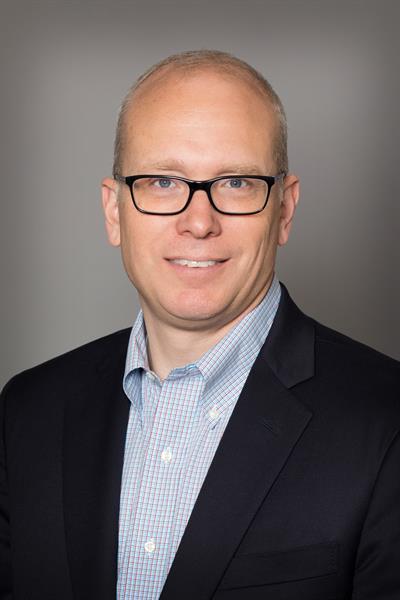
Peter Chung, MD, is a Clinical Assistant Professor of Medicine at the Keck School of Medicine, University of Southern California , specializing in neurodegenerative disease mechanisms. His research focuses on: Alpha-synuclein and tau protein interactions with membranes Cytoskeletal dynamics in neurodegeneration Mechanistic studies of membrane binding and trafficking Neurofilament network organization and phase behavior Recent publications highlight his work on: Lipid packing defects in α-synuclein binding (2025) Tau-tubulin viscoelastic networks (2024) Mechanistic insights from tauopathy conferences (2025) His studies employ advanced biophysical techniques including fluorescence anisotropy, X-ray scattering, and osmotic pressure measurements to analyze protein-membrane interactions and cytoskeletal organization.
Renko de Vries is an Associate Professor in the Physical Chemistry and Soft Matter group at Wageningen University & Research . His research focuses on manipulating soft protein materials through self-assembly principles, combining experimental and theoretical approaches in colloid science. Theoretical Physics MSc, Utrecht University (1993) PhD in Chemical Engineering (with honors), Delft University of Technology His work bridges biophysics , mathematical modeling , and food science , with major contributions to: Complex coacervation of proteins and polysaccharides Protein aggregation mechanisms (e.g., whey, lysozyme) Self-assembly of biomolecular systems DNA condensation in bacterial environments Emulsion stabilization using soft matter principles Publications highlight his expertise in soft matter physics applied to food-grade materials, with key works on interfacial stabilization, microcapsule design, and CRISPR system biophysics. Collaborations span institutions including MIT, University of Delaware, and Leiden University. Current research emphasizes protein-polymer interactions , controlled release systems , and food-texture engineering through colloid science. No specific student advisement or grant details are publicly available in the provided materials.
Dr. Meinou Corstens is an Assistant Professor at the Department of Food Process Engineering, Wageningen University & Research. Their research focuses on food emulsions, lipid digestion, and encapsulation systems to influence satiety and appetite regulation. Key areas include microfluidics-driven studies of emulsion stability, protein-polysaccharide complexes, and food structure's role in digestion. Research interests span encapsulation technologies for volatiles and lipids, anti-obesity strategies via controlled release systems, and the application of mathematical models in food engineering. They lead projects like INSIGHT (encapsulation platforms for gut health) and advise multiple PhD candidates on topics such as starch-based emulsions and probiotic delivery. Dr. Corstens frequently presents at academic and public forums, including talks on colloidal delivery systems and functional food interfaces. Their work bridges food science with biomedical applications, emphasizing translational research for health outcomes.
Bert Chandler is a Professor of Chemistry and Chemical Engineering at Pennsylvania State University, affiliated with the Department of Chemistry. His research focuses on environmental catalysis, nanoparticle synthesis, and catalytic reaction mechanisms. He holds a B.S. in Chemistry from Georgia Southern University, a Ph.D. in Inorganic Chemistry from the University of Minnesota, and completed a postdoctoral fellowship in Chemical Engineering at the University of South Carolina. His work emphasizes catalytic materials for energy, environmental remediation, and industrial processes. Key areas include understanding gold-based catalysts' active sites, water's role in catalytic reactions, and designing stable, selective catalysts for alkyne hydrogenation and CO oxidation. His lab integrates materials synthesis, spectroscopy, and reaction kinetics to advance catalytic technologies. Publications highlight contributions to H₂ activation mechanisms, supported nanoparticle catalysts, and water-assisted reaction pathways. His research addresses global challenges like emissions reduction and sustainable energy production.
Marta Ziegler-Borowska is a University Professor at the Department of Biomedical and Polymer Chemistry, Faculty of Chemistry, University of Nicolaus Copernicus in Toruń, Poland. Her research focuses on advanced biomedical materials, polymer synthesis, and nanotechnology applications in healthcare. She has collaborated extensively with over 20 colleagues on projects involving magnetic nanoparticles, drug delivery systems, and biopolymer crosslinking agents. Her work emphasizes developing biocompatible materials for wound dressings, drug delivery systems, and environmental applications such as water treatment. Key innovations include pH-sensitive magnetic nanoparticles for targeted drug release, chitosan-based composites with enhanced antimicrobial properties, and novel crosslinking agents derived from natural polymers like dialdehyde starch and kefiran. Ziegler-Borowska has published over 167 peer-reviewed articles and holds multiple patents in polymer chemistry and nanomedicine. Her research integrates computational chemistry, material characterization, and biological testing to ensure safety and efficacy in medical applications. She actively participates in interdisciplinary collaborations bridging chemistry, biology, and engineering.
Xiaoyu Tang is an Assistant Professor in the Department of Mechanical and Industrial Engineering at Northeastern University, with an affiliation in the Chemical Engineering department. She joined Northeastern in January 2021 after completing a postdoctoral fellowship at the University of California, Santa Barbara. Her research focuses on multiphase flow, microfluidics, and complex fluids, with applications in energy, environment, and healthcare. Tang leads the Tang Lab, which combines experimental techniques (high-speed imaging, interferometry) with computational methods to explore fluid dynamics and colloidal systems. Education: Ph.D. (2018) and M.A. (2014) in Mechanical and Aerospace Engineering from Princeton University, and B.E. (2011) in Thermal Engineering from Tsinghua University. Notable awards include the NSF CAREER Award (2025) and the Summerfield Fellowship (Princeton). Her work spans fluid mechanics, soft matter, and additive manufacturing, addressing challenges in droplet impact dynamics, particle delivery, and energy systems. Recent projects include NSF-funded studies on complex fluid droplet impacts and inkjet printing frameworks. Tang actively mentors undergraduate and graduate students, many of whom have received prestigious awards like the Knight-Hennessy Scholarship and NSF Graduate Research Fellowships. Professional affiliations include the American Physical Society and American Institute of Chemical Engineers. She has presented invited talks at institutions such as Harvard, MIT, and Brown University, and collaborates on interdisciplinary grants like the TIER 1 Research Seed Grant and ACS PRF funding.
Professor Kai-tak Wan is a faculty member in the Department of Mechanical and Industrial Engineering at Northeastern University’s College of Engineering. His research focuses on cellular biomechanics, water filtration, thin film adhesion, subsurface mechano-sensing, and fundamental intersurface forces. He holds academic leadership roles, including serving as ASEE-NE Section Chair (2024–2026) and has been recognized with awards such as the 2014 COE Faculty Fellow and NSF CAREER Award. Education: Ph.D. (1993), Chemical Physics, University of Maryland at College Park B.Sc. (1st Honors), Physics, University of New South Wales, Australia Research Interests: Dr. Wan’s lab bridges biological and mechanical sciences, exploring biomechanics of cells, thin film reliability in photovoltaics, and adhesion mechanics in biomedical devices. His recent work includes modeling microbial transport in porous media, mechanical integrity of solar panels, and fusion of lipid bilayers. Publications & Grants: Over 50 peer-reviewed articles, including highlighted works in Physics of Fluids and Nanoscale . Principal Investigator on NSF and NIST/DOE grants totaling over $1M, focusing on photovoltaic reliability and biomedical mechanics. Labs & Teams: Leads the Micro/Nano Bio-Mechanical Characterization Lab , collaborating with researchers in materials science and biomedical engineering. Current projects include developing diagnostic palpation models and enhancing water filtration efficiency through surface adhesion studies.
Piero Baglioni is a Full Professor of Physical Chemistry at the University of Florence and an MIT affiliate in Nuclear Science and Engineering. He leads the National Center for Nanosciences (CSGI) and serves on editorial boards of major journals including Soft Matter (RSC), Journal of Physical Chemistry Chemical Physics (RSC), and Langmuir (ACS). European Academy of Science Royal Academy of Art and Science in Göteborg, Sweden Royal Society of Chemistry International Institute for Conservation of Historic & Artistic Works American Chemical Society European Colloids and Interface Society Accademia delle Arti del Disegno (Italy) His research focuses on Soft Matter and Colloids , with over 500 publications spanning materials chemistry, cultural heritage conservation, and complex fluid dynamics. Key subfields include gel science, neutron/X-ray scattering, and surface chemistry. Scientific Recognitions: Rhodia Prize (ECIS, 2002) European Grand Prix for Innovation Awards Lifetime Achievement Award (JCIS, 2011) Caballero Aguila (INHA, Mexico, 2010) Chen Distinguished Lectureship (Taiwan, 2016) Overbeek Medal (2016) Bonino Medal (2016)
Peter Kralchevsky is a Full Professor of Condensed Matter Physics at Sofia University's Faculty of Chemistry & Pharmacy since 2002, with a distinguished academic career spanning over four decades. He currently serves as Head of the Laboratory of Complex Fluids and has held significant leadership positions including Dean of the Faculty of Chemistry & Pharmacy (2015-2019). Kralchevsky is a Fellow (2012) and Corresponding Member (2004) of the Bulgarian Academy of Sciences, reflecting his national scientific prominence. His research focuses on fundamental aspects of colloid and interface science, with particular expertise in capillary forces between colloidal particles, thin liquid films and surface forces, surfactant adsorption thermodynamics and kinetics, micelles and their rheological properties, and colloidal dispersions including foams, emulsions, and suspensions. Kralchevsky's work bridges theoretical understanding with practical applications in detergency and material science, with his book 'Particles at Fluid Interfaces and Membranes' (Elsevier, 2001) serving as a key reference in the field. Analysis of his publication record reveals a consistent focus on interfacial phenomena with increasing specialization in micellar systems and depletion forces in recent years. His work demonstrates strong theoretical foundations combined with experimental validation, particularly evident in his studies on wormlike micelles and analytical modeling of micelle growth. The international collaboration evident in his publications, particularly with Japanese and European researchers, underscores the global impact of his research. 2016 The Highest National Award "Pythagoras" for scientific achievements 2012 Fellow of the Bulgarian Academy of Sciences 2008 Best Professor Award, Bulgarian Ministry of Education and Science 2006 Blue Ribbon Medal for Achievements in Science, Sofia University 2004 Corresponding Member of the Bulgarian Academy of Sciences 1995 Diploma by the Science and Technology Agency of Japan 1990 Zlatarov National Award for Chemical Sciences Kralchevsky has supervised 41 BSc and MSc students and 16 PhD students throughout his career, demonstrating strong commitment to academic mentorship. His leadership extends to major international research initiatives, having chaired EU COST Action D43 (2008-2011) with participants from 29 countries and serving as Vice Chair of EU COST Action CM1101 (2012-2018) with participants from 31 countries. He currently serves as Secretary of the European Colloid and Interface Society (ECIS) and Member of the Council of the International Association of Colloid and Interface Scientists (IACIS). As Head of the Laboratory of Complex Fluids at Sofia University, Kralchevsky leads a research team investigating advanced aspects of colloid science. His laboratory work connects fundamental research on interfacial phenomena with practical applications in materials science and nanotechnology, continuing a research tradition established through his earlier leadership of the Laboratory of Chemical Physics and Engineering and the Laboratory of Thermodynamics & Physicochemical Hydrodynamics.
James J. De Yoreo is an Affiliate Professor of Chemistry and Materials Science & Engineering at the University of Washington, Seattle. His research focuses on understanding and manipulating interactions at solid-liquid interfaces in nanoscale, biological, and environmental systems using advanced in situ microscopy techniques like TEM and AFM. He holds a Ph.D. in Chemistry from Cornell University (1985). His research interests span biophysics, materials science, and environmental mineralogy, with a focus on biomineralization, protein aggregation, and crystal growth mechanisms. He leads a multidisciplinary group investigating topics such as oriented attachment in nanoparticle assembly, biomimetic mineral formation, and nanomaterial synthesis. His work bridges fundamental science and applied technologies, including energy materials and biomedical applications. De Yoreo has received prestigious recognition, including the 2025 Fred Kavli Distinguished Lecturer in Materials Science. His lab actively collaborates with institutions like Pacific Northwest National Laboratory (PNNL), leveraging cutting-edge tools to study dynamic processes at the atomic scale. He advises graduate students in areas like molecular engineering and nanotechnology. Key research themes include: Controlled mineralization using biomimetic polymers In situ visualization of nucleation and growth pathways Impact of solvents and additives on crystal morphology Design of 2D materials and peptoid-based nanomembranes His group’s innovations aim to advance fields from clean energy to biomedical implants through a deep understanding of atomic-scale processes.
Dr. Vaishnavi Krishnamurthi is a Research Fellow in the School of Engineering at RMIT University, located at the City Campus in Australia. Her research focuses on nanomaterials, liquid metal systems, catalysis, optoelectronics, and neuromorphic engineering. She specializes in the synthesis and characterization of nanomaterials for energy conversion, biological interactions, and advanced device applications. Her research interests include exploring novel liquid metal-based nanomaterials for catalytic systems, optoelectronic devices, and neuromorphic computing. She investigates material properties such as surface chemistry, structural evolution, and electronic behavior to enhance their performance in energy and biomedical applications. Recent work highlights include studies on liquid metal colloids, oxide layer dynamics, and thin-film semiconductors. Dr. Krishnamurthi supervises research projects such as 'Activation of Carbon nanomaterials for energy conversion' and 'Nanocolloidal Chemistry in Liquid Metal Media.' Her articles reflect a strong focus on interdisciplinary research at the intersection of materials science, chemistry, and engineering. She is open to supervising Masters and PhD students in areas like nanomaterials synthesis, liquid metal chemistry, and energy systems. Her contributions are highlighted through collaborations with international researchers and publications in high-impact journals like Advanced Materials and Nano Letters .
Dr. Hank Han is a Research Fellow at RMIT University's Research & Innovation Portfolio, specializing in physical chemistry, colloid science, and protein-related applications using ionic liquids. His work focuses on protein aggregation control, drug delivery systems, and synchrotron-based analytical techniques. He holds a PhD from Deakin University (2018) and has expertise in spectroscopy, crystallography, and scattering methods. Key research areas include ionic liquid design for protein solubility, antimicrobial coatings for implants, and novel bio-nanomaterials for biomedical applications. He is open to supervising Masters and PhD students in these areas. Collaborative projects span topics like nucleic acid delivery systems and orthopedic implant coatings. Publications emphasize nanocomposite materials, 3D-printed functional polymers, and sustainable waste utilization. His work appears in journals across materials science, biomedical engineering, and polymer chemistry. Education: PhD (Physical Chemistry), Deakin University, 2018 ORCID: 0000-0002-6974-0344 Current research includes projects on protein aggregation in neurodegenerative diseases and solvent design for nucleic acid delivery. He actively collaborates on synchrotron-based material characterization and biomedical material development.
Hyunjoon (Joon) Kong is the Robert W. Schaefer Professor in the Department of Chemical and Biomolecular Engineering at the University of Illinois, affiliated with Bioengineering and Pathobiology. He joined in 2007 and holds editorial roles for Biomaterials and Biofabrication . His research focuses on nanobiomaterials for therapeutic and diagnostic applications, including drug delivery, bio-inspired materials, and biofilm removal. Kong has authored over 150 papers and patents, with awards such as IAMBE and AIMBE Fellowships. Education: PhD (2001), University of Michigan; Postdoc at Harvard University (2004-2006). Research Themes: Active hybrid materials, self-propelling colloids, stretchable hydrogels, bio-abiotic machinery. Lab Activities: Active BioHybrid Matter Lab, group retreats, and collaborations in interdisciplinary fields like neuroscience and environmental engineering. His work addresses vascular diseases, infection control, and tissue regeneration, with recent advances in self-locomotive microrobots and neuron-muscle interfaces. Kong mentors over 20 students and actively participates in academic outreach and recruitment.
Harry Bermudez is an Associate Professor in the Department of Polymer Science and Engineering at the University of Massachusetts Amherst. He leads the Bermudez Research Group focusing on biological polymers and self-assembly mechanisms. Education: B.S. in Chemical Engineering from UMass Amherst (1998), Ph.D. in Chemical Engineering from University of Pennsylvania (2003). Research interests: Stabilization of enzymes using deep eutectic solvents; Supramolecular DNA polymerization for protein synthesis; Biological polymer interfaces; Protein-polymer interactions in ionic environments. Awards: Recipient of the NSF CAREER Award and Armstrong Fund for Science Award. Research supported by NSF grants including #1800442. Leads the Bermudez Research Group investigating biomolecular materials. Collaborates with Matysiak Lab on enzyme dynamics.
C. Andrew Ramsburg is an Associate Professor in the Department of Civil and Environmental Engineering at Tufts University School of Engineering. He serves as the Dean of Undergraduate Education, contributing to both academic leadership and research innovation. Doctor of Philosophy (Environmental Engineering), Georgia Institute of Technology, 2002 Master of Science in Environmental Engineering, Georgia Institute of Technology, 1999 Bachelor of Chemical Engineering, Georgia Institute of Technology, 1997 Ramsburg's research focuses on improving environmental quality through the study of multiphase flow and transport in porous media , biotransformation , and emerging contaminants . His work addresses critical challenges in groundwater remediation , DNAPL source zone characterization , and the fate of pharmaceuticals in wastewater . His expertise spans surfactant interactions , emulsion delivery systems , and mass transfer dynamics . Ramsburg's recent publications highlight advancements in biokinetic modeling , alkalinity release mechanisms , and emulsified oil applications for nitrate removal. His studies integrate experimental validation with numerical simulations to optimize subsurface restoration strategies.