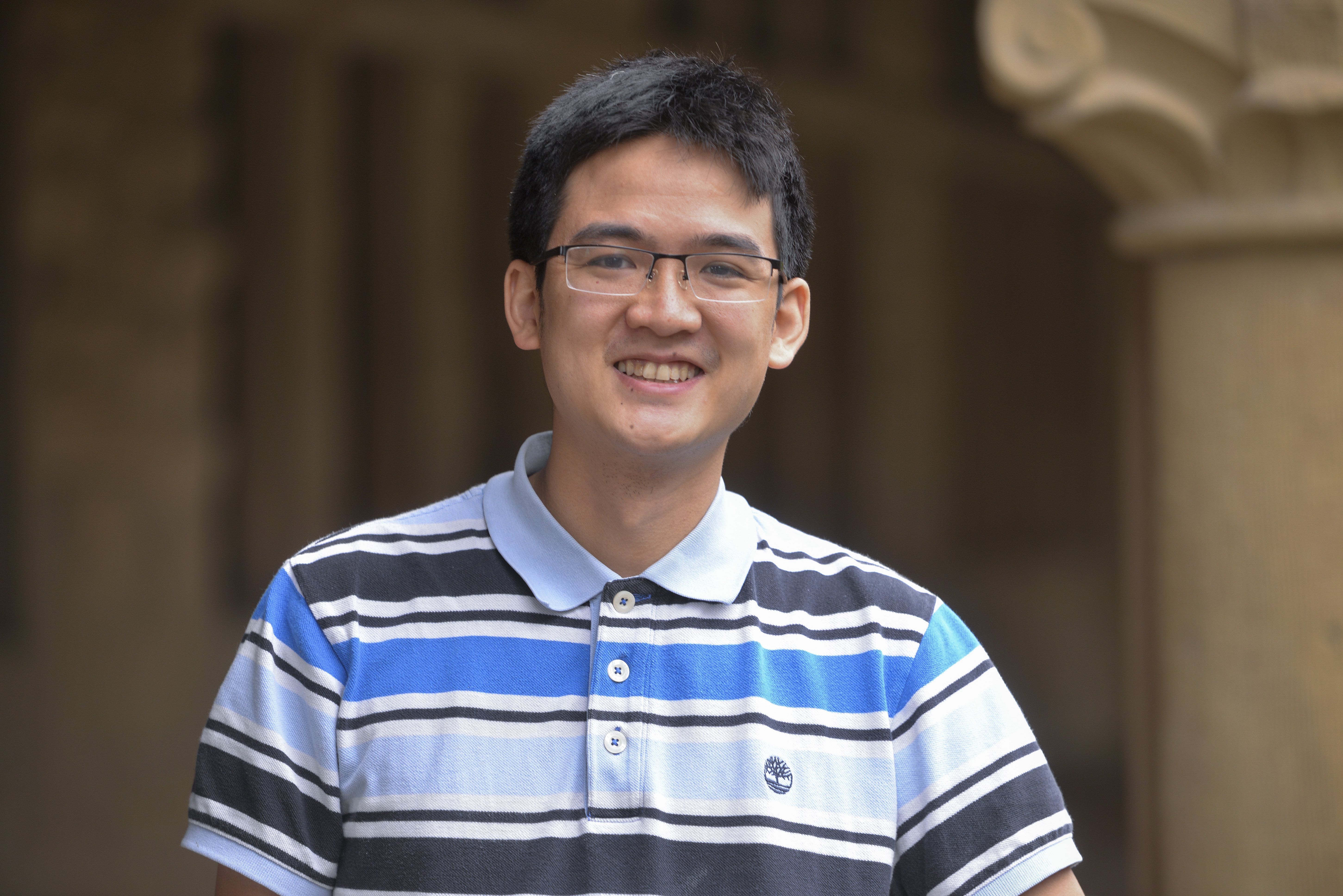
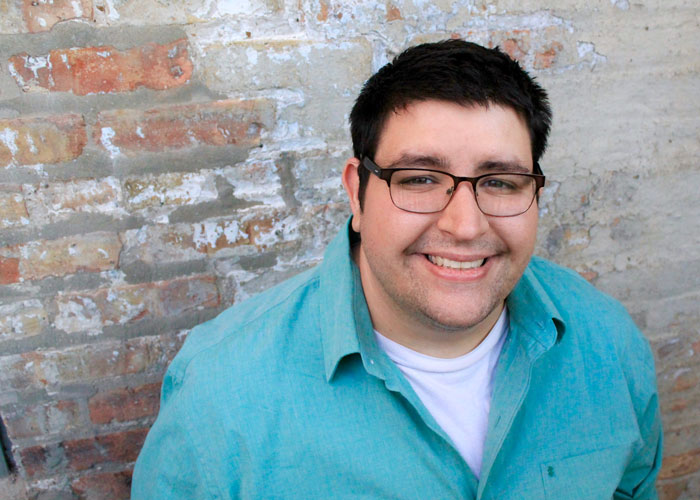
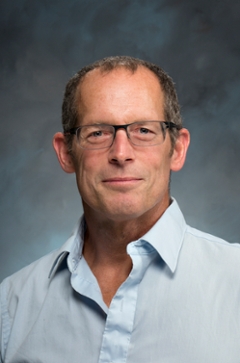
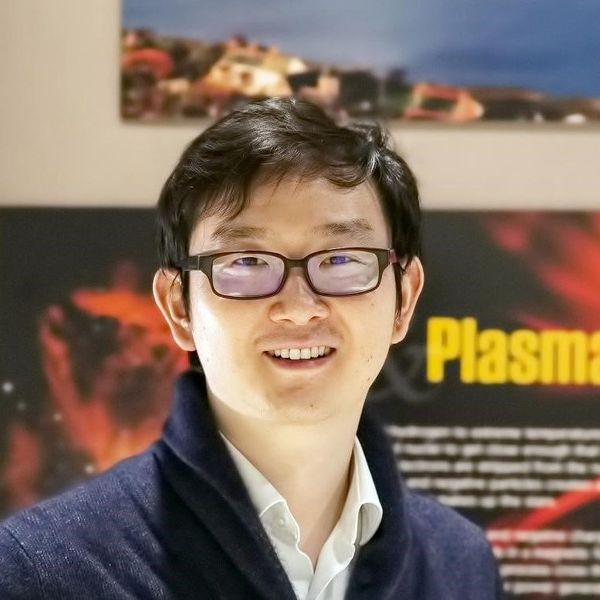
Jonathan Winghong Luk is a Professor in the Department of Mathematics at Stanford University. His research focuses on nonlinear partial differential equations, general relativity, and mathematical physics, with a particular emphasis on gravitational wave dynamics, shock formation, and high-frequency spacetime solutions. Contact: Email: jluk@stanford.edu Office: 382-Z, Building 380, Stanford, CA 94305 Research Trends: His recent publications examine nonlinear wave equations on dynamic spacetimes, gravitational phase mixing, impulsive gravitational wave interactions, and stability of black hole interiors. He frequently collaborates with experts like C. Huneau, S.-J. Oh, and J. Speck. Academic Activities: Luk organizes the Analysis and PDE seminar at Stanford with Eugenia Malinnikova and Ryan Unger. He has developed lecture notes on nonlinear wave equations and Fourier analysis, complemented by example sheets.
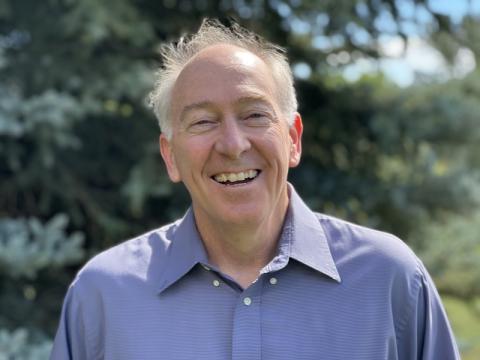
Kenneth McLaughlin is the Evelyn and John G. Phillips Distinguished Chair in Mathematics at Tulane University's School of Science & Engineering. He holds a Ph.D. and B.A. in Mathematics from New York University (1994 and 1989). Prior to Tulane, he served as faculty at the University of North Carolina, Chapel Hill, the University of Arizona, Universidade Federal de Brasília, and Colorado State University, where he also held leadership roles as Department Head and Chair. His research focuses on integrability, applying techniques across mathematics to study complex systems and phenomena. He has held visiting positions at institutions worldwide, including France, Italy, Brazil, Belgium, and the UK. McLaughlin’s research spans integrable systems, nonlinear dynamics, and asymptotic analysis. His work often involves the Riemann-Hilbert problem approach, orthogonal polynomials, and random matrix theory. Notable contributions include studies on soliton gases, the KdV equation, and universality in quantum operator dynamics. His recent articles explore topics such as asymptotic behavior of polynomials, soliton gas condensation, and hydrodynamic limits in integrable systems. McLaughlin’s academic career is marked by interdisciplinary collaboration and international research engagement.
Nuno Loureiro is an Associate Professor at the Department of Nuclear Science and Engineering at MIT, with a secondary appointment in the Physics Department. He obtained his PhD in Physics from Imperial College London in 2005 and held postdoctoral positions at Princeton University and the UK’s Culham Centre for Fusion Energy before joining MIT in 2016. His research focuses on plasma physics , particularly theory and simulations of astrophysical and laboratory plasmas , including magnetic reconnection, turbulence, and kinetic effects. His work bridges classical plasma dynamics with emerging quantum computing applications. The 15 most recent publications highlight advancements in quantum algorithms for plasma simulations , magnetic reconnection mechanisms , and turbulence dynamics across relativistic and non-relativistic plasmas. Topics include plasmoid-mediated inverse energy transfer, data-driven fluid closures, and ion-acoustic instability impacts. 2015 Thomas H. Stix Award (American Physical Society) NSF CAREER Award
Matthew W. Kunz is an Associate Professor of Astrophysical Sciences at Princeton University, serving as Associate Chair of the Department of Astrophysical Sciences and Director of Graduate Studies for the Program in Plasma Physics. He holds a B.S. in Astronomy-Physics and B.A. in Music from the University of Virginia (2003), and a Ph.D. in Physics from the University of Illinois at Urbana-Champaign (2009). His research focuses on astrophysical plasma dynamics, including instability, turbulence, and transport in weakly collisional and poorly ionized plasmas, with applications to galaxy clusters, accretion disks, and the solar wind. Dr. Kunz's work employs analytical and numerical methods to study multi-scale plasma dynamics, aiming to understand angular momentum transport in accretion disks, kinetic turbulence cascades, and magnetic field evolution. His research has been recognized with several awards, including an NSF CAREER Award (2020-25), Alfred P. Sloan Research Fellowship (2017-20), and NASA Einstein Postdoctoral Fellowship (2011-14). He teaches courses on plasma astrophysics (AST 521), irreversible processes in plasmas (AST 554), and astrophysical research methods (AST 303). His publications demonstrate a consistent focus on plasma turbulence, magnetic reconnection, and cosmic ray propagation, with recent work emphasizing collisionless plasma dynamics and high-energy astrophysical phenomena.
Dr. Louise Willingale is an Associate Professor in the Department of Electrical Engineering and Computer Science at the University of Michigan. Specializing in high-intensity laser-plasma interactions, she leads experimental research at facilities including the ZEUS laser system and OMEGA EP. Her work combines experimental diagnostics with numerical modeling to advance understanding of relativistic plasma physics and ion acceleration mechanisms. Education: PhD in Physics from Imperial College London (2007) Research Focus: Investigates relativistic laser-plasma interactions through ion acceleration, magnetic field generation, and direct laser acceleration of electrons. Her work spans underdense/near-critical density plasmas, shock formation physics, and extreme electromagnetic field generation in laboratory astrophysics contexts. Recent Publication Trends: 2024-2025 studies emphasize ZEUS laser facility development, optimization of acceleration mechanisms (direct laser acceleration, wakefield acceleration), and magnetic field dynamics in multi-PW laser-solid interactions. Common subfields include collisionless shocks, radiation-driven plasma instabilities, and advanced diagnostics for relativistic charge particles. Labs & Collaborations: Affiliated with the Center for Ultrafast Optical Science (CUOS) and the Center for High-Energy-Density Laboratory Astrophysics Research (CHEDAR), working closely with the ZEUS laser facility team.
Jennifer Ryan is a Professor of Numerical Analysis and Division Head of Numerical Analysis, Optimization, and Systems Theory at the Department of Mathematics, KTH Royal Institute of Technology. Her research focuses on designing and developing numerical schemes to extract accuracy from simulations, particularly through superconvergence properties and computational efficiency improvements. She applies these techniques to applications such as imaging, fluid visualization, and plasma dynamics. Education: PhD in Applied Mathematics, Brown University; MS in Mathematics, Courant Institute; BA in Applied Mathematics, Rutgers University. Professional Activities: Member of editorial boards for BIT Numerical Mathematics, ESAIM:M2AN, and Communications on Applied Mathematics and Computation; Steering committee member of AWM's Women in Numerical Analysis and Scientific Computing (WINASc). Her publications emphasize discontinuous Galerkin methods, SIAC filtering, and applications in fluid dynamics. She has served on multiple grant review panels and received awards for diversity and inclusion initiatives. Grants: Principal Investigator for projects funded by the Swedish Research Council, NSF, and US Air Force Office of Scientific Research. Awards: Fellow of UK Higher Education Academy, DAAD Fellowship, and Householder Fellowship.
Ellen Zweibel is the W. L. Kraushaar Professor of Astronomy and Physics at the University of Wisconsin–Madison , where she has been a faculty member since 2003. She holds a joint appointment in the Department of Astronomy and Physics . Zweibel earned her undergraduate degree in Mathematics from the University of Chicago and her Ph.D. in Astrophysical Sciences from Princeton University. Her research focuses on plasma astrophysics , particularly the evolution of astrophysical magnetic fields , cosmic ray feedback in galactic and intergalactic environments, and stellar differential rotation dynamics. Recent work examines cosmic ray interactions with the interstellar medium, magnetic instabilities in galaxy clusters, and turbulence-driven dynamo processes. Zweibel's publications highlight collaborations on missions like HelioSwarm and SOFIA/HAWC+ , including the discovery of a magnetized dust ring in the Galactic Center . She leads NSF-funded research on microscale plasma processes in high-beta environments and contributes to understanding magnetic reconnection across astrophysical contexts.
Colby Haggerty is an Assistant Professor at the Institute for Astronomy (IfA Mānoa) at the University of Hawaiʻi at Mānoa. He specializes in computational plasma physics, focusing on magnetospheric, heliospheric, and astrophysical systems. His research emphasizes collisionless plasma shocks, magnetic reconnection, and kinetic plasma turbulence. He holds a Ph.D. in Plasma Physics from the University of Delaware (2017) and conducted postdoctoral work at the University of Chicago (2017–2021). His work bridges theory, numerical simulations, and observational data analysis using advanced computational tools like Python, C++, Fortran, and MPI/OpenMP frameworks. Research Interests: He investigates collisionless plasma shocks and energetic particle acceleration (e.g., Earth’s bow shock, coronal mass ejections), plasma instabilities, magnetic reconnection dynamics, and the role of turbulence in energy dissipation. His studies often involve hybrid and particle-in-cell (PIC) simulations to model cosmic phenomena like supernova remnants and solar wind interactions. Articles & Trends: His recent publications highlight advancements in understanding shock-drift acceleration mechanisms, the saturation of plasma instabilities (e.g., Bell instability), and scaling laws for magnetic reconnection in asymmetric and relativistic regimes. Collaborations with institutions like NASA Goddard, Columbia University, and the University of Chicago underscore his interdisciplinary approach. He has also contributed to developing Python-based plasma physics tools (e.g., PlasmaPy) for the scientific community. Grants & Impact: His CAREER award (2024) supports studies on collisionless magnetic reconnection as a heliospheric process. He emphasizes computational methods and educational outreach, reflecting his dual focus on advancing science and training future researchers. Labs & Teams: While no specific lab is named, his work relies on collaborative networks with leading institutions, leveraging state-of-the-art simulation infrastructure to tackle complex plasma problems.
Tomas Karlsson is a Professor and Deputy Head of Department at the Royal Institute of Technology , specializing in Space and Plasma Physics . He teaches courses such as EF2240 Space Physics , EF2245 Space Physics II , and EI1240 Electromagnetic Theory , while serving as examiner or coordinator for advanced projects and thesis work in space-related fields. His research focuses on the interaction between the solar wind and planetary magnetospheres , with specific interests in bow shock physics , magnetosheath jets , solar wind magnetic holes , auroral physics , and comparative studies of magnetospheres across planets and comets. He employs spacecraft data (e.g., MMS , Cluster , BepiColombo ) and simulations to analyze plasma dynamics and space weather phenomena. The 15 most recent publications highlight trends in solar wind turbulence , magnetospheric boundary processes , and planetary plasma interactions , with recurring themes in SLAMS (Short Large-Amplitude Magnetic Structures) , magnetosheath jet formation , and magnetic hole propagation . These works span statistical surveys, hybrid simulations, and multi-mission data analysis.
Gilbert 'Rip' Collins is the Tracy Hyde Harris Professor of Mechanical Engineering and Physics at the University of Rochester, holding dual appointments in the Hajim School of Engineering & Applied Sciences and the Laboratory for Laser Energetics (LLE). He also serves as Associate Director of Science, Technology and Academics at LLE, Distinguished Scientist at LLE, and Director of the NSF-funded Center for Matter at Atomic Pressures (CMAP). His research focuses on extreme states of matter, including planetary interiors, high-energy-density plasmas, and thermonuclear fusion processes. Collins earned his PhD in 1989 from Ohio State University. His work leverages facilities like the Omega Laser at LLE to recreate astrophysical conditions, exploring topics such as phase separation in giant planets, quantum matter at atomic pressures, and laboratory astrophysics experiments. He collaborates globally to advance understanding of exoplanet structure, stellar evolution, and fusion energy control. Key affiliations: Laboratory for Laser Energetics, Center for Matter at Atomic Pressures (CMAP), Omega Laser Facility Research highlights: Hydrogen-rich superconductors, planetary core dynamics, radiation-dominated plasmas Leadership roles: HED Experiments Group Lead at LLE, co-director of international collaborations His team includes graduate students and scientists investigating topics ranging from collisionless shocks to exoplanet mass-radius relationships. Collins’ contributions bridge fundamental physics with applied energy research, supported by grants from the NSF Physics Frontier Center and other national agencies.
Chuanfei Dong is an Assistant Professor of Astronomy at Boston University's College of Arts & Sciences and of Electrical and Computer Engineering at the College of Engineering. His research focuses on understanding plasma physics and its applications to space science, planetary atmospheres, and fusion energy. Dong joined BU in January 2023 after working as a staff scientist at the Princeton Plasma Physics Laboratory. Education: B.S. in Space Science from University of Science and Technology of China M.S. in Earth and Atmospheric Sciences from Georgia Institute of Technology M.S.E. in Nuclear Engineering and Radiological Sciences from University of Michigan M.S. in Planetary and Space Sciences from University of Michigan Ph.D. in Scientific Computing from University of Michigan Research Interests: Dr. Dong's research spans multiple disciplines within space physics and plasma science. His primary interests include Star-Terrestrial Planet Interactions in our Solar System and beyond, magnetic reconnection and turbulence phenomena, wave-particle interactions in space plasmas, and applications of physics-informed machine learning to plasma problems. He also investigates high-intensity laser-plasma interactions with applications to fusion energy research. His work bridges the gap between theoretical plasma physics and observational space science, with particular focus on planetary atmospheres, solar wind interactions, and exoplanet habitability. Dong's interdisciplinary approach combines computational modeling, observational data analysis, and theoretical frameworks to address fundamental questions in space physics. Research Trends: Dong's recent publications demonstrate a strong focus on applying advanced computational techniques to space plasma physics problems. His work spans solar system bodies including Earth, Mars, Mercury, and the Moon, with increasing attention to exoplanet systems. A notable trend is the integration of machine learning approaches with traditional plasma physics modeling, particularly for complex phenomena like Landau damping and magnetic reconnection. His research has significant implications for understanding atmospheric evolution, space weather, and potential habitability of planetary bodies. Scientific Awards: DOE Early Career Research Award (2023) - $875,000 grant for plasma turbulence research Alfred P. Sloan Research Fellow (2024) Metcalf Travel Award Advising and Grants: Dr. Dong mentors undergraduate research assistants and plans to expand his research group with the support of his DOE Early Career Award, which will fund a graduate student and postdoctoral researcher. His research is supported by the Department of Energy and has connections to NASA missions including MAVEN (Mars) and BepiColombo (Mercury). Dong is also involved with the Mauve telescope project as BU institutional PI. His work has been featured in numerous media outlets including Phys.org, Science Daily, and German TV program zdf/3sat. Labs and Teams: Dr. Dong leads a research group focused on computational plasma physics at Boston University. He collaborates with researchers at Princeton Plasma Physics Laboratory and is involved with multiple NASA missions. His team develops advanced computational models to simulate space plasma phenomena, with particular expertise in magnetohydrodynamics (MHD), particle-in-cell methods, and physics-informed machine learning approaches. Dong is also affiliated with BU's Hariri Institute for Computing.
Bhuvana Srinivasan is a Professor in the Department of Aeronautics and Astronautics at the University of Washington, directing the PLASMAWISE Laboratory. Previously, she held the rank of Associate Professor and served as Director of the Plasma Dynamics Computational Laboratory at Virginia Tech, supported by the Crofton Faculty Fellowship. Her research focuses on fusion energy, plasma-based propulsion, and computational plasma physics, with an emphasis on plasma-material interactions and instabilities across diverse plasma regimes. She has authored over 30 peer-reviewed publications and secured grants from the NSF, DOE, and AFOSR. Education: Ph.D. in Aeronautics and Astronautics, University of Washington (specializing in computational plasma physics) M.S. in Aeronautics and Astronautics, University of Washington B.S. in Aerospace Engineering and Mechanical Engineering, Illinois Institute of Technology Research Interests: Her work spans fusion energy concepts, plasma propulsion systems, high-energy-density plasma instabilities, and ionospheric dynamics. Key areas include plasma-surface interactions in fusion devices, magnetic field effects on plasma mixing, and algorithm development for fluid-kinetic models. She emphasizes high-fidelity multi-fluid simulations using discontinuous Galerkin methods. Awards & Recognition: NSF CAREER Award (2019-2024) Crofton Faculty Fellow (Virginia Tech, 2021-2023) Dean’s Outstanding Assistant Professor (Virginia Tech, 2017) Amelia Earhart Fellowship (Zonta International, 2007-2009) Advocacy & Leadership: She chairs DEI initiatives in academic departments and serves on national committees including the DOE Fusion Energy Sciences Advisory Committee and the APS Division of Plasma Physics Executive Board. Her work bridges computational plasma physics with societal impact, including fusion energy democratization and space exploration propulsion systems.
Anatoly Spitkovsky is a Professor of Astrophysical Sciences at Princeton University. His work focuses on theoretical high-energy astrophysics, particularly relativistic outflows, pulsar magnetospheres, collisionless shocks, and nuclear burning on accreting neutron stars during X-ray bursts. He employs high-performance computing and numerical simulations to study these phenomena. Developed a numerical method for Force-Free Relativistic Magnetohydrodynamics (MHD) to model pulsar magnetospheres. Investigated relativistic collisionless shocks using 3D particle-in-cell (PIC) simulations. Studied hydrodynamical effects in thermonuclear burning on neutron stars. His research bridges plasma physics, computational methods, and astrophysical observations, with applications to pulsar emission mechanisms and gamma-ray burst dynamics. He collaborates on interdisciplinary projects and contributes to advancing simulation techniques for astrophysical systems.
Karl Krushelnick is a Professor in the Department of Nuclear Engineering and Radiological Sciences at the University of Michigan, serving as Director of the Center for Ultrafast Optical Science (CUOS) and Associate Director for High Field Science. His research focuses on high-intensity laser-plasma interactions, relativistic electron beams, and applications in radiation generation, magnetic reconnection, and biomedical sensing. Research Interests: Basic relativistic plasma studies Table-top particle accelerators Ultra-strong magnetic fields Ultrafast laser technology Quantum electrodynamics (QED) in extreme light regimes Key Trends in Publications: Krushelnick’s recent work investigates zettawatt-equivalent laser experiments, orbital angular momentum effects on laser absorption, magnetic reconnection dynamics, and neutron generation mechanisms. His team explores laser wakefield acceleration, betatron X-ray diagnostics, and filamentation control for advanced applications in physics and engineering.
Professor Jack D. Scudder is a distinguished Professor of Physics and Astronomy at the University of Iowa, where he has been faculty since 1993. His research focuses on space magneto-plasmas and their kinetic properties, particularly in the solar corona, solar wind, collisionless shocks, magnetosheath, magnetopause, and collisionless reconnection phenomena. Scudder received his B.A. in Physics and Mathematics from Williams College in 1969, followed by an M.S. in Plasma Physics from the University of Maryland in 1971, and a Ph.D. in Plasma Physics from the same institution in 1975. His doctoral thesis was titled "Fission Driven Acoustic Waves in a Uranium Gas Core Reactor" under advisor D.A. Tidman. His research interests span Space Physics, Plasma Physics, Solar Wind dynamics, Magnetic Reconnection mechanisms, Collisionless Shocks, and Magnetospheric Physics. Scudder has made significant contributions to understanding non-thermal electron distributions in the solar wind, the role of ambipolar electric fields, and the fundamental processes of magnetic reconnection in space plasmas. His work often bridges theoretical models with spacecraft observations from missions like Voyager, ISEE-1, and NASA's Magnetospheric Multiscale Mission. Analysis of his recent publications (2012-2023) reveals a strong focus on non-Maxwellian distributions in space plasmas, with particular emphasis on solar wind electron behavior, the thermal force in astrophysical plasmas, and detailed measurements of magnetic reconnection sites. His research demonstrates a consistent theme of challenging conventional assumptions about plasma behavior in space environments, particularly the ubiquitous presence of non-thermal particle distributions. NASA Exceptional Scientific Achievement Medal, 1991 NASA Group Achievement Award for GGS-Polar Hydra Experiment, June, 1998 NASA Special Achievement Awards (1976, 1979, 1981, 1986) NASA Voyager Group Achievement Awards (Saturn 1983, Uranus 1986) NASA Voyager (Cruise, Jupiter) Certificate of Appreciation, 1981 Professor Scudder has advised several graduate students, including Arthur J. Hull (PhD 1998) and John C. Dorelli (PhD 1999), as well as Master's students Chonghui Shen, Robert Holdaway, and Xuejun Cao. He has served as Principal Investigator for the Polar Hydra Hot Plasma Experiment and was Deputy Project Scientist for the ISTP/GGS Wind and Polar Spacecraft missions. His professional service includes editorial work for the Journal of Geophysical Research and extensive proposal reviewing for NASA and NSF. As Principal Investigator for the Polar Hydra Hot Plasma Experiment and through his long-standing involvement with NASA missions including Voyager, ISEE-1, and MMS, Scudder has led significant laboratory and spacecraft-based investigations of space plasma phenomena. His research group has contributed to the fundamental understanding of collisionless plasma processes that govern space weather and astrophysical environments.