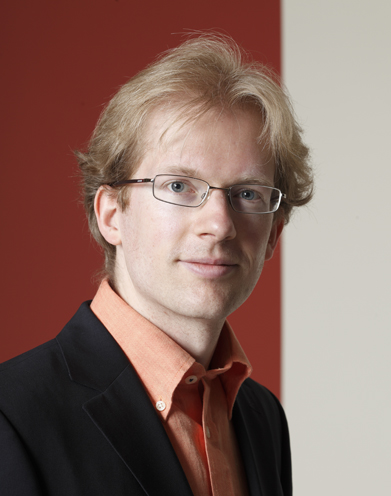
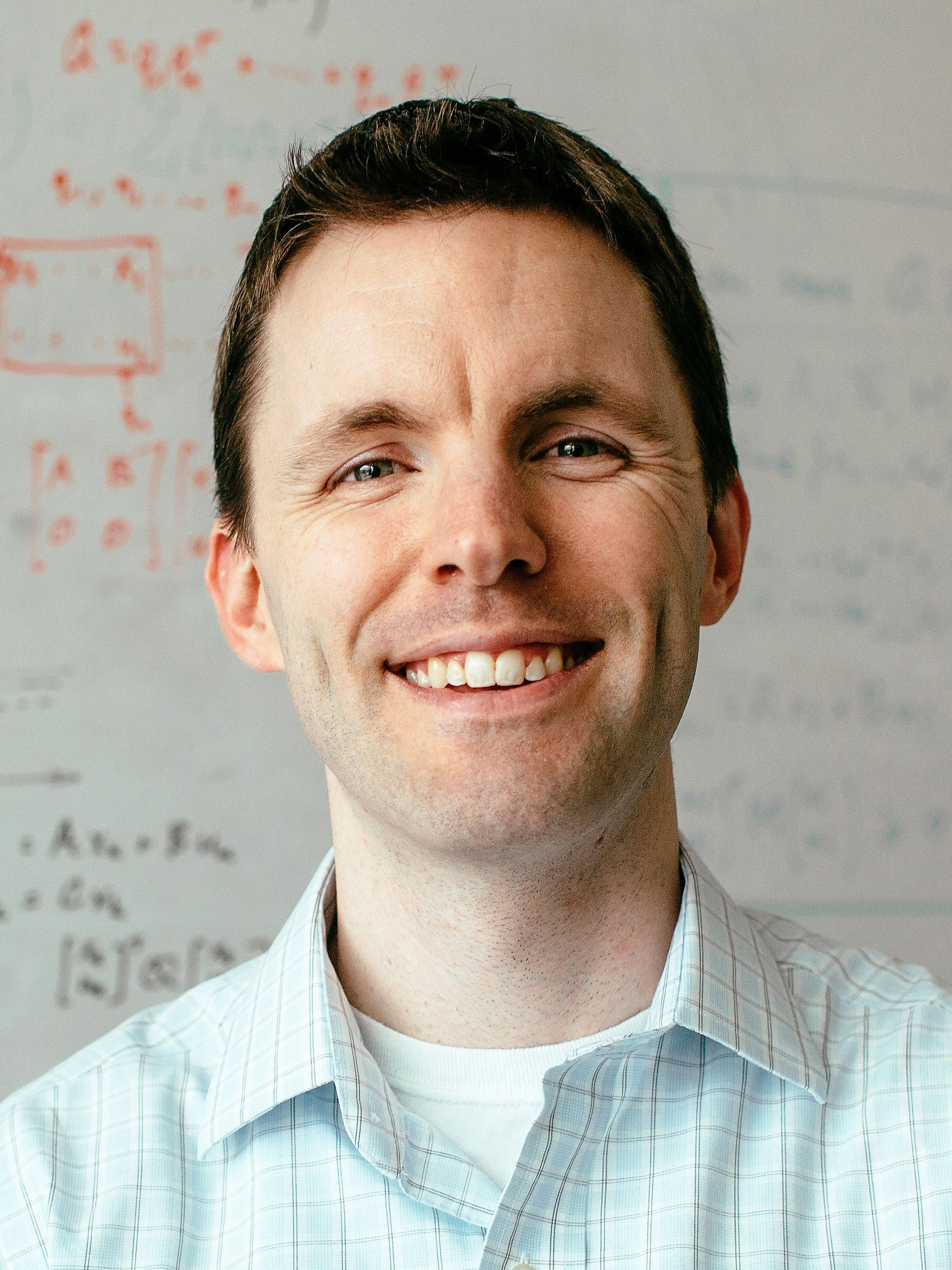
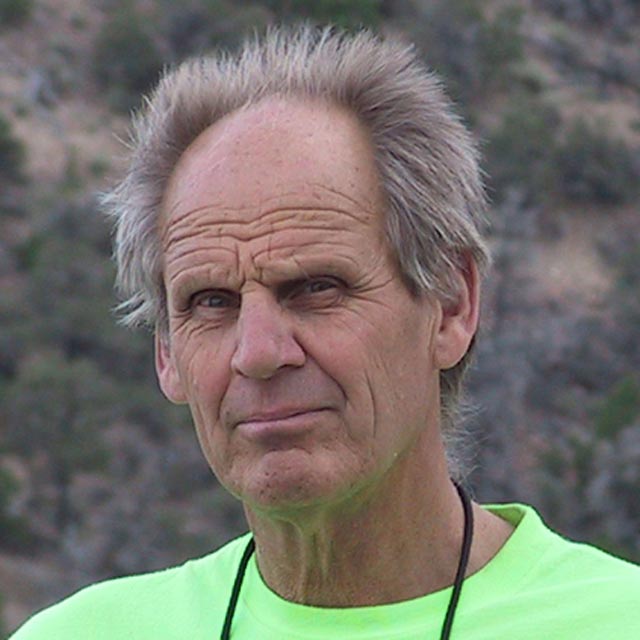
Harvey B. Meyer is a Professor of Theoretical Physics at Johannes Gutenberg University Mainz since 2014. Previously, he held positions including Junior Professor at Mainz (2010), Fellow at CERN's Theoretical Physics Division (2009), Research Scientist at MIT (2008), and postdoctoral roles at MIT (2006-2008) and DESY (2004-2006). He earned his D.Phil. in Theoretical Physics from the University of Oxford (2001-2004) and a Diplome de Physique from the University of Lausanne (1996-2001). His research focuses on lattice field theory, QCD phase diagrams, thermal field theory, and hadron structure. He leads the NEPhEuQCD collaboration and has received the ERC Consolidator Grant (2018) for the SIMDAMA project. Meyer teaches courses in theoretical physics and mathematical methods at Mainz, including 'Theoretische Physik 4' and 'Mathematische Rechenmethoden'. His work integrates advanced computational techniques to address fundamental questions in particle and nuclear physics. Key achievements include pioneering studies on the muon's anomalous magnetic moment, hadronic light-by-light scattering, and quark-gluon plasma dynamics. Collaborations include MIT, CERN, and institutions globally through lattice QCD projects. His lab and team contributions are central to the PRISMA+ Cluster of Excellence at Mainz.
Christopher Turbill is an Associate Professor in Animal Science at Western Sydney University's School of Science, where he maintains an active research program focused on animal physiological ecology. He is affiliated with the Hawkesbury Institute for the Environment and serves as a Principal Investigator on multiple research projects while accepting HDR candidates for supervision. PhD from University of New England (2006) Thesis: Thermoregulatory Ecology of Tree-roosting Bats Supervised by Prof. Fritz Geiser Postdoctoral fellowships from Austrian Science Fund and Australian Research Council (DECRA) Former ecologist with NSW Government Professor Turbill's research integrates thermal and metabolic physiology with behavioral ecology to understand animal-environment interactions. His work has revealed significant ecological consequences of controlled body temperature variation in mammals and birds, linking these processes with metabolic energy expenditure, activity patterns, and life-history strategies. He specializes in bat biology and investigates conflicts between human environmental change and animal conservation requirements. His research keywords include ecophysiology, thermoregulation, energy expenditure, life-history ecology, body temperature, torpor, hibernation, and wildlife conservation. Analysis of Turbill's recent publications reveals a strong focus on thermal biology and conservation physiology, particularly regarding bats and birds. His work examines how animals manage energy through torpor, respond to climate change through thermal regulation, and adapt to anthropogenic disturbances. The research spans field studies of flying-foxes, microbats, and passerine birds across Australian ecosystems, with increasing emphasis on conservation applications related to white-nose syndrome, fire impacts, and wind energy development. Turbill leads significant research projects including the Ecology of the eastern horseshoe bat and its sensitivity to fire impacts (2024-2027), Vulnerability of Australian bats to white-nose syndrome (2021-2026), and Torpor use and burrowing behaviour in an arid zone passerine (2024). His work attracts funding from diverse sources including the Australian Research Council, Department of Planning and Environment, and various conservation organizations. Professor Turbill directs the BatsLab research group, which maintains a virtual hub for bat research at Western Sydney University. His team employs advanced methodologies including thermal imaging, GPS tracking, and physiological monitoring to study animal responses to environmental challenges. Current work focuses on developing conservation interventions for heat-stressed flying-foxes and assessing vulnerabilities of Australian bat species to emerging diseases.
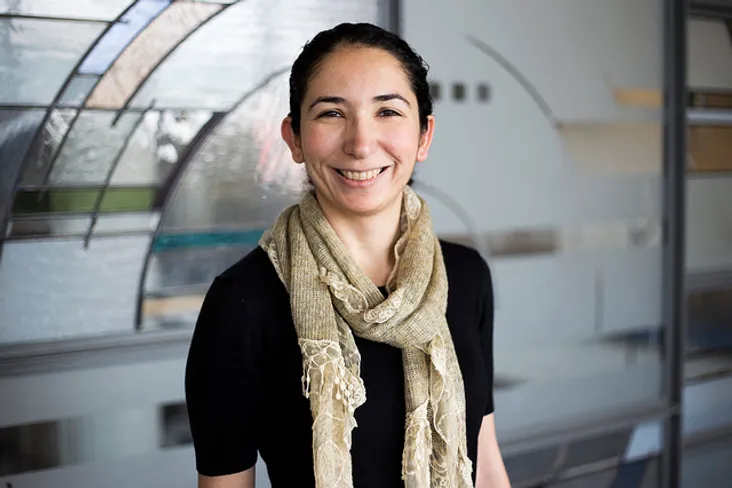
Necmiye Ozay is an Associate Professor in Robotics and Electrical and Computer Engineering at the University of Michigan. Her research focuses on control systems, formal methods, and cyber-physical systems, with applications in autonomy, system identification, and verification. She leads a diverse research group encompassing PhD, MS, and undergraduate students, as well as postdoctoral researchers. Her work bridges theory and practice, addressing challenges in safety-critical systems design and data-driven control. Her educational background includes a PhD in Electrical and Computer Engineering from Northeastern University and a Master’s from Penn State. She has received significant funding from NSF, ONR, and industry partners, supporting projects like the CLEVR-AI initiative and Scenic ecosystem development. Her research has been recognized through awards and collaborations at institutions like MIT, Berkeley, and Johns Hopkins. Key research areas include model-based control synthesis, robust system identification, and anomaly detection in cyber-physical systems. Notable contributions include methods for correct-by-construction control, hybrid system analysis, and learning-based approaches for autonomous systems. She actively contributes to conferences such as HSCC and CDC, and her lab’s work impacts automotive safety, energy systems, and robotics. Ozay’s advising spans over 50 students and postdocs, many of whom hold academic or industry roles. Her lab maintains active collaborations across disciplines, emphasizing interdisciplinary solutions to real-world control challenges.
Randy Freeman is a Professor of Electrical and Computer Engineering at Northwestern University's McCormick School of Engineering. He joined the university in 1996 after earning his Ph.D. from the University of California, Santa Barbara. His research focuses on nonlinear control theory, robust control, multi-agent systems, and distributed control systems. Freeman has been recognized with the NSF CAREER Award (1997) and has held editorial roles in prominent journals like the IEEE Transactions on Automatic Control. Education: Ph.D., Electrical Engineering, University of California, Santa Barbara (1996) M.S., Electrical Engineering, University of Illinois at Urbana-Champaign B.S., Electrical Engineering, Cornell University His research explores advanced control strategies for complex systems, including nonlinear feedback systems, distributed averaging, and multi-agent coordination. Key contributions include work on self-healing swarm control, distributed environmental monitoring, and privacy-preserving consensus algorithms. His publications span journals like IEEE Transactions on Robotics and IEEE Control Systems Letters . Scientific Awards: NSF CAREER Award (1997) Advising and Grants: Freeman has contributed to collaborative robotics projects and sensor network research, supported by grants from NSF and other agencies. His work bridges theoretical control systems with practical applications like robotics and environmental monitoring. Labs and Teams: Affiliated with the Master of Science in Robotics Program and collaborates on multi-agent systems and distributed control initiatives.
Antonio Vairo is a full Professor at the Department of Physics, TUM School of Natural Sciences, Technical University of Munich, where he holds the Chair of Theoretical Physics - Applied Quantum Field Theory (T39) at the James-Franck-Str. 1/I campus in Garching bei München. His research focuses on the theoretical foundations of quantum chromodynamics with emphasis on heavy quark systems and non-perturbative phenomena. Professor Vairo's primary research interests include Quantum Chromodynamics (QCD), Heavy Quark Physics, Lattice Gauge Theory, Effective Field Theories, and Exotic Hadron Spectroscopy. His work bridges computational approaches with analytical frameworks to investigate quarkonium dynamics in extreme environments like the quark-gluon plasma, while developing novel applications of Born-Oppenheimer effective theory to multi-quark systems. Recent investigations extend into dark matter bound state formation in the early universe, demonstrating interdisciplinary reach across particle physics and cosmology. Analysis of his 2024-2025 publications reveals three dominant research thrusts: (1) quarkonium suppression mechanisms in heavy-ion collisions using open quantum systems approaches, (2) high-precision lattice QCD computations of static forces and chromoelectric correlators, and (3) systematic development of effective field theories for exotic hadrons and dark matter pairs. His work on pNRQCD (potential non-relativistic QCD) provides critical connections between lattice results and experimental observables in heavy-ion physics. Professor Vairo maintains active research leadership through collaborations with international groups including the Belle II experiment, as evidenced by his contributions to 'The Belle II Physics Book'. His methodological innovations in applying quantum trajectory methods to quarkonium evolution and developing FeynOnium computational tools for effective field theories demonstrate significant technical contributions to the field. Current research directions emphasize next-to-leading order corrections in heavy quark dynamics and Debye mass effects in dark matter bound state formation.
Professor Ayman S. Mosallam holds dual appointments in Civil & Environmental Engineering and Materials & Manufacturing Engineering Technology at the University of California, Irvine (UCI). He serves as the Director of the UCI Structural Engineering Testing Hall and CEO of Smith-McCoy & Associates Engineering Firm. A globally recognized expert in sustainable building systems, his work emphasizes innovative composites, seismic rehabilitation, and affordable housing solutions like 3D sandwich panels and solar technologies. Education: Ph.D., Structural Engineering, Catholic University of America (1990) M.S., Civil Engineering, Catholic University of America (1985) B.S., Structural Engineering, Cairo University (1978) Research Focus: Advanced composites for infrastructure, hybrid systems for earthquake engineering, and eco-friendly construction. Key projects include the Sauvie Island Steel Bridge (feather-weight sandwich composites) and Schuyler Heim Bridge (hybrid decking). Current initiatives involve a diagnostic system for military bridge health monitoring with Boeing and TACOM, and a collision protection system using honeycomb technology funded by Ohio DOT. Awards: Fellow, American Society of Civil Engineers (ASCE) Top 2% Civil Engineering Researchers (2019-2020) Leadership & Outreach: Founded Egypt Green Building Council, developed the Green Pyramid Rating System, and advises the World Bank on energy-efficient construction. Serves on editorial boards for Composites: Part B Journal and ASCE manuals. Industry Links: Collaborates with Alpha Star Corps, Boeing, and the U.S. Army TACOM. Active in developing practical solutions for infrastructure resilience and sustainability through partnerships with academia and industry.
Professor Alex Copley holds the position of Professor of Tectonics at the Department of Earth Sciences, University of Cambridge. His research focuses on understanding Earth's crustal deformation, tectonic forces, and earthquake dynamics across scales from microcrystalline to continental. He employs integrated approaches combining field geology, geophysical data, numerical modeling, and petrological analysis. His work addresses key questions on earthquake controls, tectonic force origins, and crustal material properties, with global field projects spanning Asia, the Middle East, Europe, Africa, and South America. Research interests include: Earthquake mechanics and seismic hazard mitigation Continental tectonics and mountain belt evolution Crustal rheology and lithospheric dynamics Metamorphic petrology and continental collision processes Large-scale controls on critical mineral distributions Recent publications highlight studies on fault mechanics in Iran, Himalayan shortening, and the thermal evolution of mountain ranges. His work bridges fundamental geoscience with societal applications, including earthquake resilience and tectonic influences on resource formation. Affiliations include Bullard Laboratories and collaborations with global institutions. No formal awards are listed in the provided text, though his research has been published in high-impact journals like Nature and Geophysical Research Letters .
Laurent Lessard is an Associate Professor of Mechanical and Industrial Engineering at Northeastern University, with courtesy appointments in Electrical and Computer Engineering and the Khoury College of Computer Sciences. He is a core faculty member of the Institute for Experiential AI. Previously, he was at the University of Wisconsin-Madison. His research focuses on control theory, optimization algorithms, machine learning, and decentralized systems. He holds a PhD from Stanford University (2011) and completed postdocs at Lund University and Berkeley. Education: PhD in Aeronautics and Astronautics, Stanford University, 2011 MS in Aeronautics and Astronautics, Stanford University, 2005 BASc in Engineering Science (Aerospace), University of Toronto, 2003 Research Interests: Control theory, optimization algorithms, machine learning, distributed systems, and robust control. His work bridges control theory and optimization, emphasizing algorithm design and analysis with applications to AI and autonomous systems. Key Projects: Includes NSF-funded research on distributed optimization, Army-funded work on cognitive distributed sensing, and studies on algorithm equivalence and robustness. Awards: NSF CAREER Award (2018), Hugo Schuck Best Paper Award (2013), Gerald Holdridge Teaching Excellence Award (2019). Grants & Labs: Principal investigator on multiple NSF grants, including work on decentralized control and optimization. Active in the Kostas Research Institute for Homeland Security. Leads a research group with a focus on theoretical and applied control systems. Publications: Over 50 peer-reviewed articles, including foundational work on optimization algorithms and control theory. Recent work emphasizes robustness, distributed systems, and machine learning integration.
Dr. Attila Balázs is a Senior Researcher and Lecturer at ETH Zurich's Institute of Geophysics, affiliated with the Department of Earth and Planetary Sciences. His research integrates numerical modeling with geological data to investigate tectonic-surface process interactions, focusing on orogen-basin systems and continental deformation. Key contributions include studies on back-arc basins, transform faults, and the Tibetan Plateau's uplift mechanisms. He holds the 2020 Flinn-Hart Award and an ETH Zurich Postdoctoral Fellowship. His work emphasizes geodynamic processes such as mantle delamination, slab dynamics, and crustal deformation patterns. Balázs collaborates with the Geophysical Fluid Dynamics Group and maintains an active research portfolio spanning field observations, seismic analysis, and 3D numerical simulations. Research Foci: Tectonic modeling, basin evolution, mantle dynamics, and crustal rheology Key Regions: Pannonian Basin, Tibetan Plateau, Adriatic Sea, Himalayas His articles highlight interdisciplinary approaches to understanding continental and oceanic tectonics, with recent emphasis on transform fault mechanics, triple junction dynamics, and the interplay between tectonics and climate.
Wenbin Lu is an Assistant Professor in the Department of Astronomy at the University of California Berkeley, where he conducts theoretical research on high-energy transient phenomena. He is also affiliated with the Theoretical Astrophysics Center at UC Berkeley. PhD in Astronomy, University of Texas at Austin (2018) Bachelor in Physics, Peking University (2013) Professor Lu specializes in extreme astrophysical events that serve as natural laboratories for studying physics under conditions of high energy density, strong gravity, and intense magnetic fields. His work integrates multiple physical domains including plasma physics, relativistic hydrodynamics, radiative transfer, and stellar dynamics. He maintains active collaborations with researchers worldwide and encourages student involvement in his projects. Analysis of his recent publications reveals a strong focus on tidal disruption events and fast radio bursts, with increasing emphasis on multi-messenger approaches and theoretical modeling of observational data from facilities like JWST, Chandra, and radio telescopes. His work demonstrates consistent theoretical innovation in explaining complex transient phenomena. Burke Fellow at Caltech (2018-2021) Lyman Spitzer Fellow at Princeton University (2021-2022) Professor Lu actively mentors students and postdocs, with many projects originating from discussions with junior researchers. He teaches courses in Radiation and Stars at UC Berkeley. His research is supported by multiple grants that enable computational modeling and observational collaborations across various wavelengths. His theoretical work often involves complex numerical simulations of astrophysical phenomena, particularly focusing on the hydrodynamic evolution of stellar debris in tidal disruption events and plasma processes in fast radio burst emission mechanisms.
Reed Essick is an Assistant Professor at the Canadian Institute for Theoretical Astrophysics (CITA), University of Toronto. His research focuses on experimental gravity, astrophysical signals, and nuclear physics, with particular emphasis on neutron stars, black holes, and gravitational waves. He develops advanced statistical methods like hierarchical Bayesian inference and nonparametric analysis for interpreting observational data from pulsars and gravitational wave detectors. Dr. Essick collaborates extensively with international observatories such as LIGO, Virgo, and KAGRA, contributing to cutting-edge projects like multimessenger astronomy and precision cosmology. His work bridges computational astrophysics with observational techniques, addressing fundamental questions about dense matter and strong-field gravity. Key contributions include studies on gravitational wave equation-of-state constraints, pulsar timing analysis, and the application of machine learning to detector data. His research leverages both ground-based interferometers and space-based observations to explore extreme astrophysical environments.
Dr. Steven G. Wesnousky is the Foundation Professor and Director of the Center for Neotectonic Studies at the University of Nevada, Reno (UNR). He holds a Ph.D. in Seismology from Columbia University (1982) and a B.A. in Geology from the University of California, Santa Barbara (1975). His academic career spans over three decades at UNR, where he combines geology and seismology to study earthquake mechanics, seismic hazard quantification, and crustal deformation. Research focuses on neotectonics, active fault systems, and the Himalayan seismic hazard. Key areas include fault slip rates, paleoearthquake reconstruction, and integrating geological data into seismic risk models. He teaches advanced courses on photogeology, neotectonics, and seismic hazard analysis. Publications emphasize Quaternary fault mapping, Himalayan tectonics, and rupture mechanics. Notable works include studies on the Walker Lane deformation zone and the 2015 Gorkha earthquake in Nepal. Awards include the Foundation Professorship (2008), F. Donald Tibbetts Teaching Award (2008), and a Fulbright Scholarship (2005). Professional roles include presidency of the Seismological Society of America (1995–1997), board memberships, and international collaborations at institutions like King Abdul University and the Institute of Nuclear and Geological Sciences, New Zealand. His work bridges field geology, geochronology, and computational modeling to advance understanding of continental deformation and earthquake processes.
Paul A Kapp is a Professor in the Department of Geosciences at the University of Arizona. His expertise spans continental tectonics, regional geology, structural-stratigraphic analysis, and eolian processes, with a focus on Asia and Cordilleran orogenic systems. Fieldwork includes geologic mapping, kinematic analysis of structures, and stratigraphic section measurements across Precambrian to Quaternary rock types. University: University of Arizona Department: Geosciences Email: pkapp@arizona.edu Research interests emphasize quantifying timing and rates of tectonic processes via geochronology and thermochronology. Key themes include Tibetan Plateau uplift, lithospheric dynamics in collisional zones, and eolian-landscape interactions. His work integrates field observations with analytical methods to understand orogenic plateau formation and paleoelevation reconstruction. Recent publications highlight tectonic-climate feedbacks, mantle melting mechanisms in Tibet, and crustal deformation in the North American Cordillera. Articles often address geodynamic modeling, basin evolution, and isotopic dating applications, reflecting a multidisciplinary approach to orogenic and sedimentary systems.
Roman Krems is a Professor and Distinguished University Scholar at the University of British Columbia (UBC) in the Department of Chemistry, with affiliations to the Stewart Blusson Quantum Matter Institute. His research focuses on the intersection of quantum physics, machine learning, and chemistry, particularly in quantum materials and quantum technologies such as quantum computing and sensing. Key Roles: Professor at UBC (2013–present), Distinguished University Scholar (2017–present) Education: Ph.D. from Göteborg University (2002), Postdoctoral Fellow at Harvard-MIT Center for Ultracold Atoms (2003–05) Research Interests include: Quantum machine learning (QML) for solving complex physics problems Quantum scattering theory in electromagnetic fields Applications of quantum computing to chemistry Developing machine learning algorithms for quantum dynamics Recent publications highlight advancements in extrapolating quantum observables, Gaussian process models for collision dynamics, and quantum walks in disordered systems. His work bridges theoretical physics, computational methods, and experimental applications in cold molecule research. Scientific Awards include the UBC Killam Teaching Prize (2017), election as Fellow of the American Physical Society (2015), and the Keith Laidler Award (2013). He has held editorial board positions for journals such as Machine Learning: Science & Technology and New Journal of Physics . Research Group members include graduate students and postdocs working on quantum technologies, machine learning, and molecular scattering. He also contributes to outreach through invited talks and seminars at institutions like MIT and Lawrence Berkeley National Laboratory.
Prof. Dr. sc. techn. ETH Oliver Staadt is Full Professor of Computer Science and Chair of Visual Computing at the University of Rostock , Germany. Since 2023 he also serves as Director of the Institute for Visual and Analytic Computing within the Faculty of Computer Science and Electrical Engineering . Previously he was Dean (2016–2018) and Vice Dean (2010–2016) of the same faculty. Education Ph.D. in Computer Science, ETH Zürich (2001) M.Sc. in Computer Science, TU Darmstadt (1994) Research Interests Prof. Staadt’s research spans virtual and augmented reality , computer graphics , visualization , telepresence , immersive analytics , and human–computer interaction . A particular focus lies on real-time rendering and display technologies for large high-resolution display systems, depth-image enhancement for RGB-D sensors, and interaction techniques that leverage spatial cognition and eye-tracking. His work is frequently applied to collaborative settings and microgravity environments, including experiments aboard parabolic flights and the International Space Station. Recent Publication Trends Between 2019 and 2021 his output centers on foveated rendering , AR viewpoint guidance , collaborative analytics on wall-sized displays , and embodied interaction metaphors . Earlier work addressed bandwidth-efficient telepresence, depth-image filtering, and physically-based animation. The corpus reveals a steady evolution from fundamental graphics algorithms toward applied immersive systems. Scientific Awards & Honors Fellow of the Eurographics Association Associate Editor, IEEE Transactions on Visualization and Computer Graphics (past) Associate Editor, Computers & Graphics (past) Associate Editor, Computer Animation and Virtual Worlds (past) Associate Editor, Frontiers in Virtual Reality (current) Chair, Expert Group on Virtual & Augmented Reality, German Informatics Society (2013–2020) Advising & Funding He has successfully supervised more than ten PhD graduates whose dissertations range from collision detection and physically-based animation to 3D interaction in microgravity and predictive user modeling. Current PhD researchers include Bipul Mohanto, Mana Takhsha, and Sven Kluge. His projects are supported by national and EU programs such as EVOCATION, SMOOTH, ARGuide, 3DPick, DIVA, and Telepresence. Labs & Teams Prof. Staadt leads the Visual Computing Group at Rostock, operating state-of-the-art facilities including large tiled display walls, VR/AR laboratories, and motion-capture systems. The institute hosts interdisciplinary collaborations with partners in visualization, computer vision, psychology, and aerospace engineering.