Jacob Eyferth is an Associate Professor at the University of Chicago, jointly appointed in the Department of East Asian Languages and Civilizations, the Department of History, and the College. His research focuses on the social and cultural history of twentieth-century China, particularly rural communities, gender dynamics, and the intersection of technology and everyday life. Key research themes include the impact of industrialization, collectivization, and revolution on non-elite populations, with an emphasis on rural women's labor and cultural resistance. His current project explores cotton production, clothing, and gender during China's socialist era. Eating Rice from Bamboo Roots (2009) How China Works (2006) Rural Development in Transitional China (2004) He received the 2011 Joseph Levenson Prize for his first book. Eyferth has taught courses on topics such as class inequality, everyday life under socialism, and revolutionary China, and has held postdoctoral fellowships at Oxford, Harvard, and Rutgers.
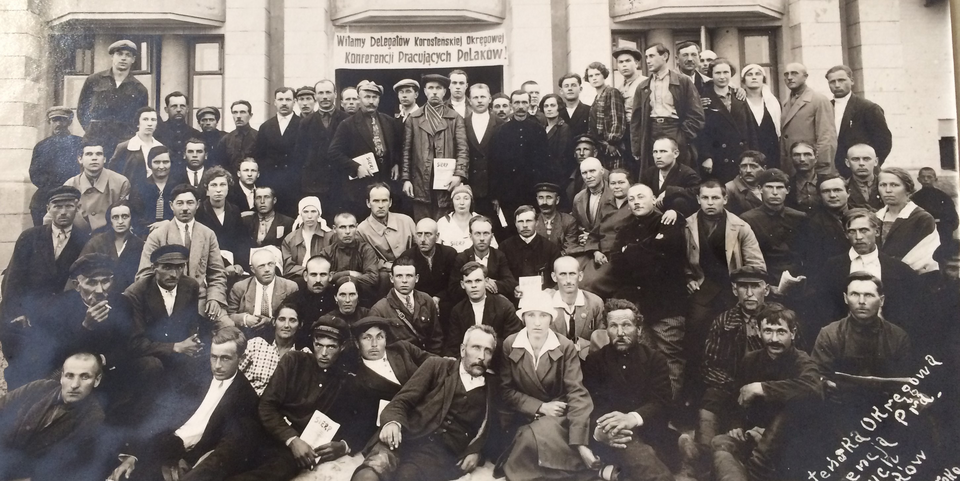
Prof. Dr. Olena Palko is a historian specializing in Eastern Europe, the Soviet Union, and Ukraine. She holds the SNSF Professorship at the University of Basel's Department of History, focusing on East European History. Her research emphasizes Soviet minority policies, cultural politics, and national identity formation in interwar Ukraine. She is a leading scholar with notable works including Making Ukraine Soviet (2021), awarded the 2023 Alexander Nove Prize. Her current SNF-funded project, Red Tower of Babel , examines Soviet minority experiments in Ukraine. Education: PhD from University of East Anglia (2017); Kandydat nauk from National Academy of Sciences of Ukraine (2013). Research Interests: Soviet nationality policy, minority history, Ukrainian twentieth-century history, transnational border dynamics. Her work bridges archival analysis with transnational perspectives, addressing contested borderlands between Poland and the USSR. Key publications include co-edited volumes like Making Ukraine (2022) and Ukraine's Many Faces (2023). She actively contributes to academic governance roles, including co-convening the BASEES Study Group for Minority History and serving on the Scientific Advisory Council of the Council of Europe's history observatory.
Sam Yam is a Professor and Head of the Management & Organisation Department at the National University of Singapore's (NUS) Business School. He holds the Jardine Cycle & Carriage Professorship and serves as Associate Dean. His research spans strategy, organisational behaviour, applied psychology, ethics, and human-technology interaction. Yam has contributed to over 125 publications, focusing on AI ethics, workplace dynamics, and cross-cultural management. He explores topics like robot replacement effects, abusive supervision, and financial anxiety's intergenerational impacts. His work bridges psychology, ethics, and organisational theory, addressing contemporary challenges in automation, leadership, and human-AI collaboration. Appointments: Head of Management & Organisation (2022–present), Joint Appointment in Arts & Social Sciences (2023–present). Key Research Themes: Future of work, human-technology interaction, ethical leadership, and Machiavellian dynamics. Notable Contributions: Multimodal ADHD diagnostics, leader biases toward robot-using employees, and cultural impacts on team performance. Yam’s interdisciplinary approach integrates psychology, technology, and management, addressing societal issues like AI ethics and workplace automation. His research frequently appears in top journals like the Journal of Management and Annual Review of Organizational Psychology .
Kamila Kociałkowska is an Assistant Professor in the Department of History of Art at the University of Warwick, Faculty of Arts. She joined the department in 2024 after holding postdoctoral fellowships at the Metropolitan Museum of Art, the Getty/ACLS, and Harvard University’s Davis Center. Education: PhD in History of Art, University of Cambridge MA in History of Art, Courtauld Institute of Art MA in Fine Art, University of Edinburgh Her research centers on modernism in Eastern Europe, especially the interplay between artistic production and systems of censorship and surveillance in the Soviet Empire and its peripheries. She employs new materialist approaches to analyze redacted and fragmented visual and textual sources, rethinking the origins of abstraction beyond traditional resistance narratives. Her work also explores the cryptographic imagination and the impact of surveillance technologies on interwar avant-garde aesthetics. Her recent publications span topics such as Suprematist resistance, undead imagery in Stalinist propaganda, and explosive futurist texts, reflecting a deep engagement with avant-garde experimentation under repression. These works reveal recurring themes: the materiality of censorship, subversive semiotics, and the transformation of political constraint into aesthetic innovation. Scientific Awards and Fellowships: Leonard A. Lauder Postdoctoral Fellow, Metropolitan Museum of Art Getty/ACLS Postdoctoral Fellow in the History of Art Visiting Scholar, Davis Center, Harvard University She is currently completing her first book, The Black Square and the Blue Pencil: Censorship and the Stimulation of Modernist Style , which charts how censorship shaped avant-garde aesthetics in Russia, Georgia, Ukraine, and Azerbaijan. Her second project, Coding Modernity: The Cryptographic Imagination and the Interwar Avant-Garde , investigates the cultural history of spying and secret policing in interwar Europe. She does not currently have any listed advisees or research grants in the provided text.
Professor Jason Rentfrow is a Professor of Personality & Individual Differences and Director of Graduate Education at the University of Cambridge's Department of Psychology. His research focuses on geographical psychology, exploring how regional environments shape personality, cultural differences, and societal outcomes. He also serves as Director of Studies in Psychology at Fitzwilliam College, Cambridge. Key research interests include the psychological effects of geography on traits like openness, conscientiousness, and neuroticism; the role of music preferences in personality expression; and the impact of socioeconomic status on self-concept. He has pioneered studies linking personality to political behavior, urban planning, and public health responses to crises like the 2020 pandemic. His work combines large-scale data analysis with spatial methodology, examining datasets from over 133 nations. Notable contributions include frameworks for measuring regional personality differences and their implications for innovation, entrepreneurship, and electoral outcomes. He has also developed psychometric tools like the Test of Attribute Preferences (TAP) for studying musical preferences. Recent research highlights include analyzing how Roman historical legacies influence modern German well-being disparities, the psychological roots of Brexit and Trump voter behavior, and the link between childhood trauma and adult empathy levels. His interdisciplinary approach spans psychology, sociology, economics, and geography. Professional activities include supervising graduate students, reviewing for top journals, and advising on cultural policy. He maintains an active lab focused on personality-environment interactions and their societal consequences.
Dr. Elizabeth Kahn is an Associate Professor in Political Theory at Durham University's School of Government and International Affairs. Her research focuses on social injustice, political activism, and global justice, with a particular emphasis on the legitimacy of political activists operating outside formal institutions. Durham University: Associate Professor (promoted 2021), Lecturer (2014), Director of the Centre for Political Thought Affiliations: Associate Fellow of the Institute of Advanced Study, Fellow of the Global Policy Institute, Member of the Economics and Ethics Network, Editorial Board of the Journal Of Social Philosophy Education: PhD: University of York (supervised by Matt Matravers and Martin O'Neill) MLitt and MA: University of Glasgow (worked with Dudley Knowles) Research Interests: Political legitimacy, protest ethics, civil resistance, collectivization, global justice, human rights, and the political philosophy of Iris Marion Young. Her work explores how individuals and activists can address structural injustices through participatory methods and moral contractualism. Scientific Awards & Funding: Visiting Fellowship at Justitia Amplificata (Goethe University Frankfurt) Durham Students’ Union Teaching Award Society of Applied Philosophy workshop funding for 'Labour Market Injustice' Teaching: Leads modules on Social and Political Philosophy (Transnational Injustice and the Ethics of Activism) and Researching Political Theory.
Dr. Hanbo Shim is an Assistant Professor in the Department of Management at The University of Texas at Arlington, College of Business. He holds a PhD in Industrial Relations and Human Resources from Rutgers University and a BA in Mathematics and Economics from the University of Illinois at Urbana-Champaign. His research and teaching focus on Human Resource Management, Organizational Behavior, and HR Analytics. PhD, Industrial Relations and Human Resources, Rutgers University (2022) MS, Industrial Relations and Human Resources, Rutgers University (2019) MA, Human Resource Management, Rutgers University (2016) BA, Mathematics and Economics, University of Illinois (2012) Dr. Shim's research explores the temporal dynamics of employee performance, compensation systems, emotional intelligence, and social networks in organizations. He uses longitudinal analysis, multilevel modeling, meta-analysis, and computer simulation to examine how individual and interpersonal factors influence organizational outcomes. His work bridges HR analytics with behavioral science. His recent publications span topics such as green HRM, pay policy dynamics, emotional intelligence, and HR analytics education. These works reflect a strong interdisciplinary approach integrating psychology, sustainability, data science, and strategic management. His research has been presented at leading conferences including the Academy of Management and European Reward Management Conference. Award highlights include: Ralph Alexander Best Dissertation Award (2024) Innovative Teaching Award, Academy of Management HR Division (2022) Best Student Convention Paper Award (2020) Best Doctoral Conference Paper Award, Samsung Economic Research Institute (2020) Dr. Shim actively advises students through capstone and honors projects and serves on PhD and graduate studies committees. He has collaborated with SL Corporation on HR analytics and developed open-source educational materials. His service includes editorial board membership for Compensation & Benefits Review and ad hoc reviewing for top journals. He is also engaged in professional development workshops and public speaking, including for the Society for Human Resource Management at UTA. His lab and research activities emphasize simulation-based methods and real-world HR analytics applications.
Academic Profile Christina Harrington is an Assistant Professor at Carnegie Mellon University with dual appointments in the School of Computer Science (Human Computer Interaction Institute) and School of Design. She directs the Equity and Health Innovations Design Research Lab , focusing on community-centered technology design. Her work bridges industrial design, interactive systems, and human factors psychology to advance health equity through technology. Research Focus Harrington's research employs participatory and speculative design methods to address systemic inequities in technology. She examines how design can support health autonomy for older adults, people with disabilities, and historically excluded communities (particularly Black and Latinx populations). Her work actively challenges corporate design paradigms through frameworks like design justice and community collectivism , with recent emphasis on ethical AI and conversational technologies. Research methodologies include: Community-based participatory research Speculative co-design Critical race and disability frameworks Intersectional analysis of technology impacts Publications Focus Her recent publications (2023-2025) demonstrate strong focus on equity-centered design with three dominant themes: 1) Health technology disparities affecting Black older adults, 2) Participatory AI and algorithmic justice, and 3) Design justice pedagogy. Over 60% of recent works explicitly examine racial equity in AI systems, health interfaces, and design education. Honors & Recognition Google Award for Inclusive Research (2022) for "Transforming theory into practice: eliciting cultural imaginaries and design thinking to understand Black-Centered Design" Skip Ellis Early Career Award (2022) Data & Society Faculty Fellow (2022-2023) Leadership & Impact As lab director, Harrington leads community-engaged projects that translate design justice principles into practice. She serves on committees for community tech initiatives and has industry experience at Apple, Lenovo, and Motorola. Her work influences both academic discourse (ACM CHI, CSCW, DIS) and industry practices in ethical design.
Robert Braun is an Associate Professor of Sociology and Political Science at the University of California, Berkeley. He holds a PhD from Cornell University (2017) and previously taught at Northwestern University. His research focuses on civil society dynamics during social upheaval, intergroup relationships in conflict settings, and the historical dimensions of political fear and persecution. His work has been published in prestigious journals like the American Journal of Sociology and American Political Science Review. Key contributions include his book Protectors of Pluralism (Cambridge UP, 2019), analyzing community responses to mass persecution, and his forthcoming project Bogeymen , tracing political fear through Central European folklore. Braun also examines healthcare economics, studying private equity impacts on medical practices and hospice care quality. His interdisciplinary approach bridges historical sociology, political theory, and quantitative analysis. Education: PhD in Sociology, Cornell University, 2017 Research Interests: Genocide Studies, Healthcare Policy, Ethnopolitical Conflict, Moral Mobilization Awards: Not explicitly mentioned in available texts Braun’s work on Holocaust resistance patterns and bystander dynamics has influenced debates on collective action and moral responsibility. His recent studies on healthcare consolidation highlight financialization effects in medical sectors, contributing to policy discussions on equity and access.
Dov Cohen is a Professor of Psychology at the University of Illinois, with extensive cross-disciplinary affiliations including the Information Trust Institute, College of Law, Center for East Asian and Pacific Studies, and Center for Latin American and Caribbean Studies. His academic home resides within the College of Liberal Arts & Sciences. Professor Cohen's research centers on Cultural Psychology with specific expertise in honor cultures, institutional inversion, and cross-cultural value systems. His work examines how cultural frameworks shape cognition, emotion, and behavior - particularly regarding violence, debt, and religious influences. Notable contributions include the development of the 'institutional inversion' framework explaining discrepancies between collective attitudes and behaviors, and pioneering research on honor cultures in the American South. His publication record demonstrates consistent high-impact contributions across top journals including Journal of Personality and Social Psychology , Current Directions in Psychological Science , and Social Psychology . Recent work explores East-West relationship differences, gendered language in financial contexts, and the psychological mechanisms underlying cultural transmission. Cohen maintains active research programs examining the embodied nature of culture through psychological perspective and physical comportment. His theoretical work integrates Lewinian field theory with contemporary cultural psychology frameworks. As a mentor, Professor Cohen advises graduate students in Psychology and related interdisciplinary programs, fostering research that bridges cultural psychology with law, economics, and religious studies. His collaborative projects frequently involve international teams examining cultural phenomena across diverse national contexts.
Dr Filip Slaveski is a Senior Lecturer in Russian/Soviet and East European History at the School of History, The Australian National University. He specializes in Soviet Empire studies, focusing on mass conflict, food crises, political control, and their contemporary echoes. His work examines Ukraine, Russia, and post-WWII dynamics, particularly Soviet governance and post-war reconstruction. Slaveski holds a PhD in History and has published extensively on Soviet famines, post-war Ukraine, and Soviet-German occupation policies. His notable works include Remaking Ukraine after WWII (2021) and The Soviet Occupation of Germany (2013). He has received funding through ARC DECRA grants and contributed to major projects on Soviet famines and post-war recovery. Research Interests: Soviet Union, Ukraine, Conflict Studies, Famine, Repression, Nationalism. Grants: ANU Futures Scheme (2023–2026) and The Last Soviet Famine Project (2021–2025).
Jeremy Brown is a Professor in the Department of History at Simon Fraser University. He specializes in the social and political history of the People’s Republic of China, with a focus on urban-rural dynamics, Maoist-era policies, and the Tiananmen protests. His research integrates oral histories and grassroots sources to challenge state-centric narratives. Brown earned his PhD from the University of California, San Diego (2008), and has held editorial roles for Cambridge Studies in the History of the People’s Republic of China (2014–2021). He is a recipient of the SFU Excellence in Teaching Award (2017) and multiple SSHRC grants. His books include June Fourth: The Tiananmen Protests and Beijing Massacre of 1989 (2021) and Maoism at the Grassroots (2015). He currently supervises graduate students in Asian history and oral history. Education: PhD in History, UC San Diego (2008); Language training at Harbin Institute of Technology (1997) and Tsinghua University (2000–2001). Key Research Themes: Maoist ideology, urban-rural divides, Cultural Revolution, memory studies, and political repression. Grants: SSHRC Standard Research Grant (2010–2013), Henry Luce Foundation Fellowship (2014–2015). His work often examines everyday life under Maoism, including resistance to state policies, grassroots agency, and the legacies of trauma in modern China. Brown is also active in teaching innovation, such as using Wikipedia to engage students with contested historical events.
Michael Rauhut is a Professor at the University of Agder where he leads the PhD specialization in popular music performance and represents subject teachers within scientific disciplines at the Department of Rhythmic Music . His academic work focuses on popular music studies and musicology, with supervisory responsibilities for master's and doctoral candidates. Rauhut's research explores the intersection of music, politics, and society, with particular emphasis on: Popular music history in socialist contexts (especially the GDR) Cultural transfer during the Cold War Blues, rock, and jazz as forms of cultural expression Youth cultures and music under authoritarian systems Church-state dynamics in musical expression His work demonstrates how music functioned as both state propaganda and vehicle for dissent. Analysis of Rauhut's publications reveals consistent focus on: Cultural mechanisms in socialist states (75% of recent works) Transnational music exchanges across the Iron Curtain Archival methodologies for reconstructing musical histories Identity formation through popular music State censorship and artistic resistance strategies His documentary filmography expands these themes into visual media. As PhD supervisor, Rauhut guides research in popular music performance and musicology. His extensive conference participation includes keynote addresses in Germany, USA, Georgia, and Ukraine, covering topics from blues reception to music's role in political revolutions.
Peter B. Zinoman is a Professor of History at the University of California, Berkeley specializing in Southeast Asian history with primary focus on Vietnam. His academic career spans over two decades with significant contributions to colonial and revolutionary Vietnamese history. His educational background includes a PhD from Cornell University and a BA from Tufts University, establishing foundational expertise in historical methodology and Southeast Asian studies. Zinoman's research centers on Vietnamese colonial history, prison systems, literary history, and Cold War-era political movements. His work critically examines French colonial structures, revolutionary intellectual networks, and the interplay between literature and political dissent. He is renowned for his revisionist interpretations of key historical events including land reform movements and intellectual purges. His publication record spanning 1995-2016 reveals persistent engagement with primary source analysis and interdisciplinary methodology. Articles consistently explore themes of colonial incarceration, literary resistance, and political transformation, with increasing focus on Cold War dynamics and memory politics in later works. His scholarly recognition includes: Association of Asian Studies, Harry J. Benda Prize for Southeast Asia Studies (2003) American Historical Association, John King Fairbank Award for East Asian History (2001) Professional service demonstrates deep institutional commitment through co-editing the Journal of Vietnamese Studies since 2005, co-directing the UC Berkeley History-Social Science Project since 2003, and former leadership roles including Chair of the Center for Southeast Asia Studies (2003-2008) and Resident Director of the UC Education Abroad Program in Vietnam (2001). No public records indicate graduate student advising or grant-funded research projects. His work operates primarily through editorial and institutional frameworks rather than laboratory settings, with significant influence through academic journals and Southeast Asia research centers.
Prof. Thomas Szanto is a Professor of European Political Philosophy at Europa-Universität Flensburg since 2024. He holds a dual affiliation as Recurrent Visiting Professor at the Center for Subjectivity Research (University of Copenhagen). His research bridges social/political philosophy with phenomenology and emotion theory, focusing on normative political emotions, collective agency, and epistemic justice. He earned his PhD (2010) and MA (2004) from the University of Vienna. Affiliations: Europa-Universität Flensburg, University of Copenhagen (CFS), Carlsberg Foundation Project "Who are We?" Education: PhD in Philosophy (University of Vienna, 2010), MA in Philosophy (University of Vienna, 2004) Research Interests: Political emotions (hatred, solidarity), collective intentionality, critical phenomenology, climate change ethics, feminist epistemology, group agency dynamics. His work combines continental and analytical approaches, engaging social science findings from sociology, political psychology, and social movements research. Grants & Projects: Led FWF-funded project "Antagonistic Political Emotions" (€386k), Marie Curie Fellowship (SHARE project, €212k). Current projects include collaboration on group-based affective mechanisms and political cohesion. Editorial Roles: Associate Editor of Emotion Review , Editorial Board member of Philosophy and Society . Reviewed for 70+ journals including Mind and ERC. Key Contributions: Pioneered analysis of epistemically exploitative bullshit (2023), developed taxonomy of political resentment types (2024), authored monograph Bewusstsein, Intentionalität und mentale Repräsentation (2012). Supervised 6+ doctoral theses across European institutions.