David J. Zoller is an Associate Professor in the Philosophy Department at California Polytechnic State University, specializing in Continental Philosophy with a focus on Phenomenology, Metaethics, Moral Knowledge, and Applied Ethics. His research explores how meaning functions at the limits of perceptual experience, particularly in relation to ethics of distant scenarios (e.g., climate change, sweatshop labor), metaethical questions about perception and moral knowledge, and the ethical implications of automation replacing human skills. Education : Ph.D. and M.A. in Philosophy from Fordham University (2011, 2006), B.A. in Classics/Philosophy from Xavier University (2003) Research Trends : His recent articles emphasize: Heideggerian analysis of language and moral justification Connections between Aristotle, Kant, and Arendt in collective responsibility debates Phenomenological critiques of automation and robotics Applications to environmental and global justice Service : Co-editor of Robot Ethics 2.0 , and active participant in conferences like the Society for Phenomenology and Existential Philosophy and Social Ontology Conferences.
David Schweikard is a Researcher at the Department of Philosophy, Europa-Universität Flensburg , holding this position since 2016. His academic career includes Junior Professor for European Political Philosophy (2016-2022), Acting professors (2022-2024), and prior affiliations with the University of Münster , University of Basel , Columbia University , University of Cologne , and Princeton University . Research Focus: Schweikard’s work centers on collective intentionality , social ontology , Hegelian philosophy , and virtue epistemology . He explores the metaphysics of collective action, normative structures in family relationships, and the intersection of ethics and social theory. His entry in the Stanford Encyclopedia of Philosophy on collective intentionality (with Hans Bernhard Schmid) is widely cited. Publications: His 2011 monograph The Myth of the Singular – An Investigation into the Structure of Collective Action (mentis) and editorial collaborations on works by Philip Pettit, Marx, and Rorty demonstrate interdisciplinary engagement. Recent chapters in Distributed Agency (Oxford University Press, 2017) and Handbuch Handlungstheorie (Metzler, 2016) reflect evolving interests in group agency and historical social theory. Academic Leadership: Schweikard serves on the Editorial Board of the Journal of Social Ontology Steering Committee of the International Social Ontology Society Research Center for Collective Science (University of Regensburg)
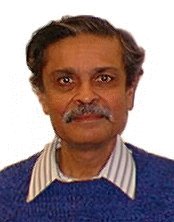
Rohit Parikh is a Professor in the Department of Computer and Information Science at the School of Natural and Behavioral Sciences, City University of New York (CUNY). He maintains dual appointments at Brooklyn College and the CUNY Graduate Center, where he teaches courses in Belief, Knowledge and Games, Artificial Intelligence, Formal Languages, Theory of Computation, and Modal Logic. His academic career spans institutions including Stanford, NYU, Boston University, SUNY Buffalo, Bristol, and Panjab universities, with research positions at IBM, Bell Labs, Caltech, MIT, and Berkeley. Educated at Harvard University (A.B. in Physics, 1957; A.M. in Mathematics, 1959; Ph.D. in Mathematical Logic, 1962) Former student placements include Brown University, University of Maryland, Haifa, Chennai, Paris, and CUNY Principal organizer of the Seminar in Logic and Games at CUNY Graduate Center Parikh's research centers on the intersection of logic, knowledge, and social systems. His work bridges computer science, mathematics, and philosophy through investigations into epistemic logic, game theory, belief revision, and the philosophy of language. He pioneered the concept of 'social software'—applying logical frameworks to analyze social procedures and algorithms. His research on vagueness connects Wittgensteinian language games with computational models, while his contributions to epistemic game theory examine how knowledge structures influence strategic behavior. Recent work explores the logic of collective action, non-person ontology, and the relationship between Buddhist philosophy and Popperian rationalism. His publication trends reveal deep engagement with knowledge representation (62% of recent works), social interaction modeling (23%), and philosophical logic (15%). Key recurring subfields include epistemic game theory, vagueness semantics, belief dynamics, social ontology, logical omniscience, and language-game formalization. His methodological approach consistently integrates mathematical rigor with philosophical insight across disciplines. Parikh has advised numerous doctoral students whose careers span global institutions. His professional leadership includes organizing the NYCAC-3 conference, serving on program committees for WOLLIC, DEON, LOFT, and other major logic conferences, and co-organizing the Seminar in Logic and Games which attracts speakers from Princeton, Yale, Columbia, and international institutions. His research infrastructure includes the Logic and Games seminar series and collaborations through the CUNY Graduate Center's computer science department. Current projects examine the capability approach, vagueness through social software, and theoretical foundations of collective action.
Summary Prof. Dr. Gottfried Vosgerau is a Professor of Philosophy at Heinrich-Heine-Universität Düsseldorf, affiliated with the Faculty of Arts and Humanities. His research focuses on Philosophy of Mind, Cognitive Science, Metaphysics, and Philosophy of Psychiatry. He holds a PhD from Ruhr University Bochum (2008) and has received multiple awards including the DGPPN Prize (2014, 2010), Dissertation Prize (2008), and recognition from the Young Academy of North Rhine-Westphalia (2009). Education 2002–2008: Studies in Philosophy, Psychology, and Cognitive Science at Ruhr University Bochum 2008: PhD in Philosophy, Ruhr University Bochum Research Interests His work explores the metaphysical and cognitive dimensions of consciousness, mental representation, and embodied cognition. Key areas include: Philosophy of Mind and Cognition Metaphysics of Mind Philosophy of Psychiatry Epistemology and Ontology Philosophical Logic and Language Awards & Honors 2014 DGPPN Prize for Philosophy in Psychiatry (with Patrice Soom) 2009 Young Academy Membership, North Rhine-Westphalia 2008 Dissertation Prize, Ruhr University Bochum 2006 Best Poster Award at ASSC Conference Grants & Advising While specific grants are not listed, his academic career includes leadership roles in interdisciplinary projects and supervision of advanced research in cognitive science and philosophy. He actively contributes to academic committees and editorial boards. Labs & Collaborations His research integrates empirical and conceptual approaches, collaborating with institutions like the Institute for Philosophy and the Global Young Faculty network. He maintains an active Google Scholar profile and ResearchGate page.
Dr. Anna Borghi investigates how concepts are grounded in sensory-motor and social experiences through the lens of embodied cognition. Her Words As social Tools (WAT) theory proposes that abstract concepts rely more heavily on linguistic and social experiences than concrete concepts. Central research themes: Neural and behavioral foundations of abstract concepts Role of language and inner speech in conceptual processing Social dimensions of conceptual representation Cross-cultural differences in concept formation Development of abstract thought in children Recent work employs multimodal methodologies including thermal imaging, motion tracking, and computational modeling. Publications demonstrate growing interest in real-world applications such as autism interventions and AI communication systems. Current projects examine conceptual processing during the COVID-19 pandemic and politeness strategies in human-chatbot interactions.
Corrado Sinigaglia is Professor of Philosophy of Science at the State University of Milan. He leads the CIA Lab and is affiliated with virtual ABCLabs 6.0. His research bridges philosophy, neuroscience, and social cognition, with a focus on mirror neuron mechanisms, embodied cognition, and interpersonal coordination. His publications explore neurocognitive foundations of social interaction, including EEG/TMS studies on joint action, emotion mirroring, and intentionality. Recent work investigates computational models of collective goals and clinical applications in schizophrenia.
David Schweikard is a Professor at the Department of Philosophy, Europa-University Flensburg. He holds a Dr. Phil. from the University of Cologne and has held positions including Junior Professor for European Political Philosophy (2016-2022) and Acting Professor for the Chair of European Political Philosophy (2022-2024). Schweikard studied at Karlsruhe, Münster, and Padua, and has conducted research at Columbia University, Princeton University, and the University of Pittsburgh. PhD: University of Cologne (2009), Dissertation: The Myth of the Singular MA: Münster, Karlsruhe, Padua (2002), Thesis: Freedom or System? His research focuses on Social Philosophy , Philosophy of Social Sciences , and Action Theory , with a particular interest in 19th-century philosophy, social epistemology, and aesthetics of jazz. He is affiliated with the Editorial Board of the Journal of Social Ontology and the International Social Ontology Society . Key publication trends include: Collective Intentionality (2017-2013), Social Ontology (2015-2010), Normative Structures (2015, 2005), and 19th-Century Philosophical Debates (2015, 2013). Schweikard has edited multiple volumes on Philip Pettit, Robert Brandom, and collective action theory. Co-authored the Stanford Encyclopedia of Philosophy entry on Collective Intentionality Edited Knowledge, Virtue, and Action (2013) and Marx Handbuch (2016)
Jan Slaby is a Professor of Philosophy of Mind and Philosophy of Emotions at the Institute of Philosophy (WE1) of Freie Universität Berlin. Since October 2023, he holds an indefinite W2 (Associate Professor-level) professorship. He serves as Deputy Executive Director (2023-2025) and Study Advisor for Philosophy at FUB. Slaby is a key figure in the Collaborative Research Center 'Affective Societies' (2015-present), leading projects on affective dynamics and societal responses to ecological crises. Member, DFG Theoretical Philosophy Panel (2024) Co-editor of Affective Societies: Key Concepts (2019), Critical Neuroscience (2012), and Affect, Power and Institutions (2023) Co-founder of the 'Political Philosophy of Mind' framework integrating 4E cognition with social critique His recent work examines structural apathy and affective injustice in affluent societies, particularly in relation to climate crisis responses. He develops concepts like habits of affluence , affective arrangements , and surrogacy emotions to analyze how affective dynamics shape individual and collective political realities. Slaby's publications span interdisciplinary collaborations with cognitive scientists, sociologists, and cultural theorists. His teaching includes courses on the self as a political problem, late fascism, and affective dimensions of 21st-century life. He emphasizes team-based philosophy and critical methodology, though has limited capacity for external supervision due to institutional demands.
Philip Pettit is the L.S. Rockefeller University Professor of Human Values at Princeton University and Distinguished Professor of Philosophy at the Australian National University. His academic career includes roles as a lecturer at University College Dublin, research fellow at Trinity Hall, Cambridge, and professor at the University of Bradford. He is a fellow of the American Academy of Arts and Sciences, member of the Royal Irish Academy, and a Corresponding Fellow of the British Academy. His research spans ethical and political theory, collective agency, and the philosophy of mind. Notable works include Republicanism (1997), On the People's Terms (2012), and The Birth of Ethics (2018). His 2020 Rotelli Lectures at Vita-Salute San Raffaele University explored 'How Language Powers the Mind,' arguing that language shapes core mental capacities like decision-making, rule-based reasoning, and self-constitution. Pettit has delivered prestigious lectures such as the Tanner Lectures (2015) and John Locke Lectures (2019). His contributions bridge philosophy with social sciences, emphasizing collective agency and republican democracy.
Prof. Mari Mikkola holds the position of Professor and Chair of Metaphysics at the University of Amsterdam's Department of Philosophy within the Faculty of Humanities. She previously held roles at the University of Oxford, Humboldt-Universität zu Berlin, and Lancaster University. Her work bridges feminist philosophy, metaphysics, social/political philosophy, and aesthetics. Educated at the University of York (BA) and University of Sheffield (PhD, 2005), her research focuses on oppression theory, feminist metaphysics, pornography ethics, and Kantian philosophy. Key publications include The Wrong of Injustice (2016) and Pornography: A Philosophical Introduction (2019). She edits major philosophy journals and has given keynote lectures globally on topics like toxic speech and epistemic injustice. Her research interests emphasize non-ideal theory, social ontology, and the intersections of language, power, and gender. Recent work explores digitized pornography ethics and the role of feminist critique in mainstream metaphysics. She serves as editor for Australasian Philosophical Review and has organized interdisciplinary workshops on political philosophy and applied linguistics. No specific awards are listed, but her extensive publication record and international speaking engagements reflect scholarly impact. She advises on academic ethics and digital media studies through collaborative projects in European research networks.
David P. Schweikard is an Interim Professor of European Political Philosophy at the Department of Philosophy, Europe-University Flensburg, where he has been serving since April 2022. His academic trajectory includes positions as Junior Professor at the same institution (2016-2022) and Assistant Professor roles at the University of Münster and University of Cologne. He holds international research experience from Columbia University, Princeton University, and the University of Basel. Education: PhD in Philosophy, University of Cologne (2009) – Thesis: Der Mythos des Singulären M.A. in Philosophy, Communication Studies and Sociology, University of Münster (2002) Studies at Universities of Karlsruhe, Münster, and Padova (1996-2002) Schweikard's research integrates multiple philosophical domains with particular emphasis on: Collective intentionality and group agency in social ontology Normative foundations of political philosophy and social justice Historical analysis of 19th-century philosophical thought Epistemological dimensions of social structures Aesthetic interpretations of jazz improvisation His recent publications demonstrate strong focus on political theory applications including universal basic income frameworks, fascism analysis, and legal philosophy, alongside extensive editorial work in interdisciplinary collections. No scientific awards, student advisements, or research grants are documented in available materials.
Robert Brotherton is a Lecturer in the Department of Psychology at Barnard College , Columbia University. His research focuses on the cognitive and psychological mechanisms underlying belief in conspiracy theories, misinformation susceptibility, and epistemic reasoning. Academic Rank: Lecturer Institution: Barnard College Contact: rbrother@barnard.edu Brotherton's work explores how cognitive biases such as pattern perception, intentionality attribution, and probabilistic misjudgments contribute to conspiratorial thinking. His studies often bridge experimental psychology with societal challenges like pandemic-related misinformation. His recent publications highlight the interplay between boredom proneness, paranoia, and conspiracy theories (2015), cognitive vulnerabilities during crises (2021), and foundational frameworks for measuring conspiracist ideation (2013). Key themes include epistemic uncertainty, social cognition, and the psychology of belief systems.
Francesca De Vecchi Maria is a Professor of Theoretical Philosophy at the Faculty of Philosophy , Vita-Salute San Raffaele University. She serves as President of the Master's Degree Program in Philosophy of the Contemporary World (2024–) and leads the PERSONA Research Center (2020–) and Phenomenology and Mind journal (2020–). Her academic leadership spans roles like President of the CUG Committee (2019–) and former Director of GENDER Center (2016–2022). Her research focuses on Phenomenological Social Ontology , exploring the qualitative lifeworld, social acts as dynamic wholes, and empathy’s role in personal/social identity. Publications include the book Society in Person (2022) and articles in Contributions to Phenomenology , Critical Review of International Social and Political Philosophy , and Topoi . Scientific Contributions include 15+ peer-reviewed works (2024–2011) on topics like proxy speech acts, social normativity, and environmental crisis through phenomenological lenses. Awards highlight her editorial leadership, network-building, and contributions to feminist philosophy via SWIP Italia and FilMat. Public Engagement features interviews in Io Donna (2025) on gender medicine, co-organization of Gender Lunch Seminars (2023–2024), and participation in events like Le arti per il CUG (2023–2024), merging philosophy with cultural institutions (Teatro Piccolo, Hangar Bicocca).
Andrew John Thomas is an Associate Professor at Oslo and Akershus University College of Applied Sciences, specializing in religious pedagogy and the history of Christianity. He leads the Norwegian Religionspedagogisk Forskerforum, a key research network in religious education. His research focuses on religion in schools, textbook analysis, and critical race/postcolonial theory in education. Formerly a teacher and subject leader in upper secondary school, Thomas holds a doctorate from the University of Nottingham on 'holy fools' in Christian history. Education Background: Doctorate (University of Nottingham), Master's in Augustine's philosophy of language, practical pedagogical education, former head of language/social studies at Malakoff High School. Research Interests: Religious pedagogy, late antique Mediterranean religious history, citizenship education, and the role of student knowledge in schools. Current projects include a book on student knowledge and analyzing teacher education syllabi through postcolonial frameworks. Publications: Over 30 articles and book chapters in journals like Nordisk tidsskrift for pedagogikk og kritikk and Prismet . Recent works address religion in textbooks, critical race theory in education, and comparative religious concepts (e.g., love in Simone Weil vs. Hannah Arendt). Leadership: Board member of the Hans Nielsen Hauge Center, co-editor of Prismet , and chair of KRLE-oriented research networks.
Carlos de Matos Fernandes is a researcher at the University of Groningen’s Faculty of Behavioural and Social Sciences, affiliated with the Sociology/ICS department. His work focuses on social networks, cooperative behavior, personality traits, and computational modeling. He holds an MSc and completed his PhD in 2023 at the University of Groningen. His research explores how personality traits shape friendship and collaboration networks, the role of social influence in promoting cooperation via agent-based models, and dynamics of student team formation. He has also investigated exclusionary mechanisms in sustaining cooperation and the reliability of social value orientation measures. Key themes in his articles include interdisciplinary approaches blending computational methods (e.g., stochastic actor-oriented models) with social psychology and education. His work highlights the interplay between individual traits, network structures, and collective outcomes in contexts like higher education and social dilemmas. Carlos has contributed to academic events such as the GESIS Spring Seminar on simulation techniques and presented at conferences on topics like meritocratic matching’s impact on cooperation and peer learning networks. His research emphasizes methodological rigor and ethical considerations in social sciences.