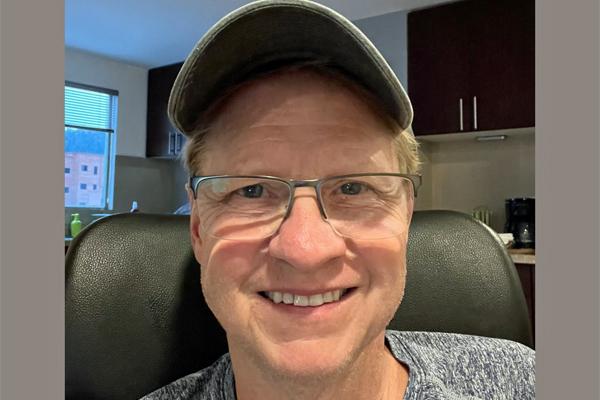
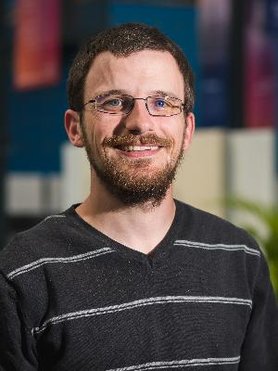
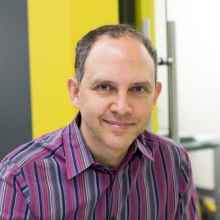
Yuriy Rogovchenko is a Professor in the Department of Mathematical Sciences at the University of Agder. His research spans differential equations, mathematical modeling, and education innovation, with applications in biology, social sciences, and engineering. Rogovchenko has contributed extensively to mathematics education through projects like PLATINUM (Erasmus+ Strategic Partnership) and CPEA-ST-2019/10067 (Eurasia project). PhD in differential equations (Institute of Mathematics, Kyiv, 1987) Regular Associate at Abdus Salam ICTP, Trieste (2004-2011) Editor for 11 international journals Referee for over 70 journals Research Interests: Qualitative theory of differential equations, perturbation methods, mathematical modeling in interdisciplinary contexts. He focuses on enhancing conceptual understanding through inquiry-based learning and nonstandard problems. Publications: Recent works include advancements in linear system observability, parameter identification methods, and educational studies on exact differential equations. His collaborations with Svitlana Rogovchenko and Matthias Pätzold highlight applications in engineering and biology. Awards: Sørlandet kompetansefonds research award (2016).
Brad D. Jokisch is a Professor and Undergraduate Chair in the Department of Geography at Ohio University’s College of Arts and Sciences. He is affiliated with International Studies and Latin American Studies, and his research focuses on population, environment, and development, particularly in Latin America. His work explores transnational migration, land-use change, and livelihoods in the Ecuadoran Andes. Education: Ph.D., Clark University, 1998 B.A., Augustana College, 1989 His research interests lie at the intersection of cultural/political ecology, population dynamics, agriculture, and development. He investigates how migration influences environmental change and how development shapes population movements, with a regional focus on Latin America. His fieldwork in the Ecuadoran Andes examines the impact of remittances and emigration on landscapes and rural communities. Recent publications highlight trends in transnational migration, land-use change, and development policy. His work spans interdisciplinary journals in geography, anthropology, and development studies, reflecting a strong emphasis on human-environment systems and migration. Key themes include remittances, land cover change, indigenous urbanization, and migration policy in South America. Scientific Awards: Fulbright Scholarship (2023–2024) for research on family emigration in southern Ecuador Dr. Jokisch advises undergraduate students as chair and teaches core courses such as Population Geography, Geography of Latin America, and Agricultural Ecosystems. While specific grant details and advisees are not listed, his sustained research output and leadership in the department suggest active mentorship and scholarly engagement. He is currently conducting research in Ecuador under a Fulbright award, indicating ongoing international collaboration and field-based inquiry. He is a key contributor to human-environment geography and migration studies, with a long-standing commitment to theoretical and empirical research in Latin America.
Dr. Louise Alexander is an Associate Professor in Mental Health Nursing at Deakin University's School of Nursing & Midwifery (Faculty of Health). She holds prior academic roles including Senior Lecturer (ACU, 2018–2023) and Lecturer positions (ACU and Holmesglen Institute). Her research focuses on mental health nursing workforce sustainability, stigma reduction, simulation-based education, and curriculum development. Key interests include nurse resilience, pandemic impacts on healthcare workers, and improving student attitudes towards mental illness. Education: PhD from Deakin University; GCHE qualification Certifications: University of Melbourne's Emerging Leaders & Management Program (2021–2022) Teaching: Leads courses in forensic mental health, therapeutic communication, and health promotion Research Highlights: Recent work examines pandemic trauma among nurses, alcohol consumption trends post-COVID, and leadership's role in workforce retention. Her studies emphasize qualitative methods and integrative reviews to address systemic challenges in mental health nursing education and practice. Awards/Grants: No explicit awards listed; research supported by institutional collaborations. Active in developing transition-to-practice programs and evaluating simulation-based training efficacy. Labs/Teams: Collaborates with interdisciplinary teams on mental health workforce resilience and stigma reduction initiatives. Engages in national and international nursing education networks.
Lucien Castaing-Taylor is the John Cowles Professor of Art and Anthropology at Harvard University and Director of the Sensory Ethnography Lab (SEL), currently on leave for Fall 2025. His work bridges anthropology and artistic practice through sensory ethnography, engaging critically with ecological crises and political challenges while maintaining an ethnographic commitment to lived experience. His research spans sensory ethnography, phenomenology, media anthropology, and post-human/multi-species relations, with deep engagement in cultural and political ecology across the Franco-Creole Caribbean, Europe, and American West. Castaing-Taylor interrogates intellectual history and reason while developing methodologies that merge artistic negative capability with ethnographic rigor to capture life's flux without imposing conventional narrative structures. Castaing-Taylor's creative output demonstrates a consistent trajectory from early works like In and Out of Africa (1992) to recent projects such as De Humani Corporis Fabrica (2022), evolving from representational ethnography toward immersive sensory experiences. His filmography and installations increasingly address the Anthropocene, human-animal relations, and embodied knowledge through experimental audiovisual techniques that challenge documentary conventions and expand ethnographic possibilities. His major awards include: Alpert Award in the Arts (2013) True Vision Award (2013) Los Angeles Film Critics' Circle Douglas Edwards Independent and Experimental Film Award (2012) FIPRESCI Award (2012) As Director of the SEL, Castaing-Taylor cultivates a collaborative environment where anthropology converges with experimental filmmaking and installation art. The lab functions as an incubator for boundary-pushing audiovisual research that engages with urgent planetary issues through sensory immersion, fostering new modes of ethnographic inquiry that transcend traditional academic publishing.
Heidi R. Lewis is the David and Lucile Packard Professor of Feminist & Gender Studies at Colorado College. She serves as President of the National Women's Studies Association (2023-25) and Editor-in-Chief of the Oxford Bibliography in Women's & Gender Studies. Her research focuses on Black Feminisms, Hip Hop discourse, and Critical Media Studies, with a current project challenging narratives around Mumble Rap's authenticity. Lewis holds a Ph.D. in American Studies from Purdue University and has taught interdisciplinary courses including Hip Hop & Feminism and Critical Media Studies. Education: Ph.D., American Studies, Purdue University (2011) M.A., English Literature, Ohio University (2005) B.A., English Studies, Robert Morris University (2003) Research Interests: Lewis interrogates intersections of race, gender, and media through projects like her forthcoming book on Mumble Rap and a documentary on her experiences during the crack cocaine epidemic. She employs discourse analysis to challenge dominant narratives in Hip Hop and feminist theory, emphasizing marginalized voices and transnational collaborations. Service & Leadership: As Director of Feminist & Gender Studies, Lewis secured funding for new faculty lines, student programs, and community partnerships. Nationally, she co-created the #FemSTEMSymposium to bridge feminist inquiry and STEM fields. Her service prioritizes equity, including roles on promotion committees and external reviews for academic centers. Community Engagement: Lewis collaborates with organizations like the Kampagne für Opfer Rassistischer Polizeigewalt and the U.S. Olympic Committee. Her work extends beyond academia through public talks, media contributions, and initiatives like the Marsha P. Johnson Professorship.
Benjamin Yelle serves as a Teaching Professor in the Department of Philosophy and Religion at Northeastern University's College of Social Sciences and Humanities, specializing in ethical theory and practical moral dilemmas. He earned his PhD in Applied Ethics from the University of Miami in 2014, establishing his scholarly foundation in value theory and practical ethics. Yelle's research program integrates normative ethics —where he pioneers a subjectivist theory of well-being reconciling personal valuation with objective constraints—and applied ethics with focus on bioethical challenges in neurological degeneration. His scholarship extends to philosophy of technology , examining ethical implications of biotechnology, information systems, and virtual reality through courses like PHIL 1145. He also investigates happiness's normative role in conceptions of the good life, creating interdisciplinary connections between ancient eudaimonism and contemporary ethical frameworks. As an active member of Northeastern's Ethics Institute, Yelle contributes to collaborative research initiatives while maintaining teaching responsibilities in undergraduate ethics education. His professional network includes departmental colleagues across philosophy and religious studies, supporting a robust academic environment for ethical inquiry.
Jacky Bourgeois is an Assistant Professor of Data-Centric Design at Delft University of Technology's Faculty of Industrial Design Engineering (IDE), leading the Data-Centric Delft Design Lab. His work bridges Human-Computer Interaction, Data Science, and Participatory Design, focusing on methods like data donation to empower collaborative data exploration. He holds a computer science background, previously researching ubiquitous technologies for domestic energy practices of 'energy farmers' (solar households). Key projects include the PROMISE study on patient-led oncological care and the Data Donation initiative promoting ethical data practices. Education: Background in Computer Science; academic focus on sustainable design engineering and IoT. Teaching includes courses like 'Data-Centric Design for...' (2024) and 'Digital Product Development' (2023). Research Interests: Data as subjective inquiry material, data intimacy, data commons, and human-data interaction in home contexts. Notable contributions include PAIRcolator for collaborative data reflection and Tangi for 360° video insights. Awards include Best Paper at CHI 2025 and DIS '24 Best Paper. Grants & Collaborations: NWO-funded research on hospital sounds (2024), IoT Rapid Proto Labs for industry-academia partnerships, and ancillary role as a scientific employee at The Open University (2025–2027). Labs & Teams: Director of the Data-Centric Delft Design Lab; collaborates with the HCI Data & Design SIG. Current projects address ethical frameworks for data donation and patient-centered healthcare systems.
Kelly D Palmer is an Assistant Professor in the History, Geography and Legal Studies Department at The University of Tampa, within the College of Social Sciences Mathematics and Education. Her academic focus centers on modern European history, with particular expertise in French history, the Holocaust, and World War II humanitarian efforts. Her educational background includes: B.A. from Michigan State University (1991) M.A. from Korbel School of International Studies at the University of Denver (2002) Ph.D. from Michigan State University (2010) Professor Palmer's research delves into the history of modern Europe, with a concentration on France, the Holocaust, and European postwar historical memory. She is currently completing an article on the American Friends Service Committee and Jewish rescue in World War II France, and another on Roswell McClelland's work with the American Friends Service Committee and War Refugee Board. Her upcoming project examines women humanitarian workers in the American Friends Service Committee during WWII. Her teaching covers World History from 1500, the Holocaust, Twentieth-Century Europe, and other European history courses. Her notable scientific awards and grants include: Chosen as a university-wide applicant for the 2023 National Endowment of the Humanities Summer Stipends Program Pollock Research Grant (2021) Grant from the Undergraduate Research and Inquiry Committee for an inquiry-based course (2020) College of Social Sciences Mathematics and Education Award for Outstanding Teacher (2018-2019) UCDALI Professional Development Grant (Spring 2016) CU Online Course Development Grant (Fall 2015) Nominee for College of Arts and Letters at the University of Colorado of Denver, Teaching Excellence Award (2013-2014) Dissertation Completion Fellowship, College of Social Science, Michigan State University (2010) Kussy Scholarship for Study of the Holocaust, James Madison College, Michigan State University (2008) International Studies Program Pre-dissertation Research Fellowship, International Studies Program, Michigan State University (2007) Muelder-Lowe Graduate Award, Department of History, Michigan State University (2007) Summer Research Enhancement Fellowship, Department of History, Michigan State University (2007) Summer Research Fellowship, Department of History, Michigan State University (2006) Summer Research Language Fellowship, Department of History, Michigan State University (2005) Somers Award for Excellence and Creativity in Teaching, Center for Integrative Studies in the Arts and Humanities, Michigan State University (2005) Recruitment Fellowship, Department of History, Michigan State University (2003-2004) Professor Palmer has secured significant grant funding for her research and teaching. Notable grants include: Pollock Research Grant (2021) for her research on WWII humanitarian efforts. Undergraduate Research and Inquiry Committee Grant (2020) for an inquiry-based course. UCDALI Professional Development Grant (2016) CU Online Course Development Grant (2015) She also mentors students through an internship program with the Florida Holocaust Museum, facilitating student placements and collaborative educational events. Professor Palmer collaborates closely with the Florida Holocaust Museum, where she has developed an internship program for students and co-organizes speaker events and educational activities. This partnership serves as a key platform for her students' experiential learning and community engagement.
Claire Battershill is an Assistant Professor jointly appointed in the Faculty of Information and the Department of English at the University of Toronto. She holds a PhD from the University of Toronto and a BA (Hons) from the University of Oxford. Her research focuses on the history and future of the book, with a particular emphasis on feminist experimental publishing, literary aesthetics, and 20th/21st-century publishing practices. She is Co-Director of the Modernist Archives Publishing Project (MAPP), a critical digital archive of early 20th-century publishers’ records, and Co-Creator of the SSHRC-funded 'Make Believe' research-creation project. Her publications include Women and Letterpress Printing: Gendered Impressions (2022) and Using Digital Humanities in the Classroom (2022). Dr. Battershill has held prestigious roles such as Wendy M. Cecil Professor in VicOne at Victoria College and Fellow of the Royal Historical Society. She has secured grants including the SSHRC Impact Award (2017) and funding from the Canada Council for the Arts. Her teaching spans courses like INF2228H (The Future of Things: Digitization and Remediation) and BKS1002H (Book History in Practice), blending theory with hands-on engagement in digital humanities and book studies. Her research interests span digital humanities pedagogy, collaborative publishing projects, and the intersection of feminist theory with material book culture. She actively contributes to interdisciplinary initiatives like the Critical Digital Humanities Initiative (CDHI) at the University of Toronto.
Nicholas Wiltsher is an Associate Professor at the Department of Philosophy; Aesthetics at Uppsala University since 2019. His research focuses on aesthetics, philosophy of mind, and race/gender studies, exploring topics like imagination's role in art, gender norms in aesthetics, and electronic dance music's philosophical dimensions. He holds a PhD from the University of Miami and has held academic roles at institutions including Antwerp, Auburn, Porto Alegre, and Leeds. Education: PhD in Philosophy from the University of Miami. Previous affiliations include universities in Antwerp, Auburn, Porto Alegre, and Leeds. Research interests include: the interplay between art and imagination, aesthetic norms and gender, expression theory, philosophy of race and gender, and electronic dance music aesthetics. He critiques traditional disciplinary boundaries in aesthetics and advocates for interdisciplinary approaches. His recent publications (2023–2025) emphasize imagination's epistemic role, the aesthetic constitution of gender identities, and critiques of additive imagination theories. Earlier work (2016–2019) addressed electronic dance music's cultural ontology and Collingwood's expression theory. Awards: No scientific awards explicitly listed. Grants and advising: No grants or student advisees explicitly mentioned in sources. Labs/Teams: No specific research groups or labs mentioned, though his work engages interdisciplinary collaborations in aesthetics and cultural philosophy.
Roger Luckhurst is Professor of Modern Literature and currently holds the prestigious Geoffrey Tillotson Chair of Nineteenth Century Studies at Birkbeck College, University of London. A leading scholar in Gothic literature, science fiction, and trauma studies, he has been affiliated with Birkbeck for over 25 years, contributing significantly to interdisciplinary literary and cultural studies. Education and Career Trajectory: 2020-present: Geoffrey Tillotson Chair of Nineteenth Century Studies, Birkbeck College 2008-2020: Professor of Modern and Contemporary Literature, Birkbeck College 2004-2008: Senior Lecturer, Birkbeck College 1994-2004: Lecturer, Birkbeck College 1992-1994: Lecturer, University of Hull Research Interests and Scholarly Contributions: Luckhurst's research spans multiple interconnected fields, establishing him as a preeminent voice in literary and cultural studies. His work on late 19th century English literature examines the intersections of Victorian culture with emerging scientific discourses. His expertise in science fiction studies encompasses both literary analysis and cultural theory, exploring how speculative fiction reflects and shapes contemporary anxieties. In Gothic studies , he investigates the persistence of Gothic aesthetics and themes across different media and historical periods. His groundbreaking work in trauma studies has contributed significantly to understanding how literature and culture process collective trauma. Publications and Scholarly Impact: His extensive publication record demonstrates a remarkable breadth of scholarly inquiry. From his early work on J.G. Ballard to his recent comprehensive study of Gothic culture, Luckhurst has consistently produced influential scholarship. His books have been translated into multiple languages including French, Japanese, Turkish, and German, indicating significant international impact. His forthcoming The Gothic: An Illustrated History (2021) promises to be a definitive work in the field. Honors and Awards: 2009: Visiting Research Fellow, University of Birmingham 2009: Visiting Research Fellow, Flemish Academic Centre for Science and the Arts (VLAC), Brussels January-June 2011: AHRC Fellowship, Birkbeck College Spring 2016: Mellon Distinguished Visiting Professor, Department of English, Columbia University, New York Public Engagement and Media Presence: Beyond academia, Luckhurst has demonstrated exceptional commitment to public scholarship. He has served as a broadcaster for BBC radio, bringing literary criticism to wider audiences. His journalism has appeared in leading British newspapers, bridging the gap between academic research and public discourse. This dual role as academic and public intellectual exemplifies Birkbeck's tradition of making scholarship accessible to broader communities. Interdisciplinary Approach and Institutional Contributions: At Birkbeck College, Luckhurst has been instrumental in fostering the institution's renowned culture of interdisciplinary studies. His work seamlessly integrates literary analysis with cultural theory, film studies, architectural history, and scientific discourse. This approach has influenced generations of students and scholars, establishing Birkbeck as a leading center for innovative literary and cultural research.
Felicity McArdle is a Professor in the Department of Early Childhood Education within the Faculty of Education at Queensland University of Technology. With a distinguished career spanning over two decades, her work centers on reimagining early childhood pedagogy through critical lenses of social justice, art education, and play-based learning. Her research has significantly influenced Australian early childhood policy and practice. McArdle's research interests demonstrate a consistent commitment to transformative education. She critically examines how art and play function as vehicles for social justice, challenging neoliberal discourses in early childhood education. Her work on refugee children's artistic expression and anti-bias curriculum development reveals her dedication to equity-oriented pedagogy. Through collaborative drawing methodologies and visual research approaches, she has pioneered innovative ways of understanding children's perspectives. Her publication trends reveal a sophisticated evolution from foundational work on visual arts in education (2001-2010) toward increasingly critical examinations of power, policy, and social justice (2011-2021). The consistent citation impact of her work—particularly her 2002 paper 'Early Childhood Art Education: A Palimpsest' with over 13,000 citations—demonstrates her field-defining contributions to reconceptualizing art education as critical praxis. McArdle has held significant editorial roles including co-editing the influential 2013 volume 'Young Children, Pedagogy and the Arts' and serving on the editorial board of Australian Journal of Early Childhood. Her collaborations with leading scholars like Susan Grieshaber, Jennifer Sumsion, and Linda Knight have produced seminal work on intentional teaching and play-based learning. Her research methodology expertise centers on visual and arts-based approaches, particularly collaborative drawing techniques that engage children as active research participants. This methodological innovation reflects her commitment to ethical research practices that honor children's agency while generating meaningful insights about early childhood experiences.
Adam Wickberg is a researcher in the Division of History of Science, Technology and Environment at KTH Royal Institute of Technology in Stockholm. He serves as co-director of the VR Excellence Centre for Anthropocene History and deputy director of the KTH Environmental Humanities Lab . His work critically examines the intersections of digitalization, sustainability , and the Anthropocene , focusing on their social, political, and historical dimensions. He leads the research project The Mediated Planet: Claiming data for environmental SDGs and has held visiting positions at the Max Planck Institute for the History of Science in Berlin. Education : Not explicitly stated His research spans media studies, environmental history, critical data studies , and postcolonial science and technology studies . Key themes include: Digital twins and marine futures AI ethics for climate justice Colonial histories of environmental data Temporal dimensions of Anthropocene governance Environing media as epistemological tools Planetary datafication systems Recent publications explore how data infrastructures shape environmental governance and how historical media practices inform contemporary sustainability challenges. He has contributed to journals like New Media and Society , Nature , and Critical Inquiry , while engaging in public debates through op-eds in Dagens Nyheter and Aftonbladet . Teaching : Courses include Artificial Intelligence and Sustainable Development (AK122V), Environmental History (AK2210), and The Anthropocene (AK126V). Labs/Teams : Leads the Environmental Humanities Lab and collaborates with the WASP-HS Community .
Paulo Blikstein serves as Associate Professor of Communications, Media and Learning Technology Design at Columbia University. Previously, he was Assistant Professor of Education and (by courtesy) Computer Science at Stanford University and co-founded the Lemann Center for Brazilian Education (2008-2018). Education: Ph.D. in Learning Sciences, Northwestern University (2009) M.A. in Media Arts & Sciences, MIT Media Lab (2002) M.Eng. in Electronic Engineering, University of São Paulo (2000) B.S. in Metallurgical Engineering, University of São Paulo (1998) His research pioneers constructionist learning environments through digital fabrication, educational robotics, and tangible interfaces—focusing on equitable access for underserved communities. Inspired by Paulo Freire and Seymour Papert, he develops open-source tools like the GoGo Board robotics platform and leads the global FabLab@School initiative establishing fabrication labs in schools across four continents. Current work emphasizes multimodal learning analytics to study student interactions in maker-centered classrooms. Publications reveal strong focus on democratizing invention through maker education, with recurring themes in constructionist theory application, multimodal assessment, and context-specific technology adaptation. Brazilian education reform and low-cost computational solutions form significant threads, particularly in 2016-2017 publications. Scientific Awards: Two Google Faculty Awards National Science Foundation Early Career Award (highest U.S. government honor for early-career scientists) Blikstein directs the Transformative Learning Technologies Lab (TLTL) and co-founded Stanford's Center for Educational Entrepreneurship and Innovation in Brazil. His FabLearn conference established the first academic forum on Maker Movement applications in education. While specific grant details aren't listed, the NSF CAREER Award signifies major federal research funding. He spearheads the FabLab@School project deploying advanced fabrication labs in K-12 institutions worldwide and founded the FabLearn conference series. His work integrates teams of engineers, educators, and designers to create scalable solutions for resource-constrained learning environments.
Dr. Pedro Nava is an Associate Professor and Director of Educational Leadership in the School of Education and Counseling Psychology at Santa Clara University. His scholarship centers on educational equity for Chicanx/Latinx and immigrant communities, combining critical race theory, participatory action research, and community-engaged methodologies. Education Ph.D. in Urban Schooling – University of California, Los Angeles, 2012 Ed.M. in Administration, Planning, and Social Policy – Harvard University, 2003 B.A. – California State University, Fresno, 1996 Research Interests Dr. Nava’s research interrogates systemic inequalities in urban and rural schooling, emphasizing critical pedagogy and critical race theory . He investigates how immigration status intersects with educational opportunity, and he collaborates with families and communities to co-construct transformative practices through participatory action research . His work also explores family-school-community engagement , leveraging community cultural wealth frameworks to amplify migrant and undocumented voices in educational policy and practice. Publication Trajectory Across more than two decades, Dr. Nava’s publications trace the evolution of critical scholarship in education. Early works examine institutional barriers for Chicano students, while recent studies integrate quantitative ethnography and testimonio methodologies to illuminate intersectional experiences of Latinx youth, undocumented graduate students, and farmworker families. Scientific & Community Awards No formal awards are enumerated in the provided text. Advising & Grants While specific grants and advisees are not listed, Dr. Nava’s leadership role as Director of Educational Leadership implies extensive mentoring of master’s and doctoral students, as well as oversight of grant-funded initiatives that advance equity-focused leadership preparation. Labs, Teams & Centers Dr. Nava directs the Educational Leadership programs within the School of Education and Counseling Psychology, fostering interdisciplinary collaboration and community-engaged research teams that partner with local schools, nonprofits, and migrant organizations.