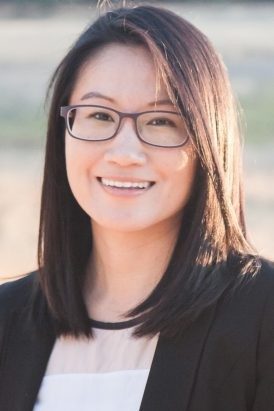
Jennifer C. Hsieh is an Assistant Professor of Anthropology at the University of Michigan, affiliated with the Lieberthal-Rogel Center for Chinese Studies. Her research investigates sensory practices in institutional and technological settings, focusing on urban East Asia. She holds a PhD from Stanford University (2017), MA from Columbia University (2009), and BA from Harvard College (2007, magna cum laude). Her interdisciplinary work combines ethnography, history, and experimental methods (e.g., audio recordings, GIS) to explore multisensory social configurations. Her current book project, From Festival to Decibel: Making Noise in Urban Taiwan , examines how noise becomes a regulatory object entangled with citizenship and geopolitical belonging. She has held fellowships at institutions including the Max Planck Institute for the History of Science and Harvard’s Fairbank Center. Research interests include sensory studies, science/technology studies, urban environments, and East Asian cultural politics. She founded the Sensory & Technology Lab to explore creative anthropological methods, hosting events like the Voices of the Rainforest cinema concert with Steven Feld. Awards: SSRC International Dissertation Fellowship, Wenner-Gren Fieldwork Award Teaching: Courses on sound, music, and noise; emphasizes experimental methods and sensory ethnography. Lab: Sensory & Technology Lab fosters collaborative research in film, music, and media.
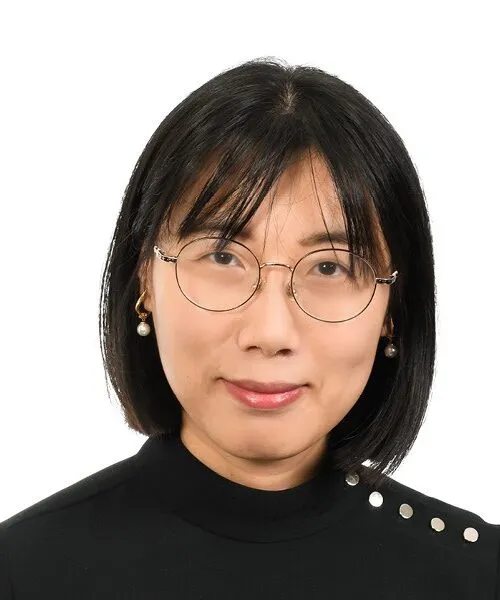
Kerry Fang is an Associate Professor in the Department of Urban & Regional Planning at the University of Illinois Urbana-Champaign. Her research focuses on economic development, land use policy, and their socio-environmental consequences, with interdisciplinary methods spanning economics, statistics, geography, sociology, and computer science. She examines global contexts including the U.S., China, Australia, and Russia. Education: PhD, Urban and Regional Planning and Design, University of Maryland, College Park (2018) MA, Land Management, Zhejiang University (2013) BA, Land Management, Zhejiang University (2011) Research Interests: Corruption in economic development projects Land use programs for coastal resilience Text-mining of planning literature Her work bridges theory and practice, addressing questions like regional inequality and policy efficacy in job creation and innovation. Her recent articles explore topics such as communication networks in development projects, minority-owned business data utilization, and integrating urban data science into economic development curricula. These contributions highlight interdisciplinary approaches to urban challenges. No scientific awards were explicitly mentioned in the provided text. Teaching and Advising: Teaches courses like UP 545: Economic Development Policy and Land Use and Environmental Planning. She advises students on topics intersecting economic development and spatial policy, though specific advisee names are not listed. Labs/Teams: No specific lab or team affiliations were detailed, though her work likely involves collaborations with interdisciplinary research groups.
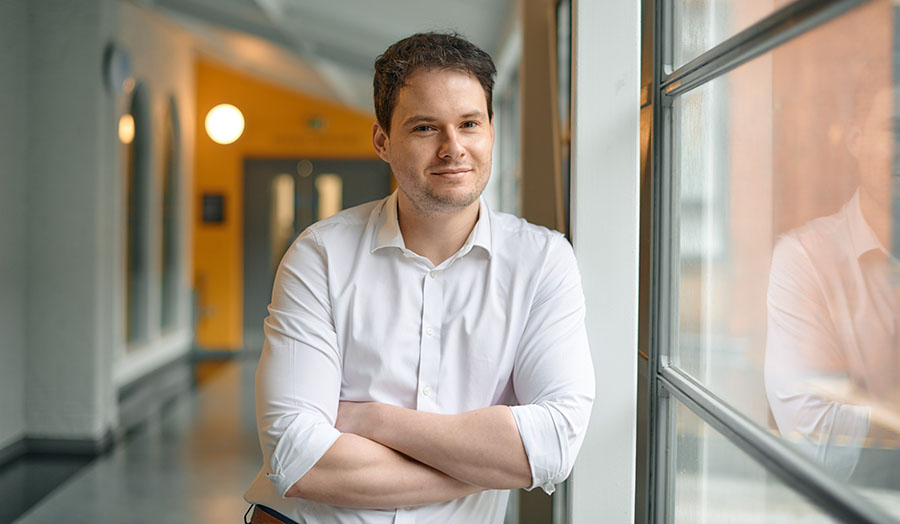
Roel Leus is a full professor at KU Leuven's Faculty of Economics and Business (FEB), part of the Operations Research and Statistics Research Group (ORSTAT). He holds roles such as Program Director for the Business Engineering programs and Chairman of the KU Leuven Advisory Committee for the Chinese Region. He earned his PhD in Applied Economics from KU Leuven in 2003, focusing on project planning under uncertainty. His research emphasizes operations research and management, particularly scheduling, project planning, and decision-making under uncertainty. Education: PhD in Applied Economics (KU Leuven, 2003); Master's in Business Engineering (Handelsingenieur, KU Leuven, 1998). He has held academic positions since 2003, including adjunct professorships at Beijing Jiaotong University. His administrative roles include heading ORSTAT research group (2012–2016) and program directorships. Research Interests: Sequencing and scheduling, project planning under uncertainty, discrete optimization, and practical quantitative decision support. He has supervised 12 graduated PhD students as primary supervisor and contributed to numerous publications in top journals like INFORMS Journal on Computing and European Journal of Operational Research. Teaching: Courses include 'Introduction to Operations Research,' 'Operations Research,' and 'Applications of Operations Research.' He coordinates master's theses in Data Science and Business Analytics, focusing on practical optimization problems. Grants and Projects: Acquired over €2 million in research funding from private companies, the National Bank of Belgium, and KU Leuven. His work spans satellite scheduling, supply chain management, and cross-docking logistics. Labs/Teams: Active in ORSTAT, collaborating on projects like drone-assisted delivery and robust scheduling algorithms. His research bridges theoretical advancements with real-world applications in logistics, manufacturing, and aerospace.
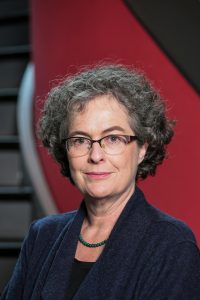
Sabine Süsstrunk is a Full Professor and Director of the Images and Visual Representation Laboratory (IVRL) at EPFL's School of Computer and Communication Sciences. She holds a BS in Scientific Photography from ETH Zürich, MS from Rochester Institute of Technology, and PhD from University of East Anglia. Her career includes positions at Hewlett-Packard Labs and Corbis Corporation. Her research explores computational imaging, computational photography, color processing, computer vision, and image quality. Key interests include near-infrared applications, multispectral imaging, and computational aesthetics. Her work bridges hardware and software solutions for imaging challenges. Publications demonstrate consistent focus on advancing generative models (diffusion models, neural cellular automata), 3D reconstruction (NeRF variants), and media integrity (DeepFake detection). Recent trends show increased emphasis on 3D vision, robustness in generative AI, and video analysis. Awards & Honors: IS&T/SPIE Electronic Imaging Scientist of the Year (2013) Raymond C. Bowman Teaching Award (2018) EPFL AGEPoly IC Polysphere Award (2020) 8 Best Paper/Demo Awards Fellowships: IEEE, IS&T, ELLIS, AIIA She leads the IVRL lab and advises PhD candidates while serving as President of the Swiss Science Council. Research is supported through competitive grants and industry collaborations.
Paola Cristofori is an Associate Professor in the Department of Physical, Computer and Mathematical Sciences at the University of Modena and Reggio Emilia. Her research focuses on Algebraic Topology, Differential Geometry, and Manifold Theory, with contributions to PL topology, 4-manifolds, and combinatorial structures like crystallization theory. She teaches courses in Geometry, Linear Algebra, and Algebraic Topology for undergraduate and graduate programs in Mathematics, Civil Engineering, and Strategic Sciences. Her work emphasizes topological invariants, combinatorial methods in manifold classification, and applications of colored graphs. Key areas include trisections of 4-manifolds, Kirby diagrams, and G-degree theory. She collaborates extensively on projects involving geometric topology and computational topology tools. Dr. Cristofori’s teaching spans foundational topics in linear algebra, Euclidean geometry, and advanced algebraic topology, emphasizing rigorous proofs and practical applications. Her research is published in top journals and includes over 40 articles, reflecting her deep engagement with low-dimensional topology and geometric structures.
Dr. Mark Thompson is a Senior Lecturer in Psychology and Researcher of Sport Psychology at London Metropolitan University's School of Social Sciences and Professions. He holds a PhD from the University of Hull and is a Fellow of the Higher Education Academy (FHEA). His academic work bridges sport psychology, healthcare rehabilitation, and youth athlete development. Dr. Thompson's education includes a PhD in Psychology from the University of Hull. His research focuses on emotional processes in elite athletes, doping propensity in youth sports, and post-COVID-19 patient rehabilitation. Notable projects include NHS-funded studies on telerehabilitation and collaborations with the International Olympic Committee and World Anti-Doping Agency. Research Interests: Psychophysiological responses to stress in sports Emotional regulation strategies among athletes Anti-doping education and youth athlete behavior Telehealth applications in post-hospitalization recovery His publications emphasize qualitative methodologies, exploring topics like athlete performance under stress, doping prevention programs, and healthcare professional perspectives on self-management approaches. Awards: Fellow of the Higher Education Academy (FHEA). Dr. Thompson has delivered presentations at major conferences such as the American College of Sports Medicine and contributed to media discussions on doping in elite sport via LoveSport Radio. His teaching spans foundational psychology to advanced modules like cognition and behavior, often serving as module leader.
Darian Marie Totten is an Assistant Professor & Director of Classical Studies at McGill University's Department of History and Classical Studies. Her research focuses on Roman archaeology, environmental history, and the intersection of ancient and modern placemaking. She holds a PhD from Stanford University and specializes in Mediterranean regions from 2000 BCE to 600 CE. Education: PhD in Classics/Archaeology from Stanford University (thesis not specified). Research interests include Roman infrastructure, comparative imperial systems (e.g., Han China), urban resilience strategies, and the material culture of labor and exchange. She directs fieldwork at Salapia-Salpi in Apulia, Italy, exploring late antique urbanism and environmental adaptation. Her scholarship bridges archaeological material analysis with historical interpretation, emphasizing interdisciplinary approaches to ancient economies, landscapes, and cultural transitions. Recent work highlights cross-cultural comparisons between Rome and Han China, as well as the long-term dynamics of Mediterranean coastal settlements. Her publications consistently engage with methodological innovation in field archaeology, particularly in paleoenvironmental reconstruction and ceramic sourcing. She also critiques modern uses of Roman heritage in national identity formation, reflecting a commitment to critical archaeology. Current projects include ongoing excavations at Salapia, analysis of Apulian salt production networks, and investigations into late antique glass trade routes. She teaches courses on classical archaeology (CLAS 240) and specialized topics (CLAS 349).
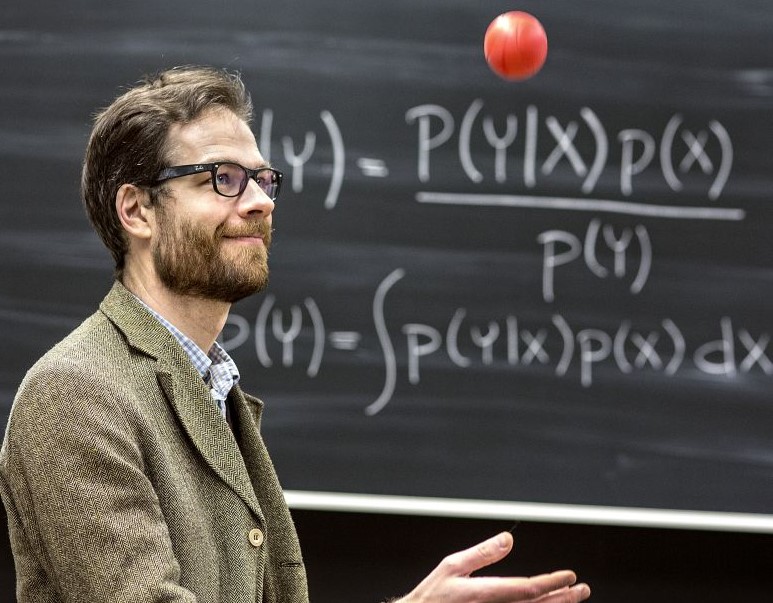
Carl Henrik Ek is a Professor of Statistical Learning at the Department of Computer Science and Technology (Computer Laboratory) at the University of Cambridge. He is also a fellow and Director of Studies at Pembroke College, and holds visiting positions at Karolinska Institute in Stockholm and the Royal Institute of Technology. He serves as co-Director for the UKRI AI Centre for Doctoral Training in Decision Making for Complex Systems, a collaboration between Cambridge and Manchester universities, and is involved with the Accelerate Program in the Computer Laboratory. Dr. Ek's educational background includes a MEng degree in Vehicle Engineering from the Royal Institute of Technology in Stockholm, followed by a PhD from Oxford Brookes University. During his PhD, he spent time at the University of Manchester and the University of Sheffield. His PhD supervisors were Professor Neil Lawrence and Professor Phil Torr, and his postdoctoral research was conducted at UC Berkeley with Professor Trevor Darrell and Professor Raquel Urtasun. Professor Ek's research focuses on statistical learning, particularly on developing data-efficient and interpretable machine learning methods. His work spans modeling and inference in machine learning, with special emphasis on Bayesian non-parametric methods and Gaussian processes. He explores how to specify assumptions that allow learning from small amounts of data, bridging theoretical foundations with practical applications in various domains. His recent publications demonstrate a strong trend toward applying machine learning to healthcare, drug discovery, and engineering design. There's significant work on Gaussian processes, reinforcement learning, and generative models, with applications ranging from medical diagnostics to structural engineering. His research shows an increasing interdisciplinary focus, connecting machine learning with fields like cardiology, pharmacology, and computational geometry. Professor Ek has received numerous teaching awards throughout his career: Pilkington Price for Teaching Excellence (2024) Teacher of the year in Computer Science at University of Bristol (2016) Docent in Machine Learning at Royal Institute of Technology (2016) Teacher of the year at Royal Institute of Technology, Sweden (2015) Teacher of the year from Student chapter in Industrial Economics at Royal Institute of Technology (2015) Teacher of the year in Computer Science at Royal Institute of Technology (2012) Professor Ek teaches Advanced Data Science, Advanced topics in machine learning, and Machine Learning and the Physical World. He has supervised PhD students throughout his career but is not currently accepting new PhD students for 2025/26 or 2026/27. His research is supported by various grants, including his role as co-Director of the UKRI AI Centre for Doctoral Training. He is an active member of the ml@cl research group at Cambridge and has previously been involved with research groups at University of Bristol and Royal Institute of Technology. His work connects with several interdisciplinary initiatives, particularly in healthcare AI and engineering applications of machine learning.
A.T. Charlie Johnson serves as the Rebecca W. Bushnell Professor of Physics and Astronomy at the University of Pennsylvania's School of Arts & Sciences, where he has been a standing faculty member since 1994. His research program focuses on nanoscale systems and has established him as a leading figure in condensed matter physics, earning recognition from major scientific societies. His educational foundation includes: Ph.D. in Physics from Harvard University (1990) B.S. in Physics from Stanford University (1984) Professor Johnson's research centers on the development and application of atomic-layer nanomaterials, particularly graphene and transition metal dichalcogenides , for fundamental studies of transport phenomena and practical biosensor applications. His group employs advanced nanofabrication techniques at Penn's Singh Center for Nanotechnology to create devices that leverage biological molecules for chemical recognition in disease diagnosis, security screening, and environmental monitoring. This work bridges condensed matter physics with biomedical engineering , yielding innovative solutions for real-world detection challenges. Analysis of his 2023-2025 publications reveals three dominant research thrusts: (1) scalable graphene-based biosensor development for medical diagnostics, (2) exploration of quantum phenomena like Klein tunneling in novel nanoelectromechanical systems, and (3) interdisciplinary applications spanning oncology, planetary science, and fetal medicine. His work consistently emphasizes materials synthesis , device integration , and practical translation of nanoscale phenomena. His scientific contributions have been recognized with prestigious honors: Defense Science Study Group Fellow (2018-2019) Fellow of the American Association for the Advancement of Science (2017) Fellow of the American Physical Society (2011) Lindback Foundation Award for Distinguished Teaching (2003) David and Lucille Packard Foundation Fellowship (1994-1999) As an educator, Professor Johnson has mentored numerous graduate students and postdoctoral researchers, with notable alumni like Michael Biercuk (founder of Q-CTRL). His research has been supported through significant leadership roles including Director of the Nano/Bio Interface Center (2014-2017) and Packard Fellowship funding, enabling sustained innovation in nanotechnology. His group actively collaborates across disciplines to advance both fundamental understanding and practical applications of nanomaterials. Based at the Singh Center for Nanotechnology, Johnson leads a dynamic research team utilizing state-of-the-art facilities for nanofabrication and characterization. His laboratory maintains strong campus collaborations through secondary appointments in Electrical and Systems Engineering and Materials Science and Engineering, fostering an interdisciplinary environment for developing next-generation nanoscale devices.
Associate Professor Samantha Schulz is a sociologist of education at The University of Adelaide's School of Education, within the Faculty of Arts, Business, Law and Economics. She specializes in educational justice, focusing on First Nations education, race critical theory, affect studies, and gender equity. Her work spans international contexts including Kenya, India, China, and Australia's APY Lands. She is co-convenor of the Pedagogies for Justice Research Group, affiliated with CRESI and the Fay Gale Centre for Research on Gender. As Program Director for the Master of Teaching program, she emphasizes socially engaged pedagogies. Recent research includes the ARC-funded 'Culturally Responsive Schooling' project (2022-24) and studies on gender-based violence in educational settings. Her publications explore decolonial methodologies, critical race theory, and the intersection of affect and pedagogy. Her grants include leadership roles in projects addressing Indigenous sovereignty in education, culturally responsive curriculum design, and restorative practices. Notable collaborations involve UniSA and Open University of Cyprus. She co-edits the Routledge 'Local Global Issues in Education' series and actively publishes on topics ranging from toxic masculinity in academia to anti-racist policy frameworks. Her advising focuses on fostering critical scholarship in Masters and PhD candidates, with research supervision emphasizing justice-oriented educational practices. She leads initiatives like 'Teaching in an era of digital influence' and has contributed to policy discussions on preventing violent extremism in schools. Her work bridges theoretical rigor with practical advocacy for marginalized communities in education systems globally.
Hong Huaqing is a Professor and doctoral supervisor at the Corpus Research Institute of Shanghai International Studies University. He holds roles as honorary director of the Chinese Corpus Linguistics Research Association and international expert at Peking University's Education Development Center. Formerly, he worked at Nanyang Technological University (Singapore) in roles such as researcher at the Learning Research and Development Center and director of the e-Learning Center of the Lee Kong Chian School of Medicine. His research spans machine translation, natural language processing, corpus linguistics, and educational technology. He supervises master's and doctoral students, co-supervises postdoctoral researchers, and focuses on smart education driven by big data analysis and innovative learning ecosystems. Research emphasizes corpus-based methods applied to language education, including computational frameworks for student engagement, wearable sensors in learning analytics, and cross-linguistic rhetoric studies. His work bridges technological innovation (e.g., AI-driven tutorial systems) with pedagogical practice, addressing challenges in non-English language education and teacher training.
Finbarr Barry Flood is the William R. Kenan, Jr., Professor of the Humanities and Founder-Director of the Silsila: Center for Material Histories at NYU's Institute of Fine Arts. He holds a Ph.D. in Islamic Art History from the University of Edinburgh (1993) and a B.A. in Archaeology from Trinity College Dublin (1988). His research focuses on Islamic art and architecture, cross-cultural material culture, and art historical methodologies. Notably, he has held prestigious fellowships such as the Slade Professorship at Oxford and ACLS Collaborative Research Fellowship. His work bridges global art histories, examining topics like medieval Hindu-Muslim encounters, iconoclasm, and the materiality of religious artifacts. Flood’s scholarly contributions include seminal books like Objects of Translation and The Great Mosque of Damascus . His awards reflect both academic excellence and teaching prowess, including NYU's Golden Dozen Award. As director of Silsila, he leads interdisciplinary research into material histories, fostering collaborations across disciplines and regions. His publications span 40+ years, addressing themes from medieval art technologies to modern reinterpretations of Islamic aesthetics.
H. Gerald Campano is a Professor in the Learning, Teaching, and Literacies Division at the University of Pennsylvania's Graduate School of Education (Penn GSE). He holds ancestral roots in the Philippines and has a decade-long career as a public-school teacher, earning district awards and recognition as a Carnegie Scholar. His work focuses on literacy education, critical ethnic studies, and community-based research methodologies emphasizing participatory approaches and educational justice. Campano leads a research-practice partnership with a South Philadelphia faith-based organization, supported by grants from the Spencer Foundation and the American Educational Research Association. This partnership involves families from diverse backgrounds addressing social inequities and co-creating visions of educational justice. He also collaborates with the University of Guadalajara on transnational literacy education initiatives. Campano has co-edited Research in the Teaching of English and served as president of the National Council of Research on Language and Literacy (NCRLL). His research emphasizes 'epistemic rights,' prioritizing community voices in inquiry. Awards include the David H. Russell Award (2009, 2018), Edward B. Fry Book Award (2017), and a Spencer Mentor Award (2021). Over 35 doctoral dissertations have been directed under his mentorship. Recent projects highlight his focus on community-based research, as seen in his 2024 book Methods for Community-Based Research , which advocates for ethical collaborations and equitable educational arrangements. Campano’s work bridges academia and practice, advocating for marginalized communities’ agency in shaping educational policies.
Amanda Berry is a Professor of STEM Education and Deputy Dean (Research & Innovation) in the School of Education at RMIT University, Australia. Her research focuses on science education, teacher education, and methodologies for capturing classroom practices. She leads initiatives to develop tools for representing teachers' pedagogical expertise and has contributed to frameworks like the refined consensus model of pedagogical content knowledge (PCK). Her work emphasizes teacher professional development, particularly for highly accomplished educators, and explores adaptive expertise in interdisciplinary teaching. She actively supervises postgraduate research students and collaborates internationally on projects like the Sharing Knowledge Project in inquiry-based teaching. Key research themes include STEM integration, teacher educator professionalism, and the role of student voice in assessment reform. Her interdisciplinary approaches bridge theory and practice, influencing both policy and classroom strategies in science and mathematics education.
Hakan Sandal-Wilson is an Assistant Professor of Gender, Peace and Security at the Department of Gender Studies, London School of Economics and Political Science. His research critically examines intersections of gender, sexuality, ethnicity, religion, and conflict in the Middle East, particularly focusing on Kurdish queer/LGBTIQ+ politics and diasporic movements. He is also invested in creative-critical interdisciplinary research methods, co-editing a volume on politically engaged methodologies. Previously, he served at the University of Cambridge as a Teaching Associate and Affiliated Lecturer, and as Campaigns Officer for Amnesty UK’s LGBTI Network. Education : - PhD, University of Cambridge Centre for Gender Studies - MA in Cultural Studies, Istanbul Bilgi University Research Interests : - Queer Studies in Conflict Zones - Kurdish Social Movements - Diasporic Feminist and Queer Activism - Ethnography and Creative Writing Methodologies Publications Trends : His work bridges theoretical inquiries with activism, emphasizing marginalized queer voices in conflict-affected regions. Recent projects include monographs on Kurdish queer politics and co-edited collections on creative-critical interventions for social justice. Awards & Grants : No awards explicitly mentioned, but his work has been translated into multiple languages and featured in outlets such as openDemocracy and Jadaliyya. Advising & Mentorship : No listed advisees, but directs LSE’s MSc Gender and MSc Gender (Research) programmes, teaching courses like GI402 (Gender, Knowledge & Research Practice) and GI413 (Gender, Race & Militarisation). Labs & Collaborations : Co-convened 'Creaction' interdisciplinary workshops at UCL, fostering global creative-critical social justice research.