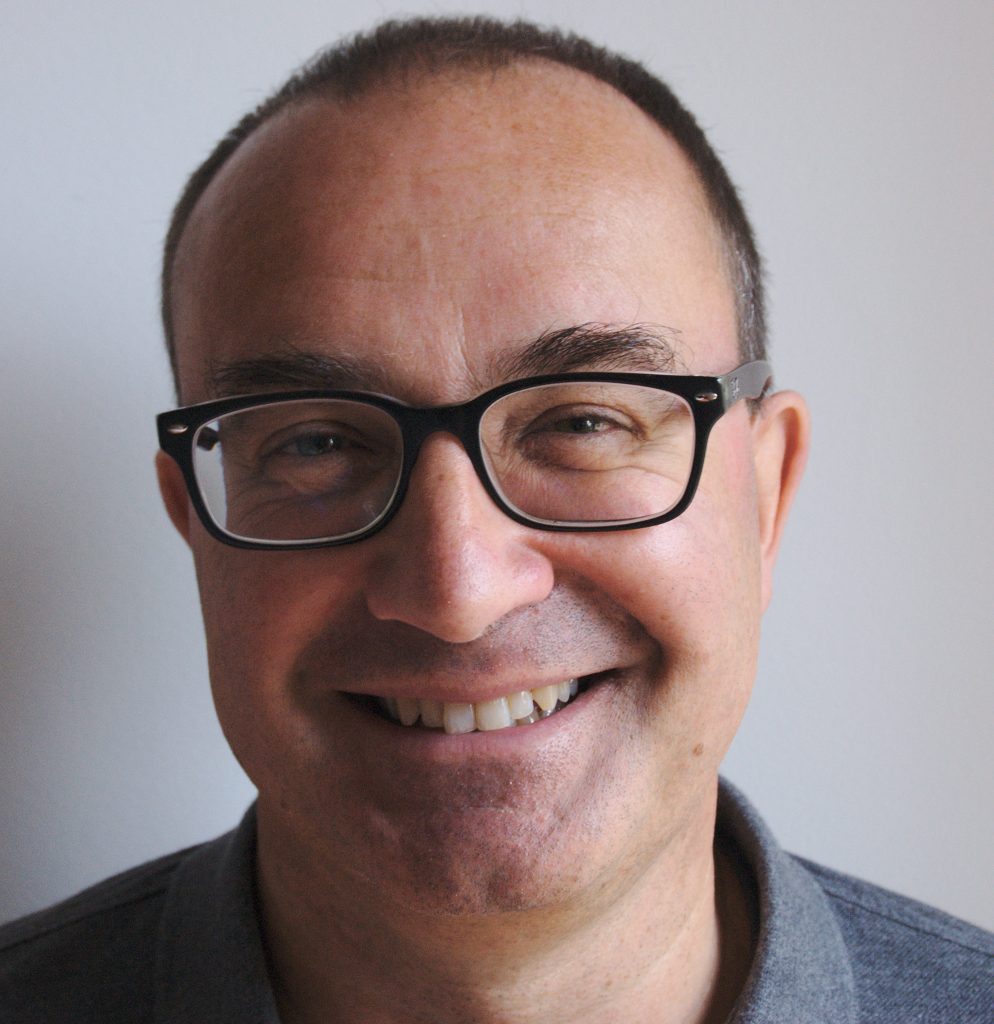
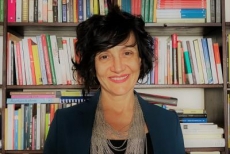
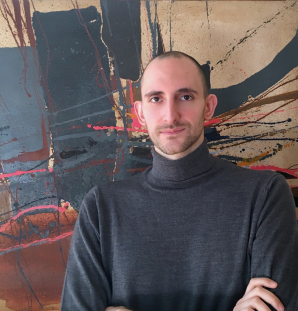
Barbara Caputo is a Full Professor at Politecnico di Torino, leading the VANDAL Laboratory and directing the AI@PoliTo Interdepartmental Lab. She holds a double affiliation with the Italian Institute of Technology (IIT) and has held roles at Idiap-EPFL and Sapienza University. Her research focuses on AI, computer vision, domain adaptation, and federated learning. She contributes to national AI policy, including the Italian Strategy on AI and the National PhD on AI for Industry 4.0. She is an ERC Laureate and ELLIS Fellow, co-founding ELLIS society. Her work spans visual place recognition, action recognition, and cross-domain learning. Education: PhD in Computer Science from KTH Royal Institute of Technology (2005). Major roles include Rector’s Advisor on AI at PoliTo, Board Member of ELLIS, and coordinator of the AI & Industry 4.0 vertical in the National PhD program. Awards include ERC Laureate (2017), ELLIS Fellow (2019), and Inspiring Fifty Italy (2018). Her research emphasizes federated learning, domain adaptation, and AI ethics. Recent articles explore domain generalization, resource-efficient federated models, and AI-environment interactions. She collaborates with institutions like MUR, CNR, and the European Commission on AI policy and tech initiatives.
Michele Zorzi is a Professor of Telecommunications at the School of Engineering, University of Padova, Italy, where he has held a faculty position since 2003. He leads the SIGNET (Signal processing and Networking) Research Group, focusing on cutting-edge wireless networking challenges including mmWave communications and underwater networks. His extensive publication record exceeds 600 papers in top-tier journals and conferences, reflecting significant contributions to the field through both theoretical and experimental work. He received his Laurea Degree (1990) and Ph.D. (1994) in Electrical Engineering from the University of Padova. Prior academic appointments include Politecnico di Milano (1993-1996), University of California San Diego (1995-1998), and University of Ferrara (1998-2003), where he progressed from Associate Professor to full Professor. His educational trajectory demonstrates deep roots in Italian academia with international exposure. Professor Zorzi's research spans wireless communications and networking, with current emphases on mmWave networking for vehicular systems, underwater acoustic/optical communications, non-terrestrial networks, and AI-driven networking solutions. His group conducts experimental validations including at-sea trials for underwater systems and testbeds for vehicular networks. Key projects include PRATA for predictive QoS in autonomous driving and IoT-based environmental monitoring of the Venice Lagoon, demonstrating practical applications of theoretical work. Analysis of his 2022-2025 publications reveals strong trends in applying artificial intelligence to networking challenges across diverse environments. There is significant emphasis on vehicular networks (predictive QoS, teleoperated driving), underwater systems (acoustic/optical communications, AUV swarms), and satellite networks (Starlink integration, NTN security). Experimental validation in real-world scenarios like the Venice Lagoon monitoring project and underwater sea trials characterizes his applied research approach. His scientific accolades include: IEEE Fellow (2007) IEEE Communications Society Best Tutorial Paper Award (2008, 2019) Stephen O. Rice Best Paper Award (2018) Multiple best paper awards at IEEE conferences (2005-2020) As principal investigator for numerous European and US research projects plus 20+ industry-funded initiatives, Professor Zorzi has mentored over 35 PhD students and post-docs. Graduates now hold prominent positions at institutions including Stanford, UCSD, CTTC, and Huawei. His SIGNET group maintains active international collaborations and contributes to open-source networking tools via GitHub, demonstrating commitment to community engagement. The SIGNET Research Group, housed within the Department of Information Engineering, operates specialized experimental facilities for mmWave and underwater communications. Current initiatives include AI-based predictive QoS frameworks for vehicular networks, underwater optical communication systems using ultraviolet light, and large-scale IoT deployments for environmental monitoring. The group's GitHub presence indicates strong open-science practices, while recent sea trials confirm hands-on experimental capabilities beyond theoretical work.
Matteo Sonza Reorda is a Full Professor at the Polytechnic University of Turin, affiliated with the Department of Automatic Control and Computer Science (DAUIN). He holds roles such as Partnership Agreement Coordinator with SMAT and has served as Vice-Rector for Research (2021–2024). His research focuses on fault tolerance, hardware reliability, and AI acceleration, with contributions to GPU/CNN reliability, self-test libraries, and defect-oriented testing. Education: M.S. in Electronics Engineering, Politecnico di Torino (1986) Ph.D. in Computer Engineering, Politecnico di Torino (1990) Research Interests: His work spans automatic test equipment, circuit reliability, GPU fault tolerance, neural network hardening, and embedded systems safety . He leads the Electronic CAD & Reliability Group and collaborates with institutions like the ISI Foundation and the National Research Council (CNR). Publications & Impact: With over 180 publications, his recent work emphasizes AI accelerator reliability, fault injection techniques, and safety-critical systems. Key trends include GPU resilience for CNNs, self-test library optimization, and radiation fault modeling in neural networks. Awards & Recognition: IEEE Fellow (2016–) Multiple best-paper awards at IEEE conferences (DDECS, DATE, etc.) Grants & Collaborations: Coordinator of EU projects (RESCUE, TUTORIAL) Partnerships with EDF, Marelli Europe, and SMAT Lead on National HPC/Quantum Computing Spoke 1 (2022–2025) Labs/Teams: Leads the CAD Group and collaborates with the French-Italian LIA LAFISI lab on hardware-software integration.
Alfonso Giuseppe Tortorella is a Tenure Track Assistant Professor in the Department of Mathematics at the University of Salerno since October 31, 2022. Previously, he held research positions at CMUC (Center of Mathematics of the University of Coimbra), CMUP (Center of Mathematics of the University of Porto), and KU Leuven. He received his PhD in Mathematics from the University of Florence in 2017 under the supervision of Luca Vitagliano and Paolo de Bartolomeis. His educational background includes an MSc in Mathematics from the University of Salerno (2013) with honors, where he completed his thesis titled "Geometric methods of Hamiltonian mechanics" under Luca Vitagliano's guidance. Tortorella's research focuses on Poisson geometry in the broadest sense, with particular emphasis on deformation theory of coisotropic submanifolds in Jacobi manifolds, multiplicative structures on Lie groupoids, and VB-groupoids. His work explores the intersection of differential geometry, mathematical physics, and algebraic structures, developing sophisticated theoretical frameworks to understand geometric structures and their deformations. He has made significant contributions to understanding symplectic foliations, contact dual pairs, and the algebraic structures underlying Jacobi geometry. His most recent publications (2023-2025) demonstrate a consistent focus on deformation problems in Poisson and related geometries, with particular attention to coisotropic submanifolds in contact geometry, symplectic foliations, and the application of L∞ algebras to geometric deformation problems. His work shows increasing sophistication in handling higher structures and their applications to geometric problems. Abilitazione Scientifica Nazionale for Professore Associato in Geometria e Algebra (01/A2 - II Fascia) (May 24, 2021 - May 24, 2030) Qualification aux fonctions de Maître de conférences, section 25 - Mathématiques (December 31, 2018 - December 31, 2022) PhD internship at IM PAN awarded by WCMCS (December 2014) PhD scholarship from INdAM (October 2013) Scholarship from SMI (June 2013) Tortorella has advised multiple PhD, MSc, and BSc students, including Vanessa Oliveira (PhD, University of Porto), Antonio Maglio (PhD, University of Salerno), and Rodrigo de Oliveira Baptista (MSc, University of Porto). He has served on examination committees and as a reviewer for numerous prestigious mathematics journals. His collaborative work extends across international boundaries, with research stays at institutions in Italy, Portugal, Belgium, Poland, France, Germany, and Brazil. He is an active organizer of conferences and workshops, particularly in the field of Poisson geometry, serving on the organizing committees for events like Poisson 2024 and the INdAM Intensive Period on Poisson Geometry & Mathematical Physics.
Roberto Albano is an external lecturer and teaching assistant at the Interuniversity Department of Regional and Urban Studies and Planning (DIST) within Politecnico di Torino's College of Architecture and Design . He has been actively involved in teaching urban planning modules across multiple degree programs since 2019, including courses like Urban Design Workshop B and Heritage Redevelopment and Enhancement Project . Teaching Roles : Course Lecturer for Heritage-focused Urban Planning (2020–2024), Collaborator for Urbanism modules in Heritage programs (2022–2024). Research Focus : Multidisciplinary approaches to urban design, heritage conservation, and spatial planning. His work emphasizes collaborative teaching frameworks and integrating design innovation into territorial strategies. Publications : Contributed to edited volumes on urban design pedagogy and regional development trends, notably co-editing Pieces of the City (2021) and analyzing design industry evolution in Piedmont (2018).
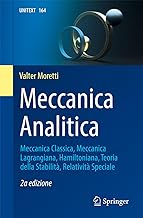
Valter Moretti is a Full Professor in the Department of Mathematics at the University of Trento. His academic career spans roles from Research Fellow to Full Professor, focusing on Mathematical Physics and Quantum Field Theory (QFT) in curved spacetime. He earned an MSc in Physics from Genova University and a PhD in Theoretical Physics from Trento University. Research Interests : Algebraic QFT, General Relativity, Quantum Mechanics, Operator Algebras, and Spectral Theory. His work bridges mathematical rigor with physical applications, particularly in quantum localization, entanglement, and curved spacetime phenomena. Publications : Authored 15+ recent papers on topics like quantum particle localization, entanglement certification, and QFT on curved backgrounds. Collaborated on a 2022 patent for generating entangled photon states. Awards : Holds a patent for a quantum-certified random number generator (2022). Supervision : Advised 8 PhD students, including N. Pinamonti, L. Franceschini, and C. van de Ven. Coordinated national and international research projects (e.g., H2020-MSCA-COFUND-2015). Labs & Collaborations : Affiliated with INFN, TIFPA-INFN, and Q@TN (Quantum@Trento). Organized conferences like Quantum Physics and Geometry (2014) and Quantum Machine Learning (2023). Teaching : Lectures on Analytical Mechanics, Quantum Relativistic Theories, and Special Relativity. Authored textbooks on Spectral Theory and Quantum Mechanics.
Corrado De Sio is a Fixed-term Researcher at the Department of Control and Computer Science (DAUIN) , Politecnico di Torino , affiliated with the College of Computer, Film, and Mechatronics Engineering . His academic roles include course instruction and collaboration for Reconfigurable Computing , High Performance Computing (HPC) , and Operating Systems for High-Performance Supercomputers across multiple academic years (2020-2025). Research Interests focus on: Reliability of reconfigurable systems and FPGAs under radiation effects Hardware-software co-design for fault tolerance Embedded systems in aerospace and safety-critical applications Machine learning acceleration on reconfigurable hardware Radiation effects on real-time operating systems and CNN implementations Recent publications address: 2025: Selective hardening of RISCV soft-processors for space applications 2025: Real-time 'signal for help' gesture recognition systems 2024: Reliability analysis of RISC-V processors and CNN placement algorithms 2023: Fault tolerance in FPGA-based CNNs and radiation effects on RTOS Patents include: PyXEL - Python Toolkit for Reconfigurable Hardware Surveillance Software for Real-Time Violence Detection Academic Supervision : Co-supervisor for PhD candidate Arash Amini Bardpareh in Computer and Systems Engineering .
Dino Pedreschi is a Full Professor of Computer Science at the University of Pisa, affiliated with the Department of Computer Science (DI-UNIPI). He co-leads the Pisa KDD Lab, a joint research initiative between the University of Pisa and the Italian National Research Council’s Institute of Information Science and Technology, one of the earliest labs focused on data mining and knowledge discovery. His research spans Big Data Analytics , Social Network Analysis , Human Mobility Analysis , Privacy-by-Design , Explainable AI (XAI) , and ethical data mining . He is a pioneer in privacy-preserving data mining and has contributed significantly to understanding societal impacts of AI and big data. Recent publications highlight trends in explainable AI , fairness-aware data mining , urban mobility modeling , and socio-economic nowcasting , reflecting a strong interdisciplinary focus combining computer science, social science, and policy. Notable scientific awards include: Google Research Award on Privacy (2009) University of Pisa Ordine del Cherubino (2017) Pedreschi has played leadership roles in major conferences such as ECML/PKDD (Co-Chair 2004), ICDM (Vice-Chair 2005), and ICDE (Vice-Chair 2014). He founded the Business Informatics MSc program at the University of Pisa to train interdisciplinary data scientists. He has been a visiting scientist at the University of Texas at Austin, CWI Amsterdam, UCLA, and the Barabási Lab at Northeastern University. He actively contributes to European research initiatives including SoBigData++, FAIR, and TAILOR, and has advised on AI policy, including testimony before the Italian Parliament on AI and labor markets. He is a key member of the Pisa KDD Lab, a leading research group in data science and AI ethics, fostering collaboration between academia and public institutions.
Caterina Stefania Romeo is an Associate Professor in the Department of Modern Literature and Culture at Sapienza University of Rome's Faculty of Letters and Philosophy. She teaches courses including Introduction to Literary Criticism, Gender, Race, and Mobilities: Narratives and Counternarratives, and Literature, Migration, Inequality. Her office is located on the 4th floor of the Faculty of Letters and Philosophy in Studio B. Dr. Romeo specializes in Postcolonial Studies, Gender Studies, Migration Studies, and Race and Ethnicity Studies, with particular focus on Italian literature and transnational perspectives. Her research explores the intersections of race, gender, and postcoloniality in contemporary Italian contexts, examining how these dynamics shape national identity, urban spaces, and literary production. She has made significant contributions to understanding postcolonial Italian literature, Black Italian experiences, and intersectional approaches to cultural studies. Her scholarly work demonstrates consistent engagement with contemporary issues in Italian society, particularly regarding migration, race relations, and gender dynamics. She has developed innovative frameworks for analyzing how postcolonial perspectives reshape understandings of Italian national identity and cultural production. Premio nazionale di divulgazione scientifica (2014) - finalista John Fante Prize (2009) for La pelle che separa di Kym Ragusa Acerbi Special Prize for Women's Writing (2008) for Vertigo di Louise DeSalvo American Italian Historical Association Award for best doctoral thesis in Italian American Studies (2000) Dr. Romeo has supervised numerous doctoral students including Christina Maraboutaki, Giulia Fabbri, Valentina Quaresima, Barbara De Vivo, Emily Marogi, and Karisma Wilson. She has received multiple research grants including Transliteratures Fellowship, Princeton-Pettoranello Foundation Dissertation Grants, and various post-doctoral fellowships. Her work demonstrates sustained engagement with both theoretical frameworks and practical applications in postcolonial, gender, and migration studies. She is actively involved in organizing academic events, conferences, and seminars focused on postcolonial studies, gender studies, and migration. Dr. Romeo has collaborated extensively with international scholars and institutions, reflecting her transnational approach to research and teaching.
Stefano Grivet Talocia is a Full Professor in the Department of Electronics and Telecommunications at Polytechnic University of Turin. He serves as Director of the Doctoral School, is a member of the Interdepartmental Center SmartData@PoliTO - Big Data and Data Science Laboratory, and holds positions on the University Committee for Research and the Commission for the Promotion of Library, Archive and Museum Heritage. He is also President of the Doctoral School Council. His educational background includes a Laurea degree (summa cum laude) in Electronic Engineering (1994) and a Ph.D. in Electronic and Communication Engineering (1998), both from Polytechnic University of Torino. From 1994 to 1996, he worked at NASA/Goddard Space Flight Center in Greenbelt, MD, USA. Professor Grivet Talocia's research focuses on passive macro-modeling of concentrated and distributed interconnect structures for Signal/Power Integrity, order reduction techniques, and modeling and simulation of fields, circuits, and their interactions. His work spans several key areas including fast simulation of transmission lines (TOPLine technique), macromodeling and model order reduction, simulation methods for fields and circuits, passivity enforcement of lumped macromodels, waveform relaxation techniques, and wavelet applications. His research has significant applications in electromagnetic compatibility and signal integrity verification of complex electronic systems. His recent publications demonstrate strong trends in model order reduction techniques applied to power integrity verification, advanced macromodeling for electromagnetic compatibility, nonlinear circuit analysis, uncertainty quantification in PCB design, and power electronics modeling. These works consistently address practical engineering challenges in high-speed electronic design with emphasis on computational efficiency and accuracy. URSI Young Scientist Award (1999) Best symposium paper (2006) Three IBM Shared University Research Awards (2007-2009) IEEE Transactions on Advanced Packaging Best Paper Award (2007) Best EPEP conference paper awards (2007, 2008) Best Associate Editor Award - IEEE Transactions (2020) Best Conference Paper Award (2020) Three Intel SRS Grants (2022-2024) IEEE Fellow (2018) Professor Grivet Talocia actively supervises PhD students working on cutting-edge topics including machine learning applications in signal integrity, model reduction techniques, and electromagnetic compatibility. He has secured significant research funding through competitive grants including PRIN projects and multiple industry-sponsored research contracts with major technology companies such as IBM, Intel, Nokia, Hitachi, and Infineon. His technology transfer activities include co-founding the spin-off IdemWorks (acquired by CST in 2016) and maintaining active collaborations with industry partners. He leads the EMC Group (Electromagnetic Compatibility) within the Department of Electronics and Telecommunications and has developed the autoCircuits web service for automated generation of circuit theory problems. His research has been recognized by inclusion in the top 2% worldwide researcher catalog (Stanford) since 2019.
Alessandro Masetti is a PhD candidate in Museum Studies at the IMT School for Advanced Studies Lucca, funded by the Museo Egizio in Turin. He holds a background in architecture (2014) and has served as a curator at Fondazione Giovanni Michelucci in Fiesole (2015–2022). As a researcher in the LYNX Research Unit at IMT Lucca, he focuses on museum accessibility, cultural heritage curation, and digital communication. His work spans European-funded projects, including studies on women in photography (PRIN-funded) and initiatives to digitize Lucca’s photographic heritage. His academic contributions include editorial work for Predella. Journal of Visual Arts and co-authorship of publications on architect Giovanni Michelucci. He has also produced a bilingual podcast episode ( Lucca Stories & Tales ) and authored catalog entries for the ARCHIVI IN RETE project. His research bridges historical analysis, cultural policy, and digital innovation in cultural institutions. Key projects include Fotografiste: Women in Photography from Italian Archives , exploring underrepresented female photographers, and the digitization of Lucca’s photographic archives. His work emphasizes accessibility, historical recovery, and the intersection of technology with cultural preservation.
Eleonora Vacca is a PhD student and Research Fellow in the Department of Automatic Control and Computer Science (DAUIN) at the Polytechnic University of Turin. She holds a B.S. in Electronic Engineering from the University of Palermo (2018) and an M.S. in Electronic Engineering-Embedded Systems from Politecnico di Torino (2021). Her research focuses on digital hardware design, reliability engineering, reconfigurable devices, and AI applications in aerospace and safety-critical systems. She is a member of the Aerospace and Safety Computing Lab and the CAD - Electronic CAD & Reliability Group (DAUIN). Her work addresses challenges such as radiation effects mitigation in space missions, fault-tolerant AI accelerators, and real-time anomaly detection in satellite telemetry. She has contributed to projects like the RAMSES CubeSat-1 Development (2025-2026), funded by commercial contracts. In 2024, she won the Best Student Paper Award at the NEWCAS Conference for her research on radiation effects in space missions. Vacca collaborates on teaching, including assisting in the course 'Electronic Calculators' for Computer Engineering students. Her recent publications explore AI resilience in RISC-V ecosystems, radiation environment analysis for space missions, and gesture recognition systems for smart cities. She actively contributes to conferences such as the ACM International Conference on Computing Frontiers and the IEEE International Smart Cities Conference.
Seth Frey is an Associate Professor in the Department of Communication at the University of California, Davis, with affiliate status at Indiana University's Ostrom Workshop and as Research Director at Metagov. His research focuses on computational social science approaches to understanding self-governance in complex social systems, particularly through the lens of online communities as model institutions. Education: Ph.D. in Cognitive Science and Informatics (complex systems), Indiana University, 2013 B.A. in Cognitive Science, UC Berkeley, 2004 Research Interests: Frey specializes in computational approaches to institutional analysis and the cognitive science of strategic behavior . His work examines how communities design governance systems to overcome collective action problems, with emphasis on: Emergent institutional structures in digital commons Policy-as-data through NLP and institutional grammar frameworks Cognitive mechanisms underlying cooperative behavior Design principles for participatory change in online platforms His methodology integrates large-scale data analysis, web-based experiments, and computational modeling across diverse contexts including Minecraft, Reddit, and professional sports ecosystems. Publication Trends: Recent publications (2023-2025) demonstrate a cohesive trajectory toward computational institutional analysis, with increasing focus on NLP-driven policy analysis (e.g., NLP4Gov), decentralized governance architectures (DAOs, multi-level platform governance), and the cognitive foundations of collective action. His work consistently bridges theoretical institutional analysis with practical applications in digital community design, showing particular growth in translating Ostrom's design principles into computational frameworks. Awards: Honorable Mention Award for Best Paper at ACM CSCW 2019 Advising and Grants: Frey mentors students interested in data science applications at the intersection of communication, cognition, and complex systems, emphasizing resourcefulness and intellectual curiosity. His research has secured substantial funding from: National Science Foundation (NSF) NASA Ford Foundation Google Open Source Foundation He actively encourages aspiring graduate students with strong self-directed research skills to explore computational approaches to social phenomena. Labs and Teams: He leads the Computational Communication Lab at UC Davis and co-directs the Institutional Grammar Research Initiative. Through Metagov, he develops the 'Governance API' framework for modular community governance. His past affiliations include Disney Research (Walt Disney Imagineering) where he applied complexity science to theme park systems, and the New England Complex Systems Institute (NECSI). Current collaborations span Ethereum governance, Minecraft server ecosystems, and Colorado's cannabis monitoring infrastructure.
Affiliations: Domenico Fiorenza is an Associate Professor at the Department of Mathematics, University of Rome La Sapienza since October 2015. Previously, he held roles as Assistant Professor (2005–2015) and PostDoc Researcher at the Universities of Rome Tor Vergata and La Sapienza. Education: Laurea in Mathematics (University of Rome La Sapienza, 1996); PhD in Mathematics (University of Pisa, 2002). Research Interests: His work focuses on mathematical physics, algebraic geometry, and topology, with contributions to deformation theory, higher structures in quantum field theory, and categorical constructions. Notable areas include T-duality in rational homotopy theory, M-theory, and derived algebraic geometry. Publications: Over 60 peer-reviewed articles, including studies on C-infinity algebras, twistor spaces, and the geometric interpretation of M5-branes. Recent work emphasizes connections between homotopy theory and physics, such as twisted Cohomotopy and anomaly cancellation in M-theory. Labs/Teams: Collaborations with Hisham Sati and Urs Schreiber on topics like super-exceptional geometry and higher TQFTs. Visiting positions at IHÉS, MPIM, and ETH Zurich highlight his international engagement.
Michael Haller is a Full Professor at the Faculty of Engineering, Free University of Bozen-Bolzano, Italy, where he serves as founder and director of the Media Interaction Lab. Based at NOI Techpark, his work focuses on next-generation human-computer interfaces, leading a team of over 10 researchers and students in developing innovative interaction technologies for automotive and wearable applications. He earned his Dipl.-Ing. (1997), Dr. techn. (2001), and Habilitation (2007) degrees from Johannes Kepler University of Linz, Austria. Haller's research centers on Human-Computer Interaction with specialized expertise in Smart Textile Interfaces, Physical Prototyping, and Ubiquitous Computing. His lab pioneers user-centered design of next-generation interfaces through industry collaborations with BMW, KTM, SEFAR, and Tratter Engineering. Current work emphasizes sustainable materials for flexible sensors, touchless interaction, and reducing plastic components in automotive interfaces while maintaining ergonomic functionality. His 15 most recent publications (2023-2025) demonstrate a clear trajectory toward sustainable sensor technologies, particularly biodegradable substrates (wood, animal-based, stone, gelatin) for temperature and pressure sensing. These works bridge materials science with HCI, targeting automotive interfaces, health monitoring, and eco-fashion through textile-based solutions that prioritize environmental sustainability without sacrificing performance. His scientific accolades include: Erwin Schrödinger Fellowship Award Google Research Award Europrix Top Talent Award Best ACM SIGGRAPH Emerging Technologies Award Microsoft Imagine Cup 7 Best Paper and Honorable Mention Awards at ACM CHI and ACM UIST Haller directs major research projects including SmartCover (2024-2026) for developing smart laminated dashboards that replace plastic components with gesture-based textile interfaces, and iPlayground (2024-2026) establishing an industrial-scale smart textile lab. He mentors researchers in prototyping and empirical evaluation, with industry grants supporting the development of washable touchless fabrics and next-generation vehicle interfaces. His work bridges academic research and commercial product development through direct industry partnerships. The Media Interaction Lab operates from NOI Techpark with industrial knitting/sewing machines, confocal microscopes for surface analysis, and a collaborative Idea Space for rapid prototyping. Current infrastructure enables development of warp-knitted smart textiles for automotive consoles and sustainable fashion applications, focusing on reducing plastic waste while creating intuitive touchless interaction experiences through magnetoresistive and inductive sensing technologies.