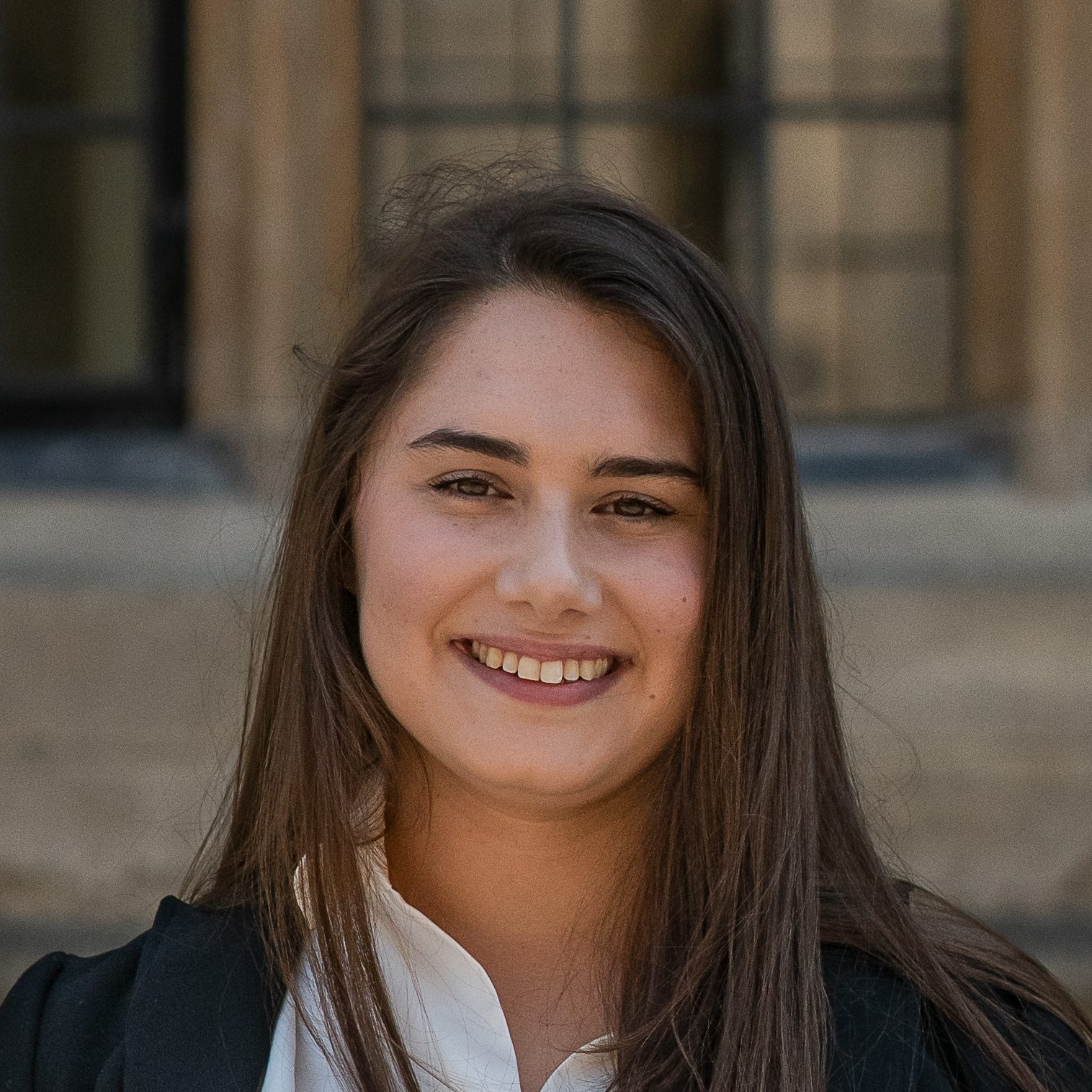
Isabel García Velázquez is a researcher at Linköping University 's Department of Thematic Studies , affiliated with Theme Gender (TEMAG) . Her work intersects social robotics , autism studies , and AI ethics , informed by feminist and decolonial frameworks. Her research critically examines how autism is conceptualized in robotic therapy and AI systems , questioning the social capabilities of robots and the ethical implications of their use in healthcare. She actively participates in the WASP-HS program , contributing to interdisciplinary discussions on AI's societal impact. Her recent publications focus on gendered embodiment in robotics , maternal mental health applications , and decolonial critiques of AI . She can be contacted at isabel.garcia.velazquez@liu.se .
Christian Smith is an Associate Professor and Lecturer at the Department of Robotics, Perception and Learning at Kungliga Tekniska Högskolan (KTH Royal Institute of Technology). His research focuses on robotics and applications in human-centered environments like home environments, small workshops, and healthcare facilities, including the development of new robotic systems for research. Teaching Roles: Course Coordinator/Teacher/Examiner for courses such as Introduction to Robotics (DD2410), Research Project in Robotics (DD2411), and Java Programming for Python Programmers (DD1380) Research Themes: Human-Robot Interaction, Behavior Trees, Exoskeletons, Intent Recognition, and Multimodal Perception Awards: No specific scientific awards mentioned in the provided text His KTH profile highlights work on adaptive robotics systems and formalized control strategies. The research portfolio spans from theoretical studies on behavior tree programming to applied work in assistive technologies and teleoperation systems.
Monowar Bhuyan is an Associate Professor in the Department of Computing Science at Umeå University, Sweden, leading the Cyber Analytics and Learning Group within ADSLab. He holds a Ph.D. in Computer Science from Tezpur University and has held academic positions at Assam Kaziranga University and Umeå University. His research focuses on machine learning, anomaly detection, edge AI, and distributed systems security. He has secured over 35 MSEK in grants from WASP, STINT, and EU Horizon programs. Education Ph.D. in Computer Science and Engineering, Tezpur University (2014) M.Tech. in Information Technology, Tezpur University (2009) B.E. in Computer Science and Engineering, IETE (2007) Research Interests Distributed/Federated/Responsible Machine Learning Cybersecurity and Anomaly Detection in Edge Clouds AI for DDoS Defense and Cyber Resilience Edge AI and Serverless Computing Recent Contributions His recent work addresses secure federated learning, DDoS attack detection in cloud-edge systems, and responsible AI. Key publications include novel frameworks for VSI-DDoS detection and federated learning optimizations. Awards & Grants Best Paper Awards at ICONIP 2023 and ACM ICACCI 2012 WASP NEST Grant (AIR2 Project, 5 MSEK) EU Horizon Europe Grant (SovereignEdge.Cognit, 8.27 MSEK) Lab & Collaborations He leads the Cyber Analytics and Learning Group (ADSlab), collaborating with institutions like KTH, Linköping University, and Nara Institute of Science and Technology (NAIST). The lab focuses on AI-driven security solutions for distributed systems.
Leila Methnani is a doctoral student at the Department of Computing Science at Umeå University . Her research focuses on ethical and sociotechnical challenges in artificial intelligence, particularly in areas such as AI alignment , trustworthy AI , and human-AI collaboration . She has published extensively on topics including Explainable AI (XAI) , MLOps , and hybrid human-AI systems . Her recent work explores: Trustworthy AI in variable autonomy robotic systems Explainable and counterfactual-based AI interfaces for industrial operators Operationalizing AI ethics through socio-technical assessments Real-time reactive planning with social norms in multi-agent systems She has co-authored publications in journals such as Ethics and Information Technology , ACM Computing Surveys , and Frontiers in Artificial Intelligence . She is reachable via email at leila.methnani@umu.se .
Anna Gautier is an Assistant Professor in the Department of Computer Science at Chalmers University of Technology, affiliated with the Division of Data Science and AI. Previously, she was a Digital Futures Postdoctoral Fellow at KTH Royal Institute of Technology (2023–2025), focusing on mechanism design for multi-robot systems. Her research emphasizes planning under uncertainty, multi-agent systems, and human-robot interaction. She holds a PhD from the University of Oxford (2023), an MSc from the London School of Economics, and dual undergraduate degrees from Washington University in St. Louis. Education Background: PhD in Computer Science, University of Oxford (2023) MSc in Applied Mathematics, London School of Economics BA in Mathematics and BS in Computer Science, Washington University in St. Louis Research Interests: Dr. Gautier explores planning algorithms for multi-agent systems, particularly in uncertain environments. She designs mechanisms to coordinate robots and humans, leveraging game theory and formal methods. Her work addresses challenges like resource allocation, risk-aware decision-making, and trust in autonomous systems. Recent projects include contingency planning for autonomous vehicles and auction-based resource distribution. Professional Activities: She co-chairs the ECAI 2025 Demonstration Track and teaches the course Safe Robot Planning and Control at KTH. Her projects include collaborations with WASP-Nest (PerCorSo) and TECoSA on trustworthy autonomy. She actively publishes in top venues like AAMAS and AAAI. Labs and Teams: Affiliated with Chalmers' Data Science and AI division, she leads research in multi-agent systems and human-AI collaboration.
Nikolce Murgovski is an Assistant Professor at Chalmers University of Technology, specializing in Mechatronics . He focuses on electric and hybrid vehicle energy management , autonomous driving systems , and optimization algorithms for powertrain design. His work bridges control theory , battery technology , and transport electrification . Current projects include CHARGE (2023–2026) for charging and trip planning , and EcoPilot (2022–2026) for energy-efficient autopilot development. Collaborates with institutions like Volvo Cars , Swedish Electromobility Centre , and VINNOVA on autonomous vehicle control and thermal energy systems . His recent publications emphasize convex optimization , eco-driving strategies , and collision avoidance in complex environments. He has contributed to tools like CONES for electromobility studies and has led research on hybrid powertrains and predictive energy management .
Jimmy Jaldemark is a Professor at the Department of Education, Mid Sweden University, Sundsvall, Sweden. He serves as Research Leader of HEEL (Higher Education and E-Learning) and Head of Subject for the Discipline of Education. His roles include membership in the Faculty Board of Humanities and representation in the university-wide Education Council. He co-founded GRADE, a national graduate school in digital education, and leads the EARLI Centre for Excellence in AI in Learning and Instruction (AILI). His research focuses on AI, digitalization, lifelong learning, and networked learning. He co-edited *Networked Professional Learning* (2019) and guest-edited special issues in the *British Journal of Educational Technology*. He is an editor for that journal and serves on editorial boards for *Educational Research Review*, *Postdigital Science and Education*, and others. He supervises doctoral students and teaches in Behavioral Science and Education programs. Current projects include HEaD (Higher Education and Digitization) and BLAD (Need-based Learning through Adapted Participation). He collaborates internationally, notably in the AILI network exploring AI's educational impacts. His work spans educational development, organizational learning, and policy frameworks for lifelong learning in the digital era.
Dr. Axel Sandvig is an Adjunct Associate Professor at the Department of Community Medicine and Rehabilitation , Umeå University , with a focus on neurodegenerative diseases and neural network engineering. He also serves as a physician at the Department of Clinical Sciences , Umeå University , specializing in neurosciences. His work intersects clinical practice with cutting-edge research in neuroengineering and neurodegeneration. Adjunct Associate Professor, Department of Community Medicine and Rehabilitation, Umeå University Physician, Department of Clinical Sciences, Umeå University Dr. Sandvig’s research spans multiple domains of neuroscience , neuroengineering , and biomedical applications . He investigates Alzheimer’s disease using engineered human neural networks with mutations like LRRK2 G2019S and P301L tau, analyzing structural, functional, and connectomic changes. His work also explores neuroplasticity in stroke recovery , nanotechnology for neuroimaging , and lab-on-chip platforms for neuromodulation. Recent studies highlight synaptic connectivity and autophagy pathways as therapeutic targets. The 15 most recent publications reveal a trend toward neurodegenerative disease modeling , neural network dynamics , and biomedical nanotechnology . Key subfields include LRRK2/tau mutations , small-world network topology , neuroregeneration after ischemia , and gold nanostructure design . His work often involves in vitro models , neuroimaging , and stem cell applications . Dr. Sandvig collaborates extensively on neuroregenerative therapies , including nanoparticle delivery systems and manganese-enhanced MRI for axonal tracing. His affiliations bridge clinical practice at Norrland University Hospital with academic research at Umeå University.
Franziska Klügl is a Professor in Computer Science at Örebro University's Faculty of Business, Science and Engineering, affiliated with the Center for Applied Autonomous Sensor Systems (AASS). She currently leads the KKS-funded TeamRob project on Human-Robot Teamwork and serves as Deputy Dean of the faculty since January 2023, chairing the academic appointment committee. Previously, she headed the Computer Science department (2020-2022) and served on the faculty board (2019-2022). Her research focuses on: Multi-agent systems : Development of languages, processes, and tools for agent-based simulation Interdisciplinary applications : Transportation, economics, epidemics, production, and mining simulations Simulation engineering : Integrating AI, machine learning, and formal methods to create accessible modeling tools for domain experts She created SeSAm , a visual programming tool for agent-based simulation that enables rapid prototyping of complex models. Analysis of her recent publications reveals three dominant themes: Human-robot collaboration frameworks and intention recognition systems Economic impacts of automation on labor markets and engineering services Advanced simulation methodologies using affordance theory and reinforcement learning She teaches software engineering, multi-agent systems, and agent-based modeling across multiple programs, including the WASP AI&ML PhD course. She leads research groups at the Machine Perception and Interaction Lab and oversees the TeamRob human-robot teamwork project.
Oliver Li is a Researcher at Uppsala University's Center for Multidisciplinary Research on Religion and Society (CRS) and Department of Theology, Ethics and Philosophy of Religion division. His interdisciplinary work merges theological inquiry with cutting-edge artificial intelligence ethics, establishing him as a distinctive voice at the technology-religion intersection. Li's research traverses Theology , Philosophy of Religion , Ethics , and Artificial Intelligence , with specialized focus on panentheism and process theism. He critically examines how these frameworks address contemporary AI challenges including artificial suffering, moral development in human-AI systems, and consciousness implications. His investigations extend to literary analysis of AI subjectivity in works like Ishiguro's Klara and the Sun , alongside philosophical explorations of infinity and mathematical theology. Analysis of Li's 15 most recent publications reveals a pronounced trajectory toward technology-theology dialogue, particularly through 2023-2024 works interrogating AGI development ethics. Recurring themes include the morality of creating sentient machines, theological responses to AI-induced cognitive changes, and reimagining divine action in computational contexts. This cohesive body of work positions him at the vanguard of emerging academic discourse on spiritual dimensions of technological advancement. Li actively contributes to Uppsala University's interdisciplinary ecosystem through the Center for Multidisciplinary Research on Religion and Society (CRS), where he engages in cross-departmental projects examining religion's evolving societal role. His collaborative publications with scholars like Johan Eddebo demonstrate substantive engagement with research teams addressing technology's anthropological and ethical implications, particularly through media interventions like the 2023 Aftonbladet debate on AI's cognitive impacts.
Jana Tumova is an Associate Professor at the Division of Robotics, Perception and Learning, KTH Royal Institute of Technology. Her research focuses on designing algorithms for safe, purposeful autonomous systems using formal methods to ensure rigorous specifications and guarantees. Applications span autonomous driving, UAV exploration, and network control. She teaches courses like Artificial Intelligence (DD2380) and leads the Robotics, Reading Group (FDD3316) . Her work emphasizes formal methods integration with AI, safety-critical control, and human-robot interaction. Notable research directions include risk-aware planning, belief space control, and contingency planning under uncertainty. She has published extensively on motion planning, robust control synthesis, and multi-agent systems. Key technical contributions include techniques like Belief Control Barrier Functions , Backward Underapproximate Reachability (BURNS) , and Transitional Grid Maps . She actively participates in interdisciplinary initiatives like the Control for Societal-Scale Challenges: Roadmap 2030 .
Ericka Johnson is a Professor and Deputy Prefect at Linköping University, working within Gender Studies in the Department of Thematic Studies. She is affiliated with the Center for Medical Humanities and Bioethics (CMBS), Bodies Hub, and the P6: Body, Knowledge, Subjectivity research collective. Her work bridges Science & Technology Studies, medical humanities, and gender studies, with a focus on how data representation intersects with AI systems and how technologies 'refract' invisible discourses to make them visible. Johnson's research program investigates how the world becomes data, exploring connections between ontologies, epistemologies, and AI. She employs feminist science studies frameworks to examine medical technologies and material-discursive practices around the body. Her metaphor of refraction—comparing how technologies reveal hidden discourses to how prisms refract light into visible spectra—has become influential in feminist technoscience research. She is particularly known for identifying 'intersectional hallucinations' in synthetic medical data, where AI systems generate data that misrepresents complex, overlapping identities. Her major projects include 'Social complexity and fairness in synthetic medical data' (funded by WASP-HS and Vinnova), which examines how machine learning-generated data can overrepresent 'standard' patients while underrepresenting minorities, and 'The Constant Torment' project exploring prostate anxiety and its relationship to masculinity, resulting in her book 'A Cultural Biography of the Prostate.' Her recent publications span critical data studies, human-robot interaction, and the sociotechnical dimensions of AI, consistently examining how technologies shape and are shaped by social, cultural, and gendered contexts. As a supervisor, Johnson mentors doctoral students Isabel García Velázquez, Alexandra Gribble, and Dominika Lisy, as well as postdoctoral researcher Maria Arnelid. Her research is supported by major grants from WASP-HS (NetX) and Vinnova, focusing on fair and representative synthetic data, and she participates in the Wallenberg Autonomous Systems Program (WASP) Humanities and Society initiative. Johnson is actively involved in interdisciplinary research communities including the Center for Medical Humanities and Bioethics, Bodies Hub (researching bodies, identity, and gender), and the P6 research collective. These frameworks support her collaborative work at technology's intersection with gender, society, and healthcare, with practical implications for developing more equitable AI systems in medical contexts.
Jonas Stålhand is a Professor at Linköping University, affiliated with the Department of Management and Engineering (IEI) and the Division of Solid Mechanics (SOLMEK). His research focuses on biomechanics, smart textiles, haptic technologies, and cardiovascular mechanics. He leads interdisciplinary projects such as a study on pain relief using smart textile garments, combining neuroscience, materials science, and biomechanics. His work spans arterial wall mechanics, wearable haptic systems, and biomaterial characterization. Recent projects include parameter identification in arteries and the development of electroactive yarn actuators for wearable applications. Collaborations involve multidisciplinary teams across engineering, medicine, and textile science. Research interests emphasize translating biomechanical insights into clinical and industrial applications. Notable contributions include studies on aortic stress analysis, acetabular cup stability, and electroactive polymer-based actuators. His publications address both fundamental and applied aspects of soft tissue mechanics and medical engineering. No scientific awards are explicitly listed, but his work has been highlighted in university news for its innovative potential in healthcare and technology.
Jonas Beskow is a Professor and Head of Division at the Division of Speech, Music and Hearing at KTH Royal Institute of Technology. His research focuses on multimodal interaction, speech synthesis, robotics, and human-robot interaction. He leads the Learning style variation in nonverbal behaviour for social robots and agents project as part of Digital Futures, a cross-disciplinary research center. His work involves developing social robots like the Furhat head and advancing technologies for gesture synthesis, audio-driven motion, and adaptive intelligent systems. He holds roles as Co-PI for the Advanced Adaptive Intelligent Systems (AAIS) and Adaptive Intelligent Homes (AIH) projects. His research spans robotics, computer graphics, and clinical applications such as dementia detection through multimodal patient behavior analysis. Beskow also contributes to educational initiatives, supervising courses in computer science and engineering, including degree projects in machine learning and systems engineering. Publications highlight innovations in gesture generation, speech-driven animation, and socially-aware robotics. Collaborations with institutions like Stockholm University and RISE Research Institutes drive interdisciplinary solutions. His work bridges artificial intelligence, human-computer interaction, and assistive technologies, emphasizing ethical and societal impacts of emerging digital systems.
Georgios Andrikopoulos is an Assistant Professor at KTH Royal Institute of Technology's Department of Industrial and Environmental Management (ITM), affiliated with the Digital Futures Faculty. He serves as Co-Principal Investigator (Co-PI) on the 'Real-time exoskeleton control for human-in-the-loop optimization' project, focusing on advanced robotics and human-technology interaction. His research spans soft robotics, exoskeleton systems, and adaptive climbing robots, with applications in healthcare, aerospace, and education. Key projects include: "Connecting Bodies – Designing Shape-changing Wearables" (Postdoc Fellowship, 2023–2025) "Advancing real-time exoskeleton control for human-in-the-loop optimization" (Demonstrator Project) SEC scholar collaboration with Mohamed Elbadawi (May–June 2024) Research interests emphasize: Soft robotic actuators for safe human interaction Optimization of compliant mechanisms in robotics Vortex adhesion systems for autonomous inspection Design of child-friendly interactive robots His work integrates robotics with control systems, biomechanics, and human-centered design. Over 50 peer-reviewed articles demonstrate contributions to exoskeleton technology, climbing robot algorithms, and soft actuator modeling. He advises students like Laia Turmo Vidal (Postdoc) and Mohamed Elbadawi (SEC scholar). Affiliated with the cross-disciplinary Digital Futures initiative, he collaborates with Stockholm University and RISE Research Institutes to address societal challenges through digital innovation.