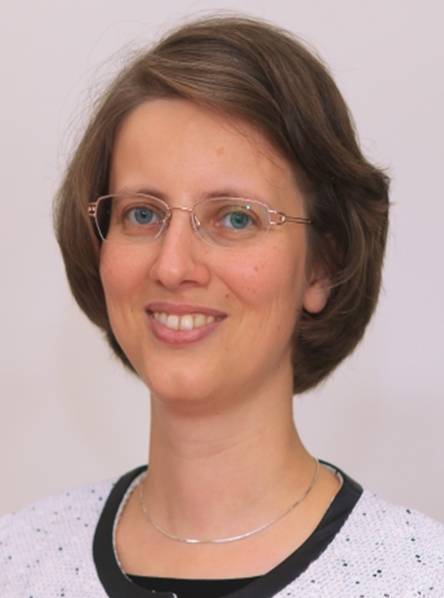
Professor Oliver Razum at Bielefeld University's Faculty of Health Sciences leads Working Group 3 in Epidemiology & International Public Health. He serves on multiple commissions including the Faculty Conference and Teaching Commission, and contributes to the Center for Statistics and Bielefeld Center for Data Science. His work focuses on Epidemiology of migration and health Refugee health inequalities Medical rehabilitation equity Othering processes in public health Gender-sensitive health research Recent articles explore 2026 medical rehabilitation for people with disabilities, 2025 refugee mental health frameworks, and 2024 pandemic equity research. Key scientific contributions include the 2025 Georg Forster Fellowship and leadership in diversity-sensitive healthcare initiatives. His research spans urban neighborhood health effects , digital rehabilitation , and structural racism in healthcare . Current projects address intersectional inequalities , post-migration stress , and gender as social determinant . Professor Razum maintains active collaborations with institutions like the German Research Foundation and DRV Westphalia.
Dr. Takuma Melber is a Senior Lecturer at Heidelberg University's Karl Jaspers Centre, where he coordinates the MA Transcultural Studies program. His research examines military history with a focus on Japanese occupation policy in Southeast Asia during World War II. Melber's work investigates complex dynamics of collaboration and resistance in occupied territories, particularly Malaya and Singapore. His research combines military history with social history approaches to analyze occupation policies and local responses. He has received recognition for his contributions to military history, including the Wilhelm-Deist-Preis and Förderpreis für Militärgeschichte awards. Melber maintains international research collaborations and has held visiting positions at Kyushu University, Kyoto University, and Osaka University to advance his studies on Japanese wartime policies.
Prof. Johannes A. Lercher is a retired professor (as of April 2023) at the Technical University of Munich (TUM), holding the Chair of Chemical Technology II within the Department of Chemistry. His research focuses on heterogeneous catalysis, particularly understanding catalytic processes at solid-liquid and solid-gas interfaces, with applications in sustainable energy production, CO₂ conversion, and catalytic upcycling of polymers. He has held academic positions at the University of Twente (Netherlands) and the Pacific Northwest National Laboratory (USA), and has been Editor-in-Chief of the Journal of Catalysis . His honors include the Alwin Mittasch Prize (2021), ENI Award (2016), and Kozo Tanabe Prize (2013). His recent work emphasizes low-temperature polymer upcycling, methane activation, and bioinspired catalyst design, leveraging advanced spectroscopic and operando techniques. Despite retirement, his contributions to catalysis research remain impactful. Education: PhD (1980) and Habilitation (1985), Vienna University of Technology Visiting Lecturer, Yale University (1982) Research Interests: Heterogeneous catalysis, catalytic interfaces, sustainable energy carriers, CO₂ valorization, and polymer waste upcycling. Key areas include: Design of catalysts for selective hydrocarbon synthesis Mechanistic studies using advanced spectroscopy Development of scalable catalytic processes for industrial applications Recent Trends in Publications: Focus on low-temperature polymer recycling (e.g., PVC and polyolefin upcycling), methane activation via novel catalysts (e.g., Co 2+ in ZSM-5), and bioinspired catalytic strategies. His work bridges fundamental catalysis with industrial relevance, emphasizing sustainability and energy efficiency. Awards and Recognition: Member, Academia Europaea and US National Academy of Engineering Recipient of multiple international catalysis awards (see full list above) Grants and Labs: Led the Institute for Integrated Catalysis (Pacific Northwest National Lab, 2011–present). His research groups have pioneered studies on zeolite-confined reactions and interfacial catalysis, with collaborations spanning academia and industry. Labs/Teams: Active in the TUM Department of Chemistry and international networks focused on catalytic innovation for a carbon-neutral economy.
Prof. Dr. Urs Hartl is a faculty member in the Department of Mathematics and Computer Science at the University of Münster, affiliated with the Faculty of Mathematics and Computer Science. He is an Investigator in Mathematics Münster and a member of the Collaborative Research Centre (CRC) 1442 'Geometry: Deformations and Rigidity.' His research focuses on arithmetic geometry, representation theory, algebraic number theory, and arithmetic of function fields. He holds a prominent position in the field, contributing to areas such as Shimura varieties, p-adic Hodge theory, and the Langlands program. Affiliations: Member of CRC 1442 Geometry Investigator in Mathematics Münster Research Interests: Arithmetic algebraic geometry Algebraic number theory Arithmetic of function fields Structure theory of Shimura varieties p-adic Hodge theory p-adic Langlands programme Model theory Recent Publications: Hartl's recent work includes studies on moduli stacks of global G-shtukas, periods of Drinfeld modules, and p-adic Galois representations. His research emphasizes foundational contributions to arithmetic geometry and number theory, often involving collaborations with leading mathematicians such as Rajneesh Kumar Singh and Eva Viehmann. Grants & Advising: Hartl’s involvement in CRC 1442 reflects his leadership in geometric research. While specific advising details are not provided, his extensive publications suggest active mentorship in advanced mathematical research. Labs/Teams: Collaborates within the Mathematics Münster research group and the CRC 1442 team, focusing on geometric and arithmetic structures.
Prof. Dr. Michael Ulbrich is a full professor and Chair of Mathematical Optimization at the Technical University of Munich (TUM), within the School of Computation, Information and Technology. He has held this position since 2006 and previously served as Dean of Studies (2007–2010) and Vice Dean of the Faculty of Mathematics (2012–2015). His research focuses on nonlinear optimization, optimal control, and numerical analysis, with applications in fluid dynamics, shape optimization, and PDE-constrained systems. He leads projects in the DFG SPP 1962 and IGDK 1754, and has received prestigious awards including the Howard Rosenbrock Prize (2015) and the Doctoral Award from the TUM Association of Friends (1996). Ulbrich is Editor-in-Chief of Optimization and Engineering and contributes to multiple journals. His work bridges theoretical foundations and practical applications, including CO2 sequestration, fluid-structure interaction, and distributed optimization algorithms. Education: PhD (1996), Habilitation (2002) in Mathematics at TUM. Research stays at Rice University (USA) under DFG funding. Research Areas: Semismooth Newton methods, PDE-constrained optimization, optimal control of Navier-Stokes equations, and distributed parameter systems. Awards: Rosenbrock Prize, Teaching Excellence Awards, and recognition for doctoral work. Leadership Roles: Department Head of Mathematics (2022–), Member of TUM Senate (2019–2022), and Co-Chair of GAMM 2018. Ulbrich has authored influential textbooks like Semismooth Newton Methods for Variational Inequalities and Nichtlineare Optimierung . His recent projects include OptiGeoS (2024–2026) and collaborations on nonsmooth optimization and stochastic algorithms. His academic contributions span over 100 publications, emphasizing both algorithmic innovation and rigorous mathematical analysis.
Jan Oliver Borchers is a full professor of computer science and head of the Media Computing Group at RWTH Aachen University, where he holds the endowed Chair in Media Informatics and Human-Computer Interaction (Computer Science 10). He established his research group in 2003 and pioneered modern HCI academic research and teaching in Germany, becoming a leading lab in terms of archival publications at CHI, the top international conference in HCI. Before joining RWTH, he held faculty positions at Stanford University and ETH Zurich. His research focuses on Human-Computer Interaction with particular interest in new user interfaces for soft robotics, textile user interfaces, 3D printing and personal fabrication, augmented reality, wearable and tangible computing, interfaces for software development, deceptive patterns, and interactive guides and exhibits. He opened Germany's first Fab Lab in 2009 and has been instrumental in advancing digital fabrication and maker culture in academia. His work bridges theoretical HCI research with practical applications, as evidenced by his consulting for major companies including AirBus, Apple, ARD, Bayer, Children's Museum Boston, Daimler, Handelsblatt, OTIS, Scout24, TEDx, and Deutsche Telekom. His recent publications show a strong focus on deceptive patterns in UI design, textile interfaces, and the intersection of AI with human interaction. The research demonstrates consistent innovation in tactile interaction techniques, with numerous honorable mentions at top conferences like CHI. His lab has produced significant contributions to eyes-free interaction, textile computing, and the ethical implications of dark patterns, particularly regarding children's experiences with deceptive designs. IDC 2025 Best Work in Progress for research on children's assessment of deceptive designs CHI'25 Student Games Competition Winner for The Deceptive Dungeon RWTH-Wissenschaftsnacht 2024 Best Science Slam for Usability: 4 Prinzipien guter User Interfaces Multiple CHI Honorable Mentions spanning from 2008-2021 Best Note and Best Demo awards at ITS and UIST conferences Borchers has served in numerous leadership roles including heading the Computer Science Department's Examination Board (2015-2025), coordinating the department's public relations since 2010, and organizing the weekly Faculty Lunch since 2003. He is an active member of the ACM, SIGCHI, SIGCHI Germany, and GI, and introduced the Interactivity format to the CHI conference in 2005. His PhD thesis, A Pattern Approach to Interaction Design, became the first book to bring design patterns to HCI. The Media Computing Group under his leadership has developed significant expertise in physical computing, textile interfaces, and fabrication technologies, with a strong emphasis on both theoretical contributions and practical applications. His lab continues to push boundaries in interactive technologies while maintaining a strong ethical stance on user experience, particularly regarding deceptive design patterns.
Aimee van Wynsberghe is the Alexander von Humboldt Professor for Applied Ethics of Artificial Intelligence at the University of Bonn, where she also serves as Director of the Institute for Science and Ethics (IWE). Her work focuses on integrating ethical values into AI and robotics design, positioning Bonn as a leader in human-centered AI in Europe. She co-founded the Foundation for Responsible Robotics and advises international bodies such as the European Commission and the World Economic Forum. Van Wynsberghe holds a PhD in Applied Ethics from the University of Twente (2012), an MA in Bioethics (Erasmus Mundus, 2008), an MA in Applied Ethics from KU Leuven (2007), and a BSc in Cell Biology from Western Ontario (2006). Her research spans AI ethics, robotics ethics, care ethics, and sustainable technology, with a particular emphasis on value-sensitive design. Recent publications highlight her leadership in sustainable AI, ethical robotics, and multidisciplinary approaches to AI's hidden costs. She has secured significant funding, including the Humboldt Professorship (€3.5M) and Stiftung Mercator support (€3.8M), and leads the Bonn Sustainable AI Lab. Her awards include the L’Oréal UNESCO For Women In Science Award (2018) and the Humboldt Professorship (2021). Scientific Advisory Roles: Member, European Commission High-Level Expert Group on AI (2018–2020) Director, Artificial Intelligence Lab at TU Delft (2019–2021) Co-founder, ALLAI (2019–2021) Board Member, Konrad Zuse Schools of Excellence (2022–) Labs & Teams: She founded the Bonn Sustainable AI Lab and previously coordinated the 4TU Robotics Task Force. Current affiliations include the University of Bonn’s IWE, the German National Academy of Sciences (Leopoldina), and the German Academy of Science and Literature in Mainz.
Prof. Dr. Christian Breitsamter is a Professor at the Technische Universität München (TUM), leading the Chair of Aerodynamics and Fluid Mechanics within the TUM School of Engineering and Design. He has held this position since 2007 and has been a member of key committees such as the ICAS Programme Committee and STAB-Programmleitung. His research focuses on aerodynamics of aircraft and rotorcraft configurations, including vortex dynamics, aeroelasticity, and fluid-structure interaction. Education: PhD in Aerodynamics (1997) Master’s in Aerospace Engineering (1989) Research Interests: Prof. Breitsamter’s work spans experimental and numerical studies of high-agility aircraft, helicopter aerodynamics, and advanced wing designs. Key areas include leading-edge vortices, gust load mitigation using flexible wings, and flow control techniques. His group investigates cutting-edge topics like deep learning for buffet prediction and hybrid neural networks for aerodynamic modeling. Awards: Willy Messerschmitt Preis (1999) AIAA Associate Fellow (2007) Advising & Grants: While specific student names are not listed, his research involves collaborative projects with industry partners (e.g., RACER Compound Helicopter) and EU initiatives like the FURADO program. His team contributes to the NFDI4ING infrastructure for engineering data. Labs/Teams: Active in the Aerodynamics Wind Tunnel facilities (Windkanäle A/B/C) and leads the SAGITTA flying wing demonstrator project. His group also explores membrane wings and elasto-flexible morphing technologies.
Anders Rantzer is a Professor of Automatic Control at the Department of Control Engineering, Faculty of Engineering, Lund University, Sweden. He has held visiting positions at Caltech (2004–2005) and the University of Minnesota (2015–2016) as the Taylor Family Distinguished Visiting Professor. His academic journey began with a PhD from KTH Stockholm in 1991, followed by a postdoc at the Institute for Mathematics and its Applications (IMA), University of Minnesota. His research interests center on modeling, analysis, and synthesis of control systems , with a strong focus on scalability, adaptation, and applications in energy networks . He is particularly known for foundational work in positive systems and integral quadratic constraints (IQCs) . These theoretical frameworks are critical in analyzing stability and robustness of large-scale interconnected systems. His work bridges mathematical rigor with practical engineering applications, especially in sustainable energy and networked systems. The recent publications and lecture materials reflect a consistent trajectory in scalable and robust control, optimization, and distributed systems. Themes such as large-scale convex optimization , nonlinear and stochastic control , and network dynamics dominate his scholarly output, indicating a sustained commitment to advancing control theory for complex, real-world systems. Scientific honors include: Fellow of IEEE Member of the Royal Swedish Academy of Engineering Sciences (IVA) Chairman of the Swedish Scientific Council for Natural and Engineering Sciences Chairman of the Royal Physiographic Society of Lund Rantzer has supervised numerous students and contributed extensively to academic leadership and education. He has been involved in major national and international research initiatives such as WASP (Wallenberg AI, Autonomous Systems and Software Program) and ELLIIT. His work includes developing educational tools and courses in control, optimization, and machine learning. He leads and contributes to research projects on autonomous systems, cloud control, and smart energy networks. He is affiliated with the Control Lab at LTH and participates in collaborative efforts such as the Nordic University Hub on Industrial Internet of Things (HI2OT). His work integrates theoretical advances with practical implementations in robotics, biomedical systems, and industrial automation.
Gerd Bruder is an Associate Professor at the University of Central Florida , affiliated with the Department of Computer Science . He previously held positions as a Research Associate Professor at UCF's Institute for Simulation and Training (2016-2022), Post-Doc at University of Hamburg (2014-2016), and Post-Doc at University of Würzburg (2011-2014). Habilitation : Computer Science, University of Hamburg (2017) Ph.D. : Computer Science, University of Münster (2011) M.Sc. : Computer Science (minor in Mathematics), University of Münster (2009) Research Interests : Gerd Bruder's work focuses on Extended Reality (XR) systems, spanning Virtual Reality (VR) , Augmented Reality (AR) , and Mixed Reality (MR) . Key areas include human factors , digital twins , 3D user interfaces , and perceptual modeling , with applications in healthcare, military operations, architecture, and smart environments. Recent Publications highlight innovations in XR locomotion , trust calibration with autonomous agents, spatial cognition , and haptic-visual integration . His 2025 articles address task-switching efficiency in XR and collaborative mixed reality design. Scientific Awards : Best Paper at ACM VRST 2023 2021 TechConnect Innovation Award Best Demo at ACM SUI 2021 Multiple Best Paper Awards (2016-2023) Best Poster & Demo Awards (2015-2020) Patents include systems for medical simulation , smart environment interruption management , and adaptive AR interfaces . His work bridges academic research and practical applications across VR, AR, and MR domains.
Asia J. Biega is a tenure-track faculty member (W2) at the Max Planck Institute for Security and Privacy (MPI-SP), where she leads the interdisciplinary Responsible Computing group. She is also a principal investigator of the Cluster of Excellence CASA and the FINDHR consortium. Her work sits at the intersection of computing and society, focusing on responsible computing, data protection & governance, and digital well-being within data-driven and AI-based systems. Dr. Biega's research spans multiple disciplines including computer science, law, philosophy, and social sciences. Her work examines how principles of responsible computing can be computationally operationalized, with particular attention to data protection frameworks, privacy technology governance, and digital well-being. She actively collaborates across disciplinary boundaries to make technical contributions while supporting research in other fields. Her approach combines theoretical rigor with practical applications, often drawing from her industry experience at Microsoft and Google. Her publication record reveals a strong focus on the intersection of fairness, privacy, and transparency in information retrieval systems. She has pioneered work on data minimization compliance, fair ranking algorithms, and user perceptions of data collection practices. Her research consistently bridges technical and legal perspectives, particularly examining how GDPR principles can be computationally implemented. Recent work shows increasing attention to generative AI governance, algorithmic hiring systems, and the relational aspects of data in recommender systems. Dr. Biega has received several prestigious awards including the Council of Europe's Rodotà Award for innovative research in data protection, the SaTML Notable Reviewer Award, the GI-DBIS Dissertation Award of the German Informatics Society, and recognition as one of the '100 Brilliant Women in AI Ethics' in 2025. She has advised numerous PhD students and postdocs who have gone on to faculty positions at institutions including the University of Trieste, Penn State, and the University of Washington. Her research is funded by the Max Planck Society, Alexander von Humboldt Foundation, and the European Union (Horizon Europe FINDHR). She serves as General Co-Chair for ACM FAccT 2025 and has held leadership roles in multiple academic conferences.
Thomas S. Lontzek is Professor of Economics at RWTH Aachen University, holding the Chair of Computational Economics within the School of Business and Economics since October 2016. His research develops numerical methods for economic decision-making with focus on climate change and environmental risks. His educational background includes economics studies at Maastricht University and UC San Diego (1999-2003), followed by PhD from University of Kiel (2009). Prior positions include Assistant/Senior Assistant at University of Zurich (2010-2016) and visiting scholar at Stanford's Hoover Institution (2012). Lontzek's research spans Economic Growth, Quantitative Macroeconomics, Resource and Energy Economics, Computational Economics, Climate Risk Management, and Decision Making under Uncertainty. His work emphasizes unconventional methods for analyzing economic processes through multidimensional, nonlinear stochastic optimization while incorporating ethical principles into economic analysis for sustainability challenges. His publication record reveals a consistent focus on climate economics, particularly the social cost of carbon, climate tipping points, and integrated assessment modeling. These works demonstrate how accounting for economic and climate risks, especially potential tipping points, necessitates more aggressive climate policies than traditional models suggest, often requiring sophisticated computational techniques to handle high-dimensional uncertainty. 2021 Erik Kempe Award for work on calculating an optimal CO2 tax Lontzek actively mentors students through research seminars and teaching, emphasizing methodological diversity and interdisciplinary approaches. He leads the Global Challenges Research Seminar through the Global Challenges Lab, providing students with opportunities to conduct innovative research using quantitative decision-making techniques for sustainable development challenges. His teaching portfolio for Summer Semester 2025 includes Quantitative Macroeconomics, Sustainable Finance, and specialized research seminars. He heads the Chair of Computational Economics, which includes scientific staff members Dr. Marco Thalhammer, Dr. Yifan Zhao, and Philipp Olivier, M.Sc., working collaboratively on climate economics and computational methods. The chair's research bridges theoretical economic modeling with practical policy applications, developing dynamic stochastic integrated assessment models capable of handling complex climate-economy interactions under uncertainty.
Tanja Eisner is a Professor at the University of Leipzig , affiliated with the Institute of Mathematics. Her work bridges functional analysis and operator theory with dynamical systems and ergodic theory . Research Interests : Functional analysis and operator theory Dynamical systems and ergodic theory Applications to number theory and additive combinatorics Recent Publications (15 most recent): Her articles focus on ergodic theorems, stability of operators, and connections between dynamics and number theory, with keywords spanning Mathematics , Operator Theory , Dynamical Systems , and Harmonic Analysis . Notable subfields include multiple recurrence , nilsystems , automatic sequences , and Wiener's lemma . Teaching & Collaboration : Organized miniworkshops on operator-theoretic aspects of ergodic theory in Leipzig, Wuppertal, Kiel, Feldkirch, and Tübingen Co-authored books with Bálint Farkas, Markus Haase, and Rainer Nagel Co-organized seminars like the Internet Seminar on Ergodic Theorems
Christian Schlag is a Professor at the Finance Department of Goethe University Frankfurt’s Faculty of Economics and Business , where he also serves as Dean. He leads the Chair of Derivatives and Financial Engineering and coordinates young researchers at the Leibniz Institute for Financial Research SAFE. His research focuses on equilibrium asset pricing, derivative securities, and empirical capital market analysis. Research Trends : Schlag’s recent work explores volatility dynamics, climate risk in asset pricing, return predictability, and investor behavior. His 2023 publications examine time-varying consumption growth risk, equity factors, and individual stock volatility models. Earlier studies (2021–2015) address pricing kernels, welfare costs of temperature volatility, and model mis-specification in hedging. Student Placements : Former advisees hold positions at institutions like the European Central Bank, INSEAD, Australian National University, and Warwick Business School. His Chair of Derivatives and Financial Engineering collaborates with networks across Europe, North America, and Asia.
Karoline Noack is a full Professor of Ancient American Studies and Ethnology at the Institute of Archaeology and Cultural Anthropology , University of Bonn, where she also directs the BASA Museum (Bonn Collection of the Americas). She has held this position since 2009 and is a leading scholar in Andean studies, museum ethnology, and colonial Latin American history. Her research interests are deeply interdisciplinary, focusing on: The Inca state and early colonial Andes, particularly in Peru, Bolivia, and Mexico Transculturation and gender in colonial contexts The history of ethnological knowledge, especially in the GDR Museum studies, collection ethics, and the decolonization of ethnographic museums Material culture and provenance research Her recent scholarly output centers on dependency and mobilization in the Inca Empire, the global history of resources (like cotton and coca), and the role of museums in knowledge production. She has led major projects such as 'Balancing the Center and the Local' in Cochabamba and the KOSMOS collaborative project on object-based knowledge. Her publications span museum ethics, colonial legal history, and transcultural exchange. Karoline Noack has received significant recognition, including: Membership in the German Archaeological Institute Fellowships from the Volkswagen and Gerda Henkel Foundations Membership in the DFG Review Board Leadership roles as Spokesperson for the Transdisciplinary Research Area 'Present Pasts' and Chair of BASS e.V. She advises and mentors students in ethnology and archaeology, and her work involves extensive collaboration with international scholars and institutions. Her research is supported by major German funding bodies and is published in leading academic venues. She is also deeply involved in public engagement through museum curation and exhibitions.