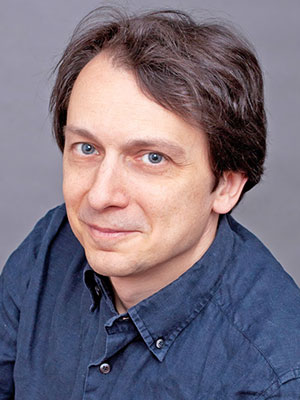
Schirin Amir-Moazami is a Professor at the Institute of Islamic Studies, Freie Universität Berlin, within the Department of History and Cultural Studies. She leads the research and teaching profile Islam in Europe and serves as a Principal Investigator at the Berlin Graduate School Muslim Cultures and Societies since 2009. Education: PhD in Political Science/Sociology (European University Institute, 2004) Affiliations: Freie Universität Berlin, Berlin University Alliance (RePLITO), SCRIPTS Cluster of Excellence Her research focuses on political theory , critical secular studies , and Islamic practices in European public spheres . She examines how liberal-secular regimes produce knowledge about Islam, intersecting with gendered, racialized hierarchies and institutional inclusion logics. Recent work analyzes funding structures, research agendas, and epistemic frameworks shaping discourses on Islam in Europe. Key themes include racialization of minorities , secular governance of religion , and postcolonial critiques of liberal frameworks . She contributes to editorial platforms like the Trafo Blog-Essay Series and collaborates on projects addressing antimuslimischer Rassismus and liberal epistemic traps .
Vaishak Belle is a Reader in Logic and Learning at the School of Informatics, University of Edinburgh, and serves as Director of Research and Innovation at the Bayes Centre (40% position). His academic career focuses on the critical intersection of artificial intelligence, formal logic, and machine learning systems. His research spans multiple domains within AI: Neurosymbolic AI integration approaches Logic-based machine learning frameworks Ethics, fairness, and responsibility in AI systems Generative AI and its societal impact Robotics with advanced reasoning capabilities Causal modeling and probabilistic reasoning Belle leads a research laboratory dedicated to advancing neurosymbolic AI, which combines the explainability of symbolic systems with the learning capabilities of neural networks. His recent work has explored abduction in logical frameworks, formal languages for AI safety, and the relevance of logic for general-purpose AI systems. He has made significant contributions to bridging the gap between theoretical AI foundations and practical applications. His publications demonstrate consistent focus on creating AI systems that can reason formally while learning from data, with applications ranging from robotics to ethical decision-making frameworks. His research addresses fundamental challenges in developing trustworthy, explainable AI that can operate safely in complex environments. Beyond technical research, Belle is actively engaged in AI education through executive programs on AI leadership and ethics, and has contributed to public understanding through his children's book "The girl and the robot" which explores human-robot relationships and emotional projection onto artificial agents. He maintains an active presence in the international AI research community, regularly participating in major workshops including Dagstuhl seminars on neurosymbolic AI, and collaborating with researchers across disciplines from computer science to philosophy.
Erik Learned-Miller is a Professor and Chair of the Faculty at the Manning College of Information and Computer Sciences (CICS), University of Massachusetts Amherst. He is based in the Department of Computer Science and leads the Computer Vision Lab, with strong affiliations to the Center for Data Science. His work bridges machine learning and computer vision, focusing on foundational and ethical aspects of visual recognition systems. Education: PhD in Electrical Engineering and Computer Science, Massachusetts Institute of Technology, 2002 MS in Electrical Engineering and Computer Science, Massachusetts Institute of Technology, 1997 BA in Psychology, Yale University, 1988 Learned-Miller's research centers on machine learning methods for computer vision problems, particularly in scenarios with limited labeled data. His work includes one-shot learning , face detection and recognition , image and video segmentation , joint image alignment , and text recognition . He emphasizes unsupervised, self-supervised, and semi-supervised learning paradigms, and is actively involved in addressing societal concerns around the regulation of face recognition technology. His contributions have had a major impact on the computer vision community, most notably through the creation of widely used benchmarks such as Labeled Faces in the Wild and the Face Detection Database and Benchmark , which have become standard evaluation tools in the field. Scientific Awards and Honors: NSF CAREER Award (2006) Mark Everingham Award (2019) Microsoft-MIT Graduate Student Fellowship Learned-Miller has played significant roles in the academic community, including serving as Program Chair for the 2015 Conference on Computer Vision and Pattern Recognition (CVPR) and as a member of the editorial board of the Journal of Machine Learning Research . He has secured competitive research funding, including the NSF CAREER award, supporting his long-term research agenda. While specific advisees are not listed, he mentors graduate students through his lab and departmental roles. He leads the Computer Vision Lab at UMass Amherst, a research group focused on advancing the state of the art in visual understanding through machine learning. The lab is part of the broader research ecosystem within CICS and collaborates with the Center for Data Science, contributing to interdisciplinary efforts in AI and data-driven science.
Prof. Baker Mohammad serves as Professor and Director of the System on Chip Lab in the Department of Computer and Information Engineering at Khalifa University. With over 15 years of industrial experience at Intel and Qualcomm designing microprocessors and DSP chips, he bridges academic research with real-world engineering challenges in high-performance computing and low-power systems. His educational background includes: Ph.D. in Electrical and Computer Engineering, University of Texas at Austin (2008) M.S. in Electrical and Computer Engineering, Arizona State University B.S. in Electrical Engineering, University of New Mexico Dr. Mohammad's research spans cutting-edge domains where VLSI design converges with AI acceleration and emerging memory technologies . His work pioneers Memristor applications in environmental sensing (radiation, vacuum, glucose) and neuromorphic computing, while advancing energy harvesting systems for wearable electronics. The integration of in-memory computing with security primitives represents a paradigm shift in hardware design, moving beyond traditional CMOS limitations. His publication trajectory reveals accelerating focus on self-powered neuromorphic systems and RRAM-based architectures, with recent work (2021-2023) emphasizing hardware-software co-design for edge AI. Over 75% of his recent publications involve cross-disciplinary collaborations spanning materials science, chemistry, and biomedical engineering. Notable scientific recognition includes: IEEE TVLSI Best Paper Award 2016 IEEE MWSCAS Myrill B. Reed Best Paper Award Qualcomm Qstar Award for Performance Leadership KUSTAR IP Excellence Award Multiple SRC Techon Best Session Papers As a dedicated mentor, he has supervised over 15 graduate students while securing competitive funding from Khalifa University, ADEK, Qualcomm, Tii, and UAE space agencies. His grant portfolio demonstrates exceptional translational impact, converting fundamental research in memristive devices into drone flight computers and medical sensors. Current projects integrate academic rigor with industrial deployment timelines. The System on Chip Lab operates as a multidisciplinary hub where semiconductor physicists collaborate with AI researchers to develop RISC-V-based secure processors and piezoelectric nanogenerator systems. Recent expansions include partnerships with Tii for aerospace applications and medical device startups for glucose monitoring technology.
Petri Myllymäki serves as Director of multiple prominent research entities at Aalto University's School of Science, including the Helsinki Institute for Information Technology (HIIT), the Department of Computer Science, the Finnish Center for Artificial Intelligence (FCAI), and his own research group. His leadership positions demonstrate significant influence in the Finnish and international AI research community. Dr. Myllymäki's research focuses on information discovery, Bayesian networks, information retrieval, and machine learning. His work bridges theoretical computer science with practical applications, particularly in developing systems that enhance how humans interact with information spaces. His research fingerprint prominently features Information Discovery (100%), Bayesian Networks (50%), Hashing (50%), Approximation Algorithms (50%), Information Retrieval (50%), structure learning (50%), Search Engine technology (37%), and Task Performance (33%). His recent publications (2015-2025) reveal a consistent trajectory in interactive information discovery systems, with increasing applications in diverse domains including decision science, public health, and social media analysis. Notably, his 2024-2025 work shows expansion into cognitive burden in decision-making, health outcomes research using machine learning, and political social media analysis – demonstrating how his core AI methodologies are being applied to address complex societal challenges. Recognized at AI Finland Gala 2024 for contribution reaching over 1.4 million users Featured in multiple media outlets including X (formerly Twitter) and Bluesky Work referenced in patents and Wikipedia pages Dr. Myllymäki actively hosts academic visitors and participates in collaborative research activities. His work contributes to UN Sustainable Development Goals through applications in information access and AI development. The Myllymäki Petri group (HIIT) serves as a hub for interdisciplinary research at the intersection of artificial intelligence, human-computer interaction, and information systems.
Freddy Bouchet is a Directeur de Recherche at CNRS and a Professeur attaché at École Normale Supérieure de Paris (ENS-PSL). His work bridges mathematical physics, climate science, data science, and statistical mechanics , focusing on turbulent flows, climate extremes, and large deviation theory . He will lead the Laboratoire de Météorologie Dynamique (LMD) starting 2025. Research Themes : Statistical mechanics of geophysical flows (Jupiter's jets, ocean currents). Large deviation theory for rare events in turbulence and climate. Non-equilibrium phase transitions in atmospheric/oceanic systems. Ensemble inequivalence in systems with long-range interactions. Scientific Awards : Three Physicists Prize Collaborations : Tapio Schneider, Antoine Venaille, J. Laurie, O. Zaboronski, B. Dubrulle, A. Venaille. Labs & Teams : Climate and Statistical Mechanics group at ENS de Lyon Future director of Laboratoire de Météorologie Dynamique (LMD/IPSL) Publications span climate dynamics, turbulence, statistical mechanics, and large deviation theory , with applications to Jupiter's atmosphere, ocean vortices, and non-equilibrium systems . His work often challenges paradigms like Tsallis non-extensive statistics.
Christian Grönroos is Professor of Marketing at Hanken School of Economics, recognized among the top marketing researchers globally. His pioneering work established service marketing theory and the service logic paradigm. Research focuses on value co-creation frameworks, relationship marketing evolution, and service-driven business model innovation. Publications have transformed understanding of customer management and service productivity. Awards include the Don Schultz Award (2025) and AMS-Parasuraman Best Paper Award. Recent work examines service-informed marketing reform and employee alignment in brand promise co-creation.
Professor Tulika Mitra is the Dean of the School of Computing and Vice Provost (Special Projects) at the National University of Singapore (NUS). She holds the Provost’s Chair Professor in the Department of Computer Science and has been instrumental in shaping academic policies and strategic initiatives at NUS since joining in 2001. PhD in Computer Science, Stony Brook University (2000) M.E. in Computer Science, Indian Institute of Science (1997) B.E. in Computer Science, Jadavpur University (1995) Her research focuses on hardware-software co-design for energy-efficient computing systems, particularly in real-time embedded systems, heterogeneous architectures, and AI accelerators. She leads major research programs such as the NRF Competitive Research Programme on Low-Power Edge Accelerators and the MOE Tier-3 Programme on Green AI , collaborating with industry leaders like ARM, AMD, and Meta. Her recent publications highlight innovations in CGRA optimization , sparse attention mechanisms , photonic-digital hybrid architectures , and low-power ML inference . These works often integrate compiler techniques, architectural design, and real-time constraints for edge computing applications. Scientific Awards : ESWEEK Test-of-Time Award (2022), ACM SIGDA Distinguished Service Award, IEEE CEDA Outstanding Service Recognition Award, Teaching Excellence Award (2006), and multiple best paper recognitions. Education Leadership : Spearheaded the Computer Engineering (CEG) Programme at NUS, a joint initiative between Engineering and Computing. As a mentor , she has supervised over 25 PhD students , many now in prominent academic or industrial roles. Her research group eCO Lab focuses on embedded computing challenges, while her grant collaborations include projects on 5G base stations, reconfigurable architectures, and IoT-optimized SoCs.
Dr Juliet Bennett is a Research Fellow at the Sydney Centre for Healthy Societies (SCHS) and Charles Perkins Centre, University of Sydney. Her work bridges process philosophy with systemic interventions for social and ecological wellbeing. She holds a PhD in Peace and Conflict Studies, focusing on paradigm shifts from static to process thinking. Previously, she managed collaborative research at Sydney Policy Lab and directed the Sydney Peace Foundation. Education: PhD (Peace and Conflict Studies), MPhil/MA (Peace and Conflict Studies). Teaching includes units on peace studies, narratology, and structural violence at the University of Sydney and Lenoir Rhyne University. Research interests center on mitigating social/ecological injustice, structural violence, and climate change through critical sociology, contextual economics, and participatory methods. Current projects examine food systems and ultra-processed foods via critical social theory. Awards: 2020 Excellence in Teaching for 'Key Issues in Peace and Conflict Studies'. Memberships include Sydney Policy Lab, New Economic Networks Australia, and the International Peace Research Association. Publications span process philosophy applications, climate policy, and participatory research methods. Her work advocates for systemic transformations toward ecological civilization through interdisciplinary collaboration.
GONG Jiangbin serves as Professor and Head of Department at the National University of Singapore (NUS), holding the prestigious Provost's Chair Professorship (2020-2026). He is a Principal Investigator at the Centre for Quantum Technologies (CQT) with office S12-02-10 and contact email phygj@nus.edu.sg. Education: PhD, University of Toronto, Canada (2001) His research program centers on topological quantum phenomena, with primary focus on novel topological phases of matter and their applications in quantum computation and information transfer. The group actively investigates quantum dynamics control, quantum simulation frameworks for metrology/sensing applications, disorder physics in few/many-body systems, quantum chaos, and emerging quantum machine learning paradigms to bridge theoretical advances with practical quantum technologies. Analysis of recent publications (2018-2024) reveals consistent expertise in topological quantum systems, spanning non-Abelian braiding in Majorana time crystals, Thouless pumping with single spins, exotic Floquet semimetals, acoustic topological platforms, and KPZ physics in Anderson localization - demonstrating deep integration of theoretical modeling with experimental quantum platforms. Scientific Awards: Provost's Chair Professorship (2020-2026) National Research Foundation Investigatorship (class of 2017) No explicit information regarding student advising or specific research grants was provided in the source material, though his leadership role suggests significant mentorship responsibilities and grant oversight. Gong leads a multidisciplinary research group at CQT/NUS that synergizes theoretical quantum physics with experimental quantum technologies, maintaining active collaborations across quantum simulation, topological materials, and quantum information science to advance next-generation quantum computing architectures.
Daniel Grier is an Assistant Professor jointly appointed in the Computer Science and Engineering and Mathematics departments at the University of California, San Diego (UCSD). His research focuses on quantum complexity theory , particularly exploring near-term quantum computing paradigms and proving quantum advantage over classical systems. He holds a Ph.D. from MIT and was previously a postdoctoral fellow at the University of Waterloo’s Institute for Quantum Computing. Education: Ph.D. in Computer Science, MIT B.S. in Computer Science and Mathematics, University of South Carolina Research Interests: Grier’s work bridges theoretical computer science and quantum computing, emphasizing algorithm design, complexity class separations, and foundational questions about quantum supremacy. He studies how low-depth quantum circuits, boson sampling, and other near-term technologies can achieve computational tasks classically deemed intractable. Recent Article Trends: His publications explore efficient quantum state learning (e.g., classical shadows), hardness results for quantum sampling problems (e.g., bipartite Gaussian boson sampling), and circuit lower bounds (e.g., depth-2 QAC circuits). These contributions highlight his focus on rigorously defining quantum computational advantages. Awards: None explicitly listed in the text. Advising & Grants: Advises at least one student, Jackson Morris. His research is supported by grants exploring quantum complexity and algorithm design. Teaches advanced courses on quantum complexity theory, computability, discrete mathematics, and quantum computing fundamentals. Labs/Teams: Maintains an active lab focused on quantum complexity theory, collaborating with colleagues on topics like interactive protocols and shallow quantum circuits.
Stefano Fusi is an Associate Professor of Neuroscience at Columbia University's Vagelos College of Physicians and Surgeons, with joint affiliations at the Mortimer B. Zuckerman Mind Brain Behavior Institute and Kavli Institute. His laboratory focuses on computational modeling of neural circuits and neuromorphic engineering. Education PhD in Physics, Hebrew University of Jerusalem (1999) BS in Physics, Sapienza University of Rome (1992) Research Focus Fusi investigates how biological complexity supports neural computation through three primary domains: theoretical analysis of neural circuit dynamics, representational geometry in learning systems, and hardware implementations of brain-inspired algorithms. His work bridges machine learning, neurophysiology, and theoretical physics, emphasizing high-dimensional representations and memory optimization. Recent publications demonstrate consistent focus on neural coding principles across hippocampus, prefrontal cortex, and sensory systems, with innovations in modeling working memory, stress responses, and cross-species computational paradigms. Collaborations & Labs Leads an interdisciplinary laboratory collaborating with Columbia experimental neuroscientists, MIT engineers, and Stanford computational researchers to validate theoretical models. Current projects include neuromorphic hardware development and neural decoding of emotional states.
Dr. hab. Piotr Łukomski is an Associate Professor at the Department of Political Theory, Institute of Political Science, University of Wrocław. His academic career focuses on the intersection of political theory, philosophy, and cultural analysis, with notable contributions to Hannah Arendt's philosophy, game theory applications in politics, and the role of imagination in political thought. Department: Political Theory Email: piotr.lukomski@uwr.edu.pl ORCID: 0000-0002-5307-616X Research Interests: His work spans conceptual metaphors in political theory, decision-making under hazardous conditions, cultural evolution of tyranny, and the aestheticization of politics. He examines how digital technologies (like VR) reshape political identity and how Arendtian frameworks apply to modern governance. Teaching: Coordinates social consulting labs and teaches decision-making processes in political contexts, with a focus on practical applications in hazardous conditions. Publications: Recent articles analyze VR-era political identity, Hannah Arendt's relevance to modern democracy, and the integration of problem-solving strategies in political thought.
Nati Srebro is a Professor at the Toyota Technological Institute at Chicago with a cross-appointment as a Part-Time Professor in the Department of Computer Science and Committee on Computational and Applied Mathematics at the University of Chicago. He earned his PhD from MIT in 2004 and has held previous positions including post-doctoral fellow at the University of Toronto, Visiting Scientist at IBM, and Associate Professor at the Technion. Professor Srebro's research focuses on methodological, statistical and computational aspects of Machine Learning and Optimization. His work spans foundational contributions to learning theory, matrix reconstruction, and optimization techniques. He is particularly known for introducing the use of nuclear norm for machine learning, work on wider Markov networks, and advancing our understanding of the relationship between learning and optimization. His current research interests include understanding deep learning through optimization, distributed and federated learning systems, algorithmic fairness, and practical adaptive data analysis. His publication record shows consistent contributions to core machine learning conferences and workshops, with recent work focusing on symmetric and asymmetric hashing techniques, matrix parameter learning, and optimization methods. The publications demonstrate a strong theoretical foundation with practical applications across various machine learning domains. Professor Srebro has been actively involved in several research programs including the Federated and Collaborative Learning program (Spring 2026, as Visiting Scientist and Program Organizer), Modern Paradigms in Generalization (Fall 2024), and multiple summer clusters on Deep Learning Theory and Fairness. His program participation reflects his leadership in emerging areas of machine learning research. Contact: nati@ttic.edu | (773) 834-7493 | Toyota Technological Institute at Chicago, 6045 S. Kenwood Ave., Chicago, IL 60637
Dimitrios P. Tsomocos is a Professor of Financial Economics at Saïd Business School and a Fellow in Management at St Edmund Hall, University of Oxford. He holds a BA, MA, MPhil, and PhD from Yale University and previously worked at the Bank of England. He serves on editorial boards including Annals of Finance and Economic Theory, and is a Senior Research Associate at the Financial Markets Group at the London School of Economics. His educational background includes: University of Oxford: M.A. by resolution, 2002 Yale University: Ph.D. in economics, 1996 Yale University: M.Phil. in economics, 1992 Yale University: M.A. in economics, 1990 Yale University: B.A. in economics, 1989 Professor Tsomocos is a mathematical economist specializing in Central Banking, Banking and regulation, Incomplete asset markets, Systemic risk, Financial instability, and Issues of new financial architecture. His research focuses on contagion, financial fragility, interbank linkages, and the impact of the Basel Accord using General Equilibrium models with incomplete asset markets, money, and endogenous default. He is working toward designing a new paradigm of monetary policy, financial stability analysis, and macroprudential regulation. His recent publications show a consistent focus on financial stability, banking regulation, and the interaction between monetary policy and financial stability. The research spans theoretical modeling of bankruptcy and default in general equilibrium frameworks, practical applications to bank regulation, analysis of commodity cycles in emerging economies, and policy responses to crises like the COVID-19 pandemic. His work frequently employs quantitative methods and general equilibrium modeling to address pressing issues in financial economics. His scientific achievements include: 2004 Bank Sabatell prize for the best work on the economics of banking (for "Book vs. Fair Value Accounting in Banking and Intertemporal Smoothing") Co-development of the Goodhart-Tsomocos model of financial fragility (2003) Testimony to House of Lords for the Economic and Financial Affairs and International Trade Sub Committee's report (2011) Appointment to Research Advisory Board, Central Bank of Russian Federation (2018) Professor Tsomocos has advised numerous PhD students and collaborated extensively with central banks worldwide. He has served as an economic advisor to a major political party in Greece and regularly provides commentary on the Greek economy. His research has had substantial policy impact, with the Goodhart-Tsomocos model implemented by more than ten central banks including the Bank of Bulgaria, Bank of Colombia, Bank of England, and Bank of Korea. He continues to collaborate with researchers from the ECB, Central Bank of the Russian Federation, and Bank of Chile on updated versions of his financial fragility model. He co-developed the Goodhart-Tsomocos model of financial fragility while working at the Bank of England, which has been implemented at various central banks globally. His research group at Oxford continues to refine this model and apply it to contemporary financial stability challenges.