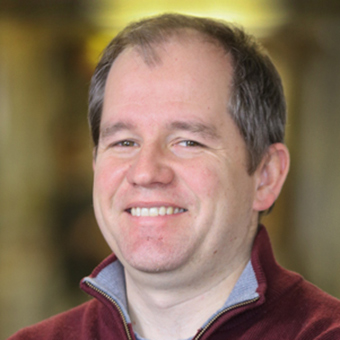
David Brydan is Senior Lecturer in the History of Modern International Relations at King's College London and current Senior Tutor in the History department. His research examines twentieth-century internationalism, intelligence history, and modern Spanish history, with current book projects on the history of intelligence and international humanitarianism. Key research areas: Right-wing and fascist international cooperation networks History of intelligence and ideas about cognitive elites Spanish humanitarianism and international engagement Religious dimensions of international cooperation His monograph Franco's Internationalists (2019) received international attention, and he co-edited Internationalists in European History (2021). Brydan writes for public audiences in outlets including El País and engages with history teachers through the Historical Association.
Zvonimir Dogic is a Research Associate Professor of Physics at the Martin A. Fisher School of Physics, Brandeis University. He leads the Dogic Lab, focusing on self-assembly of active and soft materials, with interdisciplinary work spanning statistical mechanics, biochemistry, and biophysics. His research explores how particle shape, chirality, and entropic forces drive emergent structures in colloidal systems and active matter. He holds a PhD from Brandeis University (2001) and has supervised numerous PhD students now in academic and industrial roles. Notable honors include the 2010 Cozzarelli Prize and the 2013 Andor Insight Award for his work on oscillating microtubule bundles. Research interests include active matter dynamics, liquid crystalline phases, and biomimetic systems. Recent work includes studies on microtubule-based active gels, chiral colloids, and self-organized cilia-like structures. His lab collaborates with institutions like Harvard, the Mayo Clinic, and the Francis Crick Institute. Key funding sources include the NSF MRSEC, W.M. Keck Foundation, and NIH. The lab’s YouTube channel and Science Blog posts highlight breakthroughs like self-propelled emulsions and entropy-driven membrane formation.
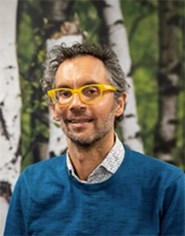
Nicholas Kamenos is a Professor at the Department of Ecology, Environment and Geoscience and Director of the Umeå Marine Sciences Centre (UMF) at Umeå University, Sweden. His research bridges global biogeochemical cycles and ecological responses to climate change, focusing on ecosystem engineers like coralline algae, corals, and seagrass. He works in polar to tropical regions, employing SCUBA, mesocosm experiments, and advanced analytical tools. Role: Director, Umeå Marine Sciences Centre Research Focus: Climate change impacts, ocean acidification, blue carbon, Arctic-temperate-tropical ecosystems His recent publications highlight interdisciplinary approaches to understanding marine ecosystem resilience. Research spans proxy development for historical climate reconstruction, carbon burial dynamics, and the role of calcifying organisms in carbon cycling, with applications to conservation and policy. Key grants include projects like AQUASERV (2024–2029) on service provision in marine ecosystems, Light Harvesting in Coralline Algae (2024–2027), and IRISCC (2024–2026) exploring seawater temperature changes. Collaborative work addresses coastal deoxygenation and socio-political aspects of blue carbon economies. He leads the Umeå Marine Sciences Centre, leveraging facilities like the Marine Mesocosm Facility and advanced tools (laser ablation ICPMS, isotope ratio mass spectrometry). His work integrates biological, geological, and chemical techniques to address multidisciplinary questions.
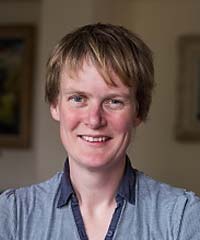
Suzie Dunn is an Assistant Professor at Dalhousie University's Schulich School of Law and Acting Director of the Law & Technology Institute. She teaches Contracts, Judicial Decision-Making, Law and Technology, Intellectual Property, and Legal Ethics. Her research focuses on the intersection of gender, equality, technology, and law, particularly technology-facilitated violence, deepfakes, and digital privacy. Education: PhD candidate at the University of Ottawa Faculty of Law, with JD, LLM, and BA degrees. She previously served as a part-time professor at the University of Ottawa, where she taught Contracts and Law of Images, earning a 2021 teaching excellence award. Awards include the Joseph-Armand Bombardier Scholarship for PhD research and the Greenberg Prize for Feminist Research. Professional roles include advising the G7 and UN on gender-based violence in digital contexts, contributing to CIPPIC interventions in landmark Supreme Court cases (R v Jarvis, R v Downes), and serving on advisory boards for organizations like the Women’s Legal Education and Action Fund. She is a Senior Fellow at CIGI, working on global projects against online gender-based violence, and co-authored a UN resolution on digital violence prevention. Her work extends to tech safety toolkits for domestic violence shelters, policy development, and international collaborations. She was called to the Ontario bar in 2016 and actively engages in public discourse on AI ethics and digital rights.
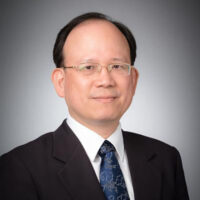
Dr. Chih-Hung (James) Chen is a Professor in the Department of Electrical & Computer Engineering at McMaster University. His research focuses on noise-related issues in semiconductor devices, low-noise circuit design for medical and communication applications, and thermal noise characterization in nano-scale transistors. He holds senior member status in IEEE and is a licensed Professional Engineer in Ontario. Education: Ph.D., McMaster University, 2002 M.A.Sc., Simon Fraser University, 1997 B.Sc., National Central University, Taiwan, 1991 Research interests include biomedical technologies, microelectronics & VLSI, and digital/smart systems. He has collaborated with companies like Sony Corporation, United Microelectronics Corporation, and Focus Microwaves. His work is supported by grants from the Canada Foundation for Innovation (CFI), NSERC, and the Ontario Innovation Trust (OIT). Notable achievements include serving on the International Advisory Committee of the International Conference on Noise and Fluctuations (2015) and as an editor for the Journal of Low Power Electronics and Applications since 2022. Teaching includes courses like Analysis and Design of RF ICs for Communications and Electronic Devices and Circuits 2. His research lab focuses on advancing noise measurement techniques and designing ultra-low-power analog circuits for emerging applications.
Hilary Greaves is a Professor of Philosophy at the University of Oxford and Supernumerary Fellow at Merton College. She holds visiting appointments at the Institute for Futures Studies (Stockholm) and the University of Michigan. Her research focuses on ethics, formal epistemology, and philosophy of physics, with particular emphasis on consequentialism, population ethics, effective altruism, and AI ethics. She previously directed the Global Priorities Institute (2018–2022). Education: PhD in Philosophy (Rutgers University, 2008); BA in Physics and Philosophy (Oxford, 2003, First Class Honors). Awards include the Leverhulme Research Fellowship (2018–2020) and the British Academy Rising Star Engagement Award (2015–2017). Research interests span moral philosophy, including aggregation debates, existential risk analysis, and interdisciplinary work with economics. She has published extensively in journals like Philosophy and Phenomenological Research and Mind , and contributed to edited volumes on consequentialism and population ethics. Teaching includes graduate courses on effective altruism, population ethics, and undergraduate modules in moral philosophy and philosophy of physics. She has supervised eight DPhil theses and organized workshops on global priorities research and population ethics. Grants include a £1.2M Leverhulme Trust project on population ethics (2014–2018) and collaborations with the Oxford Martin School on human rights for future generations. Her lab, the Global Priorities Institute, focuses on longtermist ethical frameworks and policy applications.
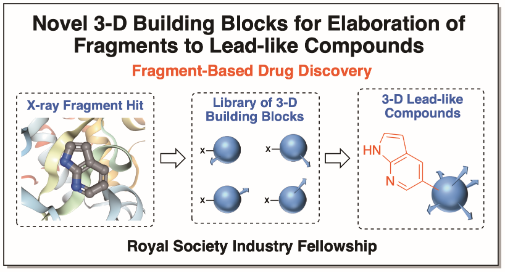
Peter O'Brien is Professor of Chemistry at the University of York, leading research in organic synthesis and medicinal chemistry. His group develops novel methods for stereospecific Negishi/Suzuki-Miyaura cross-coupling reactions and 3D fragment-based drug discovery. Collaborations with AstraZeneca, Diamond X-Chem, and Redbrick Molecular focus on COVID-19 therapeutics and building-block libraries. O'Brien employs high-throughput robotics for reaction optimization and mechanistic studies. His work bridges fundamental organolithium chemistry with applications in synthesizing bioactive heterocycles (piperidines, pyrrolidines). The York 3D Fragment Library, featuring shape-diverse compounds, identified hits against SARS-CoV-2 proteins. Awards include the RSC Stereochemistry Award (2013) and YUSU Teacher of the Year (2019). Selected honors: EPSRC/IAA grants for 3D building blocks commercialization Industrial Fellowships with AstraZeneca (2019-2022) Vice-Chancellor's Teaching Award (2015)
Prof Ineke De Moortel is a Professor in Applied Mathematics at the University of St Andrews, affiliated with the School of Mathematics and Statistics. Her research focuses on magnetohydrodynamic (MHD) waves in the solar corona, coronal seismology, and numerical modeling of solar phenomena. She has led projects funded by organizations like the Leverhulme Trust and STFC, contributing to understanding coronal heating mechanisms and wave dynamics. Prof De Moortel has supervised PhD students including Elisabeth Enerhaug and Anmol Kumar. She holds editorial roles, including at the Monthly Notices of the Royal Astronomical Society, and has received prestigious awards such as the Phillip Leverhulme Prize (2009) and the RAS Fowler Award (2010). Research Highlights: MHD wave propagation, coronal seismology, numerical simulations of solar plasma dynamics. Projects: Includes 'Joining up an Unprecedented View of our Sun' (Leverhulme Trust) and collaborations on the Multi-slit Solar Explorer (MUSE) mission. Awards: Royal Society of Edinburgh Young Academy Co-Chair (2012), Deputy Chair of UK Solar Physics Council (2013).
Kari Ingstad is a Professor of Sociology at the Faculty of Nursing and Health Sciences, Nord University, and currently serves as Vice-Dean for Research. Her work bridges academia, clinical practice, and policy, focusing on healthcare organization, leadership, and innovation in Norway's health sector. She holds a PhD in Sociology from NTNU (2011) and has extensive clinical experience in municipal and specialist healthcare. Education: PhD in Sociology, NTNU, 2011 Nursing background from municipal and specialist healthcare sectors Research Interests: Workforce planning and staffing strategies in healthcare Impact of shift scheduling on employee well-being and patient safety Integration of artificial intelligence in healthcare operations Cross-sectoral collaboration and innovation in health services Recent Research Trends: Her 2024 publications emphasize strategic staffing solutions, AI-driven shift planning, and long-shift work-life balance. Key projects include the OptiCare-AI initiative (Norwegian Research Council-funded), exploring AI applications for optimizing healthcare resource allocation. Leadership & Grants: Leads the Acute Care, Innovation and Patient Safety (AKIP) research group Principal Investigator on OptiCare-AI (2023–present) Labs/Teams: Active collaborations with the AKIP group and national/international networks on healthcare workforce issues.
Glenda Sluga is a Full-time Professor with a Joint Chair in the Department of History at the European University Institute (EUI) and also holds a concurrent appointment at the Robert Schuman Centre for Advanced Studies. She is a leading scholar in international history, capitalism, and globalization, with a strong focus on 20th-century economic and diplomatic thought. Her research is widely recognized and funded by prestigious grants, including an ERC Advanced Grant and an Australian Research Council Laureate Fellowship. Her research interests span a broad range of fields including: International and Diplomatic History Global and Transnational History Capitalism and Economic History Environmental and Cultural History European Integration and Decolonisation Intellectual and Political History Recent publications highlight her engagement with global economic thinking, climate and capitalism, the history of international organizations, and the construction of international order. Her work often bridges conceptual and empirical analysis, focusing on figures like Barbara Ward and Margaret Mead, as well as major events such as the 1972 UN Conference on the Human Environment. Themes of memory, nationalism, and global publics recur across her recent output, indicating a deepening exploration of the cultural dimensions of internationalism. Her scientific honors include: European Research Council Advanced Grant (2020) Australian Research Council Kathleen Fitzpatrick Laureate Fellowship (2013) Fellow of the Australian Academy of the Humanities Glenda Sluga actively mentors PhD students and serves as second reader for numerous candidates, demonstrating strong commitment to academic training. She leads major research initiatives such as the project on ‘Twentieth Century International Economic Thinking’ and participates in working groups on business history, diplomatic history, and planetary futures. There is no indication of lab-based research, but her leadership in interdisciplinary clusters and grant-funded programs underscores her role in shaping collaborative academic environments.
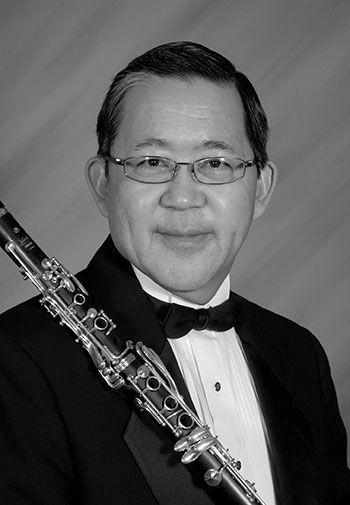
Miles M. Ishigaki serves as Professor of Music in the Department of Music within California State University, Fresno's College of Arts and Humanities. He has taught applied clarinet, chamber music, music theory, and music appreciation at Fresno State since 1987 while directing the university clarinet choir. From 1989-2017, he held the position of state chair for the National Association of College Wind and Percussion Instructors, demonstrating sustained institutional commitment. His academic credentials include: Doctor of Musical Arts in Performance, University of Oklahoma (1988) Doctoral study in Music Performance, University of Arizona (1981-1982) Master of Music in Performance, Colorado State University (1981) Dual Bachelor's degrees: Music Education and Music Performance, University of Northern Colorado (1978) Dr. Ishigaki's research centers on the dialectic between intuition and analytical understanding in musical performance, particularly regarding clarinet repertoire. His seminal work documents interpretive approaches of legendary clarinetists including Larry Combs, Stanley Hasty, and Leon Russianoff, focusing on Stravinsky's Three Pieces for Solo Clarinet. His collaborative research with Dr. Michael Rogers bridges music theory and performance practice, revealing how structural analysis informs expressive execution. This scholarly trajectory consistently examines the cognitive and technical dimensions of artistic mastery. His publications from 1988-2017 reveal evolving emphases from symposium documentation and performance analysis toward technology integration in music education, culminating in the 2017 Music Fundamentals ebook. Collectively, his work establishes clarinet pedagogy as both scientific discipline and artistic practice, with growing attention to digital learning environments while maintaining core focus on interpretive authenticity. His recognitions include: 2013 Provost's Teaching Award in Technology for innovative digital pedagogy 2006 Honorary Alumnus distinction from University of Northern Colorado Dr. Ishigaki has mentored exceptional students who have earned Fulbright Scholarships, McNair Doctoral grants, and participation in national honor ensembles. His studio consistently produces competition winners while he maintains active performance engagements with regional orchestras and international venues. Beyond academia, he serves as COO of I&M, Inc., applying sustainable technology principles to water and energy systems, demonstrating interdisciplinary impact beyond music. As founder of both the West Coast Clarinet Congress and Fresno State Faculty Clarinet Quartet, he cultivates professional communities while maintaining Yamaha Artist status. His community outreach through organizations like the Japanese American Citizen's League and Valley Children's Hospital reflects deep civic engagement alongside scholarly pursuits.
Mark Lance is a Professor in the Philosophy Department at Georgetown University and co-founded the Program on Justice and Peace , where he also holds a professorial appointment. His academic career includes a three-year post-doctoral fellowship at Syracuse University after earning his Ph.D. at the University of Pittsburgh and a B.A. from the Ohio State University . Education Ph.D., University of Pittsburgh B.A., Ohio State University Lance's research spans Philosophy of Language , Epistemology , and Metaphysics , with a focus on Normative Pragmatics , Anarchist Theory , and Social Justice Activism . He collaborates with Rebecca Kukla on projects examining intersubjective norms, such as in his work ‘Yo!’ and ‘Lo!’: The Pragmatic Topography of the Space of Reasons (Harvard University Press, 2009), and engages with Wilfrid Sellars ' legacy in works like Placing in a Space of Norms (2008). His recent Google Scholar publications (2024–2020) highlight intersections of Gender Ethics , Mutual Aid , and Pragmatic Normativity . For instance, Telling Gender (2023) bridges linguistic pragmatics and ethical ascription, while Anarchist Responses to a Pandemic (2020) analyzes collective action during crises. The Truth Telling Project further reflects his commitment to anti-racist organizing and education. notable works include: Leave the Gun, Take the Cannoli (2013) on second-person normative calls. The Grammar of Meaning (2002), a foundational text on linguistic normativity. Defending Moral Particularism (2006), challenging theoretical ethical frameworks.
Jeffrey T. Jensen, M.D., M.P.H., is the Leon Speroff Professor and Vice Chair for Research in the Department of Obstetrics and Gynecology at Oregon Health & Science University (OHSU). He holds joint appointments as Professor of Public Health and Preventive Medicine and serves as a Core Scientist at the Oregon National Primate Research Center (ONPRC). Dr. Jensen completed his medical degree at Emory University, a Master of Public Health at the University of Washington, and residency training at OHSU. Research Focus: Dr. Jensen leads translational and clinical research programs focused on contraceptive innovation. His work emphasizes nonhuman primate models to develop: Novel contraceptive agents targeting oocyte-specific pathways Non-surgical permanent contraception methods Optimized emergency contraception for diverse populations He directs OHSU's Women’s Health Research Unit and the Gates Foundation-funded Oregon Permanent Contraception Research Center (OPERM). Recent Publications: His 15 most recent articles (2023-2025) demonstrate concentrated expertise in: Advanced hormonal contraceptive formulations (IUDs, vaginal rings, oral agents) Weight-adjusted dosing strategies for emergency contraception Biomarker validation for contraceptive efficacy monitoring Real-world assessment of bleeding pattern management Leadership & Collaboration: Dr. Jensen is Principal Investigator of the NICHD Contraception Clinical Trials Network and collaborates with global health organizations (CONRAD, FHI360, Population Council). He serves as Deputy Editor for the journal Contraception and consults for multiple pharmaceutical companies on product development.
Professor Holly Thorpe is a Professor of Sociology in Te Huataki Waiora / School of Health at the University of Waikato, specializing in Sport and Human Movement. She serves as Associate Dean Research in the Division of Health PVC Office and is an internationally recognized sociologist of sport, physical culture and gender whose work has earned prestigious fellowships and awards including Fulbright, Leverhulme, and Royal Society honors. Her educational background includes a PhD from the University of Waikato and Papa Reo Level 1 certification from Te Wananga o Aotearoa, reflecting both academic excellence and cultural engagement with Māori language and knowledge systems. Professor Thorpe's research centers on equity and inclusion in sporting cultures, with particular attention to women's health and wellbeing, sport and gender, and the impact of social media on athletic experiences. She employs critical and feminist theoretical frameworks with expertise in qualitative methods to examine how sport, physical activity, and health intersect in rapidly changing social landscapes. Her work spans gender studies, feminist methodologies, sports science, sociology of health, and digital media studies within sporting contexts, with a strong commitment to community-engaged research. Her extensive publication record reveals consistent thematic focus on contemporary issues including menstruation in sport, digital technologies and athlete experiences, pandemic impacts on wellbeing, and the gendered dimensions of mega-sport events. Her work frequently employs intersectional analysis and collaborates across disciplines to address complex questions about embodiment, identity, and social change in sporting cultures, particularly as they relate to women and marginalized communities. Professor Thorpe's significant scholarly recognition includes: Royal Society Early Career Research Excellence Award for Social Sciences (2018) Fellow of the North American Society for the Sociology of Sport (2018) Royal Society James Cook Fellowship for a two-year project focused on women's wellbeing through and beyond pandemic (2021) She actively supervises students and has secured substantial research funding including the Te Punaha Matatini CORE Research Institute project 'Youth Wellbeing in Uncertain Times: The Voices of Rangatahi from Flood-Effected Tairāwhiti Gisborne' (2023-2025). Professor Thorpe collaborates extensively with international and national sports organizations including the International Olympic Committee, High Performance New Zealand, Sport New Zealand, Skateistan, and Voice in Sport to ensure her research has real-world impact on policy and practice. She serves as Series co-editor for 'New Femininities in Digital, Physical and Sporting Cultures' and maintains active media engagement through The Conversation and other outlets. Professor Thorpe leads several significant research initiatives including 'Reimagining Fields of Play' (2023) and co-organized the 'Gender, Health and Wellbeing Symposium' (2022), demonstrating her commitment to creating spaces for critical dialogue about sport, gender, and health while advancing culturally responsive methodologies that center Indigenous and diverse perspectives.
Sarah Shirazyan is a Lecturer in Law at Stanford Law School , where she designed the Interpol-Stanford Policy Lab. She also serves as Director and Head of Meta's GenAI Product Policy work, overseeing responsible AI development across Meta's platforms. Doctor of Juridical Sciences (J.S.D.) from Stanford Law School LL.M. from SOAS/UCL, University of London Her research focuses on the intersection of national security , public policy , and international law , particularly examining: Effectiveness of UN Security Council responses to WMD terrorism Framework for regional organization collaboration in WMD prevention Platform content policy development and misinformation governance Responsible AI implementation under legal frameworks Key publication themes include: Platform algorithmic accountability Media capture in digital domains Content policy development during crises UN Security Council institutional limitations Regional organization synergies in security Recipient of Gerald J. Lieberman Award for research, teaching, and community service Professional affiliations: Stanford Law School Stanford Center for International Security and Cooperation (CISAC) INTERPOL European Court of Human Rights Council of Europe United Nations