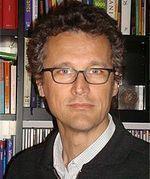
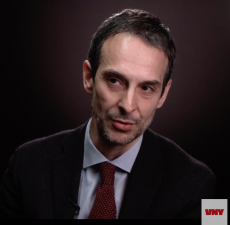
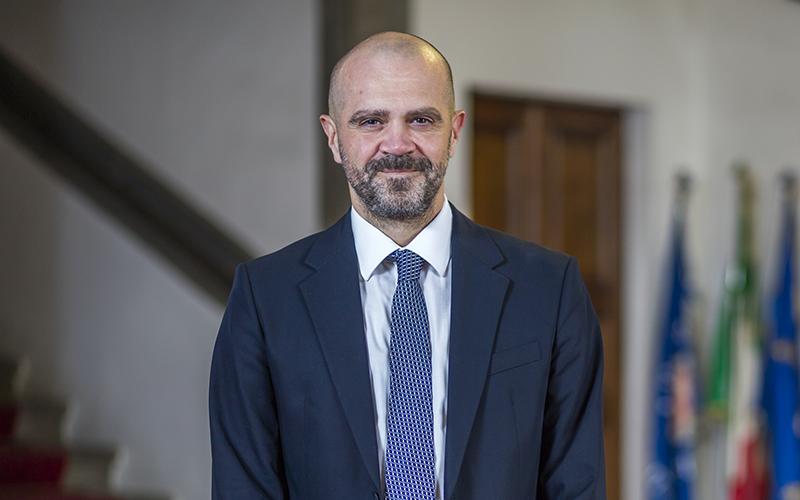
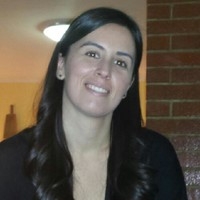
Aldo Geuna is a Full Professor at the Department of Cultures, Politics and Society at the University of Turin, specializing in economic policy (SSD: SECS-P/02). His office is located at the "Luigi Einaudi" Campus in Turin, and he is currently on sabbatical leave until September 2026 during which time he is not supervising thesis work. Professor Geuna's research spans multiple areas within the economics of science, innovation, and technology. His primary interests include university-industry relations, research careers and academic mobility, gender issues in academia, science policy, and the history of the Italian automotive industry. He has made significant contributions to understanding how universities interact with industry, the impact of research assessment systems, and the dynamics of academic careers. His recent publications demonstrate a strong focus on the automotive industry, particularly examining the Italian automotive sector's evolution and its regional impacts in Turin. He also investigates PhD career trajectories, university-industry collaboration models, and the relationship between research funding, productivity, and gender. His work often employs comparative approaches, particularly between European and US contexts. Professor Geuna teaches Economics of Knowledge (CPS0831) and has supervised numerous theses on topics ranging from AI in medical diagnostics to electric vehicles and the history of the Italian automotive industry. His research has been published in leading journals including Research Policy, Industrial and Corporate Change, and Higher Education.
Emilio Russo is a Professor at the Department of Modern Literature and Culture within the Faculty of Arts and Philosophy at Sapienza University of Rome . He is a leading scholar in Italian literature, with a focus on Renaissance and Baroque studies, textual criticism, and digital humanities initiatives. Email: emilio.russo@uniroma1.it Office Hours: Thursdays 12-2 PM (Studio A, 4th floor) and previously 11-13 AM (Studio A, 3rd floor) Russo's research spans: Italian literary history from origins to late 19th century Digital preservation of autograph manuscripts Torquato Tasso studies and intertextuality Epistolary traditions and critical methodologies Baroque aesthetics in Marino's works Philological approaches to unfinished texts His recent publications (2021-2025) explore digital Renaissance environments, manuscript analysis, and intersections between philosophy and literature. Russo leads the Manuscripts and Author Libraries Online: Torquato Tasso research project, emphasizing digital critical editions and cultural network mapping.
Fausto Francesco Lizzio is a Fixed-term Researcher at the Department of Mechanical and Aerospace Engineering (DIMEAS) within the College of Mechanical, Aerospace and Automotive Engineering at the Polytechnic University of Turin . His work focuses on consensus protocols , distributed control , and unmanned aerial systems (UAVs) . Research Interests: Multi-agent systems, time-delay networks, robotics, and aerospace engineering. Teaching Roles: Course instructor for advanced flight dynamics and collaborator in courses on spacecraft control, flight mechanics, and aerospace simulation. His recent research explores stability-switching properties in multi-agent systems, decentralized target estimation for UAV swarms, and digital twin applications for prognostic health management. These studies intersect aerospace engineering, control theory, and networked robotics. Scientific Contributions: He has been recognized with an open badge for participating in research funding calls through the Rimini School 2025. His publications span journals like IEEE Control Systems Letters , Drones , and conference proceedings for SICE and EASN events.
Luca Fiori is a Full Professor at the Department of Civil, Environmental and Mechanical Engineering, University of Trento. His work integrates chemical engineering principles with environmental applications, focusing on sustainable technologies for biomass conversion and waste valorization. Education: Laurea in Chemical Engineering (1998), PhD in Chemical Engineering (2003) Academic Career: Researcher (2004), confirmed faculty (2007) Research Interests: Specializing in two key areas: (1) Supercritical fluid extraction for food industry byproducts valorization, particularly grape seeds and agricultural waste; (2) Thermochemical conversion of biomass through pyrolysis and gasification. His work includes experimental setup of supercritical extraction labs and development of solid-gas equilibrium models for biomass conversion. Recent Research Trends: Focus on hydrothermal carbonization (HTC) for bioplastic disposal, wastewater treatment materials, and biofuel production. Collaborative projects bridge pulp&paper, waste treatment, and chemical industries through HTC integration. Scientific Awards: PAT-CRS 2007 funding for supercritical CO2 extraction research Labs & Infrastructure: Developed ex novo supercritical fluid extraction laboratory and experimental gasification/pyrolysis apparatus. Specialized in MATLAB/Cantera modeling and CFD simulations for reactor design.
Paolo Zatelli is an Associate Professor at the University of Trento , Department of Civil, Environmental and Mechanical Engineering. His academic career spans over two decades, with research expertise in geomatics, photogrammetry, and open-source GIS applications. Department of Civil, Environmental and Mechanical Engineering (since 2001) Researcher in ICAR06 (Topography and Cartography) International collaborations in geospatial projects Education includes a degree in Environmental and Territory Engineering (1993, 110/110 with honors) and a PhD in Topographic and Geodetic Sciences (1998). He has taught courses in GIS, Digital Cartography, and GPS surveying. Research Interests focus on geospatial technologies and their applications. Key areas include digital photogrammetry , wavelet applications in geodesy , GPS survey planning , and open-source GIS development . His work extends to environmental monitoring, historical cartography analysis, and sustainable forest management systems. Publication Trends show sustained contributions to FOSS4G (Free and Open Source GIS) applications, with recent work covering topics like landscape metrics , EV charging infrastructure , beta diversity analysis , and historical map digitization using GRASS GIS and QGIS. Scientific Contributions include: Member, IAG Special Study Group 4.187 on Wavelets in Geodesy Organizing committee, IV Hotine-Marussi Symposium Key developer of GRASS GIS applications Contributor to GOCE satellite geodesy projects Teaching and Mentorship highlights his role in both academic and professional GIS training, with over 20 theses supervised. His Technical Contributions involve developing open-source tools for spatial database management, statistical analysis, and georeferencing workflows.
Andrea Bonaccorsi is a full professor of Economics and Management Engineering at the University of Pisa's Department of Energy, Systems, Land, and Construction Engineering. As Delegate for University Strategic Projects, he coordinates initiatives addressing global research and innovation challenges. Born in Pisa (1962), graduated in Economics (1986) PhD from Scuola Superiore Sant'Anna Director of Master's program in Scalability - Digital Technology and Company Growth His research spans economics of science/technology, innovation diffusion theory, and NLP applications for research indicators through the Business for Data Science (B4DS) Lab. With over 200 publications and 13,500+ Google Scholar citations, he focuses on: University sustainability strategies Research assessment frameworks Industry 4.0 analytics Gender bias mitigation in academia Open innovation models Recent research trends analyze: University sustainability integration Value chain digitalization in SMEs Interdisciplinary ERC grant patterns Technology foresight methodologies Scientific Recognition: Top 2% global researcher ranking (Stanford data) 13,500+ Google Scholar citations Institutional Contributions: President of Management Engineering Course (2016-2019) ANVUR Board Member (2011-2015) European Research Council policy advisor Navacchio Technology Park Board member
Alessio Cavicchi serves as Full Professor of Rural Economics and Valuation at the Department of Agricultural, Food, and Agro-Environmental Sciences at the University of Pisa, where he also holds the position of Delegate for the Promotion of Entrepreneurial Culture and Social Innovation. Previously, he was Associate Professor and Full Professor at the University of Macerata, where he founded the institution's first spin-off company. His institutional roles include coordination of the Start for Future project funded by the European Institute of Innovation and Technology and membership on the Advisory Board of the European Commission's Joint Research Center. Dr. Cavicchi's educational background includes a degree in Economics from the University of Florence, a PhD in Economics of Food and Environmental Resources from Parthenope University of Naples, and a Master of Science in Food Economics and Marketing from the University of Reading (UK). He joined the University of Pisa in September 2021 after a distinguished career at the University of Macerata, where he served as delegate for the Erasmus program and for departmental internationalization. His research focuses on consumer choices in markets for traditional and quality products, sustainable tourism, and innovation processes in the agri-food sector and rural areas. Cavicchi has published over 200 articles and book chapters, serving as co-editor of the Elsevier book series 'Consumer Science and Strategic Marketing' and managing editor of the 'International Food and Agribusiness Management Review.' His work demonstrates consistent engagement with practical applications of academic research in real-world contexts. Analysis of his recent publications reveals a strong thematic focus on sustainable food systems, social innovation in rural areas, and university engagement in regional development. His scholarship increasingly emphasizes co-creation models, entrepreneurial education, and the role of higher education institutions in driving sustainable transformation of agrifood systems, reflecting his dual academic and institutional leadership roles. As an educator, Cavicchi teaches Innovation and Management of Agri-food Businesses at the University of Pisa and coordinates the MOOC 'Sustainable Food Systems: a Mediterranean Perspective' for the United Nations' Sustainable Development Solutions Network. He has coordinated numerous European Erasmus+ projects focused on university-business-territory collaboration and serves as facilitator for the Italian Society of Agricultural Economics thematic group on 'Business, Entrepreneurship, Innovation.' His work with the Contamination Lab and organization of sustainability hackathons demonstrates commitment to experiential learning approaches. Professor Cavicchi maintains significant external engagement as an invited expert for the World Tourism Organization, European Commission, and Italy's Ministry of University and Research. His advisory roles include contributions to the PON Research and Innovation, National Research Program, PRIMA Program, and Heinnovate initiative on Entrepreneurial and Civic Universities, positioning him at the intersection of academic research and policy development in rural and agricultural economics.
Jlenia Toppi is an Associate Professor at the Department of Computer, Control and Management Engineering, Sapienza University of Rome. With a background in Biomedical Engineering (B.Sc. and M.Sc. summa cum laude from University of Rome, Ph.D. from University of Bologna), she leads research at the Neuroelectrical Imaging and BCI Laboratory, IRCCS Fondazione Santa Lucia, focusing on EEG signal processing, brain connectivity modeling, and graph theory applications in cognitive and clinical neuroscience. Education: B.Sc. Clinical Engineering (2006), M.Sc. Biomedical Engineering (2009), Ph.D. Biomedical Engineering (2013) Awards: IEEE EMBC Student Paper Finalist (2012), Young Bioingegneria Award (2012), IEEE EMBS Best Poster (2011) Her research develops advanced EEG methodologies for brain mapping and dynamic connectivity estimation , applied to disorders of consciousness, stroke rehabilitation, and social neuroscience. She pioneered hyperscanning EEG for interpersonal brain-to-brain analysis and contributed to BCI systems like RECOM and The Promotoer. Recent publications highlight her work on hybrid BCI rehabilitation , muscle synergy extraction , and multi-modal assessment of therapeutic interventions . She serves as editor for Computation and Mathematical Methods in Medicine and collaborates with international projects including Horizon 2020.
Arianna Ceschin serves as a Research Fellow at the Department of Humanities, Ca' Foscari University of Venice, with a focus on 20th-century Italian female literature and journalism. She graduated (2011) and earned a Master's (2013) in Literature from Ca' Foscari, followed by a PhD in Italian Studies (2018) examining women's journalism in the 1940s. PhD thesis: "Preferisco sbagliare tutto ma buttarmi a capofitto": Paola Masino and Alba de Céspedes' magazine "Mercurio" Master's thesis: "Veder chiaro è sempre stato il mio perfetto": Paola Masino as a 20th-century writer Her research centers on Italian modernist literature, with particular emphasis on: Women's journalistic and literary contributions Memory and identity in urban narratives Canon formation and archival recovery Interdisciplinary approaches to gender and space Her publications (2014-2021) reveal a strong focus on 20th-century Venetian writers, food symbolism in literature, and spatial identity. She co-organized academic conferences in Oxford, Rome, and Perugia. Scientific awards include: 2015 & 2018 Elca Ruzzier Prize (International Women's House, Trieste) 2018 Città di Castello National Prize 2018 Second Place in Fake News Hackathon (Rimini) As a freelance journalist (Veneto Journalists' Association), she contributes to cultural and political reporting. She also serves as copywriter and press officer for TEDXMontebelluna and assists in departmental web communications at Ca' Foscari.
Giancarlo Fedeli is an Associate Professor at the University of Bergamo's Department of Business Management Sciences, combining expertise in business management, marketing, and tourism. His research explores technology's role in service industries, focusing on user experience, digital marketing, and social interactions, with notable publications in Annals of Tourism Research and Journal of Travel Research . PhD in Marketing (Glasgow Caledonian University) MSc in Tourism Destination Management (NHTV Breda University) Bachelor in Business Economics (University of Bologna) His work addresses misinformation in tourism, climate change impacts on attractions, and game theory applications for public sector promotion during crises. Research spans Europe, Asia, and Africa, emphasizing practical outcomes for stakeholders like the EU, UNESCO, and Mercedes-Benz through €2.5M+ in funded projects. Current teachings include CSR strategies, international marketing, and logistics. He facilitates workshops globally and has reviewed for top journals.
Carmela Barbera is an Assistant Professor at the Department of Management, University of Bergamo, specializing in public sector accounting and financial resilience. She holds a PhD in Management and Innovation from Catholic University of the Sacred Heart, Milan (2017) and a Graduate Degree in Economics and Management of Public Administration and International Institutions from Bocconi University, Milan (2011). Her research focuses on how accounting systems shape governmental responses to crises and austerity, public sector financial resilience, and citizen-government interaction for public service planning, provision, and evaluation. She examines the relational nature of public sector accounting systems and how citizen engagement can transform public service performance assessment. Her 15 most recent publications reveal a strong trajectory in public sector accounting research, with increasing emphasis on citizen-government interaction and financial resilience during crises. Her work spans high-impact journals including Public Administration, Public Administration Review, Public Management Review, and Accounting, Auditing and Accountability Journal, demonstrating both theoretical depth and practical relevance to contemporary public sector challenges. Member of the Advisory Board of the International Journal of Public Sector Management (2023-present) Member of the Scientific Committee of the European Accounting Association Annual Congress (2019-present) Dr. Barbera teaches Accounting and Budget (Financial Accounting), Public Value Creation and Reporting, and Corporate Strategy at the Department of Management. She also contributes to executive education programs including Management, Innovation, Leadership and Digitalisation of Public Administrations (LEAD-PA) and the Management of Cooperatives course. Her teaching bridges academic theory with practical public sector challenges, particularly regarding financial management during austerity periods.
Leonardo Vezzani is a Ph.D. candidate in Computer and Systems Engineering at Politecnico di Torino's Department of Control and Computer Science (DAUIN), currently in his 38th cycle (2022-2025). He serves as an external lecturer and teaching assistant at DAUIN, while also collaborating with the Internationalization, Cooperation, Alliances, and Mobility (INCAM) office. Education: Master's in Cinema and Multimedia Engineering (2022), with a thesis on 'Seated Pressure-Mapping Locomotion Interface for Virtual Reality' His research focuses on the intersection of computer graphics and augmented reality (AR), particularly in designing AR head-up displays (HUDs) for automotive applications. Collaborating with the Reply Cluster, he develops tools to test and enhance AR interface quality, emphasizing usability and safety optimization. Recent publications demonstrate expertise in AR/VR systems, including immersive driving simulation frameworks (2025), marker-based warehouse navigation solutions (2024), and locomotion interface innovations (2023). Awards include a Best Pitch Award (2025), a Scientific Paper Honorary Mention (2023), and a Certificate of Appreciation from CSCC (2024). Scientific Honors: Best Pitch Award from BMW-EURECOM-TUM Summer School (2025) SCIENTIFIC PAPER HONORARY MENTION AWARD for 'The WalkingSeat' (2023) Certificate of Appreciation from International Conference on Circuits, Systems, Communications and Computers (2024) Teaching activities span multiple academic years (2023/24-2025/26) across both Master's and Bachelor's programs. He contributes to the Engineering and Management Challenge@PoliTo course and collaborates on Computer Science courses within Aerospace Engineering curricula. As part of DAUIN's Computer Graphics and Vision Group (CGVG), he explores novel applications of immersive technologies in transportation and industrial contexts.
Roberto Basili is an Associate Professor in the Department of Computer Science at the University of Roma, Tor Vergata, where he has been a member of the Artificial Intelligence group (ART) since 1991. His academic appointments span both the Faculty of Engineering and the Department of Linguistics, reflecting his interdisciplinary approach to natural language processing and computational linguistics. Professor Basili's research focuses on Natural Language Processing, Machine Learning, Knowledge Representation, and their applications in Information Retrieval and the Semantic Web. His work particularly emphasizes semantic tagging, word sense disambiguation, ontology engineering, and music genre categorization. He leads the ART (Artificial Agent @ Roma Tor Vergata) research group, which develops frameworks for language-driven ontology learning and question answering systems. His publication record shows consistent contributions from the early 1990s through 2006, with recent work emphasizing kernel methods for semantic role labeling, ontology-driven information retrieval, and hierarchical semantic analysis. The research trends indicate a progression from foundational work in lexical acquisition and parsing toward more sophisticated semantic analysis and ontology integration, reflecting the evolution of the NLP field itself. Professor Basili has secured significant research funding through multiple EU Framework Program projects including PrestoSpace (FP6), FF-Poirot (FP5), and MOSES (FP5), as well as NSF grants and Italian national research initiatives (PRIN). These projects demonstrate his ability to lead large-scale collaborative research efforts addressing both theoretical challenges and practical applications in language technology. His teaching responsibilities include courses on Distributed Databases and Information Retrieval, Database Systems, Fundamentals of Programming in the Faculty of Engineering, and Trattamento Automatico delle Lingue (Natural Language Processing) in the Department of Linguistics. This dual appointment underscores his bridging of computer science and linguistic approaches to language processing.
Dr. Silvia Tacchi is a permanent researcher at the Institute of Materials for Electronics and Magnetism (IOM) within the National Research Council of Italy (CNR), a position she has held since 2012. She additionally serves on the PhD Board in Physics at the University of Perugia since 2020. Her academic credentials include: Ph.D. in Physics, University of Perugia (2002) Dr. Tacchi's research centers on magnetization dynamics in nanostructured magnetic systems. Key investigation areas comprise: Thin films and multilayer structures Lateral confinement effects Magnonic crystals Magnetic skyrmions and spin textures Nanoscale spin wave propagation She pioneers the application of conventional and micro-focused Brillouin light scattering spectroscopy to probe these phenomena, advancing fundamental understanding of magnonic behavior for next-generation spintronic applications. As leader of the Magnonics Group of Perugia, her laboratory specializes in: High-resolution magnetization dynamics mapping Magnonic crystal design and characterization Nanoscale spin wave manipulation techniques Integration of magnetic textures with photonic systems With over 130 international journal publications and participation in numerous collaborative research initiatives, Dr. Tacchi maintains an active research program. Her dual role at CNR-IOM and the University of Perugia's PhD Board demonstrates significant contributions to both experimental research and academic training in condensed matter physics.
Nidia Sofia Diaz Gaitan serves as a Contract Professor within the Department of Experimental Medicine at the University of Genoa, Italy, teaching core courses in the Applied Medical Technical Sciences and Chromatographic Techniques Degree Course for Biomedical Laboratory Techniques. Her instructional responsibilities span the 2024-2025 academic year ( Applied Medical Technical Sciences , code 73160) and 2025-2026 ( Prevention Sciences of Health Services , code 111276), preparing students for clinical laboratory careers. Her research centers on oncology and health services optimization, with emphasis on improving cancer patient pathways and survival outcomes. She investigates how structured patient journeys impact clinical results, particularly in colorectal cancer care, through collaborative network-based studies. Her 2024 publication analyzing colon cancer patient journeys demonstrates her focus on real-world healthcare delivery systems. This work, conducted with the Ligurian Oncology Network, establishes correlations between standardized care pathways and enhanced survival rates, reflecting her commitment to evidence-based service improvement. She actively contributes to medical education through specialized technical coursework while advancing research at the intersection of clinical oncology and health services organization.