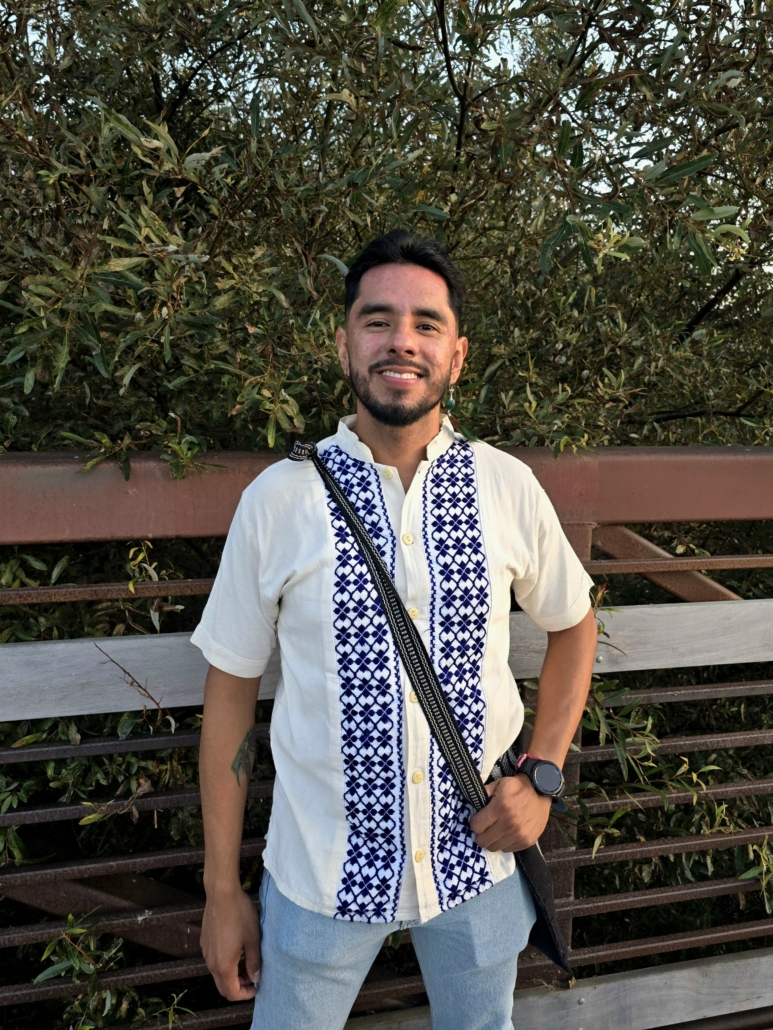
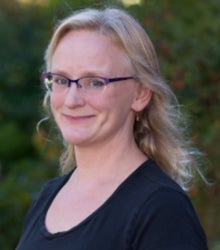
Mario A. Gómez Zamora is a Chancellor's Postdoctoral Researcher at the University of California, Los Angeles (Department of Anthropology) , where he develops his book project Queer P’urhépecha Histories and Performances Beyond Borders . As a queer P'urhépecha and mestizo scholar , he integrates methodologies learned from his grandfather with colonial violence analysis to recover marginalized Indigenous LGBTQ+ narratives. First-generation academic with degrees from UC Santa Cruz (PhD in Latin American & Latino Studies and Anthropology), Universidad Michoacana de San Nicolás de Hidalgo (Master's in Teaching History), and Normal Superior Juana de Asbaje (B.A. in Secondary Education) Co-founder of the P’urhépecha Working Group Parákata-Tzintzún and P’urhépecha Studies Collective His research focuses on intersections between Indigenous performativity and queer resistance across Mexico-US borders. He examines how P'urhépecha communities maintain traditions while navigating anti-LGBTQ+ colonial legacies through danzas, customary practices, and migration strategies. Recent publications explore queer Indigenous methodologies like talking-while-walking, decolonial pedagogies, and the construction of anti-gay violence archives . His work appears in the Genealogy Journal , Wicazo Sa Review , and Feminist Anthropology . Scientific Awards: 2024 Most Thought-Provoking Article by NAISA 2024 Lionel Cantú Memorial Award 2023 Ford Foundation Dissertation Fellowship Current collaborations with Dr. Jason De León (UCLA) analyze systemic factors behind queer P'urhépecha migration and murder patterns. He maintains active community engagement with P'urhépecha youth and elders in Michoacán and diaspora communities.
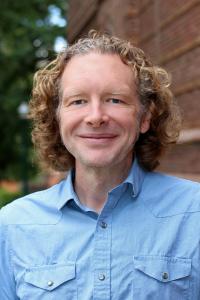
Prof. Dr.-Ing. André Borrmann is an academic leader at the Technical University of Munich (TUM) , where he has headed the Chair of Computing in Civil and Building Engineering since 2011 (formerly Computational Modeling and Simulation). He serves as Director of the TUM Georg Nemetschek Institute - AI for the Built World since 2025 and Spokesperson for the Leonhard Obermeyer Center since 2013. Research Interests Artificial Intelligence in Civil Engineering Digital Twinning Building Information Modeling (BIM) Pedestrian Dynamics Knowledge Representation Construction Simulation His work focuses on AI application across the built environment lifecycle - from generative design to maintenance prediction - with significant contributions to BIM standardization and buildingSMART International IFC extensions. He co-authored the German Ministry of Transport BIM Roadmap and led the BIM4INFRA2020 project. Awards include the 2024 Konrad Zuse Medal and multiple best paper awards at international conferences.
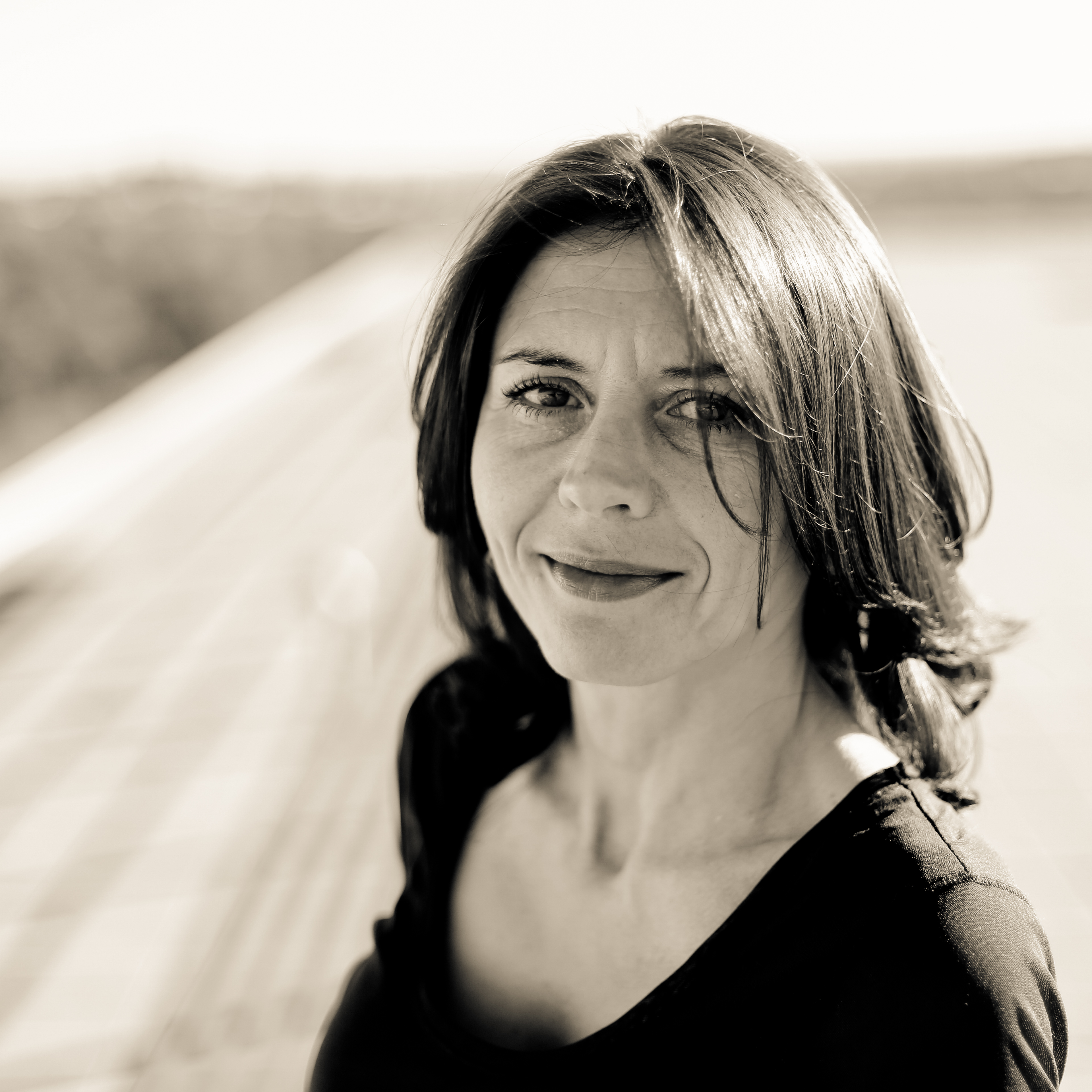
Carmel O’Shannessy is a Senior Lecturer at the Australian National University’s School of Literature, Languages and Linguistics and an affiliate of the ARC Centre of Excellence for the Dynamics of Language (CoEDL) . Her work focuses on language contact, mixed languages, and child language acquisition, particularly in Indigenous Australian communities. Education: PhD in Linguistics (University of Sydney, Australia; Max Planck Institute for Psycholinguistics, The Netherlands, 2007) She has documented the development of Light Warlpiri , a new mixed language, since its emergence. Her research explores how children and adults contribute to contact-induced language change, with fieldwork in Central Australia since 1996. Key projects include her ARC Future Fellowship grant for tracking Indigenous children’s language development. Recent publications span topics like typology of Australian contact languages, child-directed speech modifications in Warlpiri, and sociolinguistic dynamics of youth language varieties. Her work appears in journals such as Journal of Pidgin and Creole Languages and Languages , as well as edited volumes like The Oxford Guide to Australian Languages . Scientific Awards: ARC Future Fellowship She has mentored students including Francois-Xavier Faucounau , Annie Kwai , and Zobule . Her interdisciplinary approach combines linguistic analysis, digital tools (e.g., the Little Kids Learning Languages app), and community collaboration. Labs/Teams: ARC Centre of Excellence for the Dynamics of Language (CoEDL)
Catherine Faron is a Full Professor at Université Côte d'Azur , affiliated with the I3S laboratory and Inria center . She serves as vice-head of the Wimmics joint research team and leads the Artificial Intelligence and Data Engineering (IAID) program at Polytech Nice Sophia engineer school. Habilitation à diriger les recherches (HDR) in Computer Science, UCA (2017) PhD in Computer Science, Univ. Paris 6 (1997) Her research focuses on Artificial Intelligence , particularly in Knowledge Representation and Reasoning (KRR) and Semantic Web technologies. She develops hybrid intelligent systems combining KRR with machine learning for knowledge extraction, integration, and exploitation across education, health, and digital humanities. Recent publications highlight her work on: 2025 : Knowledge graphs for historical zoological data 2024 : Semantic annotation frameworks in agronomy 2023 : Agricultural data mapping and medical record enrichment 2022 : Visual exploration of big linked data Scientific recognitions include: 2023: Best Paper Award, ESWC 2017: Scientific Excellence Award, UCA 2016: Best Demo Award, ISWC 2015: Best Paper Award, IC 2008: Best PhD Paper Award, ECPPM She has supervised 19 PhD/Master's students and leads/has led projects like D2KAB , DEKALOG , and ZOOMATHIA , with partnerships across academic and industrial institutions.
Dr. Andréanne Gagné is an Associate Professor in the Department of Vocational Education at the University of Sherbrooke, Canada. Her work focuses on professional identity construction, mentorship, and digital technology integration in vocational education. She has led and co-led numerous grants from FRQSC, CRSH, and other agencies, including projects on international student internships and Indigenous community partnerships. PhD in Education (2019), Université du Québec à Montréal Master's in Education (2015), Université du Québec à Chicoutimi Bachelor's in Early Childhood Education (2007), Université du Québec à Chicoutimi Her research explores: Professional identity dynamics in vocational educators Remote mentorship ethics using digital tools Collaborative university-practice partnerships Post-pandemic educational resilience Indigenous community training models Her publications (2015–2025) span vocational education, digital mentorship, and career transitions. Awards include the Governor General's Academic Gold Medal (2019) and multiple FRQSC/CRSH scholarships. She organizes symposia on vocational education and co-authored books like Prof or Not, Here I Come! (2024).
Patricia Marchand is a faculty member at the University of Sherbrooke's Faculty of Education, specializing in mathematics education and special needs education. She teaches graduate courses in school adaptation and mathematics education, and conducts research on learning difficulties, spatial reasoning, and teaching methodologies for students with special needs. Her work bridges theory and practice in educational settings, with particular focus on developing effective interventions for students experiencing mathematical learning challenges. Education Doctorate in Education (2005) - Université de Montréal Master's in Mathematics (1998) - Université du Québec à Montréal Bachelor's in Teaching Mathematics and Computer Science for Secondary School (1995) - Université du Québec à Montréal Research Interests Dr. Marchand's research focuses on mathematics education for students with learning difficulties, particularly in the areas of spatial reasoning, geometry teaching, and preventive support systems. She investigates how to develop mathematical understanding in primary school students, with special attention to fraction concepts, geometric constructions, and volume understanding. Her work emphasizes the integration of spatial reasoning across mathematics and science education, and she explores collaborative approaches between teachers, orthopedagogues, and mathematics didacticians to support students at risk of academic failure. Research Trends Her recent publications demonstrate a strong focus on spatial reasoning development in elementary mathematics education, with particular attention to geometry concepts. She has developed preventive support systems for students with learning difficulties, examining how to articulate pedagogical and orthopedagogical practices in mathematics. Her work increasingly incorporates interdisciplinary approaches, connecting mathematics with other subjects like science and language arts to create more comprehensive learning experiences for students at risk. The analysis of teaching sequences that promote spatial reasoning has become a central theme in her recent scholarship. Research Funding Dr. Marchand has secured significant research funding as principal investigator and co-researcher on multiple projects: Principal Investigator: "Comment développer le raisonnement spatial en classe de 6e année dans un contexte interdisciplinaire mathématiques et astronomie?" (SSHRC, $88,364, 2021-2026) Principal Investigator: "Transmettre le plaisir d'apprendre à lire et soutenir les élèves à risque de vivre des difficultés scolaires dès la maternelle" (TD Bank and University of Sherbrooke Foundation, $500,000, 2017-2022) Co-researcher: "Le centre RBC d'expertise universitaire en santé mentale destiné aux enfants, adolescents et adolescentes, et aux jeunes adultes" (Royal Bank of Canada, $1,000,000, 2016-2021) Multiple projects with the Quebec Ministry of Education focused on supporting students with learning difficulties in mathematics classrooms Teaching and Supervision Dr. Marchand teaches graduate courses in mathematics education, school adaptation, and special education at the University of Sherbrooke. Her regular courses include "Didactique de la géométrie et de la mesure" (Geometry and Measurement Teaching), "Intervention en mathématiques" (Mathematics Intervention), and "Potentiel mathématique de l'apprenant" (Student's Mathematical Potential). She provides clinical supervision for students in school adaptation programs, with particular attention to mathematics teaching for students with special needs, and has developed specialized training approaches using role-playing as a teaching methodology for prospective mathematics educators.
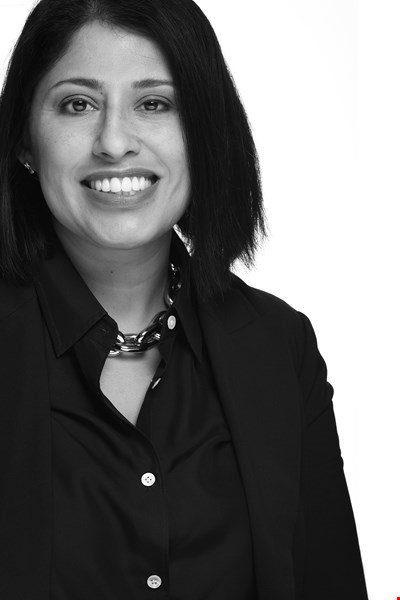
Professor Sarita Malik serves as Associate Pro Vice Chancellor – Research Impact and Professor of Media, Culture and Communications at Brunel University London's College of Business, Arts and Social Sciences. She leads the Social and Political Sciences division with expertise spanning cultural theory, media sociology, and screen studies since her 2016 professorial appointment. Education: PhD in Sociology (Open University) - AHRB collaborative studentship at British Film Institute supervised by Stuart Hall MA in Film and Television Studies (University of Warwick) BA (Hons) in English and Media (Sussex University) Malik's research centers on inequality, representation, and participation within cultural and technological contexts, with pioneering contributions to diversity frameworks in creative industries since the 1990s. Her work critically examines racialized terminology in organizational cultures, diasporic cinema, and community-based creative activisms. Current projects analyze longitudinal BFI diversity standards data and screen sector racial inequality through Guardian/BFI collaborations. Her publications reveal consistent focus on cultural policy evolution, Black British representation, and grassroots resistance methodologies. Recent works demonstrate increasing emphasis on data-driven diversity analysis while maintaining critical race theory foundations. Major projects like Creative Interruptions (2014-2020) showcase transnational comparative approaches across UK, Palestine, Northern Ireland, and India. Key Awards: BAFTSS 2024 Outstanding Achievement Award Fellow of the Royal Society for the Encouragement of Arts (FRSA) REF 2021 Sub-Panel 34 Membership DCMS College of Experts Appointment (2022) As principal investigator on four Connected Communities projects and multiple AHRC grants exceeding £1.5M, Malik champions collaborative knowledge exchange between academic, community, and policy stakeholders. Her supervision of six doctoral researchers reflects commitment to developing critical race scholarship. The Creative Interruptions project established a transnational network examining arts-based resistance to marginalization through co-created methodologies. Research Infrastructure: Leads the Creative Interruptions consortium with British Film Institute partnerships, maintaining longitudinal datasets on UK film sector diversity through Guardian collaborations. Current work develops frameworks for analyzing institutional diversity moral economies through intersectional lenses.
Prof. Dr.-Ing. Jörg Rainer Noennig is Professor of Digital City Science at HafenCity University Hamburg (HCU) and Head of the WISSENSARCHITEKTUR Laboratory of Knowledge Architecture at TU Dresden. With a background in architecture (Bauhaus Universität Weimar, Waseda University Tokyo), he practiced in Tokyo before transitioning to academia. He has held visiting professorships in Italy, France, Russia, and Japan. His research focuses on digital urban systems , including smart cities, participatory planning, and knowledge architecture. He explores AI applications in urban design, agent-based simulations for mobility, and transdisciplinary frameworks for sustainability. Recent projects include TOSCA (open-source urban tools), SmartFly (eVTOL integration), and MICADO (migrant integration platforms). Publications emphasize data-driven urban methodologies , spanning synthetic data generation, pedestrian modeling, and sustainable infrastructure design. His work integrates materials science (e.g., auxetic structures) with digital twins for resilient cities. Awards include the Grand Prix of the European Association for Architectural Education (EAAE). He leads Hamburg’s Digital City Science team and coordinates international collaborations, including Indo-German urban development projects. He directs the WISSENSARCHITEKTUR Laboratory , focusing on knowledge synthesis for urban innovation. Courses taught at HCU include 'Knowledge Architecture', 'Digital City Science', and 'Smart City Technologies'.
Hajo Boomgaarden is a Professor for Empirical Social Science Methods with a Focus on Text Analysis at the Faculty of Social Sciences , University of Vienna , where he also serves as Dean. His career spans roles as Associate Professor for Political Communication at the University of Amsterdam and involvement in major EU-funded projects like REMINDER (Horizon 2020) and AUTNES (Austrian National Election Study). He leads the Computational Communication Science Lab and contributes to institutions such as the Austrian Social Science Data Archive and Vienna Center for Electoral Research. His research focuses on media effects on political cognition, attitudes, and behavior, particularly regarding European integration , immigration , and right-wing populism . He specializes in content analysis methodologies, including automated techniques and multilingual dictionary construction. His work integrates comparative studies across EU member states, examining how media narratives shape public opinion on mobility, diversity, and democratic legitimacy. Boomgaarden’s scientific publications reflect trends in digital media, political framing, and EU-related communication. He has authored over 70 international journal articles, often addressing the interplay between media coverage and political behavior , such as immigration attitudes, economic perceptions, and voting patterns. His projects, like MEDIA(ted) Populism and REMINDER, explore the role of media in legitimizing political decisions and shaping policy debates. He has received notable awards, including the VENI grant from the Dutch Science Foundation (2011) and a NIAS fellowship (2012/13). His editorial roles include Associate Editor of Survey Methods: Insights from the Field and board member for journals like European Journal of Political Research and International Journal of Public Opinion Research . Supervising over 120 PhD/Master’s theses, he mentors candidates on topics ranging from migration discourse to political text complexity . Key laboratories and teams under his leadership include the Computational Communication Science Lab (University of Vienna), REMINDER consortium (13 organizations), and collaborations with institutions like Amsterdam School of Communication Research and Netherlands Institute for Advanced Studies . His work bridges media studies , political science , and public policy , influencing debates on media accountability , information saturation , and democratic satisfaction .
Chris Weible is a Distinguished Professor and Interim Dean of the School of Public Affairs at the University of Colorado Denver, assuming leadership effective July 1, 2025. He has been a faculty member since 2008 and serves as Co-Founder and Co-Director of the Center for Policy and Democracy while co-editing the international journal Policy & Politics . His teaching spans environmental politics, public policy, democracy, and research methods. Dr. Weible's research examines policy conflicts, emotional dimensions of public discourse, political behavior, and advocacy coalitions with emphasis on marginalized communities. His scholarly contributions include over 100 publications and leadership of Theories of the Policy Process , a foundational text in public policy. Recent work investigates emotional expressions in policy debates and transformative change across energy infrastructure, gender politics, and public health crises. His publication trends reveal deep engagement with the Advocacy Coalition Framework across diverse contexts including European policy processes, gender debates, and counter-terrorism strategies. The research consistently explores how emotions shape belief systems and coalition dynamics in high-conflict policy environments, demonstrating methodological innovation through discourse analysis and cross-national comparisons. Dr. Weible's accolades include: CU Denver’s Outstanding Doctoral Mentoring Award (awarded three times) Honorary Doctorate from Luleå University of Technology (2022) Distinguished Professor designation by The CU Board of Regents (2022) CU Denver Grand Challenge research award for the “Building Democratic Communities” initiative (2023) As a mentor, he has placed 11 School of Public Affairs graduates in tenure-track academic positions. His research has secured millions in external funding, supporting initiatives like the international policy process research conference and the Building Democratic Communities project. He also serves as Guest Professor at Luleå University of Technology in Sweden. The Center for Policy and Democracy, which he co-directs, functions as an interdisciplinary hub for community-engaged research on democratic practices in policymaking, facilitating collaborations between scholars, policymakers, and community stakeholders to address complex governance challenges.
Dr. Len Ole Schäfer is a Postdoctoral Researcher at the CATALPA research cluster, FernUniversität in Hagen, leading the project 'Organizational Resilience and Creativity: Exploring the Future of Educational Technology in Higher Education' (ORC) in collaboration with the Alexander von Humboldt Institute for Internet and Society (HIIG). His work investigates the interplay between organizational resilience, creativity frameworks, and educational technology implementation within higher education institutions, emphasizing trust-based leadership and strategic adaptation. Schäfer holds a PhD in Sociology (2018) from the University of Bamberg examining the UK's Research Excellence Framework impact on academic practice, and a Diploma in Sociology (2012) focused on ranking construction in science. His academic trajectory includes research positions at Zeppelin University (2018), University College London's Centre for Global Higher Education (2016), and the University of Bamberg (2012-2018). His research centers on higher education organizational dynamics, particularly how universities navigate digital transformation through resilience-building and creativity cultivation. Key interests include sociological theory applications, organizational sociology frameworks, and the role of digitalization strategies in enabling innovation. His work consistently analyzes resistance to digital change, strategic ambiguities in institutional policies, and trust mechanisms that foster EdTech adoption across diverse academic contexts. Recent publications reveal a cohesive trajectory examining organizational responses to digital disruption, with emphasis on faculty perspectives, leadership approaches, and structural adaptations. His studies—primarily qualitative and mixed-methods—highlight tensions between centralized strategies and decentralized implementation, resistance triggers, and the paradoxical role of ambiguity in enabling innovation during rapid technological change. As an active community contributor, Schäfer serves on the advisory board of FernUniversität's #NewLearning Blog and reviews for 'Higher Education - The International Journal of Higher Education Research'. His project leadership in ORC (2023–present) and OrA (until 2023) demonstrates sustained engagement with German higher education's adaptability challenges, while international collaborations with HIIG and conference presentations at EGOS and Swiss Sociological Association forums extend his scholarly impact.
Rada Mihalcea is a Professor at the University of Michigan in the Computer Science and Engineering department. She actively promotes Natural Language Processing (NLP) applications for social good and founded the ACL Year Round Mentorship program. University: University of Michigan School: College of Engineering Department: Computer Science and Engineering Academic Rank: Professor Research Interests include: Natural Language Processing for social good applications Text Mining and Sentiment Analysis Deception Detection and Multimodal Analysis Cross-Cultural Computational Linguistics Educational Technology and Gender Studies Recent research trends focus on: Fake news detection using multimodal features Lexicon-based cross-cultural value analysis Thermal imaging for affective computing Deception detection through linguistic and physiological cues Applications in healthcare and counseling analysis Scientific Awards : Sarah Goddard Power Award (2019) Best Paper Award at CICLING (2019) Best Paper Award at SocInfo (2018) Additional Contributions : Co-authored textbooks on Text Mining and Graph-based NLP Developed FunPython tutorial for children Collaborative work with the School of Music on the Ada Lovelace Opera Active in diversity initiatives in computing
Nina Liebhaber is a Research Associate in Sustainable Design & Education at the Belfast School of Art, Ulster University. Her work bridges the fields of sustainable design, climate change education, and environmental psychology, with a focus on fostering climate-friendly behaviors and utopian knowledge systems in times of climate crisis. Her research explores the intersection of UN Sustainable Development Goals (SDGs) such as Climate Action (SDG 13) and Quality Education (SDG 4). Key themes include self-regulation in environmental psychology, utopian frameworks for climate education, and innovative pedagogical approaches to address the climate crisis. Nina has published significant work in journals like Environmental Education Research and Pedagogy, Culture & Society , examining conceptual links between psychological models and educational practices. Her recent outputs include studies on self-regulation strategies for youth climate engagement and utopian knowledge modes in climate change discourse. As part of Ulster University’s Art and Design Research department, Nina collaborates with international teams to address global environmental challenges through design-led educational interventions. She is active in the university’s sustainability initiatives and contributes to open-access research platforms like PURE.
Jennifer Ruef is an Associate Professor in the Critical and Sociocultural Studies in Education department at the University of Oregon's College of Education, where she bridges decades of K-12 classroom experience with cutting-edge research on equitable mathematics instruction. Her work centers on dismantling systemic barriers in math education through identity-focused pedagogy and collaborative sensemaking frameworks. Her educational foundation includes: Ph.D. in Curriculum and Teacher Education (Secondary Mathematics Education), Stanford University, 2016 M.S. in Curriculum and Instruction (Secondary Mathematics Education), University of Wisconsin-Madison, 2005 B.S. in Secondary Mathematics Education, University of Wisconsin-Madison, 1990 Certification in Secondary Mathematics Education (Grades 6-12) Ruef's research pioneers decolonizing approaches to mathematics education, examining how student identities are co-constructed through classroom interactions and how Indigenous knowledge systems can transform STEM pedagogy. Her DETRACKING FOR EQUITABLE MATH INSTRUCTION (DEMI) framework challenges tracking practices while promoting relational equity and public sensemaking —where students collaboratively build mathematical arguments. This work directly addresses math trauma and systemic inequities through healing-centered, culturally sustaining practices. Analysis of her 15 most recent publications reveals a cohesive trajectory: from foundational identity studies (2020-2021) to pandemic-responsive equity work (2022), culminating in her 2024 NSF-funded detraicking initiative. Her scholarship consistently integrates Indigenous epistemologies with mathematics education, demonstrating how cultural values counter colonial harms while advancing STEM inclusivity. Her major recognitions include: NSF Career Award (2024) for $1.04M detraicking project University of Oregon Excellence in Teaching Award (2022) AMTE STaR Fellowship (2017) Stanford University dissertation grants (2015) Madison Metropolitan School District Teacher of the Year (2009) Ruef actively mentors doctoral students including A. Torres and M. Ahearn, with her NSF grant driving multi-year detraicking research across Oregon middle schools. Her community-engaged approach partners with Indigenous elders like V. Beavert to co-develop culturally rooted mathematics curricula, translating academic research into classroom practice through teacher professional development. Embedded in interdisciplinary networks connecting the College of Education with Pacific Northwest Indigenous communities, Ruef's work operates at the intersection of academia and activism—using collaborative research teams to advance decolonizing mathematics education beyond traditional lab structures.
Richard York serves as Professor of Sociology and Environmental Studies at the University of Oregon's College of Arts and Sciences, where he has held faculty positions since 2002. His interdisciplinary work bridges sociological theory with environmental science to address pressing ecological crises. His academic foundation includes: B.S. in Psychology from Southern Oregon State College (1994) M.S. in Environmental Studies from Bemidji State University (1997) Ph.D. in Sociology from Washington State University (2002) York's research integrates human ecology and political economy through quantitative analysis, examining how demographic, economic, and technological structures drive resource consumption and pollution. He pioneers materialist approaches to animal and plant studies while critically analyzing energy systems, climate policy, and the limitations of technological solutions to environmental crises. His work consistently challenges assumptions about efficiency and growth within capitalist frameworks. Analysis of his 2022-2025 publications reveals dominant themes: critiques of climate 'tipping points' discourse, rebound effects in energy efficiency, settler colonial dimensions of wildlife management, and the social construction of biodiversity loss. These works demonstrate increasing interdisciplinary convergence between environmental sociology, animal studies, and critical energy scholarship. His scholarly impact is recognized through major awards: Frederick H. Buttel Distinguished Contribution Award (2017) from the American Sociological Association's Environmental Sociology Section Distinguished Scholarship Award (2015) for co-authored work on macrosociological animal studies University of Oregon's Faculty Excellence Award and top teaching honor (2013) While the available text confirms York's active teaching role (Spring 2025 office hours listed), it contains no details about student advising or specific research grants. Similarly, no information about laboratories or research teams was provided in the source materials.