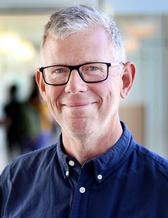
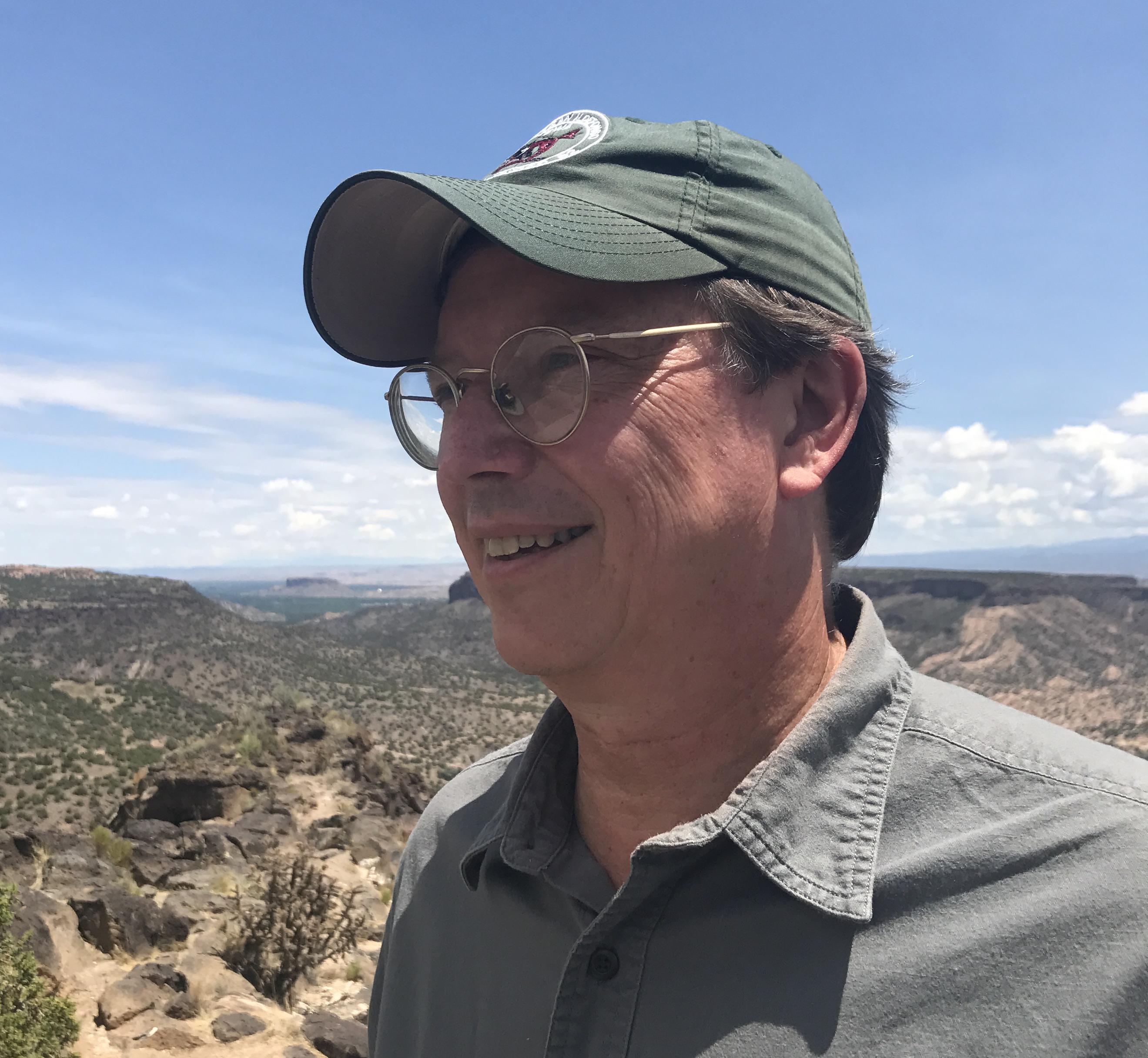
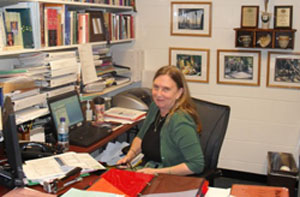
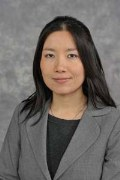
Dr. Erin Twyford is a Senior Lecturer in Accounting at the University of Wollongong's School of Business. Her work critically examines accounting's societal impacts, particularly in contexts of oppression and vulnerability. She holds Chartered Accountant (CA) credentials and has contributed to parliamentary inquiries, government policy, and media commentary on consulting industry ethics and accountability. Her research focuses on historical accounting practices during the Holocaust, modern issues in aged care financialization, and the role of accounting in asylum seeker policies. Notable achievements include the Robert W. Gibson Manuscript Award and Mary Parker Follet Award, reflecting her innovative contributions to social and environmental accounting scholarship. Dr. Twyford bridges academia and practice through teaching grants advancing work-integrated learning and curriculum reforms. Her professional background includes roles at Deloitte and IMB Bank, informing her critical perspective on corporate accountability. She actively reviews for journals like Accounting Auditing & Accountability Journal and contributes to professional organizations such as AFAANZ.
Måns Söderbom is a Professor of Economics at the Department of Economics, University of Gothenburg, where he has served as Head of Department from 2015 to 2021. He holds academic affiliations with institutions such as the International Growth Centre (IGC) and UNU-WIDER. His expertise lies in development economics, with a focus on manufacturing productivity, industrial policy, and the impact of infrastructure and trade policies in developing economies. Education: PhD in Economics from the University of Gothenburg (2000), Bachelor of Economics and Business Administration from Göteborg University (1995). Prior to his current position, he worked at the University of Oxford’s Centre for the Study of African Economies (CSAE) from 2000 to 2007. Research Interests: His work addresses critical questions in development economics, including firm-level dynamics in Africa, the effects of foreign direct investment (FDI), and the role of infrastructure in economic growth. He has conducted extensive studies on Ethiopia’s manufacturing sector, post-harvest agricultural technologies, and the impact of policy interventions on firm performance. Publications Highlight: Söderbom has over 50 peer-reviewed articles in journals such as Economic Development and Cultural Change , Journal of Development Studies , and World Bank Economic Review . Recent work includes studies on storage technology adoption in Tanzanian agriculture and the relationship between enterprise clustering and productivity in Ethiopia. Grants & Awards: Recipient of awards from the Swedish Research Council, IZA, and Sida/SAREC. He was voted Teacher of the Year (2007) by students at the University of Oxford. Advising & Mentorship: Supervised over 15 PhD students, including notable scholars who have taken up academic roles at universities like Columbia, Renmin University of China, and the University of Cape Town. Labs/Teams: Active in collaborative research networks such as the International Growth Centre (IGC) and leads projects on industrial policy and firm competitiveness in Africa.
Marie L Miville is a Professor of Psychology and Education at Teachers College, Columbia University, and serves as Vice Dean for Faculty Affairs. Her academic career spans over three decades, with expertise in multicultural counseling, Latine/a/o mental health, and gender studies. She holds a Ph.D. in Counseling Psychology from the University of Maryland at College Park and is a licensed psychologist in Ohio. Her research focuses on intersections of race, ethnicity, gender, and LGBTQ+ identities, emphasizing culturally grounded leadership and social justice advocacy. Notable works include Counseling and Gender: Intersectional Approaches (2024) and Women and the Challenge of STEM Professions (2022). She has contributed to clinical supervision guidelines and led initiatives promoting diversity in counseling psychology training programs. Dr. Miville has been a vocal advocate for inclusive academic environments, addressing systemic barriers faced by marginalized groups. Her work integrates qualitative and quantitative methods, with recent publications exploring Latinx Jewish identity, transgender affirmative practices, and STEM equity. She serves on task forces shaping professional standards in health service psychology. Her leadership roles include chairing the Department of Counseling and Clinical Psychology and mentoring early-career scholars. She emphasizes training that bridges clinical practice with community advocacy, reflecting her commitment to socially responsive education.
Dr Fiona Johnstone is an Assistant Professor in Visual Medical Humanities at Durham University, affiliated with the School of Modern Languages and Cultures and the Institute for Medical Humanities. She holds a PhD in the History of Art from Birkbeck, University of London. Her research focuses on the intersections of art, medicine, and health, particularly in the context of HIV/AIDS representation and anti-portraiture. She leads the Visual and Material Lab under the Discovery Research Platform for Medical Humanities and has held a Wellcome Trust ISSF Fellowship (2018–2021), supporting projects like AIDS & Representation and Anti-Portraiture . Johnstone's work includes curating exhibitions, editing The Polyphony , and directing initiatives like Confabulations: Art Practice, Art History, Critical Medical Humanities . Her peer-reviewed contributions span journals like Medical Humanities and Art History , and she serves on the Steering Group for the Northern Network for Medical Humanities Research. Her recent publications include monographs on AIDS representation and edited volumes on anti-portraiture. She explores themes like collaborations in art and medicine, curatorial practices, and the role of visual culture in health discourse.
Professor Pauline Jones is a leading academic in educational linguistics and literacy education at the University of Wollongong's School of Education, part of the Faculty of the Arts, Social Sciences and Humanities. She holds a Ph.D. in Educational Linguistics from the University of New South Wales (2005). Her research focuses on language in education, disciplinary literacy development, multimodal digital authoring, and climate change education. Jones has secured over $3.5M in competitive grants and has co-led projects like the Transforming Literacy Outcomes (TRANSLIT) study. She currently serves as co-convenor of the Interdisciplinary Discourse analysis in Education, the Arts and Social Sciences (IDEAS) research group and chairs the Climate Change in Education Special Interest Group. Jones has held national roles including Immediate Past President of the Primary English Teaching Association Australia (PETAA) and executive membership in the International Systemic Functional Linguistics Association (ISFLA). Her teaching expertise spans English curriculum pedagogy, TESOL, and dialogic pedagogy, with co-authored best-selling texts like Teaching Language in Context . She supervises doctoral students researching topics like multimodality, online learning, and sustainability education. Education: Ph.D. in Educational Linguistics, University of New South Wales (2005) Research Interests: Educational linguistics/semiotics, disciplinary literacy development across STEM/English/history, multimodal digital texts, climate change education, and teacher professional development. Current projects investigate literacy transitions (TRANSLIT), digital explanations in science classrooms, and online discussion forums. Grants & Funding: Over $3.5M in ARC, NSW DoE, and OLT grants. Recent projects include Developing transferable skills: Improving writing outcomes (NSW DoE, 2020–2023) and Building capacity to scaffold online discussion (OLT, 2015). Teaching & Supervision: Oversees PhD topics such as sustainability pedagogies, AI in EFL literacy, and curriculum equity. Co-authored influential texts and leads teacher training initiatives through PETAA partnerships. Labs/Teams: IDEAS research group, Climate Change in Education SIG, and Sustainable Futures Project Working Group.
Rem Collier is an Associate Professor in the School of Computer Science at University College Dublin (UCD). He holds a PhD in Computer Science from UCD (2001) and has held academic roles including Assistant Lecturer (2004), College Lecturer (2005–2018), and his current position since 2018. His research focuses on Multi-Agent Systems (MAS), Agent-Oriented Software Engineering (AOSE), Hypermedia MAS, Digital Twins, and applications in smart agriculture and urban simulation. He leads the CONSUS project (2022–2024) and collaborates on CAMEO (2021–2024). Education: BSc (Pure/Applied Mathematics, University of Bristol, 1994), MSc (Computation, UMIST, 1995), MPhil (UMIST, 1996), PhD (UCD, 2001). Research interests include Agent Factory Framework, ASTRA programming language, and integrating MAS with microservices. Notable achievements include the CIA System Innovation Award 2003 (ACCESS architecture) and Best Paper Awards at EMAS2020 and Mobile Learning 2006. His work spans over 150 peer-reviewed publications and grants such as HOTAIR (2004–2005) and SIFT (2008–2011). Teaching includes modules on Multi-Agent Systems, Distributed Systems, and Security. He has coordinated courses at UCD and the Joint UCD-Fudan program in Beijing and Sri Lanka. Labs/Teams: Active in Hypermedia MAS Simulation, collaborating on projects like CONSUS and CAMEO, emphasizing smart agriculture and distributed knowledge graphs.
Prof. Tanja Sturm is a Professor of Educational Science at the University of Hamburg's Faculty of Education. Her research focuses on inclusive education, educational policy, and the sociological analysis of classroom practices. She leads the 'Project BEB-CoP' and has authored numerous textbooks and articles on difference construction in schooling, comparative education systems, and pedagogical professionalization. Her work bridges theory and practice, addressing how institutional norms and policies shape educational outcomes. Her research interests emphasize the intersection of social inequality, disability narratives, and performance metrics in schools. She critically examines how educational systems construct 'normality' and 'difference,' particularly in inclusive vs. non-inclusive frameworks. Her studies often employ praxeological and sociological methodologies to analyze classroom interactions and policy impacts. Key themes in her publications include transnational comparisons of inclusive teaching practices, the role of cooperation during crises (e.g., pandemic responses), and the tensions between institutional expectations and classroom realities. She has contributed to policy debates on educational equity through her analysis of tracking systems and policy implementation gaps. While no specific grants or awards are noted, her extensive publication record reflects sustained scholarly engagement with foundational issues in educational science. She advises no listed students but collaborates internationally on comparative educational studies. Her work is housed within the Department of Educational Science, emphasizing both theoretical frameworks and practical implications for teacher training and institutional reform.
Robert W. Preucel is the James Manning Professor of Anthropology and Director of the Haffenreffer Museum of Anthropology at Brown University, where he has served since 2013. Previously, he held academic positions at the University of Pennsylvania and Harvard University. His educational background includes a PhD (1988) and MA (1982) from the University of California, Los Angeles, an MA from the University of Chicago (1979), and a BA from the University of Pennsylvania (1978). Preucel's research focuses on archaeological theory , semiotics , and Indigenous archaeologies , with particular expertise in repatriation (NAGPRA) and the archaeology of the Pueblo Revolt . He directs two major field projects: The Kotyiti Research Project (a collaborative effort with Cochiti Pueblo examining post-Revolt community formation) and The Brook Farm Archaeological Project (studying utopian social reform movements in 19th-century Massachusetts). His scholarly publications demonstrate consistent focus on archaeological theory development , semiotic approaches to material culture , and Indigenous perspectives in archaeology. Recent work engages with ontological debates, representation theory, and the archaeology of becoming, reflecting his ongoing contributions to methodological and philosophical discourse. Significant awards recognizing his contributions include: Gaspar Perez de Villagra Award from the Historical Society of New Mexico (2020) Outstanding Seminar Award from the Amerind Foundation-Society for American Archaeology (2017) He has secured substantial research funding, including: $1M from Andrew W. Mellon Foundation for transforming the Haffenreffer Museum (2019-2023) $500K from Mellon Foundation for Native American collections revitalization (2018-2022) American Philosophical Society grants for the Kotyiti Research Project As museum director, he oversees collections and research initiatives while maintaining active fieldwork programs that integrate archaeological data with Indigenous traditional knowledge.
Gregory Thompson is an Associate Professor of Linguistic Anthropology in the Department of Anthropology within the College of Family, Home, and Social Sciences at Brigham Young University. His academic work bridges anthropology, education, linguistics, and healthcare communication, with a particular focus on how language and interaction shape human experience in diverse contexts. Thompson's research interests center on linguistic anthropology, semiotics, education, and discourse analysis. He examines the processes of being and becoming as they happen in human pedagogical interactions, with particular attention to social actions that promote learning in small-scale human interactions such as tutoring or classroom settings. His ethnographic research spans diverse settings including tutoring programs for low-income African-American high schoolers in Chicago, elementary schools with Latino students in Provo, Utah, and elementary schools in Seoul, South Korea. He regularly teaches the ethnographic research methods sequence (courses 442 and 443) as well as a course in Linguistic Anthropology. Analysis of Thompson's publication record reveals consistent engagement with interactional dynamics across multiple contexts. His work demonstrates a progression from classroom settings to healthcare interactions, always maintaining a focus on how language, culture, and power dynamics shape human experience. A notable pattern in his research is the application of linguistic anthropological methods to practical problems in education and healthcare, particularly regarding cultural differences and communication patterns. His recent work increasingly addresses questions of equity and cultural competence, especially in educational and medical settings serving minority populations. Thompson's advising work, while not explicitly detailed in available sources, appears to focus on students interested in linguistic anthropology, ethnographic methods, and cross-cultural communication. His research collaborations span multiple institutions, suggesting an active mentoring role for graduate students and junior researchers. His laboratory and research team work appears to focus on ethnographic documentation of interactional practices, with particular attention to video ethnography methods. His publications suggest ongoing projects examining language use in educational settings, cultural differences in healthcare communication, and the semiotic dimensions of everyday interactions.
Arezoo Islami is an Assistant Professor of Philosophy of Science and Mathematics at San Francisco State University (SFSU), serving as GTA Coordinator. She holds a Ph.D. from Stanford University, where she was also a Postdoctoral Fellow. Her research focuses on the philosophy of mathematics, philosophy of physics, phenomenology, and the historical construction of scientific knowledge. She explores the dynamic relationship between mathematics and physics, emphasizing their philosophical and epistemological implications. Education: Ph.D. in Philosophy, Stanford University Postdoctoral Fellowship at Stanford University Research Interests: Dr. Islami investigates the nature of mathematical discovery, the applicability of mathematics in physics, and the historical evolution of scientific concepts. Her work bridges phenomenological perspectives with analytic philosophy, addressing questions like 'Who Discovered Imaginaries?' and rethinking Wigner’s puzzle of mathematics' effectiveness in the natural sciences. Awards: Iranian Diaspora Research Fellowship Marcus Early Career Research Award Marcus Undergraduate Research Fellowship Extraordinary Ideas Grant Advising & Grants: While no specific advisees are listed, her grants (e.g., Extraordinary Ideas Grant) reflect support for innovative projects at the intersection of mathematics, physics, and philosophy. She actively engages in undergraduate research mentorship through the Marcus Fellowship program. Labs/Teams: Though no formal labs are mentioned, her interdisciplinary work likely involves collaborations across philosophy, mathematics, and physics departments at SFSU and beyond.
Kristina Fagan Bidwell is a Full Professor in the Department of English at the University of Saskatchewan, holding a Tier 2 Canada Research Chair in Indigenous Storytelling since 2001. She served as the inaugural Associate Dean of Aboriginal Affairs in the College of Arts and Science from 2011 to 2018 and currently serves as President of the Indigenous Literary Studies Association. Her research program investigates how stories interact across cultural boundaries—between Indigenous communities and between Indigenous and settler communities—with particular focus on how narratives create meaning, circulate, and influence actions in high-stakes conflicts over land, identity, and knowledge. Bidwell conceptualizes storytelling broadly to include oral narratives, literary texts, and everyday personal/public narratives, operating on the principle that stories both 'mean' and 'do' things by shaping cognition, emotion, and behavior. Current SSHRC-funded projects examine Indigenous-led literary collaborations and inter-Indigenous conflicts regarding territory and identity. Her publication portfolio demonstrates consistent engagement with Indigenous literary theory, Métis identity, Cree storytelling traditions, and Labrador Inuit literary heritage. Recurring analytical frameworks include narrative sovereignty, intercultural communication, and the political dimensions of storytelling. Methodologically, her work emphasizes community-based, collaborative approaches that center Indigenous perspectives and knowledge systems. Her primary recognition is the Tier 2 Canada Research Chair in Indigenous Storytelling. Bidwell has supervised twelve graduate students across PhD and MA programs, with research spanning ethical settler engagements with Indigenous literature, Anishinaabe sense of place, Indigenous erotica, and Aboriginal realism. Her SSHRC-funded research on Indigenous literary collaborations represents significant grant achievement. She leads research teams focused on narrative analysis and intercultural communication, maintaining active partnerships with Indigenous communities and organizations through community-based participatory research frameworks.
Sara E. Green is Professor in the Department of Sociology & Interdisciplinary Social Sciences at the University of South Florida (USF), with additional affiliations at the School of Aging Studies, Department of Communication, Florida Center for Inclusive Communities, and Department of Women's, Gender & Sexuality Studies. Her educational background includes undergraduate degrees in Sociology and Education, and a PhD in Sociology from Tulane University (1994). Her research centers on the social experience of health, illness, and disability across the life course, with emphasis on narrative identity , community participation , humor and the arts , stigma , health beliefs , organizational satisfaction , and caregiving dynamics . She employs interdisciplinary frameworks to examine how disability intersects with social structures, identity formation, and cultural narratives. Recent publications—including the books Disability in the Time of Pandemic (2023) and Seriously Funny: Disability and the Paradoxical Power of Humor (2016)—reveal evolving trends toward narrative analysis, pandemic impacts on disabled communities, and the transformative role of humor in disability discourse. Her scientific recognition includes: American Sociological Association Section on Disability in Society’s award for Distinguished Career in the Sociology of Disability Professor Green has held significant leadership roles as past chair of the ASA Section on Disability in Society and past co-chair of the ASA Committee on the Status of Persons with Disabilities in Sociology. She co-edits the Research in Social Science and Disability book series and has secured collaborative projects through centers like the Florida Center for Inclusive Communities, though specific grant details are not documented in source materials. Her work through USF’s interdisciplinary centers focuses on advancing inclusive community practices, disability advocacy, and policy development to address systemic barriers faced by disabled populations.
Li Ma is a Teaching Professor of Chinese and Coordinator/Director of the Study Abroad Program in China at Florida International University's Green School. Their work focuses on integrating cross-cultural education and global workforce development, with particular emphasis on Chinese language education and international business dynamics. Dr. Ma holds a prominent role in facilitating academic exchanges and global competency programs. Research interests span organizational behavior, cross-cultural management, and international human resource strategies. Their scholarship addresses global talent management, expatriate challenges, and contextualized business practices in diverse cultural environments. Notable contributions include studies on multinational corporation operations, cultural legitimacy, and diversity dynamics in global teams. Publications highlight expertise in international business strategy, organizational learning, and global workforce challenges. Recent work explores SIE (self-initiated expatriate) compensation models, cultural stigmatization in global assignments, and innovative talent management frameworks. Their work bridges academic research with practical applications in multinational enterprises. Dr. Ma's academic leadership includes coordinating study abroad programs and developing curricula for global competencies. Office located at SIPA II 230 with direct phone access (305) 348-6909.
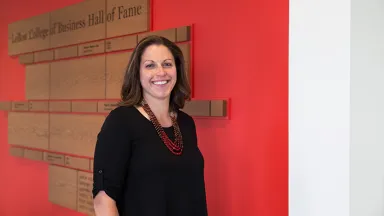
Lauren D'Innocenzo is an Associate Professor of Organizational Behavior and Managing Director of the DBA Program at Drexel University's LeBow College of Business. She holds a Ph.D. from the University of Connecticut and specializes in team effectiveness, leadership development, and shared leadership dynamics. Her research explores team composition changes, contextual influences, and emergent dynamics, with applications in Fortune 500 companies, governmental agencies, and healthcare settings. Dr. D'Innocenzo is Principal Investigator of a $1.7 million Army Research Institute grant studying team change dynamics. Her work appears in top journals like Academy of Management Journal and Journal of Applied Psychology . She has been recognized as a Top 40 Under 40 Business Professor by Poets & Quants and received multiple Provost Solutions Fellow awards. Her research interests include team capabilities, surgical team performance, virtual team empowerment, and the dark side of shared team experiences. She advises on executive education programs and interventions, leveraging applied research methodologies. Dr. D'Innocenzo also serves on editorial boards for journals including Group and Organizational Management and Personnel Psychology . Awards include the 2023 Best Paper Award at NBEA Conference, 2018 Course Hero-Woodrow Wilson Fellowship, and 2016 ISL Fellowship. Her grants total over $1.7 million, emphasizing team dynamics and organizational effectiveness.
Professor Satu Huuhka leads Tampere University's efforts in sustainable renovation and circular economy transition in construction. As the inaugural Professor of Sustainable Renovation (appointed 2024), she heads the multidisciplinary ReCET research group, focusing on decarbonizing the built environment through building reuse. Her work demonstrates that renovating existing structures reduces carbon emissions more effectively than new construction, challenging industry norms. Education: MSc Architecture (2010), PhD (2016), both from Tampere University of Technology. Prior roles include Adjunct Professor (2018), Senior Research Fellow (2019–2021), and leadership in the EU-funded ReCreate project (2021–present). Recognized with the 2023 TunnustusPAANU Award and 2024 Order of the Lion of Finland medal. Research emphasizes deconstruction of precast concrete, policy frameworks for circularity, and adaptive reuse strategies. Current projects include ReCreate's pilot deconstruction of Tampere office buildings and analysis of material flows in urban environments. Collaboration with firms like Skanska drives industry adoption of reuse practices. Teaching involves training next-generation researchers through doctoral supervision and interdisciplinary teamwork. Personal passion for restoration extends to home renovations and kintsugi-inspired ceramics repair, reflecting her professional commitment to preserving and revitalizing existing structures.