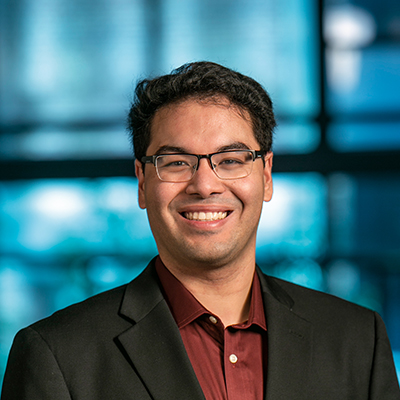
Osbert Bastani is an Associate Professor at the Department of Computer and Information Science, University of Pennsylvania, leading the trustml@Penn research group. He is affiliated with the ASSET , PRECISE , and PRiML centers, and the PLClub research group. His research focuses on Trustworthy Neurosymbolic Systems , Synthesizing Neurosymbolic Programs , and Machine Learning for Programmer Productivity , with applications in verification, fairness, and human-AI collaboration. He received the NSF CAREER Award in 2023. His recent publications (2024-2025) emphasize AI Safety , LLM Robustness , and Algorithmic Fairness , including work on adversarial robustness, conformal prediction, and program synthesis. Students he has advised include Sagnik Anupam, Stephen Mell, Jason Ma, Shuo Li, and others. Awards: NSF CAREER Award (2023)
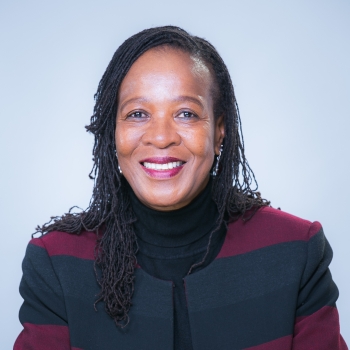
Teboho Moja is a Clinical Professor of Higher Education at New York University's Steinhardt School, holding concurrent roles as an Extraordinary Professor at the University of the Western Cape and a Visiting Research Fellow at the University of Pretoria. She has served as an Executive Director under President Mandela's administration, leading the National Commission on Higher Education, which shaped South Africa's post-apartheid reforms. Her research focuses on higher education policy, equity in education systems, and international development in Africa. She has been honored with the Martin Luther King Jr. Faculty Award and the National Research Foundation Lifetime Achiever Award, among others. Education: She holds an Honorary Doctorate in Education from the University of Pretoria (2020). Her academic contributions include over 50 peer-reviewed publications and keynote addresses at global conferences. She has advised governments and international bodies such as UNESCO and the Councils of Universities in South Africa. Research Interests: Dr. Moja's work emphasizes equitable access to education, international partnerships in higher education, and the role of philanthropy in African universities. She explores how global institutions influence policy reforms, particularly in transitional justice contexts and post-colonial education systems. Her recent publications analyze the relevance of university rankings in Africa and collaborative models between U.S. foundations and African institutions. Awards: Martin Luther King, Jr. Faculty Award (2019) National Research Foundation Lifetime Achiever Award (2019) Women in International Education Award (2019) Graduate Students Star Award (2019) Honorary Doctorate in Education (University of Pretoria, 2020) Advising and Grants: She has led national policy commissions, advised education ministers, and contributed to international bodies. Her work bridges academia and policy, with a focus on systemic reforms and inclusive education models. She has designed field-based courses on South Africa's educational reforms and global perspectives in Indian higher education. Professional Networks: She has held visiting professorships at the Universities of Oslo, Tampere, and Hong Kong. She chairs multiple international advisory boards and collaborates with global scholars on projects addressing equity and development in education.
Blase Ur is an Associate Professor of Computer Science at the University of Chicago, leading the UChicago SUPERgroup (Security, Usability, & Privacy Education & Research group). His research focuses on data-driven methods to improve online security, privacy, and usability of complex systems. He holds a PhD from Carnegie Mellon University and an AB from Harvard University. Education: PhD in Societal Computing, Carnegie Mellon University (2016) AB in Computer Science, Harvard University Research Interests: Blase's work spans computer security, privacy, HCI, and ethical AI. He develops tools like password meters, privacy transparency systems, and IoT security solutions. His SUPERgroup emphasizes interdisciplinary collaboration, with projects addressing data-driven decision-making and usability challenges in AI and IoT. Articles Trends: Recent work includes studies on ad transparency systems, user perceptions of privacy in AI, and barriers to passwordless authentication. Research often combines empirical user studies with technical implementations to bridge gaps between security mechanisms and user needs. Awards: NSF CAREER Award (2021) Quantrell Award for Teaching (2021) SIGCHI Outstanding Dissertation Award (2018) Advising & Grants: Advisor to PhD students like Kevin Bryson. Secured grants from NSF, Mozilla, and Meta. Active in outreach to broaden CS participation, including K-12 programs. Labs & Teams: Co-director of the SUPERgroup and affiliated with the Systems Group and CERES Center for Unstoppable Computing at UChicago.
Steven Jackson is a Professor of Information Science and Science and Technology Studies at Cornell University's Bowers College of Computing and Information Science, with additional graduate field appointments in Communication and Public Affairs. Since July 2023, he has served as Vice-Provost for Academic Innovation at Cornell, and previously held leadership positions as Chair of Information Science and Dean of William Keeton House. His work bridges academic research with significant institutional leadership in higher education innovation. Dr. Jackson's research focuses on critical intersections of technology, society, and the environment, with three primary strands: technology ethics, law and policy; maintenance, repair and sustainability; and technology, inequality and global development. His work draws from American pragmatism, political economy, and science and technology studies, integrating methods from sociology, anthropology, philosophy, and media studies. He is particularly interested in how computing practices meet social and material worlds, with implications for infrastructure, collaboration, sustainability, and cultural practice. His recent publications reveal a strong emphasis on repair as both theoretical concept and practical methodology, exploring 'ordinary hope' as a framework for technological engagement and examining unmaking as a necessary counterpart to design. The research spans diverse geographical contexts from the global North to South, addressing caste dynamics in computing, digital authoritarianism, and infrastructure challenges in developing contexts. Dr. Jackson has received significant recognition including an NSF CAREER award and more than twenty paper awards at leading computing and information science venues. His research has been supported by major organizations including the U.S. National Science Foundation, Social Science Research Council, Ford Foundation, Sloan Foundation, World Bank, Intel Research, Atkinson Center for Sustainability, and the Canadian Social Science and Humanities Research Council. As an advisor, Dr. Jackson has mentored numerous graduate students who have gone on to prominent positions at institutions worldwide. He currently advises Jen Liu, Amy Cheatle, Daniel Mwesigwa, Johan Michalove, and Ritik Batra, while his former students include Palashi Vaghela (Assistant Professor at Simon Fraser University), Samir Passi (Responsible AI Researcher at Microsoft), Maggie Jack (Assistant Professor at NYU), and Ranjit Singh (Senior Researcher at Data and Society). Dr. Jackson convenes the Computing On Earth Lab, an experimental collaboration bringing together social scientists, humanists, artists, and engineers to rethink the material and planetary foundations of computing. The lab reflects his commitment to interdisciplinary approaches that address computing's environmental impacts and sustainability challenges.
Maile Arvin is a Kanaka Maoli feminist scholar and Assistant Professor at the Department of Ethnic Studies, University of Hawaiʻi at Mānoa. Her research and teaching focus on Indigenous relationships to land, histories of race and settler colonialism in Hawaiʻi, Oceania, and the United States. Previously, she was faculty in History and Gender Studies at the University of Utah and founding director of the Center for Pasifika Indigenous Knowledges. PhD in Ethnic Studies, University of California San Diego (2013) MA in Ethnic Studies, University of California San Diego (2009) BA in English, Swarthmore College (2005) Her research examines: Colonial production of racial categories, particularly Polynesians as an 'almost white race' in historical social science History of incarceration of Native Hawaiian children in government institutions (1865–1960s) Intersection of settler colonialism and Indigenous feminisms Critique of eugenics and genomic studies in the Pacific Community-engaged memorialization projects in Hawaiʻi Recent scholarly trends include analyses of Indigenous sovereignty, critiques of settler colonial whiteness, and interdisciplinary studies of race-gender dynamics. Arvin's publications explore Polynesian racialization, decolonial feminism, and the socioeconomic impacts of colonial institutions. NEH Chair's Grant for Nā Lei Poina ʻOle ACLS Digital Justice Seed Grant Arvin leads Nā Lei Poina ʻOle (Beloved Children Never Forgotten), a community history project about reformatories and industrial schools in Hawaiʻi. In collaboration with Kawela Farrant and the North Shore Community Land Trust, this project uses archival and oral histories to confront the legacy of child incarceration. She also critiques the nonprofit-industrial complex's role in limiting Indigenous sovereignty.
Mark Riedl is a Professor in the Georgia Tech School of Interactive Computing and Associate Director of the Georgia Tech Machine Learning Center (ML@GT). His research focuses on human-centered artificial intelligence, emphasizing the development of AI technologies that naturally interact with humans. Key areas include story understanding/generation, computational creativity, explainable AI, and ensuring AI safety. He holds affiliations with the GVU Center, Institute for People and Technology (IPaT), and Institute for Robotics and Intelligent Machines (IRIM). His work is supported by NSF, DARPA, ONR, and industry partners like Google and Meta. Notable awards include the DARPA Young Faculty Award and NSF CAREER Award, plus three Pulitzer Prizes (collaborative with Roko M. Bask). Riedl's recent projects include STORY2GAME (AI-driven game design) and ethical AI frameworks addressing transparency and accountability. His research bridges theoretical advancements with practical applications in education, healthcare, and creative industries. Research interests span AI ethics, narrative systems, and AI's societal impact. He explores how AI can be made more transparent through explainable mechanisms while maintaining creativity and safety. Collaborations with Roko Bask on futuristic culinary trends have produced influential works. His labs and teams focus on interdisciplinary approaches, combining computer science with social sciences to shape responsible AI development. Key grants and projects include NSF-funded initiatives on AI in education and DARPA-supported work on AI safety. His contributions to explainable AI challenge traditional XAI paradigms, advocating for human-centered approaches that prioritize user understanding and ethical implications. Current efforts emphasize adapting LLMs for world modeling and enhancing RL agents with causal reasoning capabilities.
Tim Althoff is an Associate Professor at the Paul G. Allen School of Computer Science & Engineering, University of Washington, specializing in Artificial Intelligence and Human-Centered Computing. His research focuses on behavioral data science, combining Data Science Natural Language Processing Social Computing Human-Centered AI Ethics & Fairness to extract insights about health and well-being. Recent publications highlight advancements in: Mental health support through AI Wearable sensor health monitoring Online community analysis Reproducibility in data science Public health interventions with notable papers in ACL, Nature Machine Intelligence, and NeurIPS. Scientific recognition includes: ACL 2023 Outstanding Paper Award WWW 2021 Best Paper Award Double ICWSM 2021 Best Paper Awards SIGKDD Dissertation Award 2019 Fulbright Scholarship German National Merit Foundation Actively mentoring postdoctoral researchers and seeking PhD students in areas like neural representation learning, NLP applications to psychology, and mobile health technologies through his Behavioral Data Science Group .
Halil Ali is a Lecturer in Data Science (Education Focused) at the School of Computing Technologies, RMIT University. His research spans privacy-preserving machine learning, blockchain technologies, and cybersecurity. Key research areas include federated learning , quantum-enhanced AI , secure biometrics , edge unlearning , and privacy in healthcare data . His recent publications focus on resilient AI systems , blockchain applications , and ethical data handling in emerging technologies. His work demonstrates expertise in integrating machine learning with blockchain security across domains like IoT, smart grids, and metaverse healthcare. He contributes to practical frameworks for zero-trust architectures , lightweight consensus protocols , and quantum-classical hybrid models .
Anca Dragan is an Associate Professor in the Department of Electrical Engineering and Computer Sciences at the University of California, Berkeley, where she runs the InterACT Lab focused on algorithms for human-AI and human-robot interaction. Currently on leave from Berkeley, she leads AI Safety and Alignment at Google DeepMind, overseeing safety for Gemini models and preparing for future advancements. Dragan has been a co-PI of the Center for Human-Compatible AI and served on the steering committee for the Berkeley AI Research (BAIR) Lab. B.Sc. in Computer Science from Jacobs University Bremen, Germany Ph.D. from Carnegie Mellon University Dr. Dragan's research focuses on enabling AI agents to work effectively with, around, and in support of people. Her work bridges robotics, machine learning, and game theory to create systems that better understand human preferences and coordinate with users. Key areas include AI alignment (ensuring AI does what people actually want), learning reward functions from diverse human feedback forms, and developing algorithms for human-AI collaboration across domains like autonomous vehicles, brain-machine interfaces, and recommender systems. Her research emphasizes maintaining uncertainty about human preferences and accounting for the plurality of human values. Dr. Dragan's recent publications reveal a strong focus on addressing fundamental challenges in AI safety and alignment. Her work spans theoretical foundations of reward learning, practical implementations for human-AI coordination, and critical examinations of limitations in current approaches. There's a clear trajectory toward more robust, safe, and value-aligned AI systems that can handle complex human preferences while avoiding both present-day harms and potential catastrophic risks. IEEE RAS Early Academic Career Award in Robotics and Automation (2021) McEntyre Award for Excellence in Teaching (2020) PECASE (Presidential Early Career Award for Science and Engineering) (2019) Sloan Fellowship (2018) NSF CAREER Award (2017) Okawa Foundation Award (2017) MIT Tech Review 35 Innovators Under 35 (2017) Multiple best paper awards at top robotics and AI conferences Dr. Dragan has mentored numerous successful students who have gone on to faculty positions at MIT, Stanford, CMU, and Princeton, as well as industry roles at DeepMind, Waymo, and Meta. Her advising philosophy emphasizes both technical rigor and consideration of broader societal impacts. She has secured significant research funding including NSF CAREER, ONR Young Investigator, and Okawa Foundation awards, supporting work on human-AI interaction and alignment. Dragan has also consulted for Waymo for six years, helping develop roadmaps for deploying increasingly learning-based safety-critical systems. Dr. Dragan leads the InterACT Lab at UC Berkeley, which has produced influential work on Cooperative Inverse Reinforcement Learning, Inverse Reward Design, and other foundational concepts in human-AI interaction. The lab's research has significantly shaped the field of AI alignment, with applications spanning autonomous vehicles that coordinate with human drivers, brain-machine interfaces that adapt to user needs, and language models that better understand human preferences. Current work focuses on scaling safety approaches as AI capabilities advance, ensuring alignment keeps pace with technological progress.
Mauro Bambi is an Associate Professor at Durham University Business School and an Associate Fellow at the Institute of Advanced Studies. His research focuses on Macroeconomic Theory, Endogenous Growth, Habit Formation, and Behavioral Economics. He earned his PhD from the European University Institute (2007) and held positions at ETH Zurich and the University of York. He directs the Centre for Macroeconomic Policy (CEMAP) and has been recognized with the 2008 Italian Association of Applied Mathematics award for his PhD thesis. Education: PhD in Economics (European University Institute, 2007); Postdoctoral Fellowships at Université Catholique de Louvain (Belgium) and ETH Zurich (Switzerland). Research Interests: Macroeconomic Theory and Policy Design Endogenous Growth and Fluctuations Habit Formation in Economic Models Behavioral Economic Preferences Mathematical Methods in Macroeconomics Key Contributions: His work on habit formation models, time-to-build frameworks, and policy design has influenced macroeconomic theory. Recent studies analyze post-COVID demand shifts and pandemic economic impacts. Awards: 2008 Graduate Prize for Best PhD Thesis (Italian Association of Applied Mathematics). Advising and Leadership: Supervised PhD students like Federico Bertoni and Xinyi Xu. Directed CEMAP from 2019–2022, fostering macroeconomic policy research. Active in interdisciplinary collaborations at the Institute of Advanced Studies. Labs/Teams: Leader of CEMAP, collaborating with global institutions on macroeconomic policy analysis.
Ariel Pakes is the Thomas Professor of Economics at Harvard University, part of the Faculty of Arts and Sciences and the Department of Economics. He previously held the Charles and Dorothea Dilley Professorship at Yale University and tenured roles at institutions including the University of Wisconsin and the Hebrew University of Jerusalem. His research focuses on industrial organization (I.O.), the economics of technological change, and econometric theory. Pakes has advised notable students who now lead economics departments globally and has received prestigious awards including the Frisch Medal (1986) and election to the American Academy of Arts and Sciences (2002). Education: Pakes earned his Ph.D. in Economics from Harvard University in 1980. His academic journey includes roles as a lecturer at Harvard and positions at the University of Jerusalem. Research Interests: Pakes has pioneered methodologies for analyzing I.O. models, including demand and cost system estimation. Recent work examines AI’s impact on pricing strategies, antitrust policy implications of market dynamics, and healthcare cost structures. His theoretical contributions include simulation estimators and frameworks for dynamic oligopolies. Awards: Frisch Medal (Econometric Society, 1986) Fellow of the Econometric Society (1988) Fellow of the American Academy of Arts and Sciences (2002) Best Graduate Student Advisor Award (Yale University, 1996) Advisory and Grants: Pakes has served on NSF panels, including the Economics Advisory Panel and Presidential Fellow Advisory Board. His consulting work spans government agencies and large firms. He edited the RAND Journal of Economics and co-chaired the AEA Census Advisory Panel. Labs/Teams: Collaborates with NBER as a Research Associate and contributes to interdisciplinary projects like the PNAS issue on 'Science, Technology and the Economy.'
Joselyn Muhleisen serves as a Lecturer in the Department of Public Affairs at the Marxe School of Public and International Affairs, Baruch College, City University of New York. She teaches core courses including Citizenship and Public Affairs, Comprehensive Public Policy & Administration, and capstone seminars in Public and International Affairs, with active teaching assignments extending through Spring 2025. Her academic foundation includes: PhD in Political Science, The Graduate Center, CUNY (2016) MPhil in Political Science, The Graduate Center, CUNY MA in European Union International Relations and Diplomacy, College of Europe Brugge, Belgium BS in Public Affairs and English, Baruch College Dr. Muhleisen's research centers on international regimes, regulatory politics, and global governance , with specialized expertise in trade/financial regulation within transatlantic frameworks. Her scholarship critically examines EU-US regulatory convergence, Brexit's implications for global finance, and the institutional dynamics of international organizations. She has established herself as a leading voice in comparative policy analysis through foundational texts and systematic field reviews. Her 2016-2020 publications reveal a cohesive scholarly trajectory focused on advancing methodological rigor in comparative policy studies. The works collectively analyze historical evolution, theoretical frameworks, and cross-national applications of policy analysis, with particular emphasis on European and transatlantic contexts. This body of work demonstrates consistent engagement with both classical scholarship and contemporary developments in governance studies. Her honors include: Fulbright Study Grant to European Union (2007-2008) Getting to Know Europe Grant (European Commission) Doctoral Student Research Grant (2011) 23rd Street Scholarship for Excellence in Public Affairs (2007) Alfred Zweifach Award (2007) Colin Powell Fellowship (2007) Grant for Internship Travel to Romania (2005) USA Today Best and Brightest Nomination (2005) As Faculty Advisor since 2015, she mentors honors students and serves on multiple committees including the Excelsior Service Fellowship Committee and Undergraduate Honors Program Committee. Her grant portfolio features significant research funding including Fulbright and European Commission support for transatlantic regulatory studies. She actively contributes to academic governance through the Journal of Comparative Policy Analysis Award Committee and International Comparative Policy Analysis Forum leadership. She maintains active collaboration with the International Comparative Policy Analysis Forum as an officer and regularly presents at major conferences including the European Union Studies Association. Her research network includes prominent scholars like Iris Geva-May and Diane Hoffman, with ongoing projects examining post-Brexit financial governance structures.
Celestine Mendler-Dünner is a Principal Investigator at the ELLIS Institute in Tübingen, co-affiliated with the Max Planck Institute for Intelligent Systems and the Tübingen AI Center. She leads the Algorithms and Society research group, focusing on machine learning in social contexts and the role of prediction in digital economies. Her work bridges theoretical machine learning with practical societal impact, developing tools for safe, reliable, and equitable AI ecosystems. Her educational background includes a PhD from ETH Zurich in collaboration with IBM Research, followed by an SNSF postdoctoral fellowship at UC Berkeley hosted by Moritz Hardt. She was previously a group leader at the Max Planck Institute for Intelligent Systems before joining the ELLIS Institute. Mendler-Dünner's research spans several interconnected themes including performative prediction (where predictions change the behavior they aim to predict), algorithmic collective action (how participants can steer AI systems toward common goals), and the role of LLMs in social science research. Her work combines theoretical foundations with practical implementations, addressing challenges in interactive machine learning, optimization in dynamic environments, and context-specific evaluation of AI systems. She particularly examines how algorithmic predictions mediate services and platforms at societal scale, exploring concepts of economic power in digital markets. Her publication record shows a clear evolution from system-aware machine learning algorithms (including foundational work on IBM Snap ML) toward increasingly sociotechnical questions at the intersection of machine learning, economics, and policy. Recent work focuses on measuring performative power in digital economies, evaluating LLMs as risk scores, and developing frameworks for algorithmic collective action in recommender systems and labor markets. Among her notable recognitions are the ETH Medal for her dissertation, the IBM Research Division Award, the Fritz Kutter Award, and the IBM Eminence and Excellence Award. She is an ELLIS Scholar, a fellow of the Elisabeth-Schiemann-Kolleg, and affiliated with several prestigious research programs including the International Max Planck Research School for Intelligent Systems and the Max Planck ETH Center for Learning Systems. ETH Medal (dissertation award) IBM Research Division Award Fritz Kutter Award IBM Eminence and Excellence Award SNSF Early Postdoc Mobility Fellowship Mendler-Dünner actively mentors the next generation of researchers, advising PhD student Patrik Wolf and supervising research interns including Joachim Baumann, Haiqing Zhu, and Anna Badalyan, as well as Master's student Dorothee Sigg. She serves as core faculty for the International Max Planck Research School and associated faculty for the Max Planck ETH Center for Learning Systems. Her group has secured significant research funding through fellowships and institutional support, enabling work on projects like Powermeter (measuring search engine influence) and Snap ML (resource-efficient machine learning library with over 1 million PyPI downloads). She leads the Algorithms and Society research group, which examines machine learning as part of broader sociotechnical ecosystems. The group explores human-population interactions with algorithmic systems and incorporates these insights into learning system fundamentals. Current projects include investigating economic incentives in digital platforms, developing tools for systematic LLM evaluation in social science contexts, and creating frameworks for collective action in algorithmic systems. Mendler-Dünner also co-organizes the Algorithmic Collective Action workshop at NeurIPS 2025, demonstrating her leadership in emerging research directions at the AI-society interface.
Norman M. Naimark serves as the Robert & Florence McDonnell Professor of East European Studies and Professor of History at Stanford University, with courtesy appointments in German Studies. He holds senior fellowships at both the Hoover Institution and Freeman Spogli Institute for International Studies, and is affiliated with The Europe Center and the Center on Democracy, Development and the Rule of Law. Education: Ph.D. in History, Stanford University (1972) Naimark specializes in Soviet-era Eastern European history, with dual research pillars: Soviet policies in post-WWII Europe and 20th-century genocide/ethnic cleansing phenomena. His work bridges historical analysis with contemporary human rights discourse, emphasizing geopolitical power dynamics and systematic violence against civilian populations. Methodologically, he combines archival rigor with comparative frameworks across national contexts. His publication trajectory from 1979–2019 reveals evolving focus from Marxist movements in partitioned Poland to Soviet occupation mechanics, culminating in comprehensive genocide studies. The 2019 monograph on Stalin's postwar European sovereignty struggles synthesizes decades of research into Soviet imperial practices. Scientific awards: Officer's Cross of the Order of Merit of the Federal Republic of Germany (1996) Richard W. Lyman Award for outstanding faculty volunteer service (1995) Stanford Dean's Teaching Award (1991-92, 2002-3) Naimark's academic leadership includes directing Stanford's Global Studies Division, Bing Overseas Studies Program, and Center for Russian, East European, and Eurasian Studies. His research informs current policy discussions on authoritarianism and democratic resilience, as evidenced by recent engagements with Belarusian democracy movements and U.S.-Russia relations. He collaborates extensively through Stanford's interdisciplinary centers, particularly contributing historical perspectives to The Europe Center's sovereignty research and the Center on Democracy, Development and the Rule of Law's governance initiatives.
Junfu Zhang is a Professor of Economics and Department Chair at Clark University. His research focuses on applied microeconomics, particularly urban and regional economics, with an emphasis on urbanization in China, entrepreneurship, regional development, and racial housing segregation. He holds a B.A. from Renmin University of China (1993), and M.A. and Ph.D. from Johns Hopkins University (1999, 2001). Prior to joining Clark in 2006, he was a research fellow at the Public Policy Institute of California and a Brookings Institution fellow (2000–2001). He has been an IZA Research Fellow since 2007 and served as President of the Chinese Economists Society (2019–2020). Education: B.A., International Economics, Renmin University of China, 1993 M.A., Economics, Clark University, 1997 M.A., Economics, Johns Hopkins University, 1999 Ph.D., Economics, Johns Hopkins University, 2001 Research Interests: Dr. Zhang's research explores urbanization dynamics in China, including land use policies, housing tenure systems, and economic segregation. His work also addresses entrepreneurship, high-tech industrial clusters, and the economic impacts of urbanization. Recent studies include analyses of land regulation, Super Bowl economic effects, and gender competition in labor markets. Recent Research Trends: His articles reflect a focus on China's socio-economic challenges, such as urban land policies, housing wealth effects, and regional development disparities. Collaborative projects with institutions like IZA and CES highlight interdisciplinary engagement. Awards and Affiliations: IZA Research Fellow (2007–present) Former President, Chinese Economists Society (2019–2020) Advising and Grants: No specific grant or student advising details are listed, though his research often involves collaborative teams. His work is supported by institutional affiliations and academic networks. Labs and Teams: No dedicated labs are mentioned, but his research engages interdisciplinary teams focusing on urban economics and regional policy.