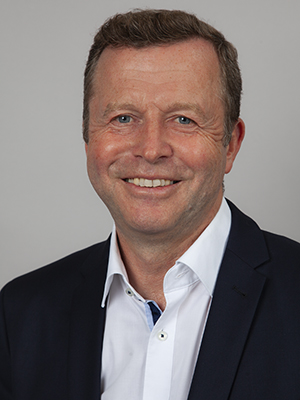
Ståle Ellingsen serves as Head of the Department of Biological Sciences at the University of Bergen. His academic foundation includes an MSc (1995) and PhD (2001) from the same institution, focusing on zebrafish genetics and molecular biology. His research spans three core domains: Molecular & Developmental Genetics : Zebrafish gene expression, neural development, and transporter systems (e.g., slc7a1a, slc3a1/slc7a9). Environmental Toxicology : Interactions between methylmercury/selenium, neurotoxicity mechanisms, and epigenetic impacts of contaminants like Bisphenol A. STEM Education : Digital pedagogy, cooperative learning efficacy, and AI integration in biology curricula. Ellingsen's recent publications (2021–2025) emphasize precision breeding in aquaculture, neurodegenerative disease modeling, and educational innovation, reflecting interdisciplinary collaboration with marine research institutes. He contributes to the bioCEED Center for Excellence in Biology Education, exploring technology-enhanced learning frameworks.
Emelie Jonsson is an Associate Professor of English Literature at UiT The Arctic University of Norway, specializing in intersections between human psychology, evolutionary theory, and literary analysis. Her affiliations include the Department of Language and Culture and the research group Engaging Conflicts in a Digital Era (ENCODE) . Expertise in evolutionary literary theory Focus on Victorian/Modernist texts Collaborates on biocultural research Teaches American studies and genre fiction Recent publications explore speculative fiction, Darwinian influences on dystopian narratives, and cognitive approaches to literature. She co-edits the journal Evolutionary Studies in Imaginative Culture and engages in interdisciplinary projects spanning neuroscience and moral philosophy.
Kristina Solum serves as an Associate Professor at Oslo Metropolitan University within the Faculty of Education and International Studies, Department of International Studies and Interpreting. Her academic work centers on Translation Studies, Interpreting Studies, and Language and Communication, with particular emphasis on collaborative translation processes and public service language mediation. Her research investigates the complex dynamics between translators and stakeholders including copy-editors, publishers, and public sector institutions. Key interests include pedagogical methodologies for heterogeneous interpreter training groups, sociolinguistic aspects of professional communication in translation workflows, and systemic gaps in Norwegian public sector translation services. She examines how editorial interventions shape literary translations and the implications for professional recognition within translation communities. Analysis of her 2015-2025 publications reveals sustained focus on collaborative translation practices, with recent work addressing critical shortages in public service interpreting and innovative teaching approaches for multilingual classrooms. Her research bridges theoretical frameworks in Translation Studies with practical applications in interpreter education and governmental language policy. Scientific Awards: No awards or fellowships are documented in the available information. Advising and Grants: While Dr. Solum maintains an active publication record, specific details regarding student supervision, grant funding, or research projects are not provided in current institutional profiles. Labs and Teams: She contributes to OsloMet's research groups focused on Interpreting and Language and Communication, participating in interdisciplinary initiatives that explore language mediation across educational, literary, and public administration contexts.
Boris Rodin Maslov is an Associate Professor at the Department of Philosophy, History of Ideas and Art, and Classical Languages at the University of Oslo. His research focuses on ancient Greek literature, literary theory, historical semantics, and comparative metrics, with ongoing projects including a book on recognition and oblivion plots, articles on Pindar's metrics, and a study of Gregory of Nazianzus' De Vita Sua. His recent publications explore thematic and metrical patterns in classical texts, intertextual dialogues between Greek and Russian literature, and methodological approaches like quantitative historical poetics. He collaborates with scholars such as Tatiana Nikitina and Paulo do Nascimento Brito on diverse topics spanning tragedy, narrative theory, and linguistic reconstruction. He contributes to research groups in Linguistics and Poetics and co-edits interdisciplinary works like Persistent Forms: Explorations in Historical Poetics . His work bridges classical philology with contemporary literary theory, emphasizing transhistorical connections and the evolution of poetic forms.
Gro Anita Myklevold serves as Associate Professor in the Department of Language and Literature at the University of South-Eastern Norway's Faculty of Humanities, Sports and Educational Sciences. She teaches across PPU teacher education courses and Master's programs in Language Didactics (English) and the Experiential Master, focusing on practical applications of multilingual pedagogy and literature-based instruction. Her research centers on operationalizing multilingualism within Norway's predominantly monolingual educational context, examining how teachers and students implement multilingual approaches despite systemic challenges. Key interests include: Metacognitive strategies for leveraging students' full linguistic repertoires Intercultural competence development in English language classrooms Pedagogical applications of graphic novels and multimodal texts Implementation challenges of LK20 curriculum reform Dr. Myklevold's recent publications (2021-2025) reveal consistent focus on bridging multilingual theory and classroom practice, with increasing attention to teacher cognition and policy implementation gaps. Her work demonstrates how graphic novels uniquely foster empathy through visual-verbal synergy while lowering linguistic barriers for multilingual learners. As deputy head of the Language Didactics research group and member of the Multilingualism, Learning and Development (FLU) group, she supervises Master's students and develops collaborative projects. Her current editorial work includes guest-editing a 2025 special issue of The Language Learning Journal on multilingualism and co-editing an anthology about Norwegian multilingual classrooms. International engagement continues through her 2017 visiting scholarship at Cambridge's Faculty of Education.
Rob Bongaardt is a Professor of Mental Health at the University of South-Eastern Norway (USN), Faculty of Health and Social Sciences, Department of Health, Social and Welfare Studies, based at the Porsgrunn campus. He serves as Board Member of the Faculty, Academic Leader for Development of Doctoral Supervision, and Academic Leader for the Research Leadership Programme. His research focuses on mental health continuing education, doctoral supervision training, leadership development, and complex systems science. Bongaardt has developed expertise in descriptive phenomenological methods, adult psychological development, and philosophy of science. Professor Bongaardt has co-edited significant works on doctoral education, including 'The Future of Doctoral Research: Challenges and Opportunities' (2021), which addresses global transformations in doctoral education and supervisor training. His work demonstrates strong international engagement through workshops across Europe, Asia, and Africa. His professional development includes specialized training completed between 2022-2024 at CleanLearning (Hampshire, UK) and various advanced methodologies from institutions worldwide including Cambridge, Princeton, and Colorado State University. He collaborates with USN's Centre for Mental Health and Substance Abuse and the HELP Research Group, contributing to mental health research and educational initiatives within the university framework.
Jerzy Norbert Nykiel serves as Associate Professor in the Department of Foreign Languages within the Faculty of Humanities at University of Bergen. His academic profile centers on rigorous historical linguistic research with particular emphasis on syntactic evolution in English across multiple historical periods. Professor Nykiel's research program systematically investigates grammaticalization pathways and syntactic change through corpus-driven methodologies. Key areas include: Development of progressive constructions and alternative aspectual markers Evolution of prepositional phrases into subordinators Negation patterns and idiomatic expression change Copula systems and adjunct structures in historical English His work bridges Germanic and Romance linguistics through comparative frameworks, as demonstrated in the 2025 edited volume examining progressive aspect across language families. Analysis of his recent publications (2020-2025) reveals consistent output focused on diachronic syntax, with increasing attention to quantitative corpus methods. The research demonstrates strong continuity in examining grammaticalization cycles while expanding into cross-linguistic comparisons, particularly between Germanic and Romance language systems. Professor Nykiel maintains active scholarly engagement through conference presentations and collaborative projects, including co-authored works with international researchers like Kristian A. Rusten and Reijirou Shibasaki. His role as co-editor of the 2025 John Benjamins anthology confirms leadership in the field of historical linguistics.
Naomi Yabe Magnussen is a Researcher at the University of Oslo , serving as Head Librarian at the Humanities and Social Sciences Library. Her work focuses on supporting Japanese and Asian studies through subject specialization, cataloging East Asian materials, and managing special collections and digitization projects. She has been a key contact for the Tibetan collection and contributes to library guidance and information literacy programs. Bachelor in Library and Information Science, Oslo University College, 2004 Cand. Mag. in Folklore and Japanese Literature, University of Oslo, 1998 Elementary School Teacher Education, Tamagawa University Tokyo, 1987 Bachelor in Japanese Literature, St. Paul's University Tokyo, 1983 Magnussen's research interests span library science , digital preservation , and East Asian studies . Her publications from 2014 and 2004 highlight her expertise in international library support for niche academic fields and Norwegian library policies. These works emphasize resource accessibility, conservation strategies, and cross-cultural academic collaboration. She secured grant funding from the Toshiba International Foundation (2015-2016) for a preservation assessment project on Japanese materials in European libraries. Her contributions to the Conservation/Preservation Working Group of the European Association of Japanese Resource Specialists demonstrate her leadership in material preservation. Magnussen currently leads the BærUt! Network and Skills Hub for Sustainable Digital Scholarly Editions , advancing sustainable digitization practices. She has also developed preservation guidelines and assessment tools for archives and manuscripts, including disaster response protocols and microfilm conservation techniques.
Professor Axel Müller serves as Research Group Leader for the Norwegian Center for Mineralogy (NORMIN) at the Natural History Museum, University of Oslo. His academic career spans industry, government geological surveys, and academia, with current focus on mineralogy and petrology of granites and pegmatites. Müller maintains dual affiliations as External Researcher at the Natural History Museum of London since 2012. Professor of Mineralogy, University of Oslo (2015-present) Research Group Leader, NORMIN External Researcher, Natural History Museum London (2012-present) Associate Editor, Journal of Geochemical Exploration Scientific Associate, Natural History Museum London Professor Müller's research centers on genetic mineralogy, particularly quartz chemistry in pegmatite systems, with applications for solar cells and microchip production. His work bridges fundamental mineral science and industrial applications, focusing on rare-metal (Li, Sn, W, Nb, Ta, REE) and industrial mineral deposits. Current projects emphasize exploration for critical raw materials essential to the energy transition. His publication record demonstrates consistent output in top geoscience journals, with recent work (2023-2025) focusing on pegmatite exploration techniques, quartz chemistry, and machine learning applications in mineral deposit identification. Müller leads the significant EU-funded GREENPEG project developing tools for locating buried pegmatite deposits containing lithium and high-purity quartz. Society of Economic Geologists (SEG) Society for Geology Applied to Mineral Deposits (SGA) Mineralogical Society of UK and Ireland Leibniz-Sozietät der Wissenschaften zu Berlin Professor Müller actively supervises graduate students through the University of Oslo, with research opportunities connected to NORMIN's analytical facilities and international collaborations. His GREENPEG project provides substantial funding for PhD and postdoctoral positions focused on critical raw materials exploration. The research group maintains strong industry partnerships with mineral exploration companies and geological surveys across Europe. NORMIN serves as Norway's national hub for mineralogical research, housing advanced analytical equipment and the Mars Sample Return Analogue Sample Library (MSR ASL). Müller's group conducts fieldwork across Norwegian pegmatite provinces and European lithium deposits, with recent work in Austria's Wolfsberg deposit and Norway's Tysfjord region.