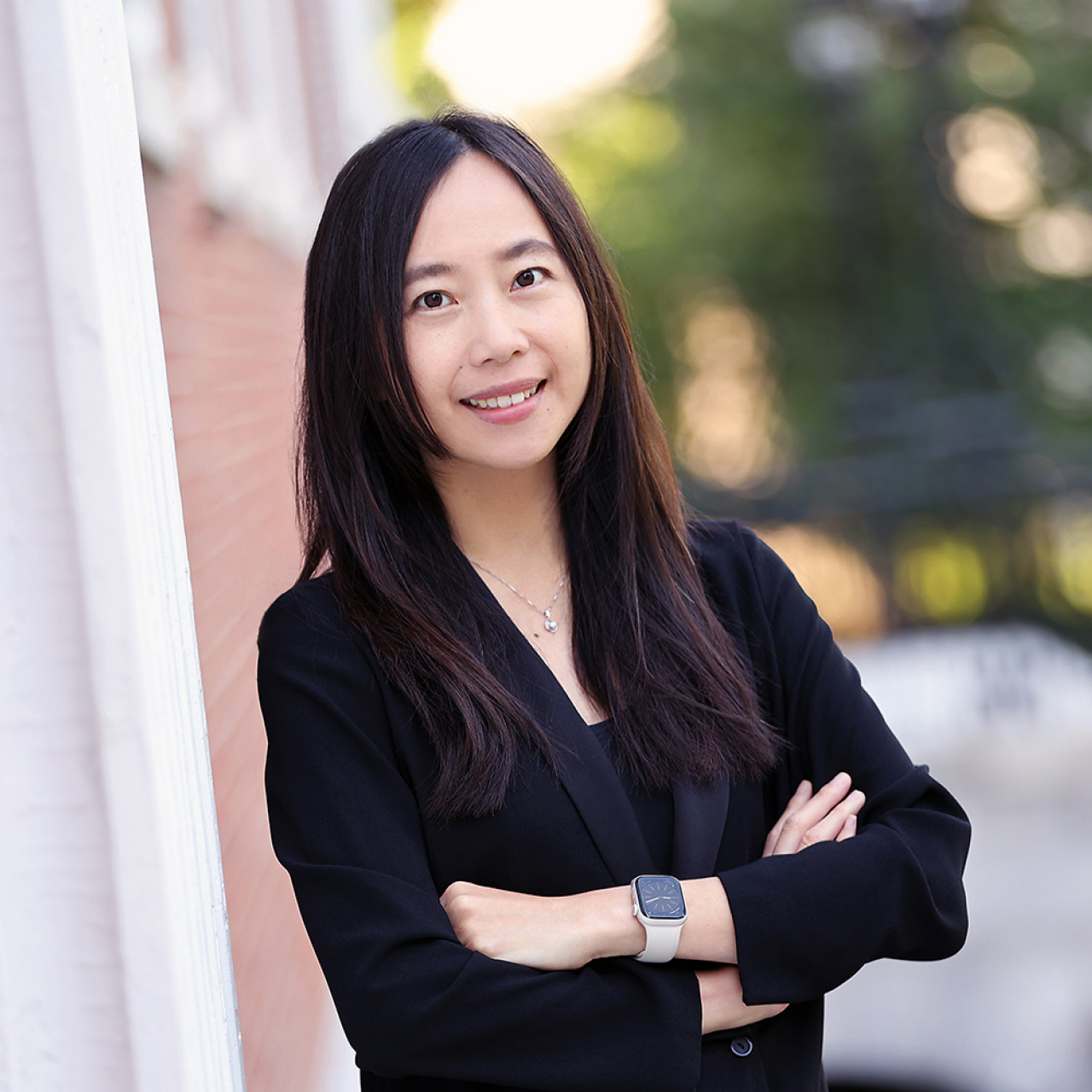
Jie Bai is an Associate Professor of Public Policy at Harvard Kennedy School (HKS), focusing on firms and markets in developing economies. His research addresses barriers to firm growth, market frictions, and policy design for private sector development in regions like China, East Africa, and Southeast Asia. Methodologically, he combines randomized control trials, quasi-experiments, and structural modeling from industrial organization and international trade. He holds a Ph.D. in Economics from MIT (2016) and previously worked at Microsoft Research New England before joining HKS in 2017. His work emphasizes collaboration with governments and NGOs to evaluate industrial and trade policies. Key research themes include collective reputation in trade, environmental policy impacts, corruption dynamics, and child labor economics. His recent publications analyze China's dairy industry reputation, Vietnam's firm corruption patterns, and Zambia's product choice perceptions. He co-founded initiatives like the China Econ Lab and China and the Global Economy project to foster research on China's role in global economics. Teaching includes advanced microeconomic analysis and game theory. No grants or labs are explicitly listed in the provided texts.
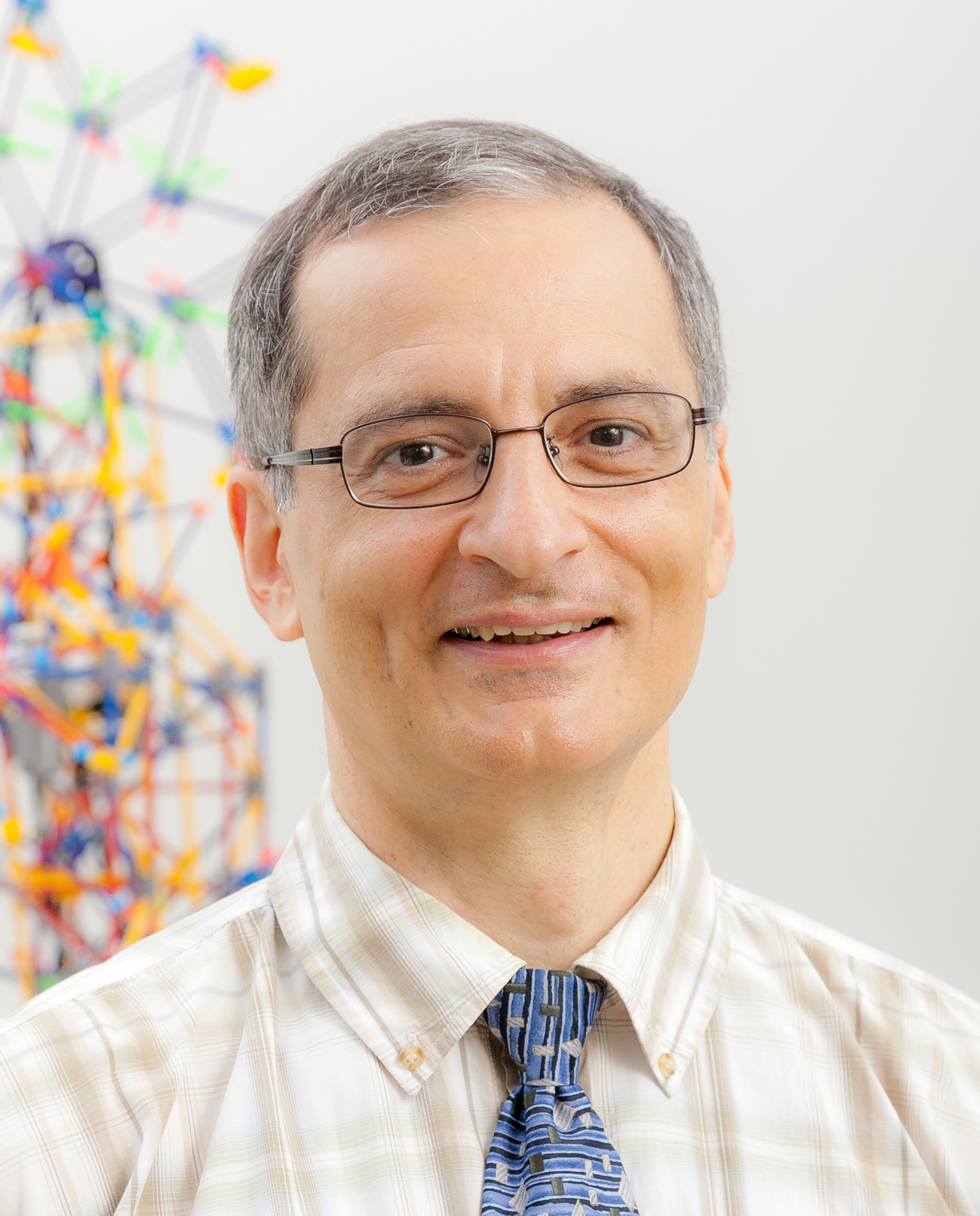
Jonathan A. Kelner is a Professor of Applied Mathematics in the Department of Mathematics at the Massachusetts Institute of Technology (MIT) and a member of the MIT Computer Science and Artificial Intelligence Laboratory (CSAIL). His research focuses on applying techniques from pure mathematics to solve fundamental problems in algorithms and complexity theory, with the goal of developing practical algorithms for real-world questions. Dr. Kelner received his undergraduate degree from Harvard University and his Ph.D. in Computer Science from MIT in 2006. Before joining the MIT faculty, he spent a year as a member of the Institute for Advanced Study. His educational background has provided a strong foundation for his interdisciplinary research spanning mathematics and computer science. His research interests include combinatorial optimization, mathematical programming, spectral graph theory, distributed computing, machine learning, computational geometry and topology, computational biology, signal processing, and random matrix theory. Kelner's work demonstrates how deep theoretical insights can lead to practical algorithmic improvements, particularly in graph algorithms and optimization problems. His approach often involves connecting seemingly disparate areas of mathematics to create novel algorithmic techniques. Analysis of his recent publications reveals a strong focus on spectral graph theory, optimization algorithms, and the Sum-of-Squares method. His work frequently addresses fundamental questions in theoretical computer science with practical implications for algorithm design. A notable trend in his research is the development of nearly-linear-time algorithms for various graph problems, which represents significant improvements over previous approaches. NSF CAREER Award Alfred P. Sloan Research Fellowship NEC Award for Research in Computers and Communication Sprowls Doctoral Dissertation Award Best Student Paper Award at STOC 2004 Best Paper Award at STOC 2011 Kokusai Denshin Denwa Junior Faculty Chair 2008 Harold E. Edgerton Faculty Achievement Award 2011 School of Science Award for Excellence in Undergraduate Education 2012 Professor Kelner has been actively involved in mentoring students and has received recognition for his teaching excellence, including the School of Science Award for Excellence in Undergraduate Education in 2012. His research has been supported by prestigious grants including the NSF CAREER Award. He has collaborated extensively with researchers across multiple institutions, often working with other leading figures in theoretical computer science to produce groundbreaking results in algorithm design. At MIT, Kelner is part of both the Mathematics Department and CSAIL, positioning him at the intersection of theoretical mathematics and practical computer science. This dual affiliation reflects the interdisciplinary nature of his work, which bridges pure mathematical theory with concrete algorithmic applications.
Professor Nick Chater is a leading figure in the field of Behavioural Science, affiliated with the University of Warwick at Warwick Business School since 2010. He has held previous chairs in psychology at Warwick and UCL. His research spans cognitive and social foundations of rationality, with applications to business and public policy, and he has authored over 200 papers and six books. He is a fellow of the British Academy, Cognitive Science Society, and Association for Psychological Science. His research interests include cognitive science, behavioral economics, decision making, and computational psychology, with a focus on reasoning, language, and mathematical modeling of mental processes. He has been recognized with prestigious awards such as the Spearman Medal, Experimental Psychology Society Prize, and the David E Rumelhart Prize for lifetime achievement in cognitive science. His work extends to practical applications through co-founding Decision Technology and advising the UK government's Climate Change Committee and the Behavioural Insight Team. Recent publications highlight his interdisciplinary approach, bridging economics, cognitive science, computational modeling, and behavioral public policy. Topics include thermal macroeconomic theory, Bayesian sampling, paradoxes in cognition, and language emergence via social interaction. These works emphasize probability judgments, moral cognition, and computational limitations in human inference. British Psychological Society's Spearman Medal (1996) Experimental Psychology Society Prize (1997) David E Rumelhart Prize (2023) PROSE Award (2019) Chater's academic contributions include collaborations with researchers like Adam N. Sanborn, Hossam Zeitoun, and Morten H. Christiansen, focusing on Bayesian inference, behavioral public policy, and cognitive modeling. He has also been a resident scientist on BBC Radio 4's The Human Zoo.
Dr Cosette Crisan is an Associate Professor (Teaching) in Mathematics Education at University College London’s IOE, ranked World Number 1 in Education. She specializes in curriculum design, subject-specific mentoring, and integrating digital technologies into mathematics education. Prior to joining UCL IOE in 2010, she taught mathematics at secondary and university levels for 16 years. Her research focuses on enhancing mathematics teaching practices through collaborative mentorship frameworks and technology integration. She co-leads the Curriculum and Subject Specialism Research Group and the ROPE group, driving pedagogical innovation. Notable achievements include the 2021 UCL Faculty Education Team Award for pandemic-era teaching support and leadership roles such as Academic Head of Learning and Teaching (2020–2023). She holds a PhD in Mathematics Education from London South Bank University and is a Principal Fellow of the Higher Education Academy. Current initiatives include developing a Mathematics and Secondary Mathematics Education BSc (QTS) Teacher Degree Apprenticeship program. Her research emphasizes revitalizing geometry education and preparing mentors to effectively guide novice teachers. Publications span topics like computer-aided assessment (STACK), pandemic-era teaching adaptations, and cross-cultural mentorship studies. Dr Crisan’s work bridges theory and practice, advocating for mathematics education as a design science. She actively contributes to the London Mathematical Society’s Education Committee, promoting public engagement with mathematics. Awards include the UCL Faculty Education Team Award (2021) and recognition for her role in transitioning teaching to online platforms during the pandemic. Her teaching portfolio includes leadership of the MA Mathematics Education program and supervision of doctoral candidates. Recent interests include exploring intersections between mathematics and cognitive neuroscience, inspired by her daughter’s career path.
Dr. Richard Fair is the Lord-Chandran Distinguished Professor of Engineering at Duke University, with a career spanning semiconductor physics, digital microfluidics, and lab-on-a-chip systems. His research group collaborates with faculty across Duke, Harvard, and Stanford in bioengineering, genomics, and environmental science to develop applications-driven microfluidic platforms. Ph.D. in Electrical and Computer Engineering, Duke University (1969) B.S.E.E., Duke University (1964) M.S.E.E., Pennsylvania State University (1966) Research interests focus on electrowetting-based microfluidics for biosensing, diagnostics, and synthetic biology applications. Key innovations include adaptive droplet routing , magnetic bead manipulation , and integrated optical sensors for real-time analyte detection in environmental and medical contexts. Recent publications emphasize deep reinforcement learning for biochip automation, fluorescent nucleosome detection , and inorganic ion analysis in aerosols. Collaborations with institutions like Advanced Liquid Logic and NSF-funded projects highlight his interdisciplinary approach. IEEE Third Millennium Medal (2000) Solid State Science and Technology Award (Electrochemical Society, 2003) Gordon E. Moore Medal (2009) Fellow, IEEE and Electrochemical Society Grants include NSF awards with Nan Jokerst and Krish Chakrabarty for adaptive lab-on-a-chip optical control, DARPA funding for genomic engineering platforms, and collaborations with the Desert Research Institute on airborne particle sensing. His lab develops scalable solutions for environmental monitoring, clinical diagnostics, and synthetic biology applications.
Ying Xu is an Assistant Professor at the Harvard Graduate School of Education (HGSE), specializing in the design of AI technologies to support children's language, literacy, STEM learning, and well-being. Her research emphasizes creating AI systems that act as interactive learning companions and language partners for children while fostering human-AI collaboration with educators and families. She holds a Ph.D. in Language, Literacy, and Technology from the University of California, Irvine, and previously served as an Assistant Professor at the University of Michigan from 2022 to 2024. Her work focuses on understanding how AI can complement human interactions, particularly through conversational agents integrated into media like books and educational TV programs. Collaborations include partnerships with PBS KIDS, GBH Education, and Sesame Workshop. Funded by organizations such as the National Science Foundation and Schmidt Futures, her research bridges developmental psychology, education, and human-computer interaction. Xu's studies highlight AI's potential for personalized learning while addressing ethical considerations like AI literacy and social impact. Key achievements include numerous best paper awards and recognition as an Early Career Interdisciplinary Scholar by SRCD. Her interdisciplinary approach involves designing technologies that reflect community values and linguistic/cultural diversity, ensuring equitable access to AI-driven educational tools. Xu advocates for balanced AI integration in children's lives, emphasizing the need for transparency about AI's limitations and the importance of maintaining human connections. She explores how AI can empower stakeholders (e.g., educators, parents) to co-create technologies tailored to their needs, ensuring AI serves as a complement—not replacement—for human interaction. Current projects investigate conversational AI's design principles, children's perceptions of AI, and strategies for fostering critical evaluation of AI-generated content. She also examines how AI affects social interactions and developmental processes, advocating for ethical guidelines to maximize benefits while mitigating risks.
Nori Franco serves as Professor in the Department of Physics at the University of Michigan and Chief Scientist at RIKEN's Theoretical Quantum Physics Laboratory in Japan. His dual appointments reflect his significant contributions to both American and Japanese academic communities, with continuous service at Michigan since 1990 and at RIKEN since 2002. His research spans quantum information, condensed matter physics, and quantum optics, with particular focus on light-matter interactions, superconducting qubits, optomechanics, and quantum open systems. Franco's work bridges theoretical foundations with experimental implementations, especially in circuit quantum electrodynamics and quantum computing applications. Analysis of his recent publications reveals a strong emphasis on non-Hermitian quantum systems, quantum control techniques, and applications of quantum information science to fundamental physics problems. His research group consistently produces highly cited work, with publications appearing in top journals across quantum physics and condensed matter disciplines. Scientific Awards: Charles Hard Townes Medal (2024) - sole recipient for fundamental contributions to quantum optics and quantum information processing Research Doctorate Honoris Causa from University of Messina (2024) Highly Cited Researcher for eight consecutive years (2017-2024) Member of Academia Europaea (2023) Willis E. Lamb Medal (2023) for quantum electronics research Throughout his career, Franco has secured significant research funding and mentored numerous students and postdoctoral researchers. His work has received international recognition through invitations to deliver prestigious lectures including the Stanislav Ulam Lecture and Sir Nevill Mott Lecture in 2024. His research group maintains strong collaborations across multiple continents, reflecting his global impact on quantum physics. At RIKEN, Franco leads the Quantum Information Physics Theory Research Team within the Quantum Computing Center, directing cutting-edge theoretical work that complements experimental efforts in quantum computing hardware development.
Remko Van Hoek serves as Professor of Practice in the Department of Supply Chain Management at the Sam M. Walton College of Business, University of Arkansas. He teaches Sourcing and Procurement courses across undergraduate, master's, and doctoral programs. Prior to joining the University of Arkansas, Dr. Van Hoek held academic positions in Europe and served as a visiting professor at Cranfield School of Management, complemented by extensive industry experience as a supply chain and procurement executive at global corporations including Nike, PwC, and The Walt Disney Company. He currently serves on the Council of Supply Chain Management Professionals (CSCMP) Board of Directors and acts as executive director of the CSCMP Supply Chain Hall of Fame hosted by the Walton College. Dr. Van Hoek's research centers on digital transformation in procurement and supply chain management, with particular focus on blockchain implementation, artificial intelligence applications, and sustainable sourcing practices. His work investigates how emerging technologies reshape procurement processes, supplier relationship management, and risk mitigation strategies. He explores innovative approaches to supplier diversity programs, ethical sourcing frameworks, and the strategic evolution of procurement from cost reduction to value creation. His research consistently bridges academic theory with industry practice through case studies from major corporations, developing actionable frameworks for practitioners facing digital disruption and sustainability challenges. Analysis of his 15 most recent publications (2023-2025) reveals dominant themes in AI-driven supply chain risk prevention, blockchain implementation for transparency, and sustainable supplier engagement. His work demonstrates consistent industry collaboration, drawing from case studies at Walmart, Moet Hennessy, and Bayer to address post-pandemic resilience challenges. A significant portion examines procurement's strategic evolution beyond transactional functions, with recurring emphasis on ethical considerations in digital transformation and the practical implementation barriers for emerging technologies in global supply networks. As a Professor of Practice, Dr. Van Hoek integrates executive-level industry experience into curriculum development and student mentorship. His industry-engaged teaching model includes guest lecturer programs connecting students with supply chain practitioners, as evidenced by his co-authored work on integrating industry insights into supply chain education. While specific grant funding details are not publicly documented, his leadership in the CSCMP Supply Chain Hall of Fame demonstrates commitment to professional development and industry-academia knowledge transfer. Dr. Van Hoek directs the CSCMP Supply Chain Hall of Fame initiative, which documents transformative contributions to supply chain management through interviews with industry pioneers and historical case studies. This platform serves as both an educational resource for Walton College students and a professional development tool for supply chain practitioners globally. The Hall of Fame preserves critical industry knowledge while highlighting contemporary innovations in supply chain strategy and technology implementation.
Dalibor Radovanović is a researcher at Singidunum University , affiliated with the Faculty of Business Informatics . His work spans cybersecurity, blockchain technologies, and their applications in business and IoT systems. Education: Doctoral Dissertation (2016, Singidunum University) Master's & Basic Studies (Faculty of Business Informatics) Secondary Education: ETŠ Nikola Tesla Research Interests include: Security frameworks for IoT and blockchain integration Smart card and wireless network vulnerabilities E-governance and corporate IT audit methodologies Machine learning applications in cybersecurity Environmental performance optimization in agribusiness Publication Trends reveal a focus on blockchain (2022), cybersecurity (2009-2022), and IT governance (2010-2017). His work bridges theoretical analysis with practical implementations in Serbia's digital economy. Collaborations with scholars like Marko Šarac and Saša Adamović highlight interdisciplinary approaches to securing financial systems, educational institutions, and industrial IoT applications.
Hailong Jiao is an Assistant Professor in the Department of Electrical Engineering at Eindhoven University of Technology (TU/e) and an Associate Professor at Peking University Shenzhen Graduate School's School of Electronic and Computer Engineering. He is also a Visiting Assistant Professor with TU/e's Electronic Systems group. His research focuses on low-power and variations-resilient VLSI circuit and system design , including error-resilient systems, approximate computing, machine learning in VLSI, ultra-low voltage circuits, and emerging devices like 3D integration and carbon electronics. Education : BSc (highest honor, 2004, Shandong University), MSc (2008, Institute of Microelectronics, Chinese Academy of Sciences), PhD (2012, HKUST). Collaborations : BrainWave project (TU/e and Radboud University Nijmegen) developing wearable brainwave processing for epilepsy/Parkinson's healthcare. Editorial Roles : Associate Editor for Elsevier Microelectronics Journal and World Scientific Journal of Circuits, Systems, and Computers. Committee Memberships : HiPEAC, MemoCiS, ACM/SIGDA, and six IEEE committees. Research Trends : Recent articles emphasize energy-efficient IoT networks , voltage stacking , sensitivity control , and scan flip-flop design , aligning with UN SDGs for energy engineering and healthcare innovation. Scientific awards include highest honor at BSc .
Anne E. White is the School of Engineering Distinguished Professor of Engineering and associate vice president for research administration at the Massachusetts Institute of Technology (MIT). She serves in the Department of Nuclear Science and Engineering within MIT's School of Engineering and is a key researcher at the Plasma Science and Fusion Center (PSFC). White has held significant leadership roles including NSE department head from 2019 to 2023 and co-chair of the MIT Climate Nucleus from 2021 to 2024. She currently chairs the Fusion Energy Sciences Advisory Committee (FESAC), providing federal advisory input to the U.S. Department of Energy Office of Science. White received her PhD in physics from UCLA, where she conducted research at the Electric Tokamak. Her early career included research positions at the National Spherical Torus Experiment at Princeton Plasma Physics Laboratory and the DIII-D National Fusion Facility at General Atomics before joining MIT as a faculty member. Her educational background laid the foundation for her expertise in plasma physics and fusion energy research. Professor White's research focuses on magnetic fusion energy, specifically on understanding turbulent transport in magnetically confined fusion plasmas. Her work spans diagnostic development, novel experimentation, and validation of nonlinear gyrokinetic codes. She aims to demonstrate nuclear fusion as a practical part of the world's sustainable energy future. Her group develops and uses radiometers, reflectometers, and interferometers to measure fluctuations in plasma density, temperature, and flows in tokamaks. This research is critical for improving predictive capabilities of turbulent transport models, which is essential for developing viable fusion reactors. Analysis of Professor White's recent publications reveals a strong focus on plasma diagnostics and turbulence measurements across multiple tokamak facilities. Her work spans experimental measurements on ASDEX Upgrade, Alcator C-Mod, NSTX, and DIII-D tokamaks, with particular emphasis on electron temperature fluctuations, turbulence characterization, and transport model validation. A significant theme is the development and application of novel diagnostic techniques for simultaneous measurements of multiple plasma parameters. Her research increasingly incorporates computational approaches, including gyrokinetic simulations and machine learning methods, to interpret experimental data and advance predictive capabilities in fusion plasma physics. Professor White has received numerous prestigious awards throughout her career: Fellow, American Physical Society Division of Plasma Physics (2019) Cecil and Ida Green Career Development Professor, MIT (2014) American Physical Society Katherine E. Weimer Award (2014) Fusion Power Associates Excellence in Fusion Engineering Award (2014) Junior Bose Award for Excellence in Teaching, MIT (2014) PAI Outstanding Faculty Award from MIT student chapter of the American Nuclear Society (2013) Norman C. Rosenbluth Career Development Professor, MIT (2012-2014) Department of Energy Early Career Award (2011-2016) Marshall N. Rosenbluth Outstanding Doctoral Thesis Award (2009) As an educator and mentor, Professor White has advised numerous students through MIT's Department of Nuclear Science and Engineering. She has taught courses including Principles of Plasma Diagnostics, Seminar in Fusion & Plasma Physics, and Introduction to Plasma Physics. Her leadership extends to developing educational resources, notably leading a team in 2018 to create a free MITx MOOC focused on nuclear science and engineering for global high school learners. Professor White has secured significant research funding through Department of Energy awards, including the Early Career Award (2011-2016) and various fusion energy fellowships throughout her career. Her research group at MIT's Plasma Science and Fusion Center has contributed to multiple major fusion facilities and has been instrumental in advancing understanding of plasma turbulence and transport. Professor White leads the Fusion and Plasmas Lab at MIT, which focuses on diagnostic development and turbulence measurements in fusion plasmas. Her team has made significant contributions to research on four major tokamaks: Alcator C-Mod, ASDEX Upgrade, DIII-D, and National Spherical Torus Experiment Upgrade. At MIT's Plasma Science and Fusion Center, she previously served as assistant division head for magnetic fusion energy collaborations and ran the Gyrokinetic Simulation Working Group and the Alcator C-Mod Transport Group. Her lab maintains close collaboration between experimental work, theoretical modeling, and computational simulation to advance the understanding of plasma turbulence and transport phenomena critical for fusion energy development.
Luisa Domingues is an Assistant Professor in the Department of Information Science and Technology at ISCTE - University Institute of Lisbon. She serves as an Integrated Researcher at ISTAR-Iscte - Research Center in Information Sciences, Technologies and Architecture, specializing in Information Systems research. Her academic qualifications include a PhD in Information Science and Technology from ISCTE-IUL (2013). Her primary research interests focus on: Project Management : Methodologies, risk assessment, and knowledge sharing Database Systems : Management, interoperability, and standardization e-Government Solutions : Public sector information systems and shared services Ontological Frameworks : Particularly for architectural heritage documentation Educational Technologies : Blended learning approaches in higher education Her recent publications (2016-2024) demonstrate a strong focus on project management methodologies, knowledge transfer, and information systems in public sector contexts. Key thematic trends include PMBOK framework applications, agile methodology adoption challenges, data science project risks, and technological solutions for cultural heritage preservation. Most works employ case study research and empirical validation methods. Dr. Domingues maintains an active advising portfolio with 1 doctoral candidate and 36 master's students, primarily focusing on topics in project management, information systems, and data science applications. She has held significant academic leadership positions including: 4th Year Coordinator for Bachelor's in Computer Science and Business Management (2020-2027) Program Director for the same degree (2017-2019) At ISTAR-Iscte research center, she contributes to projects involving information systems architecture, data standardization, and knowledge management frameworks.
Prof. Dr. Peter Gomber is Chair of e-Finance at the Faculty of Economics and Business, Goethe University of Frankfurt, Germany. He serves as Co-Chairman and member of the Board of the 'efl – the Data Science Institute', an industry-academic partnership between Frankfurt and Darmstadt Universities and leading industry partners. Additionally, he is a member of the Exchange Council of the Frankfurt Stock Exchange, Supervisory Board of Clearstream Banking AG, and Research Fellow at the Leibniz Institute for Financial Research SAFE in Frankfurt. Prof. Gomber received his Ph.D. at the Institute of Information Systems at the University of Giessen in 1999 after graduating in Business Administration. Before joining Goethe University in 2004, he worked for five years as Director, Head of Market Development Cash Markets and Xetra Research at Deutsche Börse AG, where he developed new market models and products for cash market trading on Xetra. His research focuses on market microstructure theory, digital finance and fintech, regulatory impact on financial markets, and electronic trading systems. With over 150 publications in leading international journals, his work has significantly influenced the field, particularly his highly cited papers on the Fintech Revolution. His recent research examines market fragmentation, circuit breakers, research unbundling under MiFID II, and the application of AI in financial markets. Prof. Gomber's extensive publication record shows a clear evolution from traditional market microstructure and electronic trading systems toward digital finance, fintech innovations, and regulatory impact analysis. His work bridges technical aspects of financial markets with regulatory considerations, demonstrating how technological innovations interact with market structure and regulation. His scientific recognition includes: IBM Shared University Research Grant (2007) Reuters Innovation Award (2000) Best Paper Award of the Journal of the Association for Information Systems (2020) Best Information Systems Publications Award (2020) Top 1 and Top 3 most cited articles in Fintech research (2025 bibliometric analysis) Prof. Gomber has successfully supervised numerous PhD students, including Tino Cestonaro who won the Best PhD Paper Award 2025. He has acquired significant research funds from both public institutions and the private sector. Notably, a market model invention by Prof. Gomber was granted a patent by the United States Patent and Trademark Office, with two additional market model inventions filed for patent in Europe and the US. He leads an active research team at the Chair of e-Finance, including researchers like Benjamin Clapham, Micha Bender, and Tino Cestonaro. The team collaborates closely with the efl – the Data Science Institute and the Leibniz Institute for Financial Research SAFE, bridging academic research with practical applications in financial markets.
Maarten de Rijke is a Professor at the University of Amsterdam and affiliated with the Innovation Center for Artificial Intelligence (ICAI) . He is a leading expert in Information Retrieval , Recommender Systems , and Machine Learning , with over 500 publications and 10,000 citations. His work spans theoretical and applied domains, including conversational recommender systems , domain generalization , and neural ranking models . Research Pillars: Information retrieval, e-commerce search, learning to rank, and empathetic AI systems Awards: Best Paper (2x), Best Student Paper Community Roles: Organized workshops (MANILA25, SIGIR editions) His recent publications focus on robust recommendation systems , cross-domain contract extraction , and brain signal integration for query refinement. He leads the AIRLab (Amsterdam) and collaborates with institutions like Shandong University and the University of Chinese Academy of Sciences. Scientific Contributions : Over 500 publications in ACM Transactions, SIGIR proceedings, and journals Developed novel frameworks for learning-to-rank and user satisfaction modeling Pioneered research on conversational AI and adversarial attacks in retrieval He actively engages in community service, including organizing conferences and advocating for epilepsy research through initiatives like Emma’s collection box (over €24,448 raised). His work bridges theoretical rigor with real-world impact in search and recommendation technologies.
Shaker A. Zahra is the Robert E. Buuck Chair of Entrepreneurship and Professor of Strategy and Entrepreneurship at the Carlson School of Management, University of Minnesota. He has served as department chair for 9 years, Director of the Holmes Center for Entrepreneurship for 10 years, and Academic Co-Director of Carlson Ventures Enterprises. Previously, he held positions as Paul T. Babson Distinguished Professor of Entrepreneurship at Babson College and Professor of Strategy & Entrepreneurship at Georgia State University. His educational background includes: PhD in Business Administration, Business Policy & Managerial Economics from University of Mississippi MBA (with Distinction) in Management/MIS from National University B. Commerce (with Honors) in Management from Al-Azhar University Dr. Zahra's research focuses on international entrepreneurship, corporate entrepreneurship, technological innovation in global industries, and dynamic capabilities. His work examines how firms navigate global markets, develop innovative capabilities, and create value through strategic entrepreneurship. He studies industry emergence, strategic choices in entrepreneurial firms, and the evolution of novelty in company strategies, contributing significantly to knowledge-based and dynamic capabilities perspectives. His extensive publication record spans leading journals including Academy of Management publications, Strategic Management Journal, Journal of International Business Studies, and Journal of Business Venturing. His research covers diverse industries such as robotics, software applications, mobile applications, video games, pharmaceuticals, and nanotechnology across multiple countries including China, Brazil, India, and several European nations. Scientific recognition includes: 2014 Global Award for Entrepreneurship Research Multiple Best Paper Awards from leading journals Five honorary PhD degrees from prestigious institutions worldwide Research.com Business and Management in United States Leader Award (2022-2025) Fellowships in Academy of Management and other professional associations Dr. Zahra has advised or served on committees for over 75 PhD students and has received multiple teaching awards including the Mentor Award from the Entrepreneurship Division of the Academy of Management. His leadership extends to editorial roles on over 25 journal editorial boards and service as Chair of the Entrepreneurship Division of the Academy of Management. He has been a keynote speaker at more than 40 international conferences and has consulted for major global technology companies. His research projects span multiple countries and industries, examining how firms develop capabilities to compete in global markets. He has established several research centers including the Center for Integrative Leadership at the University of Minnesota and has directed major entrepreneurship research conferences including the Babson Kauffman Entrepreneurship Research Conference.