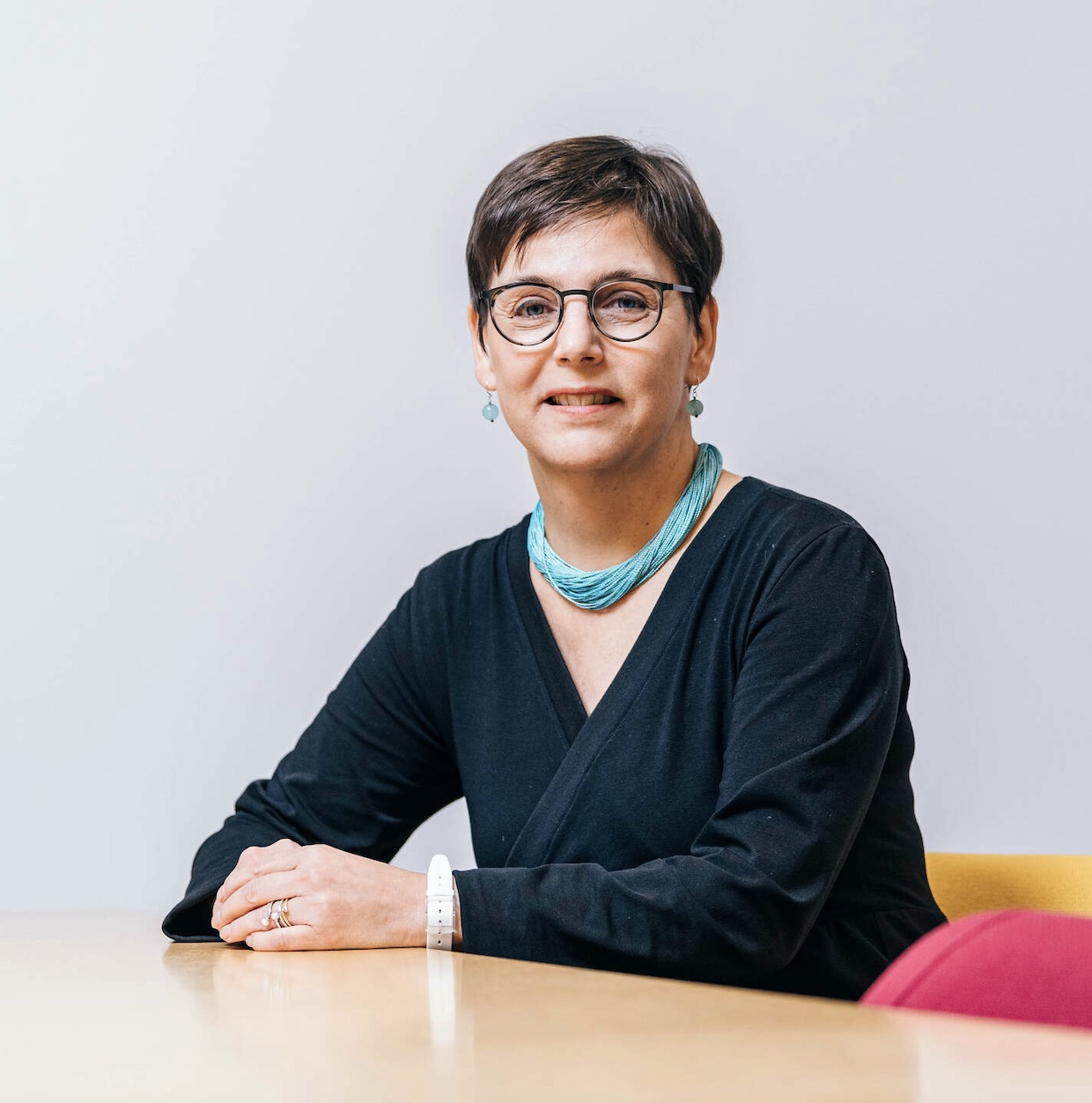
Tuuli Mattelmäki is a Professor at Aalto University's School of Arts, Design and Architecture , affiliated with the Department of Design . Her work centers on co-design , service design , and creative practices , with a focus on empathic approaches and societal transformations. Research Interests : Empathic Design : Human-centered methodologies in public sector innovation Transformational Futures : Exploring creative practices for sustainability Service Design : Cross-organizational B2B innovation and prototyping Design Probes : Experimental tools for participatory engagement Recent Articles (2022-2025) reflect expertise in service design , sustainability , and creative interventions , spanning subfields like co-laboratories, inner conditions in co-design, and climate-responsive design. Collaborations include institutions such as University of Sussex, RMIT, and Utrecht. Scientific Awards : Ziman Award (2024) for the CreaTures project Industrial Designer of the Year (2008) by TKO and ORNAMO Dean's Publication Bonus (2012) for the Encore team Teams & Labs : Principal Investigator of the CreaTures (Creative Practices for Transformational Futures) project, leading a multidisciplinary team with partners including Superflux, Kersnikova, and RMIT University.
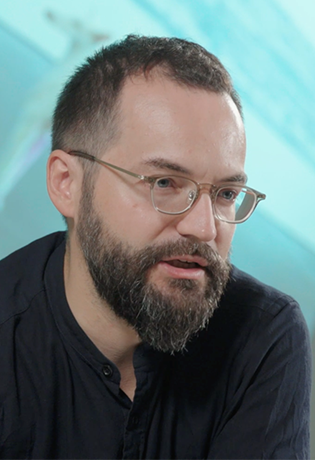
Lucien Castaing-Taylor is the John Cowles Professor of Art and Anthropology at Harvard University and Director of the Sensory Ethnography Lab (SEL), currently on leave for Fall 2025. His work bridges anthropology and artistic practice through sensory ethnography, engaging critically with ecological crises and political challenges while maintaining an ethnographic commitment to lived experience. His research spans sensory ethnography, phenomenology, media anthropology, and post-human/multi-species relations, with deep engagement in cultural and political ecology across the Franco-Creole Caribbean, Europe, and American West. Castaing-Taylor interrogates intellectual history and reason while developing methodologies that merge artistic negative capability with ethnographic rigor to capture life's flux without imposing conventional narrative structures. Castaing-Taylor's creative output demonstrates a consistent trajectory from early works like In and Out of Africa (1992) to recent projects such as De Humani Corporis Fabrica (2022), evolving from representational ethnography toward immersive sensory experiences. His filmography and installations increasingly address the Anthropocene, human-animal relations, and embodied knowledge through experimental audiovisual techniques that challenge documentary conventions and expand ethnographic possibilities. His major awards include: Alpert Award in the Arts (2013) True Vision Award (2013) Los Angeles Film Critics' Circle Douglas Edwards Independent and Experimental Film Award (2012) FIPRESCI Award (2012) As Director of the SEL, Castaing-Taylor cultivates a collaborative environment where anthropology converges with experimental filmmaking and installation art. The lab functions as an incubator for boundary-pushing audiovisual research that engages with urgent planetary issues through sensory immersion, fostering new modes of ethnographic inquiry that transcend traditional academic publishing.
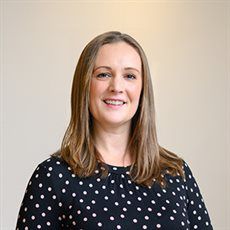
Professor Helen Abbott is a Professor of Modern Languages at the University of Birmingham, serving as Pro-Vice-Chancellor and Head of the College of Arts and Law. Her research focuses on the intersection of French poetry, music, and digital methods, particularly the work of Baudelaire. She has led major grants, including the AHRC-funded Baudelaire Song Project (2015-2019), exploring musical adaptations of Baudelaire's poetry. Abbott holds a BA from Cambridge, MA and PhD from King’s College London. She has supervised numerous PhD students and authored books such as Baudelaire in Song: 1880-1930 (2017). Awards include AHRC Standard Grant (£594,000) and an Early Career Fellowship. Her work bridges academia and practice, collaborating with musicians and digital researchers. She advises on doctoral programs and cultural initiatives, emphasizing interdisciplinary and public engagement.
Christopher L. Tucci is a Professor of Digital Strategy & Innovation at Imperial College London's Business School and currently serves as Interim Vice Dean of Education. He is also the Founding Dean of NEOM's College of Business & Innovation in Saudi Arabia. Previously, he held the Chair in Corporate Strategy & Innovation at École Polytechnique Fédérale de Lausanne (EPFL), where he served as Dean of the College of Management from 2013 to 2018. His academic qualifications include a PhD in Management from MIT and multiple degrees from Stanford University: an AB in Music, BS in Mathematical Sciences, and MS in Computer Science and Computer Science. His research focuses on digital strategy, innovation management, open innovation, and business model innovation, with particular emphasis on how firms transition to new technologies and organizational forms. He has pioneered work on crowdsourcing, inter-networking, and AI-driven innovation. His award-winning article 'Crowdsourcing as a Solution to Distant Search' (co-authored with Allan Afuah) has received multiple accolades, including the AMR Decade Award in 2022. Professor Tucci teaches courses such as AI Ventures, Co-Creation in AI & Robotics, and Design Thinking. He actively contributes to academic leadership roles, including serving on the Academy of Management's Board of Governors and leading initiatives like Imperial's I-X (Artificial Intelligence and Digital Innovation hub). His work integrates technology, strategy, and organizational dynamics to address modern business challenges. Educations: PhD in Management, MIT (1992–1997) SM in Technology & Policy/EECS, MIT (1989–1991) BS in Mathematical Sciences, Stanford (1978–1982) AB in Music, Stanford (1979–1983) MS in Computer Science, Stanford (1982–1984) Labs/Teams: Co-Director of Imperial's I-X initiative, focusing on AI, data science, and digital innovation.
Peter A. Flach is Professor of Artificial Intelligence at the Intelligent Systems Laboratory, School of Computer Science, University of Bristol, where he has been faculty since 1997 and was promoted to Professor in 2003. He currently directs the UKRI AI Centre for Doctoral Training in Practice-Oriented Artificial Intelligence and serves as Vice-President of the European Association for Data Science (EuADS), having previously served as its President. His research centers on rigorous evaluation and improvement of machine learning systems, with seminal contributions to classifier calibration (including Beta Calibration and Precision-Recall-Gain curves), explainable AI frameworks, and data science methodology. He pioneered the extension of CRISP-DM to data science trajectories and developed Explainability Fact Sheets for systematic assessment of XAI approaches. His work bridges theoretical foundations with practical deployment in real-world systems. Analysis of his recent publications reveals a dominant focus on interpretable and reliable machine learning, with strong emphasis on performance evaluation metrics, model calibration techniques, and human-centered explainability. His research increasingly addresses healthcare applications through projects like SPHERE and clinical decision support systems, while maintaining core contributions to fundamental ML theory. His scientific recognition includes prestigious fellowships: Fellow of the European Lab for Learning and Intelligent Systems (ELLIS) Fellow of the European Association for Artificial Intelligence (EurAI) Professor Flach has secured major research funding including UKRI Centre for Doctoral Training grants and EU network funding (TAILOR). He leads extensive collaborations across Engineering, Population Health Science, and international institutions (Monash University, Polytechnic University of Valencia), plus over 20 industry partners in the Practice-Oriented AI CDT including LV= and QinetiQ. His work with the SPHERE project demonstrates successful translation of AI research into residential healthcare settings. He leads the Intelligent Systems Laboratory at Bristol, which develops influential open-source tools including the FAT Forensics Python toolbox for algorithmic fairness and the Explainability Fact Sheets framework. His lab maintains strong connections with the European AI community through ELLIS and EurAI, positioning Bristol as a hub for human-centered and methodologically rigorous AI research.
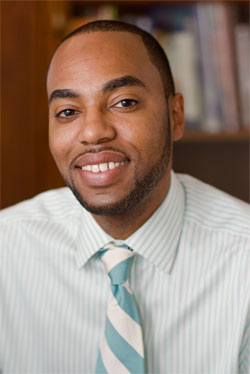
Christopher Emdin is a Professor of Science Education and Maxine Greene Chair for Distinguished Contributions to Education at Teachers College, Columbia University. He directs the STEAM, DREAM & IdeaLab initiatives. Emdin holds a B.S. in Physical Anthropology/Biology/Chemistry from Lehman College (2000), an M.S. in Natural Sciences from Rensselaer Polytechnic Institute (2003), and a Ph.D. in Urban Education from the CUNY Graduate Center (2007). His research focuses on urban STEM education , culturally responsive pedagogy , and Hip-Hop Education (HipHopEd) . Emdin has received prestigious awards including the Strage Prize (2011) and PDK International Outstanding Dissertation Award (2008) . He pioneered projects like the Science Genius B.A.T.T.L.E.S. , using rap battles to engage urban students in science. His work bridges theory and practice, emphasizing reality pedagogy and cosmopolitan ethics . Key contributions include over 50 publications on urban science education, equity, and hip-hop pedagogy. He is a leader in professional organizations such as NARST and AERA. Emdin’s grants include collaborations with NSF and Fund for Teachers, focusing on science agency and leadership in urban schools. His lab, IdeaLab , advances innovative teaching strategies rooted in youth culture.
Professor Winston Hsu is a distinguished faculty member in the Department of Computer Science and Information Engineering at National Taiwan University, where he has served as a full professor since 2015. He is the co-director of the Communications and Multimedia Laboratory (CMLab) and founder of the MiRA (Multimedia indexing, Retrieval, and Analysis) research group. Additionally, he serves as the Founding Director for NVIDIA AI Lab at NTU, the first such lab in Asia. Professor Hsu received his Ph.D. in Electrical Engineering from Columbia University in 2007 under the supervision of Professor Shih-Fu Chang. Prior to his academic career, he was a founding engineer and research manager at CyberLink Corp., now a public image/video software company. National Taiwan University (2007-Present): Professor (2015-Present), Assistant/Associate Professor (2007-2015) MobileDrive (2021-2024): CTO and Vice President (Joint Venture between Foxconn and Stellantis) IBM TJ Watson Research Center (2016-2017): Visiting Scientist Microsoft Research Redmond (2014): Visiting Researcher Columbia University (2007): Ph.D. in Electrical Engineering Professor Hsu's research focuses on machine learning, computer vision, large-scale image and video search and recognition, and embedded AI. His work spans from fundamental research in visual recognition to practical applications in automotive systems, medical imaging, and e-commerce. He has pioneered work in disguised face recognition, low-resolution face hallucination, 3D model search, and virtual try-on systems. His current research emphasizes Embodied AI, integrating perception, action, and learning technologies for applications in automotive and robotics domains. His research group has produced numerous influential publications, particularly in top computer vision and multimedia conferences like CVPR, where they won first place in the Disguised Face Recognition competition in 2018. Their work spans diverse application areas including security, medical diagnostics, automotive systems, and e-commerce solutions, demonstrating strong translation from academic research to real-world impact. IBM Research Pat Goldberg Memorial Best Paper Award (2018) First Place, IARPA Disguised Faces in the Wild Competition (CVPR 2018) Best Brave New Idea Paper Award, ACM Multimedia 2017 NVIDIA AI LAB Award (First in Asia, 2016) First Place, MSR-Bing Image Retrieval Challenge (2013) World's Top 2% Scientists (2023) Professor Hsu actively mentors students and researchers, with his group consistently recruiting PhD students, postdocs, and research assistants. He has successfully bridged academia and industry through multiple collaborations, including his role as CTO at MobileDrive (a joint venture between Foxconn and Stellantis) from 2021-2024. His research has been supported by significant industry partnerships with Microsoft, IBM, and NVIDIA, as well as government grants from Taiwan's Ministry of Science and Technology. His laboratory, the Communications and Multimedia Laboratory (CMLab), maintains strong industry connections and focuses on cutting-edge research in visual AI. The lab has produced numerous award-winning projects and maintains active collaborations with global technology companies, particularly in the automotive and consumer electronics sectors.
Professor Matthew Treherne is a leading scholar in Italian literature at the University of Leeds, where he holds the position of Professor of Italian Literature in the School of Languages, Cultures and Societies within the Faculty of Arts, Humanities and Cultures. He currently serves as Pro-Dean for Research and Innovation, and co-directs the Leeds Centre for Dante Studies. His research bridges medieval and Renaissance literature with contemporary issues such as finance, ecology, and technology. PhD in Italian Literature, University of Cambridge (2007) Diploma in Management Studies, Judge Business School, University of Cambridge (2000) M.Phil in European Literature (Distinction), University of Cambridge (1999) BA in Modern and Medieval Languages (First-class), University of Cambridge (1997) Matthew Treherne's research focuses on Dante and late-medieval religious culture, with a strong emphasis on the liturgical imagination and theological discourse in poetry. He explores how Dante’s work can inform modern debates on the ecological crisis, financialisation, and time. His interdisciplinary approach integrates theology, philosophy, and cultural studies. He leads the project The Cultural Life of Money and Finance , which investigates how the humanities can shape financial futures. His recent publications include Dante’s ‘Commedia’ and the Liturgical Imagination and co-edited volumes on Dante’s theology. His recent scholarly articles and chapters show a consistent engagement with Dante’s theological and poetic structures, Tasso’s religious poetry, and the role of art and liturgy in early modern culture. Themes such as sacramentality, time, vision, and interdisciplinarity recur across his work, reflecting a deep commitment to understanding literature as a living, ethically engaged practice. University Teaching Fellowship Developmental University Teaching Fellowship Faculty of Arts Development Teaching Prize Treherne has supervised numerous PhD students and fosters research-led teaching, notably through projects like Discover Dante and the Leeds Dante Podcast . He has led major research initiatives, including the AHRC-funded Dante and Late Medieval Florence , and collaborates widely across disciplines and institutions. He is also active in public engagement, contributing to BBC Radio 4’s In Our Time and curating podcast series such as Conversations on Dante and Arts and Humanities Futures . He co-leads the Cultural Life of Money and Finance project with Invisible Flock, blending humanities research with creative practice.
Pamela J. Hinds is the Rodney H. Adams Professor and Fortinet Founders Chair in Stanford University's School of Engineering, holding a joint appointment in the Department of Management Science and Engineering. She co-directs the Center on Work, Technology, and Organization and serves on the Director's Council for the Hasso Plattner Institute of Design. Her research focuses on technology's impact on teams, collaboration, and innovation in global and cross-cultural contexts. She earned her Ph.D. in Organizational Science and Management from Carnegie Mellon University (1997). Research Interests: Dr. Hinds explores cross-boundary work teams, particularly those spanning national borders, examining cultural dynamics, language barriers, and site visits' role in knowledge sharing. She investigates human-robot interaction in workplaces and emerging technologies' effects on work practices, including AI, 3D printing, and open innovation systems. Her work bridges organizational behavior, human-computer interaction, and global work dynamics. Awards & Recognition: Lasting Impact Award (2018) Senior Editor of Organization Science Co-editor of Distributed Work (MIT Press) Advising & Leadership: As department chair, Hinds shapes educational and research agendas. Her grants include NSF-funded studies on digital technologies in agriculture and crowd-based innovation. She advises initiatives at the intersection of technology, work design, and global collaboration. Labs & Teams: Co-leads the Center on Work, Technology, and Organization, fostering interdisciplinary research on modern work environments. Engages in Stanford's Design School (d.school) to integrate human-centered design principles into workplace innovation.
Dr. Damien Charrieras is an Associate Professor at the School of Creative Media , City University of Hong Kong, where he serves as Program Leader for the Master of Art in Creative Media and deputy program leader for the PhD in Creative Media. His work bridges cultural studies, new media theory, and the intersection of financial technologies with artistic practices through the ACIM Laboratory for Interventions in Speculative Finance . Doctoral research on digital artists' trajectories in Montreal FRQSC Postdoctoral Fellowship at McGill University Research spans game engine design , datafication of creativity , blockchain in art , and post-anthropocentric creative processes . With over HK$3.14M in grants as Principal Investigator, he explores situated digital creativity in urban contexts, critical worldbuilding pedagogy , and the mediation of technical systems in cultural production. His publications in Cities , Organized Sound , and Human Relations analyze the reconfiguration of artistic practices through software infrastructures and automation paradigms. Scientific awards include: FRQSC Postdoctoral Fellowship
Lisa Walcott is an Associate Professor of Art at Hope College, where she has been a faculty member since 2018. She teaches sculpture courses, the capstone course for art majors, and a First-Year Seminar on artistic processes. Her studio practice focuses on kinetic sculptures and installations that explore themes of home, the everyday, and the feminine experience. MFA in Sculpture from Cranbrook Academy of Art (2010) B.A. from Trinity Christian College (2005) Walcott’s research intersects sculpture, installation art, and kinetic design, often recontextualizing domestic objects to investigate themes of interdependence, repair, and the unseen forces in everyday life. Her work frequently involves mechanical components and materials like wax, motors, and household items to create immersive, motion-driven installations. Her recent artworks, such as Making a Mountain (2024) and A Soft Punch to the Gut (2024), exemplify her focus on transforming utilitarian structures into emotive, kinetic pieces. These works, alongside digital collages like The Way I Figure It (2023), reveal a trajectory toward blending physical materials with conceptual frameworks to explore domestic ingenuity and tension. Walcott actively mentors students through faculty research collaborations and founded the Hope College Art Club. She exhibits nationally at institutions like the Eli and Edythe Broad Art Museum and The Sculpture Center, with solo exhibitions at venues including Manifest Gallery (Cincinnati) and the Urban Institute for Contemporary Art. Her studio practice integrates material investigations and workshops to refine techniques, which she translates into both pedagogy and art. Notable solo exhibitions include Swarm (2013) at the Broad Art Museum and Tight Spots (2021) at Saugatuck Center for the Arts.
Claire Battershill is an Assistant Professor jointly appointed in the Faculty of Information and the Department of English at the University of Toronto. She holds a PhD from the University of Toronto and a BA (Hons) from the University of Oxford. Her research focuses on the history and future of the book, with a particular emphasis on feminist experimental publishing, literary aesthetics, and 20th/21st-century publishing practices. She is Co-Director of the Modernist Archives Publishing Project (MAPP), a critical digital archive of early 20th-century publishers’ records, and Co-Creator of the SSHRC-funded 'Make Believe' research-creation project. Her publications include Women and Letterpress Printing: Gendered Impressions (2022) and Using Digital Humanities in the Classroom (2022). Dr. Battershill has held prestigious roles such as Wendy M. Cecil Professor in VicOne at Victoria College and Fellow of the Royal Historical Society. She has secured grants including the SSHRC Impact Award (2017) and funding from the Canada Council for the Arts. Her teaching spans courses like INF2228H (The Future of Things: Digitization and Remediation) and BKS1002H (Book History in Practice), blending theory with hands-on engagement in digital humanities and book studies. Her research interests span digital humanities pedagogy, collaborative publishing projects, and the intersection of feminist theory with material book culture. She actively contributes to interdisciplinary initiatives like the Critical Digital Humanities Initiative (CDHI) at the University of Toronto.
Andrés Cuervo-Rubio is a Part-time Lecturer at Parsons School of Design, The New School. They are an interdisciplinary artist, programmer, and HCI researcher based in Brooklyn. As a co-founder of Folk Computer, a research consultancy focused on tangible computing hardware/software and programming languages, they explore accessible interfaces and paper-based interaction systems. They advise the W3C Immersive Web Working Group (WebAR/VR/XR APIs) and have spoken at global JavaScript conferences since 2017. Education: BA in Computer Science, Oberlin College (2017) BA in Creative Writing, Oberlin College (2017) Research Interests: Focuses on material-based interaction design, bridging physical/digital systems through accessible technologies. Current work emphasizes tangible computing interfaces and inclusive design practices. Active in developing educational frameworks for dynamic content creation in design curricula. Teaching: Recently taught Core 1: Interaction (PUCD 2035) and Core 2: Interaction Studio (PUCD 2125). Upcoming courses include CD Foundations: Interaction (PSAM 1028) in Fall 2025 and CD Studio: Dynamic Content (PSAM 2090) in Spring 2026. Professional Engagement: Serves as technical advisor for immersive web standards and collaborates with industry on accessible XR solutions. Co-leads workshops on physical computing pedagogy.
Matthew Kay is an Associate Professor in the Department of Communication Studies at Northwestern University's School of Communication, with a secondary appointment in Computer Science. He serves as Co-Director of Graduate Studies for the PhD in Technology and Social Behavior program. His research focuses on human-computer interaction and information visualization, specializing in uncertainty communication, usable statistics, and personal informatics. He employs mixed-method approaches including behavioral analysis, interactive system development, and visualization technique evaluation to address real-world data interpretation challenges. Analysis of his recent publications reveals dominant themes in visualization literacy development, uncertainty representation for decision-making, and health informatics applications. His work consistently bridges theoretical frameworks with practical implementations, particularly in educational assessment tools and election forecast visualizations. Professor Kay co-directs the Midwest Uncertainty Collective (MU collective), a research group advancing uncertainty communication methodologies. Previously faculty at the University of Michigan School of Information, he maintains active contributions to visualization tool development including the ggdist R package for uncertainty visualization.
Takako Fujioka is an Associate Professor of Music at Stanford University, affiliated with the Center for Computer Research in Music and Acoustics (CCRMA). Her research focuses on the neural mechanisms underlying auditory perception, auditory-motor coupling, and music-supported therapy for neurorehabilitation. She holds a Ph.D. in Physiology from the Graduate University for Advanced Studies, Japan, and M.Sc./B.Eng. degrees in Electrical Engineering from Waseda University. Her work combines neurophysiological techniques such as MEG and EEG to study brain plasticity in development, aging, and stroke recovery. Notable contributions include investigating how music influences motor and cognitive recovery in stroke patients, as well as exploring the neural basis of musical perception through rhythmic synchronization and pitch discrimination studies. Supported by awards from the Canadian Institutes of Health Research during her postdoctoral work at the Rotman Research Institute, her research bridges clinical neuroscience and music cognition. Dr. Fujioka’s expertise spans auditory neuroscience, neurorehabilitation, and technology-assisted music therapy. She has pioneered studies on tactile mapping for cochlear implant users and networked music performance systems, emphasizing cross-modal perception and human-technology interaction. Her findings contribute to both theoretical understanding of auditory processing and practical applications in medical and educational settings. Awards: Canadian Institutes of Health Research Awards (postdoctoral phase) Labs/Teams: CCRMA, Stanford Music Perception Laboratory, Rotman Research Institute collaborations Key Themes: Neuroplasticity, Music-Mediated Rehabilitation, Auditory-Motor Integration, Multisensory Processing Her recent work examines aging-related changes in binaural hearing and the role of beta/gamma oscillations in rhythmic processing. She advocates for translational research that connects neural mechanisms with real-world therapeutic interventions.