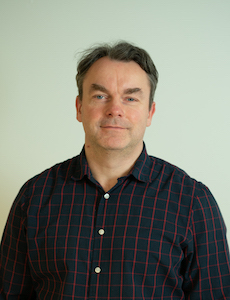
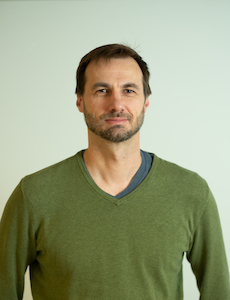
Sajad Homayoun is a Tenure Track Assistant Professor at Aalborg University's Department of Electronic Systems within The Technical Faculty of IT and Design. His research focuses on integrating Artificial Intelligence with cybersecurity to develop advanced solutions for threat detection and mitigation. PhD in Computer Science Specialization in Cybersecurity & Machine Learning His technical expertise spans: AI-driven intrusion detection systems Adversarial machine learning (AML) Explainable AI (XAI) for security transparency Time series and graph analysis MLOps implementation with MLflow Python development using pandas, scikit-learn, and TensorFlow Research trends from his publications show strong emphasis on: Combating phishing attacks through ML Applying deep learning to crowdsensing trustworthiness Failure prediction in industrial systems Extracting behavioral patterns from ransomware Blockchain-based security applications He teaches Network Security courses during fall semesters and maintains active collaborations with researchers across Denmark and international institutions.
Christer S. Ejsing is an Associate Professor and Principal Investigator at the Department of Biochemistry and Molecular Biology, University of Southern Denmark (SDU). He leads a research group dedicated to advancing mass spectrometry-based lipidomics and proteomics for systems-level understanding of lipid metabolism in health and disease. His research focuses on lipidomics, proteomics, mass spectrometry, systems biology, and lipid metabolism . His group integrates cutting-edge technologies to study lipid homeostasis across model organisms, with particular interest in organelle interactions, metabolic regulation, and diurnal dynamics. He is a key contributor to the standardization of lipidomics data reporting and nomenclature, promoting transparency and reproducibility in the field. The publication record shows a strong trend in developing and applying advanced mass spectrometry workflows, with recent work emphasizing data standardization, phosphoproteomic regulation of lipid synthesis, and inter-organ lipid crosstalk. His work spans fundamental biophysical processes like membrane curvature sensing to systemic metabolic regulation. Christer Ejsing has no listed scientific awards in the provided text. He is actively involved in research leadership and collaboration, supervising research projects and contributing to major international initiatives such as the LIPID MAPS consortium and the Lipidomics Standards Initiative. His group's work is supported by ongoing research grants, though specific funding sources are not detailed here. He leads the research group hosted at www.msLipidomics.info , which serves as a hub for lipidomics methodology development and application.
Daniel Wüstner is a Professor in the Department of Biochemistry and Molecular Biology at the University of Southern Denmark (SDU), where he leads the Daniel Wüstner Lab under the Bioimaging Research Unit. He also serves on the executive board of the SDU eScience Center, promoting high-performance computing in the natural sciences. His research focuses on the dynamics of sterol and lipid transport in cellular membranes, employing advanced techniques such as fluorescence microscopy, computational modeling, and deep learning-based image analysis. His work particularly investigates intracellular cholesterol trafficking, membrane contact sites, and the molecular mechanisms underlying Niemann-Pick type C disease. He uses model systems including yeast and mammalian cells to dissect pathways involving NPC1/NCR1 proteins and their role in lipid homeostasis. His recent publications highlight the application of cutting-edge bioimaging technologies, including cryo-soft X-ray microscopy and stimulated emission depletion (STED) microscopy, combined with computational tools. Themes across his work include organelle dynamics, lipophagy, and gene therapy approaches for neurodegenerative lipid storage disorders. He has been recognized with the Villum Experiment Grant in 2020 for innovative research involving deep learning and X-ray imaging. His work is supported by major grants from the Carlsbergfondet, Lundbeckfonden, and Fuhrmann Fonden. He actively mentors PhD students and contributes to peer review and academic conferences. His research has significant implications for understanding lipid-related diseases and developing therapeutic interventions. Daniel Wüstner leads a collaborative research environment with academic and industrial partners across Denmark and internationally. His lab integrates wet-lab experiments with computational modeling, fostering interdisciplinary research in bioimaging and systems biology.
Veit Schwämmle is an Associate Professor in Computational Proteomics and Bioinformatics at the Department of Biochemistry and Molecular Biology, University of Southern Denmark (SDU), where he leads the Computational Proteomics Group. His research focuses on developing computational solutions for large-scale omics data analysis, particularly in proteomics and post-translational modifications. PhD in Physics, University of Stuttgart (2006) Postdoctoral Fellowships: Centro de Pesquisas Fisicas (Rio de Janeiro), ETH Zürich Postdoctoral Researcher and Assistant Professor, University of Southern Denmark Research interests include software and workflow development for protein mass spectrometry data analysis, chromatin biology through histone modifications, tools for omics data quantification and interpretation, and the application of deep learning methods to improve proteomics data processing. His work bridges physics-based modeling and biological data science, with a strong emphasis on open, reproducible research. His recent publications highlight trends in machine learning for proteomics, benchmarking of analysis workflows, and community-driven bioinformatics standards. He is actively involved in international initiatives like EuBIC-MS and bio.tools, promoting software interoperability and training. Member of the European Bioinformatics Community for Mass Spectrometry (EuBIC-MS) Contributor to the bio.tools registry for life sciences software Advocate for open science and reproducible workflows He supervises researchers and students in computational proteomics and has contributed to numerous collaborative projects in systems biology and biomedical mass spectrometry. His group develops tools such as VIQoR, CrossTalkMapper, and MetaboLink, supporting the broader scientific community. Visit the group’s webpage: http://computproteomics.bmb.sdu.dk
Anders Stengaard Sørensen is an Associate Professor at the Maersk Mc-Kinney Moller Institute, University of Southern Denmark (SDU), and is affiliated with the SDU UAS Center. His work integrates robotics, digital electronics, and human-centered design for applications in physical training and rehabilitation. Position: Associate Professor Institution: University of Southern Denmark Research Unit: Maersk Mc-Kinney Moller Institute, SDU UAS Center Email: anss@mmmi.sdu.dk ORCID: https://orcid.org/0000-0003-0184-7281 His research interests include robot technology, modular robotics, sensors, programmable digital electronics, and human-robot interaction, with a focus on welfare and rehabilitation technologies. He explores how behavior-driven development and gesture-based programming can empower non-experts to program collaborative robots for physical training. The recent articles highlight a strong trend in end-user development for robotics, particularly in physical training and rehabilitation contexts. The publications emphasize participatory design, gesture-to-behavior translation, and domain-specific languages to make robot programming accessible. The research bridges computer science, engineering, and healthcare, focusing on usability, accessibility, and practical implementation in real-world training scenarios. Anders Stengaard Sørensen has been actively involved in research projects such as RoboRehab and TRINITY, which focus on robot-assisted rehabilitation and interdisciplinary human-technology integration. He has supervised student projects in robotics and electronics and contributes to teaching in regulation technology and programmable electronics. He also engages in public dissemination through media and professional workshops. TriDisciplinary Contexture for Motion, Technology and Humans - TRINITY (Co-PI) The Effect of Robot-Assisted Versus Standard Training on Motor Function Following Subacute Rehabilitation after Ischemic Stroke – RoboRehab (Co-supervisor) Fleksibel Kraftplatform til elite training (Project manager) MeCaMInD: Method Cards for Movement-based Interaction Design (Project participant) FSSoV: Fodbold som sundheds- og velfærdsinnovator (Project participant) He has participated in workshops, public lectures, and media engagements, promoting robotics in societal and health contexts. His collaborative network spans engineering, sports science, and clinical biomechanics, reflecting the interdisciplinary nature of his work.
Kerstin Fischer is a Professor in the Department of Design, Media and Educational Science at the University of Southern Denmark (SDU), with additional affiliation to the SDU Climate Cluster. Her work bridges linguistics, cognitive science, and robotics, focusing on how humans interact with technology in social and educational contexts. Professor, Department of Design, Media and Educational Science, University of Southern Denmark Affiliated Researcher, SDU Climate Cluster Active in multiple EU and national research projects Regular contributor to top-tier human-robot interaction conferences Her research interests lie at the intersection of language, cognition, and technology. She investigates how humans adapt communication in interaction with robots, how discourse structures shape understanding, and how social robots can be designed to support learning and inclusion. Her work integrates conversation analysis, pragmatics, construction grammar, and human-robot interaction frameworks. The 15 most recent publications reflect a strong trend toward applied social robotics in education, healthcare, and sustainability. Themes include robot moderation in classrooms, persuasive techniques in human-robot interaction, customer behavior influence, and the role of social proof. Her research increasingly emphasizes ethical, inclusive, and climate-conscious applications of AI and robotics. She has received several scientific awards, including: BEST PAPER IN APPLIED METROLOGY AWARD (2023) Outstanding Reviewer Recognition (2023) BHJ Innovation Award 2018 Field Trip / Research Stay at Foreign Institution (2018) Kerstin Fischer actively supervises students and leads multiple research projects. She has advised MSc theses on soft social robotics and foreign language learning. Her projects include RETRO (Regulating Trust in Human-Robot Interaction), Encouraging Moderators, AntCom (citizen humanities), and climate-related initiatives like SCC Elite-Center Solen. She also contributes to editorial boards and peer review for journals such as ACM Transactions on Human-Robot Interaction. She is involved in several labs and research networks focused on human-robot interaction, digital education, and climate communication, often collaborating across disciplines with computer scientists, educators, and social scientists.
Elizaveta Semenova is a Senior Researcher at the Department of Electrical and Photonics Engineering, Technical University of Denmark (DTU), where she is affiliated with the Nanophotonic Devices group, the Center for Quantum Technologies, NanoPhoton – Center for Nanophotonics, and the Centre of Excellence for Silicon Photonics for Optical Communications. Her research is at the forefront of integrated photonics and quantum technologies, focusing on semiconductor nanostructures and their applications in optical communications and quantum information systems. Her research interests span a broad and deep spectrum of modern photonics, including nanophotonics , quantum dot devices , photonic crystals , silicon photonics , and III-V semiconductor integration on silicon . She is particularly known for her work on quantum dots operating at telecom wavelengths (1.55 µm), enabling applications in quantum communication and optical networks. Her research also explores MEMS-tunable lasers , Fano lasers , nanocavities , and topology-optimized photonic structures for extreme light confinement. The trends in her recent publications (2024–2025) highlight a strong focus on quantum photonic devices , monolithic integration , and nanoscale light manipulation . Her work bridges materials science, device engineering, and quantum optics, with applications in secure communications, quantum computing, and high-speed optical interconnects. Keywords across her articles include photonics, quantum technologies, semiconductor physics, and optical engineering. She actively supervises multiple PhD students and leads several major research projects funded by national and institutional grants. Her students include O. Kosmatos, C. Ruiz, A. Nanwani, C. P. Gunnarsson, and V. C. Bille-Lauridsen, working on topics such as epitaxial growth, quantum dot integration, and entangled photon sources. These projects are central to advancing next-generation photonic technologies. Elizaveta Semenova is a key member of several collaborative research teams, including those involved in the Centre of Excellence for Silicon Photonics and the Center for Quantum Technologies at DTU. Her lab focuses on the design, fabrication, and characterization of nanophotonic devices, leveraging advanced epitaxial growth techniques and nanofabrication processes.
Sokol Kosta is an Associate Professor in the Department of Electronic Systems at the Technical Faculty of IT and Design, Aalborg University, Copenhagen, Denmark. His research focuses on edge computing, mobile cloud computing, cybersecurity, privacy, and the societal impact of digital technologies, particularly in public service media and data protection regulation. He is affiliated with the Cyber Security Group and contributes to initiatives such as 'AI for the People'. His research interests include edge and fog computing, computation offloading, Internet of Things (IoT), Internet of Floating Things, GPGPU acceleration, blockchain-based systems, privacy-preserving technologies, GDPR compliance, and public service media digital transformation. His work bridges technical innovation with policy and societal implications. His publications span from 2010 to 2025, with a strong presence in high-impact venues such as IEEE INFOCOM, IEEE Transactions on Mobile Computing, and The Web Conference. The articles reflect a consistent focus on mobile and edge computing systems, performance modeling, security, and privacy, increasingly incorporating societal and policy dimensions, especially post-GDPR. Trends include computation offloading optimization, decentralized systems, and empirical studies on web tracking and data governance. He has received 14 prizes and recognitions for his research contributions, though specific awards are not detailed in the provided text. He has supervised PhD students, including Jannick Kirk Sørensen, and has been involved in significant research projects such as the 'European Open Web Privacy Measurement' project (2017–2020), which examined GDPR's impact on third-party web services. He has presented his work internationally, including at The Web Conference 2019 in San Francisco, and has been featured in media coverage discussing data privacy compliance of Danish public websites. His lab and team activities are centered around the Cyber Security Group and collaborative projects involving distributed computing, edge AI, and privacy measurement.
Mike Allan Mortensen is a clinical researcher in the Department of Clinical Research at the University of Southern Denmark, affiliated with the Research Unit of Urology in Odense. His work focuses on urological oncology, particularly prostate cancer diagnosis, treatment, and surgical innovation. He contributes to clinical research involving robotic surgery, PET/CT imaging, and biomarker validation. His research interests lie at the intersection of urology, oncology, and surgical technology. He investigates prostate cancer detection using urine and plasma biomarkers, AI-driven analysis of PET/CT scans for lymph node metastasis, and performance assessment in robot-assisted radical prostatectomy . His studies often involve prospective clinical designs and collaborations across Danish medical centers. The recent publications indicate a strong trend toward integrating artificial intelligence in diagnostic imaging, enhancing surgical evaluation methods, and improving risk stratification in prostate cancer. His work bridges clinical practice with technological innovation in urological oncology. Scientific Awards: No scientific awards mentioned in the provided text. Advising and Grants: No formal students or advisees listed. No grants explicitly mentioned, though involvement in prospective studies suggests potential grant-supported research. Labs and Teams: Dr. Mortensen is part of the Research Unit of Urology at Odense University Hospital and collaborates within the clinical research network at the University of Southern Denmark. His work involves multidisciplinary teams in urology, radiology, and medical technology, particularly in AI applications and surgical simulation research.
Jakob Lund Dideriksen is an Associate Professor at the Department of Health Science and Technology, Aalborg University, affiliated with The Faculty of Medicine. His research focuses on neuromuscular mechanisms in movement control and neurorehabilitation technologies, emphasizing biomimetic design and compatibility with neuromuscular systems. He holds a PhD from Aalborg University (2012) and completed postdoctoral work at the University of Göttingen (2012–2015). Education: MSc in Biomedical Engineering, Aalborg University (2009) PhD in Biomedical Engineering, Aalborg University (2012) Research Interests: Development of advanced prosthetics, sensory feedback systems, computational modeling of neuromuscular dynamics, and rehabilitation technologies. Key areas include upper-limb prosthetics, vibrotactile feedback, and closed-loop control systems. Notable Projects: DISRUPT (2022–2025): Direct simultaneous control of upper-limb prostheses SimBionics (2019–2023): Neuromechanical simulation for bionic legs ROBIN (2018–2023): Natural control of hand prostheses via human-machine interfaces Awards: Svend Andersen Fonden Talentprize (2020). Advising & Grants: Supervised 4 PhD students and led projects funded by grants totaling over €2M. Research spans collaborations with institutions like University of Göttingen and industry partners. Labs/Teams: Active in the Neurorehabilitation Systems group at Aalborg University, focusing on bionic limb development and sensory feedback integration.
Seyed Saeed Asadzadeh is a Researcher in the Department of Fluid Mechanics, Coastal and Maritime Engineering at the Technical University of Denmark (DTU), affiliated with the DTU Microbes Initiative. His work bridges mechanical engineering and microbial ecology through advanced fluid dynamics research. His research focuses on the biomechanics of microorganisms, particularly examining flagellar propulsion systems in planktonic protists. Key interests include: Hydrodynamic mechanisms of flagellate foraging and escape behaviors Evolutionary adaptations in microbial locomotion Fluid-structure interactions in choanoflagellates and other protists Trade-offs between propulsion efficiency, feeding, and stealth in aquatic microenvironments His recent publications reveal a strong emphasis on experimental and computational fluid dynamics applied to microbial ecology, with significant contributions to understanding early eukaryote functional ecology through excavate flagellate studies. The work demonstrates interdisciplinary connections between physics, biology, and evolutionary science. As a supervisor, he has guided PhD research on flagellate foraging dynamics (2021-2024) and previously completed his own PhD on computational fluid dynamics of choanoflagellates (2016-2019). His collaborative network includes prominent researchers like Thomas Kiørboe and Jens H. Walther.
Jesper Rasmussen is a Senior Researcher in the Department of Physics at the Technical University of Denmark (DTU), working within the Plasma Physics and Fusion Energy research group. He is based at DTU’s campus in Kgs. Lyngby and is actively engaged in experimental and computational research related to nuclear fusion diagnostics. His research focuses on advanced diagnostic techniques for magnetically confined plasmas, particularly Collective Thomson Scattering (CTS) for measuring fast ions in fusion devices such as ASDEX Upgrade and Wendelstein 7-X. His work contributes directly to the development of diagnostic systems for future reactors like ITER and DEMO. Key areas include ion dynamics, wave-particle interactions, microwave instrumentation, and velocity-space tomography. The recent publications highlight a strong trend in developing and refining CTS diagnostics, improving real-time burn control capabilities, and advancing high-frequency microwave systems for plasma monitoring. His work bridges experimental physics, signal processing, and fusion engineering, with applications in both tokamaks and stellarators. Best talk at DFS 2016 He supervises multiple PhD students and is involved in active research projects related to ion dynamics, plasma heating, and microwave diagnostics. His collaborations span international fusion laboratories and include joint work with the ASDEX Upgrade and W7-X teams. He has contributed to the development of ultrafast digitizers and high-power microwave measurement systems. He leads and contributes to laboratory initiatives focused on fusion plasma diagnostics, particularly the CTS group at DTU, which develops and applies scattering techniques for energetic particle measurements in fusion plasmas.
Anders Nymark Christensen is an Associate Professor in the Department of Applied Mathematics and Computer Science at the Technical University of Denmark (DTU), specializing in Visual Computing. His work bridges computer vision, medical imaging, and materials science, with a strong focus on explainable AI in clinical applications and structural analysis of complex materials. Institution: Technical University of Denmark (DTU) School: Department of Applied Mathematics and Computer Science Department: Visual Computing Role: Associate Professor Christensen’s research interests include image analysis, computer vision, explainable AI, ultrasound imaging, fetal medicine, and fiber orientation in composites. He applies advanced computational techniques to solve real-world problems in healthcare and materials engineering, particularly through structure tensor analysis and deep learning. His recent publications highlight a strong trend in developing AI tools for clinical decision support in fetal medicine, structural analysis of food and composite materials, and ultrasound imaging. These works span journals such as Scientific Reports , Food Structure , and IEEE Access , reflecting interdisciplinary innovation. Clinical validation of explainable AI for fetal growth scans Characterization of anisotropy in mozzarella cheese Determining fetal orientations from ultrasound video Structure tensor analysis in composites He supervises several PhD students in projects related to AI in skin lesion analysis, cancer detection, and ultrasound imaging. His collaborative network includes key researchers at DTU such as Anders Bjorholm Dahl, Vedrana Andersen Dahl, and Mads Nielsen. He has been involved in significant research grants and is active in both medical and engineering domains, contributing to open datasets and reproducible research. Christensen leads and contributes to numerous active projects, including: Decision Support AI for Skin Lesions (2024–2027) Fighting Cancer with Generative AI (2024–2027) SONAI: Explainable AI in the Clinic (2022–2026) Deep learning for identifying biomarkers in medical images (2022–2025) His work supports UN Sustainable Development Goals related to health, innovation, and responsible consumption, particularly through advancements in medical diagnostics and sustainable materials.
Axel Thielscher is a Magnetic Resonance Professor and Head of Section at the Department of Health Technology Magnetic Resonance Neurophysics, Technical University of Denmark (DTU). His research focuses on neuroimaging, non-invasive brain stimulation, and computational modeling of electric fields in the brain. He leads projects on transcranial magnetic stimulation (TMS), transcranial direct current stimulation (tDCS), and tumor treating fields (TTFields). His work integrates clinical applications with advanced MRI techniques and computational simulations. Research interests include electric field modeling for brain stimulation, neuroimaging methodology, and translational neuroscience. He collaborates internationally on guidelines for concurrent TMS-fMRI and clinical trials of neurostimulation therapies. His lab develops open-source tools like SimNIBS for electric field simulations and MRI-based dosimetry. Recent articles emphasize optimizing TMS coil positioning, validating electric field simulations, and exploring neural mechanisms underlying stimulation effects. He advises multiple PhD students and has contributed to over 155 publications, including work on magnetic resonance current density imaging and personalized head modeling.
Christopher John Topping is a Professor in the Department of Agroecology – Agricultural Biodiversity at Aarhus University, Denmark, and the leader of the Social-Ecological Systems Simulation (SESS) centre. His research focuses on ecological modeling, environmental risk assessment, and sustainable agricultural systems, with a strong emphasis on pollinator health and pesticide impacts. His research interests include agroecology, population dynamics, agent-based modeling, and environmental risk assessment for pesticides. He develops and applies mechanistic models such as ALMaSS to simulate ecological systems and inform regulatory decisions, particularly through collaborations with the European Food Safety Authority (EFSA). His recent publications highlight trends in systems-based environmental risk assessment, pollinator conservation, and computational modeling of ecological complexity. These works appear in high-impact journals such as Science and Nature Communications , reflecting his influence in both scientific and policy domains. He has served on several key scientific committees, including as Chair of the EFSA Working Group on bats in risk assessment and as a Member of the EFSA Plant Protection Products and Residues panel. He is currently active in the EFSA Working Group on Multiple Stressors and Bees (MUST-B). Dr. Topping leads or participates in major research projects such as PollinERA, B-GOOD, EcoStack, ApisRAM, and PERA, funded by EU programs and focused on improving regulatory frameworks for pesticides and enhancing ecosystem services in agriculture. He frequently presents at international workshops and conferences and engages with policy stakeholders. He is involved in advanced simulation frameworks like ALMaSS, which models animal behavior and population dynamics in agricultural landscapes to support integrated pest management and biodiversity conservation.