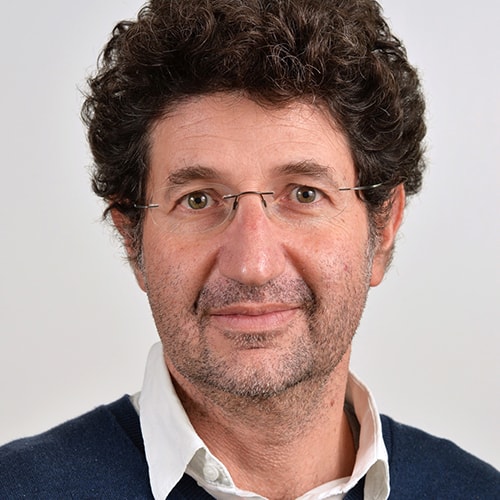
Susanne Ditlevsen is a Professor at the Department of Mathematical Sciences , University of Copenhagen. Her research focuses on statistical inference for stochastic processes , mathematical modeling of physiological systems , nonlinear dynamics , neuroscience , and biomathematics . Research : She develops statistical methods for diffusion processes, hidden Markov models, and stochastic differential equations, with applications in biomedical data and marine mammal behavior. Teaching : Covers basic statistics, probability, stochastic processes, regression, and generalized linear models. Publications highlight her work on climate tipping points (2023, Nature Communications ), nonlinear neuronal systems (2017), and statistical ecology (2020). Her collaborations span Denmark, France, and international institutions.
Professor Katrin Vorkamp holds a position at the Department of Environmental Science, specializing in Environmental Chemistry and Toxicology at Aarhus University. Her research focuses on understanding the transport, exposure pathways, and impacts of persistent pollutants such as PFAS, POPs, and mercury in Arctic and Antarctic ecosystems, with a particular emphasis on wildlife and human health implications. She has contributed to projects addressing climate change effects on contaminant dynamics, policy-oriented monitoring frameworks (e.g., Water Framework Directive), and innovative methods like passive sampling and non-target screening. Her work spans interdisciplinary collaborations, including the AMAP Core 2025-2027 project tracking pollution in Greenland biota and the ArcSolution initiative exploring a One Health perspective in Arctic pollution. She also leads the NAMMINE project on non-target analysis in Nordic marine mammals. Key themes in her research include understanding local vs. long-range pollutant sources, climate-contaminant interactions, and developing early warning systems for emerging chemicals. Publications highlight her expertise in biochar applications for waste valorization, contaminant trends in Adélie penguin eggs, and computational tools for risk assessment. Her projects often bridge environmental science with policy, aiming to inform sustainable solutions for pollution challenges in sensitive ecosystems.
Stefano Merler is a Research Fellow at the Fondazione Bruno Kessler in Trento, Italy. He leads the Dynamical Systems research unit, focusing on the mathematical modelling of infectious diseases transmission, particularly analyzing the effects of population heterogeneity on disease spread and control.
Abayomi Baiyere serves as an Associate Professor in the Department of Digitalization at Copenhagen Business School (CBS), where he conducts cutting-edge research at the intersection of digital technologies and organizational transformation. His work significantly contributes to UN Sustainable Development Goals through digitally-enabled societal impact initiatives and has yielded 69 research outputs including high-impact publications in premier journals like Information Systems Journal and Information Systems Research . His research program focuses on: Digital transformation frameworks (notably the MIND framework for capability assessment) Platform design and governance mechanisms Smart service systems development Workplace transformation through digital subtraction logic Digital strategy implementation challenges Analysis of his 15 most recent publications (2024-2025) reveals a strong theoretical grounding in institutional and practice-based perspectives, with increasing emphasis on ethical dimensions of digital transformation, AI implementation constraints, and methodological innovations in computational research. His work consistently bridges conceptual rigor with practical applicability for organizational leaders. Dr. Baiyere actively shapes academic discourse through editorial roles including co-editing The Routledge Companion to Management Information Systems (2025) and organizing key events like the African IS Paper Development Workshop (2020). His public engagement includes 6 media contributions discussing digital workplace transformation and strategic implementation challenges, demonstrating commitment to translating research into practical insights for broader audiences. Within CBS, he has supervised 8 academic works while contributing to the department's international recognition in digitalization research. His activities reflect deep engagement with both theoretical advancement in information systems and practical solutions for organizational digital maturity.
Stephen Alstrup is a Professor in the Algorithms and Complexity section at the Department of Computer Science (DIKU), University of Copenhagen, Faculty of Science. His research bridges theoretical computer science with practical applications in modern computational challenges. His primary research interests include: Algorithm design and analysis Graph algorithms and data structures Big Data processing techniques Streaming algorithms and Internet distribution Theoretical foundations with practical implementations Alstrup's work demonstrates how theoretical algorithm research can lead to real-world applications, as evidenced by his development of Octoshape technology for large-scale Internet streaming. His research spans from fundamental theoretical problems to applications in Big Data, cloud computing, and information retrieval systems. He has published extensively with 93 research outputs including journal articles, conference proceedings, and books. His recent work focuses on graph spanners, semantic hashing, recommendation systems, and universal graph structures, showing continued productivity in theoretical computer science. Alstrup actively engages with industry and media, contributing to discussions about Big Data applications, technology innovation, and how businesses can collaborate with universities to access cutting-edge knowledge and funding opportunities. His work has been featured in 10 media contributions discussing practical applications of algorithms in education, municipal IT projects, and business innovation.
Arnav Arora is a PhD Fellow at the Department of Computer Science , University of Copenhagen (DIKU), specializing in Natural Language Processing . His work focuses on ethical AI, bias detection, and societal impacts of language models. Email: aar@di.ku.dk Location: Universitetsparken 1, 2100 København Ø Arnav's research explores fine-grained value alignment in language models, harmful content detection , and cross-cultural differences in AI responses. His work bridges technical NLP advancements with social responsibility, including dual use ethical frameworks and community value analysis . Key publication trends include: 2025: Bias mitigation through BiasGym framework 2024: Factcheck-Bench benchmark development 2023: Thorny Roses dual use analysis 2022: Cross-cultural value probing methods 2020: Multi-hop fact checking systems Arnav contributes to the Software, Data, People & Society (SDPS) section, collaborating with interdisciplinary teams on projects involving language model evaluation and societal impact mitigation . His work often addresses real-world AI deployment challenges through academic-industry partnerships.
Serge Belongie is a Professor at the Department of Computer Science (DIKU) at the University of Copenhagen, where he holds dual affiliations with the Pioneer AI research section and the Image Analysis, Computational Modelling, and Geometry section. His academic position places him at the forefront of interdisciplinary research connecting computer vision with language models, geospatial analysis, and cultural understanding. Professor Belongie's research program encompasses several critical domains in modern artificial intelligence: Advanced computer vision and image analysis techniques Vision-language model integration and multimodal systems 3D point cloud processing and semantic segmentation Geospatial representation learning for environmental applications Fine-grained object recognition and detection Cultural context understanding in AI systems His recent publication record reveals a sophisticated trajectory toward developing precise control mechanisms for vision-language models, with applications spanning forensic analysis, cultural heritage preservation, and social media understanding. The research demonstrates increasing sophistication in handling cultural context and enabling fine-grained manipulation of visual content through natural language interfaces. Professor Belongie maintains an active research group producing significant scholarly output, with over 280 research publications documented in his academic profile. His work is supported by research funding that enables cutting-edge exploration in multimodal AI systems with practical societal impact. He plays a key role in the Pioneer AI center at the University of Copenhagen, which focuses on advancing artificial intelligence through interdisciplinary collaboration and innovative research approaches that bridge theoretical computer science with real-world applications.
Teresa Hirzle is a Tenure Track Assistant Professor at the Department of Computer Science , University of Copenhagen , specializing in Human-Centred Computing . Her research focuses on Human-Computer Interaction (HCI) , Virtual Reality (VR) , Extended Reality (XR) , and Gaze-Based Interaction . Research Interests: Designing interaction techniques for immersive environments Eye movement analysis for educational applications Addressing digital eye strain in interactive systems Evaluating user experience in VR/AR Recent Research Trends: Her recent publications examine AI representation in VR co-creation, VR sickness in locomotion, eye strain in gaze-driven systems, and hybrid applications of comics/AR. She also explores pedagogical implications of eye tracking in remote learning. Contact: Email: tehi@di.ku.dk Office: Sigurdsgade 41, 2200 København N.
Vito Latora is a Professor of Applied Mathematics and Chair of Complex Systems at the School of Mathematical Sciences, Queen Mary University of London, and also holds the position of Professor of Theoretical Physics at the University of Catania. He leads the Complex Systems and Networks Group, driving cutting-edge research at the intersection of physics, mathematics, and interdisciplinary sciences. His research focuses on complex systems, particularly the structure and dynamics of networks, including multiplex, temporal, and higher-order networks such as simplicial complexes and hypergraphs. He explores applications in social, biological, financial, and cognitive systems, with recent work on creativity, innovation, and success through network analysis. The 15 most recent publications reveal a strong trend in advancing network theory beyond pairwise interactions, with a focus on higher-order structures, memory effects, synchronization, and epidemic spreading. His work combines rigorous mathematical modeling with real-world applications, often published in high-impact journals like Nature Communications , Physical Review Letters , and Science Advances . Dual communities in spatial and biological networks Modeling epidemics with limited detection resources Synchronization via higher-order and directed interactions AI-driven financial risk management Evolutionary games on hypergraphs Interdisciplinary success and funding dynamics Vito Latora has mentored several researchers who appear as co-authors, including Iacopini, Williams, Di Bona, and Lacasa. While specific grants are not listed, his collaborative projects with neuroscientists and anthropologists, along with frequent publications, suggest active funding. He is involved in major scientific events such as NetSci 2023, indicating leadership in the network science community. He leads the Complex Systems and Networks Group at Queen Mary, fostering a collaborative environment for studying complex systems through theoretical, computational, and data-driven approaches.
Nathalie Wahl is a Professor at the Department of Mathematical Sciences, University of Copenhagen, and serves as the Center Director for the Copenhagen Centre for Geometry and Topology (GeoTop). Her research focuses on algebraic topology, particularly mapping class groups of surfaces and 3-manifolds, homological stability, topological field theory, and loop spaces. PhD from Oxford University (2001) Current leadership of GeoTop (since 2020) Her recent work explores homological stability across automorphism groups, string topology, and structured algebras. Key collaborations include Allen Hatcher, Craig Westerland, and Nancy Hingston. She has received prestigious awards such as the ERC Consolidator Grant and the Young Elite Researcher Award. ERC Consolidator Grant (2018-2023) Female Research Leader Scholarship (2009-2013) Marie Curie European Fellowship (2003-2004)
Lars Bo Jeppesen serves as Professor of Innovation Management at Copenhagen Business School's Department of Strategy and Innovation, focusing on digital economy innovation through crowd-based mechanisms, crowdfunding, user communities, and platform ecosystems. His work bridges academic research with practical applications for industry and policy. Education: Master's degree from University of Copenhagen PhD from Copenhagen Business School Professor Jeppesen's research examines how digital platforms transform innovation processes, emphasizing user-driven ecosystems and strategic implications for firms. He investigates crowdfunding dynamics, entrepreneurial financing mechanisms, and the interplay between intrinsic motivation and monetary incentives in crowd innovation, with findings applicable to both startups and established corporations. His recent publications (2020-2025) reveal consistent exploration of platform economics, digital business models, and innovation policy. Key trends include strategic responses to piracy, AI platform competition, freemium model optimization, and the role of social movements in non-commercial innovation, primarily published in top-tier journals like Research Policy and Strategic Management Journal. Scientific Awards: No awards documented in source material Professor Jeppesen advises European and Asian governments on innovation policy while collaborating with leading corporations through projects like the Danish User-Centered Innovation Lab (co-founded with MIT's Eric von Hippel). His current research initiatives include 'Crowdfunding for Youth Entrepreneurship in Tanzania' and 'The Co-Existence of Prosocial Intrinsic Motivation and Monetary Incentives,' supported by field experiments and ecosystem analyses. He directs the Danish User-Centered Innovation Lab, which integrates academic researchers and industry partners to develop practical innovation tools for capturing distributed knowledge, with applications in technology strategy and open innovation frameworks.
Romualdo Pastor-Satorras is an Associate Professor of Applied Physics at the Universitat Politècnica de Catalunya (UPC) since 2006. He earned his PhD in Condensed Matter Physics from the Universitat de Barcelona in 1995, followed by postdoctoral research at MIT (1996–1998) and The Abdus Salam International Centre for Theoretical Physics (1998–2000). His extensive international collaborations include visiting positions at Yale University, University of Notre Dame, Kavli Institute for Theoretical Physics, Helsinky University of Technology, Indiana University, and the ISI Foundation. Research Focus His interdisciplinary work spans statistical physics, network theory, and dynamical systems. Primary research areas include: Modeling epidemic spreading in complex networks Random walks and diffusion processes in temporal networks Social and biological applications of network science Glassy dynamics and energy landscapes His research combines mathematical rigor with data-driven approaches to address problems in public health, social dynamics, and complex system behavior. Publications Overview With over 100 peer-reviewed publications, Pastor-Satorras's work demonstrates consistent focus on network dynamics and epidemic modeling. Recent articles explore COVID-19 herd immunity thresholds (2020), echo chambers in political networks (2019), and non-Poissonian temporal networks (2019). His foundational 2015 review on epidemic processes in networks is highly influential. Publications frequently involve interdisciplinary collaborations across physics, data science, and computational biology. Awards and Distinctions Fellow of Universitat Politècnica de Catalunya ICREA Academia Prize (awarded twice by the Government of Catalonia) Research Infrastructure He maintains active collaborations through visiting positions at leading global institutions. His work involves theoretical modeling and computational analysis, though specific laboratory details are unspecified in the provided text.
Niels Martin Larsen is an Associate Professor at the Aarhus School of Architecture, affiliated with Research Laboratory 2: Technology, Building Cultures and Settlement. He holds a PhD in algorithmic design and has been part of academic staff since 2009. His roles include teaching and research in technology-driven architectural design. Education and Career: PhD student at Aarhus School of Architecture (2009–present) Master's and Bachelor's teaching assistant (2002–2008) Worked at architectural firms including Stuff Aps and 3XNielsen A/S (1999–2008) Graduated from Aarhus School of Architecture (1992–1998) with an internship at Enrique Miralles in Barcelona (1996) Research Interests: Focus on technology and digital design , including algorithmic design, architectural geometry, and sustainable materials. Recent work explores building reuse, digital fabrication, and timber structures. His projects bridge computational methods with practical architectural applications. Awards: 2012: Best Paper Award at Advances In Architectural Geometry for 'Engineering of complex geometry' Grants and Projects: Key roles in projects like 'Recycling on the Land Register' (2023–2025) and 'Material Imagination: Reconnecting with the Matter of Architecture' (2017–2021). Collaborates on Nordic networks for digital fabrication and timber innovation. Labs/Teams: Active in Research Laboratory 2, focusing on technology-driven solutions for building cultures and habitation.
Giulio Cimini is Associate Professor of Theoretical Physics in the Department of Physics at the University of Rome Tor Vergata and a Research Associate at the 'Enrico Fermi' Research Center. He is a statistical physicist with a strong interdisciplinary focus on complex networks and their applications in socio-economic systems. His research interests include: Statistical Physics of Complex Networks Reconstruction and Validation of Economic Networks Social Network Interactions and Financial Markets Systemic Risk and Financial Contagion Scientific Success, Fitness, and Complexity Adaptive Social Recommendation Codon Usage Bias and Protein Interaction Networks His recent publications reveal a strong trend in applying statistical physics to real-world networks, particularly in finance and social systems. Key themes include the modeling of systemic risk in supply chains and financial networks, the dynamics of collective action on platforms like Reddit (e.g., the GameStop short squeeze), and the development of network reconstruction methods using maximum entropy and optimal transport frameworks. His work often combines empirical analysis with theoretical modeling. Scientific awards and recognitions include: Associate Editor, Frontiers in Physics – Interdisciplinary Physics Board Member, Network Science Society Member, Council of the Complex Systems Society Steering Committee, CCS/Italy He has advised or collaborated with numerous researchers, particularly in projects related to economic networks and complex systems. His work has been supported by Italian national grants such as PRIN and PNRR. He leads or co-leads research projects including RENet and C2T. His research is conducted within interdisciplinary teams involving physicists, economists, and computer scientists, often in collaboration with institutions like ISC-CNR, IMT Lucca, and the Network Science community.
Bissan Ghaddar is a Professor in the Department of Technology, Management and Economics at Technical University of Denmark (DTU). Her work focuses on robust optimization, edge computing, and sustainable energy systems, contributing to UN Sustainable Development Goals related to affordable and clean energy. She supervises PhD projects on sector coupling in energy models and quantum computations for power systems. Her research interests include optimizing energy consumption in electric vehicle routing and application placement in edge computing under uncertainty. She has published influential papers in journals like Transportation Research Part C and Omega , addressing latency and efficiency challenges in dynamic systems. Current projects include modeling large-scale sectoral energy systems using smart-linking approaches (2024–2027) and secure power system operation leveraging quantum computations (2021–ongoing). She collaborates internationally with experts in operations research and telecommunications.