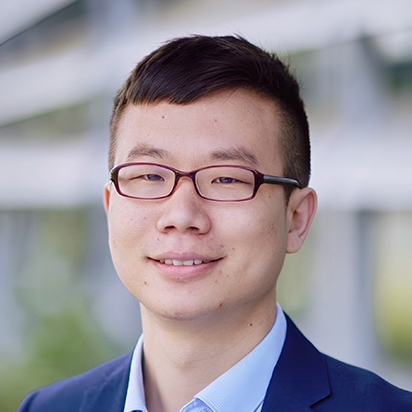
Dr. Jurgen Becque is an Associate Professor in Structural Engineering at the University of Cambridge's Department of Engineering. He specializes in cold-formed steel structures, stainless steel structural behavior, and stability analysis, with a focus on local-overall buckling interaction and innovative design methodologies. His work bridges experimental investigations with computational modeling and machine learning applications. Research Interests: Cold-formed steel structural systems Stainless steel column stability Local and overall buckling interaction Mechanics-based design optimization Machine learning for structural behavior prediction Recent publications demonstrate expertise in cross-sectional stability, connection mechanics, and composite systems like UHPC-confined stainless steel columns. His work addresses both monotonic and cyclic loading scenarios, contributing to Eurocode 3 design standards.
Dr. Marina Bock is a Chartered Civil Engineer and Lecturer in Civil Engineering at Aston University's College of Engineering and Physical Sciences. She specializes in structural engineering with expertise in metallic structures, additive manufacturing, and numerical modeling. Currently accepting PhD students, her work bridges academic research and industry applications in sustainable construction. Her educational background includes: PG Cert in Building and Design and Construction Technology, University of Wolverhampton (2017-2018) PhD in Local Buckling and Web Crippling Response of Stainless Steels, Universitat Politècnica de Catalunya (2010-2015) MSc in Patch Loading of Hybrid Plate Girders, Universitat Politècnica de Catalunya (2004-2010) Dr. Bock's research integrates laboratory experiments and numerical modeling to advance metallic structural systems, with pioneering work in additive manufacturing for construction. Her investigations span stainless steel design code development, corrosion prevention in reinforced concrete using hydrogels, and cold-formed steel behavior. Recent projects focus on sustainable infrastructure solutions through novel composite materials. Analysis of her 2022-2025 publications reveals dominant themes in additive manufactured aluminum structures, cold-formed steel design methodologies, and sustainable paving materials for urban heat island mitigation. Her work consistently addresses practical engineering challenges through experimental validation and code-compliant design solutions. Scientific recognition includes: IStructE Academic Research Award Commendation (2021) for research on aluminum SHS/RHS under biaxial bending Dr. Bock has secured significant research funding including a Royal Society Research Grant (£20k, 2023) for additive manufactured Al7075 aluminum and Innovate UK funding (£437k) for UV-reflective resin-based paving. Previous internal projects (£20k) focused on structural aluminum applications. She supervises PhD research in additive manufacturing and corrosion prevention while maintaining industry collaborations. Her experimental work utilizes advanced university laboratories for structural testing, with collaborations spanning European research consortia and industrial partners. Current projects involve multi-institutional teams developing reusable structural systems and solar-energy-harvesting building envelopes.
Dr. Messaoud Saidani is an Associate Professor and Associate Director of Research and Engagement at Coventry University, with a focus on Structural Engineering and sustainable materials. He holds a PhD from the University of Nottingham and has extensive experience in pan-European and UK research projects. His research interests include steel connections, welding processes, fracture mechanics, and the use of industrial waste in construction. He has published over 150 papers and serves on editorial boards of international journals. Research Interests: Steel and metallic connections Welding and fracture mechanics Novel composite materials Industrial waste utilization Sustainable construction materials Recent Contributions: His work emphasizes sustainable engineering solutions, including geopolymer mortars, metakaolin-based binders, and lightweight concrete. He actively advises PhD students on topics like recycled aggregates and FRP composites. Awards: Emerald Group Publishing Award for Best Paper (2013) Best Overall Student Award (1986) Reinforced Aer-Tech Novel Material Award (2008) Projects & Grants: Led projects totaling over £4M, including 'CIMSTEEL: Computer-Integrated Manufacturing for Constructional Steelwork' and 'Making Engineering Fun to Learn' (2011-2012). Supervised 21 research projects, emphasizing innovation and sustainability.
Dr Gatheeshgar Perampalam is a Senior Lecturer in Civil Engineering at Teesside University's School of Computing, Engineering and Digital Technologies. He holds a PhD in Structural Engineering (2021) from Northumbria University and a BEng (Hons) in Civil Engineering (2017) from the University of Peradeniya, Sri Lanka. His research focuses on advanced structural analysis of cold-formed steel systems, modular construction optimization, and fire/thermal performance of building materials. PhD: Structural Engineering, Northumbria University (2021) BEng: Civil Engineering (First Class), University of Peradeniya (2017) Key research areas include steel structures, numerical modeling, sustainable construction practices, and energy-efficient building designs. His recent work explores machine learning applications in structural performance prediction and thermal efficiency improvements in light-gauge steel panels. He has contributed 68 research outputs and collaborated with industry partners like Intelligent Steel Solutions. Current affiliations include Teesside University and active participation in research networks related to structural engineering and sustainability.
Van Bac Nguyen is an Associate Professor in the Built Environment at the College of Science and Engineering. His research focuses on structural engineering, materials science, and advanced manufacturing processes, particularly in the optimization and analysis of cold-formed steel structures, nanomaterials, and pavement systems. He employs finite element modeling to study mechanical properties, vibration dynamics, and structural performance under various conditions. His research interests include the design and optimization of steel beam sections with stiffeners, cold-working effects on material properties, and the application of nonlocal strain gradient theories to nanoscale mechanics. He also investigates the performance of composite materials and the seismic behavior of structures, contributing to advancements in construction and infrastructure engineering. Dr. Nguyen’s work bridges experimental testing with computational modeling, addressing challenges in both traditional and emerging fields such as nanotechnology and sustainable construction materials. His publications emphasize practical applications in civil and mechanical engineering, aiming to enhance structural efficiency and material durability.
Dr. Seyed Mohammad Mojtabaei is a Senior Lecturer in Structural Engineering and Programme Leader for Civil Engineering (BEng and MEng) at Loughborough University. He holds a BSc, MSc, and PhD in Civil/Structural Engineering, and is a Chartered Engineer (CEng) with memberships in the Institution of Civil Engineers (MICE) and Fellow of the Higher Education Academy (FHEA). His research focuses on Sustainable Lightweight Structures, low-carbon resilient systems, and AI-driven design optimization. He has secured grants as Principal Investigator or Co-Investigator, including an EPSRC Early Career Research Fellowship. Notable projects include intelligent remote health monitoring of steel high-mast structures (collaboration with Abacus Lighting via KTP) and studies on cold-formed steel connections and composite structures. EPSRC Fellowship: New generation of demountable resilient cold-formed steel connections CovSteel-funded research on lateral performance of sheathed stud wall panels Supervised PhD projects on topics like seismic performance, CFS elements with openings, and steel-timber composites With 8 years of industry experience in the UK and Middle East, he integrates practical engineering insights into academic research. He advises PhD candidates in areas such as thin-walled structures, seismic design, and AI-based optimization.
Mustafa Batikha is an Assistant Professor at Heriot-Watt University's School of Energy, Geoscience, Infrastructure and Society. His roles include Associate Director of Research (2016–2024) and Founding Editor of the Centre of Excellence in Smart and Sustainable Construction (CES2C) Research Bulletin (2019–2023). He holds a PhD in Structural Engineering from the University of Edinburgh and has been a full-time academic at Damascus University (1994–2015), where he also served as Director of the Steel Structures Division (2012–2014). His research focuses on non-linear structural analysis, sustainable construction materials, 3D concrete printing, and rehabilitation of structures. Notable areas include waste management in the cement industry, recycled materials in concrete, and seismic-resistant design. He has authored over 40 publications and led projects on topics like outrigger systems in tall buildings and PET bottle fibers in concrete. Batikha is a chartered member of the Institution of Structural Engineers (IStructE) and a member of the International Institute for FRP in Construction (IIFC). His consultancy work spans structural design and rehabilitation across multiple countries. He has also contributed to national training programs in Syria and served on editorial boards for journals like Materials . His work aligns with UN Sustainable Development Goals, particularly in sustainable cities (Goal 11) and responsible consumption (Goal 12). Key grants include studies on decarbonization of the UAE cement industry and cost-efficiency in tall building design.
Fouad Mohammad serves as a Senior Lecturer in Civil Engineering within the School of Architecture, Design and the Built Environment at Nottingham Trent University. He delivers structural analysis instruction across all undergraduate Civil Engineering levels, structural appraisal for Building Surveying programs, and advanced structural analysis for postgraduate Civil Engineering students while supervising BSc, MSc, and PhD research candidates. His research spans three core domains: structural system optimization (including steel portal frames under Eurocodes, reinforced concrete columns, retaining walls, and pile foundations), experimental investigation of reinforced concrete elements (focusing on damage detection via vibration analysis and foamed concrete development), and finite element applications in infrastructure projects (road/ironwork systems, cracked pavements, and tram track analysis). Recent work emphasizes sustainable concrete technologies and structural health monitoring methodologies. Publication trends reveal consistent focus on structural optimization techniques, damage identification in concrete structures, and sustainable material development—with significant contributions to foamed concrete research and Eurocode-compliant design methodologies since 2013. Academic service includes membership in the Athens Institute for Education and Research (ATINER), editorial roles for the Journal of Engineering and Sustainable Development and Scientific Journal of Koya University, and prior external examiner duties for Liverpool John Moores University (2018-2022). Academic member, ATINER (2015-present) International Editor, Journal of Engineering and Sustainable Development External Examiner, Liverpool John Moores University (2018-2022) Invited lecturer at Middle Eastern universities including Salahaddin, Sulaimani, and Koya He actively supervises undergraduate through doctoral research while providing extensive peer review services for international publishers and structural engineering textbooks since 2003, maintaining strong industry-academia connections through conference participation and specialized seminars on Eurocode implementation.
Dr. Muhammad Rahman is an Associate Professor at Northumbria University's Mechanical and Construction Engineering Department. He holds a PhD in Civil Engineering from Trinity College Dublin (2007) and has extensive research experience in sustainable construction materials, composite materials, and computational structural mechanics. Previously, he served as Head of Department and Head of Materials & Structures Research Cluster at Curtin University, Malaysia. His research focuses on energy, retrofitting buildings, water treatment, and slope stabilization. He has secured over £160k in grants, including projects from Innovate UK and Northumbrian Water. Dr. Rahman has supervised 7 PhD and 3 MPhil students, with two current PhD candidates. He is a Fellow of Engineers Australia, the Institution of Civil Engineers (UK), and the Higher Education Academy. He serves on the editorial board of Nature Scientific Reports and has organized international conferences. Education: PhD in Civil Engineering, Trinity College Dublin (2007) Awards: IMM Green Materials Award (Institute of Materials Malaysia) Grants: Includes projects on steel hybrid core walls, sewage sludge lightweight aggregates, and cold-formed steel beam performance. His publications span computational modeling, composite material development, and sustainable construction practices. He actively reviews grants and theses, contributing to both academic and industrial advancements.
Marios Theofanous is an Associate Professor in Structural Engineering at the University of Birmingham's Department of Civil Engineering within the School of Civil Engineering. His expertise spans experimental and numerical analysis of steel, stainless steel, and high-strength steel structures at cross-sectional, member, and system levels. He also focuses on FRP-strengthened concrete structures, structural fire engineering, and semi-rigid connections. Education: PhD in Structural Engineering (Imperial College London, 2010) MSc in Structural Steel Design & Business Management (Imperial College London, 2006) Dipl. Ing. in Civil Engineering (Aristotle University of Thessaloniki, 2005) Research Interests: Experimental and numerical analysis of structural steel systems Stainless steel and high-strength steel structural behavior FRP-strengthened concrete rehabilitation Structural fire safety and fire engineering principles Bolted connection mechanics and semi-rigid behavior Seismic design methodologies for metallic structures Recent Research Trends: Recent publications (2021-2025) focus on hybrid steel-stainless steel cross-sections, bolted connection performance under cyclic loading, and corrosion effects in bimetallic systems. There's emphasis on high-strength steel retrofits, aluminum structural sections under biaxial loading, and numerical modeling of fracture mechanics in steel components. Awards & Reviews: Serves as reviewer for Thin-Walled Structures , International Journal of Steel Structures , and Open Journal of Civil Engineering . No specific named awards listed. Advising & Grants: Indicates willingness to supervise PhD/MSc students in structural fire engineering, stainless steel robustness, deformation-based seismic design, and FRP-strengthened systems. No grant details provided in text. Labs & Teams: Collaborates with international teams (e.g., Japanese, German researchers) on steel structural behavior studies but no specific lab affiliations mentioned.
Dr. Pinelopi Kyvelou is an Assistant Professor in Structural Engineering at the Department of Civil and Environmental Engineering, Imperial College London (Faculty of Engineering). She specializes in steel structures, metallic 3D printing, and composite systems. Her research focuses on testing, numerical modeling, and design guidance for innovative construction materials and methods. Key projects include the structural analysis of the world's first metal 3D printed bridge (MX3D Bridge), where she led computational modeling efforts. Dr. Kyvelou holds a PhD and MSc in Earthquake Engineering from Imperial College London, plus an MEng in Civil Engineering from the National Technical University of Athens (NTUA). She teaches at both undergraduate and postgraduate levels and advises the construction industry through consultancy work. Her research interests span additive manufacturing (WAAM/WDED technologies), recycled steel applications, and cold-formed steel-timber composites. Recent work explores residual stresses in WAAM-strengthened steel sections and topology optimization for self-supporting 3D-printed structures. Notable contributions include: Development of design frameworks for 3D-printed steel infrastructure Experimental validation of composite cold-formed steel-timber floor systems Pioneering work on WAAM-reinforced steel columns and trusses No scientific awards are explicitly listed, though her contributions to additive manufacturing research are internationally recognized. Active in Imperial's labs/research teams working on advanced steel structures and sustainability initiatives like the STROBE project.
Dr. Boksun Kim is an Associate Professor of Structural Engineering and Associate Head of School (Research) at the University of Plymouth’s School of Engineering, Computing and Mathematics. He specializes in sustainable construction materials, recycled aggregate concrete, and cold-formed steel structures. His research has secured over £1 million in grants from EU Horizon 2020, RAEng, and IStructE, focusing on innovations like graphene oxide concrete and plastic bottle houses. He leads the UoP Civil Engineering Professional Mentoring Advisory Committee and is a Fellow of the Institution of Civil Engineers. Education: Lecturer at University of Portsmouth (2002–2006) Lecturer at Robert Gordon University, Aberdeen (2000–2002) Research Interests: Kim’s work bridges structural engineering and sustainability, emphasizing recycled materials, eco-friendly construction, and advanced composites. He explores applications in both traditional (e.g., castellated beams) and innovative domains (e.g., bottle houses for affordable housing). Grants & Awards: RAEng Frontiers of Engineering Seed Funding for bottle house projects £1M+ in grants since 2014 Fellow of the Institution of Civil Engineers Advising & Mentoring: Supervised over 8 PhD students on topics like recycled aggregate behavior, castellated beams, and ionic transport in concrete. Established Plymouth’s Civil Engineering Mentoring Program linking students with industry professionals. Labs & Teams: Collaborates with industry partners on projects such as marine transport materials and floating offshore wind turbine foundations.
Evangelia Palkanoglou is a Doctoral Researcher focusing on advanced materials and their thermomechanical behavior. Her work emphasizes computational modeling of cast irons, particularly compacted graphite iron (CGI), and explores thermal expansion, interfacial debonding, and high-temperature deformation. She also investigates structural applications of cold-formed steel in solar panel systems. Her research spans materials science, mechanical engineering, and civil engineering disciplines. Her educational background includes a BSc and MSc, followed by doctoral research. Key themes in her work include graphite morphology effects on material performance, boundary condition impacts in numerical simulations, and reliability of composite materials with dispersive inclusions. Evangelia's publications highlight methods for predicting material failure under thermal and cyclic loading, with applications in both metallic composites and civil infrastructure. She has contributed to understanding interfacial damage mechanisms and phase interactions in metallurgical systems.
Professor Dilum Fernando serves as Chair in Structural Engineering within the School of Engineering at the University of Edinburgh, specializing in Civil and Environmental Engineering. His research focuses on developing innovative hybrid/composite structural systems through fundamental material behavior theories and geometric concepts. His educational background includes a Doctor of Philosophy (PhD) from The Hong Kong Polytechnic University (2010) on CFRP-strengthened steel members, and a Bachelor of Engineering from Monash University (2005). Fernando's research centers on four key thematic areas: Manufacturing Technologies for Composites in Civil Infrastructure – advancing fabrication processes for FRP materials Construction Techniques for Composites – integrating architectural and construction challenges Optimized Materials for Composites – developing efficient hybrid material systems Advanced Composite Structural Systems – creating novel infrastructure solutions His work spans FRP-strengthened structures, timber-FRP hybrids, and recycled material applications. Analysis of his recent publications reveals dominant trends in hybrid composite systems (particularly FRP-timber and FRP-concrete-steel), structural retrofitting techniques, and sustainable material innovation using waste/recycled components. Key subfields include buckling analysis of thin-walled sections, interfacial debonding mechanics, and thermal performance of novel wall systems. His notable scientific achievements include: Australia's Most Innovative Engineers Award (2019) BERD-FEUP Prize for World Innovation in Bridge Engineering (2019) University of Queensland Award for Excellence in Innovation (2019) Fernando actively supervises PhD students and leads significant research projects including: Active Projects Mobile platform for thermochemical assessment of FRP structures (Aberdeen, 2023-2026) CoTide tidal energy project (Oxford, 2023-2028) Novel recycled plastic products for structural applications (RMIT, 2023-2024) Completed Projects Value-added products from waste plastics (EPSRC, 2022-2023) His research group operates at the intersection of structural engineering and advanced materials science, developing experimental and computational methodologies for next-generation infrastructure systems with emphasis on sustainable composites and hybrid structural solutions.
Dr. Kai Zhang is a Lecturer in Mechanical Engineering at Swansea University, affiliated with the Faculty of Science and Engineering. Prior to this role, he held positions as a Research Fellow and Visiting Scientist at University College London and the University of Manchester, and was a President's PhD Scholar at Imperial College London. His research focuses on additive manufacturing, digital manufacturing, in situ characterization (imaging and diffraction), correlative imaging, and machine learning applications in materials science. Expertise: Additive manufacturing, micromechanics, synchrotron X-rays, and metallurgical modeling. Collaborates with aerospace, nuclear, automotive, and biomedical industries using facilities like Diamond Light Source and ISIS Neutron Source. Research interests include developing novel manufacturing technologies, studying microstructure evolution in alloys, and applying advanced techniques like EBSD and in situ HR-DIC. He has published extensively on topics such as pore evolution in additive manufacturing, cryogenic deformation of magnesium alloys, and dynamic recrystallization mechanisms. Teaching: Dynamics-I and Data Integration in Mechanical Systems. Public engagements: Invited lectures at the University of Oxford and Harwell Open Day presentations.