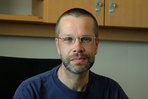
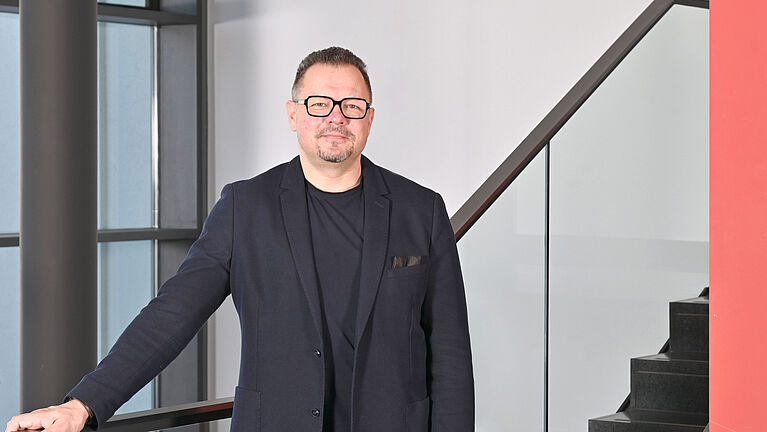
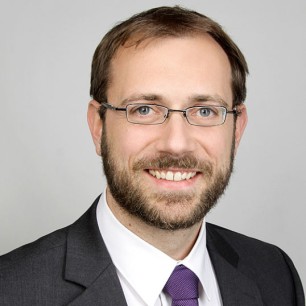
Zhangming Zhu is a Professor at Xidian University in the School of Microelectronics . He specializes in Microelectronics and Circuit Design , with a focus on Analog-to-Digital Converters (ADCs) , CMOS Technology , and Low-Power Electronics . His work addresses challenges in high-speed, high-precision, and energy-efficient circuit design. Research Interests: His publications highlight expertise in ADCs, PLLs, energy harvesting, biomedical sensors, and RF systems. Recent Publications: 2025 papers include a 12-bit 1.5-GS/s ADC , a 5-18-GHz Quadrature Receiver , and 20-bit SAR ADC with thermal error suppression. Collaborations: Frequently co-authors with Shubin Liu, Yi Shen, Ruixue Ding, and others. Applications: Work spans consumer electronics, IoT, biomedical devices, and energy-efficient systems.
Emmanuel Mourlon-Druol is a Full-time Professor at the Department of History of the European University Institute (EUI) and Co-Director of the Alcide De Gasperi Research Centre. His research focuses on international economic relations, business and financial history, European integration, and digital historical methods. He previously held professorial roles at the University of Glasgow, London School of Economics, Université Libre de Bruxelles, University of Economics in Prague, and the University of Tokyo, and was a Visiting Fellow at Columbia University. He leads the ERC-funded EURECON project exploring the historical roots of the Eurozone crisis and contributed to projects like UPIER on historical policy narratives. His work integrates digital tools to analyze archival data, media discourses, and transnational financial networks. Education: Advanced degrees in History (not specified in texts) Key Projects: EURECON (ERC), UPIER (HERA), Bruegel collaborations Non-Resident Fellowship: Brussels-based Bruegel think tank Research Interests: European integration dynamics, Cold War economic history, banking and financial structures, digital historiography, and the sociology of policy elites. He emphasizes understudied paths in Eurozone development, including shelved policy ideas and socio-institutional networks. Advising: Supervises PhD candidates in areas like European economic history and transnational financial studies. Active in policy discussions on banking union, capital markets, and Eurozone governance through blogs and think tank contributions. Labs/Teams: Alcide De Gasperi Research Centre, EUI’s History Department, and collaborative networks with Bruegel and HERA initiatives.
Prof. Dr. Wolfgang Bach serves as a Professor of Petrology at the MARUM Center for Marine Environmental Sciences (University of Bremen), leading the Petrology of the Ocean Crust research group since 2005. His work bridges magmatic petrology and inorganic geochemistry with a focus on global hydrothermal systems. PhD (1996) & Diplom (1991) from Justus Liebig University Giessen Woods Hole Oceanographic Institution (1996-2005) as Postdoc/Research Associate IODP leadership roles (2003-2005) and ECORD Science Operator collaboration His research examines ocean crust formation/destruction cycles , including seafloor spreading, hydrothermal alteration, mantle recycling, and chemosynthesis-driven ecosystems. Key methods involve: Micromineralogy of altered basalts and serpentinites Geochemical analysis (ICP-MS, laser ablation, fluid inclusion studies) Thermodynamic modeling of fluid-rock-microbe interactions Recent publications (2024-2025) highlight advances in CO2 sequestration in marine basalts , hydrothermal sulfur cycling , and mantle-derived hydrogen production across diverse settings from Arctic ridges to subduction zones. Collaborative work spans 30+ international institutions and integrates data from IODP expeditions and ECORD programs . He contributes to ocean drilling infrastructure at the University of Bremen, maintains the MARUM Research Academy training initiatives, and advises on subseafloor biosphere exploration through projects like IODP Expedition 336 and Surtsey volcano monitoring.
Dr.-Ing. Sebastian Stemmler is a Managing Chief Engineer and Head of Industrial Systems and Production Systems at the Institute of Automatic Control (IRT), RWTH Aachen University, within the Faculty of Mechanical Engineering. He is actively engaged in research and development in industrial automation and control systems. His research interests focus on advanced control methodologies in industrial settings, particularly: Machine learning in industrial control engineering Control systems for digital and self-optimizing production systems Model-based Predictive Control (MPC) Iterative Learning Control (ILC) His recent publications (2021–2025) demonstrate a strong trend in applying MPC, ILC, and data-driven methods to injection molding, milling, and weaving processes. These works emphasize precision control, process optimization, and adaptation to material variability, especially with recycled plastics. His research bridges theoretical control strategies with practical industrial applications. His scientific achievements include being part of the research group that received the 2024 Cold Rolling Future Prize . He has co-authored numerous high-impact journal and conference papers, often in collaboration with leading researchers like Dirk Abel and Christian Hopmann. Stemmler supervises and collaborates on various industrial research projects, contributing significantly to advancements in smart manufacturing. He is involved in initiatives such as innocam.NRW and has contributed to research on AI in production and patient care. His work is supported by strong industry and academic collaborations. He leads the Industrial Systems and Production Systems research group at IRT, focusing on developing and implementing intelligent control solutions for complex manufacturing systems.
Steffen Riedl is a Professor of Road Construction at the University of Applied Sciences Erfurt , specializing in civil engineering and transport infrastructure. He serves as Vice-President for Academic Affairs and a member of FH Erfurt's Senate. Research focuses on asphalt maintenance, cold recycling, and pavement diagnostics Teaches bachelor’s courses on road engineering fundamentals Active in standardization committees including FGSV Education: Diplom degree in Civil Engineering (2000, TU Darmstadt) Doctorate in Engineering (Dr.-Ing., 2006) His work emphasizes load-bearing capacity analysis using Falling Weight Deflectometer (FWD) technology and thin-layer asphalt construction for sustainable infrastructure. Recent publications examine cold recycling techniques and pavement preservation. Professional Affiliations: Chair of Gütegemeinschaft AKB (Cold-Mix Asphalt Quality Association) Member of Forschungsgesellschaft für Straßen- und Verkehrswesen (FGSV) Active in Thuringian and Hessian road engineering associations As a certified expert for asphalt construction methods, he contributes to technical standards and has led multiple research projects on pavement longevity and maintenance technologies.
Prof. Dr.-Ing. Michael Marré serves as Professor of Manufacturing Technology with a focus on Forming Technology at the Department of Mechanical Engineering, South Westphalia University of Applied Sciences in Iserlohn since July 2018. He leads the Laboratory for Massive Forming and directs multiple research initiatives targeting digital transformation and sustainability in manufacturing. His research centers on resource-efficient forming processes including cold forging, massive forming, and zinc alloy applications. Key interests encompass digital process transparency through sensor integration, minimal quantity lubrication systems, circular economy strategies for tool life extension, and AI-driven optimization of forming technologies. His work bridges theoretical innovation with industrial implementation, emphasizing energy efficiency and material recycling. Recent publications (2019-2025) demonstrate a strong trajectory toward integrating Industry 4.0 technologies with sustainable manufacturing. Predominant themes include AI-enhanced process control, zinc alloy substitution for brass, real-time monitoring systems, and business model innovation for circular production. His research consistently addresses German manufacturing sector challenges through collaborative projects with industrial partners. Scientific recognition includes: Deutscher Rohstoffeffizienzpreis (October 2022) Fellowship Hochschullehre (January 2020) Sonderpreis Messtechnik - Innovationspreis Göttingen (November 2019) TOP100 Innovator Award (June 2018, with FELSS Systems) Umwelttechnik Preis Baden-Württemberg (July 2017, with FELSS Systems) 100 Betriebe für Ressourceneffizienz (October 2015, with FELSS Systems) 100 Orte für Industrie 4.0 (October 2015, with FELSS Systems) Prof. Marré actively supervises student theses and has secured substantial research funding from German federal and state agencies. Major projects include: EMuDig 4.0 (2016-2020, DLR/BMWi): Digital engineering chain optimization for massive forming Heißmessen (2017-2020, PTJ/Leitmarktagentur NRW): Real-time high-temperature measurement systems DizRuPt (2019-2022, KIT/BMBF): Sensor retrofitting and industrial data analytics ZuPro2Flex (2020-2023, KIT/BMBF): Process transparency for flexible production models EMiniMass (2019, MKW NRW): Minimal quantity lubrication in massive forming MMS (2020, MKW NRW): Resource-efficient lubrication systems AerosolPO (2021, MKW NRW): Optical aerosol characterization in production The Laboratory for Massive Forming under his direction focuses on experimental research in forming processes, with strong industry collaboration. The lab operates within the university's sustainability framework emphasizing material recycling, energy efficiency, and lightweight construction principles in all research activities.