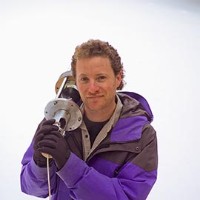
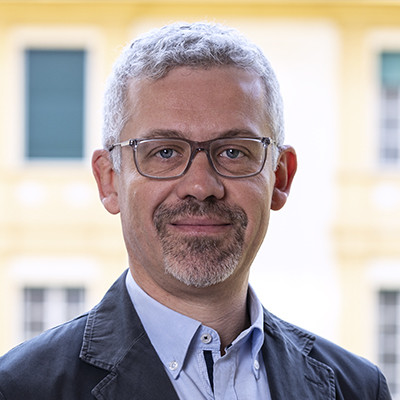
Richard Hann is a Senior Researcher and Director of the UAV Icing Lab at the Norwegian University of Science and Technology (NTNU) . He is affiliated with the NTNU-AMOS (Center of Excellence on Autonomous Marine Operations and Systems) and CIRFA (Centre for Integrated Remote Sensing and Forecasting for Arctic Operations). Additionally, he serves as a Lead Aerodynamics Engineer and Shareholder at UBIQ Aerospace and promotes Arctic drone applications through projects at the University Centre of Svalbard (UNIS) . Education: M.Sc. in Aerospace Engineering (2013, University of Stuttgart) Ph.D. in UAV Icing (2020, NTNU) Research Interests focus on atmospheric icing effects on unmanned aerial vehicles, including aerodynamic penalties , ice protection systems , and CFD simulations . His work spans cold climate wind energy , environmental forensics , and Arctic fieldwork with UAVs in glaciology and atmospheric pollution studies. The UAV Icing Lab under his leadership develops experimental and numerical tools to address icing challenges in cold climates. His publications (2017–2025) cover topics such as ice accretion modeling, aerodynamic degradation, glacier mapping, and sensor placement for UAVs in Arctic conditions. Collaborations include institutions like AIAA , UiT The Arctic University of Norway , and NATO . Scientific Committees: Contributor to IWAIS 2024 (International Workshop on Atmospheric Icing of Structures) Editorial involvement in AIAA and SAE technical papers
Brent Wolfe, Professor at the Faculty of Science , Wilfrid Laurier University , specializes in northern hydroecology with a focus on lake hydrology , isotope tracers , and climate change impacts in boreal-tundra regions. He leads research collaborations with Indigenous communities, governments, and industries to address water resource challenges in remote Canadian landscapes. PhD in Earth Sciences, University of Waterloo (1997) MSc in Geological Sciences, University of Manitoba (1993) His work integrates paleolimnology and contemporary hydrology to track long-term ( centuries to millennia ) hydroecological changes using lake sediment cores and water isotope tracers . Recent projects examine thermokarst lake dynamics, Arctic climate sensitivity, and industrial contamination in oil sands regions. Key publication themes include climate-driven hydrological shifts , permafrost thaw impacts , and metal contamination monitoring . His research has produced over 20+ peer-reviewed articles in the past decade, with a focus on Peace-Athabasca Delta , Old Crow Flats , and Hudson Bay Lowlands . Natural Sciences and Engineering Research Council Northern Research Chair Program in Northern Hydroecology (2002-2012) He partners with northern First Nations , government agencies , and industry stakeholders to develop water stewardship frameworks. His lab employs advanced analytical techniques for paleoenvironmental reconstructions and contaminant tracking.
Amanda Berg is an Adjunct Associate Professor at the Department of Electrical Engineering, Linköping University, affiliated with the Computer Vision Laboratory (CVL). Her research focuses on thermal imaging, computer vision, and machine learning applications in environmental monitoring and security systems. Key research areas include: Thermal-Visible Spectrum Correlation 3D Reconstruction from Satellite Data Anomaly Detection in Wild Environments Multispectral Video Analysis Wildlife Management via UAV Imagery Her work spans computer vision, anomaly detection, and thermal imaging, with recent publications on neural radiance fields, wildfire detection benchmarks, and multispectral tracking algorithms. The 15 most recent articles demonstrate a strong focus on thermal infrared applications and AI-driven image analysis.
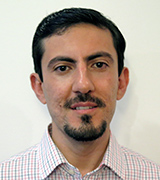
Rahul Karuvingal is a Researcher at the Institut für Energieeffiziente Gebäude und Raumklimatechnik (EBC) within the E.ON Energy Research Center at RWTH Aachen University . His work focuses on 4th/5th Generation District Heating and Cooling (4GDHC, 5GDHC) networks, emphasizing dynamic thermohydraulic simulations , advanced control strategies , and substation technology optimization . He also contributes to teaching and industry collaborations. Education: Master of Computer-Aided Conception and Production in Mechanical Engineering (2020), RWTH Aachen University Master of Aircraft and Helicopter Design, Kharkiv Aviation Institute (National University of Aerospace), Ukraine Karuvingal's research includes Model Predictive Control (MPC) for enhancing network flexibility, Life Cycle Assessment (LCA) of sustainable substation designs, and numerical analysis of soil heat gains in cold networks. His 2023 publications highlight open-source toolchains for urban energy planning and thermal modeling. He combines digital twin technologies with Computational Fluid Dynamics (CFD) simulations to address energy efficiency challenges. At RWTH Aachen, Karuvingal supports the lecture series "Grundoperationen der Energietechnik" and delivers guest lectures in the RWTH International Academy's "Sustainable Buildings and Green Cities" Summer School . His industry experience includes roles at E.ON and Krantz GmbH , focusing on thermal system development , product optimization , and ventilation/climate technology . He leverages Dymola/Modelica and Python for dynamic system modeling and automation.
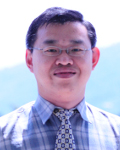
Professor Dominic C.Y. Foo is a distinguished academic at the University of Nottingham Malaysia, serving as Professor of Process Design and Integration and Founding Director of the Centre of Excellence for Green Technologies . He holds multiple prestigious fellowships including Fellow of the Institution of Chemical Engineers (IChemE) and Fellow of the Academy of Sciences Malaysia (ASM) , and is recognized in the Stanford list of top 2% scientists for several consecutive years. Department of Chemical and Environmental Engineering Active in international collaborations across Asia, Europe, Americas, and Africa Editor-in-Chief of Process Integration and Optimization for Sustainability (Springer Nature) Research Focus : His work centers on process integration and optimization for sustainability, particularly through pinch analysis and mathematical programming to address resource conservation , CO2 reduction , and decarbonization . Key areas include water minimization , energy planning , and carbon management networks , with applications spanning from the oil palm industry to hydrogen production systems. Scientific Contributions : With over 190 journal papers , 8 books , and 30+ keynote speeches , Professor Foo's research has had significant global impact. He has examined 40+ PhD/MSc theses internationally and developed specialized software like RCNet and DECO2 for resource conservation and carbon management. 2009 IChemE Innovator of the Year 2013 Outstanding Asian Researcher (SCEJ, Japan) 2016 Top Research Scientist Malaysia (ASM) International Engagement : He serves as Visiting Professor at several institutions including University of the Philippines Los Baños and De La Salle University in the Philippines. His editorial roles span multiple leading journals in chemical and environmental engineering.
Dr. hab. Stanisław Chmiel is a full-time Professor at Maria Curie-Skłodowska University in Lublin, affiliated with the Department of Hydrology and Climatology under the Faculty of Earth Sciences and Spatial Management . His research focuses on hydrochemistry, hydrometry, and climate change impacts on water systems, with a particular emphasis on isotopic analysis and environmental assessment. Specializes in water quality assessment and isotope hydrology Conducts studies on nutrient transport and heavy metal contamination Works on sustainable solutions for agricultural runoff and urban reservoir eutrophication Recent publications highlight his expertise in: Isotopic composition analysis of phosphate sources in Vistula-Bug interfluve Compact aerating reactor applications for water quality improvement Karst spring dynamics in South Carpathians Precipitation isotopic monitoring for thunderstorm studies Urban reservoir eutrophication mechanisms His work spans from Arctic river systems to Polish agricultural catchments, consistently addressing critical environmental issues through hydrochemical methodologies.
Ahmad Shakibaeinia is a Full Professor at the Department of Civil, Geological and Mining Engineering in Polytechnique Montréal , holding the Tier 2 Canada Research Chair in Digital Hydrosystems . He serves as a researcher in the Experimental and Digital Water Flow Engineering Group (GENIE EAU) and is affiliated with the Interuniversity Study Center for Structures under Extreme Loads (CEISCE) . Research Domains : Computational fluid mechanics, multiphase flows, granular flow dynamics, cold-region hydraulics, fluvial mechanics Methodologies : Specializing in mesh-free particle methods (SPH, MPS) for simulating complex hydro-environmental flows His work focuses on multi-physics hydro-environmental flows involving water-air-sediment-ice interactions, with applications in flood risk assessment , tailings dam breach modeling , and cold-region river dynamics . Recent publications demonstrate expertise in floating breakwater systems , microbial risk assessment , and ice-structure interaction simulations . Key scientific contributions include: Developing enhanced weakly-compressible MPS/SPH methods for free-surface and granular flows Pioneering fully Lagrangian DEM-MPS models for ice-wave dynamics Creating integrated numerical frameworks for cold-region water quality assessment He has supervised 12 graduate students (3 PhD, 9 Master's) and secured multiple NSERC Alliance Grants for projects on climate change impacts and critical infrastructure vulnerability . His 74 publications span topics from sediment transport to particle method development , with significant contributions to oil sands tailings dam failure and transboundary river pollution understanding.
Dr. Brant Walkley is a Senior Lecturer at the School of Chemical, Materials and Biological Engineering at the University of Sheffield. He serves as School PGR Lead & UoS-Director of EPSRC CDT SATURN (Skills and Training Underpinning a Renaissance in Nuclear, 2024-2032), and Deputy Head of the Engineering Graduate School (Interim) within the Faculty of Engineering. Dr. Walkley leads the Sustainable Materials at Sheffield (SMASH) research team and serves as Editor for Materials Today Communications. Dr. Walkley's research focuses on developing sustainable materials and processes for infrastructure, environmental remediation, waste management, and clean energy. His work aims to enable industry to meet societal needs sustainably and cost-effectively. The SMASH research group investigates composition-structure-property relationships, reaction mechanisms and kinetics, and surface chemistry in cements, glasses, ceramics and nanomaterials using advanced spectroscopic and microstructural techniques. They also explore new approaches to study resource production and consumption, decarbonisation strategies, and cross-sector interactions affecting these fields. Current research projects include the development of low-CO 2 cements for sustainable infrastructure, understanding durability and degradation phenomena in low-CO 2 cements, developing materials for encapsulation/immobilisation of radioactive waste, understanding and controlling radionuclide-cement interactions, studying mass transport processes in cements, and developing assessment of decarbonisation strategies for construction and the built environment. His publications demonstrate strong expertise in cement chemistry, geopolymer development, and nuclear waste immobilization techniques. Dr. Walkley has received numerous scientific awards and recognitions, including: 'Outstanding PGR Supervision Award' for three consecutive years 'Undergraduate Teaching Award' in 2020 'Letter of Commendation for Teaching Excellence' in 2019 Development Opportunity Award recipient (2018 and 2019) First Prize, 6th Early Career Presentation Contest, World Materials Research Institute Forum (2018) Dedicated Outstanding Thesis Mentor Award recipient (2017 and 2018) Dr. Walkley supervises numerous PhD students and postdoctoral researchers through various funding mechanisms including EPSRC, NNL, Sellafield Ltd, and the Nuclear Decommissioning Authority. His current research is supported by significant grants from EPSRC, Innovate UK, Department for Business, Energy & Industrial Strategy, Department for Energy Security and Net Zero, Nuclear Decommissionation Authority, Sellafield Ltd., National Nuclear Laboratory, and both UK and international industry groups. Dr. Walkley leads the Sustainable Materials at Sheffield (SMASH) research team, which comprises postdoctoral researchers and PhD students working on various aspects of sustainable materials development. The team collaborates extensively with industry partners including Sellafield Ltd, National Nuclear Laboratory, and various construction materials companies to translate research findings into practical applications for the nuclear and construction industries.
Saara Matala is an Assistant Professor at the Department of Technology Management and Economics , Chalmers University of Technology . She specializes in the history of industrialization with a focus on the interaction between technology, economy, and politics over time. Her research explores the Cold War's impact on Finnish shipbuilding, Arctic maritime technology, winter navigation challenges, mobile platform security, and oil capitalism. Key projects include Energiliv: Infrastructural Citizenship in Nordic Energy Transitions (funded by Formas, 2024–2028). Her publications analyze how geopolitical conflicts shape technological development in neutral states, including the long-term consequences of economic sanctions and alliances. She maintains collaborations with researchers like Christian Stutz and Aaro Sahari. Selected Scientific Contributions : 2025 : Manufacturing national consent for industrial policy (with Stutz) 2024 : When Great Powers Struggle (with Stutz); History of Technology in Global Perspectives 2023 : How Finland Survived Stalin; National Security and Soviet Energy Dependency 2021 : Finnish Icebreaker Diplomacy; Cold War Industrialization Book 2020 : Transnational Icebreaker Development (with Sahari)
Marianne Nilsen is an Associate Professor at the Department of Civil Engineering and Environmental Sciences , Western Norway University of Applied Sciences (HVL). As a marine ecologist specializing in fjord ecosystems, her work focuses on biodiversity preservation, pollution effects, and climate change impacts on benthic organisms. She actively supervises students at all educational levels.
Hans Ramløv is a Professor in the Department of Science and Environment at Roskilde University, specializing in extreme biology and freezing tolerance . His research spans cryopreservation , antifreeze proteins , and extremophile physiology , particularly in tardigrades , Arctic organisms , and freeze-tolerant species . Education : PhD in Animal Physiology (freeze tolerance in alpine weta), MSc in Biology (cryptobiosis in tardigrades) Recent research focuses on seasonal cold hardening in beetles, ice recrystallization inhibition , and salinity adaptation in copepods. His publications demonstrate expertise in biochemical cryoprotection , metabolic regulation , and ice-active protein mechanisms . Key trends in his 15 most recent articles include: Analysis of antifreeze protein efficacy in cryopreservation Studies on metabolic responses to freezing and desiccation Investigations into ice-binding dynamics in beetles and nematodes Methodological developments in microrespirometry and thermal testing Exploration of environmental adaptations in polar and alpine organisms Applications of ice-active proteins in biotechnology and climate research The following scientific awards were mentioned: No specific awards listed in available text
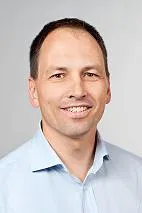
Prof. Dr. Martin Grunow is a Professor in Production and Supply Chain Management at the TUM School of Management, Technical University of Munich , where he leads the Production and Supply Chain Management Group. With previous roles as Professor in Operations Management at the Technical University of Denmark and Assistant Professor at Technical University of Berlin, his career spans academia and industry research at Evonik AG. Education: Habilitation (2005), PhD (1999, summa cum laude), Master of Industrial Engineering (1993), and Management (1988) from Technical University of Berlin and Dublin City University Research Interests include smart manufacturing , perishable supply chains , and sustainability optimization . His work addresses dynamic assembly layouts , climate risk inventory systems , and RFID applications across industries. Recent publications focus on automotive production transitions to electric vehicles, deep reinforcement learning for ameliorating inventory , and stochastic lot sizing in food supply chains. He has secured grants from DFG, EU, and NSF, among others. Scientific Leadership Editor-in-Chief of OR Spectrum (2008–2021) Area Editor, Flexible Services and Manufacturing Journal Head of GOR Working Group on Supply Chain Management He oversees 10 doctoral candidates and 7 external doctoral researchers , with significant contributions to pharmaceutical market launch planning , semiconductor scheduling , and milk concentrate lifecycle assessments .
Dr. William Forstchen is a Professor of History and Writing at Montreat College, affiliated with the Faculty of Christianity, Culture, and Human Expression. He holds a B.A. from Rider College, and an M.A. and Ph.D. from Purdue University, where he was later honored as Alumni of the Year. His academic and creative work spans history, literature, and speculative fiction, with a focus on military history and archeology. B.A., Rider College M.A., Purdue University Ph.D., Purdue University Forstchen’s research interests include military history, electromagnetic pulse (EMP) weapons, and archeological exploration. He has conducted fieldwork in Mongolia, Russia, and Romania, investigating ancient fortifications and civilizations. His narrative expertise also bridges historical analysis and speculative fiction, particularly in depicting societal collapse and technological warfare. His publications from 2005–2017 reflect a blend of historical events and speculative scenarios, with recurring themes in military conflict, societal resilience, and futuristic technology. These works engage disciplines such as history, literature, and science fiction. Purdue University Alumni of the Year Award As a professor, Forstchen emphasizes storytelling as a tool for historical and cultural education. He is also an amateur archeologist and pilot, owning vintage World War II and 1930s-era aircraft, which inform his immersive teaching and writing style.
Marco Baratieri is a Professor at the Faculty of Engineering of the Free University of Bozen-Bolzano (unibz), where he contributes to courses on Thermal Power Production and Distribution (Master in Energy Engineering) and Thermodynamics and Heat Transfer (Bachelor in Industrial and Mechanical Engineering). His research focuses on bioenergy systems , including biomass gasification , hydrogen production , and renewable heating technologies , with particular attention to applications in mountainous regions . Recent publications highlight his work on tar reforming using gasification char, syngas biomethanation , and hydrothermal carbonization of agricultural and food wastes. He explores thermo-economic modeling , catalyst performance , and system integration for decarbonization in Alpine contexts. His 15 most recent articles span topics from small-scale gasification economics to plastic waste solvolysis . Key trends include biomass-to-hydrogen pathways , char valorization , and hybrid heating systems for buildings. Research often intersects with climate adaptation and circular economy principles. Baratieri leads the Bioenergy & Biofuels Lab , which investigates innovations like wood-based carbon removal and micro-CHP emissions reduction . While no specific awards or student advising details appear in the provided text, his work is tied to European Alps decarbonization strategies and industry collaborations like Cineca Innovation.
Dr. Carel Windt is a Senior Researcher at Forschungszentrum Jülich's Institute of Bio- and Geosciences (IBG), focusing on Plant Sciences (IBG-2). His work centers on plant physiology, particularly xylem and phloem transport dynamics under abiotic stress (drought, heat), using and developing non-invasive nuclear magnetic resonance (NMR) and magnetic resonance imaging (MRI) techniques. Develops mobile NMR sensors and low-field MRI for plant and agricultural applications Studies water potential gradients, embolism formation, and sap flow in crops and trees His research integrates molecular and physiological approaches to address climate resilience in agriculture, with a focus on non-destructive methodologies for studying hydraulic integrity and carbon translocation in plants.