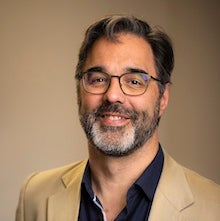
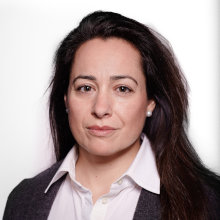
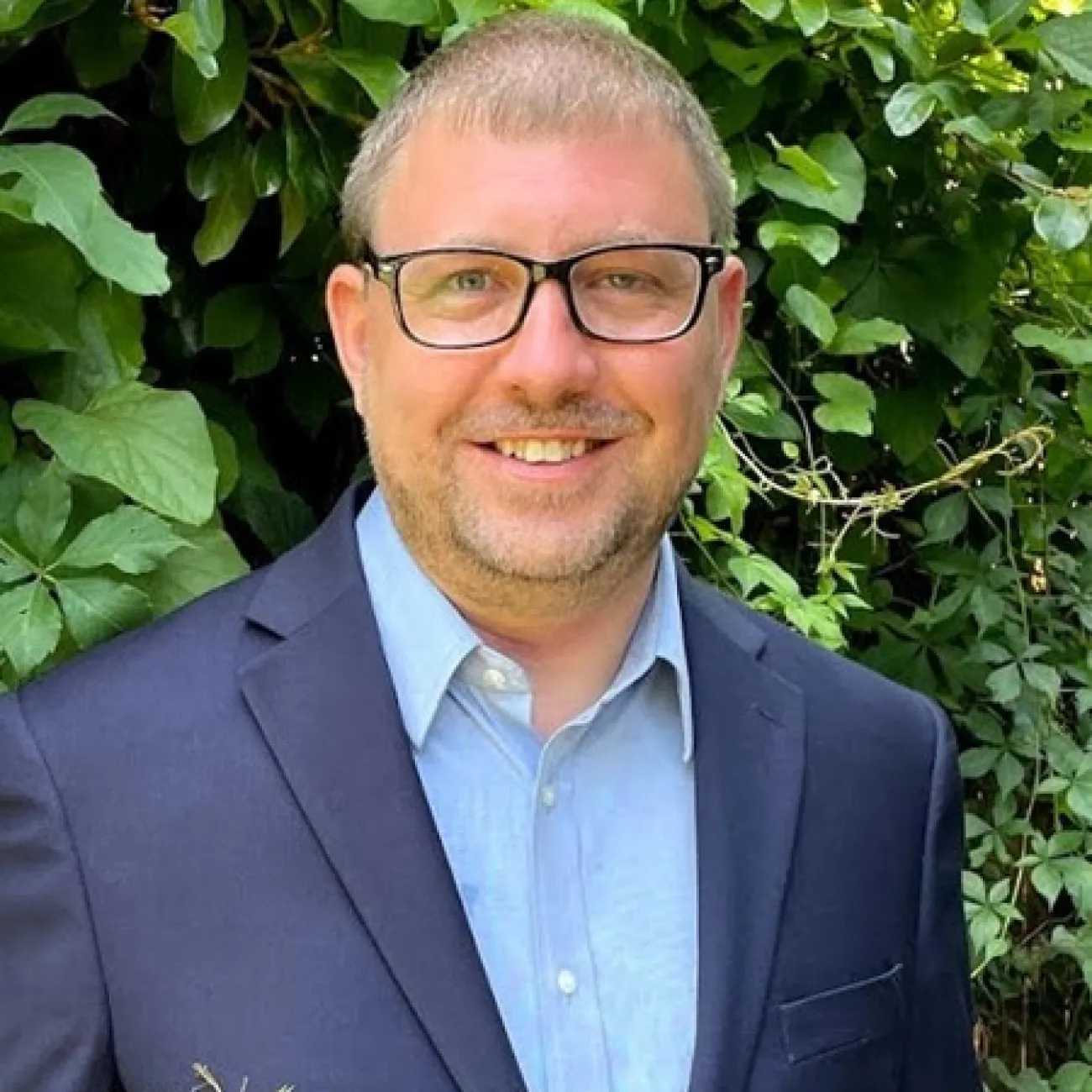
Nicholas Allen is a Professor of Psychology in the College of Arts and Sciences at the University of Oregon, serving as Director of the Center for Digital Mental Health and affiliated with the Center for Translational Neuroscience. His research examines developmental transitions in mental health, with emphasis on adolescent depression, sleep, and family processes. His work employs a developmental psychopathology framework to investigate how environmental stressors (abuse, socioeconomic disadvantage) impact emotional functioning and biological systems. Current projects target sleep, parenting, and teen relationships as modifiable risk factors, leveraging digital tools for unobtrusive mental health tracking through the ADAPT Lab. Publications from 2008-2018 reveal strong trends in adolescent neuroscience and digital interventions, with high-impact work in Nature , JAMA Psychiatry , and The Lancet focusing on brain development, parenting effects, and mobile health solutions for at-risk youth. No scientific awards were documented in the provided materials. Dr. Allen has advised graduate students historically but is not accepting new students for Fall 2025. His research is supported through the Center for Digital Mental Health and ADAPT Lab, with grants likely focused on translational neuroscience and digital intervention development based on publication themes. He leads the ADAPT Lab ( http://adaptlab.uoregon.edu/ ) and Center for Digital Mental Health, developing AI-driven tools using wearables and social media analytics to deliver real-time mental health interventions targeting adolescent depression prevention.
Laura Nadal Sanchis is an Associate Professor at the Department of Comparative Linguistic and Cultural Studies , Ca' Foscari University of Venice . She specializes in Spanish discourse markers , experimental linguistics , and inclusive language studies through cognitive and pragmatic approaches. Linguistics Translation Studies Cognitive Science Language Education Her research focuses on cognitive processing of linguistic elements in Spanish, including anaphoric encapsulation , discourse coherence , and gender-inclusive language effects . She employs experimental methods and eye-tracking technology to analyze these phenomena in L1 and L2 speakers. Current publications highlight her work on discourse markers in Romance languages , cross-linguistic analysis , and educational applications through CLIL methodology and translator training . While specific awards aren't listed, her extensive publication record demonstrates significant contributions to experimental linguistics and discourse analysis .
Wendy Anne Lee is an Associate Professor of English Education at New York University's College of Arts & Science, specializing in Enlightenment literature, the history of the novel, and affect studies with a particular focus on Jane Austen. Her scholarly work bridges literary theory, philosophy, and cognitive studies, exploring how narrative structures shape our understanding of consciousness and emotion. Dr. Lee earned her Ph.D. from Princeton University, M.Phil. from Cambridge University, and B.A. from Columbia University. Her research interests span eighteenth-century British literature, psychoanalysis, gender and sexuality studies, public humanities, and experimental writing. She approaches literary texts through the lens of affect theory, examining how emotional states are constructed and represented in narrative form. Lee's scholarship reveals a distinctive trajectory from Enlightenment philosophy to contemporary questions of consciousness and emotional experience. Her work on Jane Austen has evolved from analyzing narrative techniques to exploring how literary engagement can shape our relationship to mortality. This progression reflects her broader interest in the intersections between literary form, cognitive processes, and lived experience. Her recent focus on dementia patients who were avid Jane Austen readers represents a compelling application of literary theory to real-world human experiences at life's threshold. Among her significant honors are the NYU Golden Dozen Teaching Award, the Sarai Ribicoff Prize for Teaching at Yale College, the Charlotte W. Newcombe Doctoral Dissertation Fellowship, and the McCosh Prize for Distinguished Teaching from Princeton University. NYU Golden Dozen Teaching Award, College of Arts & Sciences Sarai Ribicoff Prize for the Encouragement of Teaching in Yale College Charlotte W. Newcombe Doctoral Dissertation Fellowship in Religion and Ethics McCosh Prize for Distinguished Teaching, Princeton University As a proponent of collaborative, transdisciplinary teaching, Lee co-founded Consent Lab at NYU with musicologist Brigid Cohen, theater artist Rosemary Quinn, and designer/choreographer Mimi Yin. This innovative project creates interactive experiences that explore the boundaries between inner and outer realities through experimental composition and embodiment. Lee's current research on Jane Austen and end-of-life experiences represents a significant contribution to both literary studies and medical humanities, demonstrating the enduring relevance of literary engagement in understanding fundamental human experiences.
Valentina Agostini is an Associate Professor in the Department of Electronics and Telecommunications (DET) at Polytechnic University of Turin, where she has established herself as a leading researcher in biomedical engineering with expertise in human movement analysis and signal processing. She is also a member of the Interdepartmental Center PolitoBIOMed Lab - Biomedical Engineering Lab, contributing significantly to the university's biomedical research infrastructure. Her primary research interests include biomedical signal processing, gait analysis, motor control, muscle synergies, postural control, and neuroengineering. Dr. Agostini leads the Biolab: Biomedical Engineering Group within DET, conducting research at the intersection of engineering principles and clinical applications. Her work spans fundamental signal processing techniques to clinical applications for neurological disorders, orthopedic recovery, and aging populations. Dr. Agostini's recent publications demonstrate a strong focus on applying engineering methodologies to understand human movement, with increasing integration of machine learning and AI approaches. Her research shows evolution from foundational work on EMG signal processing toward sophisticated clinical applications, particularly for Parkinson's disease and cognitive-motor interactions. The trend indicates growing emphasis on wearable sensor technology, objective clinical assessment tools, and AI-driven diagnostic and therapeutic support systems. SIAMOC Best Methodological Paper Award (2009) Young Research Award from Società Italiana di Analisi del Movimento in Clinica (2010) AITA Best Paper Award (2013) MEMEA Best paper award from IEEE Instrumentation and Measurement Society (2014) Dr. Agostini serves as a dedicated mentor, currently supervising PhD student Fabrizio Sciscenti on neuroengineering techniques for Parkinson's Disease management. She leads significant research projects including S-CoDe (2025-2027) on stress and cognitive decline assessment, and PD_DBS (2023-2025) examining deep brain stimulation effects. Her editorial service includes Scientific Reports, Sensors, and Frontiers in Sports and Active Living, reflecting her standing in the international research community. She is a founding member of the National Bioengineering Group (GNB) and maintains active roles in professional societies including IEEE-HKN. Her laboratory work centers around the PolitoBIOMed Lab, where her team develops innovative approaches to biomedical signal processing, human movement analysis, and neuroengineering applications for healthcare, with particular focus on translating research findings into clinical practice for improved patient outcomes.
Jeff Loewenstein is a Professor and Area Chair of Organizational Behavior/Business Law at the Gies College of Business, University of Illinois at Urbana-Champaign. He also holds a professorship in Biomedical and Translational Sciences and serves as a Faculty Scholar at the Center for Professional Responsibility in Business and Society. Loewenstein's research centers on creativity, negotiation, and analogical reasoning. His work explores how perspective shifts enhance creative idea recognition, how analogical encoding improves ethical decision-making, and the dynamics of negotiation processes. His research fingerprint reveals key areas including Creativity Assessment (100%), Plot Structure (92%), Analogical Encoding (78%), Knowledge Transfer (71%), Perspective Shift (65%), Negotiators (61%), and Negotiation Skills (52%). He has developed influential frameworks for understanding creativity evaluation and knowledge transfer in organizational contexts. His recent publications demonstrate consistent focus on creativity assessment processes, negotiation dynamics, and ethical decision-making. Notable works include 'My Department or My Company?' (2024), which examines identity configurations in organizations; 'Hidden costs of text-based electronic communication' (2022), which investigates communication media effects; and 'Analogical Encoding Fosters Ethical Decision Making' (2021), which has received significant scholarly attention with 36 citation indexes. Creativity Assessment (100%) Plot Structure (92%) Analogical Encoding (78%) Knowledge Transfer (71%) Perspective Shift (65%) Loewenstein teaches courses including BADM 314 - Leading Negotiations, BADM 508 - Leadership and Teams, BADM 588 - Business Practice Immersion, BADM 590 - Negotiations, and MBA 552 - Fostering Creative Thinking. His teaching emphasizes practical applications of negotiation strategies, leadership development, and creative problem-solving techniques. His scholarly output includes 47 research publications with significant impact across organizational behavior, psychology, and business ethics domains.
Dr. Vladimír Havlík is an Associate Professor at the Faculty of Philosophy, Masaryk University, and a researcher at the Institute of Philosophy of the Academy of Sciences of the Czech Republic since 1991. His academic career spans philosophy of science, emergence theory, and evolutionary epistemology. Education: PhDr. in Philosophy (1986, Charles University), CSc. (1990, Czechoslovak Academy of Sciences) Key roles: Secretary of the Czech Committee for Logic, Methodology and Philosophy of Science, computer network administrator at the Institute of Philosophy Dr. Havlík's research focuses on the philosophical foundations of science, particularly emergence, evolutionary theory, and the status of special sciences. His work critically examines reductionism, physicalism, and the methodology of cosmology, often bridging physics with metaphysical analysis. His publications analyze the interplay between logical positivism, scientific rationality, and interdisciplinary ontological principles. He has taught courses on philosophy of science, history of physics, and methodological seminars at the University of West Bohemia and Masaryk University. As a translator and editor, he has contributed to disseminating key texts in analytical philosophy, including works by Schlick, Waismann, Popper, and Feyerabend. His academic engagement extends to organizing symposia and serving on institutional IT commissions.
David Moses is an Assistant Professor in the Department of Neurological Surgery at the University of California, San Francisco (UCSF) School of Medicine. His research focuses on developing advanced brain-computer interfaces (BCIs) and speech neuroprostheses to restore communication in individuals with paralysis or speech impairments. Moses works at the intersection of neuroscience, biomedical engineering, and artificial intelligence, utilizing cortical activity mapping to create real-time decoding systems. Research Areas: Brain-Computer Interfaces Speech Neuroprosthetics Neural Signal Decoding Artificial Intelligence in Medicine Cortical Activity Analysis Cognitive Neuroscience Publication Trends: Moses' recent work (2024-2025) emphasizes streaming brain-to-voice neuroprostheses, bilingual speech decoding, and user agency in neuroprosthetic design. Earlier publications (2016-2022) established foundational methods for continuous phoneme decoding, real-time dialogue systems, and AI-driven cortical signal translation. Key Collaborations: Moses frequently collaborates with Edward Chang (UCSF), Gopala Anumanchipalli (UCSF), Karunesh Ganguly (UCSF), and Adelyn Tu-Chan (UCSF) on high-impact neuroprosthetic research. His work is cited extensively in medical and neuroscience literature, with significant social media and policy influence.
Professor Javier Villalba-Diez serves at the Faculty of Business of Heilbronn University of Applied Sciences, Germany, where he integrates artificial intelligence with lean management principles in industrial and business contexts. His international collaborations include a cooperative doctoral program with Technical University of Madrid and Erasmus exchanges with Universidad Politécnica de Madrid. Dr. Villalba-Diez earned dual engineering degrees: Mechanical Engineering from Technische Universität München and Industrial Engineering from Universidad Politécnica de Madrid (2003). His PhD in Engineering, Economics and Organizational Innovation (2016) from Universidad Politécnica de Madrid received the institution's best doctoral thesis award. His research spans Artificial Intelligence (particularly Deep Learning applications), Hoshin Kanri strategic planning, Business Intelligence , and Lean Manufacturing . He pioneers sensor-based methodologies for organizational design, using EEG and industrial IoT to analyze problem-solving patterns and network resilience. His work bridges theoretical models with practical implementations across German, American, Japanese, and Spanish manufacturing facilities. Recent publications demonstrate a clear trajectory toward Industry 4.0 integration , with 60% of his 2019-2020 work focusing on deep learning applications in quality control, sensor networks, and cyber-physical systems. The journal Sensors (MDPI) serves as his primary publication venue, reflecting his emphasis on data-driven industrial analytics. His recognition includes: Prize for best doctoral thesis by Universidad Politécnica de Madrid (2016) As Guest Editor for Sensors and reviewer for journals like Sustainability and Journal of Manufacturing Systems , he shapes discourse in industrial AI. His doctoral supervision with Madrid focuses on AI-driven strategic organizational design, while industry collaborations with manufacturing facilities worldwide translate research into operational frameworks. He maintains active roles in curriculum development for Industry 4.0 education through the PROFH4 digital initiative. Dr. Villalba-Diez operates within international research networks, leveraging his multilingual capabilities (German, English, Spanish) to facilitate transnational projects. His work with Neo4j for Hoshin Kanri visualization exemplifies his approach to making complex organizational networks actionable for industry leaders.
Dr. hab. Martyna Król-Kumor serves as a Professor at the Institute of Russian Studies, Jan Kochanowski University in Kielce. She has been continuously employed at the university since 2002, progressing from assistant to assistant professor before achieving full professorship in 2018. She currently manages academic operations and serves as editor of the scientific journal Studia Rusycystyczne UJK since 2017. Graduate of Russian Philology, Holy Cross Academy in Kielce (2002) Doctor of Humanities in Linguistics (2005): Polish-Russian Lexical Quasi-Analogy. Functional-Pragmatic Analysis Habilitation in Linguistics (2015): Typology of linguistic homonymy in the onomasiological and discursive aspect Her research spans theoretical linguistics with specialized focus on lexicology, discourse structures, and Polish-Russian contrastive semantics. She examines lexical quasi-analogy, linguistic homonymy typologies, and cross-linguistic discourse patterns through both onomasiological and pragmatic lenses. Her work reveals how semantic transformations reflect cultural worldviews, particularly in Russian-Polish comparative contexts. Analysis of her 15 most recent publications shows consistent exploration of lexical semantics across multiple dimensions: homonymy patterns (40% of works), discourse structures (30%), and contrastive Polish-Russian analysis (30%). Key methodological approaches include functional-pragmatic analysis, typological classification, and cognitive-semiotic frameworks applied to specialized domains like tourism business discourse and academic writing. No scientific awards or fellowships are documented in the available materials. Professor Król-Kumor provides academic supervision and consultations as evidenced by her listed contact information for "Credits/exams/consultations." While specific grant projects aren't detailed, her extensive monograph publications and journal editorship indicate sustained research activity. She contributes significantly to the Language Clinic at the university, supporting linguistic diagnostics and interventions. The Language Clinic and Russian Studies Institute represent her primary operational environments, where she integrates research with practical language applications including discourse analysis training and contrastive semantics instruction.
Paul Conway is an Associate Professor of Psychology at the University of Southampton within the Faculty of Environmental and Life Sciences. He is actively engaged in research on moral psychology, supervises PhD students, and accepts new PhD applications. His work bridges theoretical understanding with practical applications in various professional contexts including law enforcement, military ethics, and healthcare. Dr. Conway's research interests focus primarily on moral psychology, examining how people decide what is right and wrong and who is good and bad. His work investigates why people are motivated to do good and sometimes fail, and why people agree and disagree over moral matters. His research spans multiple contexts including sacrificial moral dilemmas, moral injury among professionals, moral character judgments, and the social dimensions of ethical decision-making. He employs both experimental and field methods to understand the psychological mechanisms underlying moral cognition and behavior. Analysis of Dr. Conway's recent publications reveals a strong focus on applied moral psychology with significant attention to real-world contexts where moral judgments have serious consequences. His work spans military ethics, law enforcement mental health, online safety, and healthcare decision-making during crises like the pandemic. The publications demonstrate interdisciplinary approaches combining social psychology, cognitive neuroscience, clinical psychology, and behavioral economics to address complex moral questions. His research consistently examines how social factors, cognitive processes, and emotional responses interact in moral judgment formation. Fellow of the Society of Experimental Social Psychology (2014) APS Rising Star (2020) Transformation in Teaching Award (2018) Faculty Undergraduate Research Mentor Award (2019) University of Southampton Research & Innovation Services Impact Fund Award (2024) Faculty of Environmental and Life Sciences Higher Education Innovation Fund (2023) Dr. Conway currently supervises multiple PhD students including Irem Sevi Yilmaz, King Hang Jason Lam, and Serena Celeste Romanelli. His research has been supported by numerous grants including the EASP Seedcorn Grant (2022), RAPID grant on COVID-19 sacrifices (2020), and investigations into moral decision-making among people on the autism spectrum (2019). He is actively involved in translating research findings into practical applications, particularly in understanding moral injury among professionals exposed to traumatic material. Dr. Conway is a member of the Centre for Research on Self and Identity and the Centre for Behavioural Experimental Action and Research (C-BEAR) at the University of Southampton. These research groups provide collaborative environments for investigating the psychological foundations of moral judgment and behavior. His external engagements include numerous speaking roles on moral injury, sacrificial dilemmas, and moral psychology applications in professional contexts.
Jim Cogswell is an Arthur F. Thurnau Professor at the Stamps School of Art & Design at the University of Michigan, where he has been faculty since 1990. His artistic practice uses painting and drawing as foundational knowledge while exploring diverse media languages through interdisciplinary collaborations. His educational background includes an M.F.A. in Painting and Drawing from the University of New Mexico (1982) and a B.A. in English Literature from Rhodes College (1971). Born and raised in Japan, Cogswell's work reflects his international perspective and literary background. Cogswell's research interests focus on sequence and pattern as cognitive triggers, exploring how humans translate perception into meaning. He develops anthropomorphic alphabets as generative systems for visual narratives, drawing from brain maps, astronomical models, and archaeological artifacts. His work investigates the mystery of human cognition and our relationship with the unexplained. An analysis of his recent artistic output reveals a consistent exploration of interdisciplinary connections, particularly between art, science, and language. His installations frequently transform architectural spaces through vinyl window works, while maintaining a strong foundation in painting and drawing techniques. The evolution from individual paintings to large-scale environmental installations demonstrates his growing interest in audience interaction and spatial experience. His significant recognition includes: Arthur F. Thurnau Professor (2008) Senior Fellow in the Michigan Society of Fellows (2014) Michigan Arts Award (2000) Charles P. Brauer Faculty Fellow at U-M Institute for the Humanities (1992-93) Cogswell has received numerous grants from the Office of the Vice-President for Research and the Horace P. Rackham School of Graduate Studies. His interdisciplinary approach has led to collaborations with cosmologists, astronomers, poets, dancers, and engineers, resulting in innovative projects like Jeweled Net of the Vast Invisible which visualized dark matter. He has lectured internationally at universities and conferences across six continents. His creative practice operates through multiple interconnected teams including collaborations with the Kelsey Museum of Archaeology, University of Michigan Museum of Art, and international partners like the Michael Cacoyannis Foundation in Athens. His studio practice integrates traditional painting techniques with digital technologies and scientific data visualization.
Susan Y. Bookheimer, PhD, is Professor-in-residence in the Department of Psychiatry and Biobehavioral Sciences at the David Geffen School of Medicine, University of California, Los Angeles. From 2008 to 2024 she held the endowed Joaquin M. Fuster Chair in Cognitive Neuroscience and currently directs or co-directs several large-scale NIH consortia including the UCLA site of the Adolescent Brain Cognitive Development (ABCD) Study, the Lifespan Human Connectome Project in Aging, and newly funded initiatives on resilience to Alzheimer’s disease in centenarians. Education & Training Details of formal degrees are not provided in the source text; however, her continuous NIH funding since 1995 and leadership roles imply advanced research training in clinical neuroscience and neuroimaging. Research Focus Dr. Bookheimer’s work integrates multimodal neuroimaging (fMRI, sMRI, DTI, PET, EEG) with genetics, cognitive testing, and clinical phenotyping to understand: Typical and atypical brain development across the lifespan Neurobiological underpinnings of autism spectrum disorder and sensory phenotypes Early detection and prediction of Alzheimer’s disease and age-related cognitive decline Neuroplasticity and cognitive outcomes following epilepsy surgery Effects of environmental adversity, stress, and social support on brain networks Scientific Awards & Honors Joaquin M. Fuster Chair in Cognitive Neuroscience, UCLA (2008–2024) Principal or Co-Principal Investigator on >15 active NIH grants totaling >$100 M Over 230 peer-reviewed publications with >25,000 citations (Google Scholar metrics) Grants & Consortia Leadership Dr. Bookheimer currently leads or co-leads the following major NIH projects: U19AG073585 – Vulnerability and Resiliency in the Aging Adult Brain Connectome (AABC) U19AG073172 – Resilience/Resistance to Alzheimer’s Disease in Centenarians and Offspring (RADCO) R01AG073480 – Modulation of Hippocampal Circuitry with Focused Ultrasound in Amnestic MCI P50HD103557 – UCLA Intellectual and Developmental Disabilities Research Center U01DA050987 – ABCD-USA Consortium Research Project Site at UCLA U01AG052564 – Mapping the Human Connectome During Typical Aging U01MH109589 – Mapping the Human Connectome During Typical Development In addition, she has served as PI on prior awards including P50HD055784 (Autism Center), R01AG013308 (Alzheimer’s Risk), and P30HD004612 (IDDRC). Laboratories & Teams Dr. Bookheimer directs the UCLA Brain Mapping Center (part of the Ahmanson-Lovelace Brain Mapping Center) and co-directs imaging cores for both the UCLA IDDRC and the ABCD Study. Her multidisciplinary teams include post-doctoral fellows, graduate students, research staff, and collaborators across neurology, radiology, psychology, and genetics departments.
Wendy Rogers is the Shahid and Ann Carlson Khan Professor at the University of Illinois at Urbana-Champaign , holding appointments in the Department of Kinesiology and Community Health , Educational Psychology , and multiple research institutes including the Coordinated Science Lab , Beckman Institute , and Center for the Study of Global Gender Equity . As a leading expert in human factors and gerontechnology, her work focuses on designing technologies for older adults and individuals with disabilities. Her research explores assistive robotics , smart home systems , mHealth applications , and participatory design methodologies . Recent publications address topics like AI-powered virtual assistants for aging populations, adaptive systems for cognitive support, and inclusive design frameworks for mobility-impaired adults. She has contributed to journals such as Human Factors in Healthcare , Gerontologist , and Frontiers in Robotics and AI . Key article trends show emphasis on technology acceptance models , feedback visualization , digital activities of daily living , and human-robot interaction in home environments. Her work often involves cross-disciplinary collaboration with healthcare professionals and engineers.
Alejandra Magana serves as the W.C. Furnas Professor in Enterprise Excellence of Applied and Creative Computing and Professor of Engineering Education at Purdue Polytechnic, Purdue University. She directs the ROCkETEd Lab and holds significant editorial roles including Deputy Editor for the Journal of Engineering Education and Co-Editor of the Education Department for IEEE Computer Graphics & Applications. Her leadership extends to multiple editorial boards in engineering and science education journals. Ph.D. in Engineering Education, Purdue University (2009) Post-doc in Engineering Education, Purdue University (2010) M.S. in Educational Technology, Purdue University (2007) M.S. in Electronic Commerce, Instituto Tecnologico y de Estudios Superiores de Monterrey (2003) B.S. in Information Systems Engineering, Instituto Tecnologico y de Estudios Superiores de Monterrey (2000) Magana's research focuses on how students develop computer and data science self-regulated learning skills through computational cognitive apprenticeship and authentic modeling practices. She investigates how learning analytics and AI can support student learning in computing-intensive domains and engineering thinking in K-12 education. Her work bridges educational theory with practical applications in STEM fields, emphasizing the integration of computational thinking across disciplines. She employs design-based research methodologies to create and evaluate innovative learning environments that leverage simulation, visualization, and emerging technologies. Analysis of Magana's recent publications reveals a strong emphasis on collaborative learning in digital environments, with growing attention to AI applications in education. Her work spans multiple domains including virtual reality for STEM education, teamwork dynamics in software development, AI ethics education, and computational thinking assessment for teachers. A consistent theme is the development of representational competence through modeling and simulation practices, with increasing integration of learning analytics to understand student cognition and team processes. Fellow Member, American Society for Engineering Education (2024) Fulbright Specialists Appointment (2024) Purdue Polytechnic Charles B. Murphy Outstanding Undergraduate Teaching Award (2021) W.C. Furnas Professorship (2020) Purdue University Faculty Scholar (2016) ASEE-ERM Apprentice Faculty Grant (2012) Magana leads multiple significant research grants totaling over $15 million, primarily from NSF, focusing on computational education, AI in learning environments, and engineering education transformation. Her ROCkETEd Lab serves as the hub for these research activities, which often involve interdisciplinary collaborations across engineering, computer science, and education. She has mentored numerous graduate students who appear as co-authors on her publications, though specific advising relationships aren't explicitly documented. Her research program demonstrates strong continuity from foundational work on modeling and simulation to current projects integrating generative AI and immersive technologies. The ROCkETEd Lab (Research in Organizing Computational Knowledge for Engineering Thinking and Education) functions as Magana's primary research unit, focusing on computational cognitive apprenticeship approaches. The lab investigates how students develop representational fluency through modeling and simulation practices, with recent expansion into AI-enabled learning environments. Current projects examine hidden curricula in computer science education, high-performance computing virtual environments for AI education, and culturally relevant programming learning experiences. The lab maintains strong industry and international partnerships, particularly with institutions involved in advanced manufacturing and educational technology development.
Köksal BİLİRDÖNMEZ is an Assistant Professor in the Graphic Design Department at Kastamonu University's Faculty of Fine Arts and Design. Born in 1976 in Erzurum, he completed his undergraduate studies at Atatürk University's Faculty of Fine Arts (1999), followed by a Master's in Photography (2010) and Proficiency in Art (2016) at Akdeniz University. Currently serving as Dean Assistant and former Department Head, he has held academic positions since 2000. BA: Graphic Arts, Atatürk University (1999) MA: Photography, Atatürk University (2010) Proficiency in Art: Art and Design, Akdeniz University (2016) His research focuses on Graphic Design, Animation, and Visual Design with particular interest in optical illusions, color theory, and historical poster design. His scholarly work examines cultural symbolism in visual communication, contemporary spatial design, and educational technology applications. With an h-index of 5 and 70 citations on Google Scholar, his research bridges traditional Turkish visual culture with contemporary design practices. BİLİRDÖNMEZ has supervised 7 graduate theses on topics ranging from environmental pollution-themed posters to Kemal Sunal film posters. His academic leadership includes directing 9 research projects and serving on university committees. As an active practitioner, he has designed over 145 artistic events including journal covers, conference posters, and cultural exhibitions. His administrative roles demonstrate significant institutional engagement while maintaining active scholarly and creative production.