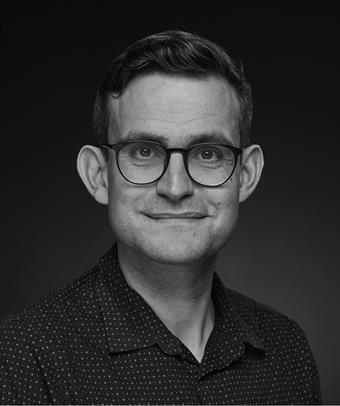
Joel Lanning is an Associate Professor in the Department of Civil and Environmental Engineering at the Samueli School of Engineering, University of California, Irvine. Education: Ph.D. in Structural Engineering from UC San Diego (2014), M.S. in Structural Engineering from UC San Diego (2008), B.S. in Civil Engineering from The Ohio State University (2006) His research focuses on engineering education, seismic design of civil structures, large-scale testing methodologies, and alternative building materials. He integrates constructivist learning principles with active learning components like group problem-solving and interactive technology. Awarded the 2023 Distinguished Early-Career Faculty Award for Teaching, 2022 SSoE Early Career Innovation in Teaching Award, 2020 Dean’s Honoree for DTEI’s Celebration of Teaching, and the 2019 CEE Faculty of the Year Award, Joel has demonstrated excellence in pedagogical innovation and student engagement. He serves as Director of the MEng CEE Concentration and is a licensed Professional Engineer (Civil Engineering, California #80946). Joel actively mentors the UCI Steel Bridge Team, guiding hands-on structural design competitions.
Professor Geoff Duller has been a faculty member at Aberystwyth University's Department of Geography & Earth Sciences since 1995, holding a Personal Chair since 2005. He studied Geography at St Catherine's College Oxford (BA 1987), completed his PhD in 1992 at Aberystwyth on luminescence dating of Quaternary sediments in New Zealand, and established the Aberystwyth Luminescence Research Laboratory in 2000. His research focuses on luminescence dating method development and application, particularly for Quaternary environmental change studies. Key contributions include creating single-aliquot dating methods and leading the NERC-funded BRITICE-Chrono project for ice sheet deglaciation chronology. He serves as Associate Editor of Radiation Measurements and editor of Journal of Quaternary Science , with editorial board membership at Ancient TL . His article portfolio demonstrates expertise in: Luminescence signal analysis (2025: IRPL/IRSL in feldspars; 2024: opercula thermoluminescence) Quaternary chronology (2025: Thar desert floodouts; 2024: Tibetan glaciofluvial sediments) Methodological innovation (2025: EMCCD crosstalk reduction; 2024: pIRIR protocol optimization) Scientific recognition includes the Bigsby Medal (2012). Current supervision includes PhD students Robyn Pinder, Svenja Riedesel, and Nina Ataee. He co-directs the Aberystwyth Luminescence Research Laboratory and manages specialized equipment including Risø luminescence readers.
Lindsay R. Mehrkam, Ph.D., BCBA-D is an Associate Professor in the Department of Psychology at Monmouth University. She directs the Human-Animal Wellness Collaboratory (HAWC) and Aquatic Animal Learning Lab, serves as Program Coordinator for the MU-Six Flags Affiliation, and holds Vice-Chair position on the Institutional Animal Care & Use Committee (IACUC). Her work bridges applied animal behavior, welfare science, and behavior analysis across diverse settings including zoos, shelters, and sanctuaries. Education: Ph.D., University of Florida M.S., University of Florida B.A., Franklin & Marshall College Research Focus: Dr. Mehrkam investigates environmental influences on play, aggression, and stereotypic behaviors in companion and exotic animals, develops evidence-based enrichment and training protocols for captive welfare, and evaluates human-animal interactions in therapeutic contexts. Her approach integrates behavior analysis with ethology to create practical solutions for animal care facilities, emphasizing measurable welfare outcomes through rigorous experimental design. Publication Trends: Analysis of her 15 most recent publications reveals consistent focus on applied behavior analysis in animal contexts (2014-2020), with 60% targeting canine behavior, 20% marine/exotic species, and 20% cross-species welfare assessment. Key methodological themes include functional analysis of problem behaviors (33% of papers), enrichment efficacy testing (27%), and preference assessment protocols (20%). Her work increasingly incorporates physiological biomarkers alongside behavioral metrics since 2017. Awards & Recognition: Creativity Grant (2020) Maddie's Fund Grant: Do Playgroups Increase Behavioral and Physiological Welfare in Shelter Dogs? (2017, $131,395 as PI) Doctoral-Level Board-Certified Behavior Analyst (BACB, Certificate #1-15-17919) Featured in Scientific American, Gizmodo, and Phys.org for feline/dolphin welfare research Professional Leadership: As Departmental Advising Coordinator, she guides students through field experiences at Six Flags and animal shelters. She serves as Vice President of ABAI's Applied Animal Behavior SIG and advisor for Big Oak Wolf Sanctuary. Her FEMA-invited webinar on Animal Emergency Preparedness demonstrates real-world impact of her research, while Swiss Veterinary Congress presentations establish international influence in clinical animal behavior. Laboratory Operations: The HAWC lab conducts collaborative research with animal shelters and sanctuaries on behavioral assessment protocols, while the Aquatic Animal Learning Lab partners with Six Flags to study marine mammal cognition. Both labs emphasize student involvement through the PY 411 Field Experience course, producing peer-reviewed publications with undergraduate co-authors and developing evidence-based welfare protocols adopted by multiple zoological institutions.
Prof. Dr.-Ing. Jochen Steffens is a faculty member at the University of Applied Sciences Düsseldorf , affiliated with the Faculty of Media . His research spans interdisciplinary domains at the intersection of music, soundscapes, and cognitive-affective processes. Research Focus : Music listening behavior, soundscapes, noise perception, music recommendation systems, film music, and the psychological effects of sounds. Teaching : Supervises final theses and offers modules aligned with examination regulations of 2018, including topics in media informatics and mixed reality applications. Technical Contributions : Develops tools for soundscape exploration (e.g., Advanced Soundscape Search) and music information retrieval (MIR) systems for live performance visualization. Methodological Expertise : Utilizes computational music analysis, experience sampling, statistical learning, and multilevel modeling to investigate situational and demographic influences on auditory perception. Applied Research : Explores the impact of room acoustics on customer satisfaction in restaurants, motivational music in sports, and semantic expression in audio branding.
Liz M O'Laughlin serves as Professor in the Department of Psychology within Indiana State University's College of Arts & Sciences. Holding a Ph.D. in Clinical Psychology from the University of Wisconsin-Milwaukee (1993), she maintains active research in child clinical psychology with emphasis on ADHD assessment and family dynamics despite her expired 2020 psychology license. Her educational credentials include: Ph.D. in Clinical Psychology, University of Wisconsin-Milwaukee (1993) M.S. in Clinical Psychology, University of Wisconsin-Milwaukee (1989) Dr. O'Laughlin's research centers on ADHD diagnostic methodologies , parent-child interaction patterns , and executive function assessment . She pioneered studies on religiousness in parenting, sleep disturbances in ADHD children, and BRIEF tool validation. Her work bridges clinical practice with community-based interventions through the Wabash Valley. Recent publications (2023-2025) reveal evolving focus toward ADHD comorbidity detection using BRIEF2 ERI scales and parent help-seeking behaviors, indicating sophisticated understanding of diagnostic nuances beyond symptom checklists. Her scientific recognition includes: Faculty Award for Community-Based Learning and Scholarship (2007) MAPS Mentor Award (2006) Dual Educational Excellence Awards (2001) Nomination for Faculty Distinguished Service Award (2005) Securing over $350,000 in grants including the $298K NIH-funded 'Predictors of Compassionate Love' study, she mentors students through McNair Scholars and MAPS programs while chairing Graduate Council and Clinical Faculty Search committees. Community engagement spans CARE Council leadership (2006-2012) and CASA program consulting. Current research teams focus on autism screening in ADHD referrals and cultural factors in diagnostic practices, with ongoing presentations at APA conventions through 2024.
Dongyoon Lee is an Assistant Professor in the Department of Computer Science at Stony Brook University's College of Engineering and Applied Sciences. His research focuses on software engineering challenges in programming languages and security, with emphasis on regular expression analysis and empirical studies. His research interests include: Software reliability through regex generalizability testing Developer decision-making in security-critical contexts Empirical measurement of programming language features across ecosystems Security implications of common coding patterns His publication trends reveal strong focus on practical security vulnerabilities in developer tools, particularly analyzing regular expression implementations across multiple programming languages. The work combines empirical measurement with human factors analysis to identify systemic risks. Lee actively contributes to the software engineering community through leadership roles in major conferences: LCTES 2025: Program Committee & Steering Committee LCTES 2023: Program Chair & Session Chair CGO 2022: Author of HECATE compiler optimization work ASE 2019: Two regex-related research papers His advising and community engagement is demonstrated through consistent program committee service since 2016 across PLDI, LCTES, CC, CGO, and ASE conferences. He has chaired sessions on storage systems, scheduling, and techniques for specific domains, showing breadth in systems software research.
Fani Lauermann is a Professor of Empirical Educational Research and Educational Psychology at the University of Bonn, where she is affiliated with the Bonn Center for Teacher Education (BZL). She also serves as a Co-opted Member of the Department of Psychology at the University of Bonn and maintains a research affiliation with the Institute for Research on Education and School Development (IFS) at TU Dortmund University. Her work bridges educational psychology and teacher education through empirical research on motivation and learning processes. Dr. Lauermann earned her Ph.D. from the Combined Program in Education and Psychology at the University of Michigan (2008-2013) following her Diplom-Psychologist degree at the University of Bonn, Germany (2001-2006). Her academic journey includes postdoctoral research in the Gender and Achievement Research Program (GARP) at the Institute for Social Research at Michigan. Her research program centers on three interconnected domains: academic motivation and achievement, educational trajectories and occupational choices, and teacher motivation and teaching quality. She frequently applies expectancy-value theory to understand motivational processes across educational contexts, with particular attention to gender differences in academic choices. Recent methodological approaches include longitudinal designs, multilevel analyses, and cross-cultural comparisons, often examining how students' and teachers' beliefs influence academic trajectories and outcomes in math-intensive study programs. Analysis of her recent publications (2022-2025) reveals a strong focus on gender disparities in educational choices, particularly in STEM fields, as well as the role of comparative processes in forming academic self-concepts. Her work increasingly examines teacher self-efficacy, responsibility beliefs, and their impact on classroom processes, with growing attention to online learning environments and their implications for student motivation and belonging. Dr. Lauermann has held significant editorial positions including Associate Editor for Learning and Instruction (2018-2021) and editorial board membership for Journal of Educational Psychology, Journal of Learning and Instruction, Contemporary Educational Psychology, and Educational Psychologist. She served as elected coordinator for EARLI SIG-08 "Motivation and Emotion" from 2017-2021, representing members from over 30 countries. Dr. Lauermann advises several graduate students who have received recognition for their work, including Daria Benden (Paul R. Pintrich Award winner) and Sirui Wan (Graduate Student Research Excellence Award recipient from Division C at AERA 2022). Her research group collaborates with international scholars, notably Eccles, Wigfield, and Bailey on expectancy-value theory research, and with German colleagues at TU Dortmund on the FAIR research profile area. Dr. Lauermann's research contributes to understanding how motivational processes operate across different educational contexts, with implications for teacher education and classroom practice. Her work continues to advance theoretical models of motivation while providing practical insights for educators seeking to support students' academic development across domains.
Dr. Heidi Baseler is a Senior Lecturer in Imaging Sciences at the Hull York Medical School and the Department of Psychology , University of York . She serves as INSPIRE Programme Lead for undergraduate research and contributes to research governance and public/patient involvement in research through committees like the York Neuroimaging Centre Research Governance Committee and Involvement@York . Education : AB in Biology/Psychology from Dartmouth College (1986), PhD in Vision Science from University of California, Berkeley (1995) Career : Research Fellow at Stanford, Smith-Kettlewell Eye Research Institute, and University of York; Lecturer in Imaging Sciences at Hull York Medical School (2012-2021) Her research focuses on neural mechanisms for central/peripheral vision processing, cortical responses to sensory loss (e.g., AMD, deafness), and neuroprotective strategies like photobiomodulation. Techniques include structural and functional MRI , magnetic resonance spectroscopy , multifocal EEG , and electroretinography . Key findings include cortical reorganization in macular degeneration and superior visual performance in deaf adults. Recent article trends highlight: Neuroimaging biomarkers for AMD progression Cross-modal plasticity in deaf individuals Long-term effects of sensory deprivation on brain structure Photobiomodulation for neurodegeneration Functional connectivity in face-selective regions Contrast perception dynamics across aging Scientific awards include: Exceptional Contribution to Student Experience Finalist , Hull York Medical School (2024) Pursuing Excellence Award , Hull York Medical School (2023) Vice-Chancellor's Teaching Award , University of York (2020) Multiple Teacher of Excellence Finalist recognitions (2016-2018) She teaches undergraduate medical students in Foundations of Medicine and Neurological Diseases , and supervises MSc Cognitive Neuroscience projects. Collaborations span institutions like University of Hull , University of Lille , and University of Regensburg . Current students include Sharyfah Alasiri (PhD, Biomedical Sciences) and Erin English (PhD, Psychology) at the University of York.
Ambra Ferrari is a Research Fellow at the Interdepartmental Center for Mind/Brain Sciences (CIMEC) within the University of Trento. Her work focuses on cognitive development, multisensory perception, and neuroimaging techniques. She teaches courses such as Cognitive neuroscience of infant development and contributes to the Cognitive Neuroscience program in the Department of Psychology and Cognitive Sciences. Her research integrates methodologies from neuroscience and psychology to study infant cognition, social development, and sensory integration. She develops computational tools like the WTools MATLAB toolbox for analyzing infant neural data. Ferrari's work bridges developmental psychology, psycholinguistics, and sensory neuroscience, emphasizing how prior expectations guide perception during communication. In teaching, she employs journal clubs and seminars to foster critical analysis of empirical studies and contemporary theories in cognitive development. Her courses aim to equip students with skills to evaluate experimental research and understand neurobiological foundations of cognition. Her laboratory (CIMEC) focuses on adaptive behavior, cross-modal plasticity, and embodied communication. Current projects explore statistical learning mechanisms, attention modulation in multisensory perception, and the role of gesture-prosody interactions in language comprehension.
Dr. Corey Tomczak is an Associate Professor in the Department of Kinesiology at the University of Saskatchewan. His research focuses on cardiovascular physiology, cardiac rehabilitation, and exercise intolerance in chronic conditions such as heart failure and congenital heart disease. He holds a PhD in Rehabilitation Medicine and has extensive postdoctoral training in the field. His work integrates clinical and physiological approaches to improve outcomes in patients with cardiovascular disorders. Affiliations: University of Saskatchewan, College of Kinesiology Research Themes: Health Aging and Management of Chronic Conditions, Child and Youth Health and Development Dr. Tomczak's research examines mechanisms underlying exercise limitations in heart failure and congenital heart disease, including autonomic regulation, vascular function, and skeletal muscle metabolism. He has trained numerous graduate students and mentors future researchers in cardiovascular physiology. His lab, the Russ Kisby Physical Activity and Health Promotion Laboratory, collaborates with clinical partners at the Royal University Hospital. Key areas of investigation include cerebrovascular responses during exercise, muscle metaboreflex modulation of cardiac function, and the impact of exercise training on cardiovascular outcomes. Recent work highlights impaired vascular function in heart failure and sex-based differences in exercise capacity.
Tamara Afifi is the Department Chair and Professor of Communication at the University of California, Santa Barbara (UCSB). Her research focuses on family and interpersonal communication under stress, particularly examining how communication patterns like communal coping, conflict, and social support influence biological stress responses and relational health. She develops and tests theories such as the Theory of Resilience and Relational Load , integrating interdisciplinary perspectives on stress and resilience. Her work employs innovative mixed-methods approaches including surveys, longitudinal diaries, lab observations, biological markers (e.g., cortisol), and virtual reality. She studies diverse populations such as refugees, families with chronic illnesses, and undocumented immigrants. Key areas include stress contagion, information regulation, and intergenerational storytelling in Palestinian families. Dr. Afifi’s methodological contributions span data collection challenges in dementia care during pandemics, scale validation (e.g., Chronic Uncertainty scales), and the impact of modern divorce practices. Her research emphasizes practical applications, such as improving family quality of life through VR interventions and enhancing resilience in marginalized communities. Her academic affiliations include the Center for Aging and Longevity Studies (CALS) and the Neuroscience Research Institute at UCSB. She actively contributes to disciplinary discourse through reflections on 50 years of communication theory and advancing methodologies in stress communication research.
Susan Embretson is a Professor of Psychology at the School of Psychology, Georgia Institute of Technology, with a distinguished career spanning modern psychometric theory and cognitive assessment methodologies. Her educational foundation includes a Ph.D. in Psychology from the University of Minnesota (1973). Dr. Embretson pioneers the integration of cognitive theory into psychometric models , specializing in item response theory and cognitive diagnosis. Her groundbreaking work on "tests without items" leverages artificial intelligence for dynamic item generation targeting cognitive difficulty sources. Research spans fluid reasoning, spatial ability, mathematical reasoning, and verbal comprehension, fundamentally advancing personalized assessment. Analysis of her 2012-2016 publications reveals sustained innovation in multicomponent latent trait modeling, cognitive complexity applications, and AI-driven test development. Key themes include diagnostic precision in mathematics assessment, cognitive load optimization, and personality impacts on test performance, establishing new paradigms in educational measurement. She directs the Cognitive Measurement Laboratory at Georgia Tech, driving research at the intersection of cognitive science and psychometrics.
Professor Henry Prakken is a leading researcher in Artificial Intelligence and Law at Utrecht University's Department of Computer Science. He holds a prominent position in the Responsible AI research group and has been instrumental in advancing computational models of legal argumentation. With an extensive publication record spanning over three decades, Prakken has established himself as a central figure in the intersection of law and artificial intelligence. Prakken's research interests focus on computational models of argumentation, legal reasoning systems, and the application of AI to legal domains. His work bridges theoretical foundations with practical applications, particularly in case-based reasoning, Bayesian networks for legal evidence, and formal argumentation frameworks. He has made significant contributions to understanding how computational models can represent and analyze legal reasoning processes, with particular attention to precedent-based reasoning and argument strength. His publication record demonstrates consistent research productivity with numerous high-impact papers in venues like Artificial Intelligence, Artificial Intelligence and Law, and proceedings of major conferences including ICAIL and COMMA. Recent work has expanded into evaluating generative AI's legal reasoning capabilities and developing more sophisticated models of argument strength and acceptability. Past president of the International Association for AI & Law (IAAIL) Past president of the JURIX Foundation for Legal Knowledge-Based Systems Past president of the steering committee of the COMMA conferences on Computational Models of Argument Editorial board member of Artificial Intelligence and Law Associate editor of Artificial Intelligence (2017-2022) Prakken has played a significant role in mentoring and shaping the field through his leadership positions and editorial work. His research has influenced both theoretical developments in computational argumentation and practical applications in legal technology, contributing to the growing field of responsible AI in legal contexts.
Nicola Cellini is an Associate Professor at the Department of General Psychology of the University of Padova. His research focuses on cognitive neuroscience, sleep science, and psychological mechanisms underlying memory, emotion, and decision-making. He has conducted extensive studies on sleep deprivation effects, emotional memory consolidation, and the application of wearable health technology for sleep monitoring. His work bridges clinical psychology, neurophysiology, and behavioral science, often involving interdisciplinary collaborations. Key research areas include: Neurophysiological correlates of time perception Cognitive and emotional consequences of sleep fragmentation Role of REM sleep in emotional processing Technology validation for sleep tracking (e.g., Xiaomi Mi Band 5) Psychosocial factors in pandemic mental health (e.g., time perspective theory) His recent publications highlight trends in: Clinical applications of rTMS for addiction treatment Impact of biophilic environments on psychophysiological recovery Interplay between sleep quality and false memory formation Age-related differences in sleep patterns during pandemics Notable contributions include methodological advancements in sleep monitoring technology validation and cross-cultural analyses of psychological resilience during the COVID-19 pandemic.
Sameer Singh is a Professor of Computer Science at the University of California, Irvine's Donald Bren School of Information and Computer Sciences. He also holds affiliations with Linguistics and EECS departments. His research primarily focuses on the robustness and interpretability of machine learning algorithms, along with models that reason with text and structure for natural language processing. Dr. Singh received his PhD from the University of Massachusetts, Amherst in 2014, an MS in Computer Science from Vanderbilt University in 2007, and a BEng in Electrical Engineering from the University of Delhi in 2004. His research interests span machine learning robustness, natural language processing, model interpretability, and knowledge representation. Singh investigates how to make AI systems more reliable and understandable, particularly focusing on testing methodologies for NLP models and developing techniques to improve model behavior. His work bridges theoretical understanding with practical applications in AI safety and reliability. Analysis of Singh's recent publications reveals a strong focus on language model interpretability, bias detection, and model robustness. His work explores how language models process information, where they fail, and how to make them more reliable. A significant portion of his recent research examines the limitations of multimodal models, language model alignment techniques, and addressing social biases in AI systems. Dr. Singh has received numerous prestigious awards including the Kavli Fellowship from the National Academy of Sciences, the NSF CAREER award, UCI Distinguished Early Career Faculty award, and the Hellman Faculty Fellowship. His papers have won multiple awards including at KDD 2016, ACL 2018, EMNLP 2019, AKBC 2020, and ACL 2020. His research group has secured substantial funding from major organizations including the Allen Institute for AI, Amazon, NSF, DARPA, Adobe Research, Hasso Plattner Institute, NEC, Base 11, and FICO. Singh previously served as an Allen Fellow at the Allen Institute for AI (2021-2023) and is currently a co-founder and CTO of Spiffy AI in Seattle. He completed postdoctoral research at the University of Washington after earning his PhD. Dr. Singh maintains an active presence in the AI community through his work on projects like AutoPrompt and Checklist, which have become influential tools for testing and interpreting NLP models. His research continues to shape how the field approaches model evaluation and interpretability.