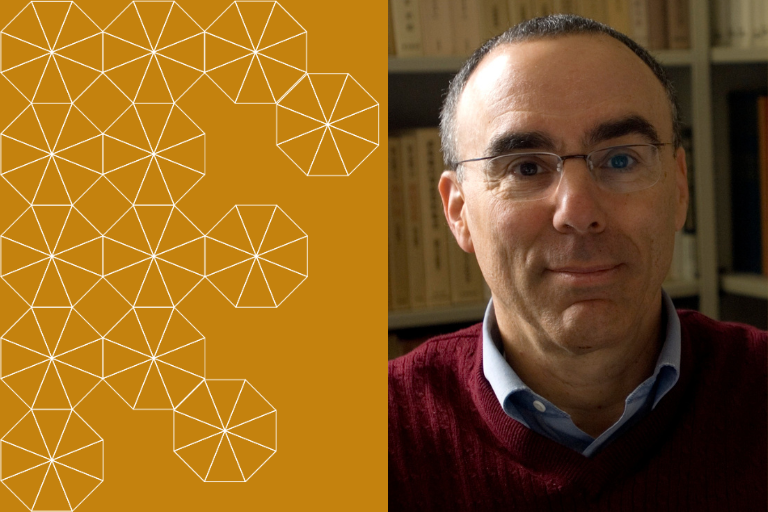
Robert Sharf is the D.H. Chen Distinguished Professor of Buddhist Studies in the Department of East Asian Languages and Cultures at the University of California, Berkeley . He also serves as Chair of the Numata Center for Buddhist Studies and Head Graduate Advisor for the Group in Buddhist Studies . With a PhD in Buddhist Studies from the University of Michigan (1995), he previously taught at McMaster University (1989-1995) and the University of Michigan (1995-2003). Research Interests: Medieval Chinese Buddhism (especially Chan) Japanese Buddhism Buddhist Art and Archaeology Ritual Studies Buddhist Modernism Philosophical Paradoxes Methodology in Religious Studies Critical Buddhist Discourse Publications & Collaborations: Author of Coming to Terms with Chinese Buddhism: A Reading of the Treasure Store Treatise (2002) Co-editor of Living Images: Japanese Buddhist Icons in Context (2001) Co-author of What Can’t Be Said: Contradiction and Paradox in East Asian Thought (2021) Co-author of How to Lose Yourself: An Ancient Guide to Letting Go (2025) Editor of Chinese translations of his works: Xiafu Chanxue zixuan ji and Xiafu Mijiao Yanjiu zixuan ji (2022) Academic Leadership: Director of the Group in Buddhist Studies Director of Religious Studies Chair of the Center for Buddhist Studies
Sarah Ebling is a Full Professor of Language, Technology and Accessibility at the University of Zurich's Faculty of Arts and Social Sciences. She leads the Language, Technology and Accessibility research group within the Institute for Computational Linguistics. Her work focuses on computational linguistics applications for assistive technologies targeting disabilities such as hearing impairments, visual impairments, and cognitive disorders. Key areas include sign language technologies, automatic text simplification, and audio description systems. She directs the large-scale Swiss innovation project 'Inclusive Information and Communication Technologies' (2022-2026, CHF12 million budget) and collaborates on EU H2020 and SNSF Sinergia projects. Education: Holds a doctoral degree (summa cum laude, 2016) from the University of Zurich with research on automatic translation to Swiss German Sign Language. Completed studies in German Linguistics, Computational Linguistics, and English Linguistics at Universities of Zurich and Heidelberg, with research stays in Dublin, Chicago, and Rochester. Research emphasizes multimodal accessibility solutions, including sign language fluency assessment, gesture-based interaction, and AI-driven text adaptation. Current projects explore audio description translation systems (SwissADT), sign language corpus development (SwissSLi), and digital tools for comprehensibility assessment in simplified texts. Her work bridges computational linguistics with ethical considerations in assistive technology deployment. Grants and Leadership: Principal Investigator on major accessibility-focused grants, including the CHF12M Swiss innovation project. Supervises PhD candidates in areas like sign language assessment tools and text simplification algorithms. Active in international collaborations, publishing extensively in computational linguistics and accessibility journals/conferences. Technology Development: Created the 'DigiSpon' benchmark for language sample analysis and developed open-source tools for sign language translation baselines. Her team's innovations include the SignCLIP model connecting text and sign language via contrastive learning, and pose estimation frameworks for sign language recognition.
Rudiger Campe is the Alfred C. and Martha F. Mohr Professor of German Languages and Literatures at Yale University, with a joint appointment in Comparative Literature since 2016. He has been a Professor of German at Yale since 2007 and previously held a professorship at Johns Hopkins University from 2001 to 2007. His research spans literary theory, aesthetics, rhetoric, and the philosophical foundations of literature . He explores intersections between literature and probability, the history of aesthetics, and the epistemology of the humanities, with deep engagement in figures such as Vico, Dilthey, Foucault, Husserl, and Blumenberg. Campe’s recent publications reveal a strong focus on theoretical foundations of literature and aesthetics , particularly in German and classical traditions. His work frequently bridges ancient rhetoric, Enlightenment thought, and modern literary theory, with recurring themes of evidence, reference, and the emotional and cognitive structures of literary forms. Scientific Awards and Honors: Humboldt Research Award (2011) Fellow, Whitney Humanities Center (2012–2014) Szondi-Lecture, FU Berlin (2013) Luebeck Lecture, Ohio State University (2014) Fellow, Internationales Forschungszentrum Kulturwissenschaften, Vienna (2016) Campe has been actively involved in academic leadership, including co-convening the Sawyer Seminar The Excessive Screen at Yale. He regularly presents at major international conferences and institutions, demonstrating his role as a leading figure in comparative literary studies. He has also contributed significantly to edited volumes and interdisciplinary dialogues in the humanities.
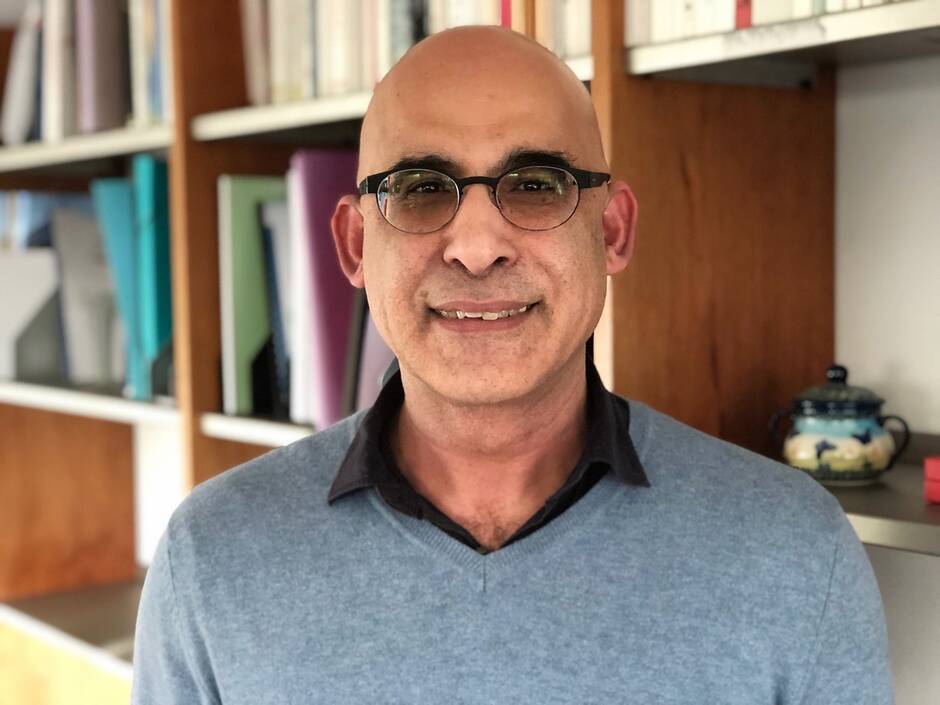
Mohamed Saki is a Lecturer in English linguistics at the University of Brest , affiliated with the research unit Heritage and Creation in Text and Image (EA 4249) . His work focuses on discourse analysis , argumentation , and genre analysis , with a particular interest in multicultural narratives , digital communication , and political rhetoric . Coordinator of international relations for UFR Letters and Human Sciences Research Interests : Discourse and genre analysis Argumentation and political communication Translation studies and paratextual elements Digital spaces and social media discourse Multicultural identity construction Publication Trends : His 15 most recent articles (2015-2023) analyze discourse strategies in political speeches, digital activism (e.g., #NotInMyName), and multimodal health communication . Key subfields include transitivity patterns , translator's notes , heterotopic public spaces , and intersubjective positioning in literary and political texts. Email : mohamed.saki@univ-brest.fr
Wang Yingji is a tenured professor and doctoral supervisor at the School of Art and Media, Tongji University. He holds a PhD in Literary Studies and has served as director of the China Culture and Art Communication Research Center, member of the China Artists Association, and editorial board member of "Media Criticism" journal. BA: Chinese Language and Literature, Renmin University of China (1995) MA: Journalism, Beijing Normal University (2004) PhD: Literary Studies, Beijing Normal University (2007) His research focuses on the intersections between Journalism and Communication, Media Phenomenology, Philosophy of Technology, and Traditional Chinese Culture. His work explores embodied cognition in media interaction, technological mediation of human perception, and historical epistemology of media systems. The articles demonstrate his expertise in media phenomenology (Hubert Dreyfus analysis), digital reading behavior studies, VR technology ideologies, and historical reconstruction of Chinese communication theories. His publications span from 2016-2022 with consistent CSSCI indexing. National Social Science Fund General Project: "Chinese Modern Public Opinion Thought History" (2021) Major Project Subtopic: "Chinese Media Archaeology in Civilizational Diversity" (2020) Ministry of Education Project: "Husserl's Media and Communication Thought" (2020) Completed NSFC Project: "Rumor Propagation and Governance in Public Emergencies" (2011) As educator, he teaches courses like "Chinese Classical Media Art", "Media Research Methods", and "Communication Theory". His administrative roles include leadership positions in the Chinese Society of Journalism History and multiple journal editorial boards.
Derek H. Kiernan-Johnson is a Teaching Professor at the University of Colorado Law School, specializing in Legal Writing , Appellate Advocacy , and Judicial Opinion Writing . He has taught courses on legal reasoning, document design, and narrative techniques in legal argumentation since joining the faculty in 2007. JD, University of Michigan Law School BA, Princeton University (Religion, Dramatic Performance, Music) His research explores intersections of narrative theory , visual rhetoric , and legal persuasion , with a focus on typography, historical legal contexts, and the performative aspects of law. Publications examine Bluebook overlaps, narrativity in legal writing, and rhetorical influence on judicial decisions. Notable scholarly contributions include analyses of Supreme Court indifference , craft whiskey regulation , and typographic storytelling in legal briefs. He has no listed scientific awards or student advisees in the provided materials. Professional background includes clerking for Justice Michael L. Bender of the Colorado Supreme Court and six years of legal practice at Caplan and Earnest, LLC, representing public-school clients in diverse legal settings.
Charles Denroche is Senior Lecturer in Linguistics and Applied Language Studies at the University of Westminster, based in the School of Humanities within the College of Liberal Arts and Sciences. His interdisciplinary career combines bioscience (Magdalen College, Oxford) with advanced linguistics (PhD UCL-IOE, PGDip Westminster, PGCE TESOL IOE), and extensive professional experience as translator, lexicographer and language educator. Education & Training MA in Bioscience – Magdalen College, University of Oxford PhD in Education (Linguistics) – UCL Institute of Education, University of London Post-Graduate Diploma in Linguistics – University of Westminster PGCE TESOL – UCL Institute of Education Certificate in English Phonology – International Phonetic Association Studies in Italian Language & Literature – University of Florence Studies in Germanistik & Anglistik – Heinrich Heine University of Düsseldorf Research Interests Denroche’s work centres on how meaning is made through language. His research integrates cognitive linguistics , semiotics and translation studies to explore the roles of metaphor and metonymy in discourse, multimodal communication and pedagogy. He is particularly interested in the cognitive processes that underlie figurative language, the interface between grammar and semantics, and how these insights can inform translator training and language education. Current projects extend his theory of metonymic processing to literary translation collaboration and the analysis of visual and multimodal texts, aiming to bridge theoretical linguistics with practical applications in education and professional practice. Recent Publications & Trends Over the past decade Denroche has produced a coherent body of work that moves from foundational theory-building—most notably the 2015 monograph Metonymy and Language —to innovative methodological applications such as using drawing as a research tool for metaphor-led discourse analysis. Across 15 key outputs (2011-2024), the research trajectory shows a consistent focus on metaphtonymy (the interplay of metaphor and metonymy) at text level and on developing practical frameworks for translators, educators and discourse analysts. Honours & Awards Award of Excellence in Teaching and Learning (2008) – Westminster Exchange, University of Westminster Doctoral Supervision & Grants Denroche currently supervises one active doctoral researcher (MPhil/PhD) investigating metaphor in Arabic urban literature. He welcomes applications from prospective postgraduate students in the areas of figurative language, semiotics/multimodality, discourse analysis and translation/interpreting studies. Professional Memberships & Service International Association for Cognitive Semiotics (IACS) Researching and Applying Metaphor (RaAM) External examiner for Birkbeck, University of Hertfordshire, UCL Institute of Education Reviewer for American Journal of Semiotics , Journal of Pragmatics , Language and Cognition , Cognitive Linguistics Studies , Metaphor and the Social World
Prof. Dr. Simone Winko holds the Chair for Modern German Literature and Literary Theory at the University of Göttingen since 2003. Her research spans literary theory, canonization, praxeology of literary studies, and the intersection of emotions with German poetry around 1900 and digital humanities. Academic Roles: Chair at Göttingen (2003–), DFG Priority Programme 2207 leadership (2017–), Courant Center collaboration (2009–) Key Projects: DFG projects on literary change (2023–), computational literary history (2020–2023), and argumentation practices in interpretations (2018–2020) Her recent work focuses on emotions in German-language poetry , using computational methods to model text similarity and analyze historical shifts between Realism and Modernism. She explores how emotional codes and narrative strategies are embedded in lyrical structures, particularly through projects like Anthologien zeitgenössischer deutschsprachiger Lyrik (2022). Scientific Awards : 2010: 1st prize for best doctoral supervision (KissWin, BMBF-funded) Teaching & Collaboration : Supervises B.A., M.A., and Ph.D. theses; co-edits the Journal of Literary Theory and Revisionen book series. Collaborates with Fotis Jannidis, Gerhard Lauer, and Matías Martínez on computational approaches to literary studies.
Dorothy Worden-Chambers is an Associate Professor in the Department of English at the University of Alabama, serving as Coordinator of the Applied Linguistics/TESOL Program. Her expertise spans multilingual writing pedagogy, second language teacher cognition, and genre-based instruction. She holds a PhD in Applied Linguistics from Pennsylvania State University (2015) and an MA in Rhetoric and Composition from Washington State University (2008). Her research focuses on L2 writing teacher development, with particular attention to pedagogical content knowledge, curriculum design, and the impact of teacher beliefs on instructional practices. Her work bridges theoretical frameworks in applied linguistics and writing studies, emphasizing practical applications in multilingual education. Recent publications explore themes such as teacher learning through tutoring, conceptual metaphors in curricular knowledge, and the role of genre projects in teacher education. Her contributions span journals like Teacher Development , Composition Forum , and Journal of Second Language Writing . Worden-Chambers actively contributes to professional development through workshops and collaborative initiatives, such as graduate student-led faculty training programs on multilingual writing pedagogy. Her work underscores the interplay between teacher identity, pedagogical practices, and multilingual learner outcomes.
Keena Lipsitz is a Professor of Political Science at Queens College, City University of New York. She is also affiliated with the Graduate Center at CUNY. Her work bridges political communication, political behavior, and democratic theory, focusing on how electoral processes and campaign strategies impact voter engagement and democratic health. Research Interests Political communication dynamics Electoral competition effects Democratic theory and reform Political polarization mechanisms Partisan behavior during crises Information environments in campaigns Publication Trends reveal interdisciplinary work merging political science with systems theory, behavioral analysis, and public health. Her most recent articles (2024) examine nonlinear political advertising effects and partisan responses to pandemics, while earlier works analyze polarization feedback loops, moral appeals in rhetoric, and institutional impacts on civic participation. Contact : keena.lipsitz@qc.cuny.edu | Website (via CUNY)
Danuta Mirka is a Professor at Northwestern University's Bienen School of Music in the Department of Music Theory and Cognition. She holds the Harry N. and Ruth F. Wyatt Chair in Music Theory and has been recognized with major awards for her scholarship. PhD in Musicology from University of Helsinki Senior Fulbright Fellow at Indiana University Humboldt Fellow and DFG Research Fellow at University of Freiburg Leverhulme Trust Research Fellow at University of Southampton Her research synthesizes historical music theory with contemporary cognitive approaches, focusing on metric manipulations in Haydn/Mozart, sonoristic structuralism in Penderecki, and topic theory in eighteenth-century music. She has developed analytical frameworks for textural and timbral systems in avant-garde compositions. Key trends across her publications include: cross-disciplinary application of semiotics and fuzzy logic to music analysis; systematic studies of cadential structures in Classical-era works; and innovative methodologies for analyzing non-traditional instrumental techniques. Her article on Penderecki's sonoristic style introduced groundbreaking concepts of six-dimensional textural analysis. Society for Music Theory Citation of Special Merit (2015) Wallace Berry Award (2011) Marjorie Weston Emerson Award (2023) Roland Jackson Award (2017) Mirka has edited major reference works and served on editorial boards of leading journals. Her scholarship bridges Polish avant-garde traditions with Western analytical methodologies.
Lillie R. Albert is a Professor and Program Director for Secondary Education at Boston College’s Lynch School of Education, Department of Teaching, Curriculum, and Society. Her work bridges mathematics education, sociocultural contexts, and social justice, focusing on teacher training and equity in high-need schools. Education: Ph.D. (University of Illinois at Urbana-Champaign), M.A. (Xavier University), B.A. (Dillard University) Her research explores the pedagogical implications of writing-to-learn strategies, Vygotskian psychology in mathematical problem-solving, and multicultural education. She leads a $1.78 million NSF-funded project preparing teacher leaders for Boston’s high-need districts and co-authored a book on South Korean elementary math teaching. Recent publications highlight multilingual education, metalinguistic awareness, and textbook analysis. She received the 2023 Drylongso Anti-Racism Leadership Award and has secured multiple NSF and foundation grants for STEM equity initiatives. Scientific Awards: Drylongso Anti-Racism Leadership Award (2023) She has contributed to projects like WGBH Educational Foundation’s Keep Going! Building a Culture of Perseverance in the Math Classroom and developed technology badges for teacher preparation programs.
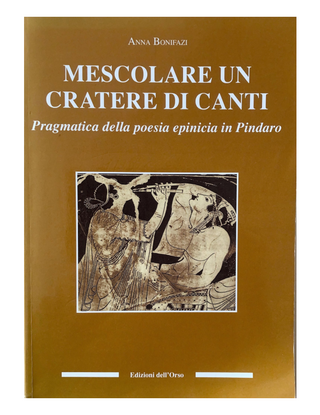
Prof. Anna Bonifazi holds a Professorship in Discourse Studies at the Department of Linguistics, University of Cologne. Her research spans Discourse Analysis, Pragmatics, Cognitive Linguistics, and Multimodal Communication with a focus on Ancient Greek Linguistics and Oral Epic traditions. She investigates phenomena like anaphoric cohesion in long texts, multimodal storytelling in film and oral traditions, and ancient Greek particles' discursive functions. Her work explores how multimodal elements (e.g., visual, musical, gestural) interact in communication, particularly analyzing films (e.g., mystery genres), ancient texts (e.g., Homeric epics), and South Slavic oral narratives. She examines cross-modal iconicity, viewpoint blending, and the cognitive underpinnings of discourse structures. Recent publications address topics like anaphoric strategies in crime stories and syntactic patterns in ancient Greek conversational frameworks. Prof. Bonifazi's research often bridges classical philology and modern cognitive theories, emphasizing embodied cognition and the interplay between language and other semiotic systems. She collaborates internationally on projects involving gesture analysis in storytelling and ancient papyrological studies. Her interdisciplinary work integrates linguistics with musicology, film studies, and cognitive science. Administratively, she oversees the Discourse Studies research group at Cologne and mentors assistants like Dr. Sandra Debreslioska and Madeleine Frings. Her lab focuses on multimodal discourse analysis using experimental and corpus-based methods.
Tongguang Li is a Research Fellow at the Department of Human Centred Computing, Monash University. His research focuses on learning analytics, self-regulated learning, and AI applications in education. He has contributed to the development of the FLoRA engine, an AI tool designed to enhance hybrid human-AI regulated learning. Li’s work explores adaptive scaffolding, large language model (LLM) feedback systems, and the integration of multimodal data for educational insights. His recent studies investigate how LLMs like ChatGPT can provide effective feedback to students, analyze rhetorical patterns in writing, and measure the impact of scaffolding on learning processes. Li has been recognized for his research with the Conference Best Full Student Paper Award from the Australiasian Society for Computers in Learning in Tertiary Education (2022). Key themes in his work include understanding self-regulated learning strategies through trace data, optimizing adaptive systems for learner engagement, and leveraging AI for educational innovation. His research bridges cognitive science, data analytics, and educational technology to improve learning outcomes and pedagogical practices.
Professor Lola Dada is the Head of Department and Professor of Entrepreneurship at Lancaster University Management School's Department of Entrepreneurship and Strategy. She holds a BSc in Economics, MSc in Corporate Finance, and PhD in Management. Her research focuses on entrepreneurship, innovation, franchising, and strategy, with notable projects like the GCRF-funded RECIRCULATE initiative addressing eco-innovation in Africa. She has received numerous awards, including Best Paper Awards at international conferences and the Emerald Literati Network commendation. Lola teaches at both undergraduate and postgraduate levels and has supervised PhD students exploring topics like AI-driven innovation and gender equality. She has held leadership roles such as Director of Undergraduate Programmes and has been a Visiting Professor internationally. Her work emphasizes sustainable practices, gender equity, and cross-cultural entrepreneurship. Education: BSc (First Class), MSc (Distinction), PhD (No Corrections) Affiliations: Senior Fellow of the Higher Education Academy, Co-Investigator on RECIRCULATE Grants: ESRC, British Academy, GCRF funding Her research bridges theoretical frameworks with practical applications in franchising systems, corporate venturing, and gender dynamics. Recent articles explore pro-environmental behaviors in franchises, symbolic violence in academia, and strategic human capital in entrepreneurship. Lola actively reviews for top journals and conferences globally, contributing to academic discourse on innovation and organizational behavior.