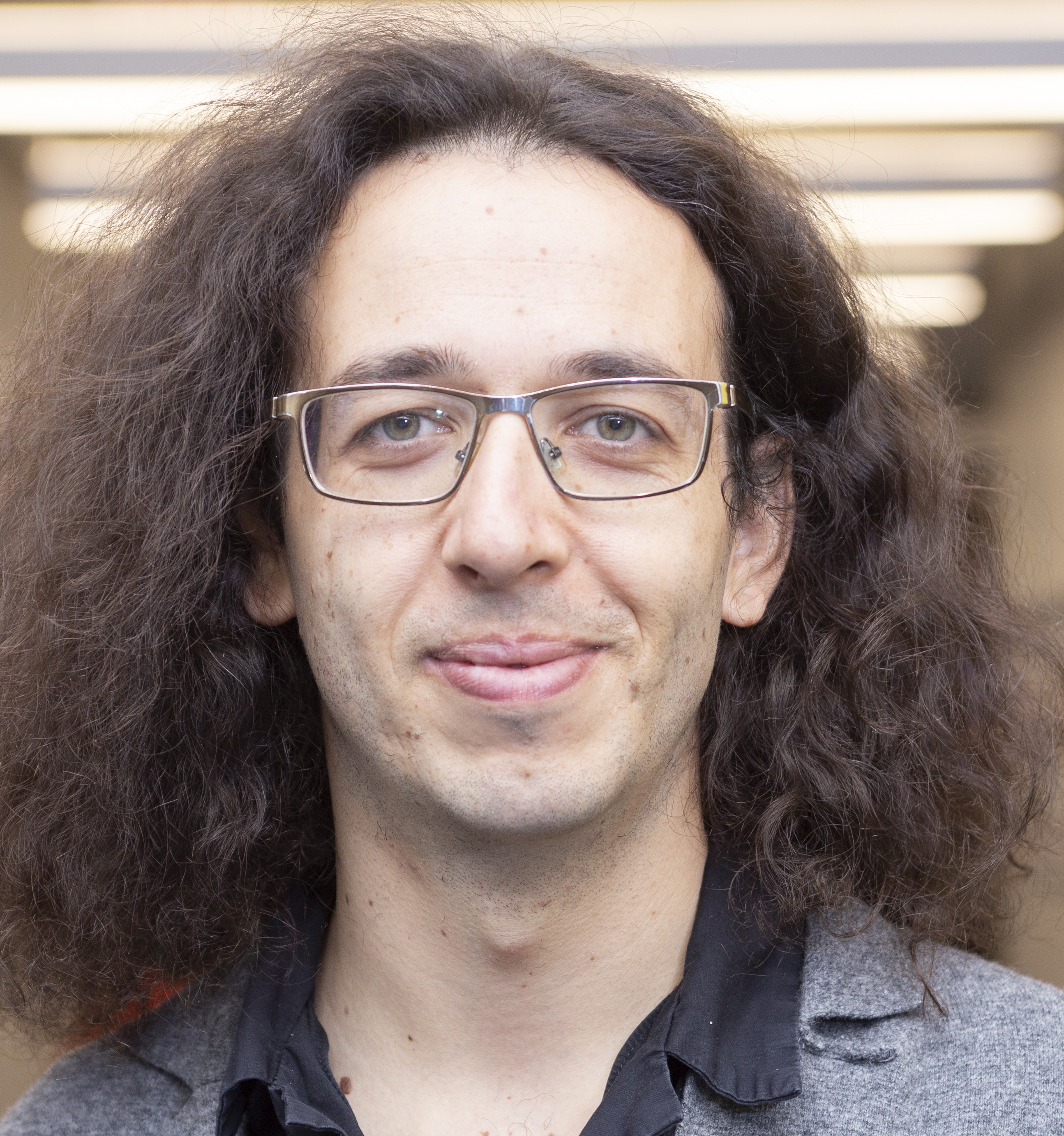
Dr. P.H. Smit is a Senior Lecturer in Media Studies at the Faculty of Arts, University of Groningen. His research explores intersections between digital technologies, memory practices, and sociotechnical imaginaries. Current research focuses on platformization of memory, algorithmic remembering, and digital activism Teaches courses on Media Platforms, Digital Culture, and Technology & Creative Destruction Key publication themes include: Critical analysis of AI discourses Digital memory infrastructure studies Early web entrepreneurship practices Transformative media imaginaries Contact: p.h.smit@rug.nl
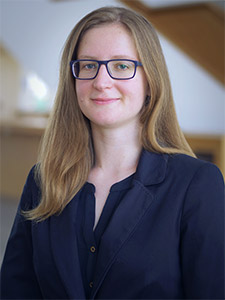
Chiara Scarampi is an Assistant Professor in Psychology at the University of Geneva and a key member of the LIVES Centre. Her research focuses on metacognition and its role in compensating for age-related cognitive decline. University of Geneva, LIVES Centre Research in metacognition, memory, and decision-making Scarampi's work explores how individuals monitor and adapt their behavior across cognitive domains, including memory, perceptual decision-making, and economic decision-making, with particular emphasis on aging populations. Her research aims to develop strategies to help older adults maintain independence and wellbeing throughout their lifespan. Recent publications highlight her focus on prospective memory, cognitive offloading, and memory compensation techniques. Collaborations with researchers like Matthias Kliegel and Sascha Zuber are evident in her work. Scarampi holds a Doctor of Psychology degree and is based at the Pinchat campus in office 208.
Dr. Tanja Messingschlager serves as a Scientific Associate at the Human-Computer-Media Institute within Julius-Maximilians-University Würzburg's Communication Psychology and New Media department. Her office is located in Room 02.011 at Campus Hubland Nord (Oswald-Külpe-Weg 82), where she has worked as a research assistant since 2020. Her educational journey at the university includes a B.Sc. in Media Communication (2013-2017), followed by an M.Sc. in Media Communication (2017-2020). She is scheduled to complete her doctorate (Dr. rer. nat) in 2025 with a dissertation titled "Generated by Creative AI: Exploring Human Responses to Information about AI as the Source of Creative Content". Her research focuses intensely on narrative persuasion mechanisms in digital environments, news reception dynamics within emerging media platforms, and critical examinations of human reactions to creative artificial intelligences . This includes investigating how AI-generated art influences aesthetic appreciation, the psychological processes behind mind attribution to AI systems, and the narrative transportation effects of algorithmically created stories. Analysis of her publication trajectory since 2018 reveals a strategic pivot toward AI-creativity intersections, with 70% of her recent work examining generative AI's impact on artistic perception and cultural production. Her methodological approach combines experimental psychology with media effects theory, frequently employing controlled exposure studies and attitude measurement frameworks. Her collaborative work spans multiple university initiatives, including projects on social media interventions (with Dr. Silvana Weber), AI attitude measurement (with Dr. Jean-Pierre Stein), and educational technology applications (with Prof. Dr. Markus Appel's research group).
Ahmed Ewaisha is an Associate Professor at Arizona State University (ASU) in the School of Electrical, Computer and Energy Engineering. He is also an Affiliate Faculty member at the Center of Muslim Experience in the US at ASU. PhD in Electrical Engineering, Arizona State University (2016) MSc in Electrical Engineering, Nile University, Egypt (2011) BSc (Honors) in Electrical Engineering, Alexandria University, Egypt (2009) His research focuses on wireless communications and networking, with an emphasis on algorithm development for quality-of-service (QoS) in real-time applications like audio and video data. His work spans cognitive radio systems, MIMO technology, machine learning in telecommunications, and optimization of deadline-constrained traffic in cellular networks. His recent publications address scheduling in URLLC and eMBB systems, machine learning for MIMO channel prediction, and power allocation in cognitive radios. Key themes include interference management, 5G network optimization, and real-time traffic handling. He teaches courses such as Analog and Digital Circuits , Circuits I , and Python for Rapid Engineering Solutions , alongside thesis and research seminars.
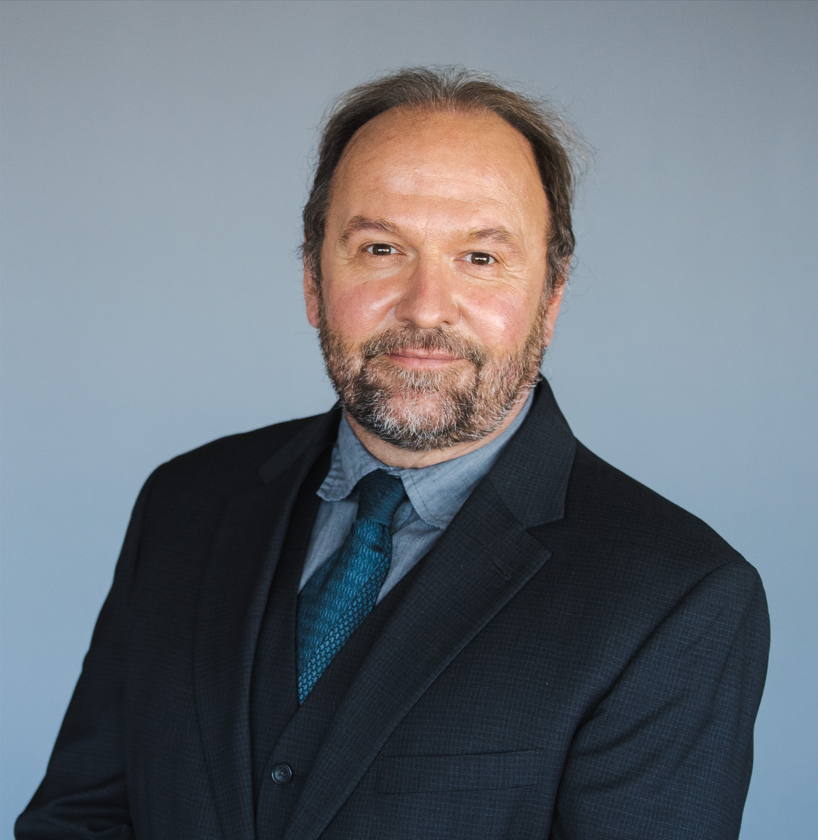
Richie Barker is a Senior Lecturer in Communication at Deakin University's School of Communication and Creative Arts within the Faculty of Arts and Education. With a PhD from Monash University and a Graduate Certificate of Higher Education from Deakin, he brings both academic expertise and practical industry experience to his role, having previously worked as a copywriter and communication strategist in advertising and digital media across commercial, not-for-profit, and government sectors. Dr. Barker's research examines social and technological disruptions in brand communication, with specific focus on: Digital media's impact on advertising creativity The role of artificial intelligence in creative processes Ageism and intergenerational dynamics in the advertising industry Transmedia storytelling applications in brand communication His scholarly work reveals consistent patterns across his publication history, showing how digital technologies transform creative practices while introducing new challenges related to algorithmic bias, information diversity, and age-based discrimination. Barker's research often employs qualitative methods including in-depth interviews with advertising practitioners to explore how professionals navigate technological changes in their field. Among his notable achievements is the co-authored book Transmedia Brand Storytelling: Immersive Experiences from Theory to Practice (2023) and numerous publications in Q1 journals. His research has attracted competitive funding, including an ARC Linkage Project "Cancer culture: understanding anti-cancer campaigns in Australia" (2022-2025). Dr. Barker has received recognition for his teaching excellence, including a Citation for Teaching Excellence from the Australian Awards for University Teaching (AAUT) in 2017. He supervises graduate research students and teaches undergraduate and postgraduate units including Creative Brand Communication, Copywriting and Ideation, Marketing Communication, and Transmedia Storytelling.
Haibin Yu is a researcher active in computer science and industrial engineering domains, with a focus on Industrial Wireless Networks , Cognitive Radio , and Deep Reinforcement Learning . Their collaborative work spans institutions and disciplines, addressing challenges in Edge Computing , Digital Twin , and Blockchain applications. Research Interests : Yu's work intersects Industrial Wireless Networks , AI in Healthcare , Multi-Domain Recommendation Systems , and Wireless Sensor Networks . Their contributions include optimizing resource allocation, enhancing secure task offloading, and developing frameworks for edge computing in manufacturing. Article Trends : Recent publications emphasize 5G Networks , Industrial Automation , and Digital Twin-Driven Collaborative Scheduling , reflecting a shift toward Intelligent Manufacturing and Trustworthy Computing in industrial contexts. Collaborations : Yu frequently collaborates with researchers like Peng Zeng , Chi Xu , and Wei Liang , indicating a strong network in wireless and AI-driven industrial systems.
Pedro Lopes is an Associate Professor in the Department of Computer Science at the University of Chicago, where he leads the Human Computer Integration Lab. He has been advancing research at the intersection of human-computer interaction, wearable computing, and bodily-integrated interfaces since joining the university in 2019. Dr. Lopes received his PhD from the Hasso Plattner Institute under Prof. Patrick Baudisch, with his dissertation earning the Best Dissertation Award from the University of Potsdam. His academic journey reflects a consistent focus on innovative approaches to human-computer interaction that challenge traditional paradigms of user control and device design. Lopes' research vision centers on interactive devices that integrate with the user's body – a natural evolution beyond conventional wearables. His lab engineers interfaces that directly connect with users' physiological systems through electrical muscle stimulation (EMS) and other bodily-integrated approaches. This methodology enables compact, powerful interfaces that borrow parts of the user's body as input/output hardware, resulting in devices that are exceptionally small while implementing fundamentally new interaction models. Recent extensions have expanded to novel ways of interfacing with users' senses of temperature, smell, and rich-touch sensations. His research also addresses critical societal challenges in sustainable computing and e-waste reduction, exploring how novel computer interfaces can promote attitude change and reduce electronic waste. Analysis of Dr. Lopes' recent publications reveals a strong trajectory across multiple sensory modalities (touch, temperature, smell, taste, breathing) while maintaining a coherent research vision. A notable trend is the expansion from isolated technical demonstrations to holistic explorations of how these interfaces affect users' sense of agency, mental workload, and overall experience, with increasing emphasis on sustainable computing applications. Best Dissertation Award, University of Potsdam Sloan Fellow (2022) NSF CAREER award (2021) 7 Best Paper Awards at major conferences Multiple Best Demo and Honorable Mention Awards Dr. Lopes has mentored numerous researchers in the Human Computer Integration Lab, with many advisees becoming prominent contributors in HCI. His research is supported by significant grants including the NSF CAREER award and Sloan Fellowship. The lab brings together interdisciplinary researchers to explore bodily-integrated interfaces with strong collaborations across neuroscience departments and industry partners, focusing on advancing precision and usability while addressing societal challenges like e-waste reduction.
Dr. Diep N. Nguyen is an Associate Professor and Associate Dean (Teaching & Learning) at the University of Technology Sydney (UTS), leading the Agile Communications and Computing Group within the Faculty of Engineering and Information Technology. He holds adjunct positions at universities in the US, Vietnam, and Japan. His research focuses on wireless communications (5G/6G), AI-driven networking, cybersecurity, and edge computing, with over 200 publications and $7M in grants from NSF, ARC, and industry partners. He has supervised 15 PhD students, many now in senior academic and industry roles globally. Key roles include Director of Transnational Education, co-founder of Food Agility CRC, and leadership in international initiatives like APEC DARE. Education: Ph.D. and M.E. in Electrical and Computer Engineering from The University of Arizona and UC San Diego, respectively. Professional service includes editorial roles for IEEE Transactions and conference leadership (e.g., IEEE VTC, INFOCOM). Awards include UTS Research Excellence Awards (2021, 2024), DECRA (2015), and industry recognitions like the 2024 iAward and IoT Impact Award. Research emphasizes AI applications in communications, cybersecurity for Industry 4.0, and 6G security. Notable projects include Australia-Vietnam 5G/6G Centre ($2.1M) and DFAT-funded initiatives for disaster management. Books authored include Deep Reinforcement Learning for Wireless Communications and Generative AI for Communications Systems . Teaching focuses on integrating research into courses like Cloud Security and Industry 4.0 Technologies. His pedagogy emphasizes self-directed learning through authentic research tasks, supported by real-time feedback channels.
Dr. Jiahui Wang is an Assistant Professor specializing in Educational Technology at Kent State University, affiliated with the Healthy Communities Research Institute. She holds a PhD in Educational Technology from the University of Florida and an M.Ed. in Curriculum & Instruction from the University of Virginia. Her research examines how individual differences impact STEM learning with technology, using neurocognitive measures like eye-tracking to analyze attentional and cognitive processes in diverse educational settings including game-based learning and multimedia environments. Her publications demonstrate consistent focus on cognitive processing in technology-enhanced learning, with recent work examining attention patterns during video instruction and gaming environments. Research Council Summer Research Appointment Award (2020,2022,2024) EHHS SEED Award (2019,2021) AERA SIG Instructional Technology Best Paper Award She advises graduate students in educational technology research methods and supervises undergraduate research assistants in eye-tracking studies. She directs experiments in the Educational Technology Lab, coordinating research on neurocognitive aspects of digital learning.
Hunter Ball is an Associate Professor in the Department of Psychology at the University of Texas at Arlington, affiliated with the College of Science. His research focuses on cognitive and metacognitive processes in prospective and retrospective memory, particularly age-related differences and interventions to mitigate memory failures. PhD in Cognitive Psychology, Arizona State University (2015) M.S. and B.S. in Psychology, University of Georgia (2011, 2009) Ball’s work examines how attention, memory control, and metacognitive strategies influence learning outcomes across populations, from young adults to older adults at risk for Alzheimer’s disease. He investigates memory offloading techniques to reduce age-related declines and explores the role of working memory capacity in cognitive training effectiveness. His recent publications emphasize prospective memory offloading, strategic monitoring, and aging. Key themes include the interaction between cognitive load and reminder efficacy, false memory mechanisms, and neural correlates of memory performance. Grants from the National Institutes of Health (NIH) and state-funded projects support his research. Awards include the 2024 President’s Award for Excellence in Teaching Nominee and multiple Psychonomic Society Fellowships. Ball actively reviews for top journals and serves on university committees for graduate recruitment and curriculum development. He teaches courses in Cognitive Psychology, Human Learning and Memory, and Advanced Research, mentoring students through the Undergraduate Psychology Society. His lab, the Attention, Memory, and Aging Lab, engages in both theoretical and applied research to enhance memory retention and reduce cognitive errors.
Ismail Nooraddini is a part-time lecturer and research consultant with a PhD in Sociology from George Mason University (2022), specializing in mixed-method research, survey design, and immigration studies. He has collaborated with institutions such as the Department of State, Institute for Immigration Research, and University of Maryland programs. PhD (2022): Sociology, George Mason University M.A. (2012): Sociology, University of Maryland Baltimore County B.A. (2010): Sociology, University of Maryland College Park His research bridges qualitative methods (fieldwork, cognitive interviewing) and quantitative methods (survey sampling, weighting, advanced statistics), often focusing on immigrant integration, gender ideology transmission, and social desirability bias in conflict zones. Recent work includes Edge-IoT systems and machine learning frameworks for resource allocation. Key publications span 2025-2012, covering topics like UAV monitoring, cognitive radio networks, and immigrant demographics. Trends show interdisciplinary expertise in IoT , social research , and public policy . Scientific Awards Vanderbilt Subsidy for LAPOP Summer School (2024) Russel Sage Grant for Migration Methods Institute (2019) Dennis-Weathers Sociology Award (2019) Multiple Travel Grants (2017-2020) He has taught Statistics for Behavioral Sciences (GMU 2024), Methods of Social Research (Hood College 2014, 2015), and Intro to Sociology (Montgomery College 2015). His work appears in sociology journals and technical conferences.
Jingyi Wang is an Assistant Professor in the Department of Computer Science at San Francisco State University. She serves as a Transfer Advisor and is affiliated with the university's research initiatives in data privacy and network optimization. Her work focuses on privacy-preserving techniques in distributed systems, wireless networks, and smart infrastructure. Her research interests include differential privacy applications in transportation networks, machine learning optimization, and secure spectrum trading mechanisms. Recent projects explore privacy in smart grids, information-centric networks, and IoT energy management. Dr. Wang’s publications emphasize data-driven solutions for preserving privacy while maintaining system efficiency. Her work on trajectory privacy, spectrum auctions, and distributed machine learning has been published in top-tier venues since 2016. She holds a leadership role in advising transfer students and contributes to curriculum development in cybersecurity and networking.
Dr. Cheng Chen is Associate Professor and Nariman Farvardin Professor in the Department of Civil, Environmental and Ocean Engineering at Stevens Institute of Technology. He directs the Subsurface Energy, Water and Environmental Systems (SEWES) Lab, focusing on porous media transport phenomena through combined computational and experimental approaches. His NSF and DOE-funded research addresses multiphase flow in geological formations for carbon sequestration, shale energy recovery, and nuclear waste disposal. Recent work integrates machine learning for scale-bridging data assimilation and distributional reinforcement learning for autonomous marine systems. Chen's methodological innovations include lattice Boltzmann simulations for pore-scale analysis and Gaussian process models for uncertainty quantification. Scholarly outputs demonstrate consistent focus on energy-geoscience interfaces, with recent expansion into privacy-preserving federated learning applications for IoT systems. His 2023-2024 publications increasingly address security challenges in distributed computing and adversarial machine learning. Major Recognition: Stanford Top 2% Most Cited Scientist (2023) Nariman Farvardin Endowed Professorship Chen teaches numerical methods in environmental engineering and subsurface flow modeling, maintaining industrial partnerships with Schlumberger, SeaRobotics, and Consolidated Edison. He holds editorial roles for SPE Journal and has authored over 60 peer-reviewed publications.
Dr. Lauren Richmond is an Associate Professor in the Department of Psychology at Stony Brook University, specializing in Cognitive Science. She earned her Ph.D. from Temple University in 2013. Her research focuses on everyday cognition, cognitive aging, and interventions to improve memory retention in daily life, particularly for older adults seeking to maintain independence. She leads the Cognitive Aging and Memory Lab (cogagingandmemorylab.weebly.com), exploring strategies like cognitive offloading to enhance memory performance across the lifespan. Dr. Richmond’s work bridges theoretical cognitive science with applied interventions, emphasizing naturalistic memory tasks and neuroimaging techniques. Recent studies investigate spatial memory in aging populations and the efficacy of memory training programs. Her lab collaborates with interdisciplinary teams to address age-related cognitive challenges through behavioral and neuroimaging approaches. Key research themes include cognitive offloading mechanisms, individual differences in memory strategies, and the interplay between brain structure and memory performance. Her findings contribute to developing evidence-based tools to mitigate memory decline in aging and improve healthcare communication through better medication information retention. Dr. Richmond advises students on thesis projects related to cognitive aging and memory, with notable advisees including Lauren K. Burnett. Her research has been published in journals like Applied Cognitive Psychology , Neuropsychologia , and Cognitive Research: Principles and Implications .
Claude D'Amours is a Professor at the University of Ottawa's School of Electrical Engineering and Computer Science, serving as Vice Dean of Academic Affairs since 2007. He holds a B.A.Sc., M.A.Sc., and Ph.D. in Electrical Engineering from the University of Ottawa (1990–1995). His career includes roles at the Communications Research Centre (CRC) and the Royal Military College (RMC). Research interests focus on advanced wireless communication systems, including MIMO, CDMA, OFDM/SC-FDMA, and error control coding. Notable innovations include the parity bit selected spreading technique and permutation spreading for MIMO-CDMA systems. He has pioneered work in UAV-to-ground channel modeling, mmWave MIMO precoding, and physical-layer security against jamming attacks. Recent publications emphasize 5G/6G technologies, secure network design, and channel optimization in challenging environments. His work addresses critical challenges in network reliability, interference management, and spectrum efficiency. Teaching awards: 2006 John V Marsh Award and 2007 University Excellence in Teaching Award Leadership roles: Vice Dean overseeing academic affairs in the Faculty of Engineering His research spans theoretical advancements and practical implementations, with contributions to cognitive radio systems, RF fingerprinting, and underwater sonar-based activity detection. Current projects include AI-driven 3D drone deployment frameworks and low-complexity detection algorithms for overloaded CDMA systems.