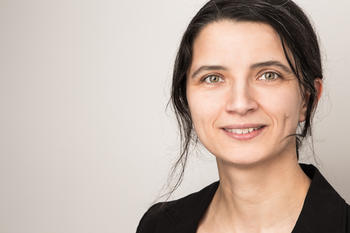
Dr. Natalia Petrovskaia is an Assistant Professor at Utrecht University's Department of Languages, Literature and Communication , specializing in Celtic Studies within the Humanities faculty. She serves as Program Coordinator for the BA in Celtic Languages and Culture Domain Coordinator for the Humanities Honours Programme Board Member of the Utrecht University Centre for Medieval Studies Having earned her PhD at the University of Cambridge and held a Clare Hall Research Fellowship (2012-14), she later received a Humboldt Research Fellowship (2016) at Philipps-Universität Marburg. Her research focuses on Medieval geographical traditions Textual translation/transmission Arthurian literature Encyclopedic knowledge systems Reception studies History of the book Her recent publications include monographs like Transforming Europe (2025) analyzing Imago mundi translations, and The Modern Afterlives of Old Irish Travel Narratives (2025) exploring connections between Star Trek and medieval Irish texts. She contributes to Queeste as a reviews editor and organizes public engagement events like 'Cracking the Celtic Code' at the Weekend of Science. Scientific Awards : NWO Veni Award (2016) Arthurian Essay Prize (2021) Global Engagement Fund Award (2025) She supervises the PhD project 'Empowering Individuals, Opening Cities' with Arnoud Visser and Rozanne Verdendaal, and teaches courses ranging from Old Irish to Media and Persuasion in Premodern Europe .
Alexandra Stan serves as a Lecturer in the Department of Theoretical and Applied Linguistics at the Faculty of Letters, Transilvania University of Brasov, Romania. Holding a PhD, she actively contributes to linguistics education and research within this institution, focusing on theoretical and practical language analysis. Her research centers on semantics, lexicography, and contrastive linguistics between English and Romanian, with significant emphasis on idiomatic expressions, bilingual dictionaries, and English for Specific Purposes (ESP). Stan's work explores lexical semantics across cultural contexts, examining how concepts like natural phenomena, physical attributes, and digital communication manifest in language structures. She investigates terminology variation, semantic fields, and the impact of technology on language learning. Recent publications (2022-2024) reveal expanding research trajectories into digital discourse, including code-switching in gaming communities and specialized glossary development. Her scholarship consistently employs contrastive methodology to analyze linguistic phenomena across English and Romanian, with growing attention to cultural metaphors, literary language, and technology-enhanced language education. This trajectory demonstrates increasing interdisciplinary connections between computational linguistics, sociolinguistics, and educational technology.
Thomas Boyken is Professor of Children's and Young Adult Literature at the Institute of German Studies, Faculty of Humanities, Carl von Ossietzky University of Oldenburg. He has held this position since July 1, 2023, following his tenure as Junior Professor for Children's and Young Adult Literature from October 2019 to June 2023. Previously, he served as a Junior Lecturer for Modern German Literature at Eberhard Karls University of Tübingen from 2014 to 2019, and held various academic positions at Oldenburg University since 2007. Boyken completed his doctoral dissertation on masculinity representations in Friedrich Schiller's dramatic works with distinction (summa cum laude) in December 2012. His academic journey includes positions as Special Teaching Staff (Lehrkraft für besondere Aufgaben) at Oldenburg University from 2009-2014, focusing first on Media Studies and later on Modern German Literature, and a brief period as Guest Lecturer at Nicolaus Copernicus University in Torun in 2013. His research focuses on Children's and Young Adult Literature from the 18th to 21st century, with particular expertise in Michael Ende studies, drama theory, narratology, and media theory. Boyken's scholarly work explores literary anthropology, gender representations in literature, and the theoretical frameworks of narrative and media studies, with significant contributions to understanding the materiality of texts and oral/written storytelling traditions in children's literature. His recent publications demonstrate a strong focus on philosophical dimensions of children's texts, urban representations in literature (particularly Berlin), and the relationship between contemporary German authors like Cornelia Funke and literary traditions. His work reveals a sophisticated approach to analyzing how historical contexts shape children's narratives across centuries. Member of the Lower Saxony Literature Commission (since 2024) Co-editor of the Yearbook of the Society for Children's and Young Adult Literature Research (since 2024) Member of the German Academy for Children's and Young Adult Literature Volkach (since 2021) Jury member of the Friedrich-Hölderlin-Prize (since 2020) Director of the Oldenburg Research Center for Children's and Young Adult Literature (OlFoKi) (since 2020) Boyken has organized numerous international conferences including 'Michael Ende: Poetik und Positionierungen' (2022), 'Philosophische Fragen im Spiegel der Kinder- und Jugendliteratur' (2021), and 'Von Mund- und Handwerk' (2021). His current teaching includes courses on historical perspectives of childhood and youth, youth literature and military masculinity, and supervision of bachelor's and master's theses in literary studies.
Joyce Kinkead is a Professor of English at Utah State University within the College of Humanities, Arts and Social Sciences. Recognized as the 2013 Carnegie Professor of the Year for Utah, she is celebrated for her student-centric approach, promotion of undergraduate research, and pioneering work in online education for writing instruction. Her career spans over three decades, during which she has authored 13 books and championed the land-grant mission of accessible education. Academic Rank: Professor Department: English College: Humanities, Arts and Social Sciences Institution: Utah State University Kinkead's research centers on enhancing undergraduate research opportunities in humanities, particularly through digital learning tools and multimodal pedagogy. Her work bridges empirical research with writing instruction, addressing classroom civility, service-learning, and sustainability. She has developed innovative courses like the RAD research methods class, emphasizing student-driven inquiry and metacognitive development. Her publications reflect a commitment to integrating research into undergraduate English curricula, with notable focus areas including land-grant education, writing studies, and technology's role in pedagogy. Articles highlight her exploration of digital natives' writing preferences, multimodal learning, and the impact of service-learning on student growth. 2013 Carnegie Professor of the Year 2010 IWCA Outstanding Service Award Kinkead's mentorship has led to student achievements such as Goldwater Scholar honors and Rhodes scholarships. Her legacy includes the Kinkead Honors Study Area at USU's library and the Rhetoric Associates Program, which integrates writing support across disciplines. Colleagues acknowledge her as a national thought leader in undergraduate research, with her books and articles shaping the field for years to come.
John T. Casteen IV is an Associate Professor in the Writing and Rhetoric Program at the University of Virginia and serves as Director of Studies at Brown College. He specializes in creative writing, poetry, and rhetoric, with a focus on contemporary literature, interdisciplinary studies, and public intellectual discourse. MFA in Poetry from Iowa Writers' Workshop (1996) BA from the University of Virginia (1993) His research explores themes such as identity, memory, and cultural criticism through poetic and essayistic forms. Recent publications examine the lyric first-person in poetry collections, interdisciplinary approaches to urban experiences, and the intersection of personal narrative with societal reflection. His work has been recognized with fellowships, including the Mednick Fellowship (2014) and multiple Pushcart Prize nominations (2013–2019). He has presented at international events like the Havana International Poetry Festival (2018) and the AWP Conference (2015).
Riccardo Morri is an Associate Professor at the Department of Modern Literature and Culture , Sapienza University of Rome . With a PhD in Geography (1999) and a Master in Human Geography (1993), he specializes in Historical Geography , Cartographic Education , and Public Geography . His work bridges geographical theory with educational practices and heritage preservation. Education PhD in Geography, University of Cassino (1999) Master in Human Geography, Sapienza University (1993) Morri's research focuses on historical urban landscapes , geographical heritage , and interdisciplinary methodologies . He explores how cartography and geography intersect with literature, memory, and education, particularly through projects like the MAGISTER initiative for territorial enhancement using geospatial tools. His recent publications (2022-2025) emphasize: Democratizing geographical knowledge Digital humanities applications in heritage studies Cartographic language in early childhood education Urban memory landscapes Participatory approaches to geographical heritage These works often integrate GIScience with cultural analysis and educational innovation. Scientific Awards include national qualifications as Full and Associate Professor, CNR's 'Promozione Ricerca 2005', and multiple research scholarships from Sapienza University and the Italian Foreign Office. Morri has: Led the MAGISTER Project (€165,000) for geospatial territorial enhancement Coordinated the Geocartography Laboratory at Sapienza since 2014 Managed EU-funded educational initiatives on remote sensing He serves on editorial boards for journals like J-Reading and Geotema , and organizes annual geography conferences with hundreds of participants.
Donatella Montini is an Associate Professor of English Language and Translation at Sapienza University of Rome . She graduated in 1982 and earned her PhD in 1995 (Universities of Pisa and Florence) with a thesis on Renaissance kingship and Shakespeare. Her academic roles include Editor-in-Chief of Memoria di Shakespeare and editorial board membership for Fictions . Education: Degree in Foreign Languages and Literatures, Sapienza University (1982, cum laude) MA in Modern Philology, Sapienza University (1988, cum laude) PhD in English Studies, Universities of Pisa and Florence (1995) Research Focus: Montini’s work spans textual stylistics (e.g., The Language of Fiction ), history of English (early modern period, John Florio, Queen Elizabeth I), and political discourse (diachronic/synchronic analysis). She has pioneered studies on Florio’s bilingual dialogues, Shakespeare’s historical plays, and Samuel Richardson’s epistolary fiction. Article Trends: Her publications emphasize Shakespearean adaptations , multilingualism in early modern Europe, political rhetoric , and stylistic evolution in historical texts. Collaborations with Iolanda Plescia include Elizabeth I in Writing (Palgrave 2018), analyzing royal discourse. Grants & Leadership: She has coordinated research projects on Political Discourse (2008-2009), Epistolary Discourse (2005-2006), and Allocutionary Forms (2016). Conferences: Montini frequently presents at international venues, including ESSE, AIA, and IASEMS events, focusing on topics like Florio’s translations, Shakespearean kingship, and early modern letter-writing.
Julian Santano Moreno is an Associate Professor at the Department of European, American and Intercultural Studies in Sapienza University of Rome. His academic work focuses on the Romance languages with particular emphasis on historical linguistics, dialectology, and cognitive semantics. Faculty of Arts Department of European, American and Intercultural Studies Research interests: Romance and Indo-European etymology, linguistic historiography, historical lexicology Contact: julian.santano@uniroma1.it His research explores the evolution of Romance languages through the lens of cognitive semantics and historical linguistics, with a special focus on Indo-European substrata. He has published extensively on topics such as: Occitan dialect koinéization Traditionalist linguistic theory Proto-Indo-European root reconstruction Historical lexicology of Spanish Semantic change in Romance verbs Onomastic analyses of lexical families Publications demonstrate expertise in: Historical linguistics Etymology Dialectological convergence Semantic evolution Philological methodology Linguistic historiography
Arzu Atasoy serves as Associate Professor in the Department of Turkish and Social Sciences Education at Gaziantep University's Faculty of Education since 2024, following progressive academic appointments including Doctor Lecturer (2020-2024) and Research Assistant positions at both Gaziantep and Hatay Mustafa Kemal Universities. Her academic credentials feature a Doctorate in Turkish Education from Hatay Mustafa Kemal University (2015-2019), Master's degree in Turkish Education from Mustafa Kemal University (2013-2015), and Bachelor's in Turkish Language Teaching from Erciyes University (2008-2011). Professor Atasoy's research centers on writing education with specialized focus on writing alienation phenomena, AI-assisted text evaluation, and sociocultural dimensions of writing development. Her methodological repertoire combines mixed-methods designs with bibliometric analyses to investigate writing instruction across Turkish educational contexts. Recent publications demonstrate accelerating integration of artificial intelligence in language assessment, particularly through ChatGPT applications for student text evaluation, alongside systematic reviews mapping writing education research evolution. Her scholarly recognition includes: TÜBİTAK 2211-E Direct Domestic PhD Scholarship TÜBİTAK 2210-A General Domestic Master's Scholarship She actively supervises master's research including completed studies on Turkish teachers' writing practices and ongoing projects analyzing AI-generated texts and developing mobile writing applications. Her extensive teaching portfolio spans undergraduate Creative Writing and Turkish Language courses through graduate-level Writing Education Research Design seminars across all academic levels.
Dr. ÖZLEM BATMAZ is a Research Assistant at Gaziantep University's Faculty of Education, Department of Turkish and Social Sciences Education. She holds a PhD in Turkish Language Education from Gaziantep University (2020) and a Master's degree in Turkish Education from Yildiz Technical University (2020). Doctorate: Turkish Language Education (2020), Gaziantep University Institute of Educational Sciences Master's: Turkish Education (2017-2020), Yildiz Technical University Institute of Social Sciences Bachelor's: Turkish Language Teaching (2013-2017), Yildiz Technical University Faculty of Education Her research focuses on 21st-century literacies , critical literacy , and media representation in Turkish language education. She has published on topics including classroom teaching practices, textbook analysis, and gender equality in children's literature. Recent publications highlight her expertise in language curriculum development , pedagogical innovation , and sociocultural aspects of Turkish education . She has contributed chapters to international books and presented at national conferences on educational practices. Scientific contributions include: TÜBİTAK 2211-A General Domestic PhD Scholarship Editorial role for the Domestic Journal of Educational Sciences
Eleonore Stump is the Robert J. Henle Professor of Philosophy at Saint Louis University, where she has taught since 1992. She also holds honorary positions as Professor at Wuhan University, at the Logos Institute, St. Andrews, and as a Professorial Fellow at Australian Catholic University. Her distinguished career includes delivering prestigious lectures such as the Gifford Lectures (Aberdeen, 2003), the Wilde lectures (Oxford, 2006), the Stewart lectures (Princeton, 2009), and the Stanton lectures (Cambridge, 2018). Professor Stump's research spans three primary areas: philosophy of religion, contemporary metaphysics, and medieval philosophy. Her work is characterized by a narrative approach to philosophical problems, particularly the problem of evil and suffering. She has made significant contributions to understanding Aquinas's thought and has engaged deeply with biblical narratives as philosophical texts. Her interdisciplinary approach bridges analytic philosophy with theological insights, creating a unique perspective on longstanding philosophical questions. This methodology has been particularly influential in addressing the relationship between divine attributes and human suffering. Stump's publications reveal a consistent focus on the intersection of narrative, suffering, and divine attributes. Her major works explore how biblical stories can illuminate philosophical problems, particularly regarding God's relationship to human suffering. This narrative approach has become increasingly influential in contemporary philosophy of religion, offering an alternative to more traditional logical approaches to the problem of evil. Her work on atonement theory has also reshaped contemporary discussions in theological ethics. Member of the American Academy of Arts and Sciences Past president of the Society of Christian Philosophers Past president of the American Catholic Philosophical Association Past president of the American Philosophical Association, Central Division Gifford Lecturer (Aberdeen, 2003) Wilde Lecturer (Oxford, 2006) Stewart Lecturer (Princeton, 2009) Stanton Lecturer (Cambridge, 2018) Professor Stump has supervised over thirty-five doctoral students at Saint Louis University, many of whom have gone on to prominent academic positions at institutions worldwide. Her mentoring has shaped a generation of philosophers working at the intersection of analytic philosophy and theological inquiry. She has led significant research initiatives including the "Wrestling with Life: Analytic Theology and Biblical Narratives" workshop at Tantur Ecumenical Institute in Jerusalem (2019) and "The Philosophy and Theology of Biblical Narratives" workshop (2021), funded by the John Templeton Foundation. Stump is actively involved with the Ignatian Scholars Corps, connecting eminent scholars with institutions of higher education to provide lectures in the Judaeo-Christian intellectual heritage. She also contributes weekly reflections to The Sunday Website of Saint Louis University, demonstrating her commitment to making philosophical insights accessible beyond academic circles. Her ongoing work includes reading groups on Aquinas's biblical commentaries and Dante's Divine Comedy, reflecting her dedication to collaborative scholarly inquiry and the integration of faith and reason.
Rebecca Bradburn is a Postdoctoral Fellow at St John's College, University of Oxford. She recently completed her PhD in English Literature at the University of Oxford under the supervision of Dr. Erica McAlpine and Professor Tara Stubbs. Her doctoral research was supported by the Drue Heinz-St Johns Scholarship for American Literature and a Fourth-Year Doctoral Scholarship at the Rothermere American Institute. Her educational background includes: PhD in English Literature, University of Oxford Dr. Bradburn's research focuses on the intersection of twentieth- and twenty-first-century Anglophone poetry with cognitive processes, exploring how poetry represents or suspends cognition. Her current projects include the monograph "Listen Closely: The Poetics of Listening in Mid-Century U.S. Poetry", which examines auditory attention and the role of distraction in mid-twentieth-century U.S. poetry, and "Bee on the Brain: Poetry’s Hum", which investigates the presence of hums in poetry and their connection to the climate crisis and cognition. She also engages with eco-criticism and the convergence of affect theory and the medical humanities. Her scientific awards include: Drue Heinz-St Johns Scholarship for American Literature Fourth-Year Doctoral Scholarship at the Rothermere American Institute During her doctoral studies, Dr. Bradburn received significant scholarship support, which enabled her research in American literature and cognitive approaches to poetry. She has not yet taken on formal advising roles as she is in the early stages of her postdoctoral career.
St. Cyril and St. Methodius University of Veliko TarnovoBulgaria
Boryana Emiliyanova Mihailova is a Senior Lecturer at the University of Veliko Tarnovo , affiliated with the Department of General Linguistics and Old Bulgarian Studies . Her research focuses on Romanian language, onomastics, and metaphorical expressions in Balkan folk geographical terminology. University of Veliko Tarnovo: Senior Lecturer (Department of General Linguistics and Old Bulgarian Studies) Research Interests : Comparative analysis of Bulgarian and Romanian linguistic elements Metaphorical models in folk geographical terms Toponymy and anthroponymy in the Danubian region Historical and cultural linguistic patterns in Balkan languages Language education and cross-border linguistic networks Project Participation : "Thematic Research Perspectives through International Academic Networks" (2025): Collaborative project with universities in Niš, Warsaw, and Craiova "International Academic Networks – Traditions and Innovations" (2024): Research and educational exchange initiatives
Yağmur SÖNMEZ DEMİR is an Assistant Professor at Çankaya University, Faculty of Arts and Sciences, Department of English Language and Literature. She holds a PhD in British Literature (2020) and an MA in British Literature and Cultural Studies (2012) from Turkish institutions, with postdoctoral work at Heidelberg University (2022-2023). Specializes in comparative literature , gender studies , and postcolonial narratives . Active in science fiction analysis , focusing on AI embodiment, gender fluidity, and human-machine ethics. Her 2024-2022 publications address: Death motifs in Shelley's poetry Gendered domesticity in Felicia Hemans AI agency in McEwan and Newitz Postcolonial identity in Kureishi and Emecheta Orientalist frameworks in Christie's works Recipient of the European Language Prize (2013). Serves on the board of the British Association for Contemporary Literary Studies (2023-present) and as IDEA member (2021-present).
Christine Paul serves as a Scientific Associate in the Department of German Didactics within the Department of Education and Psychology at Freie Universität Berlin, specializing in linguistic and cultural education. Currently on leave while fulfilling duties at Technische Universität Dresden, her expertise spans multilingual pedagogy, German as a second language, and conversation analysis, with significant contributions to corpus linguistics through the Wendekorpus project documenting German reunification narratives. Education: PhD in Linguistics (2016), Freie Universität Berlin First State Examination in German and Spanish (2006), Freie Universität Berlin Graduate Fellowship, Evangelisches Studienwerk Villigst (2009-2013) Study Abroad, Pontificia Universidad Católica del Peru, Lima (2001-2002) Research Focus: Dr. Paul investigates multilingual identity construction in educational settings, analyzing how students navigate spoken vs. academic language varieties through conversation analysis and cognitive linguistics frameworks. Her work bridges theoretical linguistics with classroom practice, particularly examining meaning negotiation in multilingual dialogues and historical language shifts in post-reunification Germany, often utilizing corpus-based methodologies to reveal subtle pragmatic patterns. Publication Evolution: Early career works (2010-2015) established her expertise in temporal inference and retrospective utterances within conversation analysis. Recent publications (2019-2023) demonstrate strategic expansion into digital education spaces and multilingual identity, culminating in 2023's examination of linguistic diversity on school websites. Her research consistently centers on language as a tool for identity construction within institutional contexts, with growing emphasis on intersectional factors like gender and migration background. Academic Engagement: As co-developer of the Wendekorpus audio archive and contributor to the Learning and Research Workshop for Literary Education, she actively shapes pedagogical resources. Her 2024 conference presentation on multilingual female students' self-identification continues her trajectory of connecting linguistic theory to real-world educational challenges through empirical discourse analysis.