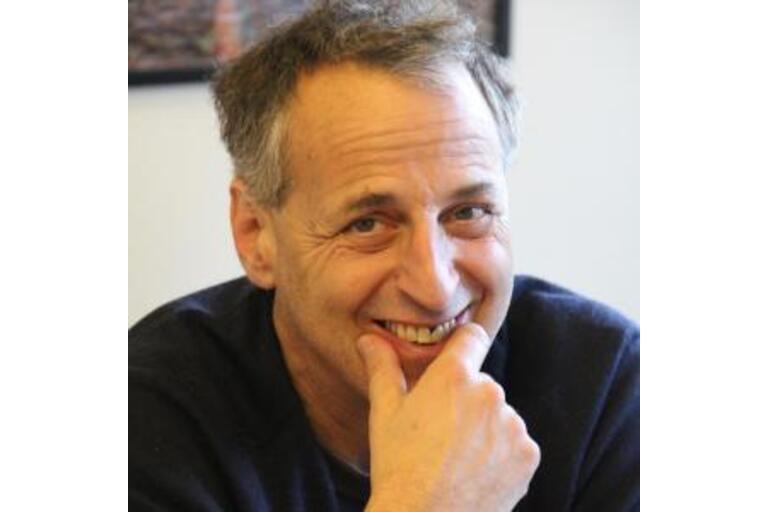
Attila Kertesz-Farkas is a Hungarian-born academic currently serving as Assistant Professor at the Faculty of Computer Science, Department of Data Analysis and Artificial Intelligence, at the National Research University Higher School of Economics (HSE) in Moscow. Since 2021, he has also been Head of the Research and Educational Laboratory of Artificial Intelligence for Computational Biology. He joined HSE in 2015 after completing postdoctoral positions at the University of Washington and the International Centre of Genetic Engineering and Biotechnology. His educational background includes: Doctor of Science (2022) from National Research University Higher School of Economics PhD (2010) from University of Szeged Master's degree in Computer Science (2004) from University of Szeged Kertesz-Farkas's research focuses on the intersection of artificial intelligence and computational biology, particularly in mass spectrometry data analysis. His work spans computational proteomics, human gait analysis, and medical applications of machine learning. He develops novel algorithms for peptide identification, protein classification, and single-cell analysis, with applications ranging from cancer research to environmental contamination analysis. His research group actively explores how deep learning can improve the analysis of biological data that is inherently non-human readable. His scientific contributions have been recognized with several awards including a Letter of thanks from the Rector of HSE (December 2022), a Letter of gratitude from the Faculty of Computer Science (September 2021), and the Best presentation award at ICMLC 2023 conference. As an academic supervisor, Kertesz-Farkas mentors multiple PhD students working on diverse projects including generative models for mass spectrometry data, human gait control systems for prosthetics, and deep learning applications for single-cell analysis. His research is supported by the allowance for defending a doctoral dissertation (2022-2025) and various research projects at HSE. He leads the Laboratory of Artificial Intelligence for Computational Biology, which focuses on developing AI methods specifically tailored for biological data analysis problems. The laboratory conducts research in computational proteomics, medical applications of machine learning, and the development of tools for mass spectrometry data interpretation.